

The Data Behind Online Appraisals: How AVM Tools Can Pump Up (or Down) Your Price
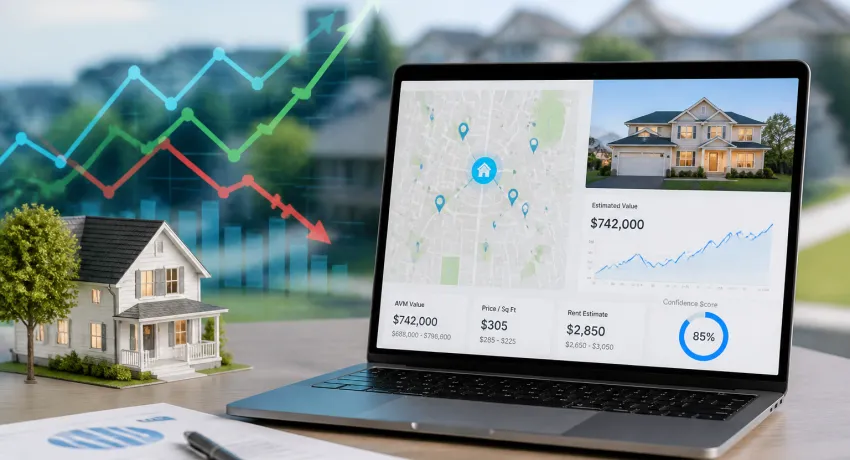
Table of Contents
- What Are Automated Valuation Models (AVMs)?
- How Automated Valuation Models Work
- AVM Accuracy: What the Data Actually Shows
- AVM Accuracy Testing: The Three Main Benchmarks
- AVMs vs. Traditional Appraisals: A Direct Comparison
- Limitations and Challenges of AVMs
- Regulatory Compliance: The Federal AVM Quality Control Rule
- How to Interpret an AVM Estimate as a Homeowner
- The Future of AVM Technology
- Conclusion
- Frequently Asked Questions
You pull up Zillow, punch in your address, and a number appears in seconds. It feels authoritative. But here's the thing—is it actually reliable? Automated Valuation Models, or AVMs, are what millions of homeowners now use as their first check on property value. And they're convenient. The catch? These tools can swing your perceived value by tens of thousands of dollars, sometimes more, and most people don't understand why that happens. If you're refinancing, selling, or dealing with a major financial decision tied to your home, understanding AVM tools home appraisal accuracy matters. Really matters. This guide walks you through how AVMs actually work, when they're genuinely useful, where they tend to stumble, and most importantly—how to pair them with real professional judgment instead of treating them like gospel.
Wondering what selling will cost? Start with our guide to seller closing costs. It breaks down every seller cost at closing, the surprises, and ways to pay less.

What Are Automated Valuation Models (AVMs)?
An Automated Valuation Model is a computer-based system that estimates your home's market value in seconds using statistical algorithms, machine learning, and massive property databases. No appraiser needs to walk through your front door. The technology started in the 1990s when lenders wanted to cut costs and speed up the appraisal process. Early versions were basic regression analyses. Modern AVMs? They're far more sophisticated—using machine learning to spot patterns across millions of data points at once.
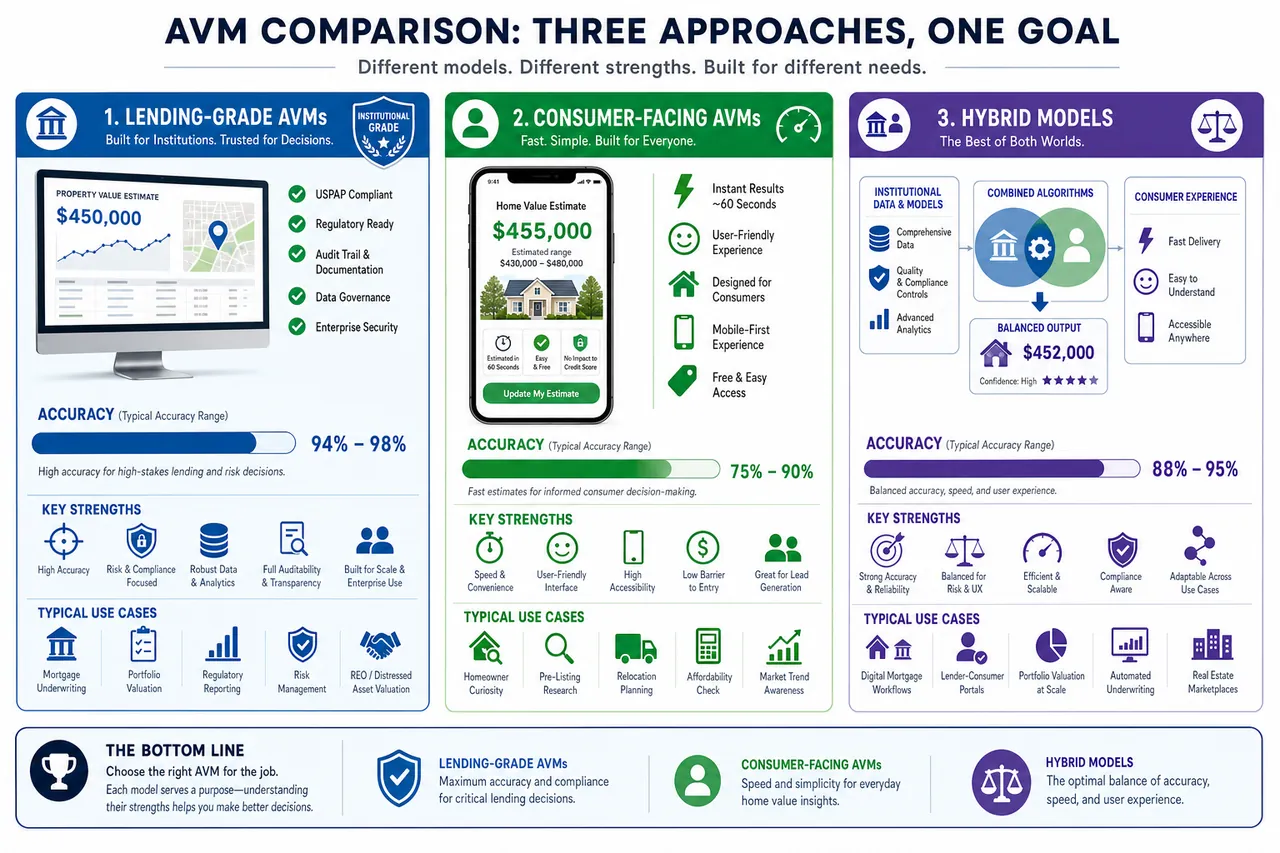
You've probably heard of Zillow's Zestimate or Redfin's Estimate. Those are the consumer versions. But lenders rely on professional-grade models from companies like Cotality (formerly CoreLogic) and Clear Capital. And that's where things get serious. Consumer AVMs give you a ballpark figure for curiosity's sake. Lending-grade AVMs follow strict regulatory standards because they're used to make actual financial decisions.
Back to topHow Automated Valuation Models Work
Data Inputs and Sources
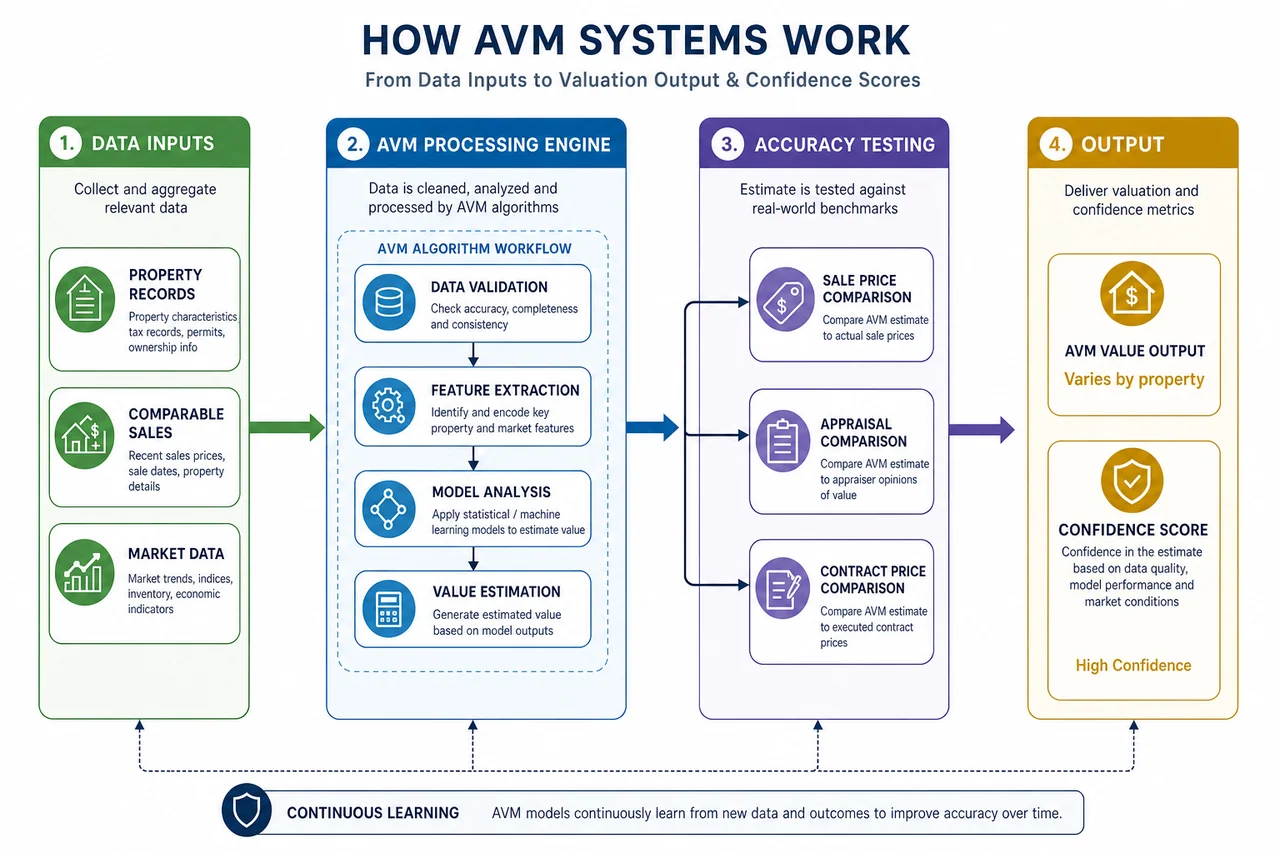
Here's where it starts: AVMs pull information from everywhere. Public property records (think tax assessor data and deed transfers), MLS listings, mortgage and lien records, geographic information systems, and sometimes even aerial imagery all feed into the system. But here's the catch—the quality and freshness of this data isn't consistent across the country. One county might have spotless records updated weekly. Another? You might be waiting months. That variance is why you'll see wildly different valuations depending on where your property sits.
Algorithms and Mathematical Models
At heart, an AVM does something pretty straightforward: it finds recent sales of similar homes and adjusts the numbers based on differences. Your house is 200 square feet bigger? The algorithm adds value. It's 10 years older? It subtracts. But modern systems go deeper than that.
They layer in hedonic pricing models—a fancy way of saying they assign dollar values to specific features like an extra bathroom or a two-car garage. They factor in market trends over time. They weight nearby sales more heavily than distant ones. The result isn't just a number. Most professional-grade AVMs also spit out a confidence score, which tells you how much you should actually trust the estimate based on the data available.
Understanding Confidence Scores
This is the part most people ignore. And it's the most critical.
A confidence score reflects two things: how many comparable sales were actually available and how close those comparables clustered around the final number. A suburban neighborhood with 20 recent sales within half a mile? That creates a high confidence score you can lean on. A rural farmhouse with three sales scattered across two years? That's a different animal entirely, and the confidence score tells you so.
Think of it this way: when the score is low, you're getting a rough directional indicator. Not a pricing anchor. If you're getting ready to list your home, a weak confidence score means you need to skip the AVM and talk to a licensed appraiser or a sharp real estate agent who can pull together a real comparative market analysis (CMA). Don't rely on an automated system when your biggest financial decision is on the line.
Back to topAVM Accuracy: What the Data Actually Shows
Here's where things get real. The gap between what people think AVMs can do and what they actually do matters—especially if you're relying on one to make a major decision about your home.

The two biggest consumer AVMs out there publish their own accuracy numbers. And the story they tell is pretty clear-cut.
Look at the actual figures. Zillow's data as of August 2026 shows a national median error of about 1.9% for homes that are actively listed but jumps to ~7.0% for homes not on the market. Redfin? Almost identical: 1.85% error for on-market homes and 7.27% for off-market homes. Why the huge difference? Active listings give AVMs fresh data—list prices, price cuts, how long homes sit. Off-market homes? They're flying blind.
But what does 7% actually mean in your wallet? The U.S. median home price hit $410,700 in Q2 2026. Seven percent error on that number swings nearly $28,700 either way. Imagine you're already stressed about money. A falsely high AVM estimate might convince you to turn down a legitimate cash offer. A low one could push you into dropping your asking price when you shouldn't.
Professional-grade tools work better. ATTOM's documentation shows their AVM hits a 4.3% national median error rate, with 70% of estimates landing within 10% of the final sale price. Still not perfect, but noticeably more reliable than what you'll find on your phone.
But here's what really matters: where you live. According to AmeriSave's research, suburban markets with lots of recent sales? AVMs typically stay within 5–10%. Rural areas or unusual properties? Errors can spike past 15%. You're selling a rural place in Indiana or Tennessee? Don't trust a consumer AVM on its own. Check our state guides for Indiana and Tennessee—you'll see how thin the comparable data is, and how easily that distorts what an algorithm thinks your home's worth.
Back to topAVM Accuracy Testing: The Three Main Benchmarks
How do AVM providers actually measure their own accuracy? They rely on three primary testing methods. Each one has real strengths—and real blind spots you should know about.
| Testing Method | Benchmark Source | Pros | Cons | Best Use Case |
|---|---|---|---|---|
| Sale Price Benchmark | Recorded transaction prices | Objective, publicly available, large sample sizes | Sale price reflects negotiation dynamics, not pure market value; distressed or motivated-seller sales skew results | General population accuracy reporting |
| Contract Price Benchmark | Executed purchase contracts (pre-close) | Captures buyer-seller agreement before appraisal contingencies; reduces post-negotiation noise | Requires MLS or lender data access; not always publicly available | Purchase mortgage origination testing |
| Appraisal Value Benchmark | Licensed appraiser reports (refinance or HELOC) | Reflects professional judgment; useful for testing AVM vs. human accuracy | Appraisals themselves carry error and can be influenced by the loan target; circular validation risk | Refinance portfolio reviews; quality control audits |
Here's the problem: every single method introduces its own biases. Sale price benchmarks pull in motivated-seller transactions. Foreclosures. Estate sales. Divorce settlements. These deals don't reflect what an open market would actually pay. And if an AVM trained on distressed sales data covers your neighborhood, it might systematically undervalue your home—which matters when you're trying to understand what you've got. Want to understand how pricing strategy actually works with these data realities? Check out our data-driven home pricing strategy guide.
Back to topAVMs vs. Traditional Appraisals: A Direct Comparison
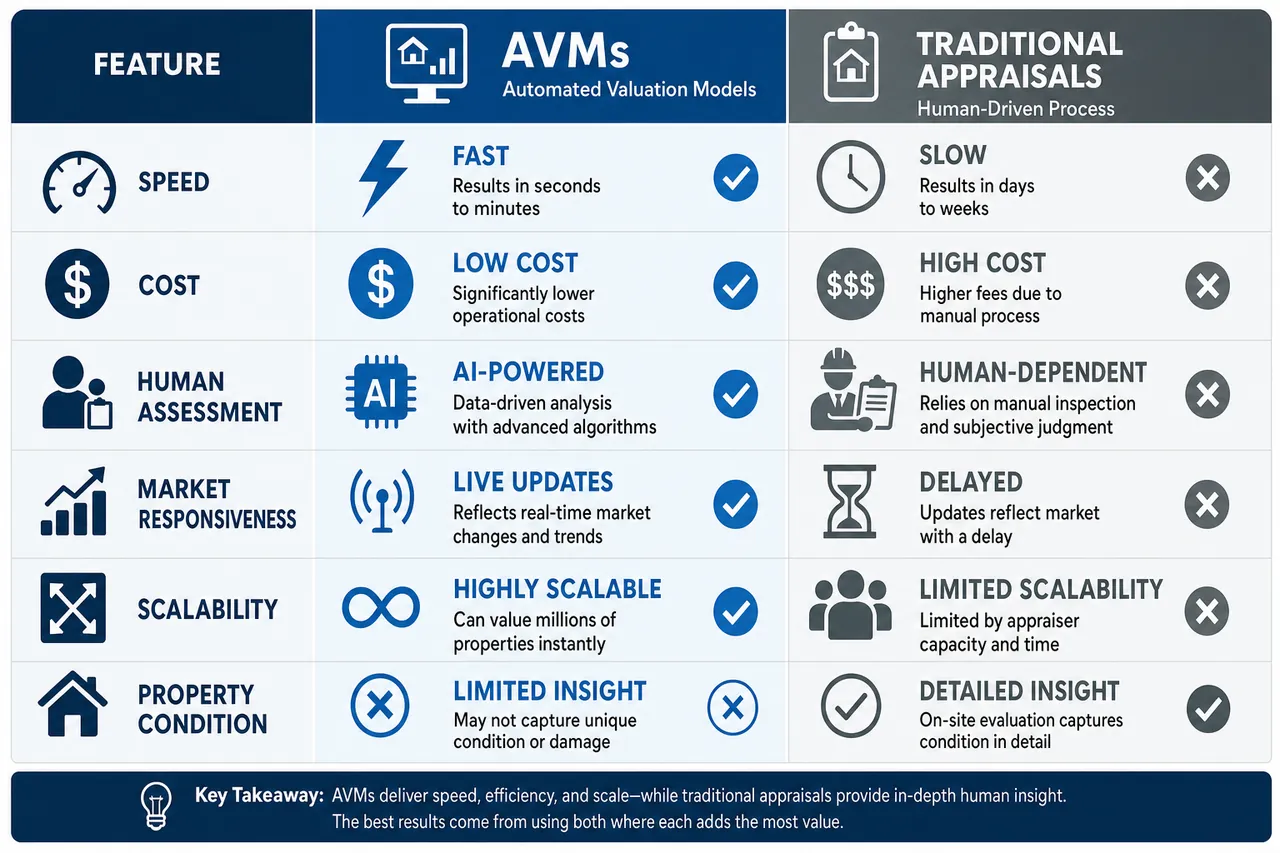
Think of these less as competitors and more as tools built for different jobs. One's fast and cheap. The other's thorough but slower.
| Criteria | Automated Valuation Models | Traditional Appraisals |
|---|---|---|
| Speed | Instant (seconds to minutes) | Days to weeks |
| Cost | Free to low-cost for consumers; subscription-based for lenders | Average $359 (typical range $314–$425) for standard appraisals as of 2026; VA loans average $732; FHA/USDA range $400–$900 |
| Property Condition Assessment | Can't evaluate physical condition, renovations, or defects | Licensed appraiser inspects interior and exterior; accounts for updates, damage, and condition |
| Accuracy (on-market, suburban) | ~2% median error (consumer); ~4–5% (professional-grade) | Generally within 5–10% of sale price; subject to appraiser judgment |
| Accuracy (rural/unique) | Can exceed 15% error | Better, but still limited by comparable sales availability |
| Regulatory Acceptance | Accepted for low-risk mortgage decisions under federal guidelines (as of October 1, 2025) | Required for most purchase mortgages and high-value loans |
| Best Application | Quick screening, portfolio monitoring, market awareness | High-stakes lending decisions, contested valuations, unique properties |
Planning to downsize? Especially if you're retired and weighing whether now's the time to sell?
This cost and accuracy trade-off matters before you set your asking price. And you'll want solid market data to support your timing. Our guides walk you through selling your home for retirement, with state-specific versions for Florida and Colorado. But there's also a general guide if your state's not covered.
Back to topLimitations and Challenges of AVMs
What AVMs can't See
No algorithm can walk through your front door. That freshly renovated kitchen? The cracked foundation hiding behind the walls? Water damage or a backyard that borders a noisy commercial property? AVMs don't see any of it. Your home could've been meticulously updated over the past decade, yet receive the same estimate as an identical neighbor whose interior hasn't changed since 1987. And here's the flip side: a property with serious deferred maintenance might get overvalued because the algorithm only knows its size and location.

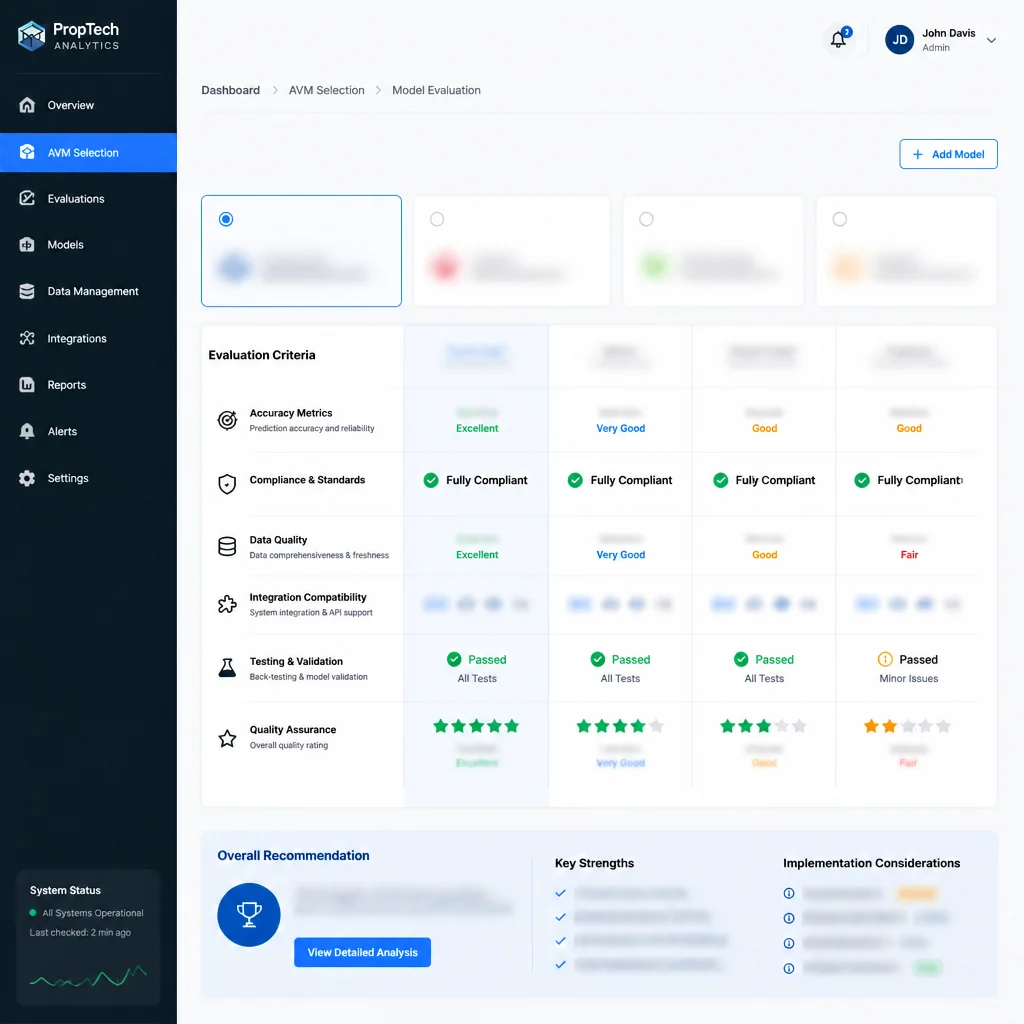

This matters most if you're in a tough spot—selling an estate, going through a divorce, or dealing with a property that's been neglected. If your home's actual condition is way different from what your neighbors' places look like, that AVM number is probably wrong. You need to know which direction before you make any decisions.
Data Lag in Volatile Markets
AVMs look backward. They crunch historical sales data and add trend adjustments, but when markets move fast, the models fall behind by weeks or months. That's a problem. In a downturn, an AVM might make your home look worth more than it actually is. In a hot market surge, it might undervalue you. If you're selling in a fast-moving state like Florida, Washington, or Colorado, think of an AVM estimate as a snapshot from the past, not what your home's worth right now.
Rural and Unique Properties
Want to know where AVMs really struggle? Rural areas and unusual homes. When there aren't many comparable sales to work with, accuracy falls apart fast. Error margins can exceed 15% for rural or one-of-a-kind properties. A log cabin on 40 acres, a mixed-use building, or a home with a detached in-law suite can confuse algorithms built mainly for suburban tract homes. You're trying to figure out whether to drop your price on something unusual? Our guide on when to reduce your sale price in Chehalis, Washington walks through this. Take any AVM estimate with a big grain of salt.
Algorithmic Bias and Fair Lending Concerns
Here's something most people don't talk about: AVMs trained on old sales data can accidentally repeat patterns of discrimination from decades ago. If certain neighborhoods were systematically undervalued by appraisers or lenders back then, that undervaluation gets baked into the algorithm. The federal AVM Quality Control Rule requires nondiscrimination compliance. But the underlying data problem? That's hard to fully fix.
Back to topRegulatory Compliance: The Federal AVM Quality Control Rule
Most articles gloss over this part. But here's what actually matters: as of October 1, 2025, the federal AVM Quality Control Rule is in effect. The rule came down on July 17, 2024 (Federal Register 89 FR 64538). It's backed by a full lineup of federal agencies—the FHFA, CFPB, FDIC, NCUA, OCC, and Federal Reserve all signed on.
Here's what the rule actually requires. Financial institutions that use AVMs to make credit decisions need written policies in place. They've got to make sure they're confident in those valuations. They can't let anyone mess with the data. Conflicts of interest? Not allowed. They're running random sample tests on AVM outputs. And they're staying compliant with fair lending and nondiscrimination rules—no shortcuts.
Now, does this affect that Zestimate you checked online? No. This rule targets lenders using AVMs for mortgage origination and loan decisions. When you apply for a refinance, the valuation your lender pulls gets held to a way higher standard than anything you'd see on a public website. That's the real difference between what you're looking at and what they're using to decide whether to lend you money.
Back to topHow to Interpret an AVM Estimate as a Homeowner
- Check multiple sources. Pull estimates from at least two or three different platforms. When they disagree significantly? That's actually telling you something important—your market probably doesn't have enough recent sales data to pin down a reliable number.
- Look for the confidence score. Most professional tools and some consumer platforms will show you this metric. A low confidence score means the estimate isn't trustworthy. Don't treat it as a single number. Think of it as a range instead.
- Compare to recent sold data manually. Hunt down the three to five most recent sales of properties that are genuinely comparable to yours in your immediate neighborhood. Do those actual sales back up what the AVM is telling you?
- Account for your property's condition honestly. Your home might be in much better shape than the typical house on your block—or worse. Either way, that difference matters. Adjust the AVM estimate in your head before you make any decisions based on it.
- Get a professional opinion for high-stakes decisions. If you're listing, refinancing, settling an estate, or accepting a cash offer, hire a licensed appraiser or ask your agent for a detailed CMA. It costs money—around $359 on average in 2026—but that's cheap compared to pricing your home wrong by thousands of dollars.
Need state-specific help figuring out what your home's market value actually means for your asking price? Check out our seller's pricing guides for California and Indiana.
Back to topThe Future of AVM Technology
AVMs are getting smarter. Real-time data, deeper machine learning, satellite imagery, permit records—these tools are all heading into the mix. You'll see the accuracy gap between homes currently on the market and those sold off-market shrink as data pipelines improve. But here's the catch: algorithms can only do so much. In neighborhoods where houses rarely sell, no amount of computational power fixes the simple problem of not having enough comparable sales to work with. Human appraisers aren't going anywhere, especially for unusual properties or situations where disputes matter.
And the rules keep changing too.
The 2025 federal QC rule is the first real federal standard for how institutions can use AVMs. Expect more updates as adoption spreads—stricter standards around bias and data quality are coming.
Back to topConclusion
AVMs have made property valuations accessible to everyone. They've also sped up mortgage processes in real ways. But here's the catch: they're not always accurate. Suburban homes that are on the market? You might see error rates below 2%. Rural properties, off-market homes, or anything unusual? Errors can hit 15% or higher—that's tens of thousands of dollars at today's prices.
So use AVM estimates as your starting point. They're helpful for getting oriented. They're not enough when real money is on the line.
What should you actually do? Cross-reference those estimates against recent comparable sales in your area. Look hard at the confidence scores the tool provides. And when the stakes are high—whether you're buying, selling, or dealing with a divorce or estate situation—bring in a licensed appraiser or an experienced local agent who knows your market inside and out. These professionals catch what algorithms miss.
Understanding what these tools can and can't do? That's where smart home pricing starts.
Back to topFrequently Asked Questions
How accurate is a Zillow Zestimate compared to a real appraisal?
Here's what you're actually dealing with: Zillow reports a national median error rate of about 1.9% for homes currently on the market. Off-market homes? That jumps to roughly 7.0%. A licensed appraiser who walks through your property physically will give you a much more trustworthy number—especially if your home's unique, sits on rural land, or has condition issues that algorithms can't see. The catch is cost: you're looking at an average of $359 in 2026 for a standard single-family home appraisal.
What's a confidence score on an AVM report, and should I trust a low one?
A confidence score tells you how much data the algorithm actually had to work with. It also shows whether that data was consistent. When you see a low score, it means the system didn't have enough comparable sales—or the ones it found were all over the place. This happens constantly in rural areas, with unusual property types, or where homes don't sell often. Don't treat a low-confidence estimate as gospel. Think of it as a rough ballpark instead. You'd be smart to get a professional appraisal or a real estate agent's CMA before you make any pricing decisions.
Are AVMs used in actual mortgage decisions, and what rules govern them?
Yes, they are. Lenders rely on professional-grade AVMs for refinances, home equity lines of credit, and other credit decisions. Starting October 1, 2025, the federal AVM Quality Control Rule kicks in. Banks and lenders now have to maintain strict policies. They need to make sure their AVM outputs are reliable, guard against data manipulation, run random sample tests, and follow fair lending laws. But here's the thing: consumer tools like Zestimate aren't bound by these same rules.
Why does my AVM estimate vary so much between Zillow, Redfin, and other platforms?
Different algorithms. Different data sources. Different ways of weighing factors. Different update schedules. One platform might've grabbed the latest MLS data yesterday; another might be using tax records as its primary input and weight them more heavily than recent sales. When you see huge swings between Zillow and Redfin, that's actually telling you something important: your market's data isn't consistent. That's exactly when you shouldn't average the numbers and call it a day—get a professional valuation instead.
Can home improvements increase my AVM estimate?
Only indirectly, and there's usually a lag. Here's why: AVMs can't peek inside your home. A brand-new kitchen won't show up unless that renovation appears in public permit records—and even then, some AVMs don't tap into that data. Your improvements might eventually influence the estimate if they drive up comparable sales in your neighborhood. But realistically? That renovation won't register until after you've sold and your transaction becomes historical data. If you've sunk money into upgrades, this is a solid reason to skip the AVM and pay for a real appraisal instead.
Back to topMore in Appraisals and home value
- Appraisal Definition: How Your Home Value Is Determined
- How to Prepare Your House for an Appraisal: Tips to Boost Your Home's Value
- What Is My Home Worth? Home Valuation Methods for Sellers
- What Is My Home Worth? How to Determine Your Home's Value
- Should You Pay for a Home Appraisal Before Listing? Pros, Cons, and Costs
- What Is a Drive-By Appraisal? How It Works and Why Lenders Use It
See our guide: “Closing Costs for Sellers: What You'll Pay and How to Reduce Them” →

