

How to Prepare Your House for an Appraisal: Tips to Boost Your Home's Value
Table of Contents
- What's a Home Appraisal and Why It Actually Matters
- The Quick Preparation Checklist
- What Appraisers Look For
- Room-by-Room Preparation Strategy
- Exterior and Curb Appeal Improvements
- Minor Repairs That Make a Difference
- Documentation and Communication Strategy
- What doesn't Change Your Appraisal
- During and After the Appraisal
- Conclusion: Take Control of What You Can
- Frequently Asked Questions
A home appraisal can feel like a high-stakes test you didn't study for — but here's the thing: you've got more control than you think. Whether you're refinancing, selling, or settling an estate, knowing how to prepare your house for an appraisal can mean the difference between a valuation that works in your favor and one that leaves money on the table. With the U.S. median home sale price sitting at $408,475 as of August 2026, even a small percentage swing in appraised value can translate to tens of thousands of dollars. That's real money. This guide walks you through everything — from the one-hour morning-of checklist to the documentation strategy most homeowners completely overlook.
Wondering what selling will cost? Start with what sellers pay at closing. It breaks down every seller cost at closing, the surprises, and ways to pay less.

What's a Home Appraisal and Why It Actually Matters
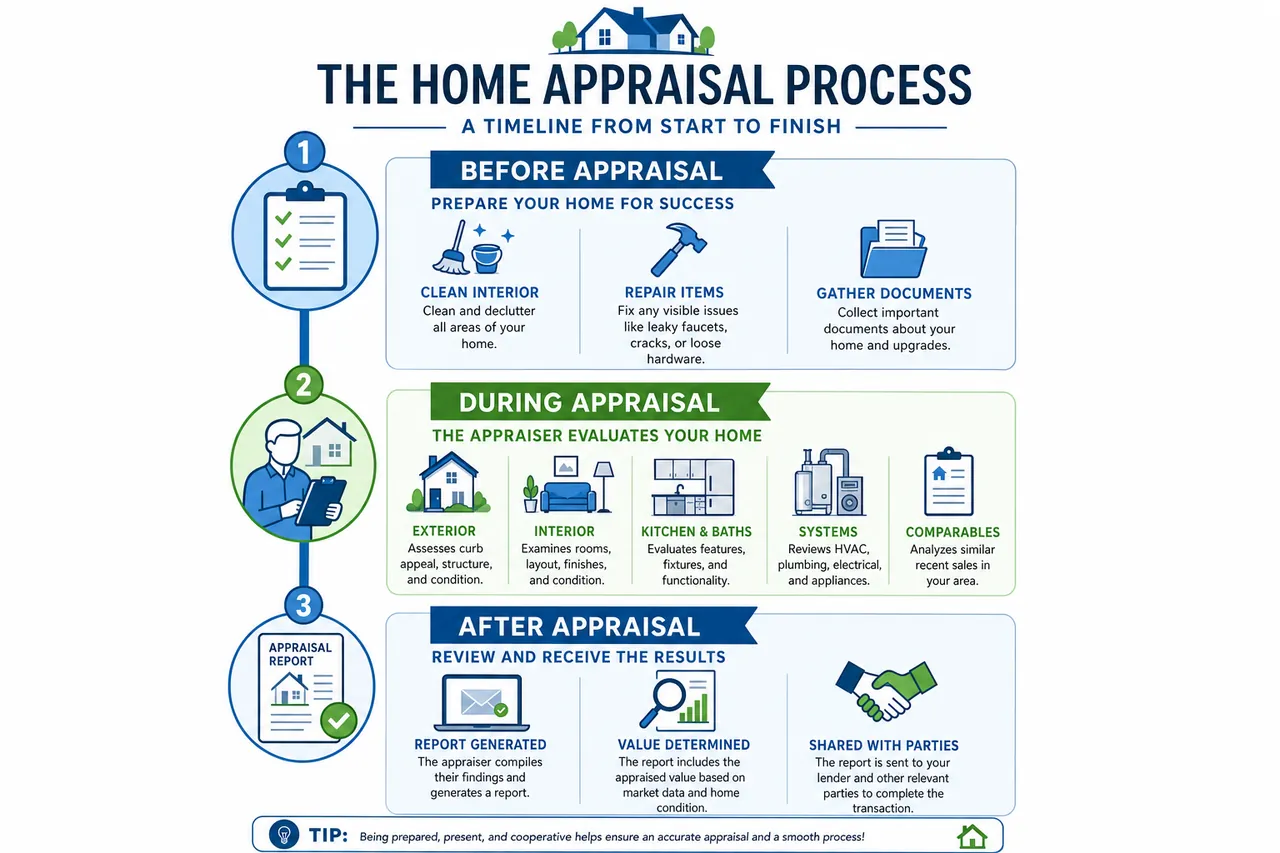
Definition and Purpose
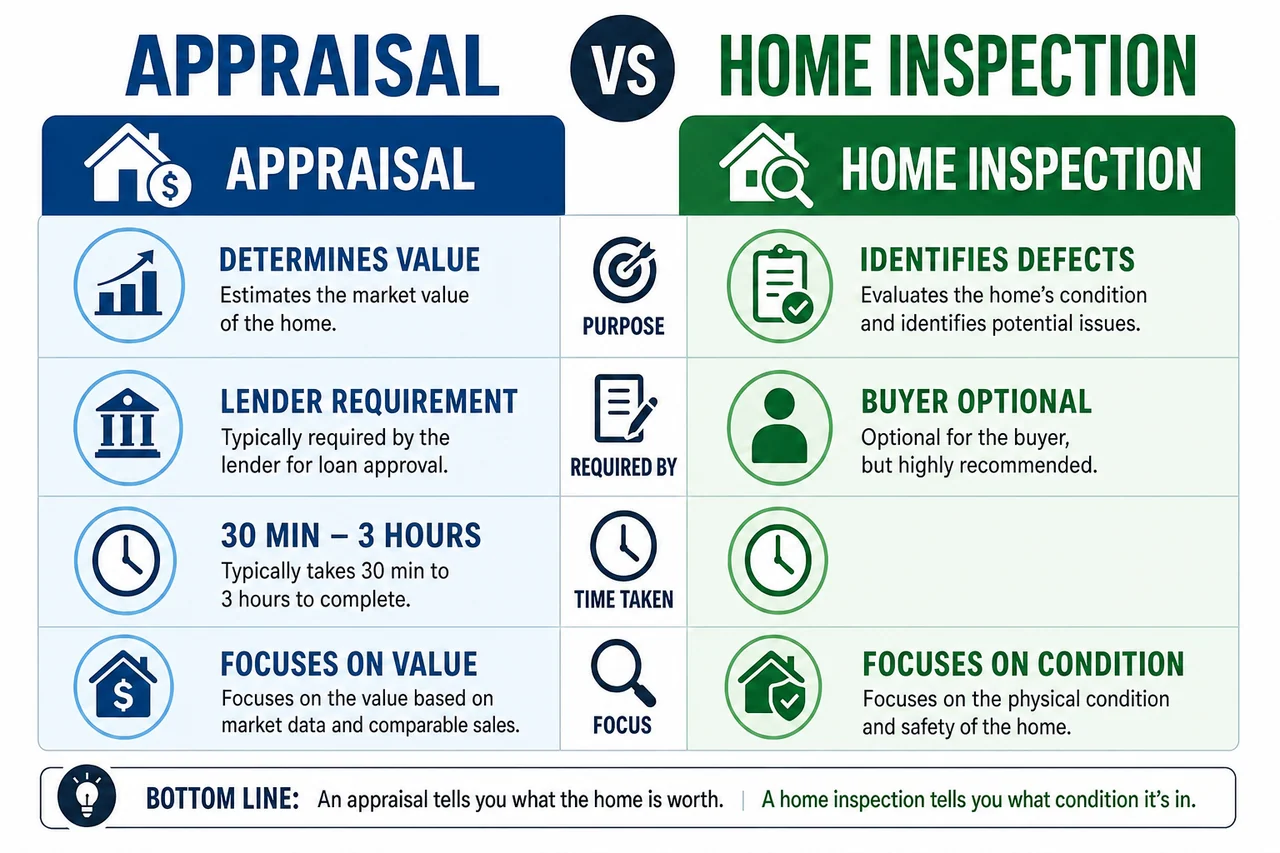
A state-licensed or certified appraiser gives you a professional, unbiased estimate of what your home is actually worth on the market. Here's the thing: it's not the same as a home inspection. An inspection looks at whether your roof leaks and if your electrical system's up to code. An appraisal determines market value — what a willing buyer would actually pay a willing seller in a fair deal. Banks won't lend you more than this number, so they require appraisals before they approve any mortgage.
Why Appraisals Are Critical
They protect lenders, sure. But they affect you and your money too. If your home appraises below the sale price you agreed on, you're in trouble. The deal might collapse entirely, or you'll be renegotiating with the buyer — and you might be the one taking a hit on price. Are you refinancing? A low appraisal can lock you out of tapping your home's equity or getting better loan terms. Knowing what's on the line makes it worth taking time to prepare properly.
How Long Does an Appraisal Take?
The whole thing — from the moment you order it to when you hold the written report — takes 6 to 20 days according to HomeLight's 2026 timeline data. The appraiser's actual visit to your home? That's 30 minutes to 3 hours, depending on size and how complex your property is. And here's something most people don't know: the appraiser workforce is shrinking by roughly 3% each year, with a median age of 60 and 80% over 50. This means scheduling delays are becoming standard in lots of markets. Start the process early.
What Does an Appraisal Cost?
For a standard single-family home, you're looking at a national average of $359 in 2026, with most people paying between $314 and $425. But government-backed loans are pricier. FHA and USDA appraisals run $400 to $900, while VA appraisals average $732, ranging from $550 to $1,500. Need it done fast? A rush job taking 2 to 5 business days will add $100 to $300 to your bill.
Back to topThe Quick Preparation Checklist

You don't want anything falling through the cracks before your appraisal. Here's a practical timeline that'll keep you on track.
| Timeframe | Key Tasks |
|---|---|
| 4 Weeks Before | Pull permits for past work; compile receipts and improvement records; schedule any licensed contractor repairs; research recent comparable sales in your neighborhood |
| 2 Weeks Before | Complete minor repairs (leaky faucets, loose railings, cracked outlets); paint touch-ups; address exterior maintenance (gutters, siding, landscaping) |
| 1 Week Before | Deep clean interior and exterior; declutter all rooms including basement and attic access areas; organize documentation into a single folder |
| Day Of | Unlock all interior doors, gates, sheds, and crawlspace access; clear paths to attic, furnace, water heater, and electrical panel; secure pets; replace any burned-out bulbs; move cars from driveway |
And here's the good news: a lot of this overlaps with getting your home ready for showings or an open house. If you're selling, check out our guide on open house tips for sellers for presentation strategies that'll boost both your showing and appraisal results. Depending on where you are—Florida, California, or Tennessee—you'll find state-specific insights in those dedicated guides.
Back to topWhat Appraisers Look For
Your home's value isn't determined by how much you love it or how great your decorator made it look. Appraisers follow a strict, standardized approach instead. Most use Fannie Mae's Uniform Residential Appraisal Report (URAR), which organizes everything into specific categories they evaluate systematically.
| Evaluation Category | What the Appraiser Assesses |
|---|---|
| General Property | Overall condition rating, structural integrity, lot size, location |
| Interior | Room count, square footage, layout functionality, finish quality, updates |
| Exterior | Roof condition, siding, foundation visibility, curb appeal, driveway and walkways |
| Systems | HVAC, electrical panel, plumbing — age, condition, functionality |
| Kitchen & Bathrooms | Age of updates, fixture quality, condition of surfaces |
| Comparable Sales | Recent sales of similar homes within roughly a one-mile radius (or broader in rural areas), adjusted for differences |
Here's where it gets real: the comparable sales section ("comps") is what actually moves the needle on your appraisal. Your appraiser will dig up three to five recent sales from homes like yours and then adjust values up or down based on how your place stacks up — things like square footage, condition, features, and where you're located. You can't control what sold down the street last month. But you absolutely can control whether your home looks better or worse than those comparable properties.
Back to topRoom-by-Room Preparation Strategy


Don't spin your wheels on tasks that won't move the needle. A room-by-room checklist keeps you focused on what actually matters to an appraiser.
| Area | Priority Tasks | Common Red Flags to Fix |
|---|---|---|
| Kitchen | Clean thoroughly; ensure all appliances function; fix leaky faucets; tighten loose cabinet hardware | Water damage under sink, non-functioning burners, damaged countertops |
| Bathrooms | Fix drips and leaks; re-caulk if needed; ensure exhaust fans work; replace cracked toilet seats | Visible mold, soft subfloor near tub, non-functioning ventilation |
| Living Areas | Declutter; patch wall holes; ensure all light switches and outlets function; check stair railings | Unsecured railings, water stains on ceilings, damaged flooring |
| Bedrooms | Ensure windows open and close properly; closet doors function; adequate lighting | Egress window issues (especially basement bedrooms), broken closet systems |
| Basement | Clear clutter; address any moisture or water intrusion signs; ensure lighting works | Standing water, efflorescence on walls, blocked utility access |
| Attic / Crawlspace | Ensure hatch/door is accessible; clear any blocking storage; check for visible insulation | Evidence of pest activity, blocked vents, inadequate insulation |
| Utility Areas | Clear 3-foot access around furnace, water heater, electrical panel; note ages of equipment | Improper wiring, corroded pipes, HVAC filters not maintained |
And here's the thing—these prep steps overlap nicely with home staging strategies that help sell your house faster. The same principles work for both. If you're selling in Colorado or Washington, you're competing in tight markets where the appraiser's verdict and your home's first impression both carry serious weight.
Back to topExterior and Curb Appeal Improvements
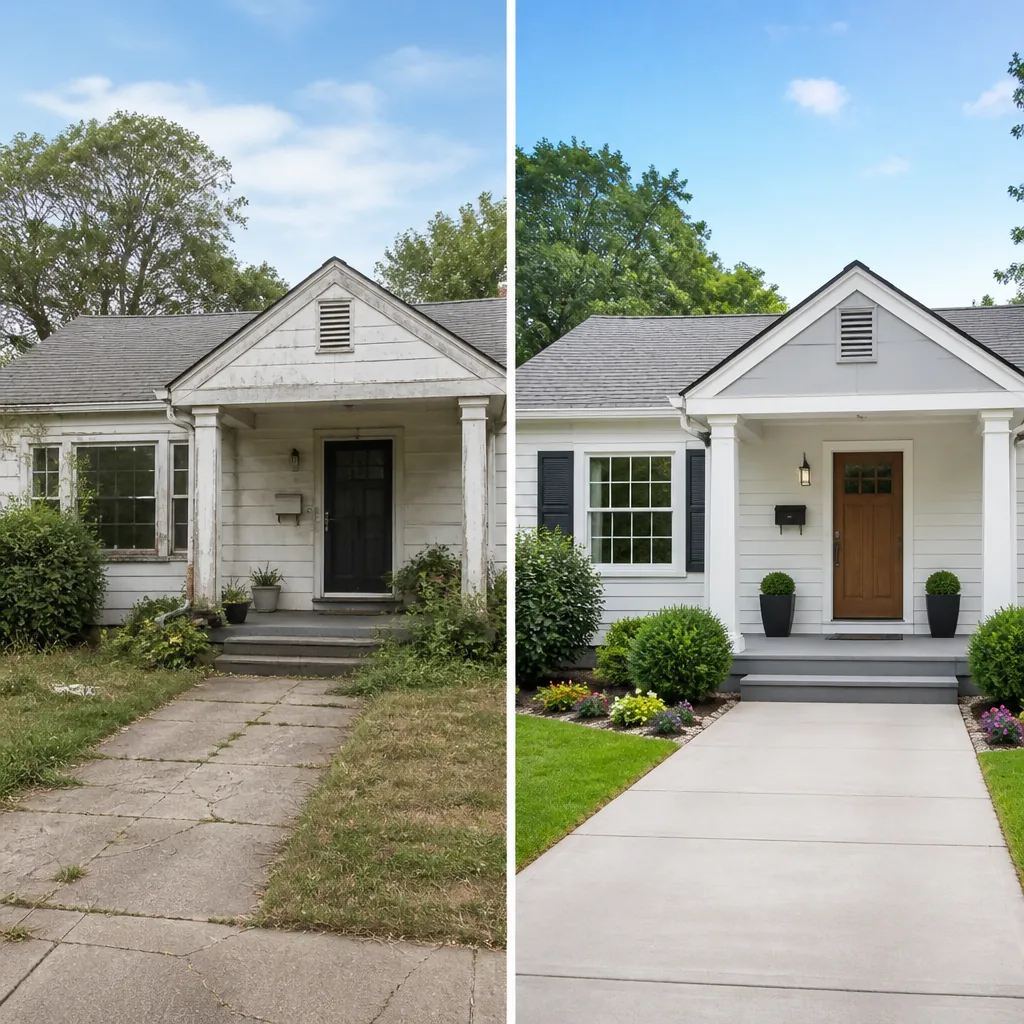
Here's the truth: appraisers form their first impression from the street. Before they ever step inside your home, the exterior condition shapes their baseline perception. And it's the first thing photographed for the appraisal report.
- Mow the lawn and edge walkways — overgrown landscaping signals neglect
- Clear debris from the yard — remove dead branches, accumulated junk, and stored items
- Secure or repair loose gutters and downspouts — visible damage suggests deferred maintenance
- Touch up exterior paint — focus on trim, shutters, and the front door where peeling is most visible
- Check the driveway and walkways for significant cracking that could flag a safety issue
- Move cars out of the driveway and garage — this allows the appraiser to photograph and measure without obstruction
- Inspect the roof from the ground — missing or lifted shingles will be noted
You don't need perfection here. The goal is eliminating obvious negatives, not creating a showstopper. But what you prioritize depends on where you live. Sellers in Indiana might be dealing with post-winter exterior damage right now. Those in Colorado often focus on snow-related roof or gutter problems instead.
Back to topMinor Repairs That Make a Difference

Here's what you need to know: not every repair is worth tackling before an appraisal. But plenty of cheap fixes pack real punch when it comes to how the appraiser rates your home's condition. Appraisers use a condition rating system (usually C1 through C6 on the URAR form), and bumping yourself up from a C4 (minor deferred maintenance) to a C3 (well-maintained)? That can meaningfully shift your final appraised value.
The golden rule: if it costs under $500 and it's a visible condition problem, do it.
Anything significantly pricier without a real functional benefit? Skip it.
| Repair | Typical Cost | Why It Matters to an Appraiser |
|---|---|---|
| Fix leaky faucets | $50–$150 (DIY or plumber) | Water damage screams neglect; active leaks are huge red flags |
| Replace burned-out bulbs | $5–$20 | Non-working fixtures make appraisers question your electrical systems |
| Patch wall holes / nail pops | $10–$50 (DIY) | Visible damage tanks your condition rating and shows up in photos |
| Secure stair railings | $20–$100 | Safety issue that can kill FHA or VA loan deals if it's not fixed |
| Replace missing outlet covers | $2–$10 each | Safety red flag that gets documented as deferred maintenance in photos |
| Re-caulk tub or shower | $10–$30 (DIY) | Stops moisture problems before they start; proves you're maintaining the place |
| Touch-up interior paint | $30–$100 | Fresh paint signals active maintenance and shows up front and center in photos |
What to skip: Big renovations right before an appraisal? They almost never pay off proportionally, especially when you're rushing. And rushed work without permits can actually damage your appraisal. The numbers tell a striking story. A minor kitchen remodel returns roughly 96% at resale according to Angi's 2026 figures, but go upscale and you're looking at only around 50% back. Same deal with bathrooms. A mid-range bathroom remodel currently returns approximately 80% — the highest since 2007, per the 2026 Zonda/JLC Cost vs. Value Report — while an upscale one gets you only about 42%. What does this mean for you? Targeted, modest improvements beat luxury overhauls every single time when you're timing things around an appraisal. Want more strategies? Check out our guide on 5 tips to increase the value of your home.
Back to topDocumentation and Communication Strategy
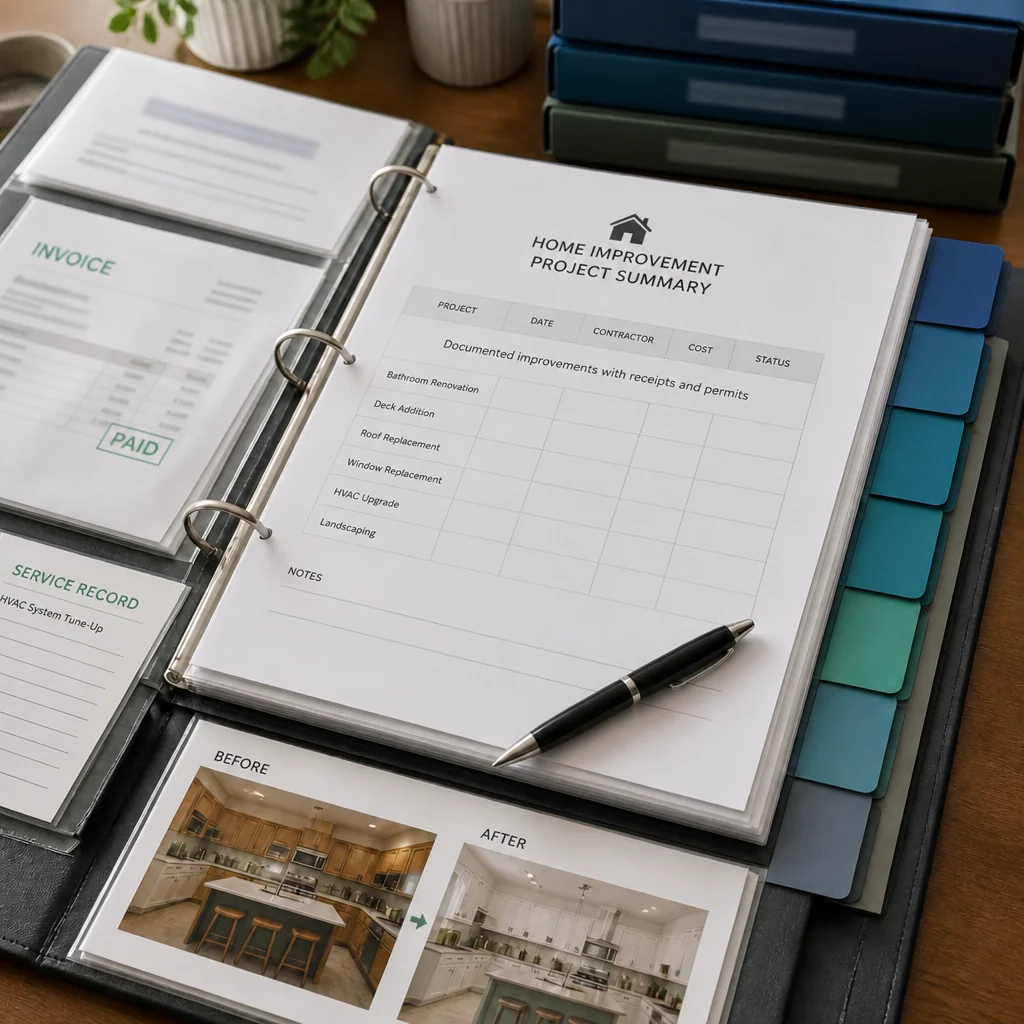
Here's where most homeowners lose money. Appraisers can only value what they can verify. Your kitchen remodel? Your new roof? If you don't have documentation, they might get zero credit or far less than you deserve.
What to Compile
- A one-page summary listing every major improvement with the completion date and cost
- Building permits for any work that required them (additions, HVAC replacements, electrical upgrades)
- Contractor invoices or receipts
- Warranty documentation for appliances, roof, or HVAC
- HOA documents if applicable
- Utility bills if you've made energy efficiency upgrades
Communicating With the Appraiser
Hand your documentation folder over at the start of the visit. You should be there to answer questions — but don't hover over their shoulder or try to steer their conclusions. Appraisers have to stay independent, and pushiness usually backfires. Stick to facts instead: "We replaced the roof in 2023 with architectural shingles — here's the permit and invoice." That works. Guessing about your home's value doesn't.
Know something about your neighborhood that matters? Maybe there's a new school district boundary, fresh infrastructure upgrades, or commercial development coming in. A brief written note makes sense. But let your paperwork do the heavy lifting.
Back to topWhat doesn't Change Your Appraisal
Understanding what doesn't matter to an appraiser? That's just as important as knowing what does.
| Item | Does It Affect Appraisal Value? |
|---|---|
| Furniture and décor choices | No — appraisers value the property, not the contents |
| Paint color preferences | No — condition matters, not color taste |
| Personal collections and organization | No — clutter can hurt access but not the numeric value |
| Unpermitted work | Sometimes negative — can create liability; may not receive credit |
| Temporary or staging improvements | Minimal — appraisers value permanent features |
| "Potential" of spaces | No — value is based on current condition and use |
| Scents, candles, fresh flowers | No — this isn't a buyer showing |
Here's the thing: staging efforts matter for buyers, but they're a totally different animal from appraisal prep. If you're listing on the open market, you'll want both strategies working together. Check out our Florida home staging guide and Indiana staging guide to see how they layer together effectively.
Back to topDuring and After the Appraisal
During the Visit
Be home. Be accessible. Have your documentation folder ready to hand over the moment they ask for it. When the appraiser questions something, answer truthfully — these professionals follow USPAP (Uniform Standards of Professional Appraisal Practice) ethics, and they care far more about accuracy than your sales pitch. Point them toward the attic access, crawlspace, and utility areas. Then get out of their way and let them do their job.
After the Report
Expect your written report somewhere between 6 and 20 days after you order it. Don't just file it away. Read through it carefully and look for factual mistakes: square footage that's wrong, rooms they somehow missed, lot size errors, or renovations they didn't credit. Found something off? You have the right to submit a formal reconsideration of value (ROV) request. Back it up with documentation — extra comparable sales, corrected information, or proof of improvements the appraiser overlooked.
What If the Appraisal Comes In Low?
A low appraisal doesn't have to be a deal-breaker.
You've got real options here. Negotiate a lower sale price with the buyer. Ask them to cover the gap in cash. Order a second appraisal (you pay for it). Or submit an ROV with solid comparable evidence. In a refinance situation, you might simply wait for the market to recover before trying again. The big thing? Don't panic. Appraisals are professional opinions, and like any professional opinion, the right documentation can challenge them successfully.
Back to topConclusion: Take Control of What You Can
You won't create value out of nothing by prepping your house for appraisal. But here's what matters: you're protecting the value that's actually there. Homes that are clean, documented, and well-maintained get better condition ratings every time. Those ratings? They directly affect your final number. So focus on what moves the needle—access, cleanliness, minor visible repairs, and solid documentation. Skip the frantic renovations and the air fresheners.
Consider this. With a U.S. median home value of $368,697 as of August 2026, even a small bump in your condition rating translates to real money on your appraisal. That's not trivial. Spend your prep time on things that actually matter, and you'll walk into that appointment knowing you did everything right.
What if the traditional sale timeline doesn't work for your situation?
KDS Homebuyers offers a different route—one where an appraisal isn't even part of the equation. Learn more at kdshomebuyers.net.
Back to topFrequently Asked Questions
How far in advance should I start preparing for a home appraisal?
Four weeks is your target. That timeline gives you breathing room to hire licensed contractors for minor repairs, track down permits and documents, and handle outdoor maintenance without cramming everything into the final week. The day-before stuff—unlocking doors, clearing walkways, putting the dog away—takes maybe 45 minutes if you've already done the real work.
Can I be present during the appraisal?
Absolutely, and you should be there. You can answer questions, point out upgrades the appraiser might not catch on their own, and hand over your documentation folder showing recent work or improvements. But here's the key: stay available without hovering. Don't follow them room to room or try to steer their conclusions.
Does cleaning my house actually affect the appraisal value?
Not directly. A spotless kitchen won't bump your value up $5,000. What it does do is shape how the appraiser rates your home's condition—and that absolutely matters for the appraisal. A grimy, cluttered house also hides problems and blocks access to areas they need to see. Clean because it's a baseline standard, not because you think it'll magically raise your home's worth.
What happens if the appraiser can't access part of my home?
They'll document it in the report and likely lower your condition rating or flag it as a concern for the lender. This stalls closing or forces a second visit. Unlock attics, crawlspaces, utility closets—everything—before they arrive. Every single time.
Is a home appraisal the same as a home inspection?
They're completely different animals. An inspection checks whether your roof leaks, your foundation cracks, your HVAC works, your plumbing's sound—all the systems and components that could fail. You get a defect report. An appraisal, on the other hand, determines what your home's actually worth by looking at comparable sales, condition ratings, and location. Different professionals do each one. Different purposes. Different timing in the transaction. Most conventional purchases involve both.
Back to topMore in Appraisals and home value
- The Data Behind Online Appraisals: How AVM Tools Can Pump Up (or Down) Your Price
- Appraisal Definition: How Your Home Value Is Determined
- What Is My Home Worth? Home Valuation Methods for Sellers
- What Is My Home Worth? How to Determine Your Home's Value
- Should You Pay for a Home Appraisal Before Listing? Pros, Cons, and Costs
- What Is a Drive-By Appraisal? How It Works and Why Lenders Use It
See our guide: “Closing Costs for Sellers: What You'll Pay and How to Reduce Them” →

