

Sell Your House As-Is Without an Inspection: Is It Possible?

Table of Contents
- What Does Selling a House As-Is Mean?
- Can You Sell a House As-Is Without an Inspection?
- Benefits of Selling As-Is Without an Inspection
- Risks and Drawbacks of As-Is Sales Without Inspection
- Legal Considerations and Disclosure Requirements
- When Selling As-Is Without Inspection Makes Sense
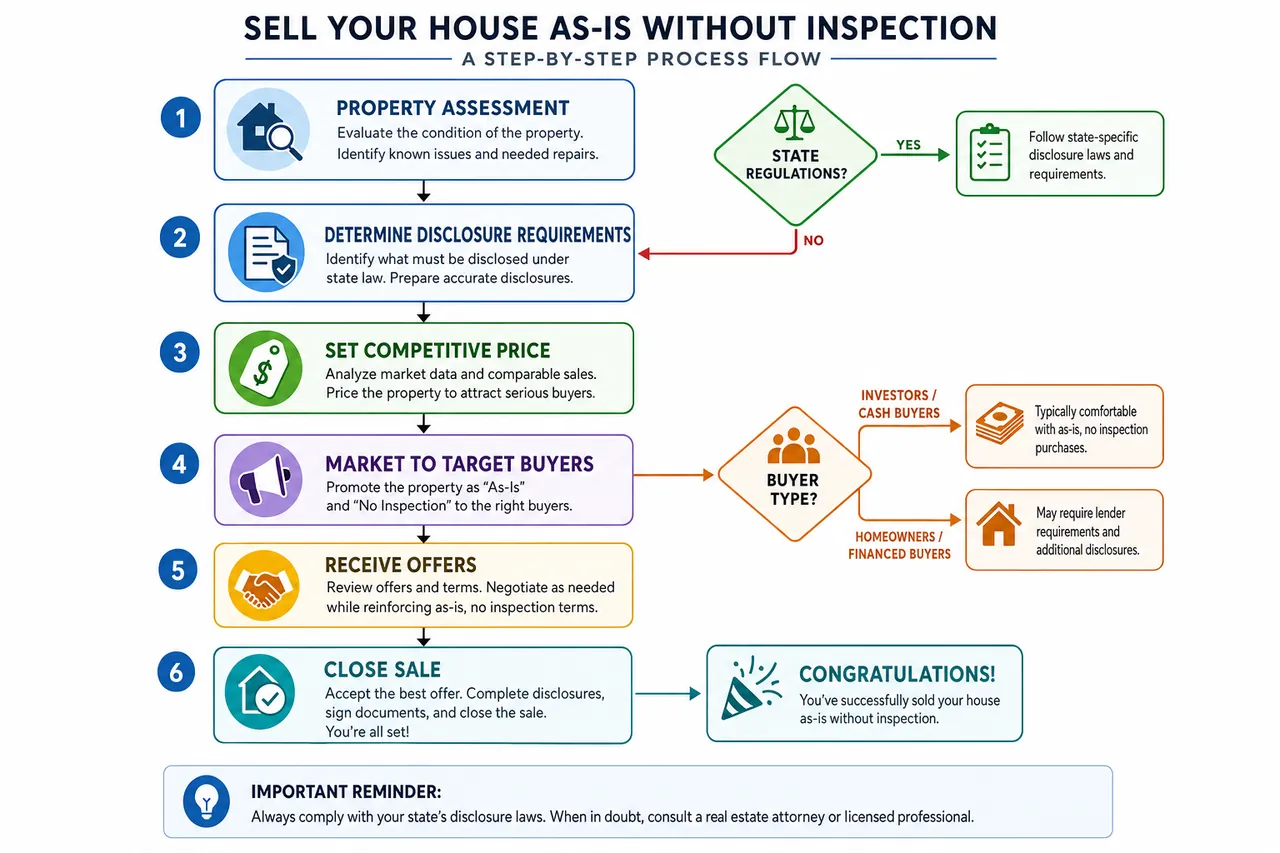
- Strategies for Successfully Selling As-Is Without Inspection
- The Role of a Pre-Listing Inspection
- Pricing Your As-Is Home Correctly
- Marketing and Attracting Buyers for As-Is Properties
- Common Misconceptions About Selling As-Is
- Who Buys Houses As-Is (And What They're Really After)
- Conclusion: Is Selling As-Is Without an Inspection Right for You?
Selling a house as-is without an inspection sounds like the ultimate shortcut — skip the stress, skip the repair bills, and close quickly on your terms. Thousands of homeowners do it every year. But here's where it gets tricky: "as-is" is one of the most misunderstood terms in real estate. What you think it means and what it legally means? They're often worlds apart. That gap can cost you tens of thousands of dollars or expose you to a lawsuit years after closing. What should you actually know before you list your home this way? This guide breaks down exactly how selling a house as-is without an inspection works, what your legal obligations really are regardless of how you structure the sale, and how to protect yourself while still getting the speed and simplicity you're after.
Selling a house that needs work? Start with what to know before selling a house that needs repairs. It explains what as-is means, how pricing works and every way to sell a house with problems.
What Does Selling a House As-Is Mean?
Definition and Legal Implications
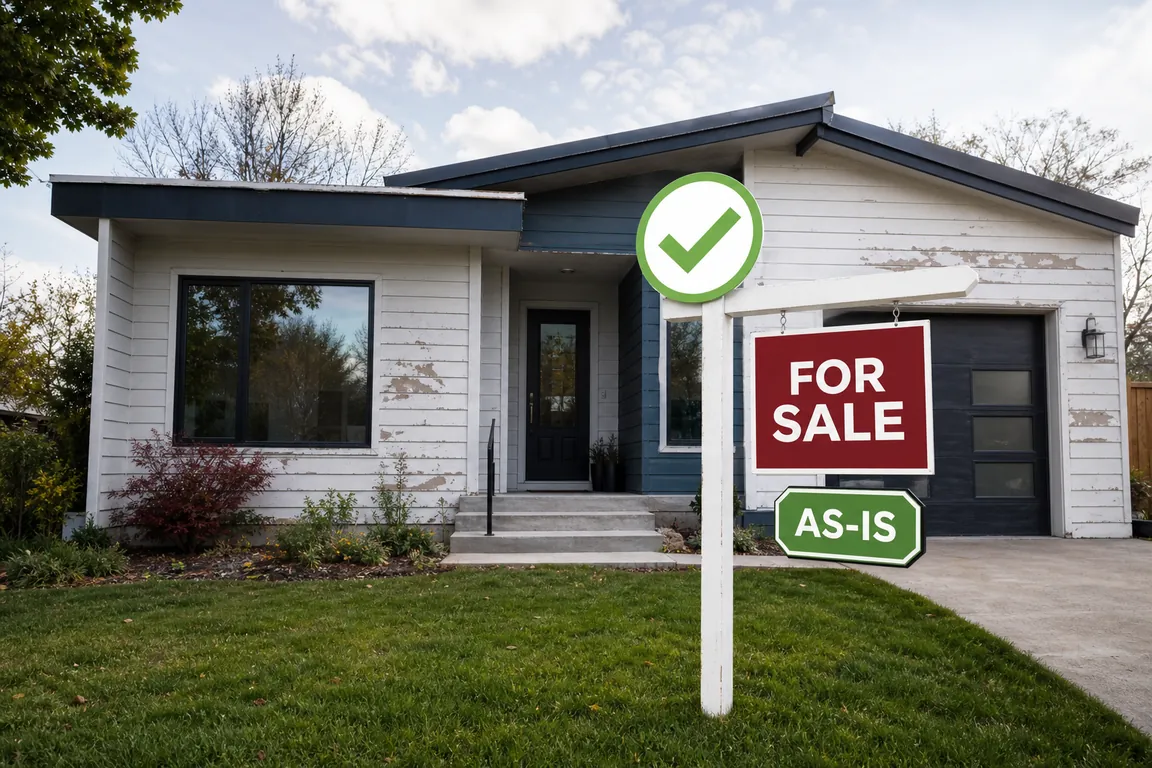
An as-is sale means one thing to most sellers: I'm not fixing anything. You're buying the house exactly as it stands right now, with all its quirks, creaks, and problems. The seller won't make repairs. Won't negotiate credits. Won't budge. It's a clear message to buyers: take it or leave it.
But here's where sellers get into trouble. Saying "as-is" doesn't mean you can hide what you know. In every U.S. state, you're legally required to disclose material facts about your property — the things that would make a reasonable buyer think twice or offer less money. Courts across the country have been crystal clear on this: an as-is clause does not override your disclosure duty. If you're sitting on knowledge of a cracked foundation, active mold, or a roof that leaks every time it rains, you can't just slap "as-is" on the listing and walk away. That's a lawsuit waiting to happen.
As-Is vs. Traditional Sales Comparison
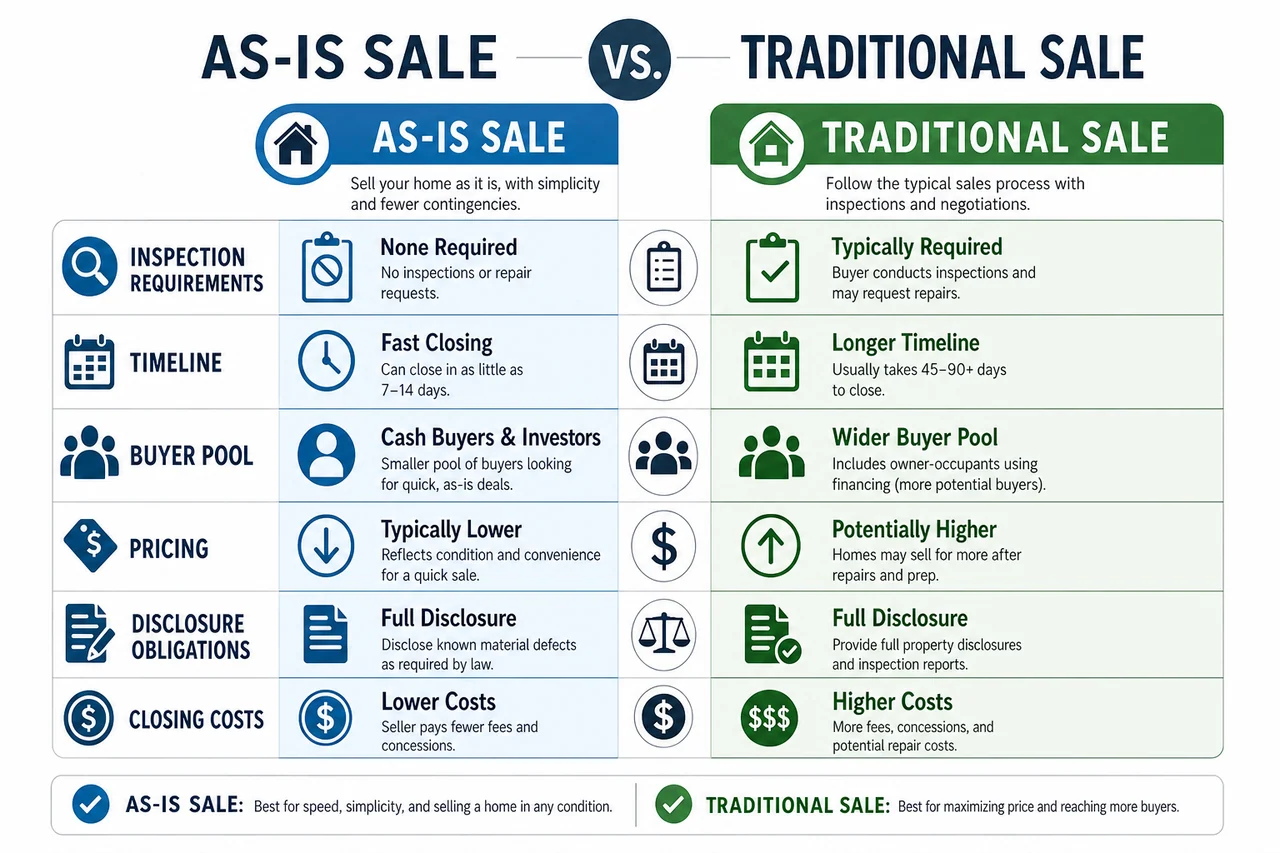
Want to know what you're really signing up for? Here's how the two paths compare side by side.
| Factor | As-Is Sale | Traditional Sale |
|---|---|---|
| Typical timeline | 7–30 days (cash buyer); 30–45 days (financed) | 45–90+ days |
| Buyer pool | Narrower — investors, cash buyers, flippers | Broader — retail buyers, financed buyers |
| Price expectation | 70–90% of market value, depending on condition | 90–100%+ of market value |
| Inspection contingency | Often waived or limited | Standard; repairs frequently negotiated |
| Repair costs | None paid by seller | $2,000–$15,000+ common post-inspection |
| Closing costs | Negotiable; often buyer-covered in cash deals | Seller typically pays 6–10% in commissions and fees |
Disclosure Requirements in As-Is Sales
Here's what trips up most sellers: they think an as-is clause means they're off the hook for disclosure. Wrong. Even if the buyer walks through without hiring an inspector, you still have to put all known material defects in writing before closing. That's the law. Structural damage, water intrusion that happened last spring, termites, HVAC that's on borrowed time, lead paint (required disclosure for any home built before 1978), and anything environmental — it all goes on the disclosure form. And you can't fudge it.
Skip those disclosures in an as-is sale, and you're inviting a lawsuit after closing. The buyer can sue for contract rescission, damages, or both. It's not worth the risk.
Back to topCan You Sell a House As-Is Without an Inspection?
Short Answer and Legal Feasibility
Yes, you can legally sell a house as-is without a home inspection in most U.S. states. There's no federal law requiring it. The inspection isn't some government mandate—it's really a tool that buyers use to protect themselves, and honestly, they can choose to skip it entirely. You'll see this happen all the time in competitive markets or when someone's buying a distressed property. Now here's the thing: there's a big difference between a seller-ordered inspection (which you're never required to get) and a buyer-requested inspection (which buyers can ask for but may also walk away from).
State-Specific Variations
No state actually mandates a home inspection as a sale requirement. But several states have their own rules about what needs to happen before you close. Take California—sellers must complete a detailed Transfer Disclosure Statement even if they're selling as-is. Some states require septic inspections, well water tests, or energy audits before the deal can close. Are you selling without a realtor in California? Then you really need to know about TDS requirements, because they apply even when you're selling as-is. Here's what you need to know about selling a house without a realtor in California. And Florida sellers face something called the "Johnson v. Davis" rule—a common law duty to disclose latent defects. That applies no matter what your contract says about as-is sales.
Inspection Waiver Mechanics
When a buyer waives their inspection contingency, they're really giving up two things: the right to renegotiate the price and the right to walk away if an inspection turns up problems. But here's what people get wrong. A waiver doesn't mean no inspection will ever happen—a buyer can still hire an inspector after closing. And if that inspector finds defects you knew about and didn't disclose? You're still on the hook legally. The waiver protects you from renegotiation pressure, not from legal liability for hiding something you knew was wrong.
Back to topBenefits of Selling As-Is Without an Inspection
Time Savings and Faster Closing
Speed. That's the real draw here. Traditional sales drag on for 60–90 days once you add up listing prep, scheduling inspections, negotiating repairs, doing re-inspections, and waiting for lender appraisals. An as-is cash sale? You're looking at 7–14 days to closing. And if you're facing foreclosure, going through a divorce, relocating for work, or need to liquidate a parent's estate, that difference isn't just convenient — it's essential.
| Stage | As-Is Sale | Traditional Sale |
|---|---|---|
| Inspection phase | Waived or 1–3 days | 7–14 days (scheduling + report) |
| Negotiation period | Minimal or none | 5–15 days post-inspection |
| Repair timeline | None | 7–30+ days depending on scope |
| Appraisal process | Skipped (cash) or 5–10 days | 10–21 days (lender-required) |
| Total to closing | 7–30 days | 45–90+ days |
Cost Reduction and Repair Avoidance
Here's where your wallet starts to feel lighter: post-inspection repair negotiations. HomeAdvisor data shows the average inspection finds $2,000–$7,500 in repairs. Older homes or distressed properties? You're often looking at $20,000–$50,000 in requests. Sell as-is and that whole negotiation vanishes. But there's more. You skip staging costs, expensive deep cleaning, and those cosmetic upgrades that buyers expect in a traditional listing.
Appeal to Specific Buyer Demographics
Cash investors and house flippers actually want as-is properties. They don't need move-in-ready homes — they need profit margin. A property with issues is exactly what they're hunting for. They've already factored repair costs into their offer before they even walk through the door. So there's no friction. No emotional arguments about a leaky faucet or that aging roof, because the buyer already knew those problems existed and priced them in.
Psychological Advantages in Pricing
Remove the inspection contingency and you remove a powerful negotiating tool. In traditional sales, buyers use inspection reports to push prices down — often by the full repair estimate plus what they call a "hassle premium" for good measure. With an as-is sale and a waived inspection contingency, that lever doesn't exist. The price you negotiate tends to stay your final price.
Back to topRisks and Drawbacks of As-Is Sales Without Inspection
Reduced Buyer Pool and Lower Offers
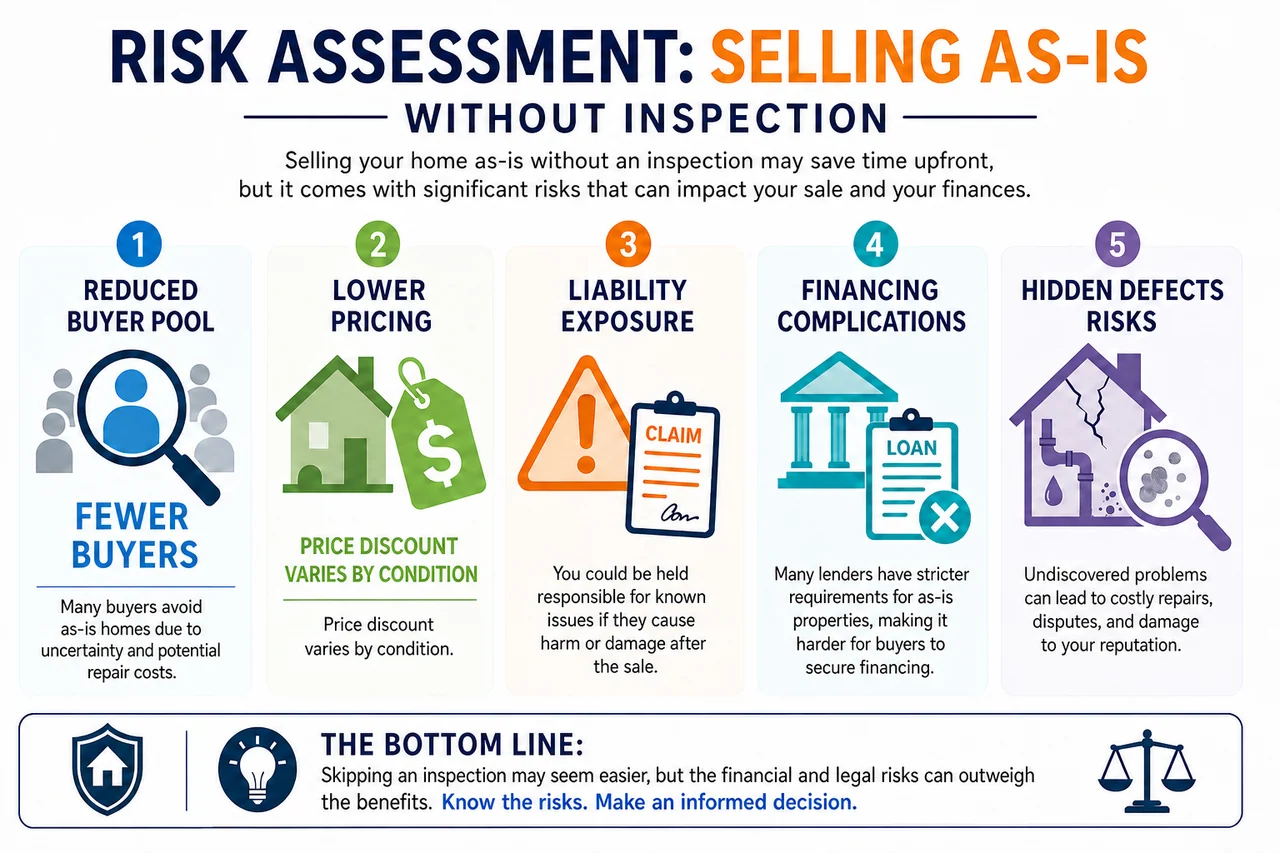
Speed and simplicity come with a cost. You're basically shrinking your potential buyer list the moment you list as-is. Most conventional buyers — especially first-time homeowners using FHA or VA loans — won't even consider a property with deferred maintenance, because their lenders won't approve the mortgage or they simply don't have the cash reserves to handle repairs after closing. And that's where you run into trouble. Your pool drops down to cash buyers, investors, and experienced owner-occupants willing to roll the dice on hidden problems. Fewer interested buyers means less competition. Less competition means lower offers on your home.

Liability and Legal Exposure
Here's what surprises most sellers: the as-is clause doesn't protect you the way you think it does. If a buyer discovers a defect after closing that you actually knew about but didn't disclose, they can take you to court for fraud, misrepresentation, or breach of contract. The as-is language won't save you. Worse, many states give buyers 2–6 years after closing to file these claims. That $10,000 repair issue? Once attorney fees and damages pile up, you're looking at a $60,000 lawsuit.
Hidden Defects and Undisclosed Issues
Without a pre-listing inspection, you might not actually know what's broken.
Sellers who've owned a home for years often have no clue about latent problems lurking inside — slow foundation settling, deteriorating HVAC ductwork, outdated wiring hiding behind walls. If you genuinely don't know about a defect, you technically can't be held liable for not disclosing it. But here's the catch: if evidence later shows you should have known — like visible water stains you ignored or a musty basement smell you covered up — your legal defense crumbles fast.
Financing and Appraisal Complications
Even when a buyer wants your home as-is, their lender might not agree to it. That's the real kicker. FHA loans require properties to meet Minimum Property Standards (MPS), a safety and livability checklist. VA loans have comparable rules. A roof that's failing, missing handrails, exposed wiring, or serious foundation cracks? The property won't appraise at your agreed price, or the lender demands repairs get done before closing. You just defeated the entire reason you went as-is in the first place. This is why savvy as-is sellers target cash buyers only — they bypass appraisal headaches and lender requirements altogether.
Back to topLegal Considerations and Disclosure Requirements

What Must Be Disclosed vs. What's Optional
Here's the thing: disclosure rules shift from state to state. But nearly everywhere, you're legally required to tell buyers about any known material defect — meaning anything that seriously impacts value or creates a health and safety problem. What does that actually look like? Here are the big ones:
- Structural defects (foundation cracks, roof damage, load-bearing wall issues)
- Water intrusion, flooding history, or drainage problems
- Mold, asbestos, or lead paint (federal requirement for pre-1978 homes)
- Pest infestation history (termites, rodents)
- HVAC, plumbing, or electrical system failures
- Environmental hazards (underground storage tanks, contaminated soil)
- HOA disputes, liens, or encumbrances on the title
- Neighborhood nuisances or zoning changes that affect the property
And then there's the optional stuff. Cosmetic issues, minor deferred maintenance, subjective complaints about noise or difficult neighbors — you *can* disclose these if you want, but you're not always legally forced to. Though be careful: depending on your state and how serious the problem actually is, that line between "optional" and "required" gets blurry fast.
State-by-State Legal Variations
Your state's rules matter more than you'd think.
| State | Mandatory Disclosures | Liability Period | Special Provisions |
|---|---|---|---|
| California | Transfer Disclosure Statement (TDS), Natural Hazard Disclosure, Mello-Roos | 3 years (fraud), up to 10 years (latent defects) | TDS required even in as-is sales; agent must also disclose known issues |
| Texas | Seller's Disclosure Notice covering structure, systems, and environmental issues | 4 years | Investors may be exempt if they've never occupied the property |
| Florida | All known latent defects under Johnson v. Davis common law duty | 4 years (contract), 5 years (fraud) | As-is language doesn't eliminate duty to disclose latent defects |
| Pennsylvania | Seller Property Disclosure Statement (SPDS) for residential properties | 2 years | Exemptions for foreclosure, estate, and bankruptcy sales |
| Massachusetts | No standardized form required, but common law fraud and misrepresentation apply | 3–6 years | Buyers heavily rely on inspection; as-is sales less common in this market |
Selling in one of these states? Pull up the disclosure rules for Washington, Colorado, Tennessee, or Indiana before you skip the professional help. You really don't want to get this wrong.
Consequences of Non-Disclosure
Skip disclosure on a material defect and you're looking at real trouble. Buyers can demand rescission — which means the whole deal gets unwound and you hand back the purchase price. But that's just the start. They'll also sue you for damages equal to repair costs, plus additional damages if that hidden problem caused more destruction (like water damage that spread after a leak you knew about). Courts sometimes go further and award punitive damages when it looks intentional. And here's the kicker: putting "as-is" in your contract doesn't protect you from any of this.
Back to topWhen Selling As-Is Without Inspection Makes Sense
Ideal Property Conditions and Scenarios
As-is sales work best when the property's issues are clearly visible, already reflected in pricing, and don't involve hidden structural or environmental hazards that require disclosure management. When does this actually apply to your situation?
- Inherited properties in estate sales where the seller has no knowledge of the home's history
- Homes with cosmetic deferred maintenance (dated finishes, worn carpet, aging appliances) rather than structural problems
- Properties in geographic markets with high investor activity
- Homes facing foreclosure where timeline is more important than price maximization
- Situations where the seller's financial position makes repair investment impossible
Managing the sale of an elderly parent's home is already overwhelming. Add cognitive decline or estate complications, and the stress multiplies fast. An as-is sale to a cash buyer can cut through all that complexity and get you to closing in weeks instead of months. You'll want to read our guide on how to sell an elderly parent's home — it covers the legal authority issues and timing questions you'll actually face.
Market Conditions That Favor As-Is Sales
Seller's markets are kinder to as-is properties. When inventory is tight, buyers compete for everything — even homes with visible problems. They'll make offers anyway. But in buyer's markets? As-is properties get crushed on price because buyers have options and leverage.
Here's the real talk: you sell as-is when you need to, not when the market is perfect. But knowing whether you're in a seller's or buyer's market helps you price accurately and set realistic expectations.
Financial Considerations
The math is straightforward. Does the discount you take selling as-is cost less than fixing the place up?
Say your foundation needs work, the roof's failing, and the HVAC is ancient. That's roughly $40,000 in repairs. If selling as-is nets you $45,000 less than a comparable home in good shape — but you avoid 3–6 months of contractors and headaches — you're ahead. The as-is route wins.
But if you only need $8,000 in cosmetic updates and an as-is sale costs you $25,000 in price reduction, fix it first. The math clearly favors doing the work.
Back to topStrategies for Successfully Selling As-Is Without Inspection
Pre-Listing Inspection Benefits
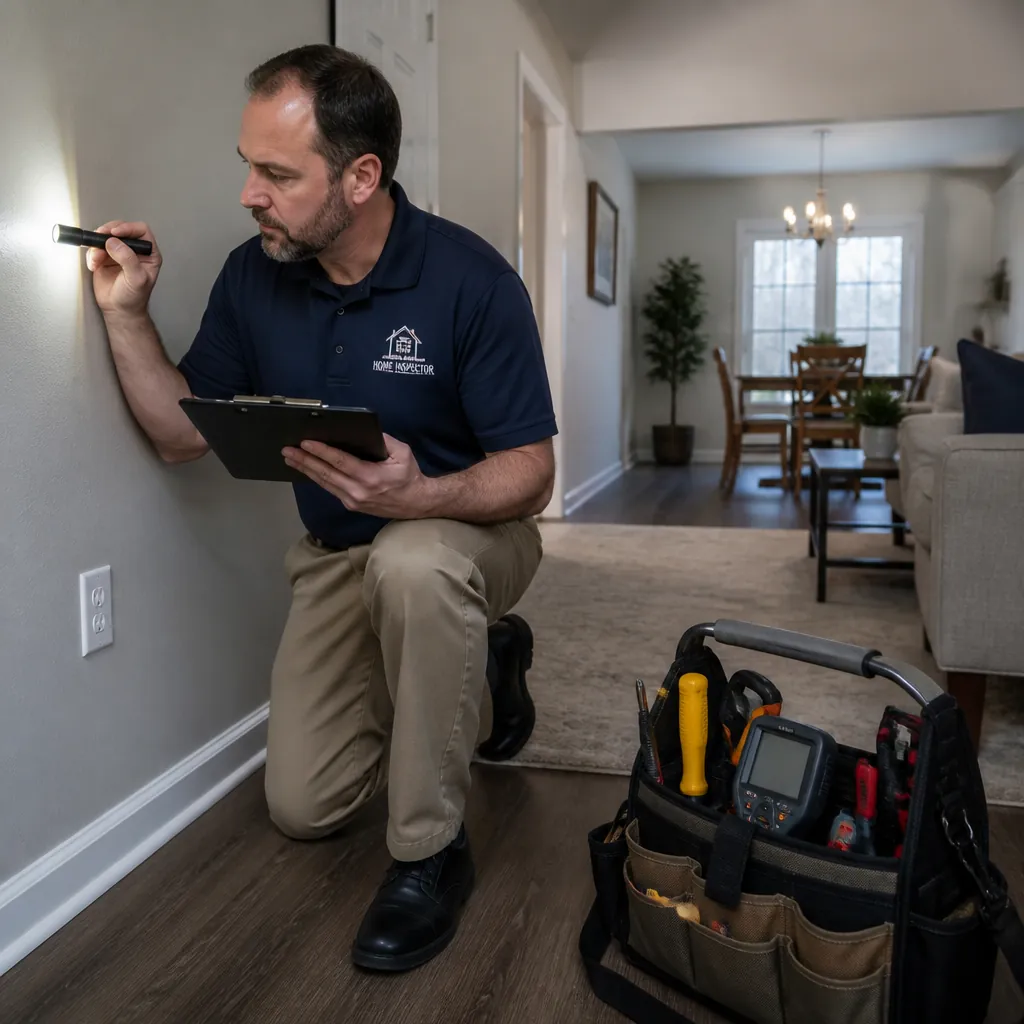
Here's something that might seem backward: pay for your own inspection before listing as-is. Why would you do that? Because it actually protects you and speeds up the whole process. A pre-listing inspection runs about $300–$500 and gives you three major advantages:
- You know what you're disclosing. No guessing. You'll fill out disclosure forms accurately and lower your legal risk significantly.
- You control the narrative. When you share the inspection report upfront, buyers stop worrying about what's hidden. That confidence means fewer lowball offers born from fear.
- You price accurately. Instead of guessing and cutting the price too much, you know exactly what issues exist. Price reflects reality.
Transparent Marketing and Honest Descriptions
Don't hide behind vague language like "sold as-is, seller makes no warranties." That triggers alarm bells. Buyers get suspicious, and you get lowball offers. Instead, be specific. Say it directly: "priced to reflect roof that needs replacement and dated electrical; seller won't make repairs." This builds trust. When people know exactly what they're buying, they're more willing to commit and less likely to create problems at closing.
Working With Experienced Real Estate Professionals
Not every agent knows how to handle as-is sales. Find someone with experience in distressed properties, estate sales, or investment deals. They'll know the pricing, understand which buyers to target, and handle disclosure forms correctly. Thinking about selling without an agent to save commission? Check out the FSBO process first. You can do it yourself, but you're managing all the legal documentation and disclosures on your own.
Targeting the Right Buyer Demographics
The fastest as-is sales happen when you reach buyers already looking for distressed properties. Real estate investors, house flippers, buy-and-hold landlords—these people expect repairs and price accordingly. And if you need to close fast, cash home buyers specialize in this exact situation. You won't get top dollar, but you'll skip weeks of uncertainty and close without repairs.
Back to topThe Role of a Pre-Listing Inspection
Know Problems Before Negotiation
Going into negotiations blind puts you in a weak position. A buyer's inspector will catch issues you've never noticed, and suddenly every single finding becomes leverage they can use against you. But here's what changes when you get your own inspection first: you've got the data. You walk in prepared. Instead of fumbling through explanations, you can say, "We've priced the property with full knowledge of the HVAC system's condition and the foundation settlement noted on page 12 of our inspection report." That kind of specificity? It works. Buyers respect it.
Managing Buyer Expectations
There's actual data here. Buyers who see a pre-listing inspection report up front are measurably less likely to bail out mid-deal. Why? Uncertainty costs them sleep at night. They start imagining worst-case scenarios — hidden mold, shot plumbing, foundation cracks that'll cost $20,000 to fix. And that fear drives them to lowball offers or walk entirely. When you hand them documentation instead, you're replacing that anxiety with facts. Some sellers have discovered that sharing a pre-listing inspection actually pushed their final sale price up compared to similar homes listed without one. Buyers will pay closer to asking price when they can see the actual risk, not just imagine it.
Cost-Benefit Analysis
You're looking at $300–$600 for a pre-listing inspection on most single-family homes.
And if it stops even one repair renegotiation that would've cost you $3,000–$5,000? Or prevents a deal from collapsing and costing you two more months of mortgage, taxes, and utilities? It's already paid for itself many times over. The small upfront investment in knowing what you've got beats the gamble of flying blind every single time.
Back to topPricing Your As-Is Home Correctly
Adjusting for Condition and Lack of Inspection
Pricing an as-is property isn't just math—it's strategy too. Start with a comparative market analysis (CMA) that looks at recent sales of homes in similar condition to yours. That's your baseline. Then you subtract estimated repair costs. But here's the thing: you can't just deduct dollar-for-dollar. Buyers taking on repair risk want to be compensated for more than the actual cost of fixes. They're pricing in contractor markups, their own time, and the very real possibility that costs will balloon once work starts. A $10,000 repair typically means a $13,000–$18,000 price reduction because of all that risk premium buyers build in.
| Condition Level | Discount Range | Example (on a $250K Home) |
|---|---|---|
| Minor cosmetic issues (paint, carpet, fixtures) | 3–7% | $232,500–$242,500 |
| Moderate deferred maintenance (aging roof, older systems) | 8–15% | $212,500–$230,000 |
| Significant structural concerns (foundation, framing) | 15–25% | $187,500–$212,500 |
| Major system failures (roof, HVAC, plumbing combined) | 25–40% | $150,000–$187,500 |
Psychological Pricing Tactics
There's real power in pricing just under a round number. $247,000 instead of $250,000 pulls in more buyer interest and can spark multiple offers—even on as-is sales. Investors especially respond to this because they're running comps fast and filtering by price thresholds. And when you price with a small negotiation cushion ($245,000 when your actual floor is $238,000), buyers get that psychological win of "winning" the deal. You don't lose much on your end, but they feel like they negotiated well.
Back to topMarketing and Attracting Buyers for As-Is Properties

Messaging and Positioning Strategies
Your listing language makes a real difference. Skip the vague legal disclaimers like "no representations made" — they just sound like you're hiding something. Instead, talk like an investor would. Try phrases like "Priced well below market to reflect current condition," "Ideal for investors or buyers seeking renovation opportunity," or "Motivated seller; all offers considered." You're saying the same thing about the price adjustment. But you're positioning it as an opportunity, not a problem.
Highlighting Investment Potential
Cash buyers are constantly running the numbers. They're asking themselves: What will this property be worth after renovation? How much will I actually make? Help them answer those questions fast. Say comparable renovated homes in your neighborhood are selling for $380,000 and you're asking $245,000. Then state it plainly: "ARV of approximately $375,000–$395,000 based on recent comps." The more data you give them, the quicker they'll move.
Multiple Marketing Channels
You need your property everywhere at once:
- MLS listing (even with a buyer's agent offering if using an agent)
- Zillow, Realtor.com, and Redfin for broad retail exposure
- BiggerPockets and local REIA (Real Estate Investor Association) forums
- Facebook Marketplace and local Facebook real estate investment groups
- Craigslist and local "we buy houses" networks
- Direct mail and door-knocking to known investors in your zip code
Visual Presentation and Photography
Professional photos matter, even for distressed properties. They signal you're serious. And they build trust with buyers. Clean what you can. Make sure every light works. Shoot during daylight. Your goal isn't to hide the property's condition — that's a mistake. Buyers will figure it out the moment they arrive, and you'll lose the deal. Instead, show exactly what the property is. That honesty goes a long way with the right investors.
Back to topCommon Misconceptions About Selling As-Is
As-Is Doesn't Mean No Disclosure
Let's be clear about this one. You might think an as-is sale gets you off the hook for telling buyers about problems — it doesn't. That's a dangerous assumption, and it can lead to lawsuits you really don't want. Here's the key difference: the as-is clause covers repairs. You're saying "I won't fix anything." But it doesn't cover transparency. You can't hide things and claim you're protected. These are two completely separate legal concepts, and mixing them up can cost you.
Buyers Can Still Request Inspections
Even when you're selling as-is, buyers can absolutely hire an inspector to look at the property. They might waive their inspection contingency — which means they can't back out or renegotiate if problems show up — but that waiver doesn't stop them from getting an inspection done. It's just for their own information. And here's where it matters for you: if that inspector finds something you already knew was broken, and you didn't tell anyone about it, you're still liable. The contingency waiver only removes their right to renegotiate or walk away. It doesn't protect you from legal claims.
Price Doesn't Reflect True Value
The as-is price you're asking reflects the current condition, the buyer risk, and the smaller pool of people willing to buy it that way. It's not saying anything about what the house is actually worth or what it could be worth down the road. Picture this: a home priced at $185,000 as-is might have an after-repair value of $320,000. Both numbers are legitimate — they're just looking at different things. Many sellers push back on aggressive as-is pricing because they take it personally, like the price is insulting the home itself. Once you separate "what it's worth right now in this condition" from "what the house is fundamentally worth," pricing conversations get a lot easier.
Sellers Aren't Protected From Liability
Here's what matters most: an as-is clause is just a contract between you and the buyer. It doesn't override state law, fraud doctrine, or federal disclosure rules. You're still legally responsible for known defects you chose to keep quiet about, no matter what your purchase agreement says. What as-is actually protects you from is the buyer coming back after closing and asking for repairs or trying to renegotiate the price. That's it. It doesn't shield you from fraud claims or claims that you misrepresented something material.
Back to topWho Buys Houses As-Is (And What They're Really After)
| Buyer Type | Key Motivation | Typical Offer | Inspection Likelihood |
|---|---|---|---|
| Cash investors / iBuyers | Quick acquisition, portfolio growth | 65–75% of ARV | Low — often waive or do walkthrough only |
| House flippers | Renovation profit margin | 60–75% of ARV minus repairs | Moderate — may do informal assessment |
| First-time buyers (limited) | Affordability; willing to DIY | 75–85% of market value | High — likely to request inspection |
| Owner-occupants (experienced) | Below-market purchase; custom renovation | 80–90% of market value | Moderate to high |
Conclusion: Is Selling As-Is Without an Inspection Right for You?
Selling a house as-is without an inspection isn't only legally possible in most circumstances
Back to topMore in Inspections and disclosures
- Selling a House With Mold Problems: Disclosure Rules and Buyer Concerns
- Is It Illegal to Sell a House with Termites? Disclosure Requirements
- Selling a House with Termites: Disclosure, Treatment, and Buyer Impact
- Is It Illegal to Sell a House With Mold? Disclosure Laws and Liability
- Selling a House with Roof Damage: Disclosure, Repair, or Price Reduction
- Selling a House with Pests or Termites: Disclosure and Fixes
See our guide: “How to Sell a House As-Is: What It Means and How It Works” →

