

Selling a House with Pests or Termites: Disclosure and Fixes

Table of Contents
- Understanding Termite Damage and Its Impact on Home Value
- Disclosure Laws and Legal Requirements
- Selling Options: Repair vs. As-Is vs. Cash Sale
- Steps to Take Before Listing Your Home
- Termite Treatment and Repair Costs
- How Lenders View Termite Damage
- Active Infestation vs. Past Damage
- Pricing Your Home with Termite Damage
- Common Mistakes to Avoid When Selling
- Real Estate Agent and Professional Guidance
- Conclusion: You've Got Real Options
- Frequently Asked Questions
Termites and pest infestations rank among the most anxiety-inducing discoveries a homeowner can face — especially when a sale is on the horizon. Here's what matters most: you absolutely can sell a house with pests or termites. Thousands of homeowners do it every year. According to the National Pest Management Association, termites cause approximately $6.8 billion in property damage annually across the U.S. (as of March 2026). That damage affects roughly 600,000 homes per year. You aren't alone. And your situation isn't hopeless either. This guide walks you through your legal obligations, realistic selling options, cost expectations, and the practical steps to take right now — so you can move forward with confidence.
Selling a house that needs work? Start with our guide to selling a house as-is. It explains what as-is means, how pricing works and every way to sell a house with problems.

Understanding Termite Damage and Its Impact on Home Value
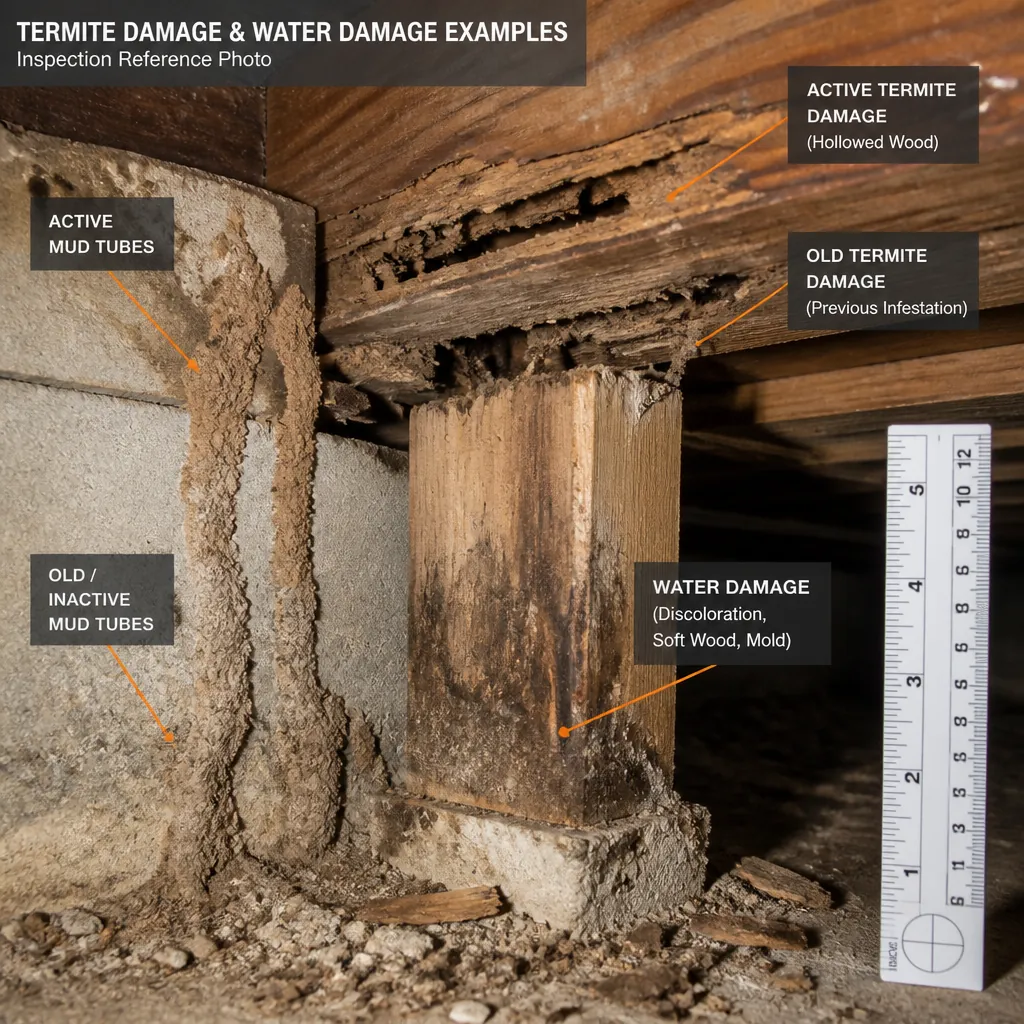
How Much Value Does Termite Damage Reduce?
Severity matters. Location matters. And whether you've actually fixed the problem — that matters most of all. According to a 2024 industry analysis, homes with a history of termite damage see roughly a 20% decrease in property value. But here's the good news: that number isn't set in stone. If you've got documented proof of professional treatment and quality repairs, you can recover a huge chunk of that lost value. A home with a transferable termite warranty looks completely different to buyers than one where someone just slapped paint over the problem.
Types of Termite Damage to Your Home
Termites eat wood from the inside out. You won't see them working — that's exactly why infestations stay hidden for years. Watch for these warning signs:
- Structural framing damage: Support beams, floor joists, and wall studs hollowed or weakened
- Subfloor damage: Soft, sagging, or "spongy" flooring caused by compromised structural boards
- Window and door frames: Warping or difficulty opening due to damaged surrounding wood
- Drywall penetration: Small holes, bubbling paint, or discoloration from mud tunnels
- Roof supports: Rafters and fascia boards weakened in severe infestations
- Cosmetic wood trim: Baseboards, crown molding, and cabinetry showing surface damage
Structural vs. Cosmetic Damage Assessment
Not all termite damage costs the same to fix. Surface-level issues like trim damage or drywall scuffs? Those are relatively cheap — $300 to $2,000 as of November 2025. Structural damage is where things get expensive. When load-bearing walls, support beams, or subfloors are compromised, you're looking at $5,000 to $15,000 or more (November 2025 data). And if you're selling or refinancing, you'll want a structural engineer to assess the full scope — that runs about $553 (August 2026 data). It's money well spent. You get defensible documentation of exactly what's wrong and how well it was repaired.
Back to topDisclosure Laws and Legal Requirements


State and Local Disclosure Obligations
Here's the straight truth: if you know about termite damage, you must tell the buyer. Most U.S. states require sellers to disclose known material defects, and termite damage almost universally qualifies. The exact rules depend on where you live. Some states want disclosure on a specific standardized form; others let you write it out as a narrative. A handful even mandate a licensed pest inspection before the sale closes.
And here's where it gets tricky — timing varies too. Some states want you to disclose before an offer even comes in. Others give you a specific number of days after the contract is signed. New York recently tightened things up. As of March 20, 2024, sellers can no longer pay a $500 credit instead of completing a property condition disclosure. Full written disclosure is now mandatory for 1–4 family homes.
Pennsylvania's rules are even more generous — to the buyer. You've got up to two years after settlement (as of June 2026) to bring a claim for non-disclosure. That's a long window. It shows just how seriously these states take concealment.
Don't guess. Talk to a local real estate attorney or licensed agent who knows your state's current rules before you list.
What Happens if You Don't Disclose?
Skipping disclosure? The fallout ranges from expensive to devastating. Buyers who find undisclosed damage after closing can sue for fraud, misrepresentation, or breach of contract. You could end up paying all repair costs, legal fees, and damages combined. In states with strict disclosure laws, penalties can hit hard — think of federal lead paint violations, which carry civil penalties of $23,000+ per violation (2026).
It's not worth it.
Other hazards in your home — asbestos, lead paint — carry their own disclosure obligations. We've got detailed guides on selling a house with asbestos and selling a house with lead paint that break down the federal and state requirements.
Documenting Your Disclosure
Documentation is your shield. Keep records of everything:
- All professional pest inspection reports and WDI reports
- Treatment invoices, contracts, and warranties
- Contractor receipts for any structural or cosmetic repairs
- Before-and-after photographs of damage and repairs
- Signed copies of all disclosure forms given to buyers
Here's something most sellers miss: giving buyers a clear, organized file of your treatment history actually builds confidence. It shows you took the problem seriously and fixed it right. That's far more reassuring than silence or vague answers.
When to Hire a Real Estate Attorney
Bring in a real estate attorney if the damage is severe, if you're unsure about your state's rules, or if a buyer's pushing back on your disclosures. Does your situation involve active litigation? HOA complications? Multiple known defects? Those situations need professional legal help. An attorney consultation costs far less than defending a post-closing lawsuit.
Back to topSelling Options: Repair vs. As-Is vs. Cash Sale

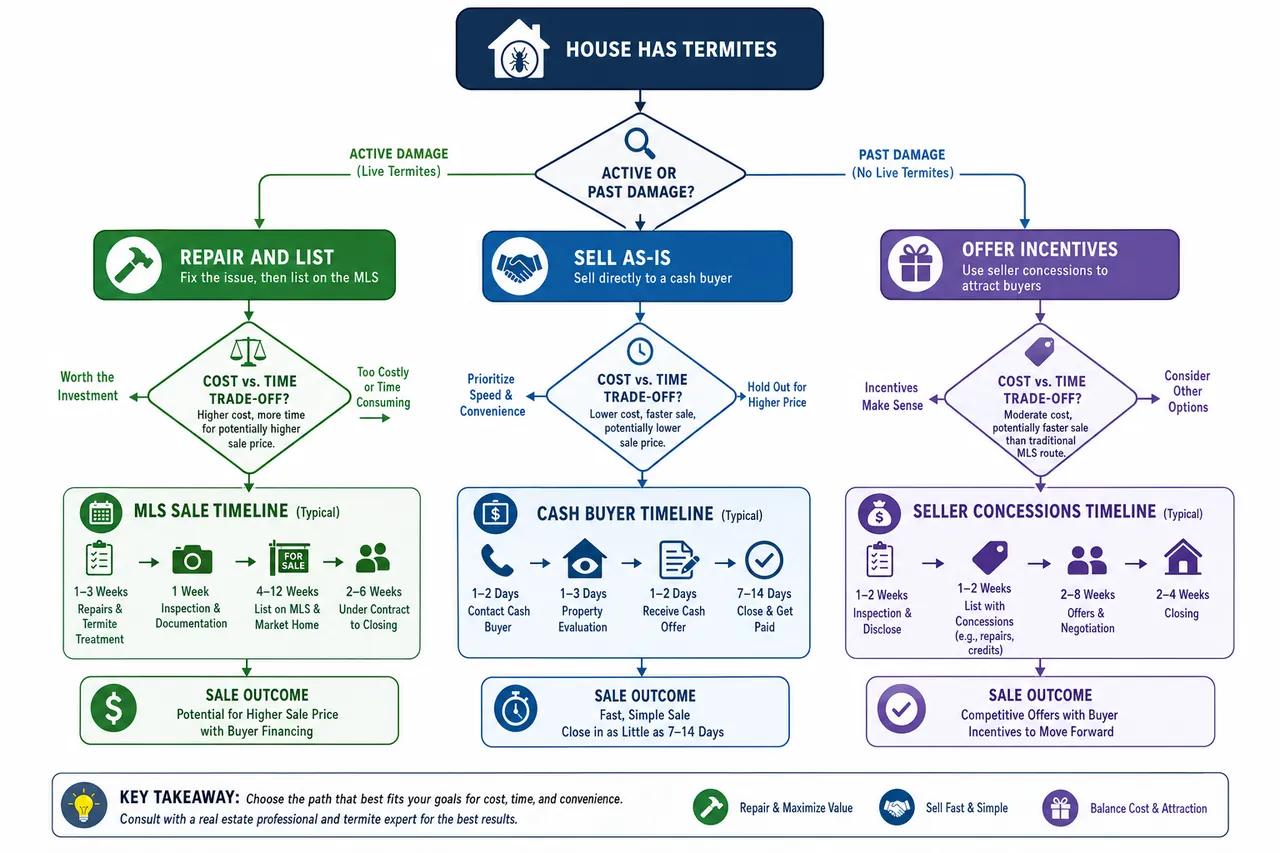
You've got three main paths forward once you know what you're required to disclose. Each one plays out very differently depending on your situation.
| Selling Option | Typical Timeline | Price Impact | Upfront Costs | Best For |
|---|---|---|---|---|
| Repair & List on MLS | 3–6+ months | Closest to market value | High (treatment + repairs) | Sellers with equity, time, and financing for repairs |
| Sell As-Is (Investor/Cash Buyer) | 1–3 weeks | Below market (reflects repair costs) | Low (inspection only) | Sellers needing speed, facing financial hardship, or with severe damage |
| List with Seller Concessions | 1–3 months | Moderate reduction via credits | Moderate (inspection + credits) | Sellers who want traditional sale without full upfront repair costs |
Option 1: Repair and List on MLS
This is your best shot at top dollar. You treat the infestation, fix the damage, document everything, and put it on the market. Traditional mortgage buyers — that's the vast majority of your potential buyers — often can't even get approved by their lenders if there's active termite damage. A fully remediated home with solid documentation? That attracts competing offers.
But here's the catch: you're paying for treatment and repairs before anyone's made an offer. You need capital upfront and the bandwidth to manage contractors. This timeline stretches 3 to 6 months or longer.
Option 2: Sell As-Is to Cash Buyers
Speed matters when you're in a tight spot. Cash buyers and real estate investors do this for a living — they buy properties sight-unseen, full of problems, active infestations and all. No mortgage approval needed. No lender red tape.
The price reflects reality, though. They'll offer you what the property's worth to them after they pay for repairs, plus their own profit. You lose some money on the deal, but you're selling in 1 to 3 weeks. For someone facing foreclosure, managing an inherited property, or dealing with damage so severe that traditional repair-and-sell doesn't make financial sense, this delivers certainty when you need it most.
Option 3: Offer Incentives and Seller Concessions
Want a middle ground? List it, disclose fully, and offer a repair credit or escrow holdback at closing. The buyer chooses their own contractors and applies your credit toward the work. You still get traditional marketing reach.
And here's what matters: your credit number has to be real. Pull actual repair estimates from licensed contractors. Lowball the buyer and they'll just walk away. Get it right, and everyone moves forward.
Back to topSteps to Take Before Listing Your Home

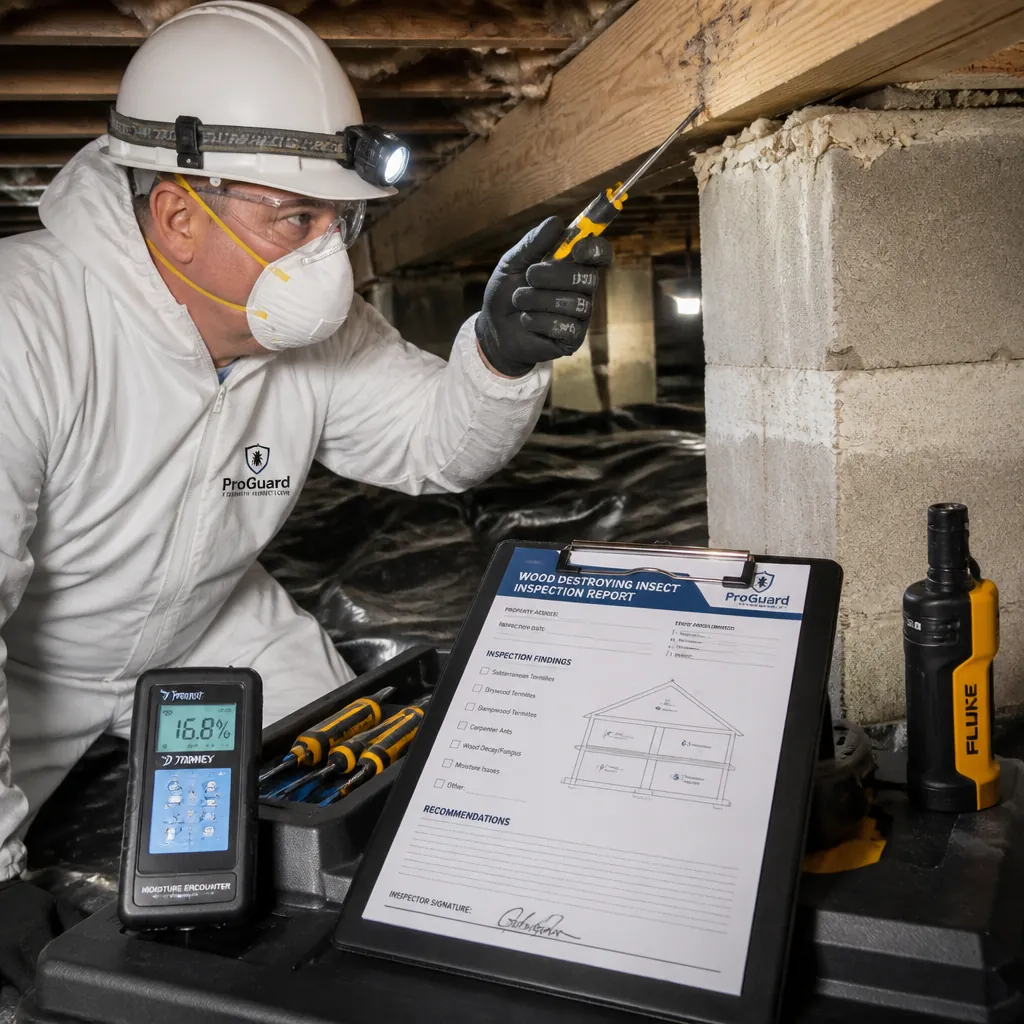
Get a Professional Termite Inspection (WDI Report)
Start here. A Wood-Destroying Insect (WDI) report — also called a WDO (Wood-Destroying Organism) report — is what a licensed pest inspector gives you after they've thoroughly examined your property. They're looking for active infestations, signs of past damage, and anything that's structurally compromised. You're looking at roughly $165 (anywhere from $100–$200) for a home sale inspection as of July 2026. If your lender requires it, expect around $150. In South Carolina? You'll need the CL-100 report for any sale—it costs about $160 and stays valid for 30 days (as of July 2026). Get this done first, before you decide anything else, so you actually know what you're working with.
Structural and Mold Inspections
If your WDI report shows serious damage, don't stop there. Bring in a structural engineer and—if moisture is part of the picture—get a mold inspection too. Termites and water damage almost always show up together; moisture creates the perfect environment for mold to spread through damaged wood. When you fix both issues and document it, you're protecting yourself during the buyer's inspection period.
Gather Treatment and Repair Documentation
Hunt down everything: old pest control contracts, treatment receipts, warranties on that work, repair invoices. Transferable termite warranties? Those are gold. They tell the buyer that the problem's been professionally handled, not just band-aided.
Cost Estimation and Timeline Planning
Before you pick a selling strategy, get written quotes from at least two licensed pest control companies and two licensed contractors for any repairs needed. This gives you hard numbers to work with.
Back to topTermite Treatment and Repair Costs
Want to know if you should fix the termite damage before selling or just let the next owner deal with it? Understanding what these repairs actually cost is how you make that call.
| Damage Severity | Typical Repair Cost | Treatment Cost | Inspection/Assessment | Value Impact |
|---|---|---|---|---|
| Minor/Cosmetic (trim, drywall, surface wood) | $300–$2,000 (Nov 2025) | $263–$1,032 avg. $620 (2025) | $100–$200 (Jul 2026) | Moderate; recoverable with repairs |
| Moderate (joists, non-load-bearing walls, subfloor sections) | $1,000–$10,000+ avg. $3,000 (Aug 2026) | $2,000–$8,000 (tenting, 2026) | $553 structural engineer (Aug 2026) | Significant; requires documentation |
| Severe (load-bearing walls, major beams, widespread subfloor) | $5,000–$15,000+ (Nov 2025) | $2,000–$8,000 (tenting, 2026) | $553 structural engineer (Aug 2026) | Substantial; ~20% value reduction (2024) |
How long does treatment take? It depends on what you choose. A chemical barrier treatment can wrap up in a single day. Bait station programs are different — they'll need months of monitoring to work properly. Fumigation, which is the tent-your-whole-house approach, takes 1–3 days for the actual process plus time for clearance checks afterward.
Then there's the annual termite bond option. These programs cost $200–$400 per year (as of April 2026) and they're worth considering. You get ongoing monitoring and guaranteed re-treatment if termites come back. Here's the real benefit: if that bond is transferable, you can actually market it to buyers as something that adds value to your listing and potentially bump up your asking price.
But here's something you absolutely need to know. Your homeowners insurance doesn't cover termite damage — not any of it (as of 2026). Every dollar you spend treating or fixing termites comes straight out of your pocket. There's no safety net here.
Back to topHow Lenders View Termite Damage
Here's the reality: different loan types have wildly different rules about termite damage. This matters because it shrinks or expands your pool of potential buyers.
| Loan Type | Termite Inspection Required? | Active Infestation Allowed? | Past Damage (Repaired) Allowed? | Documentation Required |
|---|---|---|---|---|
| FHA | Required in termite-prone areas | No — must be treated and cleared | Yes, with proof of treatment and repair | WDI/WDO clearance report, repair receipts |
| VA | Required in most states | No — must be treated and cleared | Yes, with documentation | WDI clearance certificate, repair invoices |
| Conventional | Not always required (varies by lender) | Generally no; lender discretion | Yes, with sufficient documentation | Varies by lender; inspection report helpful |
| Cash Buyer | Optional (buyer's choice) | Yes — no lender restrictions | Yes | None required (disclosure still legally required) |
Active termites? That's a dealbreaker for FHA and VA loans. And those two programs represent a huge chunk of home buyers out there. If you want access to those buyers, you've got to treat the infestation before you list. There's no way around it.
Now, old damage that's been fixed and documented—that's different. Lenders will typically accept it. But don't be surprised if the appraiser still raises concerns about structural integrity, especially if it affects what the home's actually worth for lending purposes.
Back to topActive Infestation vs. Past Damage
Selling a House with Active Termites
Active infestations are urgent. Really urgent. If your buyer needs mortgage financing, their lender won't touch it — and their inspector will catch it anyway. Even cash buyers know what they're looking at, and they'll lowball you hard because of it. Should you treat before listing? Yes, if you possibly can. The treatment costs money, but the alternative is far worse — offers that crater or no offers at all.
Selling a House with Prior Termite Damage
Now, past damage that's been treated and fixed? That's completely different. Buyers can live with a history of termites, as long as you've got the paperwork to prove it was handled right. We're talking inspection reports, treatment records, repair receipts, and ideally a warranty you can transfer to the new owner. Here's the key: a home that's been through termites and came out the other side is actually safer than one where nobody's looked closely. Your documentation shows you didn't cut corners.
WDI Clearance Certificate
Once treatment is done, your pest control company gives you a WDI clearance certificate. This confirms there's no active infestation. FHA and VA lenders require it. Any buyer will want to see it.
Keep the original in a safe place and hand over copies to anyone seriously interested in your home.
Back to topPricing Your Home with Termite Damage
Start with a professional appraisal or comparative market analysis (CMA) from someone who knows your local market. That's your baseline. Then you'll subtract realistic repair estimates and factor in what buyers will actually offer once they account for the uncertainty and work ahead. Here's the thing: transparency works. When you disclose the damage clearly and price accordingly, you're actually building trust with buyers. Trying to hide termite damage and hope for the best? That strategy fails every time. You'll end up dropping the price anyway, watching the listing age, and dealing with the stigma of a property that won't sell.
Already fixed the problem? Document everything. Get receipts, inspection reports, before-and-after photos — all of it. Then price competitively against undamaged homes in your neighborhood. You've probably seen the data: unrepaired termite damage can knock about 20% off your home's value. But here's what matters — that penalty applies to damage that's still there. If you've actually done the repairs and you've got the documentation to back it up, your home shouldn't carry that same hit.
Back to topCommon Mistakes to Avoid When Selling
- Waiting until after you receive an offer to get inspections: Here's what happens: buyers' inspectors find damage, and suddenly you're negotiating from a position of weakness. Get your own WDI report first. You'll know exactly what you're dealing with.
- Using unlicensed or substandard treatment services: That cheap DIY treatment might seem like a win until you're trying to sell. Buyers and lenders can't verify it actually works, and there's no warranty to back it up. Always hire licensed pest control professionals who provide written warranties.
- Attempting DIY structural repairs: This isn't a weekend project. Structural work demands licensed contractors. Unpermitted or sloppy repairs create liability issues, fail inspections, and void warranties—three problems you don't want.
- Failing to document repairs: Even if the work's flawless, it won't help you sell without proof. Keep receipts, permits, and photos. Documentation is your evidence.
- Not accounting for related damage: Termites rarely travel alone. Moisture problems, wood rot, and mold often tag along. Before you list, get a complete picture of what's actually going on in your home.
- Skipping the disclosure entirely: This is it—the highest-risk mistake. Buyers and their attorneys will find the damage. The real question is whether you came clean or tried to hide it.
These same principles apply when selling homes with other known hazards. Your property might have multiple issues, and we've got specific guidance for those too. Check out our resources on selling a house with asbestos in Florida, selling a house with lead paint in California, and selling a house with radon for disclosure and remediation details specific to each hazard.
Back to topReal Estate Agent and Professional Guidance
Your agent choice can make or break a sale when your home has known issues. You need someone who's actually sold problem properties before — someone who knows the local disclosure forms inside and out, has trusted contractors on speed dial, and can market a fixed-up home without spooking buyers. When termite history comes up (and it will), a skilled agent knows how to present your documentation in a way that reassures rather than alarms.
State rules vary wildly. That's why we've put together specific guides for Colorado sellers dealing with hazardous conditions, Tennessee's lead paint disclosure requirements, and Washington's asbestos rules. The same goes for termite disclosure — what's required in one state might not apply in another.
You'll likely need more than just an agent. A licensed pest control company handles the inspection and treatment documentation. A structural engineer evaluates damage. A licensed contractor manages repairs. And if the damage is extensive or the disclosure situation is legally tricky, bring in a real estate attorney.
Back to topConclusion: You've Got Real Options
A house with pests or termites isn't unsellable. It's just a problem that needs honest assessment, solid documentation, and a real plan. Your best path depends on three things: how bad the damage is, what you can actually spend, how quickly you need to sell, and what buyers are doing in your area right now. Here's what we've seen work: sellers who handle this professionally, disclose everything upfront, and price accordingly? They close sales. Sellers who hide damage or skip the paperwork? They end up facing legal trouble—sometimes years after closing.
And here's the thing. Your approach matters less than your foundation.
Whether you fix it and list the traditional way, sell to a cash buyer for speed, or negotiate seller concessions with a regular buyer—start with these four steps. Know exactly what you've got. Document everything you've done about it. Disclose what you know. Price it honestly. That protects you legally, builds real buyer confidence, and gets you the best outcome you can realistically expect from a tough situation.
Back to topFrequently Asked Questions
Is it hard to sell a house that has had termites?
Not necessarily. If you've had the infestation professionally treated and the damage properly repaired — with documentation to back it up — you're in decent shape. Termite history is a material fact you have to disclose. But here's the good news: a fully remediated home with a transferable warranty can be marketed confidently to serious buyers. Active infestations, severe damage, or undisclosed problems? That's where you run into trouble. Most sellers can still attract qualified buyers with proper prep work.
Does the seller have to repair termite damage before closing?
It depends. Your loan type matters. Your buyer's lender matters. And what you negotiate in the purchase contract matters most. FHA and VA loans generally require active infestations to be treated and cleared before closing. Conventional and cash purchases are different — you can negotiate here. You might offer repair credits, hold money in escrow, or just knock down the price and let the buyer handle repairs themselves. Whatever you agree to needs to be documented clearly in the contract and disclosure paperwork.
Will a lender approve a mortgage on a home with termite damage?
Active infestations? No. Lenders won't touch that. Past damage that's been professionally treated and fixed — with solid documentation — usually passes. But severe structural damage can spook the appraiser and reduce the loan amount. Cash buyers don't have this problem. Check the lender comparison table above for the specific rules by loan type.
Can I sell a house with active termites?
Legally, yes. In most places you can sell with full disclosure. But your buyer pool just shrunk to cash buyers only. Lenders won't approve financing on actively infested properties. You'll see much lower offers because buyers are pricing in treatment costs, repairs, and their own risk premium. Treating the infestation before you list almost always nets you more money.
What's a WDI report and why do I need it?
A Wood-Destroying Insect (WDI) report is a formal inspection document from a licensed pest control professional. It documents active infestations, signs of past activity, and visible structural damage from wood-destroying insects. Budget around $165 as of July 2026. FHA and VA lenders require it. Conventional lenders ask for it frequently. Cash buyers often use it to shape their offers. Here's why you should get one before listing: you control the narrative. You'll know what inspectors will find and can fix problems on your timeline instead of scrambling during a buyer's inspection period.
Back to topMore in Inspections and disclosures
- Selling a House with Termites: Disclosure, Treatment, and Buyer Impact
- Is It Illegal to Sell a House With Mold? Disclosure Laws and Liability
- Selling a House with Roof Damage: Disclosure, Repair, or Price Reduction
- Selling a House with Foundation Cracks: Disclosure and Repair Options
- Selling a House with Mold: Disclosure Requirements and Buyer Options
- Selling a House With Structural Damage: Disclosure and Buyer Options
See our guide: “How to Sell a House As-Is: What It Means and How It Works” →

