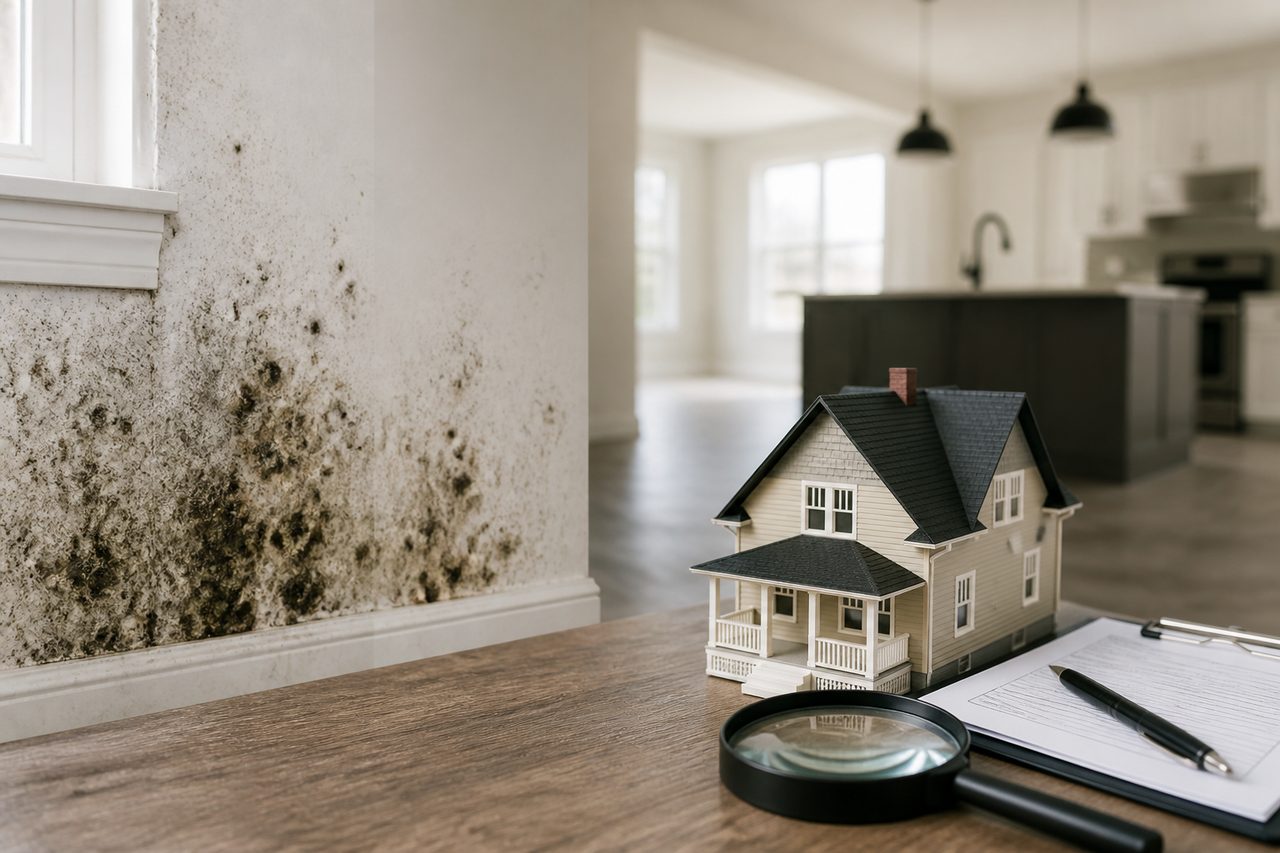
Is It Illegal to Sell a House With Mold? Disclosure Laws and Liability
Table of Contents
- Is It Illegal to Sell a House with Mold?
- Understanding Mold Disclosure Laws by State
- Legal Consequences of Not Disclosing Mold
- Mold Remediation Costs: What You're Actually Looking At
- Three Paths to Selling a House with Mold
- Mold's Impact on Home Value and Appraisals
- Mold Inspections vs. Home Inspections
- Insurance Coverage for Mold: What's Actually Covered
- How to Legally Sell a House with Mold: A Step-by-Step Approach
- Does Previous Remediation Protect You from Future Liability?
- Conclusion: Disclosure Protects Everyone, Including You
- Frequently Asked Questions
You can legally sell a house with mold in any U.S. state — but you can't hide it. Mold counts as a material defect everywhere, which means every state requires you to disclose it on disclosure forms. Skip that step, and you're looking at post-sale lawsuits, contract rescission, and serious financial liability. This guide covers what the law actually requires, what happens if you don't comply, and the realistic options you actually have as a seller.
Selling a house that needs work? Start with how selling a house as-is works. It explains what as-is means, how pricing works and every way to sell a house with problems.
Nothing in this article is legal, tax, or financial advice. Disclosure rules vary considerably by state law. Before listing a home with known mold issues, talk to a licensed real estate attorney in your state.
Is It Illegal to Sell a House with Mold?
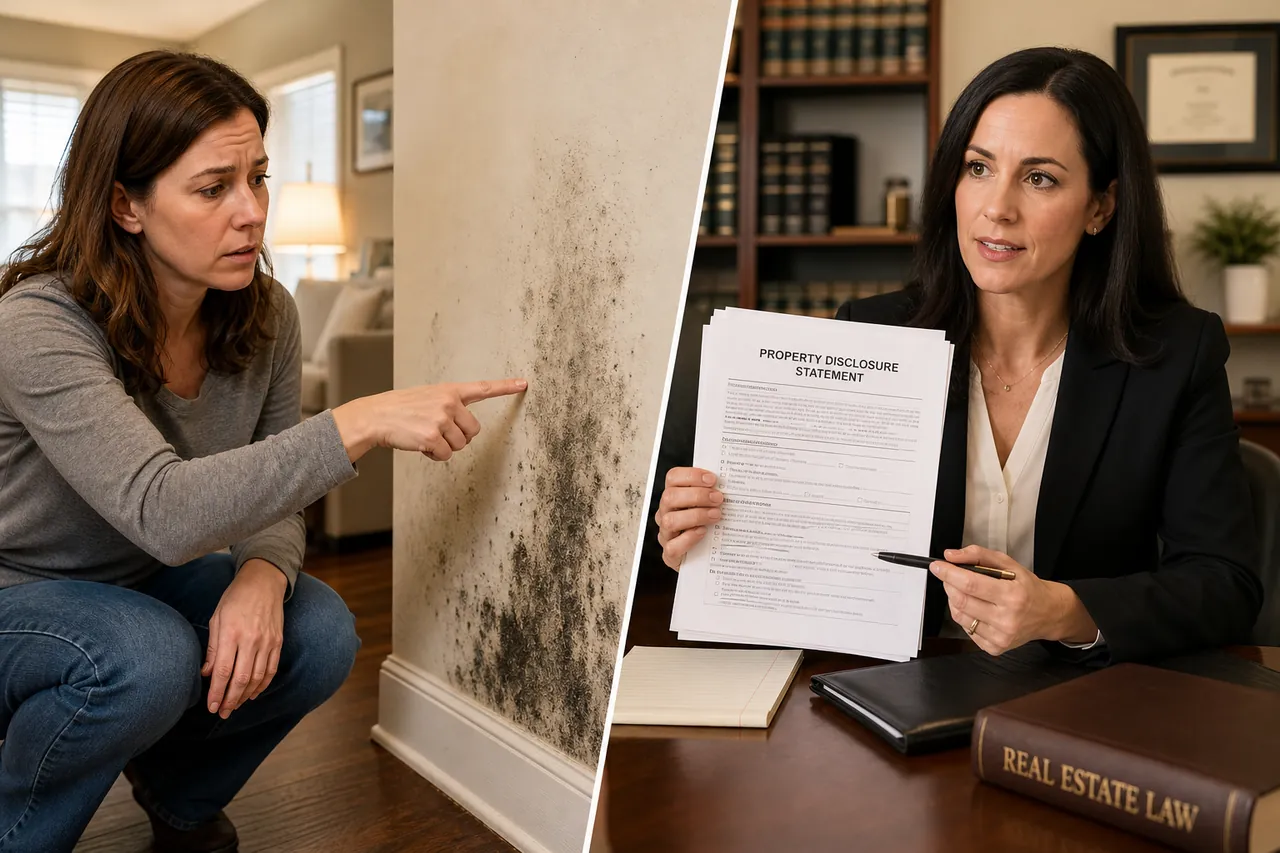
You can sell a home with mold. That's not illegal. What is illegal — everywhere in the U.S. — is knowingly hiding a material defect from the buyer. Since mold counts as a material defect in every state, hiding it stops being just a civil problem. It becomes fraud.
The Distinction Between Disclosure and Remediation
Fix it or don't. That's your choice. But you must tell the buyer what you know, and you must do it in writing before they're locked into a contract. Disclosure and remediation are completely different legal obligations. Most sellers mix them up, and that's when trouble starts. You're allowed to sell a house with active mold, spend zero dollars on repairs, and still stay fully compliant with the law — if you disclose accurately.
No Federal Mold Disclosure Law Exists
Lead-based paint has a mandatory federal disclosure requirement for homes built before 1978. Mold doesn't. There's no federal mold-disclosure statute, which means your state sets the rules. The form you use, what language is required, when you have to deliver it, and what happens if you don't — all of that varies by location. Be suspicious of anyone claiming there's one national rule that applies everywhere.
What Counts as a Material Defect
A material defect is something that changes how a reasonable buyer would act — whether they'd buy at all, or how much they'd pay. Mold checks both boxes. It rots framing. It damages drywall. The health risks are documented. And it usually points to a moisture problem that'll cost thousands to solve. Courts across multiple states have ruled that sellers who painted over mold or hid it another way committed fraud. That kind of judgment can cost you far more than fixing the mold would have.
Back to topUnderstanding Mold Disclosure Laws by State
There's no federal mold disclosure law. But all 50 states? They require you to disclose known material defects when selling residential property. Most states use a standardized seller's disclosure form or statement to do this. The catch is that everything else — the form's name, which questions get asked, when you have to deliver it, and what happens if you don't — varies from state to state.
State-Specific Examples
California requires sellers to complete a Transfer Disclosure Statement under Civil Code § 1102.6. The state's Toxic Mold Protection Act of 2001 specifically calls out known mold as a material defect. Are you selling in California and wondering about other environmental hazards? The same principles apply. Check out our guide to selling a house with asbestos in California to see how the state handles multi-hazard disclosure.
New York changed its rules significantly in 2023–2024. Starting June 14, 2023, the Property Condition Disclosure Statement (PCDS) now includes a mandatory question about indoor mold history under NY Real Property Law § 462. Then came another shift. As of March 20, 2024, following NY A01967/S5400, sellers lost the old workaround — you can't give buyers a $500 credit instead of the PCDS anymore. Full disclosure is now required. No exceptions.
Texas takes this further than most. If your home went through mold remediation, you must provide the buyer with a Certificate of Mold Damage Remediation (CMDR) under Tex. Occ. Code § 1958.154(b). This applies to any remediation done within the 5 years before the sale date. That requirement took effect January 1, 2026.
Maryland requires a dedicated mold disclosure form as part of seller obligations under Md. Code § 10-702.
Want to know your state's exact form and deadlines? Call your state's real estate commission or hire a local real estate attorney. These forms and rules shift regularly, and using the outdated version can create real legal problems.
What You Must Disclose — and When
Most states require disclosure before the buyer signs the purchase agreement, or within a narrow window after signing while the buyer can still back out. Don't wait until closing — that's too late almost everywhere. You need to disclose:
- Mold you can see (visible growth on walls, ceilings, in crawl spaces or attics)
- Mold you know exists but isn't currently visible (mold that was painted over, encapsulated, or is behind finished surfaces)
- Prior mold problems, even if remediated — in Texas, the CMDR requirement makes this explicit for the past five years
- Conditions you know are likely to cause mold (a known roof leak, chronic basement flooding, broken exhaust ventilation)
And here's what trips up sellers: you don't need to have physically seen the mold yourself for it to count as "known." A prior inspection report that documented it? That's knowledge. A contractor who mentioned it? That's knowledge. A persistent moisture problem you've been living with? Knowledge. All of it has to be disclosed.
The Gap Between 'Known' Mold and Mold Found During Inspection
Many sellers get this wrong. If a buyer's inspector finds mold that you genuinely didn't know about, you haven't violated disclosure law. These laws cover known defects only. When an inspector uncovers mold in a crawl space you've never entered or an area you had no reason to suspect, the situation changes — the buyer now has that information and can renegotiate or walk away, but you haven't committed fraud. Keep records of what you knew and when you knew it. That documentation protects you if questions come up later.
Back to topLegal Consequences of Not Disclosing Mold
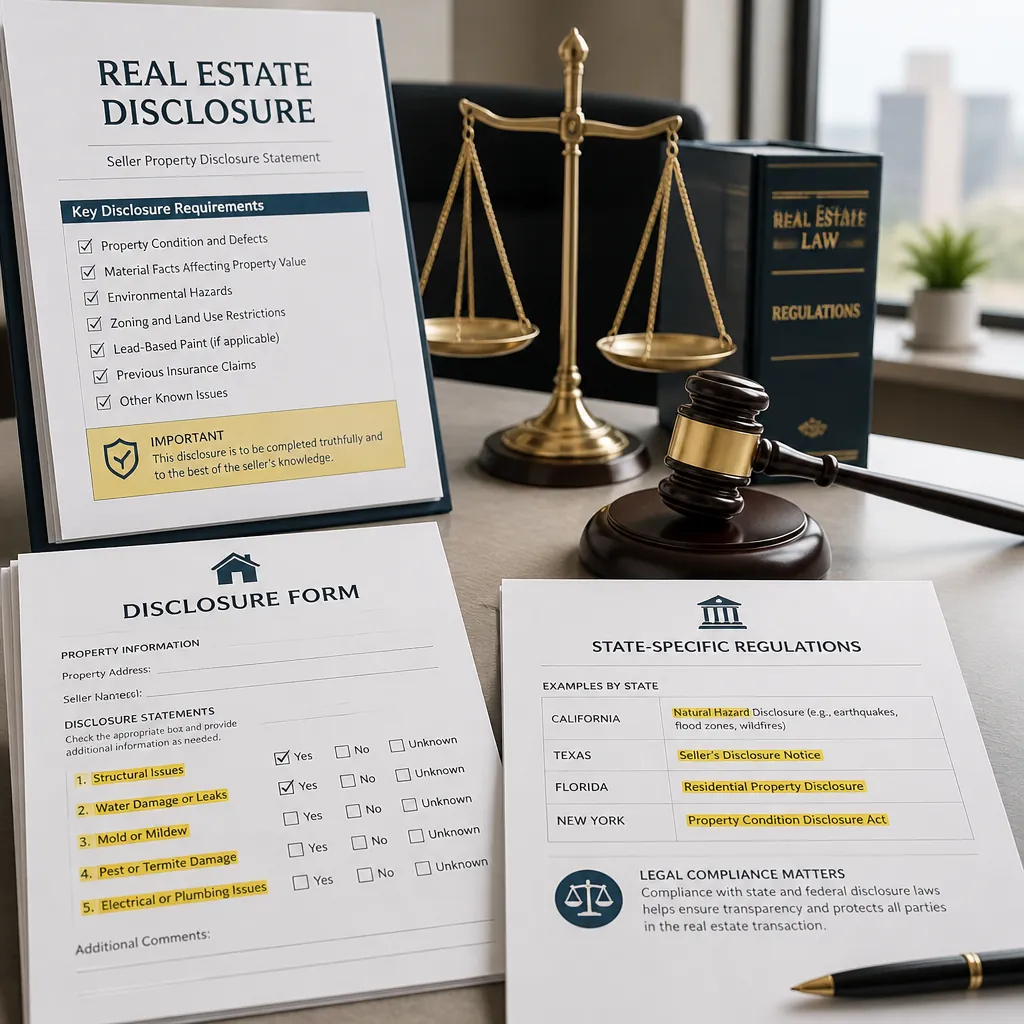
Post-sale lawsuits over undisclosed mold are incredibly common—and the fallout can haunt you for years. We're talking financial damage, legal bills, and complications that most sellers never see coming.
Post-Sale Lawsuits and Damages
A buyer discovers mold after closing. They weren't told about it. They have a case—possibly several of them. Fraudulent concealment. Negligent misrepresentation. Breach of contract. Pick your poison. Courts routinely award damages that cover the full cost of remediation, the hit to the home's resale value, temporary housing while the mold gets fixed, and sometimes punitive damages when it's clear you deliberately hid the problem. Here's what stings the most: the legal fees alone can run tens of thousands of dollars for both sides before you even reach a settlement. Most of the time, that bill ends up being way bigger than the remediation would've cost if you'd just dealt with it upfront.
Contract Rescission
Buyers have another weapon in their arsenal. They can ask the court to unwind the entire deal.
Within the applicable time window, if they catch undisclosed mold, they can seek rescission. That's legalese for "undo this transaction." The buyer walks away with their cash. You get the house back. But you're stuck with the mold problem and a legal bill. This outcome is brutal if you were counting on those proceeds to close on your next purchase or escape a difficult situation.
Statute of Limitations
Different states have different rules, and different claim types have different windows. A fraud claim typically stays alive longer than a breach-of-contract claim. Many states use what's called the "discovery rule"—meaning the clock doesn't start when the buyer closed on the house. It starts when they discover the mold (or should have discovered it). Mold hiding inside a wall? That could trigger a lawsuit years after you sold. Your state law sets the specific deadlines, so you'll need to talk to a local attorney to know exactly where you stand.
Insurance Implications
Don't bet on your homeowners insurance to cover you here. Most homeowners policies protect you against property damage claims, not liability from failure to disclose. A personal liability umbrella or errors-and-omissions policy might help in certain situations—but coverage varies wildly by policy and insurer. If you're genuinely concerned about personal exposure, contact your insurance broker before you list the house. Get clarity in writing.
Back to topMold Remediation Costs: What You're Actually Looking At
Before you list, you need to know what remediation will actually cost. The national average for a mold remediation project runs approximately $2,350–$2,369 as of 2026. But that number doesn't tell the whole story—it depends heavily on how much mold you're dealing with.
| Contamination Scope | Approximate Cost Range (2026) | EPA Containment Level | Notes |
|---|---|---|---|
| Minor (under 10 sq ft) | Owner may self-remediate; professional: $100–$500+ | None required (EPA guidance) | EPA recommends professional consultation above 10 sq ft |
| Moderate (10–100 sq ft) | $1,200–$3,750 (most projects fall here) | Limited containment: single layer 6-mil poly sheeting | Typical bathroom, crawl space, or single-room issue |
| Extensive (100+ sq ft) | $3,750–$30,000+ | Full containment required (EPA guidance) | Multi-room, structural involvement, HVAC contamination |
| Black mold (Stachybotrys) premium | ~15–25% above standard mold remediation cost (2025) | Determined by scope | Specialized PPE and disposal required |
Most professionals charge $10–$25 per square foot as of 2026. Specialized work can push that to $30 per square foot. And if your HVAC system or structural framing is involved? You could easily be looking at $30,000 or more.
Your region matters. The type of mold matters. What your walls are made of matters. All of it shifts the final price.
Now the hard part. You can spend every dollar on remediation and still watch the mold come back if you don't fix what caused it in the first place. A roof leak, failed plumbing, foundation seepage, poor ventilation—one of these is feeding your mold problem. Find a licensed inspector or mold professional and have them trace the moisture source before you hire a remediation crew. Fix the water. Then fix the mold. Do it the other way around and you've just thrown money away.
Back to topThree Paths to Selling a House with Mold
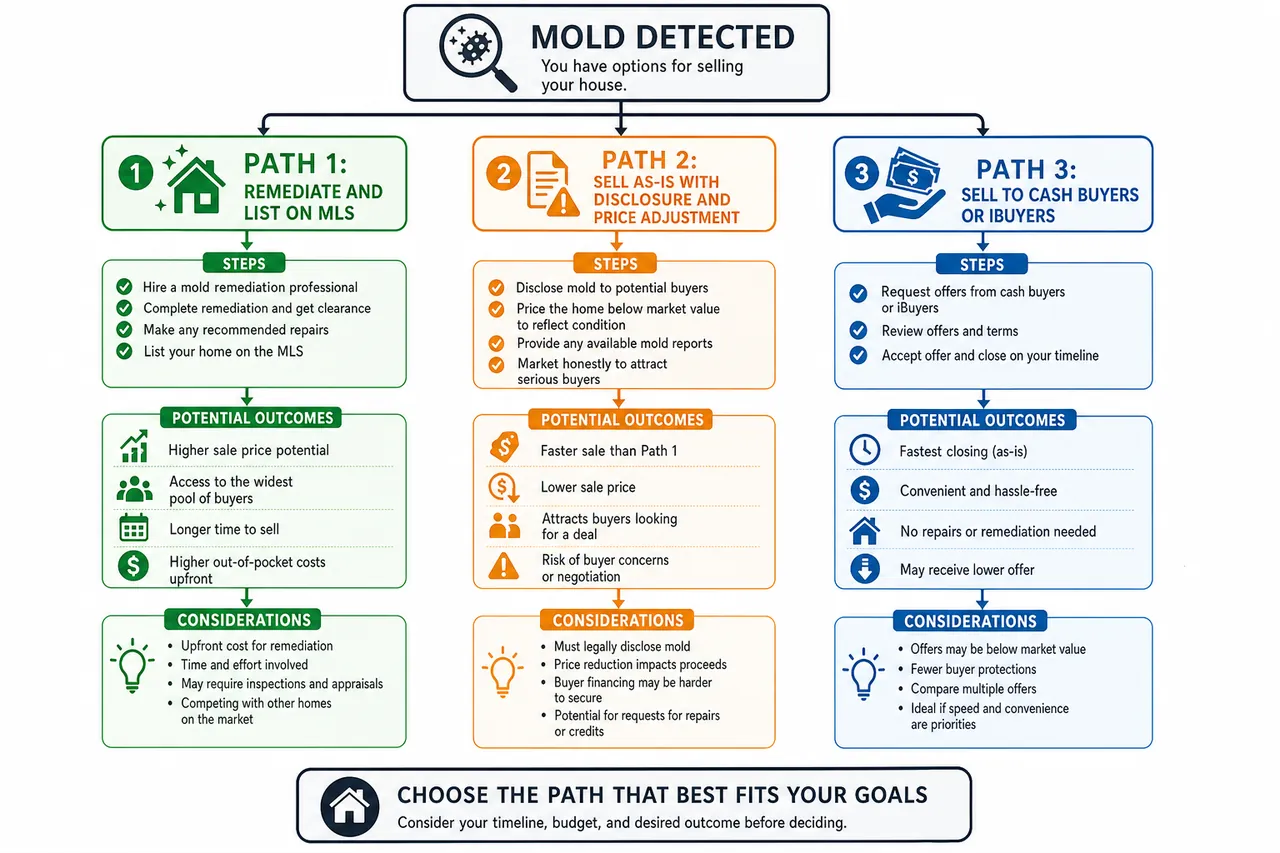
You've got three realistic ways forward after you've made your disclosures. Each one trades off cost against timeline against what you'll actually take home at closing. Want the full picture of how these strategies work with what buyers can do? Check out our guide to selling a house with mold: disclosure requirements and buyer options.
| Path | Upfront Cost | Typical Timeline | Net Proceeds Impact | Buyer Pool | Main Risk |
|---|---|---|---|---|---|
| Remediate, then list on MLS | $1,200–$30,000+ (remediation) | 60–120 days (remediation + listing + closing) | Best potential; recoup some remediation cost in price | Full market including financed buyers | Remediation doesn't fix moisture source; mold returns before closing |
| Sell as-is with full disclosure and price adjustment | Low (disclosure only) | 30–90 days depending on market | 10–30% reduction from market value typical | Investors, cash buyers, buyers willing to do work | Financing may fall through; FHA/VA loans unlikely to close |
| Sell to a cash buyer or investor | Minimal | As fast as 14 days | Below market, but no remediation cost or carrying costs | Single buyer (no open market competition) | Lower sale price; evaluate net carefully |
Option 1: Remediate and List on MLS
If you're looking at moderate contamination — something under $5,000 to fix — and the moisture problem that caused it is actually gone, fixing it before listing usually pays off. You'll open the door to financed buyers. Conventional appraisals won't flag the property. And you avoid the stigma that comes with "mold disclosure" on a public listing.
Get a clearance letter from your remediation company once the work's done. That document protects you legally and gives buyers real peace of mind that the job was done right.
Hold onto every record from remediation forever. In Texas you'll need to provide a Certificate of Mold Damage Remediation for any work done in the past five years. Even if you're not in Texas, having proof that a professional did the work, when they did it, and how they did it? That's your best defense if a buyer comes back with questions after you've closed.
Option 2: Sell As-Is with Full Disclosure and Price Adjustment
Here's something people get wrong: selling as-is doesn't erase your legal duty to disclose known defects. You still have to tell buyers what you know. "As-is" just means you're not fixing anything. It's a totally legal way to sell when remediation costs are steep or the structural situation's complicated.
You'll price the house 10–30% below what similar homes in good shape are selling for. The exact percentage depends on how bad the mold is and what buyers think about it. Some walk away instantly. Others see it as a chance to negotiate hard. The ones who stay interested tend to be investors, contractors, or homeowners who know how to handle this work themselves.
Option 3: Sell to a Cash Buyer
Cash buyers and investors buy properties exactly as they sit — no financing contingencies to slow things down or kill the deal entirely. Close in 14 days if that's what you need. But the price will be below market because the buyer's factoring in remediation costs and risk. This path makes sense when you're paying carrying costs every month, when the mold problem's massive, or when speed matters more than squeezing out every dollar.
And do the math carefully. Take that cash offer. Don't subtract anything for remediation. Now compare it to what you'd actually pocket after paying for remediation, holding the property longer, paying your agent's commission, and making concessions to close on a traditional sale. Does the cash deal still win?
Back to topMold's Impact on Home Value and Appraisals

You can disclose everything, find a buyer who's willing to move forward—and still watch the deal collapse. Mold creates real problems in the financing and appraisal stage that most sellers don't see coming.
How Appraisers Handle Mold
Appraisers spot visible mold right away. They're trained to catch water damage signs and structural red flags that point to moisture problems in your home. Once an appraiser notes mold in their report, something called a "subject to" appraisal kicks in. This means the lender won't fund the loan until you've had the mold removed and remediated. You end up doing the work first, even if you wanted to sell the place as-is. It's a game-changer for your timeline.
FHA and VA Loan Requirements
These government-backed loans have tougher standards than conventional financing. Neither program requires a separate mold inspection by default, but here's what matters: if the appraiser spots visible mold during their appraisal, you're now required to fix it. Active visible mold will kill FHA and VA loan approval outright—you'll need complete remediation, proof that the moisture source is fixed, and usually a clearance letter before the lender will close. And that's a serious problem. Most buyers with government-backed financing simply can't proceed, which dramatically shrinks your buyer pool.
Conventional loans follow Fannie Mae and Freddie Mac guidelines. They're slightly more forgiving, but not by much—mold still gets flagged as a condition that needs attention. The real-world result? Active mold pushes almost all financed buyers away from your property. You're left chasing all-cash offers, which are rarer and often come in lower.
Back to topMold Inspections vs. Home Inspections
A standard home inspection looks at what's visible and accessible. Your inspector might spot obvious mold or signs of moisture damage, but they won't test the air or hunt for hidden growth behind walls or under floors. That's where a mold inspection comes in—a specialized service run by a certified industrial hygienist or mold inspector. They do air sampling, surface sampling, and give you a detailed report that names the mold species, shows concentration levels, and pinpoints exactly where it's growing.
If you're selling, getting your own mold inspection before you list is smart. You'll know what you're actually dealing with, what you legally have to disclose, and whether spending money on remediation makes sense. Buyers notice this move. When they run their own mold inspection during the contingency period and find something you already told them about, the conversation stays civil. Compare that to a buyer discovering mold you never mentioned—that's a lawsuit waiting to happen.
Buyer Inspection Contingencies
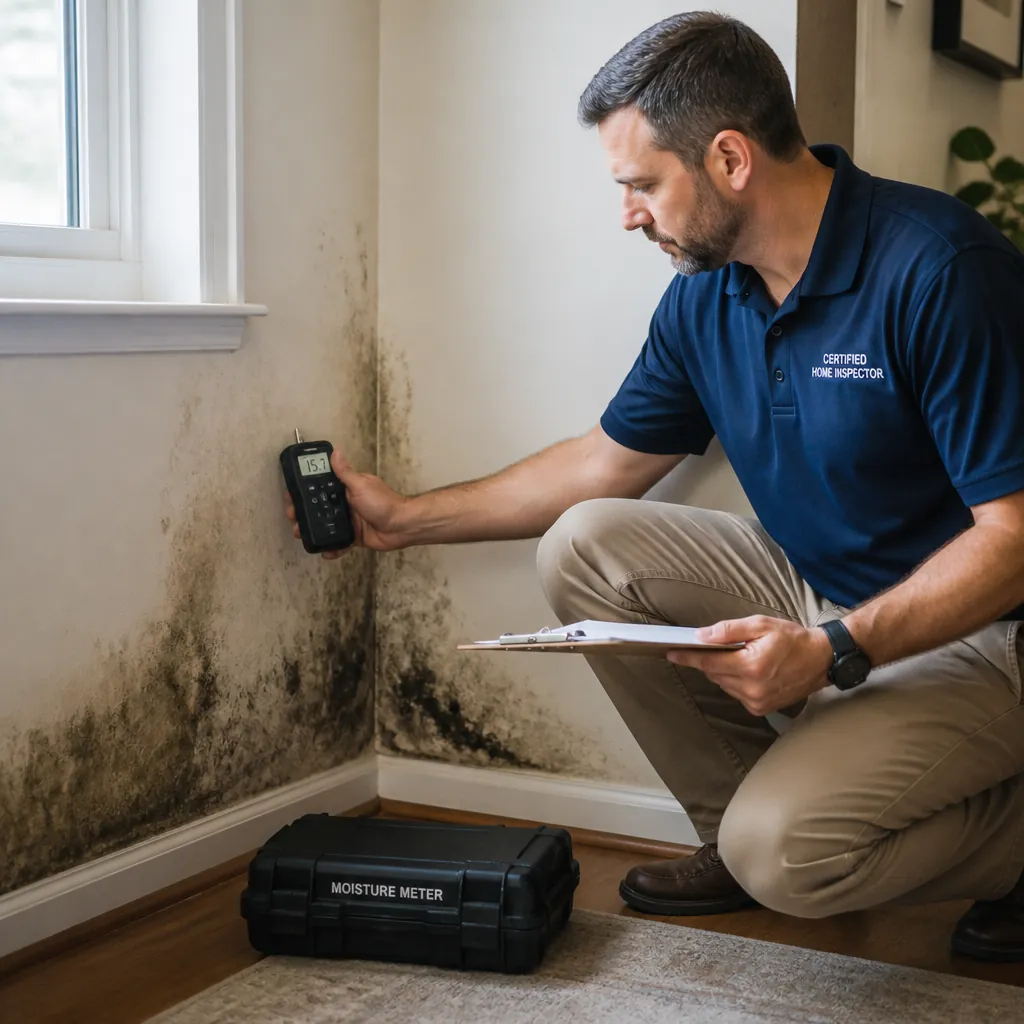
Most purchase contracts give buyers an inspection contingency—usually 7 to 15 days, though it depends on your contract and what's standard in your area. During that window, they can complete inspections and then make a choice: accept the property as-is, ask for repairs or money off, or walk away and get their earnest money back. If mold shows up during this period, the buyer has real leverage. They can exit the deal or demand a price reduction. But here's what protects you as a seller: if you've already disclosed the mold honestly, there's no bombshell. The buyer's negotiating a known problem, not accusing you of hiding something.
Back to topInsurance Coverage for Mold: What's Actually Covered
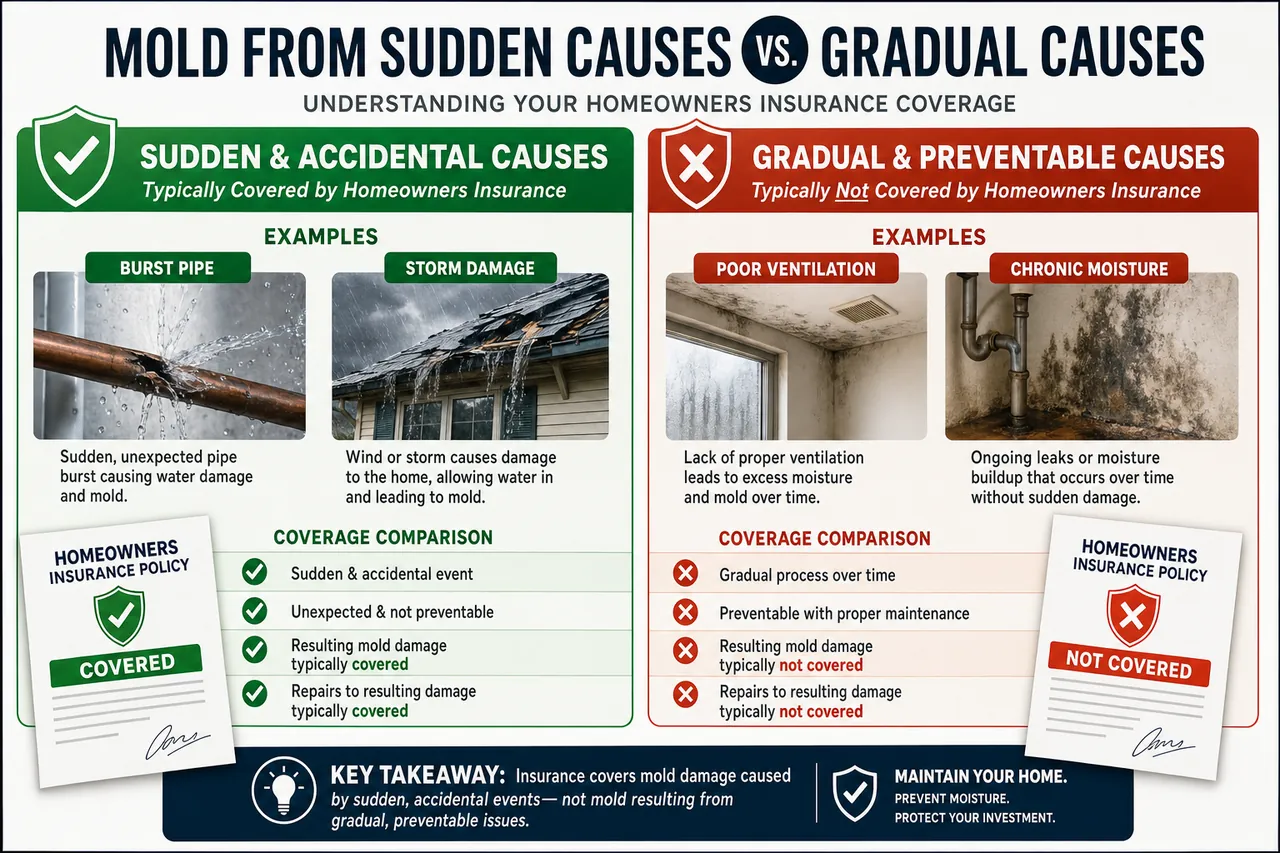
Your homeowners insurance either covers mold or it doesn't—and it all comes down to what caused it in the first place.
| Cause of Mold | Typical Insurance Status | Examples |
|---|---|---|
| Sudden, accidental covered peril | Often covered (mold remediation as part of water damage claim) | Burst pipe, appliance failure, roof damage from storm followed by water intrusion |
| Long-term humidity or inadequate ventilation | Not covered — considered neglect or maintenance failure | Chronic bathroom condensation, crawl space humidity buildup over years |
| Gradual leak (slow drip behind wall) | Generally not covered — insurers treat gradual leaks as a maintenance issue | Slow drain leak, pinhole pipe leak over months |
| Pre-existing mold at time of policy | Excluded — policies don't cover pre-existing conditions | Mold present before homeowners policy was issued |
Even when mold is covered, your policy might not pay what you need. Different insurers set different limits—many cap mold remediation at $5,000 to $10,000, which can leave you exposed if you're dealing with serious contamination across multiple rooms. Pull out your declarations page and call your insurer or a licensed public adjuster to get clarity on your actual coverage. Filing a claim can bump up your premiums or make it harder to renew your policy down the road, so know what you're walking into first.
Back to topHow to Legally Sell a House with Mold: A Step-by-Step Approach
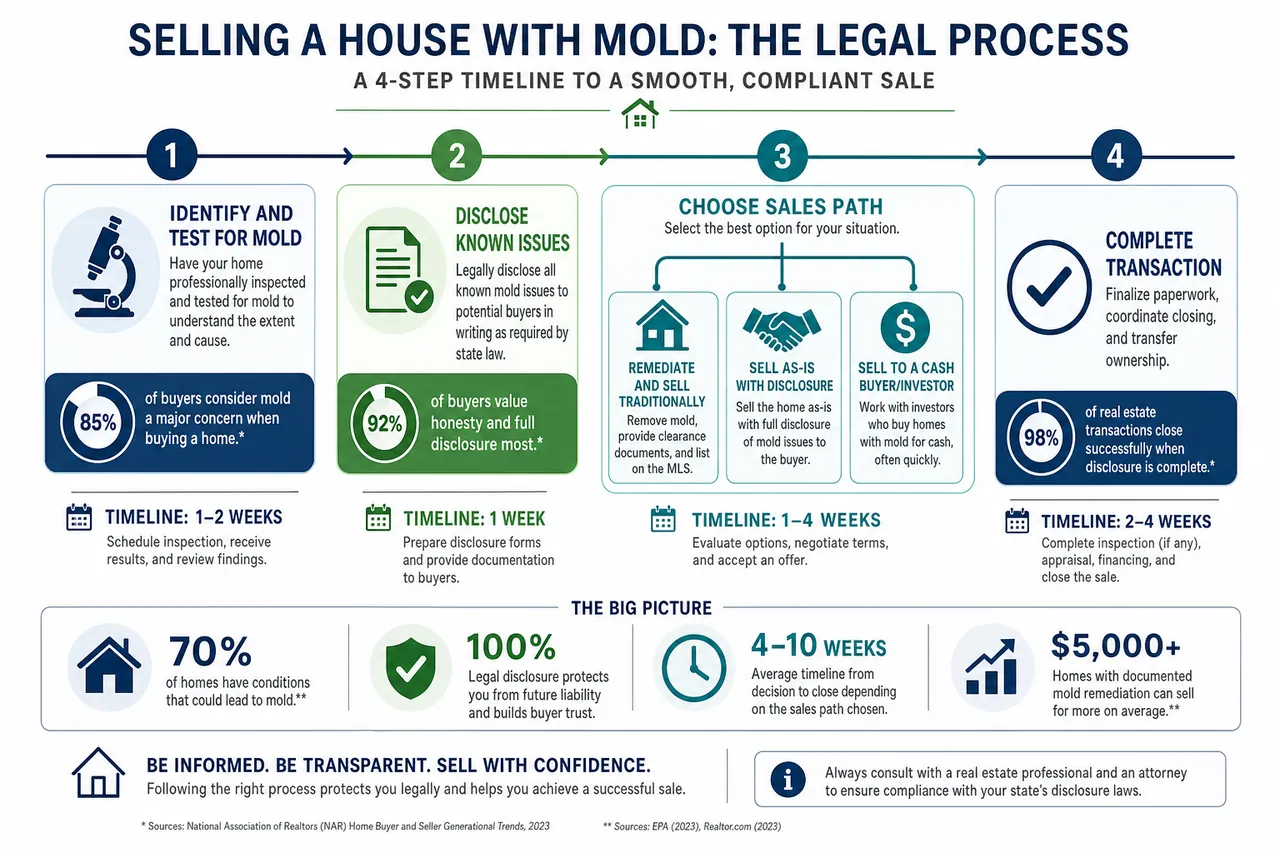
You're facing mold and need a practical roadmap. Here's how to move forward without creating legal problems for yourself.
- Get a professional assessment. Hire a certified mold inspector or industrial hygienist to evaluate the property. They'll identify the type, extent, and location of contamination — information you absolutely need for disclosure and to decide whether remediation makes sense. Don't rely on what you see with your own eyes.
- Identify and address the moisture source. Even if you're selling as-is, you need to understand where the moisture is coming from. Buyers will ask. Their inspectors will dig into it. Fixing the mold without fixing the source is just putting a bandage on the problem, and that's misleading.
- Complete disclosure forms accurately and completely. Work with a real estate attorney or your agent to fill out the state-required forms correctly and get them delivered on time. Disclose everything you know. Not just the parts you think won't scare people off.
- Decide on your sales path. Use the cost-benefit analysis above. If remediation makes financial sense, hire a licensed contractor and get a clearance letter. If selling as-is is the right call, price it accordingly.
- Keep all documentation. Inspection reports, remediation invoices, clearance letters, contractor warranties, and signed disclosure forms — hold onto all of it permanently. In Texas? Keep the CMDR for the full five-year disclosure window.
- Consult a real estate attorney. This matters even more if the contamination is extensive, if you're unsure what you knew and when, or if an unlicensed contractor did prior remediation work. One hour with an attorney now costs far less than defending a lawsuit down the road.
This same framework works if your home has multiple environmental issues. For related guidance on other hazard disclosures, see our articles on selling a house with asbestos and selling a house with lead paint, which cover disclosure obligations that often overlap with mold in older homes.
Back to topDoes Previous Remediation Protect You from Future Liability?
Yes — but only if you've got proper documentation and disclosure. A licensed contractor doing the work, a clearance letter in hand, full disclosure to the buyer, and complete records of everything done: that's your strongest legal shield. Texas's CMDR requirement basically puts this into law. Courts elsewhere have ruled that sellers who disclosed prior mold and remediation, who provided documentation of professional work, weren't liable when mold showed up again — because the buyers knew exactly what they were getting into at purchase time.
What won't help you: DIY remediation with zero records. Remediation that ignored the moisture source. Or telling the buyer "We had some mold years ago and took care of it" without specifics. You need dates. Locations. The contractor's name. Which part of the house. Without those details, you haven't really disclosed anything.
Your property's legal history is complicated? Maybe there's an old insurance claim, a dispute with the contractor over remediation quality, or a lawsuit tied to the mold. Check out our guide to selling a house with a pending lawsuit — it'll walk you through how these overlapping issues change what you're legally required to disclose.
Back to topConclusion: Disclosure Protects Everyone, Including You
You can sell a house with mold in every U.S. state. That's legal. The real legal problem isn't the mold — it's hiding it. Write down what you know. Use your state's required disclosure forms. Do this before the buyer signs anything. After that, the choice is yours: fix it and sell at full price, drop the price and sell as-is, or find a cash buyer who'll handle the mold themselves.
None of these strategies work. Betting the buyer won't spot it. Painting over the problem and hoping it lasts until closing. Skipping disclosure because fixing mold costs too much.
And here's why: concealment lawsuits are expensive. Really expensive. Almost always more expensive than actually dealing with the mold would've been in the first place. You're trading a known cost for an unknown, potentially massive one.
When you're unsure about what to disclose, err on the side of too much information rather than too little. Then have a real estate attorney look over your forms before you sign anything. It's a small investment that can save you from a much bigger problem down the road.
Back to top
Frequently Asked Questions
Can I sell a house with mold without telling the buyer?
No. Every U.S. state requires you to disclose known material defects, and mold counts as one in all jurisdictions. Hide it knowingly? You're looking at fraud claims, breach of contract lawsuits, contract rescission, and damages that often dwarf what disclosure and remediation would've cost you upfront. Write out what you know using your state's required disclosure forms.
Do I've to remediate mold before selling?
Legally? No, not in most cases. Disclosure is mandatory. Fixing it isn't. You can absolutely sell a home with active mold as-is, provided you've fully disclosed it. But here's what changes: active, visible mold kills FHA and VA loan approval. Your buyer pool shrinks dramatically. And you'll likely take a price hit of 10–30%. Whether remediation makes sense depends on what it costs versus how much the mold is already tanking your sale price. Run those numbers for your specific house.
What if mold is found during the buyer's inspection that I didn't know about?
You're legally clear if you genuinely didn't know — disclosure law covers known defects only. Once the buyer spots it during the contingency period, they can push back: ask for a price reduction, demand a remediation credit, accept the house as-is, or walk. Document your lack of knowledge carefully. And here's the thing to watch for: if an old inspection report or contractor note flagged that area, pull it now and review it closely with your attorney before you claim ignorance.
How long after closing can a buyer sue me for undisclosed mold?
It varies by state and claim type. Fraud claims typically have longer windows than breach of contract claims do. Many states use a "discovery rule" — meaning the clock starts ticking when the buyer actually finds the mold or reasonably should have. Mold hidden inside walls? Liability can chase you for years. Complete, documented disclosure at sale time is your shield. Talk to a real estate attorney licensed in your state about the specific deadlines that apply to you.
Does homeowners insurance cover mold remediation?
Maybe. If mold came from a sudden, covered event — a burst pipe, storm damage, that kind of thing — it's usually covered as part of your water damage claim. Mold from years of humidity, slow leaks, or neglect? Insurers won't touch it. They call that maintenance, not a covered loss. And even when mold is covered, many policies cap payouts well below your actual remediation bill. Before you assume you're covered, call your insurer or hire a licensed public adjuster to review your specific policy.
Back to topMore in Inspections and disclosures
- Selling a House with Termites: Disclosure, Treatment, and Buyer Impact
- Selling a House with Roof Damage: Disclosure, Repair, or Price Reduction
- Selling a House with Pests or Termites: Disclosure and Fixes
- Selling a House with Foundation Cracks: Disclosure and Repair Options
- Selling a House with Mold: Disclosure Requirements and Buyer Options
- Selling a House With Structural Damage: Disclosure and Buyer Options
See our guide: “How to Sell a House As-Is: What It Means and How It Works” →