

Selling a House With Structural Damage: Disclosure and Buyer Options
Table of Contents
- What's Structural Damage in a House?
- Why Structural Damage Makes Selling Difficult
- Legal Disclosure Requirements When Selling
- Pricing a Home With Structural Damage
- Your Main Options: Repair vs. Sell As-Is
- Finding and Attracting the Right Buyers
- Selling Options Comparison
- Step-by-Step Selling Process for Structural Damage
- Tax Implications and Insurance Considerations
- Additional Resources and Next Steps
- Conclusion
- FAQs About Selling a House With Structural Damage
Yes, you can sell a house with structural damage without repairing it, but you must disclose known structural defects, and the forms and deadlines depend on your state. Your main options are repairing and listing at full market value, listing as-is with an agent, or selling as-is to a cash buyer or investor. Cash sales typically close in 7–21 days at 15–35% below market, depending on the damage.
Selling a house that needs work? Start with how selling a house as-is works. It explains what as-is means, how pricing works and every way to sell a house with problems.
Your foundation's cracking. The walls are shifting. Maybe the support beams are giving out. Discovering structural damage like this hits hard — it feels like your biggest asset just became your biggest problem. But here's what matters: thousands of homeowners successfully sell properties with structural problems every year. You can too. The difference comes down to three things: knowing what you legally have to disclose, understanding what options actually exist, and being realistic about what buyers will pay and how long it'll take. This guide covers all of it — from your disclosure responsibilities straight through to finding someone who'll buy the house as-is.
What's Structural Damage in a House?
Structural damage means something's wrong with the load-bearing integrity of your home — the actual components that keep it standing and safe. It's not like peeling paint or worn carpet. Structural problems go deep into the bones of your property, and they can create real safety risks if you ignore them.
Common Examples of Structural Damage
- Foundation problems: Cracking, settling, heaving, or shifting in the concrete slab or basement walls
- Subsidence: Gradual sinking of the ground beneath the home, often caused by soil erosion or underground voids
- Underpinning failure: When previously repaired foundations begin to fail again
- Roof structure damage: Sagging rafters, broken trusses, or compromised ridge beams
- Load-bearing wall damage: Cracks, bowing, or removal of walls that carry structural weight
- Beam and joist deterioration: Rot, insect damage, or moisture damage in structural framing
- Retaining wall failure: Leaning or collapsing walls that hold back soil
How Structural Damage Differs From Cosmetic Issues
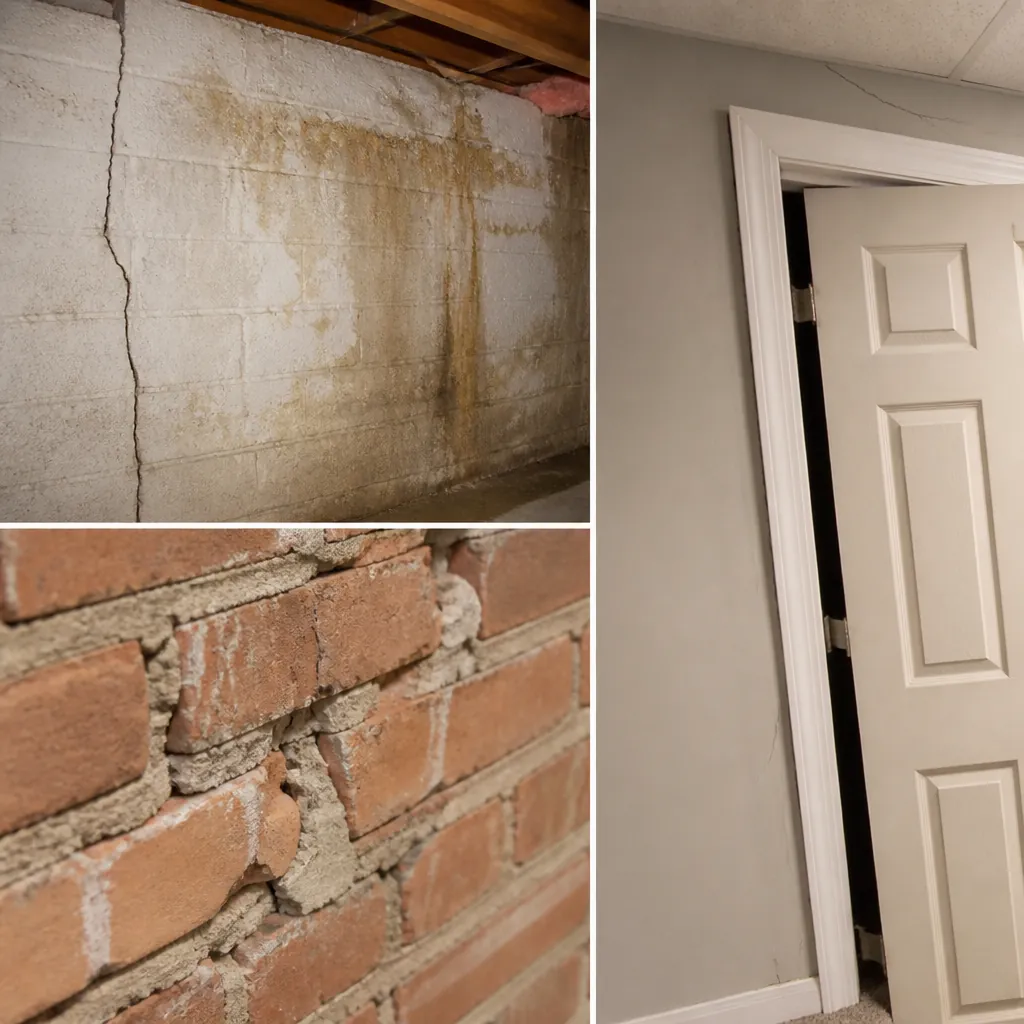
Here's the key question: does it affect safety or whether you can actually live there? A hairline crack in drywall? That's cosmetic. A horizontal crack running across your basement wall? That's structural — and it matters. Cosmetic repairs might cost a few hundred dollars. Structural repairs? You're looking at anywhere from $5,000 to well over $100,000. And here's what really hits hard: lenders, insurers, and home inspectors scrutinize structural issues closely. That directly impacts your ability to sell.
Red Flags That Indicate Serious Structural Problems
- Diagonal cracks running from corners of windows and doors
- Floors that visibly slope or feel bouncy underfoot
- Doors and windows that stick, won't close, or have gaps at the frames
- Visible gaps between walls and ceilings or floors
- Bowing or bulging exterior walls
- Water intrusion in basements that follows cracks in the walls
- Chimney separation from the main structure
Why Structural Damage Makes Selling Difficult

Structural damage cuts deeper than just a lower price tag. It changes the entire pool of buyers you can attract, how they'll finance the purchase, and how long you'll actually be waiting to close. When you understand these obstacles ahead of time, you can stop guessing and start planning your best exit strategy.
Impact on Property Value and Buyer Interest
Foundation problems alone? The National Association of Realtors says they'll knock 10% to 15% off your home's value for smaller issues — and 25% or more if things are really bad. But the price drop isn't even the worst part. Your buyer pool shrinks fast. Most people buying a home to actually live in won't touch significant structural repairs after they've already closed on the deal.
How Structural Issues Affect Financing and Inspections
Here's where things get genuinely complicated. Conventional lenders won't touch it. Neither will FHA, VA, or USDA loan programs — they'll typically refuse to finance homes with unresolved structural problems. An appraiser will catch the damage and flag it, which can torpedo your buyer's loan approval right in the middle of the transaction. And even if your buyer wants to proceed? Their lender probably won't fund the deal until repairs are actually done. You need sale proceeds to fix the house. But the sale can't close until it's fixed. Sound impossible? That's the trap.
Timeline Challenges and Emotional Burden
Expect a longer wait. Homes with structural damage sit longer, fail inspections, and watch deals collapse — sometimes more than once. Each failed contract adds weeks or months to your timeline and weighs heavily on your peace of mind. You might also feel anxious about disclosure. Do you have to tell buyers? Yes, absolutely — and the next section shows you exactly what that involves and what it means for your situation.
Back to topLegal Disclosure Requirements When Selling
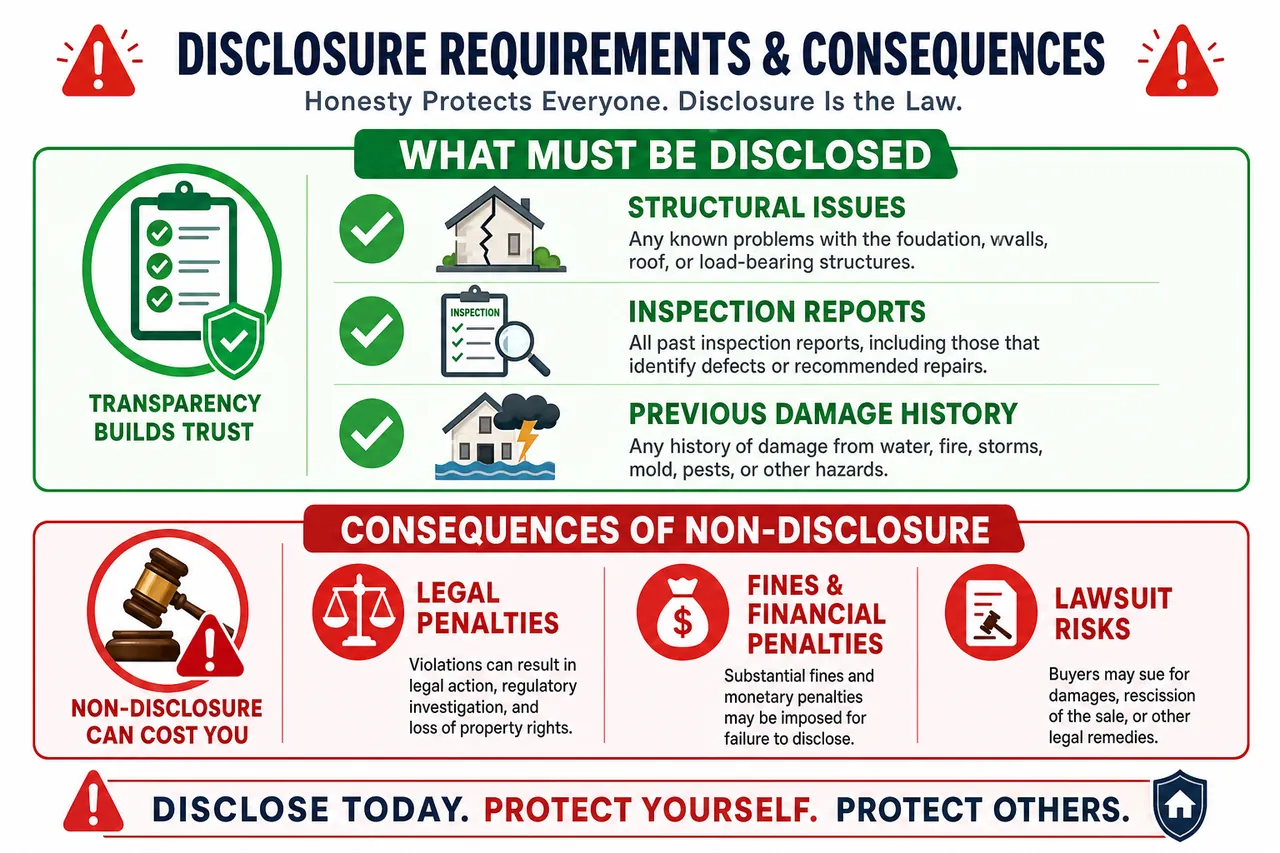
Disclosure isn't optional. You're legally required to tell buyers about any known material defects — the stuff that would change their mind about buying or affect what they'd pay. Structural damage almost always counts. And here's the harsh truth: hiding or playing down structural problems creates serious legal trouble that can haunt you years after closing.
What You Must Reveal to Buyers
You need to disclose anything structural you know about:
- Current foundation cracks, settling, or movement
- Previous structural repairs and whether they were permitted
- Known causes of structural issues (soil problems, drainage, flooding)
- Any engineer reports or inspection findings related to structure
- Insurance claims related to structural damage
Here's the thing — disclosure only covers what you actually know. You're not required to pay for a structural inspection before selling. But if you've already had one done? That report is now part of what you have to share with buyers.
State-by-State Disclosure Variations
| Region/State | Disclosure Requirement | Penalties for Non-Disclosure | Disclosure Timeline |
|---|---|---|---|
| California | Mandatory written disclosure (Transfer Disclosure Statement); must include all known structural defects | Civil liability, rescission of sale, punitive damages | Before buyer removes contingencies |
| Florida | Seller must disclose all known material defects; no standard form required but written is recommended | Fraud claims, contract rescission, attorney fees | Prior to or at contract signing |
| Texas | Seller's Disclosure Notice required; foundation and structural issues must be listed | Civil damages, deal rescission up to 4 years post-sale | Within 7 days of contract execution |
| Colorado | Seller's Property Disclosure form; structural problems specifically enumerated | Civil liability for fraud or misrepresentation | Prior to or within 10 days of contract |
| Tennessee | Residential Property Condition Disclosure required; foundation/structural section included | Civil damages, potential criminal fraud charges | Prior to acceptance of purchase offer |
| Indiana | Sales Disclosure Form required; structural defects must be disclosed | Civil liability, deal rescission | Before or at time of offer |
| Washington | Seller Disclosure Statement required; structural and foundation issues enumerated | Rescission within 3 years, civil damages | Within 5 business days of mutual acceptance |
| Most Other States | Varies; most require disclosure of known material defects in writing | Civil liability; varies by jurisdiction | Before or at contract signing |
Water damage and structural problems go hand in hand more often than you'd think. If your home's also had flooding issues, check out our specific guidance for selling a flood-damaged house in Florida, disclosure rules in Colorado, or flood damage disclosure in California — you'll likely need to address both issues together.
Consequences of Non-Disclosure
Skip disclosure and you're looking at serious trouble. Buyers can rescind the sale (walk away and undo the whole thing), sue you for repair costs plus damages, or in really bad cases, pursue fraud charges. Courts don't buy the "I forgot about that foundation crack I've been watching crack wider for three years" defense. Being upfront actually works in your favor — negotiating a lower price now costs way less than paying for litigation later.
Back to topPricing a Home With Structural Damage


Get the price right. That's everything when you're selling a structurally damaged home. Overprice it and you're stuck watching crickets on the market for months. Underprice it and you're literally giving away equity. The magic number depends on two things: how much the repairs actually cost and what similar homes in your area are really selling for.
Structural Damage Types and Average Repair Costs
| Damage Type | Severity Levels | Typical Repair Range | Time to Fix | Impact on Value |
|---|---|---|---|---|
| Foundation cracks (minor) | Hairline to 1/4 inch | $500 – $3,500 | 1–3 days | 5–8% reduction |
| Foundation settling/sinking | Moderate to severe | $5,000 – $25,000 | 1–3 weeks | 10–20% reduction |
| Foundation underpinning/piering | Severe | $15,000 – $50,000+ | 2–6 weeks | 15–30% reduction (unrepaired) |
| Subsidence damage | Moderate to severe | $10,000 – $40,000 | 3–8 weeks | 20–35% reduction |
| Load-bearing wall damage | Minor to severe | $3,000 – $20,000 | 1–4 weeks | 10–25% reduction |
| Roof structure (rafters/trusses) | Moderate to severe | $5,000 – $15,000 | 1–3 weeks | 8–18% reduction |
| Beam/joist rot or insect damage | Moderate to severe | $2,000 – $30,000 | 1–6 weeks | 10–20% reduction |
Here's the formula cash buyers and investors use: Comparable Market Value − Repair Cost − Buyer's Risk Premium (typically 10–20% of repair cost). You'll notice their offers feel shockingly low sometimes. But they're not being unreasonable. They're accounting for labor costs, timeline delays, permit headaches, and the uncertainty that always comes with structural work. A typical homeowner can't absorb all that risk.
Getting a Professional Assessment
Don't skip this step. Hire a licensed structural engineer — not a general home inspector — and budget $300–$700 for a written assessment. Two things happen when you do this. First, you get solid documentation for your disclosure paperwork. Second, buyers see that you know exactly what's broken and how much it'll cost to fix. And that matters more than you'd think. Most buyers fear unknown damage far more than documented problems with price tags attached.
Back to topYour Main Options: Repair vs. Sell As-Is
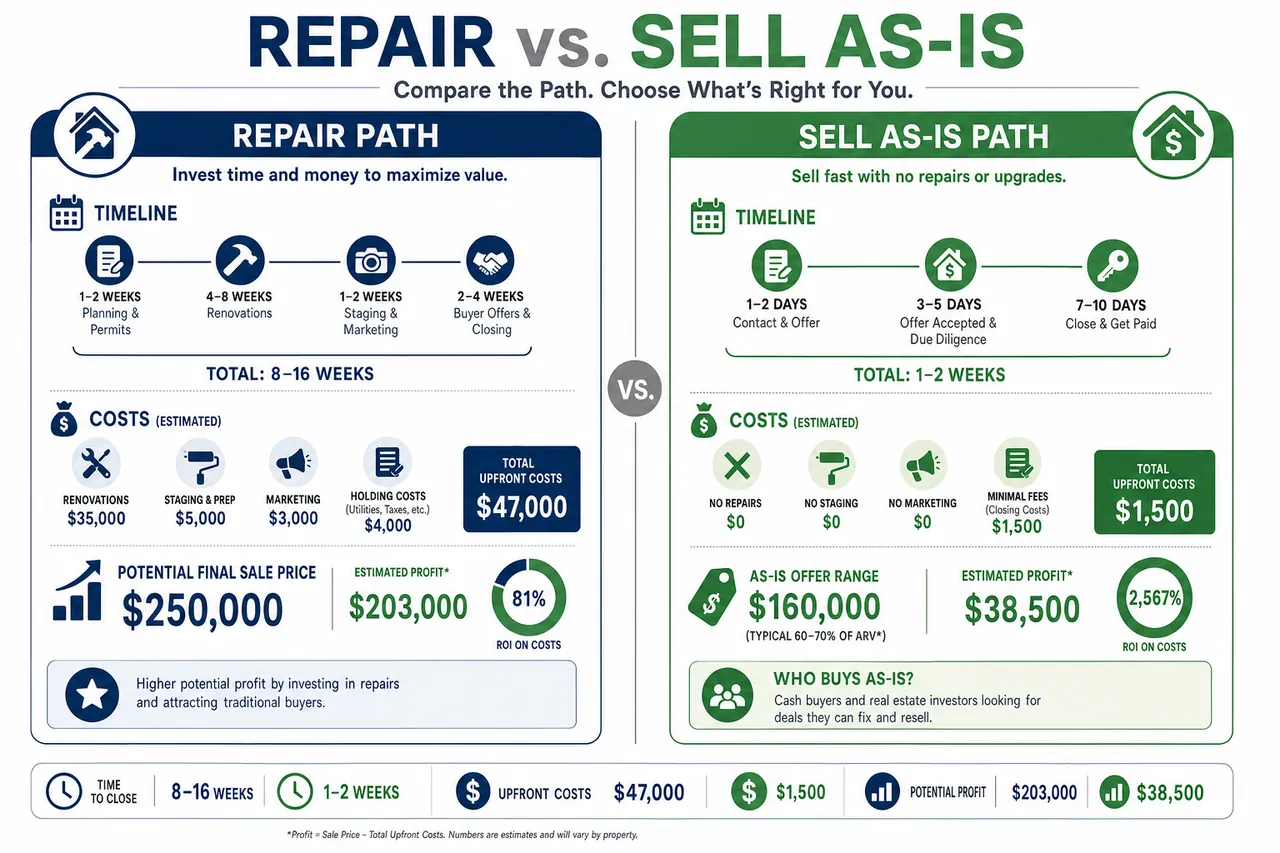
Now comes the big decision. You can sink money into repairs and sell at full market value. Or you can sell the property as-is to someone willing to buy it in its current state. What's the right move? It depends entirely on your situation — how much equity you have, how fast you need to sell, what cash you can access, and what buyers in your area are actually looking for.
Repair vs. Sell As-Is Decision Matrix
| Damage Severity | Typical Repair Cost | Sale Time (Repaired) | Sale Time (As-Is) | Recommended Option |
|---|---|---|---|---|
| Minor (cosmetic/small cracks) | $500 – $5,000 | 30–60 days | 45–90 days | Repair — high ROI, minimal disruption |
| Moderate (foundation settling) | $5,000 – $20,000 | 45–90 days | 14–45 days (cash buyer) | Depends on equity and financial position |
| Severe (major foundation/subsidence) | $20,000 – $60,000+ | 90–180 days | 14–30 days (cash buyer) | Sell as-is — repair ROI rarely justifies cost |
| Catastrophic (structural failure risk) | $50,000 – $150,000+ | 180+ days or unfeasible | 21–45 days (investor) | Sell as-is or demolition/land sale |
Repairing Before Selling: Pros and Pitfalls
Here's the math: repairs only make sense if the cost is less than 50% of the value bump you'll actually get back. And you need the cash or financing to do it without drowning yourself financially. When those stars align, repairing works. A fixed home qualifies for regular mortgages. You'll attract way more buyers. Sales close faster in most markets.
But the pitfalls are real too. Hidden damage emerges mid-project. Contractors miss deadlines. Your holding costs — mortgage, property taxes, insurance — keep piling up while repairs drag on. One surprise discovery can turn a profitable repair into a money pit.
Selling As-Is to Cash Buyers or Investors
When the damage is severe, your finances are tight, or you're facing a deadline, selling as-is to a cash buyer becomes your practical path forward. These buyers — including companies like KDS Homebuyers — close on homes no matter what condition they're in. No financing contingency. No appraisal. You could have cash in hand in as little as two weeks.
Yes, you'll get less than full market value. But think about what you're actually saving: zero repair costs, no holding expenses, no real estate commission, and you skip the whole uncertainty of waiting months for a traditional buyer to come along.
And if your house has multiple problems stacked on top of each other — say asbestos-containing materials plus knob-and-tube wiring — selling as-is becomes even smarter. Combining repair projects almost never pays off.
Back to topFinding and Attracting the Right Buyers

Here's the reality: the person buying your structurally damaged home isn't the same person shopping for a move-in-ready place. Match your property to the right buyer type, and you'll dramatically improve your chances of actually closing a deal.
Types of Buyers Interested in Damaged Properties
- Professional house flippers: These investors know exactly how to estimate repair costs. They've got contractor relationships locked in, so they can finish work fast and efficiently.
- House-buying companies: Cash buyers who'll purchase your place as-is. Fast, certain closings. No surprises.
- General contractors: Builders looking for a project they can flip for profit.
- Owner-occupants with construction skills: Handy folks willing to roll up their sleeves in exchange for below-market pricing.
- Land buyers: Sometimes the damage is so severe that the lot value is what really matters.
Marketing Strategies for As-Is Sales
Be honest. That's it—that's your best marketing move here. Lead with the engineer's report. Put the damage front and center in your listing. Price it to match what it actually is, not what you're hoping buyers won't notice. And here's what you need to understand: sophisticated investors will spot a misleading listing immediately and walk away. You'll waste everyone's time. Instead, target investor networks, real estate investment groups, and local house-buying companies directly. That's where your real buyers are.
Real Estate Auctions as an Alternative
Auctions can work—especially when you need a guaranteed closing date and your area has serious investor interest. The competitive bidding format sometimes pushes prices higher than what a single investor would offer. But know the downsides first. Auction fees typically run 5–10%. Your final price isn't guaranteed. And if investor turnout is weak, you could end up with a disappointingly low bid. Auctions make the most sense for severely damaged properties in desirable locations where the land alone has real value.
Back to topSelling Options Comparison
| Selling Method | Timeline | Costs/Fees | Property Condition | Typical Net | Best For |
|---|---|---|---|---|---|
| Traditional listing (repaired) | 90–180 days total | 5–6% agent commission + repairs | Repaired/move-in ready | Full market value minus repair and commission costs | You've got minor-to-moderate damage and solid equity |
| Traditional listing (as-is) | 60–120 days | 5–6% agent commission | As-is, disclosed | 10–30% below market | Moderate damage. Right choice if you can wait |
| Cash house-buying company | 7–21 days | No commission, no repair costs | Any condition | 15–35% below market | Severe damage, urgent situations, financial hardship |
| Investor/flipper sale | 14–30 days | Minimal or no commission | Any condition | 20–40% below market | Properties investors see potential in renovating |
| Real estate auction | 30–60 days to auction | 5–10% auction fees | Any condition | Variable — competitive bidding can push prices higher | Desirable neighborhoods, severe damage |
Step-by-Step Selling Process for Structural Damage
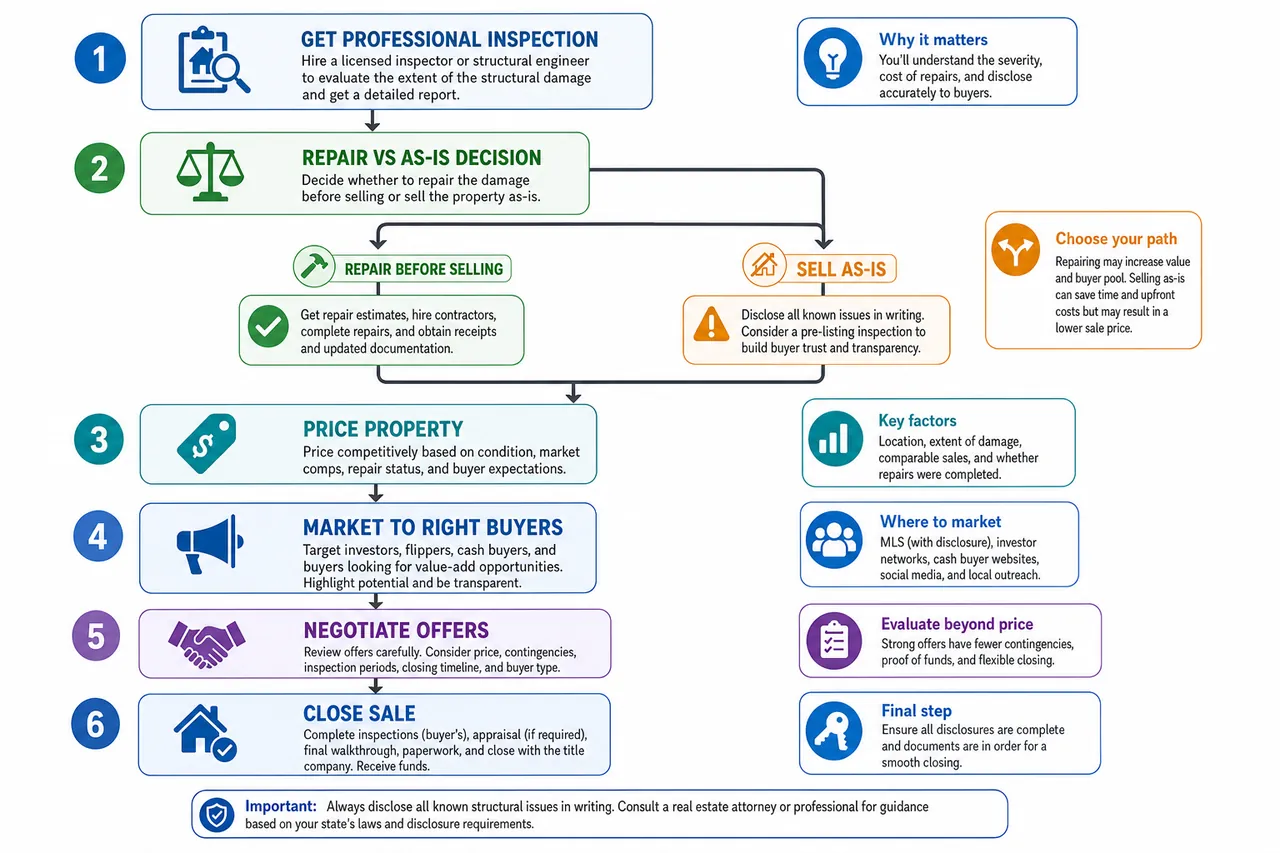
Here's what matters: a clear roadmap cuts through the noise. You'll avoid costly mistakes, stay protected legally, and actually get the best deal possible — whether you repair or sell as-is.
Step 1: Get a Structural Engineer Assessment
Don't call a general home inspector. You need a licensed structural engineer who'll give you a detailed written report. Expect to pay $300–$700. This becomes your North Star — it drives your pricing, your legal disclosures, and every repair decision you make.
Step 2: Get Repair Estimates
Contact at least two or three licensed contractors who specialize in structural work. Get written bids from each. Why? Because you need actual numbers, not guesses. Whether you fix it or sell as-is, these estimates are your ammunition in negotiations.
Step 3: Decide on Repair vs. As-Is Strategy
Pull out that engineer's report and those contractor bids. Compare them against the decision matrix we covered earlier. Can your equity absorb repair costs and still net you a reasonable return? If yes, fix it. If no, start building your list of cash buyers and investors.
Step 4: Prepare Your Disclosure Package
Gather everything. The engineer's report, contractor estimates, past inspection reports, insurance claims, repair receipts — all of it. Then complete your state's disclosure forms with brutal honesty. If the damage is serious, have a real estate attorney look over your paperwork before you list.
Step 5: Set a Realistic Asking Price
Work with an agent or pull comparable sales yourself. What are homes without structural damage selling for in your neighborhood? Start there. Then apply the right discount based on your damage and whether you're selling as-is or repaired.
Step 6: Negotiate Transparently
Buyers will absolutely use inspection reports to push for lower prices. That's normal. But here's your edge: counter with your documented repair estimates. Real numbers beat guessing games. You're negotiating from knowledge now, not fear.
Step 7: Plan for Closing Logistics
Cash buyers can close in a week. Traditional sales? Plan for contingencies, repair negotiations, and lender inspections — even on as-is deals. And budget extra time. Structural issues routinely add two to four weeks to closing timelines compared to a standard home sale.
Back to topTax Implications and Insurance Considerations
Here's something most people miss: if your home's value dropped because of structural damage, you might actually catch a break on taxes. Your capital gain could be smaller — sometimes significantly smaller. Before you close, talk to a tax advisor about your adjusted basis (that's your original purchase price plus any improvements you've made, minus depreciation) and how it stacks up against your final sale price. This matters especially if you've owned the place less than two years.
And then there's insurance. Many homeowner's policies actually cover structural damage — but only if it comes from covered perils like fire, windstorms, or certain water events. Have you looked at your actual policy lately? Pull it out and read through it before you list. If your damage is covered, filing a claim could pay for repairs without costing you a dime out of pocket. That could bump up your sale price considerably. Just remember: most policies won't touch gradual settling or soil movement. But sudden, accidental structural damage? That's often covered.
Flooding is its own beast.
If water caused your structural damage or your home sits in a flood zone, you need specific information for your state. Check out our guides for selling flood-damaged homes in Tennessee, Indiana flood damage disclosure requirements, or our full national guide to selling flood-damaged properties.
Back to topAdditional Resources and Next Steps
Selling a structurally damaged home isn't straightforward, but you absolutely can do it. Start with two things: get a structural engineer's assessment and dig into your state's disclosure rules. These give you hard facts to build your pricing, strategy, and buyer decisions around.
Your situation might be more complicated than just structural damage. Maybe you're dealing with asbestos in Florida, asbestos concerns in Colorado, or flood damage in Washington — multiple issues layered together. When that happens, a cash buyer who takes on all-condition properties often beats out everything else.
Think hard about three things before you decide between a traditional agent and a cash buyer. First: do you actually have 90–180 days plus the cash to fix things and list properly? Second: after repair costs come out, will you still make money? Third: how much do you value knowing the deal will close versus squeezing out every last dollar? Speed, certainty, and simplicity point you toward a direct cash sale.
Back to topConclusion
Selling a house with structural damage is challenging. But it's absolutely achievable. You just need the right approach. The homeowners who actually pull this off? They do four things: they get professional documentation upfront, they disclose honestly and completely, they price realistically based on actual repair costs, and they match their selling strategy to their own financial and time circumstances.
You've got real options here. Repair and list through an agent. Sell as-is to a traditional buyer. Work directly with a cash buyer who takes it off your hands fast. Pick the path that fits your situation — and stick with it.
Preparation and transparency make all the difference. Don't let structural damage paralyze you. You've got this.
Back to topFAQs About Selling a House With Structural Damage
Can you sell a house with structural damage without fixing it?
Yes, you can. The law doesn't force you to repair structural damage before you sell—but it does require you to disclose it. And here's the good news: plenty of sellers move structurally damaged homes as-is every year. Cash buyers, investors, and even some retail buyers will step up if the price reflects the repair work ahead. You trade a lower sale price for avoiding those expensive repairs and the months of construction headaches.
Are you legally required to declare structural problems when selling?
Every U.S. state says yes. Known material defects must be disclosed, and structural damage—foundation cracks, subsidence, failing support beams—almost always qualifies. Skip this step and you're looking at civil lawsuits, contract rescissions, or even fraud charges in some states. Document everything in writing and keep those disclosure copies forever. Don't take shortcuts here.
How much does structural damage devalue a home?
That's the million-dollar question. A few hairline foundation cracks might knock 5–8% off your value. But severe subsidence or underpinning failure? You could see 25–35% or more vanish. And it's not just the repair bill. Buyers add what's called a risk premium—that's 10–20% extra they hold back because they're nervous about unknowns and the chaos of major repairs. So expect offers to cover repair costs plus that safety buffer.
How long does it take to sell a structurally damaged house?
Speed depends entirely on your route. Selling to a cash buyer takes 7–21 days from offer to closing. List it as-is on the traditional market? Plan for 60–120 days, though honestly, it's often longer. Fix it first, then sell? That's 90–180+ days minimum, depending on how complex the repairs are. Here's the catch: structural damage kills a lot of conventional deals at inspection, so those traditional timelines almost always stretch.
Will homeowner's insurance cover structural damage?
Maybe. Most policies cover sudden, accidental damage from things like fire, windstorms, or a car crashing into your house. Gradual settling, soil movement, normal wear and tear? Those aren't covered. Neither is damage from neglect. Call your insurer and pull up your actual policy before you count on anything. If you've got a legitimate claim, file it before you list. That money could fund repairs and boost your sale position.
Should I hire a real estate agent or go directly to a cash buyer?
If you've got minor to moderate damage and solid equity, a real estate agent who knows distressed properties might fetch you a higher net price after commissions. But severe damage, financial pressure, or a tight timeline? That's when a reputable cash buyer like KDS Homebuyers makes sense. You get speed, certainty, and zero repair obligations. No surprises. No deal falling apart at inspection.
Back to topMore in Inspections and disclosures
- Selling a House with Termites: Disclosure, Treatment, and Buyer Impact
- Is It Illegal to Sell a House With Mold? Disclosure Laws and Liability
- Selling a House with Roof Damage: Disclosure, Repair, or Price Reduction
- Selling a House with Pests or Termites: Disclosure and Fixes
- Selling a House with Foundation Cracks: Disclosure and Repair Options
- Selling a House with Mold: Disclosure Requirements and Buyer Options
See our guide: “How to Sell a House As-Is: What It Means and How It Works” →

