

Selling a House With Septic Tank Problems: What Buyers Need to Know

Table of Contents
- What's a Septic System and How Does It Work?
- Signs Your Septic System Is Failing
- Is It Legal to Sell a House With a Failed Septic System?
- Your Options for Selling a House With Septic Tank Problems
- Repair vs. Replacement: Costs and Timeline
- Disclosure Requirements and Legal Responsibilities
- How Septic Problems Affect Your Home's Value
- Pros and Cons of Each Selling Strategy
- State Septic Regulations Quick Reference
- Tips for Successfully Selling With Septic Issues
- Conclusion: You've Got More Options Than You Think
- Frequently Asked Questions
Your septic system fails right before — or worse, during — a home sale. The smell hits you first. Then the soggy yard. Then the inspection report lands with those alarming red flags, and suddenly the whole deal feels impossible.
Selling a house that needs work? Start with our guide to selling a house as-is. It explains what as-is means, how pricing works and every way to sell a house with problems.
But here's what actually happens: thousands of homeowners sell houses with septic tank issues every single year. It's entirely possible. You're not stuck.
What you need to know comes down to three things. First, your legal obligations — what you're actually required to disclose in your state. Second, the real numbers: what repairs actually cost, what inspections run, what different solutions price out to. Third, your options. Do you repair before selling? Do you disclose and negotiate? Do you find a cash buyer who'll take it as-is?
This guide walks you through all of it. Disclosure laws. Repair costs. Cash buyer strategies. The numbers, the timelines, the financial reality of each path. By the end, you'll have what you need to make a clear-eyed decision about which direction fits your situation.
What's a Septic System and How Does It Work?
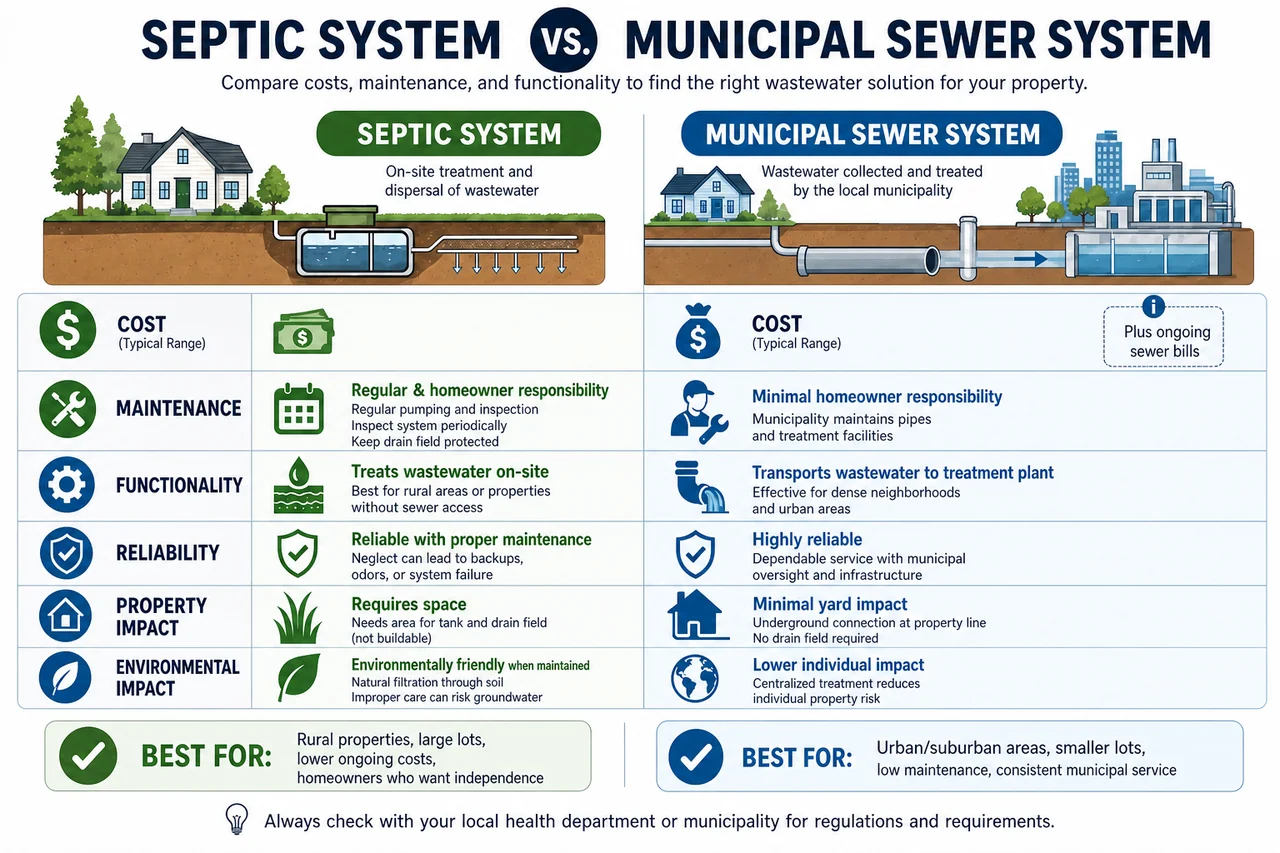
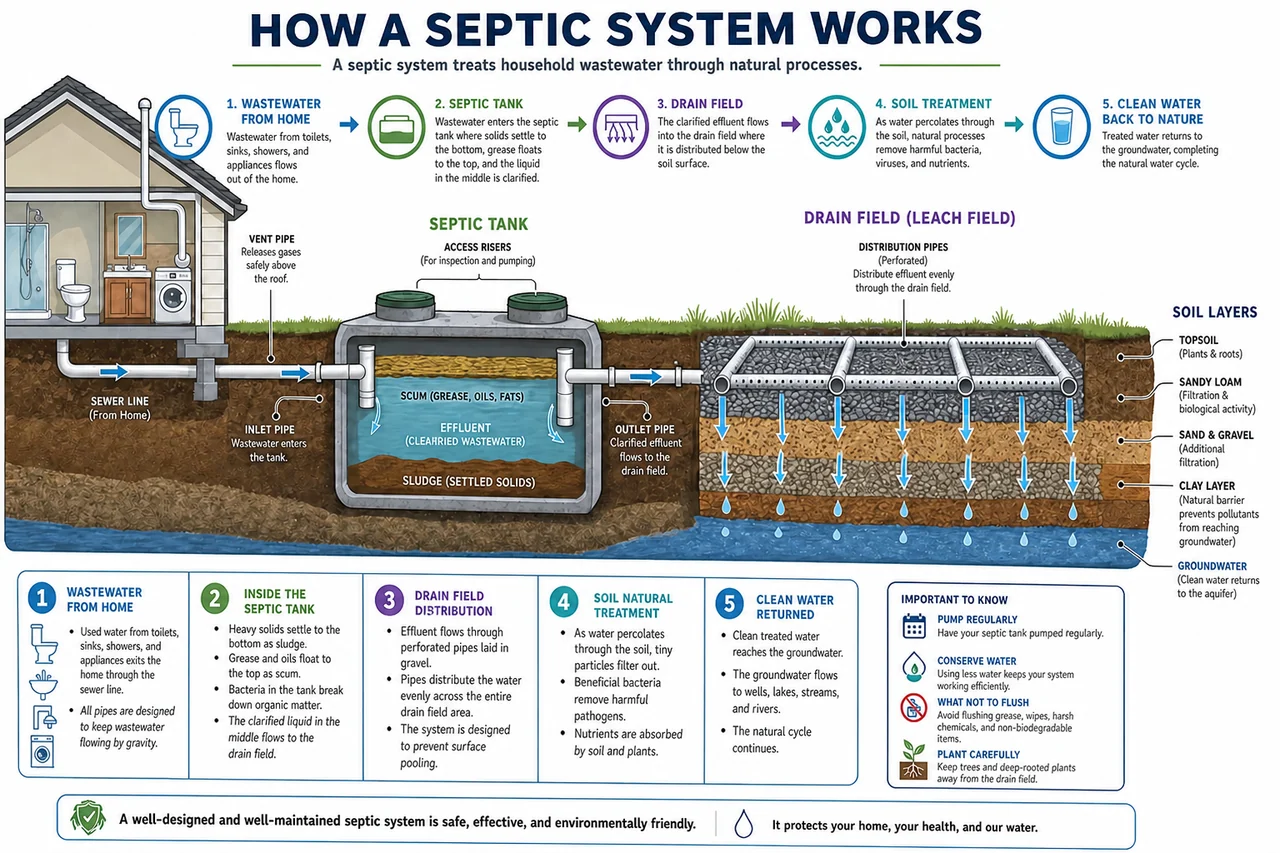
About one in five U.S. homes relies on a septic system, according to the EPA. You'll find them most often in rural and suburban areas where the city doesn't have sewer lines running to your property. Before you make any moves — selling, refinancing, or dealing with a problem — you need to understand what you're working with.
Basic Components of a Septic System
Three main parts make up a conventional septic system: the septic tank, the distribution box, and the drain field (sometimes called the leach field). Here's the flow: wastewater leaves your house and enters the tank. Solids sink to the bottom and become sludge. Lighter materials float up as scum. The liquid in the middle — the effluent — gets distributed to your drain field. There, soil gradually absorbs and filters it.
How Septic Systems Differ From Municipal Sewage
Here's the critical difference. Municipal systems send your wastewater miles away to a centralized treatment plant. Your septic system treats everything right there on your property. That matters. A lot.
And here's why: everything depends on your system working and your soil being suitable. If the city's sewer line fails, that's their headache — and their liability. If your septic fails? That's on you. Buyers know this. Lenders know this. Inspectors definitely know this. When you're selling or refinancing, regulators treat your septic system as a major property feature that demands careful examination and full disclosure.
Back to topSigns Your Septic System Is Failing

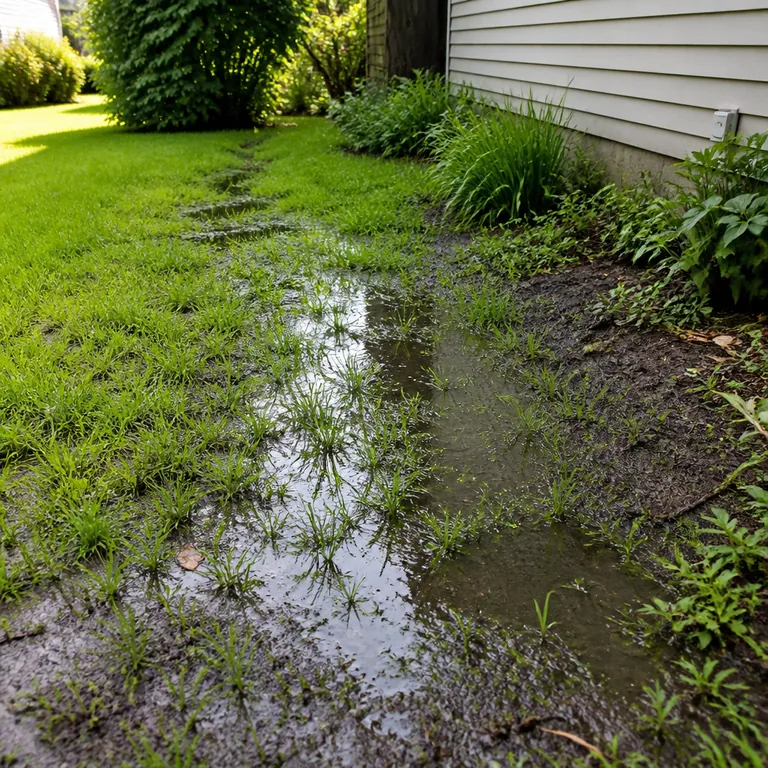
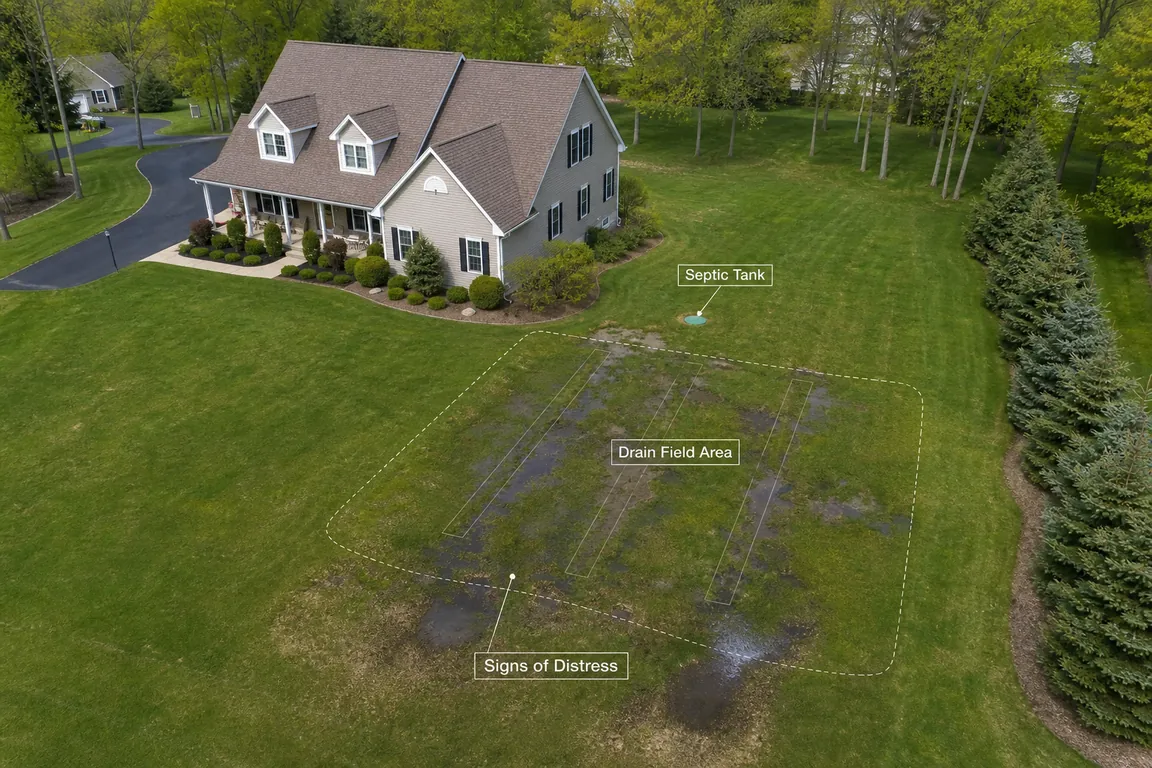
Here's the thing: sometimes a buyer's inspector catches the problem. But plenty of homeowners have been dealing with this quietly for months or even years. Catching these warning signs early? That gives you choices. And it gives you time to handle them strategically instead of in a panic.
Visual Indicators of Septic Failure
- Soggy patches or standing water in the yard — especially over the drain field. This means your system's saturated and can't absorb effluent the way it should
- Unusually lush, green grass right above the drain field area. Sure, it looks great, but it's telling you that partially treated wastewater is bubbling up to the surface
- Visible sewage or dark liquid pooling near the tank lid or anywhere in low spots on your property
Odor and Drainage Problems
- Foul sewage odors inside your home or outside near the tank and drain field
- Slow-draining sinks, tubs, and toilets all over the house. And notice — this is everywhere, not just one fixture (a single slow drain usually just means you've got a local clog)
- Gurgling sounds in your pipes or toilets as water drains elsewhere in the home
- Sewage backups into your drains or toilets. This is serious. It needs immediate attention
Common Inspection Red Flags
When a professional inspects your septic system, they're looking for cracked or deteriorated tank walls, damaged baffles, effluent levels that are running too high, and soil compaction or damage in the drain field. They'll also check for signs of past failures or unpermitted repairs. Here's what matters: in many states, a septic inspection is legally required before you sell. That's why you need to know your local rules before you list the property.
Back to topIs It Legal to Sell a House With a Failed Septic System?
Here's what keeps sellers up at night. And the real answer? It depends on where you live — but in most places, you can sell. You'll just need to follow the right disclosure steps.
Disclosure Requirements by State
Almost every state requires you to disclose known material defects. A failing septic system definitely counts as one. Some states demand even more: they require a septic inspection before you can close. Massachusetts? You need a Title V inspection. Washington State makes you disclose any known septic problems. And California requires disclosure of anything that affects whether someone can actually live there — which includes septic issues.
Local Regulations and Compliance Standards
Your county or municipal health department has its own rules too. That's on top of state law. Here's the tricky part: some jurisdictions require your system to meet current code when you sell it — even if it was perfectly legal when it was installed decades ago. This "upgrade on transfer" rule can cost you real money and add months to your timeline. Call your local health department before you list. Don't wait.
Consequences of Non-Disclosure
Hiding a septic problem you know about is a legal minefield. Buyers will discover it eventually. When they do, they can sue you for damages, demand their money back, or force you to pay for repairs — and they usually win. Some states also hit sellers with fines. A few even allow criminal charges. Transparency is always your safest move. Write down what you know. Write down when you found out. Document everything you've done about it.
Back to topYour Options for Selling a House With Septic Tank Problems

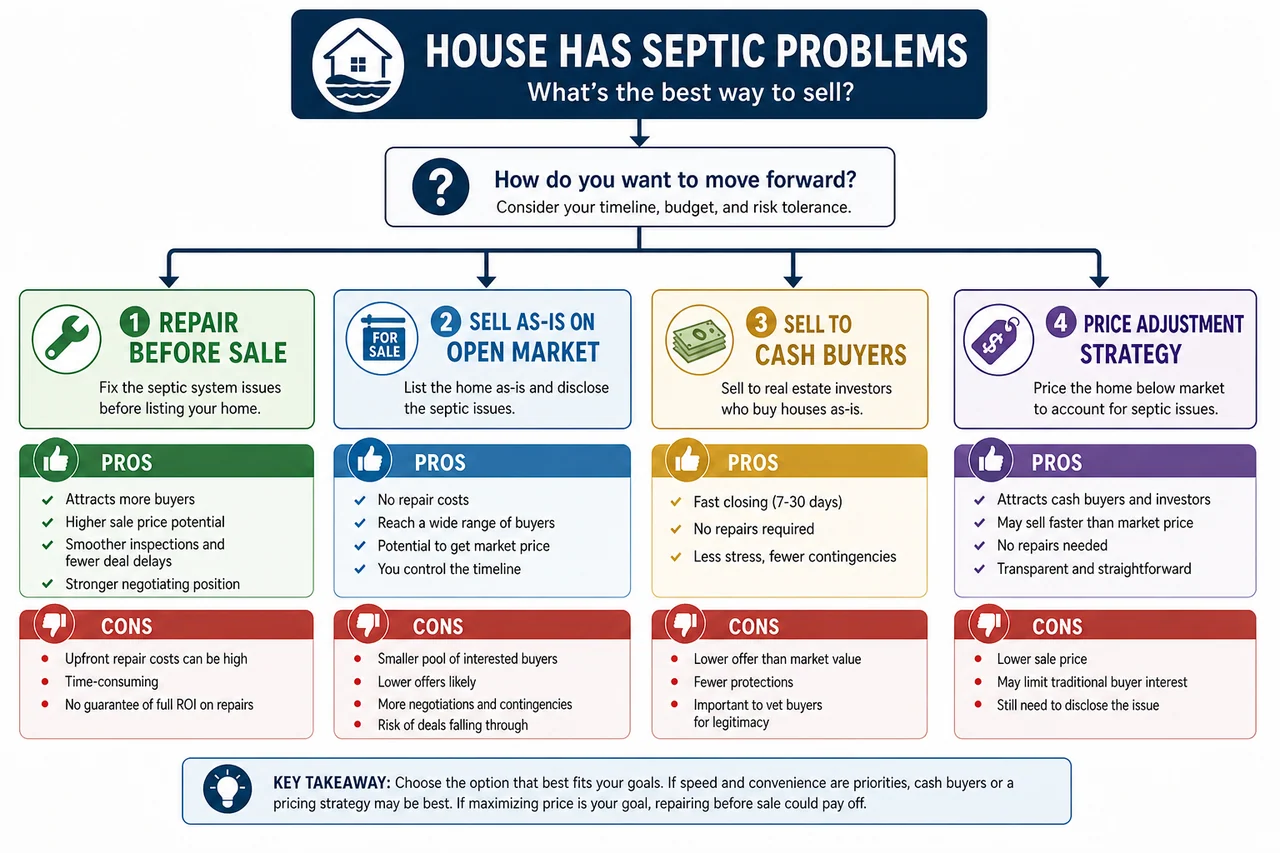
You've got four realistic paths forward once you've assessed what you're dealing with and know your disclosure obligations. The catch? They all have different price tags, different timelines, and different trade-offs.
Option 1: Repair or Replace the Septic System
Fix it before you list, and you're in the strongest position to negotiate. A working septic system that's been recently serviced removes a huge red flag for buyers. And here's the real benefit: your home stays eligible for conventional financing, FHA loans, and VA loans — which means you're not limiting yourself to a tiny pool of cash buyers.
The tradeoff is real money upfront. You're looking at anywhere from $500 for minor repairs to $25,000 or more for a full replacement. Some jobs also take weeks to complete, and you'll need permits. Is the time and expense worth it? That depends on your local market and how badly the system's failing.
Option 2: Sell As-Is on the Open Market
You can absolutely list with full disclosure of the septic issues and adjust your price to match. Investors and contractors actively hunt for properties with known problems — they know how to fix them and build those costs into their offers. Even experienced rural homebuyers aren't spooked by septic issues the way suburban buyers are.
But here's the hard truth: your buyer pool shrinks fast. And if someone needs conventional financing? Their lender will likely kill the deal if the septic system fails inspection.
Option 3: Sell for Cash to Investors or iBuyers
Cash buyers like real estate investors and companies such as KDS Homebuyers don't care about your septic system — they buy in as-is condition, period. No lender breathing down anyone's neck. No inspection contingencies to negotiate. No repairs required before closing.
You'll take a price hit below what you'd get on the open market. But factor in your carrying costs, what you'd spend on repairs, and how long your house would sit listed before someone actually made an offer. Sometimes that discount isn't really a discount at all.
Option 4: Price Adjustment Strategy
List at a reduced price that factors in the repair or replacement cost — then offer a buyer credit at closing. Savvy, budget-conscious buyers sometimes go for this because they can handle the work themselves and feel like they're getting a deal.
And yet lenders still might require proof of a working system before they'll fund the loan. That's the risk you're taking with this approach.
Back to topRepair vs. Replacement: Costs and Timeline
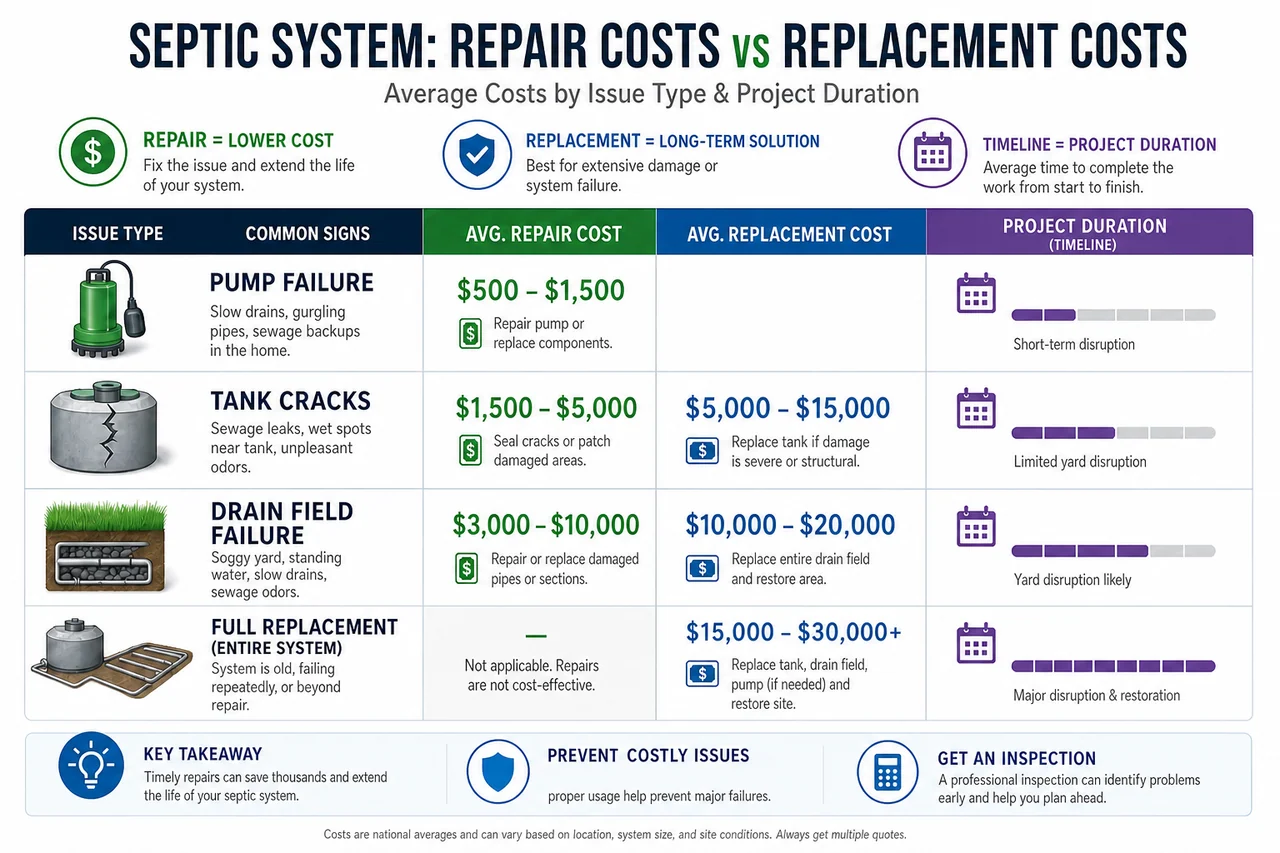
Here's the reality: repair costs vary wildly. A minor fix might run a few hundred dollars. But a full system replacement? That's $15,000 to $30,000+. And the difference between those two scenarios can literally determine whether you stay afloat financially or find yourself underwater on the sale.
| Issue Type | Severity Level | Typical Repair Cost | Replacement Cost | Impact on Sale |
|---|---|---|---|---|
| Clogged inlet/outlet baffle | Minor | $200–$600 | N/A | Minimal if resolved before listing |
| Pump failure (in pump systems) | Moderate | $500–$1,500 | N/A | Low if disclosed and repaired |
| Tank pumping and cleaning | Routine maintenance | $300–$700 | N/A | Positive — shows maintenance history |
| Cracked or leaking tank | Moderate–Severe | $1,500–$5,000 | $5,000–$15,000 | High — triggers lender concerns |
| Drain field failure (partial) | Severe | $3,000–$10,000 | $10,000–$20,000 | Very high — major buyer deterrent |
| Full system failure / replacement needed | Critical | N/A | $15,000–$30,000+ | Extreme — cash buyers preferred |
But money's only half the equation. Don't forget about time.
A clogged baffle? You're looking at one or two days, tops. Need a new drain field? That's a different story entirely. You'll need soil percolation tests, permits pulled from your county, contractor availability, and multiple inspections. That process typically stretches four to twelve weeks depending on where you live and what season it is. If you're selling on a deadline or facing foreclosure, that kind of delay can kill your deal before it even starts.
Back to topDisclosure Requirements and Legal Responsibilities
Here's the thing: disclosure matters more than you might think. Getting these details right isn't just good practice — it's the difference between a smooth sale and a lawsuit that drains your bank account.
What Must Be Disclosed to Buyers
Your buyer needs to know about any defects or problems with the septic system. Tell them the age if you know it. Share records of previous repairs and maintenance work. Hand over any inspection reports you've had done. And if you've received notices of violation or non-compliance from your local health department, that goes on the table too. Most states have formal disclosure forms with a septic section built right in — check yours.
Timing of Disclosure in the Sale Process
Timing is critical here. Most states want disclosure before the offer gets accepted. Don't wait until closing. And here's where people slip up: just because your buyer ordered their own inspection doesn't mean you're off the hook. You still need to provide written disclosure early and keep that signed receipt proving they got it.
Documentation and Inspection Reports
Pull together everything. Permits, installation records, inspection reports, pumping logs, repair invoices, emails with the health department — all of it.
This paper trail protects you legally. But there's a bonus: it actually increases buyer confidence. A well-documented maintenance history shows you cared for the system, even if there were problems along the way.
Back to topHow Septic Problems Affect Your Home's Value
A bad septic system does more than create headaches during negotiations. It directly tanks what buyers will pay — and shrinks the pool of people who can even buy in the first place. Knowing how this works helps you price realistically and make smarter decisions.
Market Impact and Price Reduction Calculations
Real estate data is consistent: a known septic problem cuts your home's value by 5% to 15%. Sometimes more. On a $350,000 home, you're looking at $17,500 to $52,500 less. The actual hit depends on how bad the problem is, what it'll cost to fix, and what buyers in your area expect.
Here's a practical formula that works: price your home as if everything worked perfectly, then subtract 125% to 150% of the repair estimate. That extra percentage covers the buyer's risk and gives you negotiating room. Need a $12,000 drain field replacement? Plan on discounting $15,000 to $18,000 from your asking price — minimum.
Financing Challenges for Buyers
Most sellers don't realize how big this problem is. FHA and VA loans — the backbone of first-time and veteran buyer financing — require a functional septic system that passes local health inspection at closing. If it fails, the lender won't fund the loan until it's fixed. So even a buyer who loves your house and has the money may not be able to close without you fixing the septic first.
Conventional loans through Fannie Mae and Freddie Mac work the same way in most cases. The bottom line? A failed septic system locks out the majority of buyer financing options. That's why cash buyers become so valuable here. And sellers dealing with roof issues face the same financing squeeze — check out our guide on selling a house with an old or damaged roof to see how similar problems play out.
Reduced Buyer Pool and Longer Market Time
Once you cut out finance-dependent buyers, your potential buyer pool drops by 50% or more. Homes with septic problems sit unsold for 30 to 90 days longer than comparable properties in good shape. And every single day it sits, you're still paying the mortgage, property taxes, insurance, and utilities. That's money people rarely factor into the "just leave it broken" strategy — but it adds up fast.
Back to topPros and Cons of Each Selling Strategy
You've got four main options. Let's break down how each one actually works for your situation.
| Strategy | Pros | Cons | Time to Close | Best For |
|---|---|---|---|---|
| Repair Before Listing | Full buyer pool, full price, all financing options | High upfront cost, repair timeline delays | 45–90 days after repairs complete | Sellers with equity and time |
| Sell As-Is (Open Market) | No repair cost, list quickly | Reduced buyer pool, lower offers, lender issues | 60–120 days | Sellers with investor-friendly markets |
| Cash Buyer / Investor Sale | Fast closing, no repairs, certainty | Below market price (typically 70–85% of ARV) | 7–30 days | Sellers needing speed or avoiding repairs |
| Price Reduction + Buyer Credit | Attracts bargain buyers, no upfront repair cost | Still faces lender scrutiny, complex negotiations | 45–90 days | Sellers in cash-buyer-friendly markets |
Three things matter most here. How much time do you actually have? How much equity can you afford to lose on a discount? And just how bad is that septic problem?
Dealing with a different major issue? Check out our guides on selling a house with termite damage and selling a house with an old or damaged roof in Florida. They walk you through the same kind of decision-making process.
Back to topState Septic Regulations Quick Reference
Every state handles septic rules differently. The Northeast and Pacific Northwest? They've got some of the toughest standards around. But here's the thing — regulations change constantly. Before you do anything, call your local health department and verify what's actually required right now.
| State | Inspection Required at Sale | Disclosure Required | Repair Timeline | Compliance Standard |
|---|---|---|---|---|
| Massachusetts | Yes (Title V) | Yes | Before closing or escrow funds held | State Title V Code |
| Washington | Yes (in most counties) | Yes | Varies by county | DOH/County standards |
| California | No (but disclosure required) | Yes | As required by local jurisdiction | County environmental health |
| Florida | No (voluntary) | Yes | Negotiated between parties | Florida DOH standards |
| Tennessee | No (voluntary) | Yes | Negotiated | TDEC regulations |
| Colorado | No (county-specific) | Yes | Varies by county | County public health |
| Indiana | No (voluntary) | Yes | Negotiated | IDEM standards |
Washington State imposes strict disclosure rules on just about everything. And septic systems are no exception. That's why our guide on selling a house with an old or damaged roof in Washington walks through how the state's disclosure environment affects other property defects too. Looking at Tennessee? The rules are looser there, but you still need to know what you're dealing with. Check out our Tennessee termite damage selling guide to understand how state law treats property defects broadly.
Back to topTips for Successfully Selling With Septic Issues
You've got three main paths forward: fix it, sell as-is, or find a cash buyer. Whichever route you choose, these practical steps will help you avoid nasty surprises down the road.
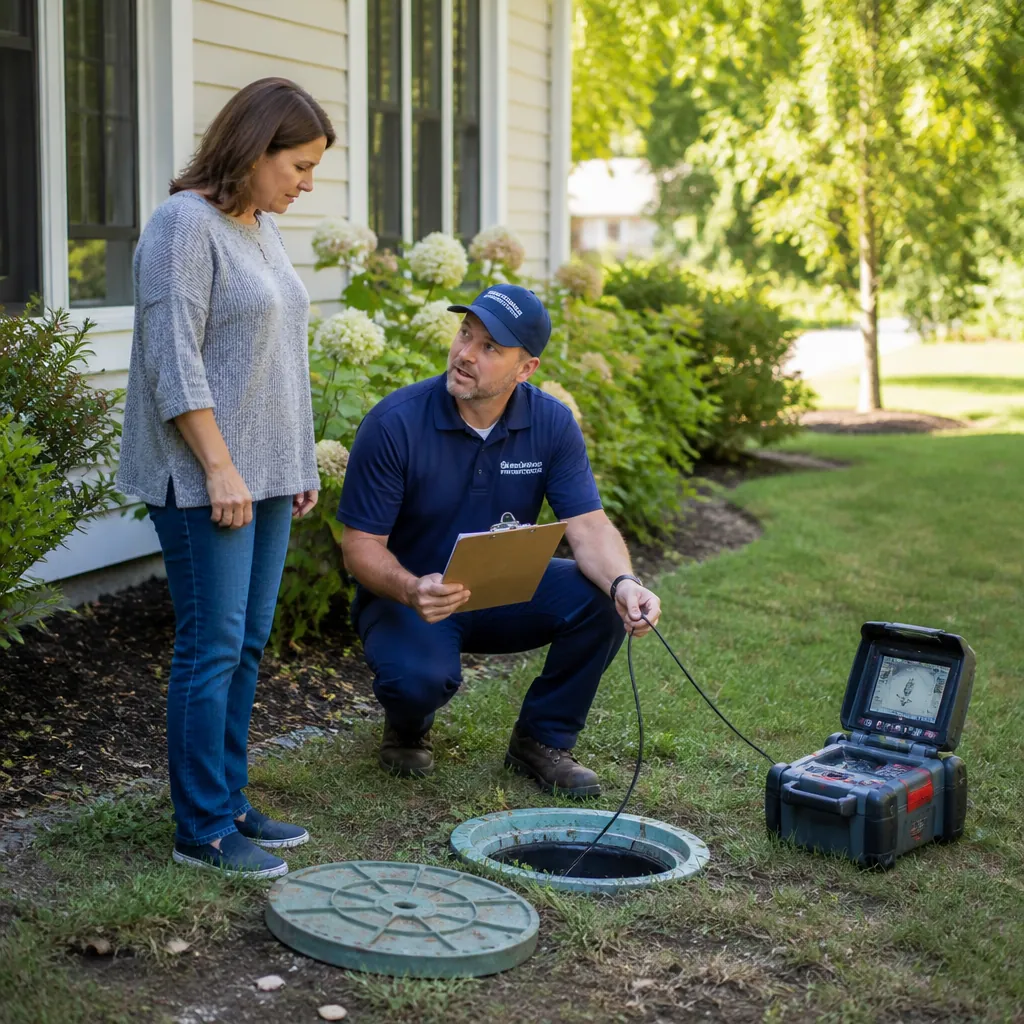
Get a Professional Inspection Before Listing
Your buyer's inspector will find problems eventually. Why not find them first? Commission your own inspection before you list — it's called a Title V inspection in Massachusetts or just a septic inspection everywhere else. You'll have time to make smart decisions instead of panicked ones. And you'll show buyers you're being honest with them.
Get Multiple Repair Quotes
Septic repair costs swing wildly depending on who you hire and where you live. Get at least three quotes. Ask each contractor about permitting costs, how long the job takes, and whether their solution will actually pass inspection. The lowest price doesn't mean much if it won't get you through the inspection process.
Set Realistic Pricing From Day One
Don't overprice and then drop your price repeatedly. That screams desperation and invites lowball offers. Price it right from the start based on what similar homes in your area sell for, minus a fair discount for the septic situation. Better listings attract serious buyers. Serious buyers close faster.
Be Upfront in Your Listing Description
You don't have to hide septic issues in the fine print. Consider mentioning them directly in your listing when it makes sense. Try something like "priced to reflect septic system that needs replacement." Buyers who see this are already prepared. They won't bail out the moment the inspector reports what you already told them. And you're protected legally.
Offer Buyer Credits or Concessions
Instead of spending your own money to fix the system, offer a credit at closing. Make it equal to — or slightly above — what the repair should cost. Your buyer hires their own contractor. You keep the sale moving. Lenders are fine with this because you can set up repair escrow. Just work with a real estate attorney who knows how to structure these properly.
Maintain Detailed Documentation
Gather everything: original permits, installation records, pumping logs, repair receipts, inspection reports. Put it all in one folder and share it with buyers and their agents. This shows you've been a responsible owner. It calms buyer nerves. And it protects you legally if something comes up after closing. Sellers in complex situations — like those dealing with Medicaid lookback rules when selling a house — already know this truth: solid documentation turns messy transactions into clean ones.
Back to topConclusion: You've Got More Options Than You Think
Selling a house with septic tank issues is challenging. But it's far from impossible. The sellers who actually succeed here share three things: they act early, they get real data, and they make decisions based on numbers—not panic. What does the repair actually cost? Find out. Know what your state legally requires you to disclose. Then run the math on each option you're considering, factoring in how long you'll carry the house and what that costs you each month. And if a quick cash sale makes sense for your situation, don't dismiss it just because you'd rather have the repairs done.
You might be in Indiana staring down a failed drain field. Maybe you're in Colorado watching your system age past its useful life. Tennessee homeowners sometimes deal with systems that work fine today but won't pass inspection tomorrow. The path forward is identical regardless: get clear on what's wrong, document everything, and move forward with a plan. Every month that septic problem sits without a strategy? It bleeds money from you—in carrying costs, in stress, in buyer hesitation.
Ready to explore a cash sale or curious what your home might fetch as-is? KDS Homebuyers purchases homes in any condition, including those with septic system problems. No obligation. No repairs required. No hidden catches.
Back to topFrequently Asked Questions
Can I sell my house without fixing the septic system?
Yes. In most states, you can sell a home with a failed or problematic septic system as long as you disclose the condition to buyers. You're generally not legally required to fix it before selling — unless your local ordinances specifically mandate it (and some counties and states do). What are your actual options here? You could sell as-is to a cash buyer, list on the open market with full disclosure and adjusted pricing, or offer a buyer credit to cover repair costs at closing. But don't skip this step: verify your specific state and county requirements with a real estate attorney.
Will buyers be able to finance a home with septic problems?
FHA and VA loans typically require a functioning, compliant septic system as a condition of loan approval. If the system fails inspection, lenders will generally require repairs before closing — or deny the loan entirely. Conventional loans have similar requirements, though they're sometimes more flexible. This financing hurdle is exactly why many sellers with serious septic issues turn to cash buyers. No lender requirements to satisfy. No inspection contingencies that kill the deal.
What if my septic system is old but still functional?
Much less of an obstacle than a failing one. You'll still need to disclose the age and condition, and buyers may request a price concession or inspection contingency. But here's what matters: an older system that actually works — especially one with a documented maintenance history — is very different from one that's actively failing. Get a current inspection to establish its condition in writing. Consider proactive pumping and servicing before listing to show potential buyers the system is being maintained.
How long does it take to replace a septic system?
Full septic system replacement typically takes four to twelve weeks from the time you engage a contractor to the final inspection sign-off. That timeline includes soil percolation tests (if required), design and permitting, contractor scheduling, installation, and municipal or county inspection. Seasons matter: frozen ground in winter can delay installation significantly in northern states. And if you need to sell quickly? Full replacement may not be realistic. A cash sale or as-is listing might be your better move.
Does a septic problem always reduce my home's value significantly?
It depends on the severity of the issue and your local market conditions. A minor problem like a faulty pump or clogged baffle that costs $500 to fix has almost no impact on value if repaired before listing. A failed drain field requiring $20,000 in replacement costs? That meaningfully reduces your home's value and shrinks your buyer pool. Get an accurate diagnosis and realistic repair quotes so you can calculate the actual financial impact. Don't assume the worst or hope buyers won't notice.
Back to topMore in Foundation, systems and pests
- Selling a House With Pest Damage: Termites, Bed Bugs, and More
- Selling a House With Polybutylene Pipes: What Buyers Will Ask
- Selling a House With Knob-and-Tube Wiring: Risks and Options
- Selling a House With Termite Damage: What Buyers Need to Know
- How to Sell a House With Foundation Problems
See our guide: “How to Sell a House As-Is: What It Means and How It Works” →

