

Selling a House With Defects: What You Must Disclose to Buyers

Table of Contents
- Why Disclosure Laws Exist — and Why They Matter to You
- The Two Legal Frameworks: Caveat Emptor vs. Mandatory Disclosure
- The Federal Lead-Paint Disclosure Requirement
- Material Defects: What you're Generally Required to Disclose
- The "Known" Standard — and Why It Matters
- Comparing Your Options: Fix, Disclose and Discount, or Sell As-Is
- What Happens When Sellers Fail to Disclose
- State-Specific Nuances: Why You Must Check Local Law
- Practical Steps for Sellers With Known Defects
- A Note on the Current Market Context
- Conclusion: Disclosure Is Protection, Not Defeat
- Frequently Asked Questions
Selling a house with defects is more common than most people realize. But here's what catches sellers off guard: the legal liability can haunt you for years. A leaky roof. Aging electrical panels. A cracked foundation. Mold in the crawlspace. These issues force a critical choice—and what you decide to tell (or not tell) buyers matters tremendously. According to a Cinch Home Services study cited by the National Association of Realtors, 60% of sellers admit to not disclosing a known defect. That's the statistic explaining why failure to disclose ranks as the single largest source of real estate lawsuits. And you don't want to be part of that group.
This guide covers what the law actually requires you to disclose. It explains which defects demand your immediate attention. It shows you what happens when sellers stay silent—and the consequences can be serious. Most importantly, you'll learn how to navigate the entire transaction, whether you're fixing problems before listing or selling as-is.
Why Disclosure Laws Exist — and Why They Matter to You
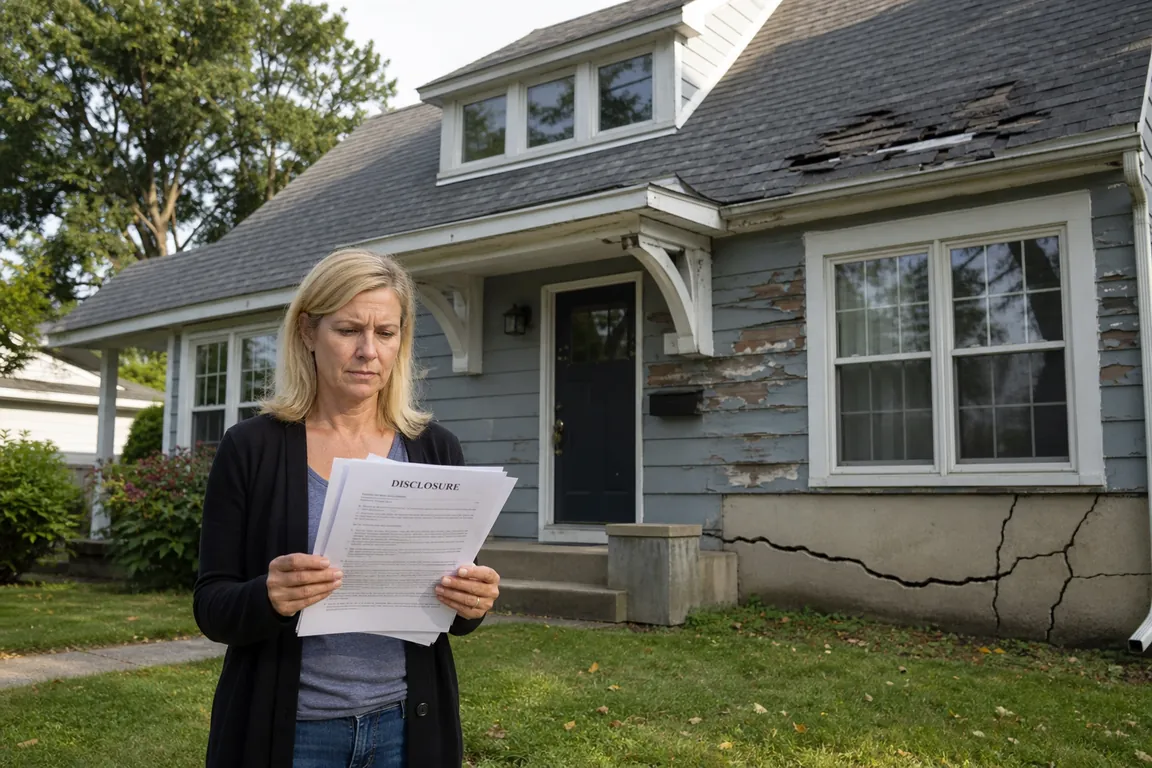
Real estate disclosure laws exist to close the information gap between sellers and buyers. You know this house. You live with its quirks, its history, the problems only you've seen up close. The buyer? They're walking through for the first time. Disclosure laws require you to share what you know so buyers can actually make an informed decision — and price their offer based on reality, not surprises.
The stakes are real. A 2025 NAR report found that 23% of buyers report unexpected major repairs after closing. When someone discovers a problem you didn't mention, they don't call a contractor first. They call a lawyer. And CRES Insurance data from April 2026 shows something sobering: more than 70% of real estate errors-and-omissions lawsuits stem from failure to disclose. This isn't just about being ethical — it's about protecting yourself financially.
Back to topThe Two Legal Frameworks: Caveat Emptor vs. Mandatory Disclosure

Which legal framework governs your state? You need to know this before you go any further. The rules vary dramatically across the country, and what worked for your neighbor's sale might leave you with zero recourse after closing.
Caveat Emptor States
"Caveat emptor" means "let the buyer beware." In these states, sellers don't have to tell you anything about defects. You're responsible for digging them up yourself — that's the burden of the buyer in these jurisdictions. According to DocJacket's 2026 state disclosure resource, at least two states — Arkansas and Alabama — operate under caveat emptor principles, though that number may shift as legislatures continue tightening their rules.
But don't assume sellers can hide things. They can't actively lie or deliberately conceal defects. The doctrine just means they don't have to volunteer information without being asked.
Mandatory Disclosure States
Most states take the opposite approach. Sellers must complete a written disclosure form before or when you sign the contract. The questions are direct: Has it ever flooded? Any mold you know about? Structural damage? And here's what matters — answering "no" when you know the answer is "yes" isn't just an oversight. That's misrepresentation, and it creates real legal liability in most states. Some states go further and demand separate disclosures for specific hazards, HOA issues, or things like proximity to military flight paths.
One federal requirement applies regardless of which framework your state uses. And the penalties for violating it are serious.
Back to topThe Federal Lead-Paint Disclosure Requirement
Your home was built before 1978? Then federal law has something to say about it. Title X — the Residential Lead-Based Paint Hazard Reduction Act — requires you to disclose any known lead-based paint or lead hazards before closing, according to the EPA's current guidance on real estate disclosures. And this applies everywhere. All 50 states have to follow it, no matter what your local laws say.
So what exactly do you need to do?
- Provide buyers with the EPA pamphlet Protect Your Family From Lead in Your Home
- Disclose any known lead-based paint or related hazards in writing
- Give buyers a 10-day window to conduct a lead-paint inspection or risk assessment (buyers may waive this right in writing)
- Attach a lead-paint disclosure addendum to the purchase contract
Skip these steps and you're looking at real money out of your pocket. The federal penalty is $11,000 per violation (updated as of May 14, 2026). But wait — the EPA adjusts this number annually for inflation under 40 CFR §19.4. If you're selling a pre-1978 home right now, check the current EPA enforcement guidance to see what the 2026 penalty ceiling actually is.
Civil fines are one thing. But if a buyer can prove you knowingly hid lead hazards? That's a different beast. Under 24 CFR Part 35 Subpart A, a court can hit you with treble damages — that's triple what they actually lost. Imagine a buyer proves $30,000 in damages from undisclosed lead. You could end up owing $90,000.
Back to topMaterial Defects: What you're Generally Required to Disclose

Here's the thing: every state defines this differently. But they all circle back to one core idea — a "material defect" is anything that substantially changes what your home's worth, or that could affect someone's health and safety. It's basically any condition a reasonable buyer would want to know about before signing on the dotted line. Most mandatory-disclosure states use pretty similar categories on their forms.
Structural and Foundation Issues
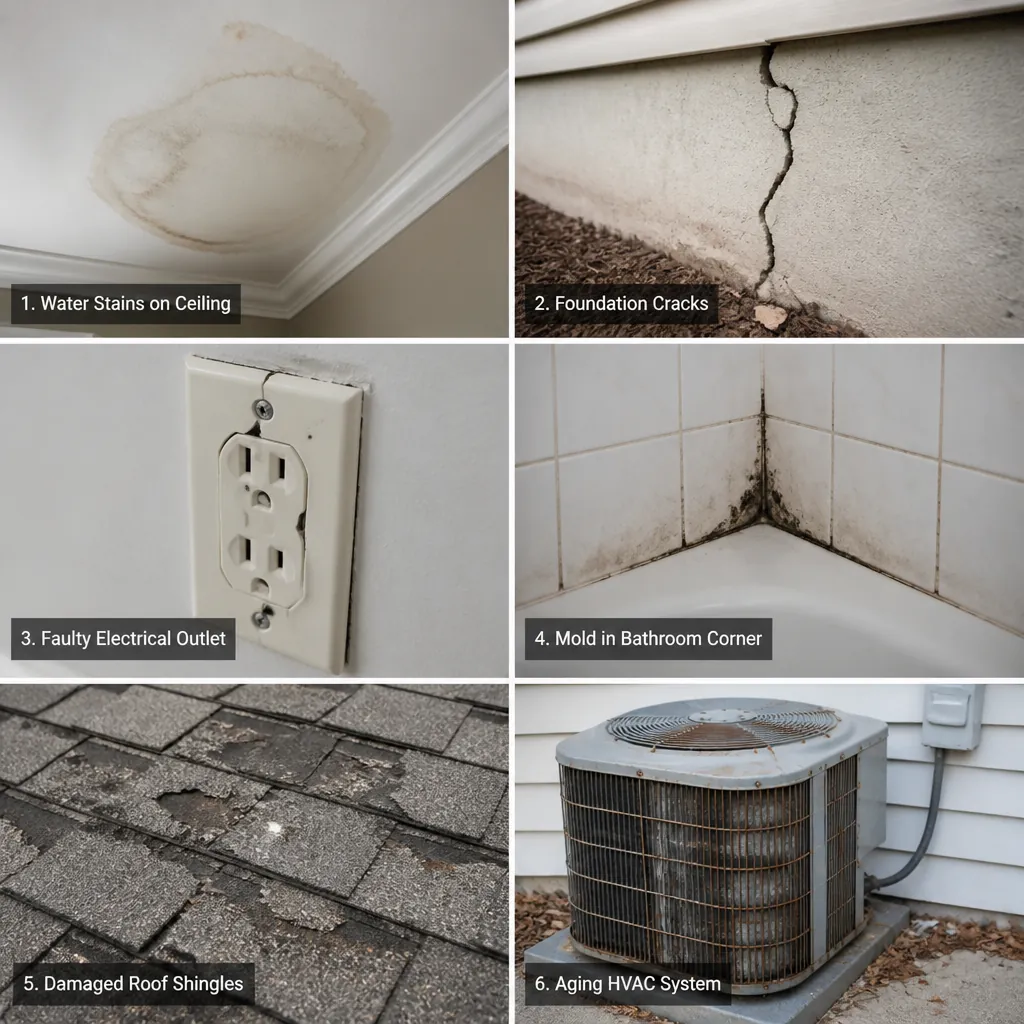
These are serious. Foundation cracks, settling, bowing walls, earthquake damage, subsidence — virtually every state requires you to disclose these. If a structural engineer evaluated your property, you've got to share that report. And here's what matters: don't try to hide cosmetic cracks with paint or caulk. Inspectors are trained to spot the red flags, and covering things up turns a simple disclosure into actual fraud.
Roof Condition and History
Any roof leaks you know about? Water coming through? The age of your roof and any repairs you've done — all disclosable. That storm damage from three years ago when you filed an insurance claim? It counts. Many states allow buyers to pull your claim history from the CLUE (Comprehensive Loss Underwriting Exchange) database, so hiding it won't work anyway.
Water Damage and Flooding
Water damage tops the list of disclosure lawsuits across the country. Why? It costs thousands to fix, it signals future risk, and sellers often downplay it or conveniently forget to mention it. You need to disclose past flooding, basement seepage, current drainage issues, and water intrusion from any source. If your home sits in a FEMA flood zone, many states require you to explicitly state that. Our guide on selling a house with water damage breaks down pricing and disclosure obligations in detail.
Plumbing and Sewer Problems
Leaking pipes. Low water pressure. Old galvanized steel or polybutylene plumbing. Septic system issues. Sewer line defects. All disclosable. Plumbing problems are especially important to be honest about because buyers will find them during inspection anyway — and fixing a sewer line can cost tens of thousands of dollars. Check out our article on selling a house with plumbing problems for the full disclosure and financial picture.
Electrical System Deficiencies
Knob-and-tube wiring. Aluminum branch circuits from 1960s–1970s homes. Federal Pacific or Zinsco panels. Not enough amperage for today's power needs. Unlicensed electrical work. Buyers and their insurance companies pay close attention to this stuff. Many of these conditions either make a home uninsurable or jack up your insurance costs — information buyers absolutely need before they commit.
Mold and Air Quality Issues
Known mold growth. Past mold remediation. Conditions that breed mold, like chronic moisture intrusion — these are disclosable in most states. Some states have their own mold disclosure laws. Even if professionals already cleaned it up, that history has to go on the form. Painting over mold and staying silent? That's dangerous and legally risky.
Pest Infestations and Damage
Termite damage. Active infestations. Your treatment history. Many states require disclosure of all three. Warm-climate states especially have strict rules — they often mandate a separate termite and wood-destroying organism form. Dry rot and other wood damage from moisture or pests usually fall here too.
Hazardous Materials Beyond Lead
Asbestos hiding in insulation, floor tiles, or roofing. Underground storage tanks (common in older homes with oil heating). Radon gas above EPA action levels. Many jurisdictions require disclosure of all these. Radon comes up a lot in Pennsylvania, Colorado, and Minnesota, where natural levels run high.
Legal and Title Issues
Built that deck without a permit? Added a room without inspections? Know your fence sits four feet inside your neighbor's property line? These go on the disclosure form. So do boundary disputes, easements that limit what you can do with your land, and any past or pending lawsuits tied to the property.
Neighborhood Conditions
Some states require you to disclose off-property issues too. Nearby Superfund sites. Flight paths. Planned developments that might tank your property value. Nearby commercial operations causing noise or activity. Requirements vary widely by state — you'll need to check your specific disclosure form carefully.
Back to topThe "Known" Standard — and Why It Matters
Here's what most disclosure statutes actually require: sellers must disclose defects they "knew" about. Not every theoretical problem. You don't need to hire inspectors to uncover issues you genuinely don't know exist. But here's the catch — that "known" standard cuts both ways. If you had a wet basement every single spring for five years and kept quiet because it "seemed to stop," a court won't buy your argument that you didn't "know" there was a water problem.
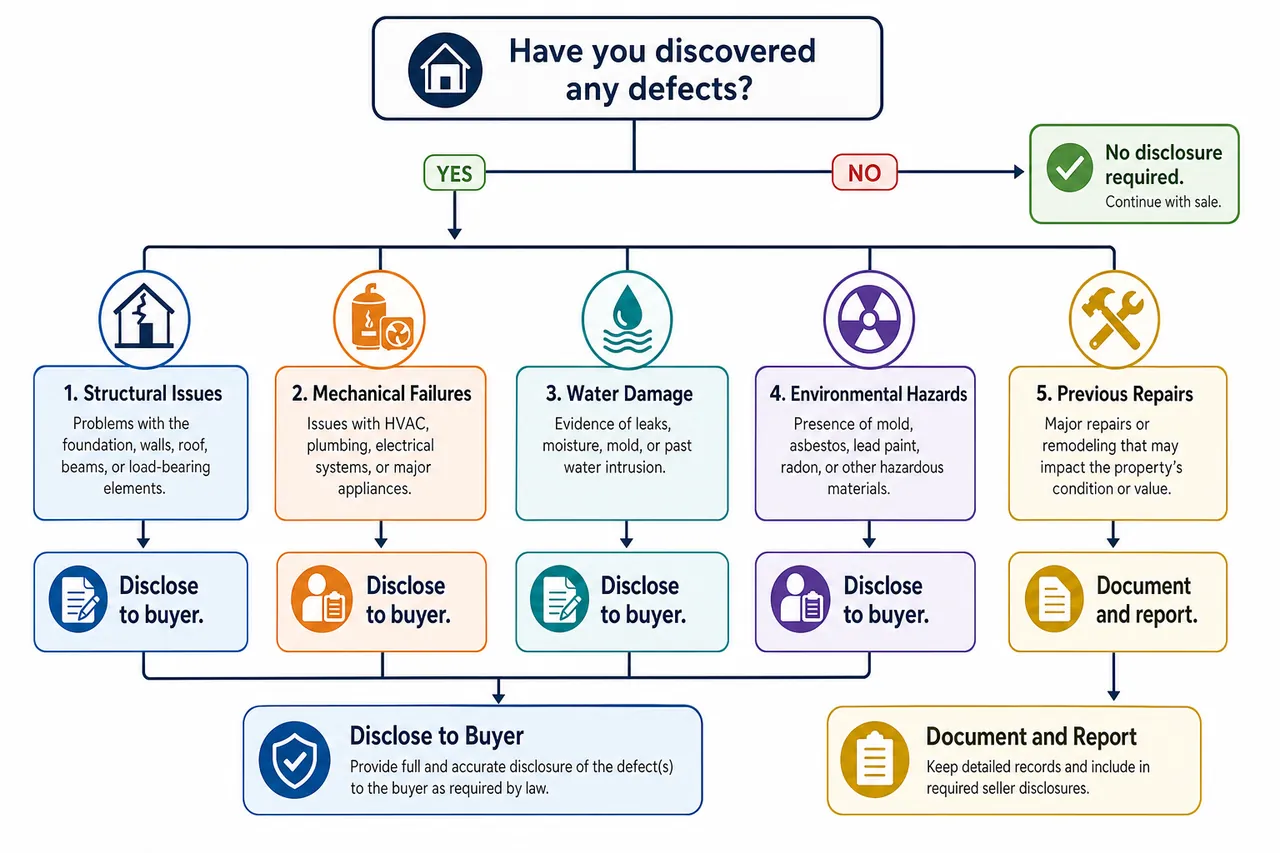


Courts ask themselves this: what should a seller in your shoes have known? Anything you personally experienced, paid someone to fix, filed an insurance claim for, or got a written report about — that's all fair game. The legal phrase is "knew or should have known," and it casts a really wide net.
And here's something that might surprise you: pre-listing inspections actually protect you. Commission a home inspection before you list, then share those results with every prospective buyer. You've just documented everything the inspector found. It's much harder for someone to later accuse you of "knowingly" hiding a defect that's already in the disclosure.
Back to topComparing Your Options: Fix, Disclose and Discount, or Sell As-Is
You've got information about what needs disclosure. Now comes the harder part: figuring out what to actually do about it. Most sellers find themselves choosing between three distinct paths, and which one makes sense really hinges on how serious the problem is, what your bank account looks like, and how fast you need to move.
| Option | Best For | Key Advantage | Key Risk |
|---|---|---|---|
| Fix before listing | Minor to moderate defects with predictable repair costs | Maximizes sale price; fewer buyer objections | Repair costs may exceed price recovery; delays listing |
| Disclose and price accordingly | Known defects that are expensive or impractical to fix | Transparent; attracts buyers who factor the defect in | May narrow buyer pool; requires accurate pricing judgment |
| Sell as-is to a cash buyer | Significant defects, time pressure, or sellers who can't fund repairs | Fast close; no repair negotiations; disclosure still required | Lower offer price reflects buyer's risk premium |
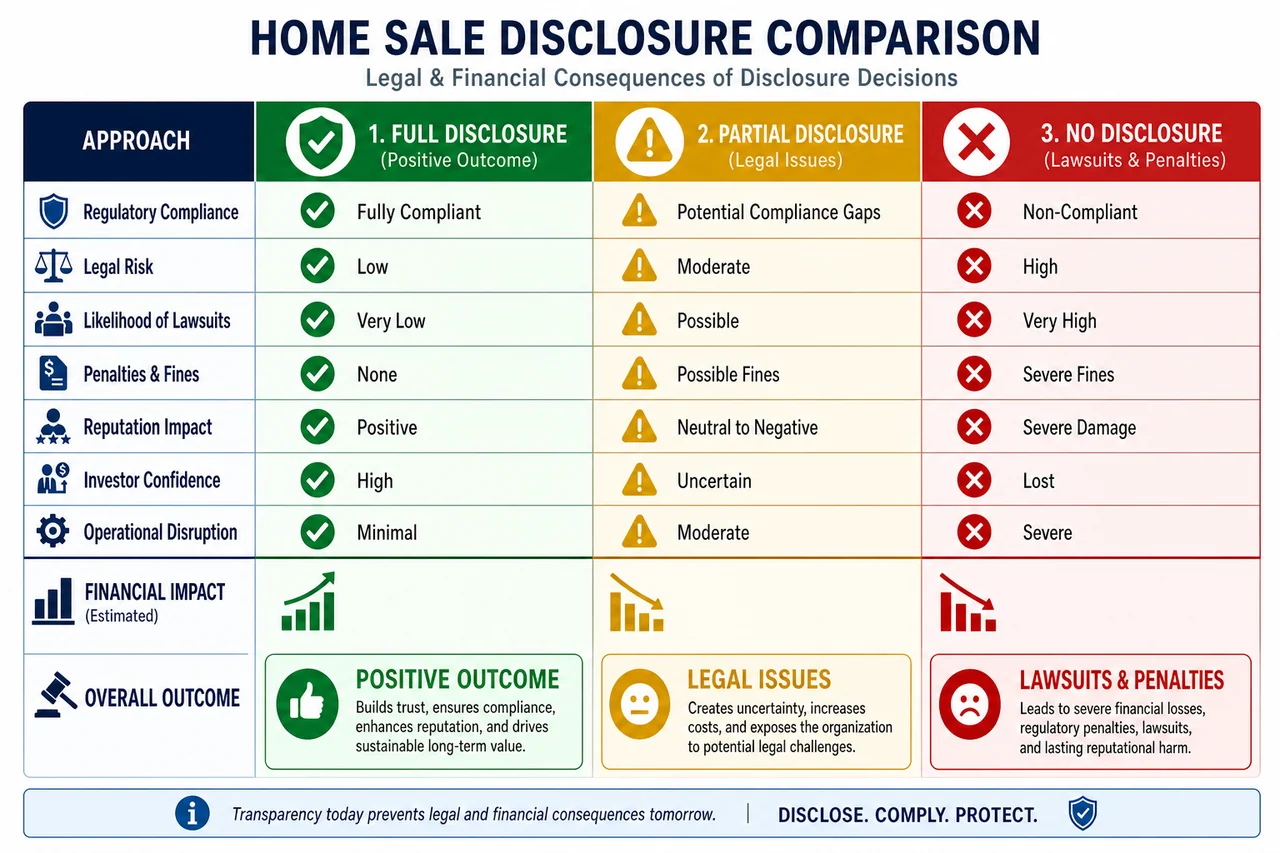
Here's what trips people up: selling "as-is" doesn't wipe away your disclosure obligations. Not even close. "As-is" just means you're not putting money into repairs. It doesn't give you permission to hide what you know about the property's condition. A buyer who closes as-is and later uncovers a defect you knew about? They've got the same legal options as any other buyer would have.
Back to topWhat Happens When Sellers Fail to Disclose
Failing to disclose problems doesn't end when the sale closes. The consequences range from uncomfortable to financially devastating.
Rescission
Some states allow buyers to undo the entire sale if they discover a major undisclosed defect. You get the house back. The buyer gets their money returned. And you might still owe them damages for inspection costs, repairs they already made, or other expenses they incurred. It's a seller's nightmare scenario.
Compensatory Damages
Most disclosure lawsuits end with the buyer suing for repair costs, lost property value, and related expenses like home inspections or temporary housing during fixes. Consider the numbers: Redfin data shows the median U.S. home sold for $408,776 as of June 2026. Major structural or system repairs? Those easily hit five figures. Your financial exposure is real.
Punitive Damages and Treble Damages
Here's where it gets serious. If a court finds you knowingly hid something — not just made a mistake, but intentionally lied — the judge can award punitive damages on top of repair costs. In lead-paint cases, federal law goes even further: you can face treble damages (three times the actual harm) for knowing violations.
Attorney Fees
Many state laws say this: if the buyer wins, you pay their lawyer. This one rule changes everything. It makes even smaller defect disputes worth fighting for a buyer. A $3,000 repair issue suddenly becomes worth $15,000 in legal fees. That's why so many of these cases get settled or litigated aggressively.
Want the full picture? Check out our complete guide to selling a house with undisclosed defects and legal liability.
Back to topState-Specific Nuances: Why You Must Check Local Law
National articles like this one can only take you so far. Here's the thing: disclosure obligations are fundamentally state-law creatures. The differences between states aren't trivial—they're game-changers for sellers like you. Consider a few examples:
- California has some of the most extensive disclosure requirements in the country, including the Transfer Disclosure Statement, the Natural Hazard Disclosure Statement, and specific requirements around death on the property. Our guide to selling a house with plumbing problems in California explains how these layers interact for that specific defect category.
- Florida requires disclosure of any facts that materially affect property value and aren't readily observable—a broad standard. Neighborhood nuisances, flooding history, and more fall under this umbrella. That's why we've put together Florida-specific resources on selling a house with water damage in Florida and plumbing problems in Florida.
- Colorado uses a detailed Seller's Property Disclosure form. And you'll also face specific requirements around radon and wildfire risk. Review our guides on water damage disclosure in Colorado and plumbing defects in Colorado before you list.
- Tennessee and Indiana both use standardized state disclosure forms but have their own quirks around "as-is" sales and what constitutes a material defect. Check our guides for water damage in Tennessee and plumbing problems in Indiana.
- Washington State uses a Form 17 disclosure statement and has specific provisions around seller liability. Our resource on water damage disclosure in Washington covers the nuances for that state.
Use a licensed real estate attorney in your state to review your completed disclosure form before you sign it. Really. An hour of legal advice costs far less than a post-closing lawsuit—and you want someone who knows your state's specific rules inside and out.
Back to topPractical Steps for Sellers With Known Defects
You've got defects to disclose. That's stressful. But here's the thing — a methodical approach protects both you and protects the transaction. It's not as complicated as it feels.
- Document everything you know. Write down every defect, repair, insurance claim, and professional assessment you're aware of. Check your memory, dig through your records, review old invoices. When you're thorough here, you're protected later.
- Commission a pre-listing inspection. A licensed home inspector will catch issues you've forgotten about or never noticed in the first place. When you share that report with buyers upfront, you're showing good faith. You're also creating a paper trail.
- Get repair estimates for major defects. Don't want to fix that foundation crack? Get a written contractor estimate anyway. Buyers need accurate numbers for their own pricing analysis — and honest estimates make negotiation way smoother.
- Complete your state's disclosure form carefully and completely. Read each question literally. When there's any ambiguity, disclose it. Never leave a blank — type "unknown" where you genuinely don't know something. Silence isn't an option.
- For pre-1978 homes, complete the federal lead-paint addendum. Make sure buyers get the EPA pamphlet and sign the acknowledgment. Give them the required 10-day inspection window or get a written waiver. Don't skip this.
- Work with a real estate attorney. Especially if your property has significant defects. Legal review of your disclosure package before listing costs money upfront but saves you headaches later.
- Consider your pricing strategy carefully. If you're disclosing a $25,000 foundation repair need, buyers will expect the price to reflect it. Overpricing a defective property doesn't get you more money. It gets you months of stale listing status and lowball offers.
A Note on the Current Market Context
Where does your market actually stand right now? According to U.S. Census Bureau and HUD data released July 24, 2026, new single-family homes are selling for a median of $398,300 as of June 2026. Existing homes? They're going for $408,776 as of June 2026, according to Redfin.
Here's what that means for you. A $15,000 roof replacement or a $20,000 plumbing overhaul — even issues that feel massive — actually become manageable when you're working with these price points. They're real costs, sure. But they're not deal-breakers in most markets.
And this is crucial: transparent disclosure, accurate pricing, and realistic expectations are what actually close deals that stick. Cut corners on honesty, and you'll pay for it later with a failed transaction or worse.
Back to topConclusion: Disclosure Is Protection, Not Defeat
Selling a house with defects isn't the end of the world. Sellers do it successfully every day. What actually tanks careers, drains bank accounts, and eats up years of stress? Trying to hide known problems from buyers. The law doesn't protect silence—it punishes it. Failure to disclose drives the majority of post-closing real estate litigation. And the consequences for buyers are serious: rescission, compensatory damages, treble damages in federal lead-paint cases, and attorney fee shifting.
Here's what you need to do: know your state's disclosure requirements. Document every defect you're aware of. Complete your disclosure forms accurately and completely—no shortcuts. If your home was built before 1978, apply the federal lead-paint rules. Then price your property to match its actual condition. Buyers who understand what they're getting into close deals and stay closed. Buyers who feel deceived? They become plaintiffs.
You're facing a property with serious defects and don't know where to start. That's where KDS Homebuyers comes in. We work with sellers in exactly these situations every week—providing fair cash offers on properties in any condition, no repair requirements, and a transparent process from start to finish. Disclosure is still required, but your path to closing becomes much simpler than a traditional sale.
Back to topFrequently Asked Questions
Do I have to disclose defects if I'm selling the house as-is?
Yes. Here's the thing: "as-is" means you're off the hook for repairs. It doesn't mean you can hide what you know. A buyer who purchases as-is and later proves you withheld knowledge of a material defect has the same legal remedies as any other buyer, including the right to sue for damages.
What if I honestly didn't know about a defect?
Disclosure obligations cover defects you knew about — not every possible problem lurking in the walls. If you genuinely had no knowledge of an issue, you typically can't be held liable for failing to disclose it. But here's where it gets tricky: courts examine what a reasonable seller in your position "should have known." Defects you experienced firsthand, hired contractors to address, or received written assessments about? Those are nearly impossible to claim ignorance of.
Does the federal lead-paint rule apply to condos and apartments?
Yes. The EPA's lead-paint disclosure requirements under Title X apply to residential housing built before 1978. That includes condominiums and most multi-unit residential properties. And common areas are covered too. Both the seller and the seller's agent share responsibility for ensuring compliance.
Can a buyer sue me after the statute of limitations has passed?
It depends on your state. Statutes of limitations for disclosure claims commonly range from two to six years, but here's what matters: the clock usually starts when a buyer discovers the defect — not when you closed on the house. A problem you concealed at closing could still be the basis of a lawsuit if discovered years later. You need to talk to a real estate attorney in your state about the specific limitations period that applies to you.
Is there any benefit to disclosing more than the law requires?
Almost always. Over-disclosure shows good faith and cuts down on post-closing headaches. Buyers who feel fully informed are more likely to close on time and less likely to demand last-minute price reductions after inspection. The cost of sharing one extra detail? Zero. The cost of a post-closing lawsuit? Ask your attorney.
Back to top
