

Selling a House With Undisclosed Defects: Legal Liability Guide

Table of Contents
- Understanding Undisclosed Defects and Seller Liability
- Federal and State Disclosure Requirements
- Common Types of Undisclosed Defects and Their Costs
- Who Can Be Held Liable for Undisclosed Defects
- Legal Defenses and Limitations
- Damages and Remedies for Buyers
- Steps to Take If You Discover Undisclosed Defects
- How to Protect Yourself Before Purchase
- Seller's Responsibilities and Risk Mitigation
- Conclusion
- Frequently Asked Questions
Selling a house with undisclosed defects can expose you to serious legal and financial consequences — including lawsuits, forced rescission of the sale, and punitive damages that far exceed the cost of the original repair. For a buyer who just discovered a hidden problem, the stakes are high. This guide breaks down the legal landscape around sell house with undisclosed defects liability, covering disclosure laws by state, who bears responsibility, what damages are recoverable, and how to protect yourself at every stage of the transaction.

Understanding Undisclosed Defects and Seller Liability
What Are Undisclosed Property Defects?
Any condition that materially affects the value, safety, or habitability of a home counts as a property defect. Two broad categories exist:

- Patent defects — Visible conditions a reasonable buyer can observe during a normal walkthrough, such as cracked drywall or stained carpeting.
- Latent defects — Hidden conditions that aren't visible and that a buyer couldn't reasonably detect, such as buried foundation cracks, active mold behind walls, or faulty wiring inside conduit.
Here's the catch: only material defects — those that would influence a reasonable buyer's decision to purchase or affect the purchase price — trigger mandatory disclosure obligations. A scuffed baseboard? That's probably fine. But buried foundation cracks? That's a different story. The line between material and non-material gets disputed constantly and frequently decided in court.
The Legal Concept of Caveat Emptor vs. Modern Disclosure Laws
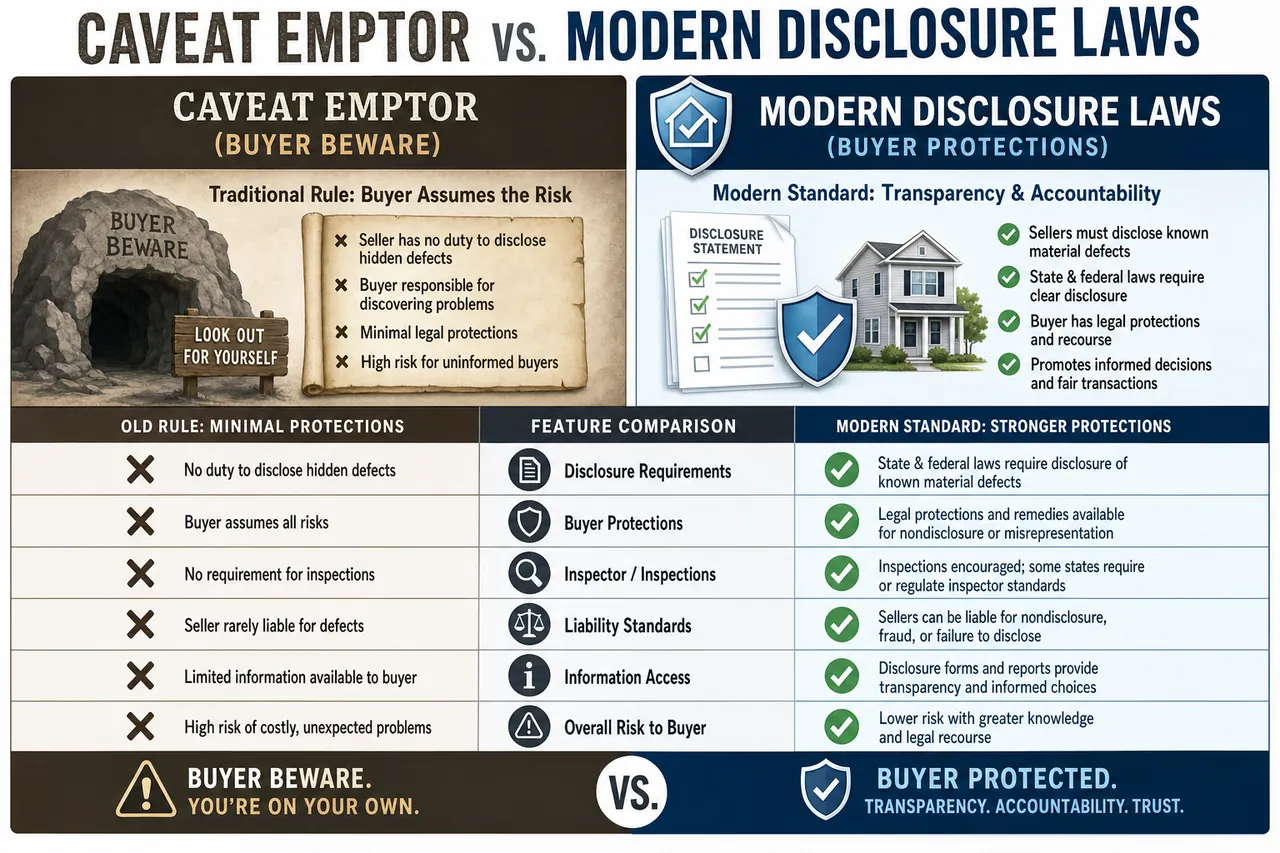
Once upon a time, caveat emptor ("let the buyer beware") put all the burden on you. The buyer had to do all the detective work. But things have changed dramatically over the past four decades. Nearly every U.S. state has replaced or gutted this old doctrine with affirmative disclosure statutes that actually protect you. Now sellers have a legal duty to disclose known material defects — even if you never ask. And that's not all. Intentional concealment can constitute fraud. Even negligent failure to disclose creates liability, regardless of intent to deceive.
Back to topFederal and State Disclosure Requirements
Federal Disclosure Laws and Requirements
Here's the thing: at the federal level, lead-based paint is the big one. If your home was built before 1978, the seller's got to follow the Residential Lead-Based Paint Hazard Reduction Act. That means they need to give you an EPA-approved pamphlet, tell you about any lead hazards they know about, and let you inspect for 10 days. Now, RESPA (Real Estate Settlement Procedures Act) and TILA (Truth in Lending Act) do handle financing disclosures. But they don't actually cover what's wrong with the house itself.
State-by-State Variations in Disclosure Laws
Here's where it gets complicated. Every state does this differently—some require tons of paperwork, others barely anything. The timing, penalties, and what sellers can get away with vary all over the place. Check the table below to see how your state stacks up against others.
| State | Mandatory Disclosure Form | Delivery Timing | Statute of Limitations (Fraud/Latent Defect) | As-Is Sales Allowed? |
|---|---|---|---|---|
| New York | Property Condition Disclosure Statement | Before contract signing; $500 credit alternative | 6 years (fraud); 3 years (negligence) | Partially (credit in lieu option) |
| Illinois | Residential Real Property Disclosure Report | Before offer accepted | 2 years from discovery; 10 years max | Yes, with caveats |
| Texas | Seller's Disclosure Notice (TREC) | Before or within a short time after contract | 4 years (fraud); 2 years (DTPA) | Yes, but fraud claims survive |
| Colorado | Seller's Property Disclosure (SPD) | Within disclosure deadline in contract | 3 years (fraud); 2 years (negligence) | Yes, limited protection |
| California | Transfer Disclosure Statement (TDS) | As soon as practicable before close | 3 years (fraud/concealment) | Seller must still complete TDS |
| Florida | No standard form; common law duty | Prior to or at closing | 5 years (written contract); 4 years (fraud) | Yes, but Johnson v. Davis standard applies |
| Washington | Seller Disclosure Statement | Within 5 days of mutual acceptance | 3 years | Limited; buyer can rescind within 3 days |
Are you selling in Colorado? You'll want to understand the legal documents and signature authority issues involved. Our article on Using Power of Attorney to Sell a House: Legal Requirements in Colorado walks you through it.
Back to topCommon Types of Undisclosed Defects and Their Costs
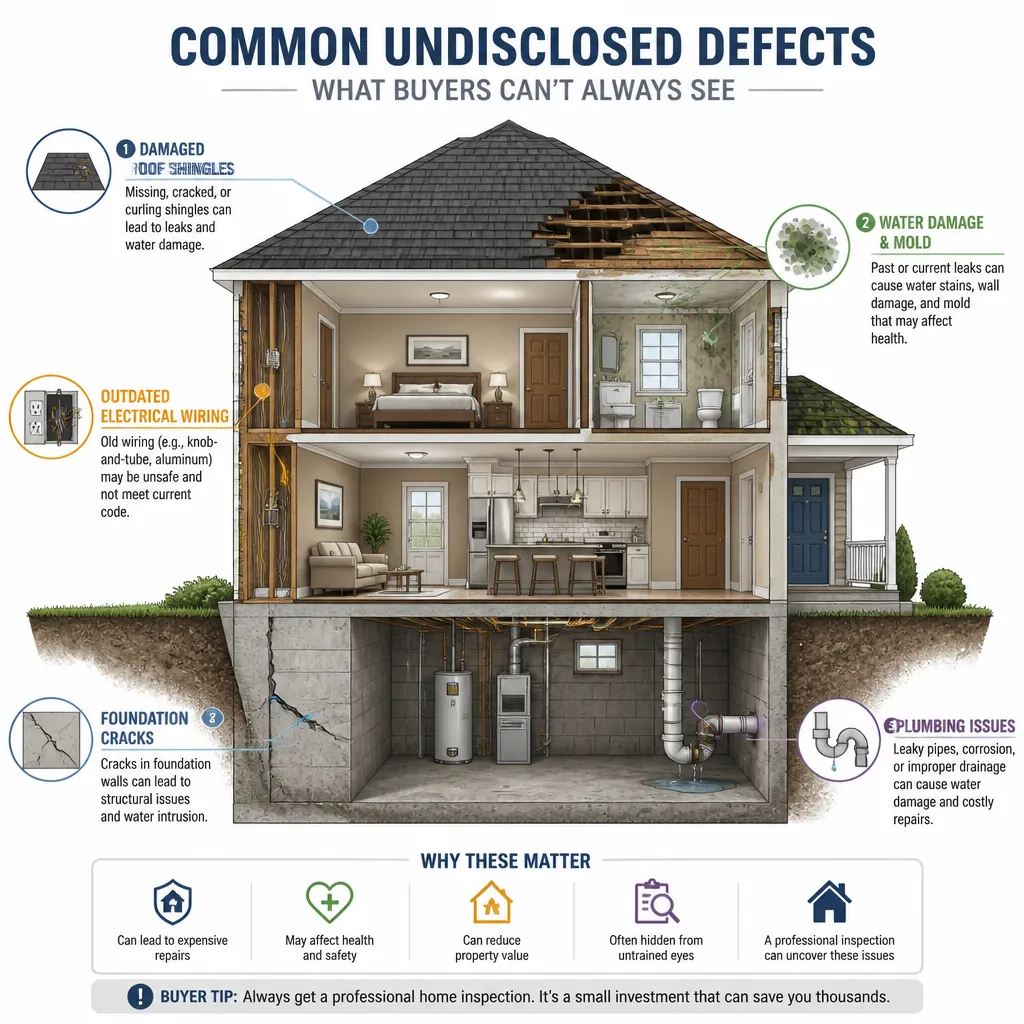
Want to know what'll hurt you most—legally and financially? Look at the table below. It shows which defects matter most, what they'll cost you to fix, and whether you're legally required to disclose them. If you're selling, this tells you what not to hide. If you're buying, it tells you what to dig into before you sign.
| Defect Type | Average Repair/Remediation Cost | Disclosure Required? | Typical Legal Exposure if Hidden |
|---|---|---|---|
| Foundation/Structural Issues | $5,000–$50,000+ | Yes (all states) | High — rescission, repair costs, diminished value |
| Mold / Moisture Intrusion | $1,500–$30,000 | Yes (most states) | High — health claims, punitive damages possible |
| Roof Damage / Active Leaks | $3,000–$25,000 | Yes (all states) | Moderate-High |
| Plumbing Defects / Water Damage | $1,000–$15,000 | Yes | Moderate |
| Electrical System Issues | $1,000–$10,000 | Yes (safety-related) | High if fire/injury results |
| Asbestos / Lead Paint | $5,000–$40,000 | Yes — federal mandate (lead); state laws (asbestos) | Very High — federal penalties up to $10,000 per violation |
| Prior Unpermitted Work | Varies widely | Yes (most states) | Moderate — code compliance costs |
| Pest/Termite Infestation | $500–$10,000 | Yes (most states) | Moderate |
Asbestos is its own beast. The feds mandate disclosure, and most states pile on their own rules too. Need state-specific details? Check out our guides on selling a house with asbestos. We've got specific resources for Florida, Colorado, and California.
Back to topWho Can Be Held Liable for Undisclosed Defects
Direct Seller Liability
You, as the seller, are the one with the primary legal obligation to disclose known material defects. That's where the buck stops. The liability can hit you from three different angles: fraudulent concealment (you knowingly hid a defect), negligent misrepresentation (you didn't bother investigating or disclosing something you had reason to suspect), and breach of contract (something you promised in the purchase agreement turned out to be false).
Real Estate Agent and Broker Liability
Your agent isn't off the hook either. If they knew—or really should have known—about a material defect and didn't disclose it, they can be personally liable right alongside you. And it's not just conversations. Misrepresentations in MLS listings and marketing materials count too. In most states, agents have their own independent duty to disclose adverse material facts they discover while handling the transaction.
Property Inspector Liability
Home inspectors can get sued for negligent inspection. Did they miss something that any reasonably competent inspector would've caught? That's on them. But here's the catch: most inspector contracts cap their liability—often to just the inspection fee itself. Courts sometimes enforce these caps, though it depends on where you live.
Joint and Several Liability
Multiple parties messed up?
When a seller, agent, and inspector all share responsibility, courts can impose joint and several liability. That means the buyer can recover the entire judgment from any single party—doesn't matter how much blame actually belongs to each person. This can create serious financial exposure for everyone involved in the transaction.
Back to topLegal Defenses and Limitations
As-Is Sales and Their Legal Impact
Here's the thing: selling a home "as-is" doesn't actually get you off the hook. That clause tells buyers you won't fix anything, sure. But courts won't let you use it to hide defects you knew about. Deliberately concealing something you know is broken? That's not protected. Florida's Johnson v. Davis case made this crystal clear — sellers have to disclose known facts that matter to the home's value, even in as-is deals. You're still required to be honest. If you're thinking about alternative sale structures, a cash-for-house company might simplify things, though you'll still need to disclose honestly either way.
Statute of Limitations by Jurisdiction
Time's working against claims for hidden defects. Most states use what's called the "discovery rule," and it changes everything. The clock doesn't start ticking at closing — it starts when the buyer actually found the problem (or reasonably should have found it). From there, you're typically looking at 2 to 6 years for fraud claims. Some states? They go up to 10 years for latent defect actions under implied warranty theories.
Damages and Remedies for Buyers
Types of Recoverable Damages
You won a claim for undisclosed defects. Here's what you might recover:
- Compensatory damages — The actual cost to fix things. This includes repair bills, remediation work, temporary housing while repairs happen, and testing fees.
- Diminished value damages — The gap between what you paid and what the property was genuinely worth at closing, given the defect that wasn't disclosed.
- Rescission — You walk away from the whole deal. The seller returns your purchase price and gets the property back.
- Punitive damages — These show up in fraud cases in most states. But there's usually a cap—either 3x whatever you actually lost, or a fixed dollar limit.
- Attorney's fees — You can recover these in fraud and consumer protection claims across several states. Texas's DTPA is a good example.
Cost-Benefit Analysis: Litigation vs. Settlement
Here's the reality: litigation drains your bank account and offers zero guarantees. You're looking at $15,000–$50,000 just in attorney's fees. And that's before you know if you'll win anything back.
If the repair costs sit under $10,000–$15,000, don't go to court. A settlement or mediation gets both of you to the finish line faster and keeps more money in your pocket.
Start by documenting everything—photos, emails, contractor estimates, inspection reports. Send the seller a written demand. Most disputes actually settle at this stage, before a lawsuit even files. Talk to an attorney first. It costs far less than a courtroom fight.
Back to topSteps to Take If You Discover Undisclosed Defects
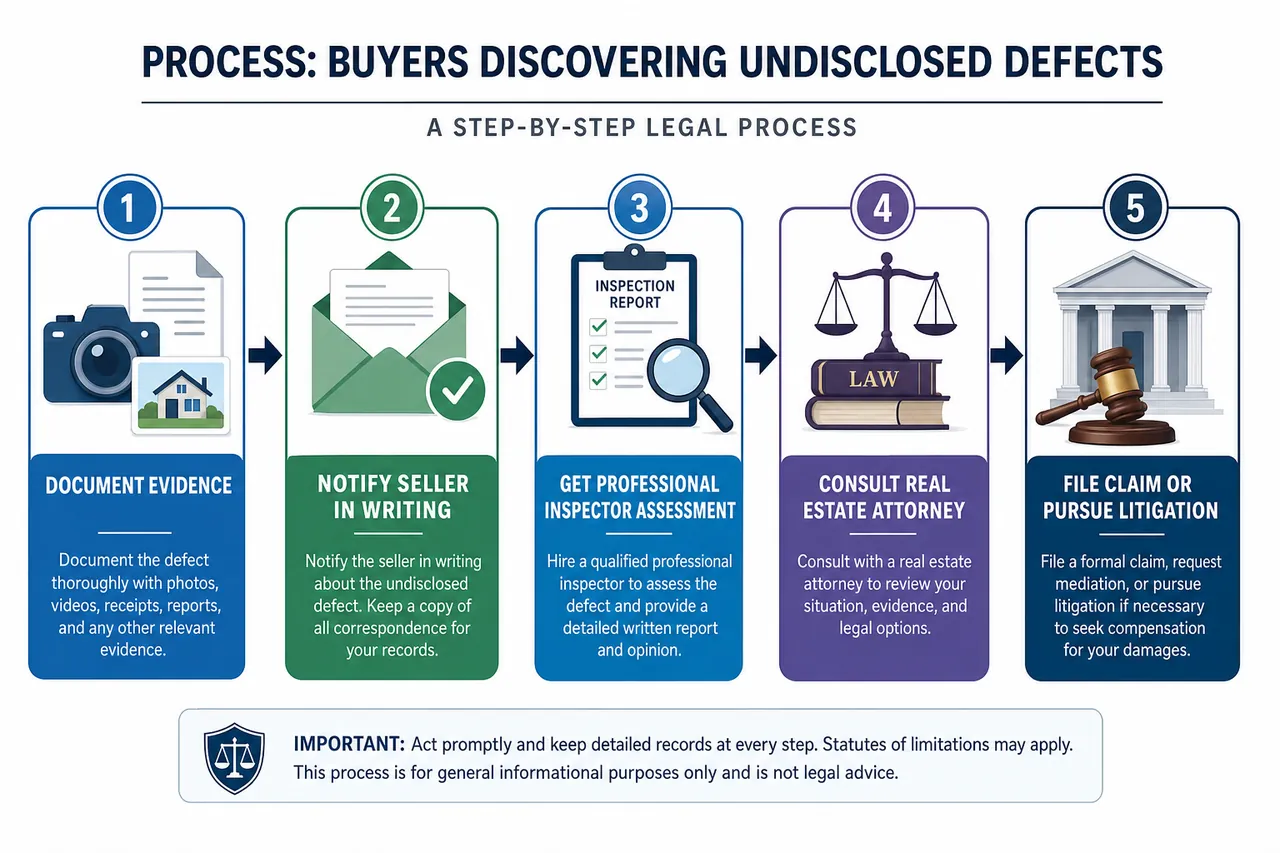
- Document everything right now. Before you fix anything or let time pass, grab your phone and photograph or video the defect from multiple angles. Save every text, email, and call log with the seller and agent. You'll need this evidence later.
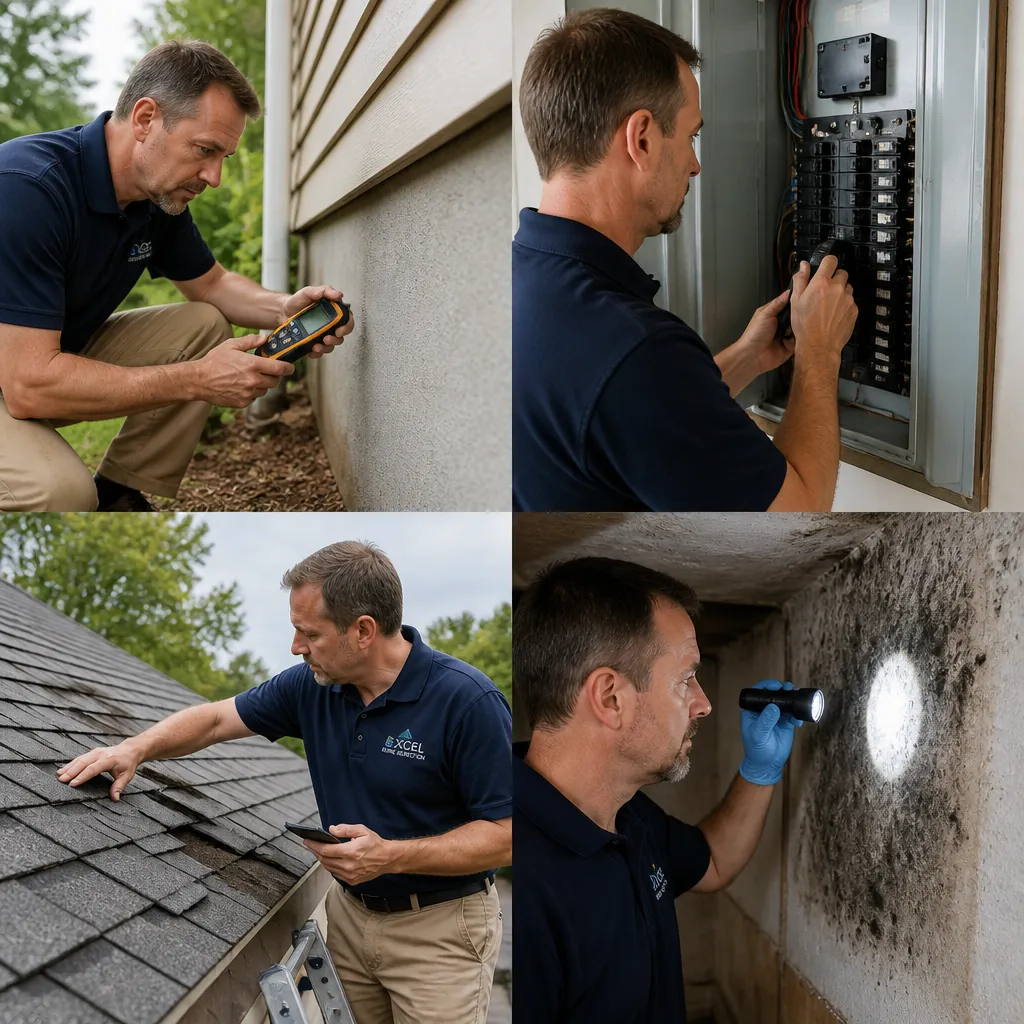
- Hire an independent professional inspector or contractor to look at what's actually wrong, figure out how it happened, and tell you exactly what repairs will cost. This report? It's your strongest piece of evidence in any dispute.
- Send a written demand letter to the seller and their agent. Be specific: describe the defect, include the repair estimate, and explain your legal right to compensation. Give them 10–14 days to respond in writing. Don't just call — get it on paper.
- Call a real estate attorney. Many won't charge you for an initial consultation, and they'll know immediately if you've got a real case. If your purchase agreement has a mediation or arbitration clause (they're everywhere in California and Washington), your attorney walks you through what that actually means and what comes next.
- Take formal action if they won't negotiate. You've got options: file a complaint with your state's real estate commission against the agent, go through mediation or arbitration as your contract may require, or file a lawsuit in state court.
How to Protect Yourself Before Purchase
It's always cheaper to prevent problems than pay for a lawsuit later. Here's what you need to do before you close:
- Hire a licensed home inspector to do a thorough walkthrough — and don't skip specialty inspections (structural engineer, mold testing, sewer scope) if the house is older.
- Read every single word of the seller's disclosure form. When you see vague answers like "unknown" or blank spaces where there should be answers, that's your cue to ask more questions.
- Get the permit history and past insurance claims directly from the seller. Water damage claims? Those usually mean moisture problems keep coming back.
- Dig into the property's past. Check with the county assessor, building department, and local court records to see if anyone's ever sued over this property before.
But here's the thing: if you're selling without a traditional agent, you need to really understand what you're legally required to disclose. Our guide to selling a home without a realtor in Tacoma, Washington walks you through the specific steps Washington sellers have to follow.
Back to topSeller's Responsibilities and Risk Mitigation

Best Practices for Full Disclosure
Here's the truth: disclose everything. Even stuff you're on the fence about. Courts treat sellers who over-disclose way more kindly than those who cherry-pick what to mention. Want to protect yourself? Order a pre-listing inspection before you list. You'll spot problems before buyers do, and that's your chance to fix them, adjust your price, or get ahead of the conversation with full disclosure.
Documentation and Insurance Protection
Keep every receipt. Every permit. Every contractor invoice and inspection report — filed where you can actually find them later. Then pull out your homeowners insurance policy and read it. Does it cover errors and omissions? What about post-sale liability? Some sellers also grab home warranty policies as both a safety net and a signal to buyers that you stand behind your home.
Selling when ownership gets complicated? That's when proper legal documentation stops being optional. Check out our guides on using power of attorney to sell a house, plus state-specific resources for Washington, Florida, California, and Indiana. Getting it right from day one protects you later.
Back to topConclusion
Here's the hard truth: not disclosing material property defects can cost you tens of thousands in lawsuits, settlements, and attorney fees. Foundation problems. Mold. Faulty wiring. Contaminated soil. You've got legal exposure on all of it — but only if you don't handle disclosure the right way.
The good news? Most of this is avoidable. Follow your state's disclosure rules to the letter. Write down what you actually know about the property's condition. And before you sign anything at closing, have a real estate attorney review your disclosures.
Doing these three things cuts your liability risk dramatically.
As a buyer, you've got skin in this game too. Don't skip the pre-purchase inspection. Read every disclosure document the seller gives you — really read it. Those two steps alone protect you from discovering expensive surprises after you've already closed.
When you're unsure whether something counts as a material defect? Disclose it anyway. Transparency isn't just the ethical choice. It's your best legal defense.
Back to topFrequently Asked Questions
Can I sell a house "as-is" to avoid disclosing defects?
Not really. Sure, selling as-is means buyers can't demand you fix anything. But it doesn't let you off the hook for disclosure. In almost every U.S. state, hiding a defect you know about—even in an as-is sale—is fraud. And that exposes you to rescission, damages, and potentially punitive liability.
How long does a buyer have to sue me after discovering a hidden defect?
The answer varies by state and which legal theory the buyer uses. Most states give them 2–6 years to file a fraud or misrepresentation claim, and the clock usually starts when they discover the problem, not at closing. Some jurisdictions stretch that to 10 years if they're using implied warranty of habitability arguments. You'll need a local real estate attorney to pinpoint the exact timeline where you live.
What defects am I required to disclose even if I didn't know about them?
Generally? Only the ones you actually knew about. But here's the catch: courts use a "knew or should have known" standard. If there were obvious warning signs you brushed off, or you got prior inspection reports flagging an issue, you can't hide behind ignorance. This is exactly why a pre-listing inspection saves you—it kills the "I didn't know" defense before it becomes a problem.
Can my real estate agent be held liable for a defect they didn't know about?
Agents have their own obligation to disclose material facts they uncover themselves. And if they had access to information—old inspection reports, visible problems during showings, disclosures from you—and didn't share it with buyers, they're on the hook personally. You could both end up liable.
Is it worth suing over undisclosed defects, or should I settle?
Most claims under $25,000–$30,000 settle better than they litigate. Once you factor in attorney's fees, your time, and the risk of losing, a negotiated deal or mediation usually nets you more. Litigation makes sense for bigger claims involving serious fraud, genuine health hazards, or sellers who won't negotiate in good faith. Talk to a real estate attorney about your specific situation before you decide to file.
Back to top
