

Home Warranty When Selling: Is It Worth Offering and What Does It Cover?

Table of Contents
- What's a Home Warranty When Selling?
- Why Sellers Offer Home Warranties
- What Does a Home Warranty Cover?
- How Much Does a Home Warranty Cost?
- Should You Offer a Home Warranty When Selling?
- Transferable Warranties and Post-Sale Coverage
- Seller Home Warranty During the Listing Period
- Home Warranty vs. Homeowners Insurance: Key Differences
- How to Choose and Offer a Home Warranty
- Conclusion: Making the Right Call on a Home Warranty
- Frequently Asked Questions
Should you offer a home warranty when selling? It's one of those decisions that seems small but can actually swing your entire sale. Buyers love the peace of mind. You'll have an easier time getting past those post-inspection negotiations. And you're protected during the listing period too. But here's the catch — warranties cost real money and come with real limits that most sellers don't think about upfront. To figure out if it's worth it for you, you need to understand what you're actually paying for, when the coverage kicks in, and whether that investment makes sense in your specific situation.
Wondering what selling will cost? Start with every closing cost a seller pays, and how to cut them. It breaks down every seller cost at closing, the surprises, and ways to pay less.

What's a Home Warranty When Selling?
Definition and Basic Concept
A home warranty is a service contract — not insurance. It covers repairs or replacements for major home systems and appliances that fail from normal wear and tear. When you're selling, a seller's home warranty is something you buy and offer to your buyer, either to sweeten the deal or as a negotiated concession during the sale. Coverage typically kicks in when you purchase the policy and transfers to the buyer at closing, usually lasting 12 months after the sale closes.

Here's the key difference from a standard product warranty on a new appliance: a home warranty covers your entire home system. Your HVAC unit, water heater, electrical panel, built-in appliances — it's all under one umbrella. Think of it as a safety net for systems that are past their manufacturer warranty but still supposed to work reliably.
How Seller's Home Warranties Differ from Buyer's Warranties
Both sellers and buyers can get home warranties. But they work differently. A seller's warranty protects you while your home sits on the market and gives the buyer peace of mind after closing. Coverage can start the day you list — so if your HVAC quits before you even have an offer, you might be covered. A buyer's warranty is different. It's purchased at or after closing and covers only the buyer, starting day one of ownership. When you offer a warranty as part of the sale, you're essentially pre-buying a buyer's warranty on their behalf. And that's a genuinely attractive offer in any market.
Home Warranty vs. Homeowners Insurance
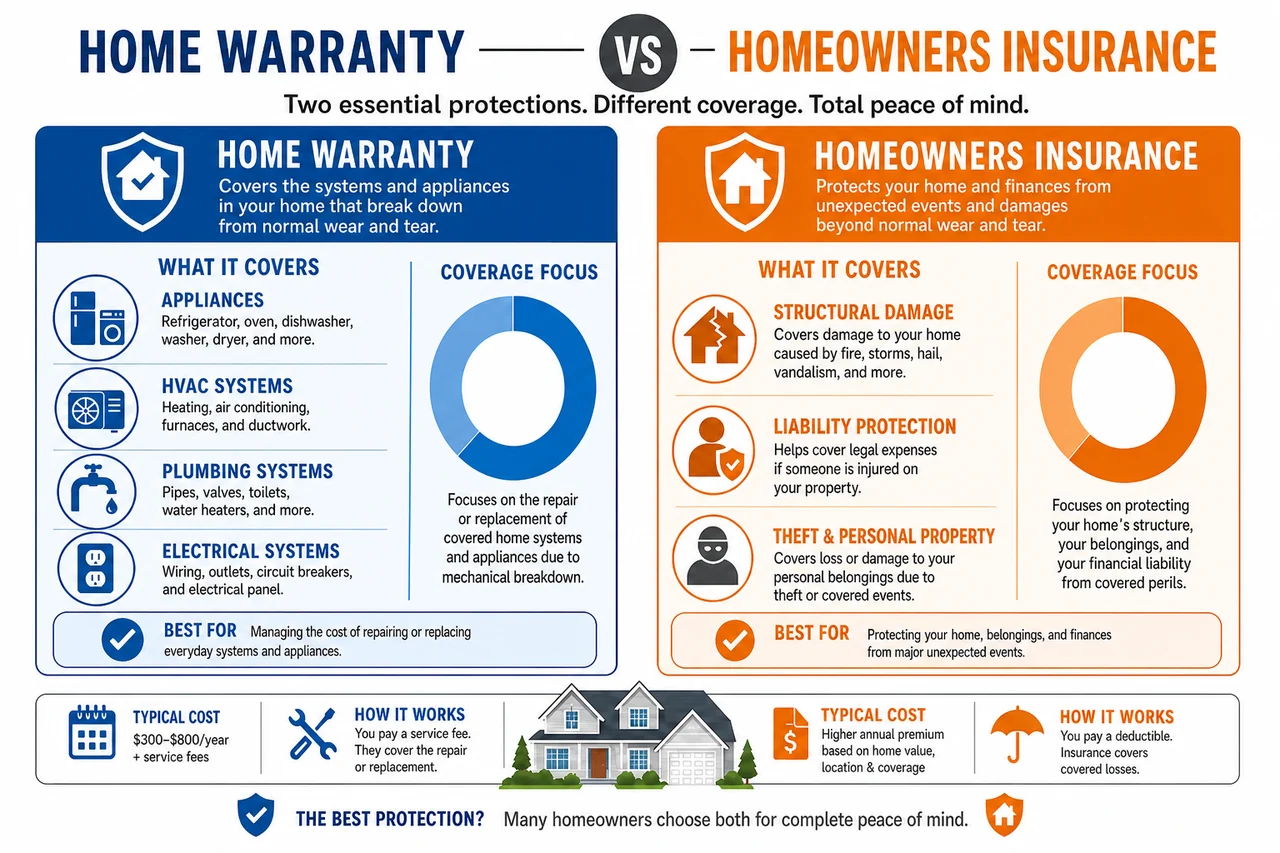
This is huge. Most sellers mix these two up. Homeowners insurance covers sudden, accidental damage — a tree crashes through your roof, a pipe bursts and floods everything, a fire destroys the kitchen. Home warranty? That's for mechanical failure and normal wear and tear. The furnace that quits after 15 years of service. The dishwasher pump that burns out. The water heater losing efficiency over time. They're solving completely different problems. And honestly, you need both. We'll dig deeper into this comparison later in the article.
Back to topWhy Sellers Offer Home Warranties

Attracting Buyers in Competitive Markets
Here's what actually moves the needle in a buyer's market. A home warranty makes your listing stand out when two similar homes sit on the market at the same price point. That 12-month coverage on major systems and appliances? It gives buyers a concrete reason to feel safer about their purchase. The National Home Warranty Association found that homes with warranties sell about 11 days faster and stay closer to asking price than those without one. And in slower markets, that edge matters even more—buyers are shopping carefully and can afford to be picky.
Building Buyer Confidence and Peace of Mind
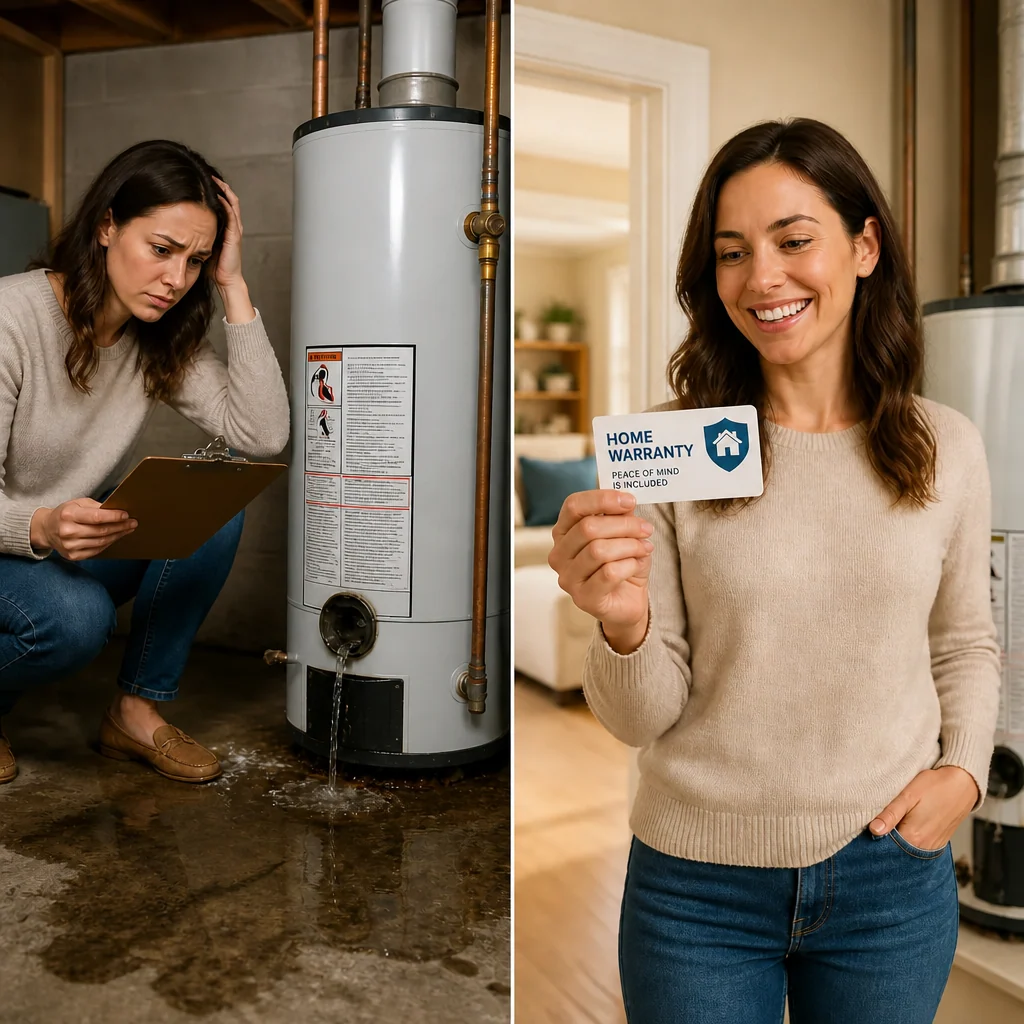
Unexpected repair bills scare people. It's one of the biggest reasons buyers get nervous after an inspection and start second-guessing their decision. A warranty won't eliminate that worry completely, but it does give buyers a clear path forward if something breaks in year one. Think about it from a first-time homebuyer's perspective. They don't have $6,000 sitting around for an HVAC replacement. But knowing they can make one service call and get it handled? That's genuinely powerful. The psychological shift can turn a hesitant buyer into a committed one. Want to know what comes next in the process? Our guide on what "under contract" means when selling a house walks you through the timeline.
Using Warranties in Negotiations
This is where warranties earn their keep. After the inspection comes back and the buyer spots aging systems or appliances on their way out, they'll ask for repairs, a price cut, or a credit. You've got options here. Instead of hiring contractors or dropping your price, you can offer a warranty upgrade—or enhance the existing one. A $600 warranty bump almost always costs less than a $3,000 price reduction. And you'll get the same result: the buyer feels protected, and you keep more money.
Market Conditions That Make Warranties Valuable
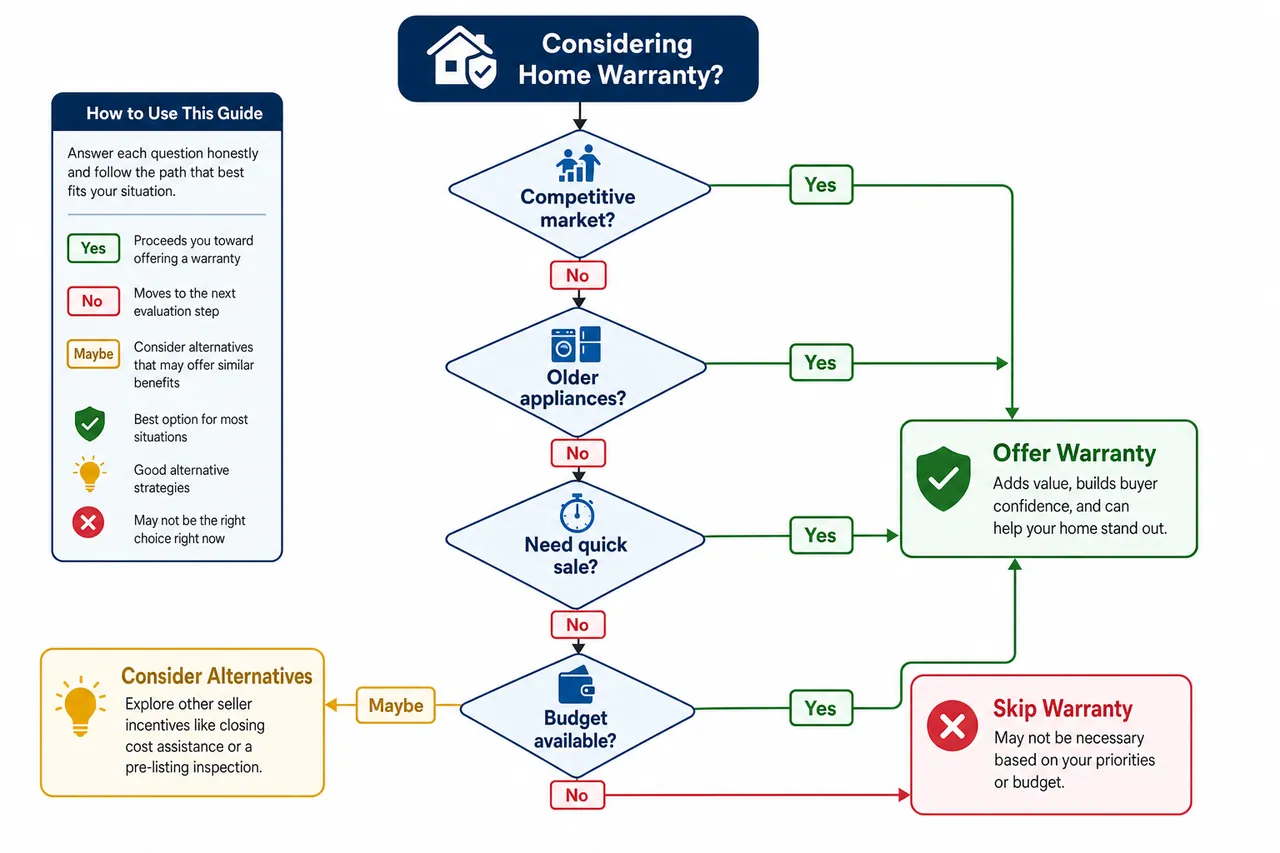
Three situations are perfect for warranties. First, buyer's markets where there's tons of inventory and buyers are calling the shots. Second, older homes where systems are closer to failure. Third, sales with known inspection issues where you'd rather offer peace of mind than pay for repairs upfront. What about a red-hot seller's market? You might think warranties don't matter there. But they still help justify your price and prevent arguments after closing.
Back to topWhat Does a Home Warranty Cover?
Standard Coverage Components
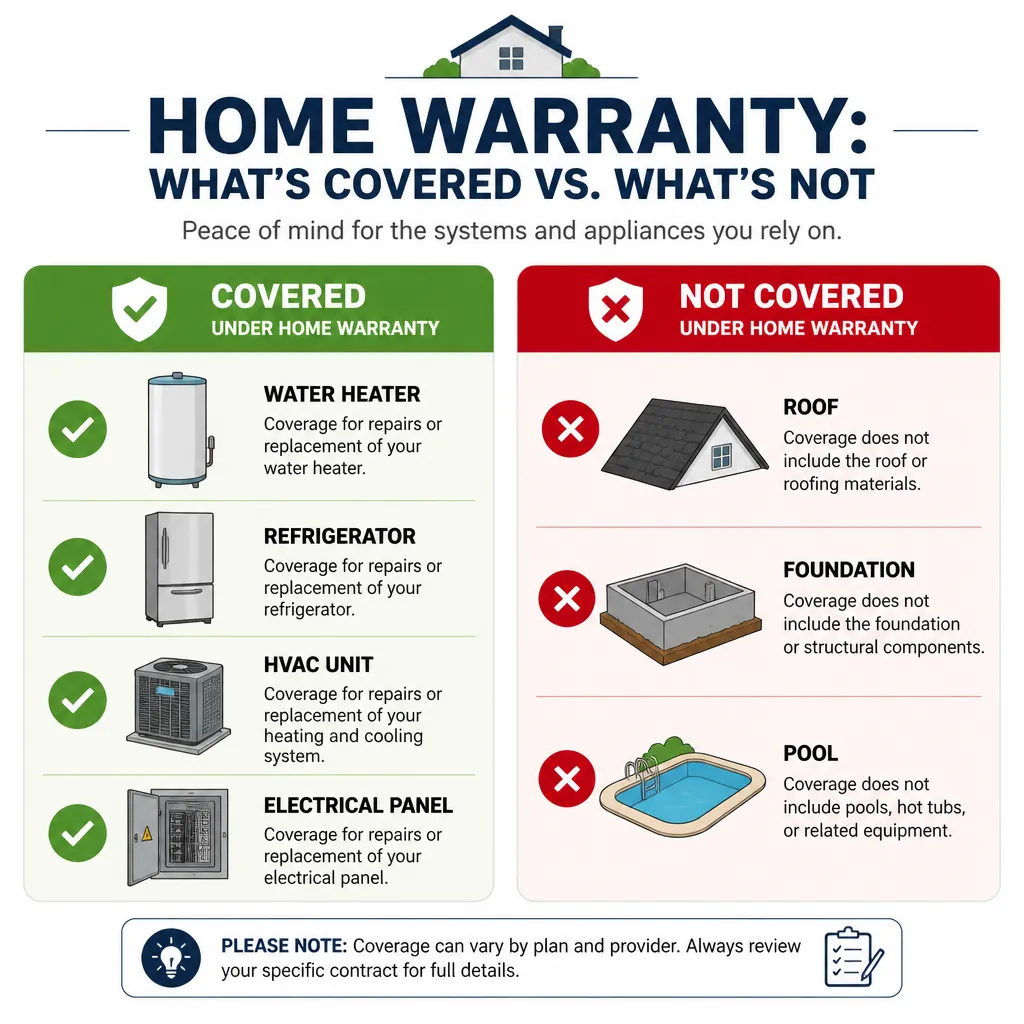
Your home warranty covers the big-ticket mechanical systems and appliances that keep your home functioning. Here's what matters: coverage kicks in when something fails from normal use — not from neglect, sloppy installation, or problems you already knew about when you bought the place. That pre-existing condition clause is huge, so understand it before you sign.
| System/Appliance | Typically Covered? | Common Exclusions | Optional Add-on? |
|---|---|---|---|
| HVAC (heating & cooling) | Yes | Improper maintenance, rust, corrosion | No (standard) |
| Water heater | Yes | Sediment buildup, code violations | No (standard) |
| Electrical system | Yes | Panels over 200 amps, code upgrades | No (standard) |
| Plumbing | Yes | Septic systems, secondary lines | Septic as add-on |
| Kitchen appliances (range/oven) | Yes | Cosmetic damage, knobs/handles | No (standard) |
| Refrigerator | Varies by plan | Ice makers often excluded at basic level | Yes (basic plans) |
| Built-in dishwasher | Yes | Racks, baskets, door latches | No (standard) |
Optional Add-ons and Expanded Coverage
And here's where you can customize. Most warranty companies let you bolt on extras — things like pool equipment, septic systems, well pumps, roof leak repair, a second fridge, or washer/dryer coverage. Does your home have a pool or well? Don't skip these add-ons. A single septic backup or well pump failure could run you thousands out of pocket.
You're looking at $50–$200 per add-on annually. It's worth the investment if your home actually has those features.
What Isn't Covered by Home Warranties
This part matters more than you'd think. Pay attention to the exclusions because that's where claims get denied.
Most plans won't touch pre-existing conditions — anything you knew about or should've known about before closing, cosmetic stuff like broken knobs or worn seals, code upgrades that pop up during a repair, botched installation or DIY tinkering, or basic maintenance like changing filters or snaking drains. The warranty company will argue that poor maintenance caused the failure, not normal wear. And they're often right.
Read the exclusions carefully before you buy. Better yet, call the company's claims line and ask about specific systems in your home.
Back to topHow Much Does a Home Warranty Cost?
Typical Pricing for Seller Plans
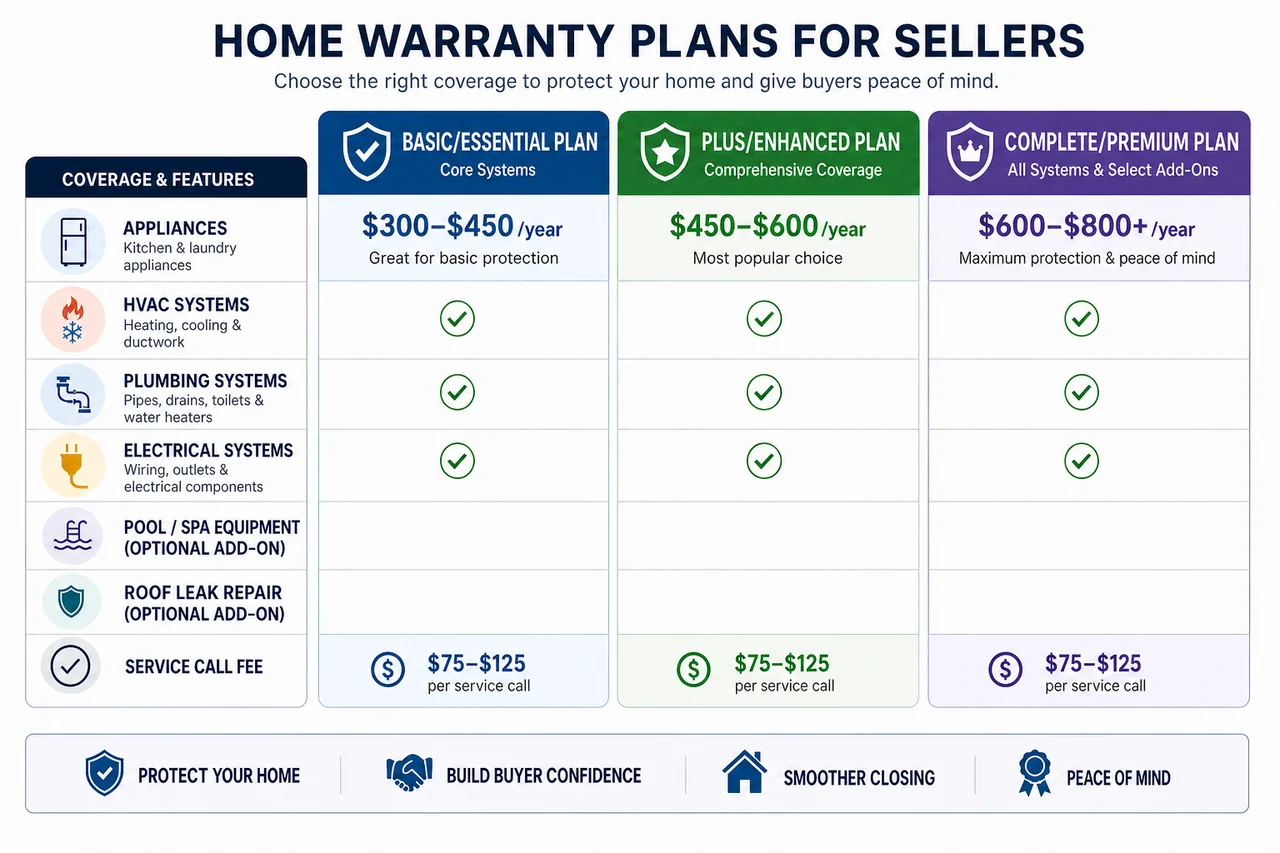
Most seller home warranty plans run you somewhere between $300 and $800 per year. The exact price depends on your plan level, how big your home is, and where you live. Living in California or Washington? Expect to pay more. Midwest and Southern homeowners typically see lower premiums. Now here's what catches people off guard: service call fees. Every time a technician shows up, you're paying $75 to $125 just for that visit. And if your HVAC system breaks down the same day as a plumbing issue? That's two separate service call fees.
| Plan Type | Price Range | Coverage Scope | Service Call Fee | Best For |
|---|---|---|---|---|
| Basic/Essential | $300–$450/year | Core systems only (HVAC, plumbing, electrical) | $75–$100 | Newer homes, limited budget |
| Plus/Enhanced | $450–$600/year | Systems + most appliances | $85–$110 | Most standard home sales |
| Complete/Premium | $600–$800+/year | All systems, appliances, and select add-ons | $100–$125 | Older homes, luxury listings |
Comparing Cost to Repair Expenses
Here's where the real math gets interesting. An HVAC replacement can hit $5,000 to $12,000. Water heater? $1,000 to $2,500 installed. Refrigerator compressor repair alone runs $400 to $800. Do you see where this is going? Even one covered repair during the year pays for the entire warranty—sometimes many times over.
| Scenario | Warranty Cost | Average Repair Cost | Savings Potential | Worth It? |
|---|---|---|---|---|
| New home sale (<5 years old) | $400 | $200–$500 | Minimal | Maybe |
| Home 15+ years old | $600 | $3,000–$12,000 | $2,400–$11,400 | Yes |
| With inspection repair requests | $500 | $1,500–$4,000 (credit) | $1,000–$3,500 | Yes |
| No major issues, new construction | $350 | $0–$200 | None | Debatable |
| Negotiation help at risk of deal falling | $500 | $5,000+ (price reduction) | $4,500+ | Strongly yes |
Who Pays — Seller or Buyer?
The seller typically covers the warranty cost. It shows up in your closing costs, usually ranging from a few hundred to just over a thousand when add-ons are involved. You'll pay it through escrow at closing, and it'll appear right there on your settlement statement. But here's the thing—buyers can buy their own warranty too if they want. That said, offering one as a seller gives you real marketing power. Some sellers use it as a negotiation move, basically agreeing to pick up the warranty cost after the buyer flags repair needs during the inspection period.
Back to topShould You Offer a Home Warranty When Selling?
When Warranties Are Worth the Investment
A seller's home warranty makes the most sense in specific situations. You're selling an older home (15+ years old) with systems that are starting to show their age? That's a strong candidate. Or maybe you're in a buyer's market where your listing needs an edge to stand out from the competition. Warranty coverage becomes particularly valuable if the inspection turned up concerns about specific systems, or you're trying to attract first-time buyers who tend to be more cautious about taking on repair risks. And here's something to keep in mind: if you're selling in high-cost labor markets like California, Florida, or Washington, that warranty protection is worth even more because repairs there can drain a budget fast. Want to dig deeper into what makes sense for your state? Check out our guides on selling with a home warranty in California, selling with a home warranty in Florida, and selling with a home warranty in Washington.
Downsides and Risks to Consider
Home warranties have plenty of critics for good reason. The home services industry gets more complaints about these companies than almost anything else, and there's usually a pattern behind those complaints. Claims get denied on technicalities — pre-existing conditions, improper maintenance, code upgrade exclusions — and you're stuck explaining why to your buyer. Service response times drag, sometimes creating problems right before closing. Then there's the replacement cap, which leaves buyers footing the bill for the gap between what the warranty pays and what the repair actually costs. Before you commit, read the contract closely and pick a provider with real independent reviews instead of just going with whoever quoted the lowest price.
Alternatives to Offering a Warranty
Don't want to go the warranty route?
You've got options. A seller credit at closing puts cash in the buyer's hands so they can handle repairs however they want. Or get proactive with a pre-listing inspection — fix the problems before they become buyer negotiation ammunition. Price adjustments that factor in the home's actual condition can sidestep a lot of back-and-forth after the inspection comes back. In some cases, especially when you're selling to a cash buyer or investor, you don't need any of these tools at all since they're buying as-is anyway.
Your specific market matters too. Pick up region-specific advice on whether a warranty makes sense where you live through our guides on selling with a home warranty in Colorado, selling with a home warranty in Tennessee, and selling with a home warranty in Indiana.
Back to topTransferable Warranties and Post-Sale Coverage
Can Existing Warranties Transfer to Buyers?
Do you already have a home warranty on the property? Whether you got it when you bought the place or renewed it recently, you'll want to reach out to your provider. Here's the good news: most major home warranty companies will let a seller transfer an active policy to the buyer, and it usually only costs $50–$100 to do it. If your existing coverage is solid and doesn't expire before closing, this can save everyone money. But here's the catch — transferability rules and fees aren't the same across all providers. Get the details in writing before you mention this to buyers.
Coverage During and After Closing
Timing is everything when it comes to home warranty coverage. Buy a seller's warranty at listing? You're protected during the listing period (so repair bills don't come out of your pocket while showing the house), and then it transfers to the buyer at closing for whatever time's left on the contract. Let's say your contract is 12 months and you list 3 months before closing — the buyer only gets 9 months of coverage, not the full year. Want to give buyers that complete 12-month term? You can purchase a brand-new policy at closing instead, though you'll lose the protection you had while the home was on the market.
Back to topSeller Home Warranty During the Listing Period
Protection While Your Home Is on the Market
Here's something most sellers overlook: a home warranty covers repairs before you even get an offer. Your furnace dies in January while buyers are walking through? The warranty kicks in and covers the repair — no out-of-pocket hit, no scrambling, no scared-off buyers. Without it, you're stuck calling your homeowners insurance (which won't touch mechanical failures) or paying the whole thing yourself. Both options drain your cash and kill momentum when you can least afford to lose it.
Coordination with Buyer Repair Negotiations
Once you're under contract, here's where the warranty becomes a negotiation tool. The inspector flags that your water heater's getting old? Instead of agreeing to replace it before closing, you point to the warranty. The buyer gets protection. You avoid the cost and hassle. It's a smart reframe — you're shifting "what will you fix?" into "what will be covered after you move in?" — and it works because you're still solving their actual problem. Need state-specific help? Check out our guides for Florida and Colorado.
Back to topHome Warranty vs. Homeowners Insurance: Key Differences
People mix these up all the time. Sellers, buyers, even some agents. But they're completely different products, and you need to understand what each one actually does.
| Aspect | Home Warranty | Homeowners Insurance | Both Recommended? |
|---|---|---|---|
| What it covers | Mechanical failure, normal wear and tear | Sudden damage, fire, theft, liability | Yes — they cover different risks |
| Cost range | $300–$800/year + service fees | $1,000–$2,500/year (average) | Yes |
| When it applies | When a system or appliance breaks down | When a covered peril causes damage | Different triggers |
| Claims process | Call warranty company, pay service fee, tech dispatched | File claim with insurer, adjuster assesses damage | Separate processes |
| Mandatory? | No — optional service contract | Yes — typically required by mortgage lenders | Insurance required; warranty optional |
Here's what you really need to know: these products complement each other, not replace each other. Your air conditioner dies after 15 years? Homeowners insurance won't touch it. But your roof gets hammered by hail and springs a leak? The warranty won't cover that either.
And if you want full protection, you need both.
For sellers specifically, the home warranty is your secret weapon — it's what actually reassures buyers that the major systems and appliances in the house work right now.
Back to topHow to Choose and Offer a Home Warranty
Selecting the Right Plan Type
Start here: how old is your home? What shape are the appliances in? If your house is less than five years old with newer systems, you probably don't need the premium tier — a basic or enhanced plan covering major systems will do the job. But if you're looking at a 20-year-old home with original appliances? That's when a full plan makes sense. And don't skip coverage for things like pools, wells, or septic systems if you've got them — that extra cost usually pays for itself.
Now comes the tedious but essential part: compare at least three providers. Skip the company's marketing materials. Instead, check the Better Business Bureau and Consumer Affairs for what real customers actually say.
Here's what to look at side-by-side:
- Coverage caps per item — some plans cap HVAC replacement at $1,500, which may not cover a full replacement
- Service call fees — lower premiums often mean higher service fees, which can offset savings quickly
- Contractor network quality — plans that use in-network contractors may have slower response times in rural areas
- Claim denial rate — publicly available complaint data gives you a realistic picture of the company's reliability
- Transferability — confirm whether the policy can transfer to the buyer and whether there's a fee
Presenting a Warranty as a Selling Incentive
You've picked your plan. Now make sure buyers actually see it. Put the warranty details right in your MLS listing — include the provider name, coverage level, and how long it lasts. Tell your real estate agent to bring it up during showings and feature it in marketing materials. Some sellers print a one-page summary and leave it on the kitchen counter during open houses. That simple move makes buyers see the warranty as intentional value, not just fine print buried in closing documents.
Working with Your Real Estate Agent
Your agent needs to know how to leverage this. Before you list, sit down and decide: is this warranty non-negotiable, or are you open to upgrades during negotiations? That clarity matters. It keeps you from getting pressured into boosting the warranty AND giving away money on other concessions. Many agents have go-to warranty providers they work with regularly. That's convenient. But still do your own homework to make sure their recommendation actually fits your home.
Back to topConclusion: Making the Right Call on a Home Warranty
Here's the truth: a home warranty isn't a magic fix, but it's not a waste of money either. It's a strategic move with real payoff in specific situations. You've got an older home? Your buyers are skittish about surprise repairs? You're selling in a buyer's market where inventory sits on shelves? Then a home warranty often becomes one of your best tools for closing fast and avoiding deal-killing negotiations over a $4,000 HVAC replacement. Newer homes in hot markets are different—the math gets cloudier, sure. But the marketing angle and negotiating room you gain? Still valuable.
Success comes down to doing this right. Read those exclusions line by line. Pick a provider with real reviews and a track record. And tell buyers about the warranty the moment your listing hits the market—don't bury it in closing docs. When you're strategic about it, a home warranty can save a deal that would otherwise fall apart. Want the full picture on selling? Check out our complete guide on whether you should offer a home warranty when selling. And if you're dealing with an estate, trust, or probate situation, don't skip our breakdown of probate vs. trust when selling a house.
Back to topFrequently Asked Questions
Does a home warranty cover pre-existing conditions?
No. This is one of the biggest reasons claims get rejected, and it catches people off guard. Most warranties explicitly exclude anything that was known or "knowable" before your coverage started. Say a home inspection shows your HVAC system is failing, and you buy a warranty that same day — the company will likely deny any claim on that system using the pre-existing condition clause. Timing matters here. Some providers even require an inspection or impose waiting periods to protect themselves.
Can a seller's warranty be transferred to the buyer at closing?
Yes, in most cases. The big warranty companies let you transfer an existing policy to the buyer at closing — usually for a $50–$100 transfer fee. Some sellers just buy a fresh policy at closing instead. That way the buyer gets a full 12-month term rather than whatever's left over from the seller's partially used policy. Before you mention this to potential buyers, talk directly with your provider about transferability and any fees involved.
What's the biggest risk of offering a home warranty to a buyer?
The buyer has a claim denied. Then they blame you for it.
That's the real concern. While you're technically not liable when the warranty company rejects a claim, it creates awkward post-closing friction — and in some situations, actual disputes. You want to protect yourself here. Pick a warranty company with solid independent ratings and a low complaint rate. And be direct with buyers: explain that this is a service contract with specific terms, not a promise that every single repair will be covered.
Is a home warranty required by law when selling a house?
No — there's no federal or state law requiring you to offer one. Home warranties are completely optional everywhere in the U.S. But local customs vary. California sellers routinely include them as standard practice. Other states? Not so much. Talk to a local real estate agent or attorney about what's typical in your area and whether any state-specific rules affect your sale.
When is the best time to purchase a seller's home warranty?
It depends on what you're trying to do. Want protection during the listing period so repair bills don't blindside you while the house is for sale? Buy it when you list. Your main goal is giving the buyer a full 12-month term starting after closing? Purchase at closing through escrow. And here's what many sellers do: they buy listing-period coverage and then arrange a new policy to kick in at closing. Both you and the buyer get maximum protection — though you'll pay for two separate periods if the sale takes months to close.
Back to topMore in Closing, contingencies and getting paid
- Home Inspection Contingencies: What Sellers Should Know
- Sell House and Buy Another: Timing, Contingencies, and Strategy
- How the Real Estate Closing Process Works (Seller's Guide)
- Real Estate Contingencies Explained: What Every Seller Should Know
- Property Tax Proration at Closing: How It Works for Sellers
- What Is Earnest Money? A Seller's Guide
See our guide: “Closing Costs for Sellers: What You'll Pay and How to Reduce Them” →

