

Home Inspection Contingencies: What Sellers Should Know

Table of Contents
- Understanding Home Inspection Contingencies for Sellers
- Types of Home Inspection Contingencies Sellers Encounter
- Distinguishing Reasonable vs. Unreasonable Repair Requests
- Seller Negotiation Strategies for Inspection Contingencies
- Pre-Listing Inspections: A Seller's Proactive Strategy
- Handling Inspection Results: Step-by-Step Seller Process
- Non-Negotiable Contingencies and When to Prioritize Acceptance
- Contingency Deadlines and Timeframes for Sellers
- Working with Real Estate Agents to Manage Contingencies
- Conclusion: Managing Inspection Contingencies with Confidence
- FAQs: Sellers' Common Questions About Inspection Contingencies
Your buyer's offer includes something critical: a home inspection contingency clause. And here's the thing — it can either help you close smoothly or derail the entire deal. Inspections give buyers a legitimate reason to demand repairs, ask for price cuts, or bail out completely. Sometimes you're stuck waiting weeks while they decide. Want to protect yourself? You need to understand how these contingencies actually work, what you're legally required to do, and exactly how to respond when issues come up. This guide walks you through everything — from reviewing the contract language on day one to negotiating your way through final objections.
Wondering what selling will cost? Start with what sellers pay at closing. It breaks down every seller cost at closing, the surprises, and ways to pay less.

Understanding Home Inspection Contingencies for Sellers
What's a home inspection contingency?
A home inspection contingency is a clause in your purchase agreement. It gives the buyer the right to have the property professionally inspected — typically within 7 to 14 days after contract acceptance. After they get those results back, they can proceed with the purchase, request repairs or price reductions, or walk away entirely without penalty.
Here's what matters for you as the seller: this contingency puts your deal in a holding pattern. Your property isn't officially sold until the inspection period expires or the buyer formally waives their contingency rights. Want a clearer picture of how contingencies work in the bigger context? Check out Real Estate Contingencies Explained: What Every Seller Should Know.
How inspection contingencies affect sellers
Once the buyer's inspector submits their report — and these things can be 30 to 60 pages long — you're looking at documented requests for repairs, price cuts, or closing cost credits. The problem? Most sellers react without thinking. They either agree to expensive fixes they shouldn't have to pay for, or they dig in their heels and torpedo the whole deal. Don't be that seller.
Your strategy should be thoughtful and measured, not emotional.
Why sellers need to understand contingency language
Not every inspection contingency reads the same. Some give buyers huge flexibility to exit the contract for basically anything that shows up in the inspection. Others are tighter — they require the buyer to list specific defects and actually give you a chance to fix problems before they can bail out. Before you sign, sit down with your agent or attorney and read the exact language word-for-word. Those small differences? They matter tremendously when it's time to negotiate.
Back to topTypes of Home Inspection Contingencies Sellers Encounter
Standard inspection contingencies
This is the most common one you'll run into. The buyer gets to do a general home inspection, and then both sides negotiate based on what they find. Can't reach a deal? The buyer walks away and gets their earnest money back. And sellers should know — these contingencies typically cover more than just the main structure. They usually include separate inspections for the roof, HVAC, plumbing, and electrical systems too.
Appraisal contingencies related to inspection results
Here's where things get complicated. When an inspector uncovers major issues — like structural problems or years of deferred maintenance — it can actually tank the property's appraised value. What does that mean for you as a seller? The buyer might use both an inspection contingency AND an appraisal contingency at the same time, which stacks the negotiation odds against you.
Financing contingencies tied to inspection findings
FHA, VA, and USDA lenders don't mess around. They'll require specific repairs before they'll fund the loan. Say an inspector finds peeling paint with lead hazard issues, an active roof leak, or a dead HVAC system — the buyer's lender will demand those get fixed. It's not a suggestion or a negotiation point. It's a requirement tied to the financing itself, not just what the buyer wants. If you're selling in California or Washington, your state has particularly strict financing contingency rules. Check out Real Estate Contingencies Explained for California Sellers and Real Estate Contingencies Explained for Washington Sellers to understand what applies to your deal.
Back to topDistinguishing Reasonable vs. Unreasonable Repair Requests
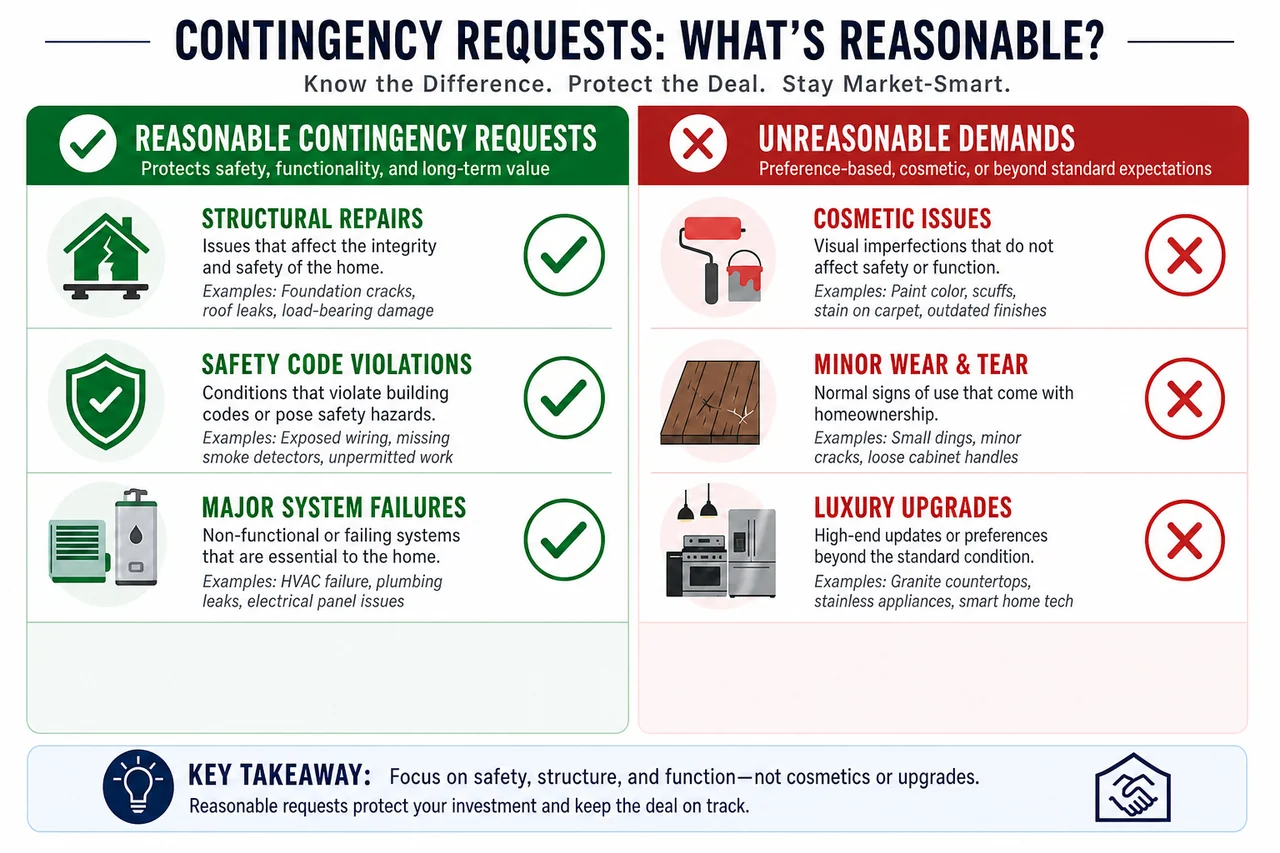
You'll need to sort through inspection repair requests quickly. And here's what matters most: not everything on that report is created equal — or legally required of you to fix.
| Request Type | Examples | Reasonable? | Seller Recommendation |
|---|---|---|---|
| Structural Issues | Foundation cracks, sagging roof, load-bearing wall damage | Yes | Address or offer significant credit; these affect lender approval |
| Safety/Code Violations | Missing GFCI outlets, exposed wiring, CO detector absence | Yes | Repair — often low cost, high liability if ignored |
| Major System Failures | Non-functional HVAC, water heater at end of life, failed septic | Yes | Repair, replace, or offer an equivalent credit |
| Cosmetic Defects | Scuffed paint, worn carpet, dated fixtures | No | Politely decline; cosmetic items are buyer's responsibility |
| Normal Wear and Tear | Caulk around tubs, minor settling cracks, weatherstripping | No | Decline or offer minimal accommodation |
| Preference-Based Requests | "Upgrade the panel" when current panel is functional | No | Decline — buyer wants improvements, not repairs |
| Environmental Hazards | Radon above EPA threshold, active mold, asbestos | Yes | Address — these affect habitability and financing |
Here's the shortcut: does it touch safety, structure, or your buyer's ability to get financing? That's reasonable. Is it paint touch-ups or a buyer's wish to upgrade something that works fine? You can decline.
But timing matters too.
In a slow market, you might need to bend more on requests just to keep the deal alive. When homes are flying off the market, buyers don't tend to push hard on cosmetic stuff — they're just grateful to get the place.
Back to topSeller Negotiation Strategies for Inspection Contingencies

| Market Condition | Seller Use | Contingency Strategy | Typical Buyer Behavior | Recommended Seller Approach |
|---|---|---|---|---|
| Hot Market (low inventory) | High | Shorten inspection window to 5–7 days; limit repair obligations | Buyers may waive inspection entirely to compete | Counter with firm repair cap ($1,000–$2,000); decline cosmetic requests |
| Balanced Market | Moderate | Standard 10-day window; negotiate case-by-case | Reasonable repair requests; willing to accept credits | Offer credit in lieu of repairs when possible; counter unreasonable items |
| Cool Market (high inventory) | Low | 14-day window typical; buyer holds more cards | More aggressive repair lists; may use inspection to renegotiate price | Pre-inspect to get ahead of issues; address safety items proactively |
When to push back on contingency terms
You're not required to accept every repair request. A buyer submits a 40-item list? You've got every right to pick and choose what you'll actually fix. In your counteroffer, focus only on safety and structural items. Explicitly decline cosmetic or preference-based requests in writing. In competitive markets, you might simply respond that the property is being sold as-is beyond specific safety items. That's it.
How to craft effective counteroffers
Specificity is your friend here. Instead of agreeing to "fix electrical issues," specify exactly which items you'll address and set a dollar threshold upfront. Don't make vague promises. And here's the real move: offering a closing cost credit in lieu of repairs is often faster, cleaner, and less risky than actually doing the work yourself. You avoid contractor scheduling delays. You eliminate disagreements about whether the work was done right. Everyone wins.
Back to topPre-Listing Inspections: A Seller's Proactive Strategy

Here's something most sellers overlook: hiring your own licensed inspector before the home hits the market. It's called a pre-listing inspection, and for $300 to $500, it can save you thousands when negotiations get heated. Why wait for buyers to find problems you already know about?

Benefits of getting a pre-listing inspection
- Eliminates surprises: You discover defects before buyers do, giving you time to repair, disclose, or price accordingly
- Strengthens your negotiating position: Buyers have less use when defects are already disclosed and factored into pricing
- Speeds up closing: Fewer post-inspection negotiations mean fewer delays
- Builds buyer confidence: A clean pre-inspection report signals the property has been well maintained
Transparency advantages in negotiations
Disclose known defects upfront — with your pre-inspection report to back you up. Buyers can't use the inspection as a renegotiation tool for items you've already addressed or disclosed. And that's powerful leverage.
This matters especially in states with strict disclosure laws. If you're selling in Florida, Colorado, Indiana, or Tennessee, check your state-specific obligations: Florida contingency guide, Colorado contingency guide, Indiana contingency guide, and Tennessee contingency guide.
Back to topHandling Inspection Results: Step-by-Step Seller Process
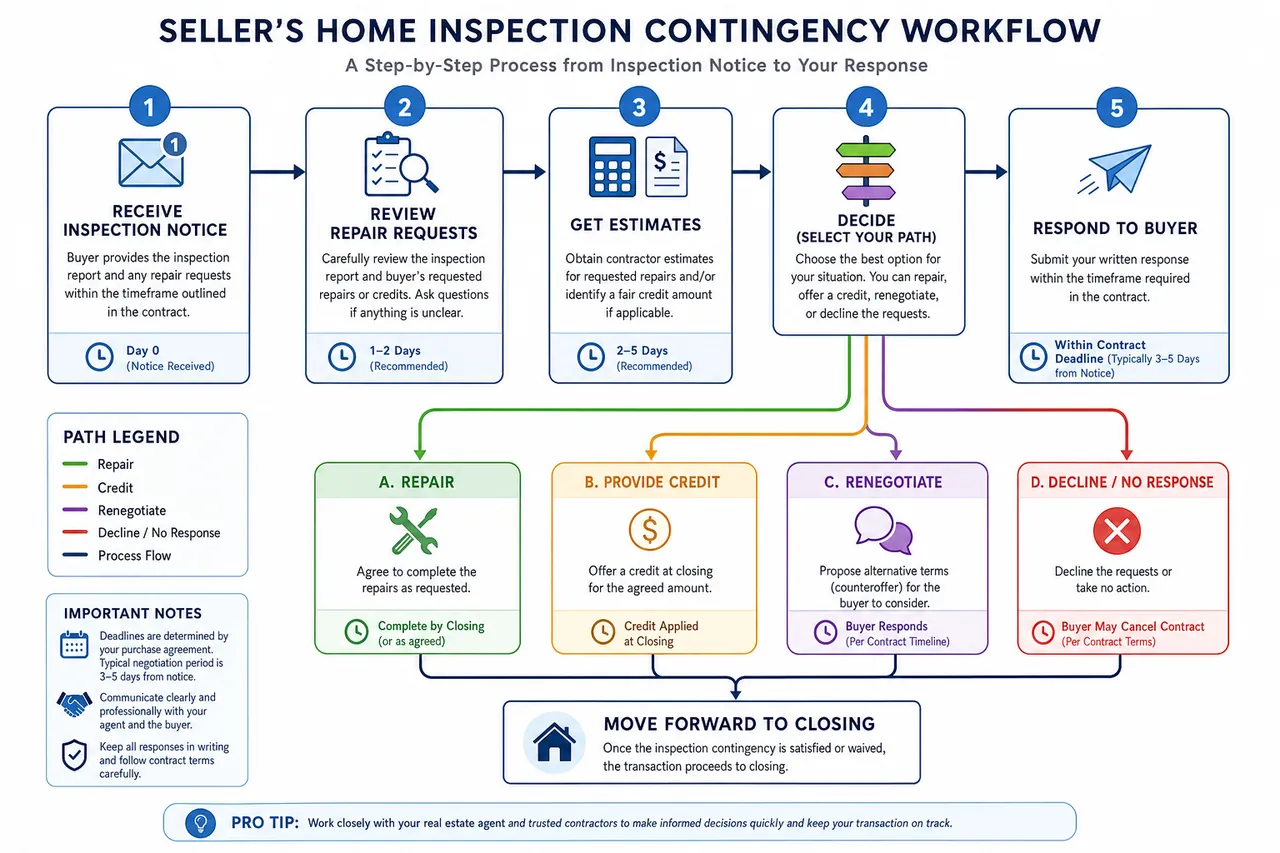
The buyer's inspection contingency notice just landed in your inbox. You've got 3 to 5 business days to respond—and this next move matters. Here's how to handle it without leaving money on the table or creating headaches at closing:
- Read the repair request carefully. Don't skim it. Sort each item into three buckets: safety/structural issues, major systems, or cosmetic stuff the buyer just wants fixed for free.
- Get contractor estimates fast. If you're thinking about repairs, call two different contractors and get written estimates within 24–48 hours. This step saves you from accidentally agreeing to vague repair work that could drag on for weeks.
- Decide your strategy for each item. Will you repair it? Offer a credit instead? Or decline? Safety issues almost always need either a repair or an equivalent credit. Cosmetic requests? Decline them in writing and move on.
- Write a specific counteroffer. Address every single item the buyer mentioned. Vague responses? They lead to disputes right before closing, and you don't want that.
- Include a deadline. Your counteroffer needs a response deadline—typically 48 hours. Make it clear: accept, counter, or the deal terminates.
| Seller Response Option | Pros | Cons | Best Used When | Typical Cost Implication |
|---|---|---|---|---|
| Agree to Repairs | Buyer stays happy; contingency goes away quickly | Contractor might delay; quality arguments at closing | Safety/code issues; lender-required repairs | Variable; get estimates first |
| Offer a Credit | Faster closing; no dealing with contractors | You take a hit to your proceeds; buyer might ask for more later | When repairs cost too much or time is tight | Fixed; you control the amount |
| Renegotiate Price | Cleaner than itemized credits; simpler paperwork | Changes contract terms; appraisal might come back lower | Major defects discovered late; buyer's market conditions | Depends on how bad the defect is |
| Decline and Sell As-Is | You keep the most money; no repair headaches | Buyer might walk; deal could fall apart | Seller's market; defects already disclosed upfront | Zero out-of-pocket; but you risk relisting costs |
Non-Negotiable Contingencies and When to Prioritize Acceptance
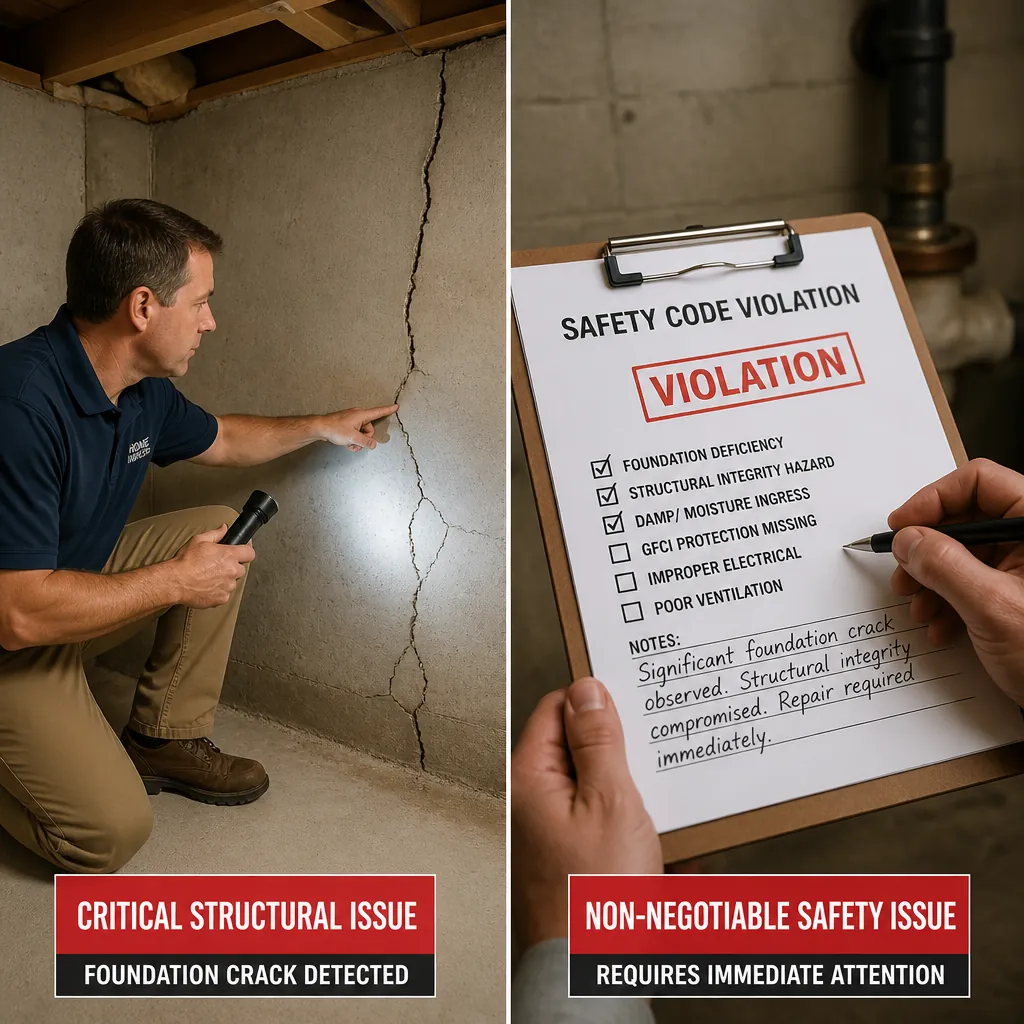
Some inspection findings aren't optional. They're legally required, financially risky, or ethically non-negotiable. And here's the thing — fighting them usually costs you more than just fixing them in the first place.
- Environmental hazards: Active mold, radon above 4 pCi/L, or deteriorating asbestos make a home uninhabitable. Once you know about these issues, most state laws require you to disclose them. You can't just ignore them and hope the next buyer doesn't find out.
- Structural deficiencies: Foundation failures, load-bearing walls that are compromised, unsafe roof structures — these follow you. Even after you sell, you're liable if you didn't properly disclose or repair them. That's exposure you don't want.
- Safety code violations: Missing smoke detectors, improper egress windows, non-grounded outlets in bathrooms or kitchens. These are cheap fixes. But ignore them? You're looking at serious liability exposure. Is saving a few hundred dollars worth that risk?
- Lender-required repairs: If your buyer is financing through an FHA, VA, or USDA loan, many defects shift from "let's negotiate" to "you must fix this." Refusing means the deal falls apart and you're back to square one hunting for a conventional buyer.
Contingency Deadlines and Timeframes for Sellers
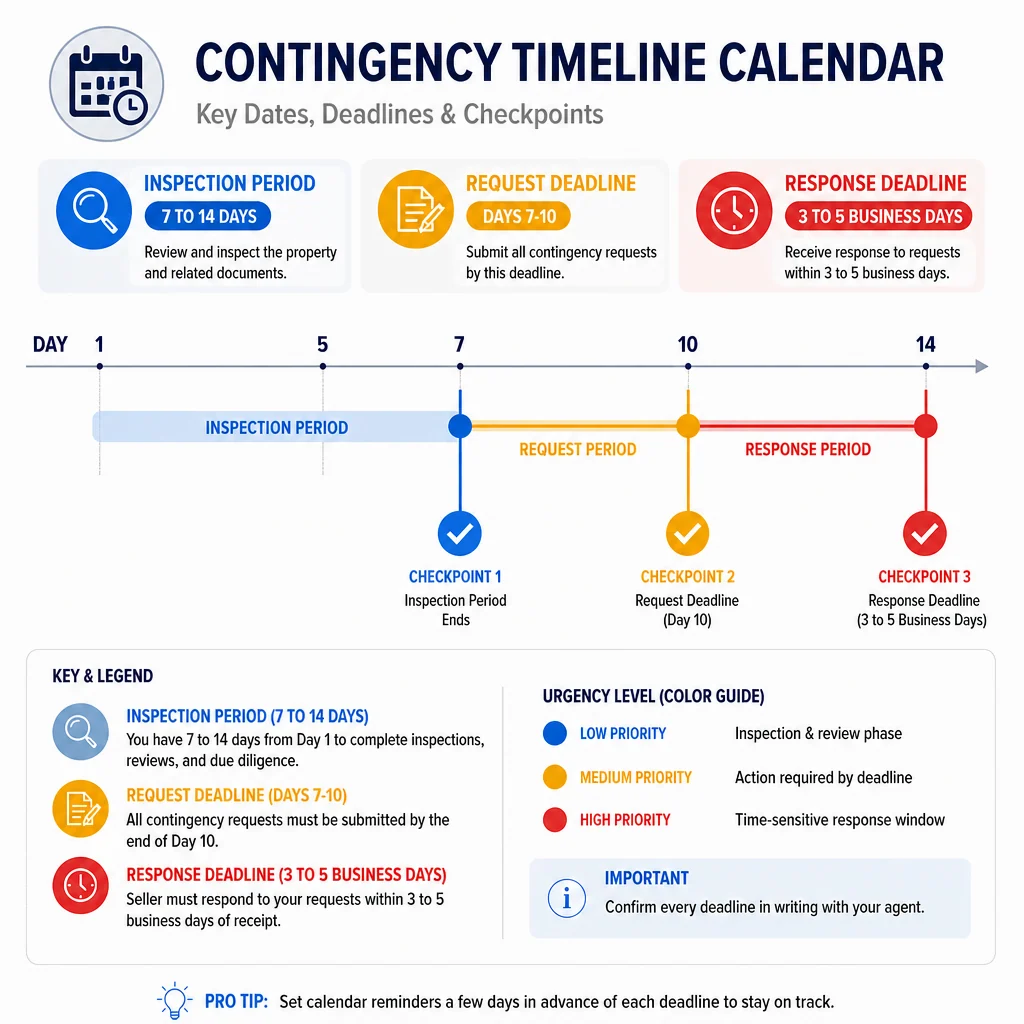
Time moves fast in inspection contingency negotiations. Every day counts — and understanding the typical timeline keeps you from getting stuck waiting around while uncertainty eats away at your position.
| Timeline Event | Typical Timeframe | Seller Action |
|---|---|---|
| Contract accepted / Contingency begins | Day 0 | Confirm inspection window in writing |
| Buyer schedules inspection | Days 1–3 | Provide access; ensure utilities are on |
| Inspection completed | Days 3–7 | Note date for deadline tracking |
| Buyer receives report and submits requests | Days 7–10 | Review requests; begin contractor estimates |
| Seller response deadline | Days 10–14 | Submit written counteroffer |
| Buyer accepts or terminates | Days 14–17 | Confirm contingency removal in writing |
Here's where you have leverage: push back on longer inspection windows. A 7-day window? That's your sweet spot now. And if the buyer asks for more time, don't automatically say yes. You can grant an extension, but get it in writing and cap it at 3–5 additional days — that's fair, but it keeps things moving. Your real estate agent should be the one enforcing these deadlines, so make sure they're on top of it.
Back to topWorking with Real Estate Agents to Manage Contingencies
A good real estate agent is worth their weight in gold during inspection contingency negotiations. They've reviewed hundreds of inspection reports. They know the difference between a buyer nitpicking and a genuine structural problem that needs fixing. Here's what a skilled agent can do for you:
- Evaluate each repair request against local market norms
- Draft counteroffers that are firm but don't alienate the buyer
- Track deadlines and ensure proper documentation of all contingency communications
- Coordinate contractor access and estimates efficiently
- Advise when to hold firm and when flexibility preserves the deal
Before you walk into inspection negotiations, you need to know whether your home's asking price matches reality. An overpriced house going into an inspection creates a nightmare scenario — the buyer's already looking for problems, and the numbers don't support their offer anyway. Check out Are Zillow Zestimates Accurate? What Sellers Should Know to understand how pricing accuracy affects your negotiating power. We've also got state-specific guides for Florida, Colorado, and Washington.
Selling in Washington State? Then read up on Selling Your Home in Bonney Lake, Washington — local market conditions directly impact how contingency negotiations typically shake out in your area.
Back to topConclusion: Managing Inspection Contingencies with Confidence
Home inspection contingencies don't have to blindside you. Here's the thing: when you know what kinds of contingencies buyers typically request, when you can tell the difference between a fair ask and an unreasonable one, and when you have a clear game plan for responding, the inspection phase stops feeling chaotic. It actually becomes your chance to shine.
The sellers who walk away with the best deals? They combine three things. First, they prep ahead — getting a pre-listing inspection, pricing accurately, and disclosing everything upfront. Second, they nail down contract language that protects them. Third, they negotiate based on what the market actually looks like right now, not wishful thinking.
Whether you'll repair something, offer a credit, or renegotiate the price depends entirely on your situation.
But the pattern is always the same: the winners are deliberate. They don't just react when an inspection report lands in their inbox. An experienced real estate agent on your team makes a real difference here. Know your state's legal obligations too — this knowledge is what keeps you in control when it's time to close.
Back to topFAQs: Sellers' Common Questions About Inspection Contingencies
Do sellers have to agree to repairs after an inspection?
Nope. You're not legally required to fix anything the buyer asks for. But here's the thing — if you refuse everything, don't be surprised when they walk away and take their earnest money with them. The smart move? Handle the real problems — safety issues, structural damage, anything the lender won't approve without fixing. Say no to the cosmetic stuff and the "nice to have" requests. Then wait and see if they'll accept your terms or if they're heading for the exit.
Can sellers refuse to include an inspection contingency in the contract?
You can push back. Most markets let you counter with a shorter inspection window, a cap on repair costs, or an as-is clause instead. But completely rejecting an inspection contingency? That's going to scare off a lot of potential buyers. Hot markets are different — sometimes buyers will voluntarily drop the inspection contingency just to beat out other offers. You can structure your counter in a way that makes this attractive, but don't demand it outright.
What happens if the buyer waives the inspection contingency?
They're giving up their right to ask for repairs or back out based on what the inspection finds. That's gold for you as a seller. It removes a major source of complications after you've already agreed to sell.
But don't think you're off the hook completely. You still have to be honest about what you know is wrong with the property. Waiving an inspection doesn't give you permission to hide defects or lie about condition. If you knowingly conceal something serious, that's fraud, and you're still liable.
Is a closing cost credit better than making repairs?
In most cases, absolutely. Offering a credit at closing is faster, cheaper (you decide the amount), and you don't have to worry about contractors missing deadlines or doing sloppy work. The one exception: lender-required repairs. If the buyer's bank says the roof needs to be fixed before they'll fund the loan, a credit won't help. The repair actually has to happen.
How long do sellers typically have to respond to inspection contingency requests?
Most contracts give you 3 to 5 business days. Check your purchase agreement — that number should be spelled out clearly. Miss that deadline, and you could be in trouble. In some states, not responding in time gets read as a rejection of their requests, which can trigger the buyer's right to terminate and take their earnest money back. Call your agent, confirm your exact deadline, and make sure you respond in writing.
Back to topMore in Closing, contingencies and getting paid
- Sell House and Buy Another: Timing, Contingencies, and Strategy
- Home Warranty When Selling: Is It Worth Offering and What Does It Cover?
- How the Real Estate Closing Process Works (Seller's Guide)
- Real Estate Contingencies Explained: What Every Seller Should Know
- Property Tax Proration at Closing: How It Works for Sellers
- What Is Earnest Money? A Seller's Guide
See our guide: “Closing Costs for Sellers: What You'll Pay and How to Reduce Them” →

