

Sell House and Buy Another: Timing, Contingencies, and Strategy

Table of Contents
- Understanding Your Three Main Options
- Financial Planning and Mortgage Considerations
- Preparing Your Home for Sale
- Marketing and Selling Your Current Home
- Finding and Buying Your New Home
- The Legal and Conveyancing Process
- Managing Timing and Completion Coordination
- Organising Your Move
- Common Challenges and How to Overcome Them
- Special Considerations and Unique Situations
- What You'll Actually Pay
- Professional Support and Guidance
- Key Takeaways and Next Steps
- Frequently Asked Questions
Trying to sell your house and buy another at the same time? It's one of the toughest challenges a homeowner can tackle. You're juggling two separate property transactions — each with its own timeline, paperwork, negotiations, and legal requirements. And they all need to line up perfectly. According to Rightmove data, the average UK property transaction takes 12–16 weeks from offer acceptance to completion. Even a small delay in one deal can throw off the other. But here's what matters: thousands of homeowners pull this off every year. With the right strategy, financial preparation, and professional support, you can too. This full guide walks you through every stage — from choosing your timing approach to coordinating completion dates, managing cash flow, and planning your move.
Wondering what selling will cost? Start with what sellers pay at closing. It breaks down every seller cost at closing, the surprises, and ways to pay less.

Understanding Your Three Main Options
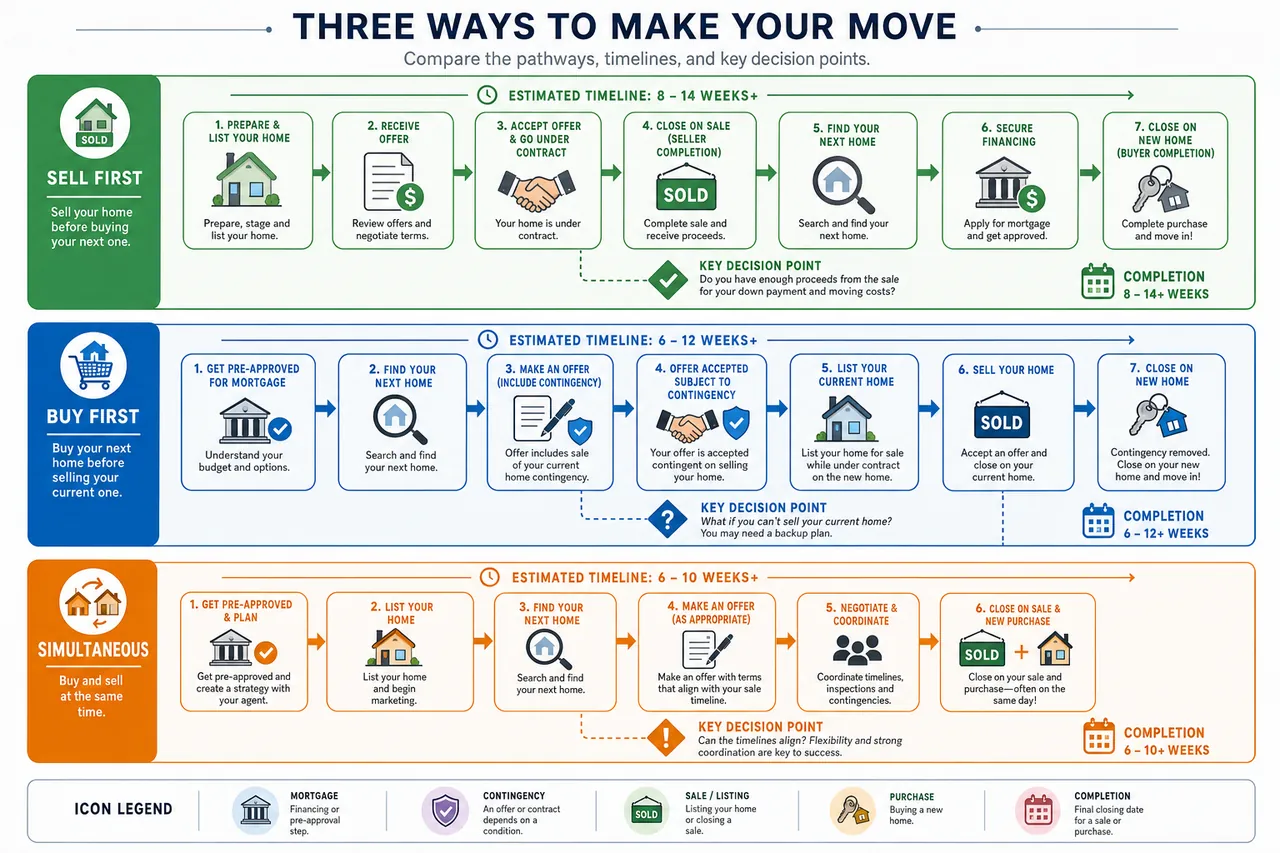
You need to pick your fundamental approach before anything else. Each one has different financial implications, risk profiles, and suitability depending on where you stand right now.

Option 1: Selling Your Home First
You accept an offer on your current property before you even make an offer on a new one. This is the most financially conservative approach. You know exactly how much equity you're releasing. You're a chain-free or near-chain-free buyer. And you're under zero pressure to accept a poor price on your new home.
But there's a catch: the gap period. If your sale completes before you've found and purchased a new home, you might need temporary accommodation. That could mean a few weeks in a hotel, staying with family, or renting short-term.
Option 2: Buying Before You Sell
This puts you in control of your new home's timeline. The problem? It creates significant financial pressure.
You'll need to finance the new purchase — through savings, a bridging loan, or a retained mortgage — while still servicing your existing mortgage. That's two payments running at the same time. This approach suits homeowners with substantial equity, strong cash flow, or access to short-term finance.
The risk is real: if your current home takes longer than expected to sell, costs escalate quickly. Bridging loan interest compounds. Your mortgage payments keep coming. Suddenly you're hemorrhaging money.
Option 3: Simultaneous Buying and Selling
Most homeowners in England and Wales use this approach. Both deals are linked so that exchange and completion happen on the same day (or very close together). You agree a sale on your current property and an offer on your new one, then your conveyancers coordinate the legal process on both sides.
It's efficient when it works. But it creates vulnerability — if one transaction falls through, both are at risk. You're dependent on another chain continuing to hold.
| Factor | Sell First | Buy First | Simultaneous |
|---|---|---|---|
| Financial risk | Low | High | Medium |
| Negotiating power (buying) | Strong — chain-free | Weaker — chain dependent | Moderate |
| Need for temporary accommodation | Likely | Unlikely | Possible |
| Bridging finance required | No | Often yes | Rarely |
| Typical timeline | 4–12 months total | 3–6 months | 4–6 months |
| Best suited for | Cautious sellers in slow markets | High-equity homeowners | Most homeowners |
| Chain collapse risk | Low | Medium | High |
Once you've settled on a strategy, financial planning becomes the next critical pillar. That's where everything else flows from.
Back to topFinancial Planning and Mortgage Considerations

This is where things fall apart. Money. Get your finances crystal clear before you list or make an offer — there's no skipping this step.
How Mortgages Work When Selling and Buying
Your existing mortgage doesn't just follow you to the next property. That's the first myth to bust. If your current lender offers mortgage porting, you might keep your existing deal and avoid early repayment charges (ERCs). But here's the catch: the lender will reassess your affordability, and they'll want the new property to meet their lending criteria. If you're borrowing more, any extra amount gets charged at today's rates, not your old rate. Talk to your existing lender first. Then speak to an independent mortgage broker. Don't assume porting works until you've had both conversations.
Bridge Loans and When to Use Them
Bridging finance is short-term borrowing. It typically lasts 1–18 months and covers the gap between buying your new place and getting money from your sale. The cost? High. Interest rates usually run 0.5% to 1.5% per month. But in a hot market or a time-sensitive situation, a bridge loan might be exactly what saves you from losing the home you want.
| Loan Amount | Monthly Rate | Duration | Total Interest Cost | When to Consider |
|---|---|---|---|---|
| £100,000 | 0.75% | 3 months | ~£2,250 | Short overlap, strong equity |
| £200,000 | 0.85% | 6 months | ~£10,200 | Market delay, high-value purchase |
| £300,000 | 1.0% | 9 months | ~£27,000 | Only if no alternative and deal is strong |
| £150,000 | 0.75% | 4 months | ~£4,500 | Competitive market, auction purchase |
Use bridge loans strategically. Think of them as your last resort or your calculated move — never your default option. Work through the worst case. What if your sale drags on to six months instead of three? Can you handle that extra cost?
Cash Flow Management and Stamp Duty
Bridge finance isn't your only cash drain during a dual transaction. You've got two sets of conveyancing fees (£1,500–£3,000 each), estate agent fees (1–3% of what you sell for), survey costs (£400–£1,500), removal costs (£800–£2,500), and Stamp Duty Land Tax (SDLT) on your purchase. And here's something many people miss: if you own a second property at any point — even just temporarily — SDLT surcharge rules kick in. That's an extra 3% on your bill. It adds up fast.
Speaking to a Mortgage Broker
Don't treat a mortgage broker as optional. Not for this. An independent whole-of-market broker looks at your complete financial picture, tells you whether porting makes sense, finds the right products for you, and explains what a lender needs if things change mid-transaction. Book this call before you call your estate agent.
Back to topPreparing Your Home for Sale

How you prepare your home for sale matters — it directly shapes how fast it sells and what price you'll actually get.
Property Valuation and Pricing Strategy
Start by getting three valuations from reputable local estate agents. Then cross-reference those numbers against sold prices on Rightmove and Zoopla for comparable properties in your area from the last three to six months. This gives you real data, not guesses.
Overpricing is the single biggest cause of slow sales. And here's the thing: once a property sits on the market for more than four weeks, buyers start to assume something's wrong with it. Price realistically from day one, or you'll pay for it later.
Worried about market timing? Our guide on the best time to sell a house covers seasonal patterns and what's actually happening in your local market right now.
Essential Documentation
Gather these before you list:
- Title deeds (or confirm Land Registry title is clear)
- EPC (Energy Performance Certificate — you legally need this to market your home)
- Building regulations certificates for any work done
- Planning permissions
- FENSA certificates for windows
- Boiler service records
- Lease documentation, if applicable
Missing paperwork causes delays. Avoidable delays are also expensive ones. Get ahead of this now.
EPC and Legal Requirements
You must obtain an EPC before marketing your property — it's a legal requirement, not optional. Expect to pay £60–£120, and the certificate stays valid for ten years.
Got an F or G rating? You can't let the property, but you can still sell it. And if you're concerned about your rating, consider small improvements like loft insulation or draught proofing — they sometimes bump you up a band, which makes your home more attractive to mortgage lenders and buyers alike.
Back to topMarketing and Selling Your Current Home
You need the right buyer at the right price, and you need the sale to move fast. Just listing on Rightmove won't cut it.
Choosing an Estate Agent
Don't pick an agent based on fees alone. Look at their local market knowledge, how quickly homes sell, what percentage of asking price they actually achieve, and whether their photos and descriptions make properties stand out. A cheap fee means nothing if the agent consistently undersells properties or lets sales stall for months. Here's the real test: ask each agent how they handle chain sales — specifically, what's their process when your buyer is also selling? Their answer tells you everything about whether they know what they're doing.
Marketing Your Property Effectively
Professional photography isn't optional. Rightmove data shows that listings with high-quality images get up to 118% more views than those without. Virtual tours matter too, especially if you've got serious buyers looking from out of the area. Price matters enormously. Set your asking price just below the psychological threshold — £299,950 instead of £305,000 — and you'll show up in more buyer searches.
Moving significantly or relocating out of state? That changes your selling strategy in ways most agents don't think through. Our article on selling your house when moving out of state walks you through those specific challenges.
Negotiating and Agreeing a Sale
When offers come in, look beyond the number. The buyer's situation matters just as much as the price. A chain-free buyer or someone with cash and a mortgage-in-principle in hand? They're worth accepting a lower offer for. Their deal won't fall apart. Ask your agent to verify the buyer's finances and whether they're in a chain before you accept anything. And start building a good relationship with the buyer's solicitor early — through your agent — so the momentum keeps going.
Back to topFinding and Buying Your New Home
You're juggling two major transactions at once. That's stressful. The key? Stick to your criteria and don't let emotions drive your decisions when you're under time pressure.
House Hunting Strategy
Start by writing down your non-negotiables — location, number of bedrooms, property type, condition — before you view a single house. Register with every agent covering your target area. Set up alerts on Rightmove and Zoopla so you catch new listings instantly.
Here's what makes sellers take you seriously: being pre-approved by a mortgage lender. Even better? Having your sale already agreed or being chain-free. Sellers want buyers who can actually close quickly. You become that buyer when your finances are locked down.
Making an Offer
When you put in an offer, tell the vendor exactly where you stand. Your sale is agreed and moving forward? Say it. Vendors and agents prioritise buyers who can actually complete. Don't throw numbers at a property you can't afford — base your offer on your confirmed equity and your mortgage approval letter, not wishful thinking.
And here's something many people skip: include a proposed completion date that matches your own sale timeline. Ask the vendor to take the property off the market once they accept your offer. It signals you're serious.
Getting a Survey and Inspection
A RICS HomeBuyer Report costs around £400–£700. A full Building Survey runs £600–£1,500 depending on the property's size and condition. Don't skimp here.
Survey findings matter. A significant defect discovered post-survey can knock thousands off the asking price — or it might reveal that walking away is the smart move. Commission the survey the moment your offer's accepted. Every day you delay pushes back your completion date.
Back to topThe Legal and Conveyancing Process
Conveyancing is where most timelines fall apart. Pick the right solicitor and stay on top of things? You can cut weeks off the whole process.
Selecting a Conveyancing Solicitor
Look for a solicitor or licensed conveyancer who actually specialises in residential property and has done simultaneous transactions before. Your first question should be direct: "Can you handle both my sale and purchase at the same time?" Some firms will represent you on both sides, which cuts down on miscommunication. Check their responsiveness, whether they offer online tracking, and ask about fixed-fee pricing—hourly billing on straightforward deals just drags things out unnecessarily.
Managing Dual Transactions
Your solicitor's got a lot on their plate. They'll run searches on both properties, talk to your mortgage lender, review contracts, raise enquiries, and coordinate with the other solicitors involved. And here's the tricky part: they need to sequence everything carefully. Usually that means finishing the sale-side work first so you both know what equity you've got, then moving forward with the purchase details. Tell them immediately about any changes or updates on your end—delays from you become delays in the whole timeline.
Communication and Coordination
The best simultaneous transactions happen when information flows constantly.
You, your solicitor, your estate agent, and the buyer's solicitor all need to be talking. Same thing happens on the purchase side. Set up a weekly call with your solicitor—not monthly, weekly. Push back on vague timelines for responses. The standard "we're waiting to hear back" approach will cost you weeks you don't have. If you're juggling an inherited property alongside your main home and selling it from out of state, you're dealing with similar coordination headaches—selling an inherited house from afar has its own wrinkles worth knowing about.

Managing Timing and Completion Coordination
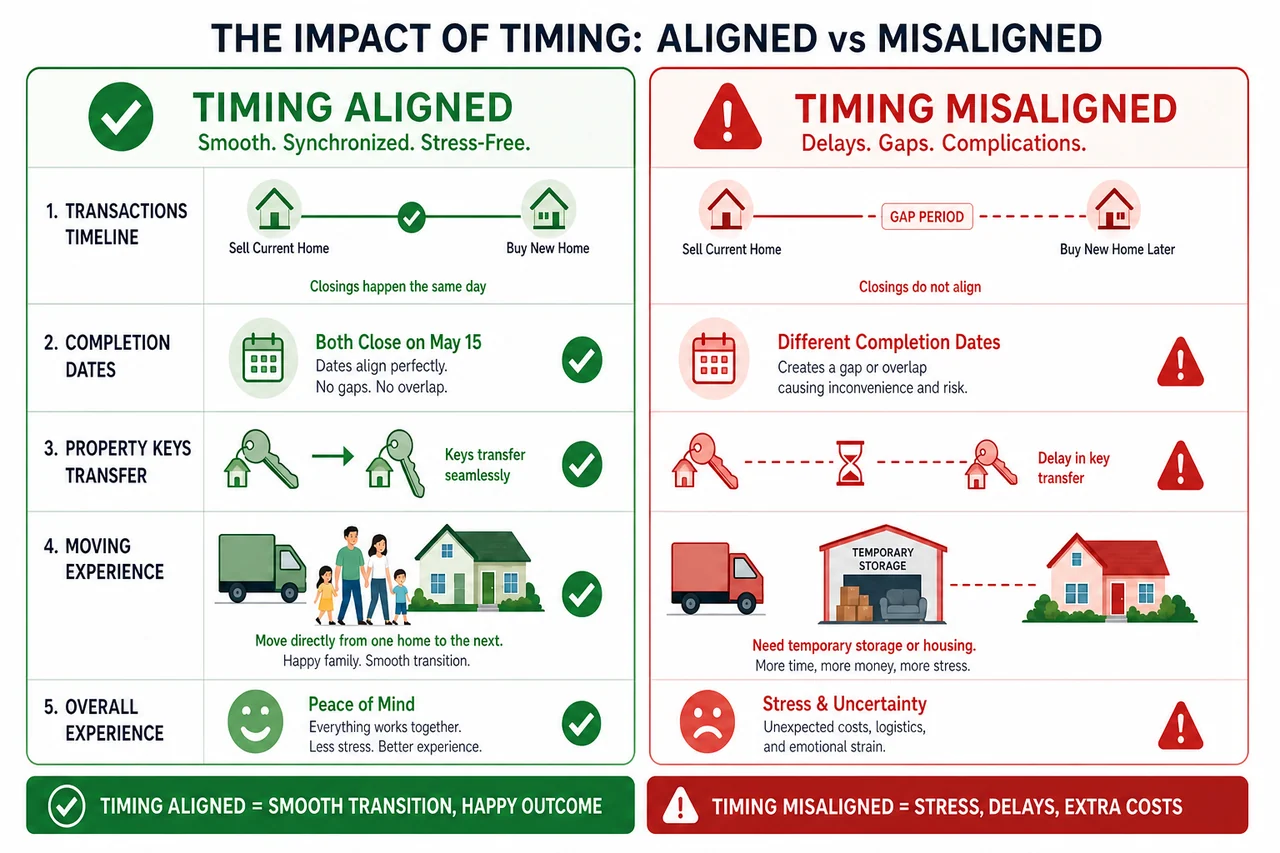
This is where it gets real. The exchange and completion stage is where simultaneous transactions are most vulnerable — but it's also where careful planning saves you thousands in stress and money.
Exchange of Contracts
Exchange is the legally binding moment in UK property transactions. Once you exchange, you're locked in. Both parties are committed, and a completion date gets set in stone. For a simultaneous transaction, aim to exchange on both your sale and purchase on the same day, or within 24–48 hours of each other. If you exchange on your purchase before your sale completes, you've created significant financial exposure. Your solicitor will coordinate the timing, but don't just sit back — you need to actively manage it too.
Setting Realistic Completion Dates
Completion typically happens 1–4 weeks after exchange. And here's the thing: you need a completion date that works for everyone in the chain, not just you. Two weeks is the bare minimum. Four weeks? That's more comfortable, and honestly, most people prefer it. Make sure there's enough time to sort removals, get your mortgage funds released, and handle the logistics. Pay attention to which day of the week you pick — Monday's chaos for solicitors, and avoid dates near bank holidays when offices and banks shut down completely.
Contingency Plans if Transactions Don't Align
Write down a contingency plan before you exchange. Seriously — do this in advance. What happens if your purchase falls through after you've already sold? Where do you live? If your sale collapses after you've bought, can you carry both mortgages temporarily? Think through short-term rentals, storage facilities, staying with family, or a bridging loan. Having these options mapped out removes the panic when something actually goes wrong.
| Transaction Phase | Typical Duration | Sell First | Buy First | Simultaneous |
|---|---|---|---|---|
| Property preparation | 2–6 weeks | 2–6 weeks | Parallel with search | 2–4 weeks |
| Finding buyer / finding property | 4–12 weeks | 4–12 weeks | 1–8 weeks | Both in parallel |
| Conveyancing (both sides) | 8–16 weeks | Sequential | Sequential | 8–16 weeks combined |
| Exchange to completion | 1–4 weeks | 1–4 weeks | 1–4 weeks | Same day preferred |
| Total estimated timeline | — | 6–18 months | 4–8 months | 5–8 months |
Organising Your Move
Most people underestimate moving logistics. Then the week before completion hits, and suddenly you're scrambling. Planning ahead? It saves money and stress.
Removals Planning
Book a removal company the moment you've got your exchange and completion dates locked in. Spring and early summer are chaos — firms get booked solid weeks ahead. You'll want three quotes minimum. And here's what matters: ask whether they can store your stuff if there's a gap between leaving your current place and moving into the new one. Monday completions are standard, which also means they're the hardest to book.
Storage Solutions
Even a three-day gap between moving out and moving in means you need somewhere to put your belongings. Self-storage units are flexible and available on short notice, running £80–£200 per week depending on what you're storing and where you're located. Build this cost into your moving budget. Also check their access hours — you might need to grab something during that in-between period.
Logistics and Timing
Your solicitor can tell you when the mortgage funds actually release on completion day. That timing dictates when you get your keys. It's almost never before noon. Coordinate with your removal firm, your buyer's timeline, and the person selling you the new property so everyone's on the same page about who moves when. A simple shared checklist between all parties stops the nightmare of multiple removal lorries jamming up the same street at once.
Back to topCommon Challenges and How to Overcome Them
Even the best-laid plans hit snags. When you're juggling a sale and a purchase at the same time, knowing what typically goes wrong helps you stay ahead instead of scrambling to fix it.
Timing Misalignment
Challenge: Your buyer's ready to close, but you haven't found your next place yet. Solution: Push for a longer completion window—10 to 12 weeks gives you breathing room. You could also lock in a completion date in the contract that works for both sides of your chain. And honestly? Many buyers will wait if the property's priced right. Short-term rental accommodation is another option if timings really don't line up.
Market Volatility
Property prices don't stand still. Between your sale and purchase, the market could swing either way—leaving your equity calculations off and your affordability stretched. Solution: Don't borrow the absolute maximum your bank approves. Build in a buffer. When markets move fast, check regional guides like the best time to sell in Washington state or market timing in Florida. They'll show you how cycles affect your strategy and timing.
Financing Gaps
Challenge: Your mortgage offer expires before you close. Most lenders give you 3 to 6 months. Solution: Time your mortgage application strategically—late enough to stay current, but early enough to close on schedule. Track that expiry date obsessively. Contact your lender well in advance if you need an extension. They'll usually say yes, but you have to ask formally. Here's the critical part: if anything changes with your finances between application and completion, tell your broker immediately. Undisclosed changes that surface at closing can kill the entire deal.
Falling Through Transactions
Around 25–30% of UK property sales collapse after offer acceptance. In a simultaneous transaction? That's twice as painful. You need backup plans. Verify your buyer's financial position before you even accept an offer. Stay in touch throughout the chain—silence breeds doubt. Push your solicitor to move fast on conveyancing because every extra week is another chance for things to fall apart. And here's the practical move: have an alternative buyer or property lined up just in case. Ask your solicitor to start property searches early too. It signals you're serious and gets the ball rolling faster.
Back to topSpecial Considerations and Unique Situations
Shared Ownership Properties
Shared ownership adds real complexity to your sale. Here's why: the housing association gets a statutory nomination period—typically 8–12 weeks—to find their own buyer before you can market freely. That's two to three months tacked onto your timeline right there. Check your lease for the exact terms and build this waiting period into your plans. The upside? Once you're ready to buy again, you can use proceeds from your full market sale, but you'll absolutely need a solicitor who knows shared ownership deals inside and out.
Buy-to-Let Properties
Capital Gains Tax changes everything if this is an investment property, not your home. You'll owe CGT on any profit above £3,000 (that's the annual exempt amount as of April 2024), taxed at either 18% or 24% depending on your income bracket. And you've got just 60 days after completion to report and pay it. That's a meaningful chunk out of your net equity—which directly affects how much you can spend on your next place. Talk to your accountant before you list. Don't skip this step.
Moving Out of State or Cross-Region
Distance makes everything harder. Solicitors can work remotely without issue, sure, but handling viewings, surveys, and staying in touch with agents from hundreds of miles away? You're looking at serious planning challenges. Our guide on selling your house when moving out of state walks through exactly how to manage this. And here's the thing—markets vary wildly by region. If you're headed to Tennessee or Colorado, spend time understanding when to sell in Tennessee or Colorado's property cycle. Get the timing right and you could shift your sale price and timeline significantly.
Back to topWhat You'll Actually Pay
Here's the honest breakdown. The fees you'll face depend entirely on which strategy you choose—and some costs stack up faster than others.
| Fee Type | Sell First | Buy First | Simultaneous |
|---|---|---|---|
| Estate agent fees (1.5% avg) | Standard | Standard | Standard |
| Conveyancing (sale) | £1,000–£2,000 | £1,000–£2,000 | £1,000–£2,000 |
| Conveyancing (purchase) | £1,500–£3,000 | £1,500–£3,000 | £1,500–£3,000 |
| Bridging loan interest | None | £2,000–£30,000+ | Rarely needed |
| Temporary accommodation | £800–£3,000/month | None typically | Minimal if aligned |
| Storage costs | £80–£300/week | None typically | Minimal |
| SDLT surcharge risk (3%) | Low | High (dual ownership) | Low if coordinated |
| Survey costs | £400–£1,500 | £400–£1,500 | £400–£1,500 |
The real killer? Buying first without selling triggers bridging loan interest that can balloon to £30,000 or more. You're also juggling two properties at once, which means storage (£80–£300 per week), temporary housing (£800–£3,000 monthly), and that dreaded 3% SDLT surcharge on dual ownership.
Sell first and you dodge most of those extras.
But then you're homeless between deals. That's accommodation costs and storage fees eating into your proceeds—unless your timing's perfect.
Simultaneous completion? It's the sweet spot financially, assuming you can actually coordinate it.
Back to topProfessional Support and Guidance
You can't handle a simultaneous property transaction solo and expect it to go smoothly. Your success hinges almost entirely on the professionals you hire and whether they actually talk to each other.
Building Your Support Team
Start with these essentials: an experienced local estate agent who can handle both your sale and your purchase simultaneously, a whole-of-market mortgage broker, a residential conveyancing solicitor who's done dual transactions before, and a financial advisor or accountant if capital gains tax or complex tax issues are in play.
Here's what matters most. Tell each professional the complete story — not just the part that affects them. When your solicitor understands how your buyer's mortgage timeline affects your purchase deadline, they make smarter moves. Your broker knows why speed matters. Everyone's pulling in the same direction instead of working blind.
When to Seek Expert Help
Stop and call your professionals immediately if any of these happen: your mortgage offer's about to expire, someone in the chain goes silent, your buyer's financial situation changes, the survey uncovers major defects, or anyone's pushing you to exchange before your own purchase is locked down.
And here's the truth. Experienced professionals spot solutions that are completely invisible when you're juggling this alone. They've seen these problems a hundred times. You haven't.
Back to topKey Takeaways and Next Steps
Here's what actually matters when you're selling and buying: timing it right for your money situation, assembling a team that talks to each other, and preparing for things that might go wrong. Most homeowners who hit walls? They underestimate how complicated this gets. They don't save enough money upfront. And they let pressure push them into decisions instead of sticking to a plan.
Start here. Get a mortgage-in-principle from a broker — this takes a few days and shows you're serious. Then call three local agents and ask for property valuations. Ring a conveyancing solicitor before you're in a time crunch. Write down your non-negotiables for the new place.
Do this groundwork now. You'll be ahead of most buyers and sellers out there.
But what if your situation's unusual? Maybe you're handling an inherited property in Florida. Or you're trying to sell in Indiana's market with its own quirks. Make sure your team has actually dealt with these specific circumstances before. Experience matters here.
Back to topFrequently Asked Questions
Can I exchange contracts on my new home before my current sale has exchanged?
Technically, yes. But here's the risk: you're legally committed to completing that purchase no matter what happens to your sale. And if your sale falls through? You'll need either a hefty cash reserve or bridging finance to cover the gap. Most solicitors will tell you flat out not to do this unless your financial position is rock solid. Your safest bet is to exchange on both properties the same day.
What happens if my buyer pulls out after I've already had an offer accepted on a new property?
Before exchange, neither you nor your buyer has any legal obligation to proceed. This is the nightmare scenario in simultaneous transactions. If it happens, you've got real options. Try to find a new buyer fast — your solicitor's already done the groundwork, so you're ahead of the game. You could ask your new property's vendor for an extension. Or step back and decide whether to move forward at all. The crucial thing? Act quickly and be honest with everyone involved. Most vendors would rather wait a few weeks than lose a buyer entirely.
Do I have to pay the 3% Stamp Duty surcharge if I'm replacing my main residence?
No, not if both transactions complete on the same day. And if you sold your previous main residence within three years, you're safe too. But what if you complete your purchase first? You'll pay the 3% surcharge upfront, then claim a refund once your old home sells — as long as that happens within three years. Keep every document. Tell your solicitor to file the reclaim the moment your sale completes.
How long does a simultaneous sale and purchase typically take?
Once you've had offers accepted on both sides, expect 12–20 weeks for a standard transaction in England or Wales. Leasehold properties, complex chains, or missing paperwork? That'll push you past 20 weeks. Scotland's different. The legal system there uses missives, which get concluded earlier in the process. That can actually make timelines more predictable — though it also means you're committing earlier.
Is it worth using a cash buyer service to speed up my sale?
Cash buyer services can close in as little as 7–28 days. You eliminate the chain risk from your sale side entirely. The catch? Price. Most cash offers come in at 80–90% of market value. If you've found your dream home and need to move fast, that discount might be worth it. But do the math first. Compare what you'd lose on the discount against what a bridging loan would cost — or what you'd lose if the transaction collapses.
Back to topMore in Closing, contingencies and getting paid
- Home Inspection Contingencies: What Sellers Should Know
- Home Warranty When Selling: Is It Worth Offering and What Does It Cover?
- How the Real Estate Closing Process Works (Seller's Guide)
- Real Estate Contingencies Explained: What Every Seller Should Know
- Property Tax Proration at Closing: How It Works for Sellers
- What Is Earnest Money? A Seller's Guide
See our guide: “Closing Costs for Sellers: What You'll Pay and How to Reduce Them” →

