

Selling Your House With or Without Furniture: What Buyers Want
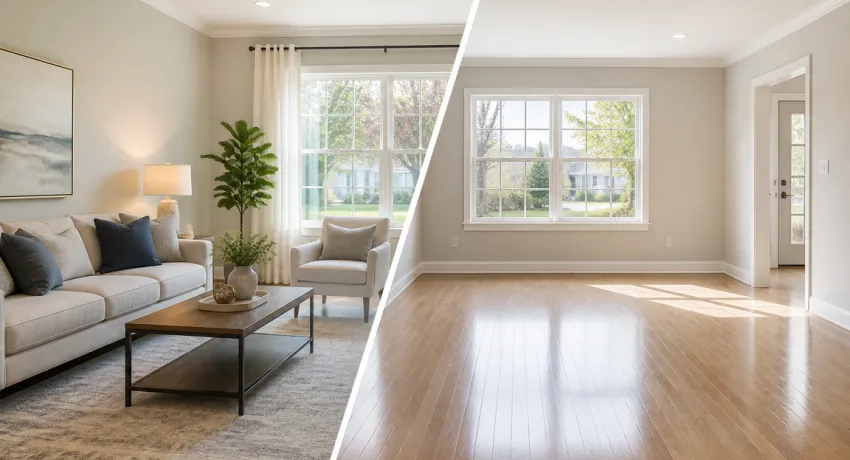
Table of Contents
- Should You Sell Your House With Furniture or Without?
- Should You Sell Your House With Furniture? Here's What Works
- What Items Typically Stay or Go in a Home Sale
- How to Price Your Home When Furniture Is Included
- How to Decide: Key Factors
- Best Practices for Selling a Furnished Home
- Professional Staging vs. Selling Furnished
- Conclusion: Making the Right Call for Your Situation
- Frequently Asked Questions
Here's something that trips up a lot of sellers: should you sell your house with furniture or without? On the surface, it seems like a simple logistics question. But it's not. Your choice ripples through everything — how buyers perceive the space, what your listing photos look like, how long the house sits on the market, and ultimately what you'll pocket at closing. The right answer depends on your timeline, the quality of your pieces, who you're trying to attract, and what's happening in your local market. Let's dig into each angle so you can decide with confidence.

Should You Sell Your House With Furniture or Without?
This isn't just about looks. Furniture changes everything—how fast buyers fall in love with your space, whether your listing photos actually stand out online, and whether people think they're getting real value. The NAR's 2025 Profile of Home Staging found something striking: 83% of buyers' agents say staging helps buyers picture themselves living there. Your own furniture works just as well as professional staging pieces. The impact is real.
Here's the thing. Homes are selling for a median of $440,600 as of June 2026—higher than ever before. You're competing in a tight market where tiny details make a difference. And right now, properties sit on the market for about 49 days on average. Even one week fewer? That's worth it. So anything you can do to catch a buyer's eye deserves serious thought.
Back to topShould You Sell Your House With Furniture? Here's What Works
| Selling WITH Furniture | Selling WITHOUT Furniture |
|---|---|
| Helps buyers visualize the space | Buyers can project their own style |
| Better listing photos and marketing | No personal taste conflicts |
| Perceived added value for buyers | No liability for furniture condition |
| Can speed up sale for relocating buyers | Cleaner contract — no furniture disputes |
| Reduces seller moving/disposal costs | Seller keeps valuable pieces |
| Useful negotiating use | Avoids clutter perception from excess items |
Why Furniture Can Actually Help You Sell
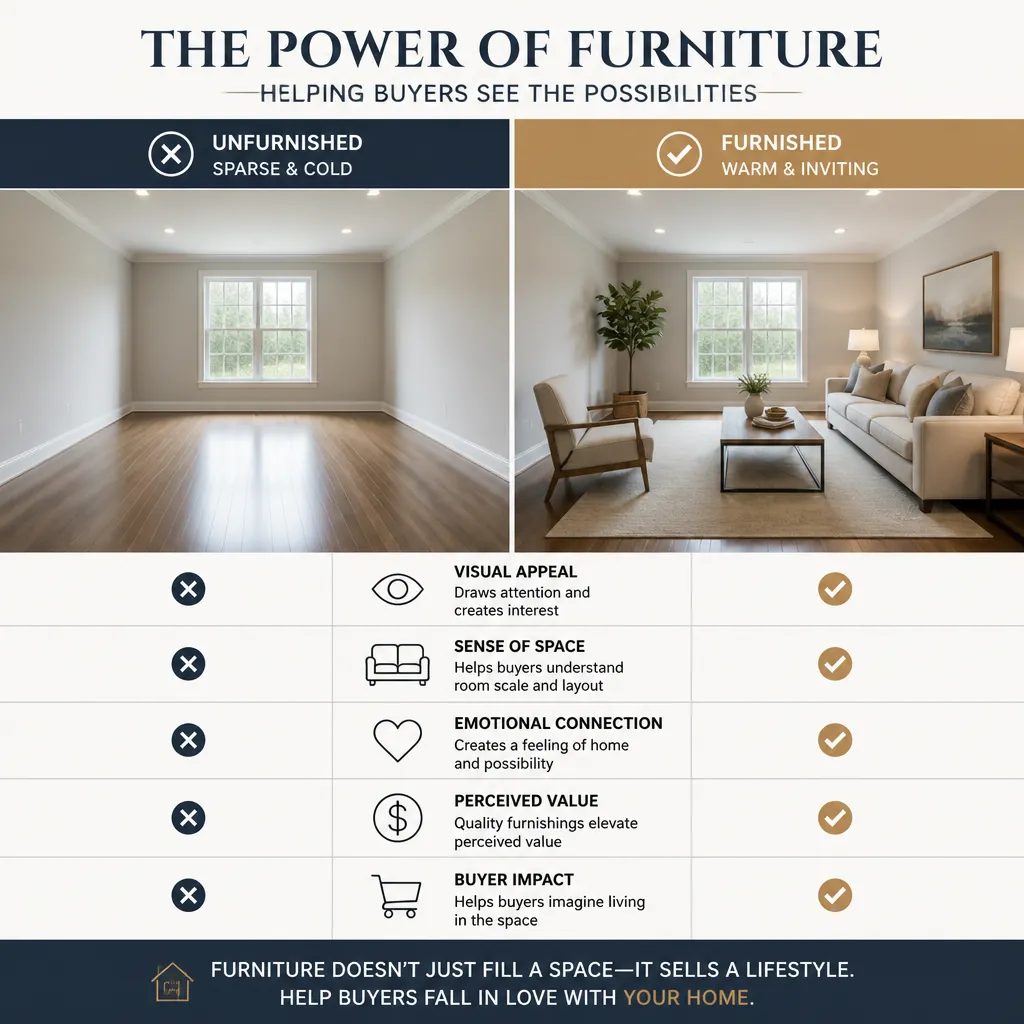
Empty rooms are genuinely hard to sell. Buyers walk in and struggle to see themselves living there — they can't judge scale, traffic flow, or how the space actually feels as a home. Furniture changes that. It anchors the room, makes it warm, and tells a story.

Buyers need to visualize your home as theirs. And that's nearly impossible in an empty shell. According to NAR data, 83% of buyers' agents confirm that furnished or staged spaces make a real, measurable difference in how buyers imagine their future in the home.
Your listing photos matter more than you think. Most buyers start online. A furnished room has depth, character, and proportion. An empty one? It looks small, cold, and vague. Better photos mean more showings. More showings mean faster sales.
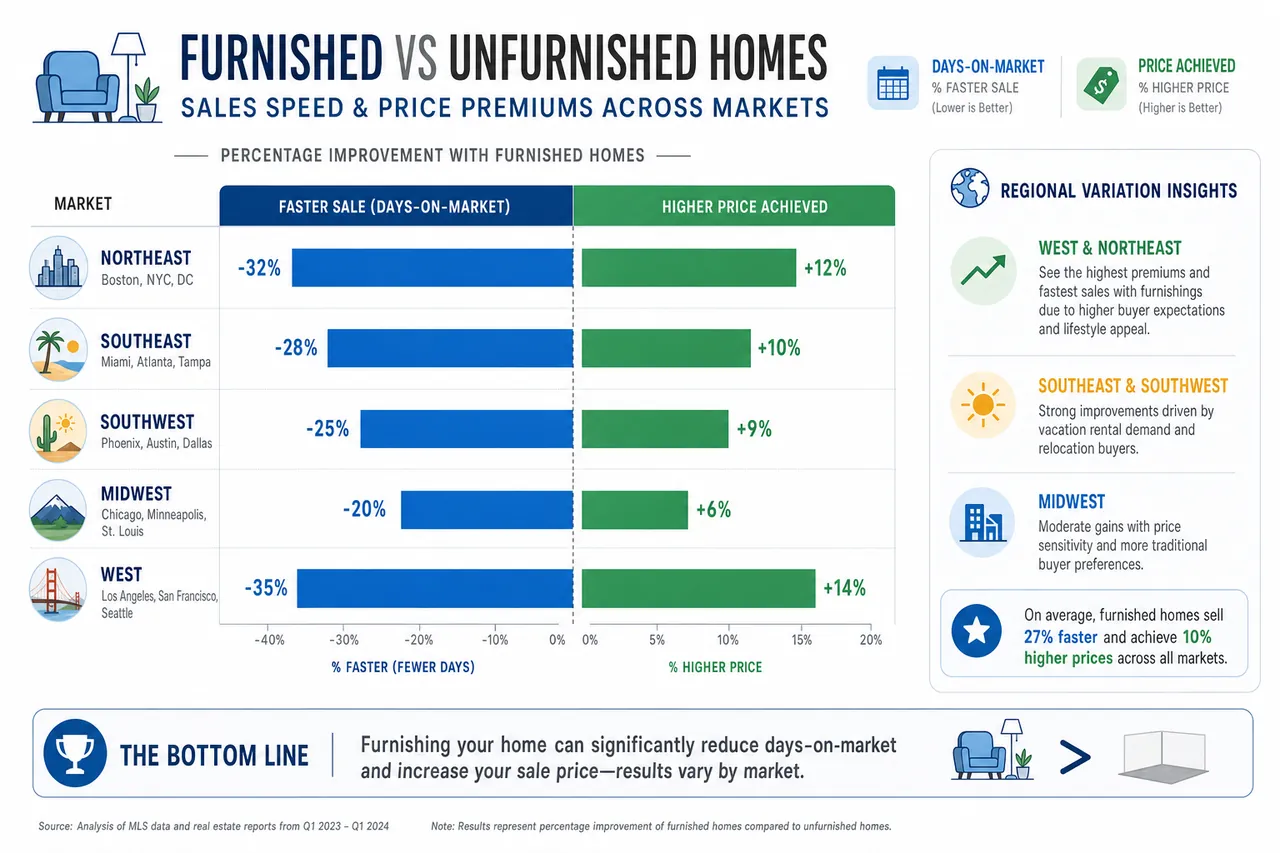
The numbers are striking. Research from Done & Done Home tracked over 3,000 transactions from January 2024 through December 2025 and found that staged homes sold in about 23 days compared to 47 days for unstaged homes — that's a 51% faster sale. While that's specifically about professional staging, a well-curated furnished home can hit similar timelines, especially if you're selling to someone relocating from out of state who wants a move-in-ready property.
Leaving furniture behind saves you real money. Moving furniture costs hundreds — sometimes thousands of dollars. Storage, hauling, disposal? It adds up fast. If you're downsizing, moving quickly, or handling a parent's estate (something we dive deeper into in our guide on selling an elderly parent's home), leaving quality pieces in place can eliminate that financial burden entirely.
The Real Drawbacks of Including Furniture
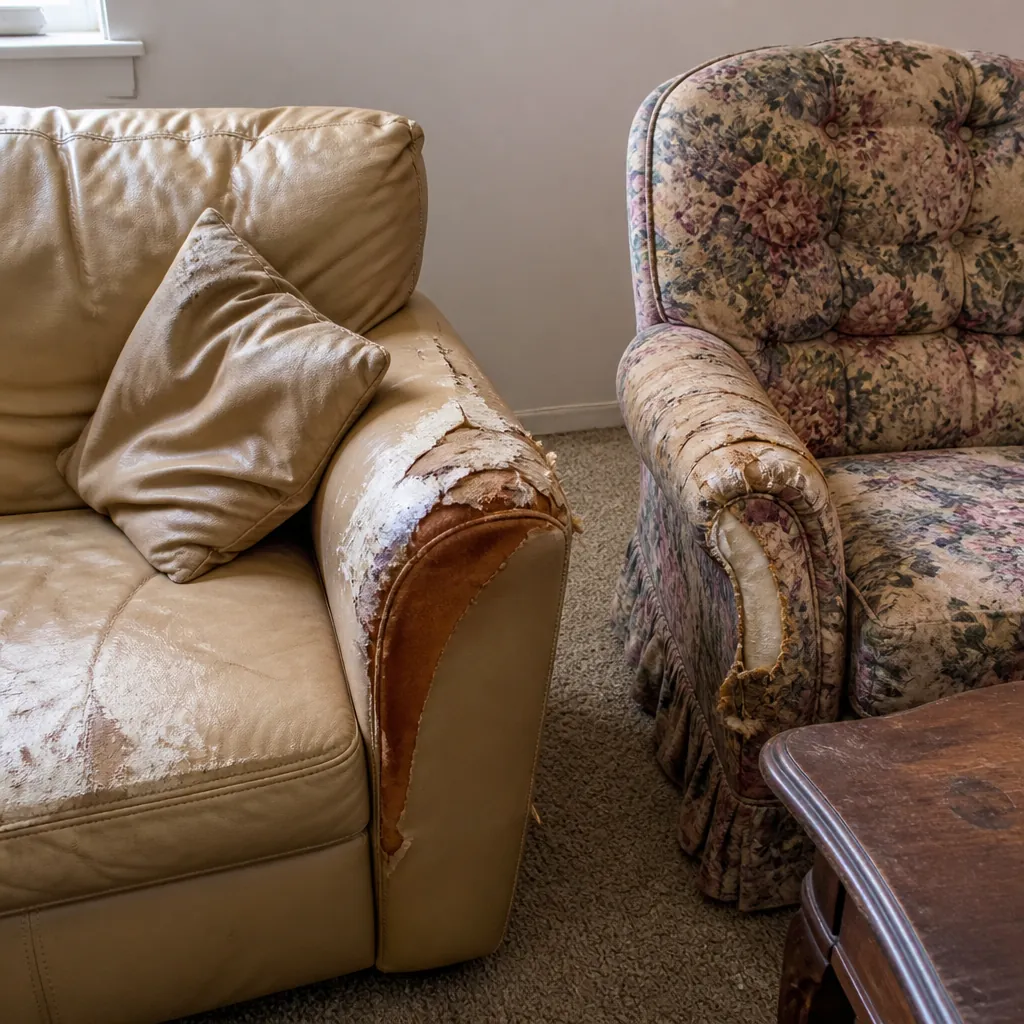
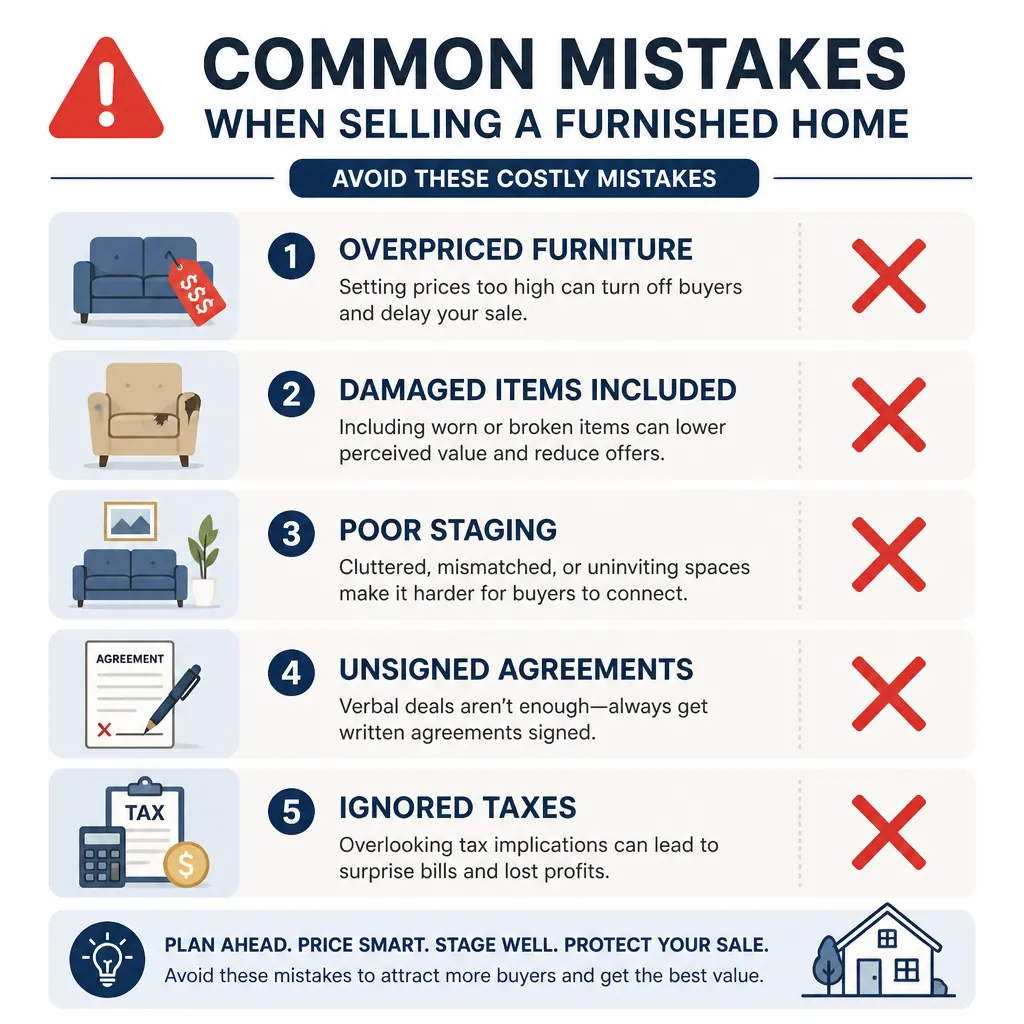
Your taste isn't everyone's taste. That leather sectional you love? A buyer might find it dated or clunky. Bold accent pieces, maximalist decor, or mismatched furniture can actively turn buyers away if it clashes with what they're imagining for their own home.
Furniture depreciates like crazy. Don't fool yourself into thinking you'll recover your original investment. Unless a piece is high-end, nearly new, and in pristine condition, it's not going to add anywhere near what you paid for it. And it might create negotiation headaches instead.
Once furniture is part of the sale, its condition becomes your legal responsibility. Worn spots, damage, stains — they're all documented now. You'll need receipts, photos, and detailed descriptions, or you risk disputes after closing. Is it worth the paperwork?
Too much stuff makes rooms feel small. The rule of thumb: remove 30–50% of your personal items before listing. Keep only pieces that show off the room's purpose and actual dimensions. Cramped spaces don't sell faster — they sell slower.
Back to topWhat Items Typically Stay or Go in a Home Sale
| Category | Typically Stays | Typically Goes With Seller | Negotiate Separately |
|---|---|---|---|
| Fixtures | Built-in shelving, ceiling fans, light fixtures | Freestanding lamps, plug-in lights | Decorative chandeliers |
| Appliances | Built-in dishwasher, range, oven | Portable appliances, washer/dryer (varies) | Refrigerator, washer/dryer |
| Furniture | Built-in cabinetry, window seats | Sofas, dining sets, bedroom furniture | Outdoor furniture, large sectionals |
| Electronics | Mounted smart home systems (if hardwired) | TVs, entertainment systems, wall art | Mounted TVs with brackets |
| Personal Items | Nothing — these always go with the seller | Family heirlooms, personal collections | Artwork, decorative mirrors |
Here's the simple rule: anything bolted or built into the structure stays with the house. Everything else—your couch, your grandmother's mirror, your washer and dryer—walks out the door with you. But there's a catch. That gray area in the middle? Those items are where deals fall apart after closing.
And disputes happen constantly. You think that chandelier's yours because you bought it last year. The buyer assumes it stays because it's hanging from the ceiling. Six months later, you're dealing with lawyers instead of moving on with your life.
That's why you need to list every single questionable item in writing before you sign anything. Don't rely on a handshake or what your agent said was "standard." Get it in the contract—what stays, what goes, what gets negotiated separately. Your real estate attorney can help you draft this language correctly.
Back to topHow to Price Your Home When Furniture Is Included
Here's where most sellers stumble. You can't just add the original purchase price of furniture to your asking price. That couch you bought for $3,000 ten years ago? It's worth maybe $1,200 today. Furniture tanks fast — typically losing 20–50% of its value in just the first few years.
So what's the right approach?
- Get a professional assessment: A furniture appraiser or estate sale professional will tell you what your pieces actually sell for in today's market.
- Use depreciated value, not replacement cost: Buyers aren't paying retail prices for used furniture in a real estate deal. They just aren't.
- Consider separate invoicing: Sometimes it makes sense to list furniture as a separate line item from the home price. But this has tax implications for both you and the buyer. Talk to a real estate attorney or CPA first — especially if you're in a state with specific transfer tax rules.
- Use furniture as a negotiating tool: Skip inflating your asking price. Instead, offer furniture as a concession during negotiations. Say "We'll leave the dining set and patio furniture" and you might close the deal without dropping your price at all.
Sellers dealing with tight timelines or complicated situations — like when you're selling an elderly parent's home — often get better results by offering furniture as a sweetener rather than padding the asking price. Take a look at our guide on selling an elderly parent's home in Florida for more on that scenario.
How to Decide: Key Factors
Your Target Buyer
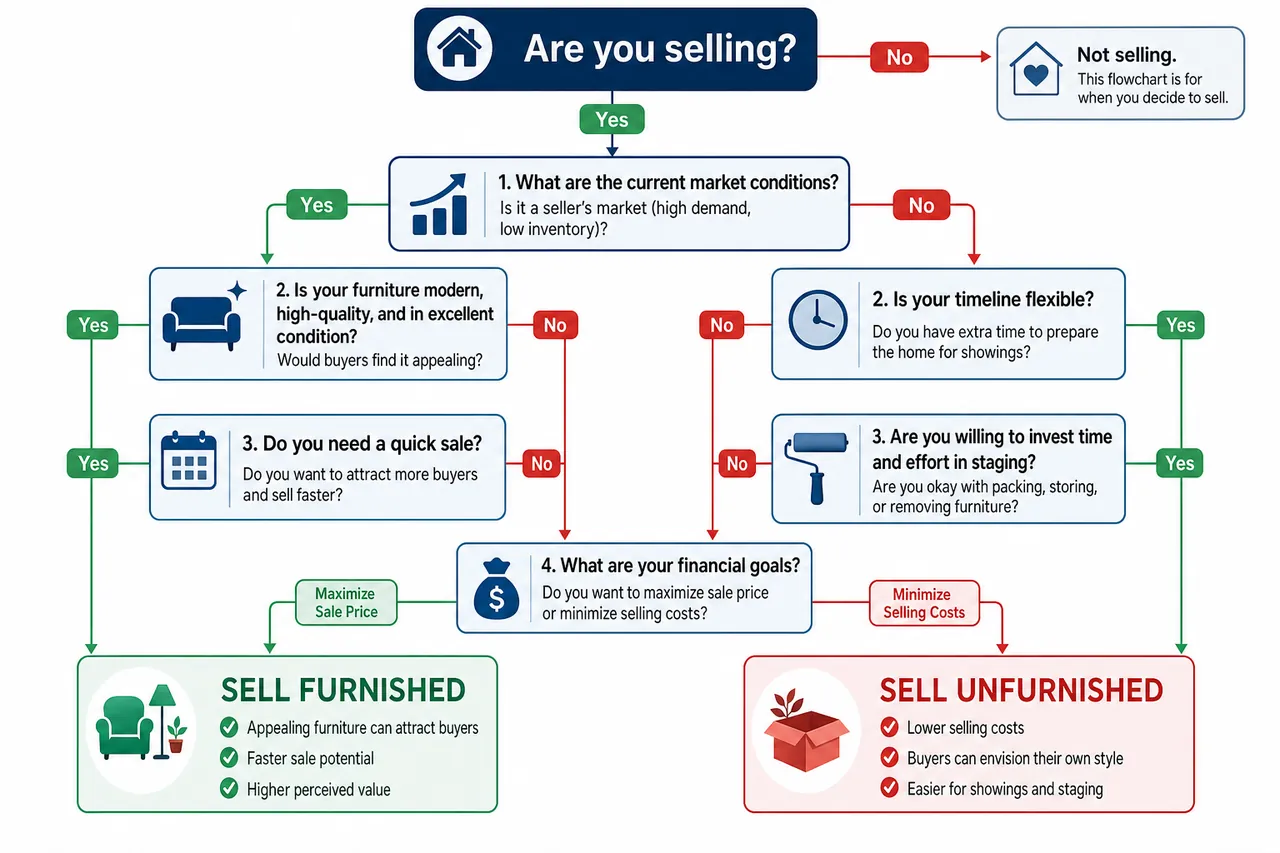
First-time buyers love furnished homes. So do relocating professionals and international purchasers. Why? It cuts down setup costs and saves them from decision fatigue. But if your buyer already owns furniture or has strong design opinions, they'll want a blank canvas instead. So here's what matters: figure out who's most likely to buy your property type. That answer should drive your whole decision.
Property Type and Location
Urban condos, vacation homes, and investment properties? These almost always benefit from being furnished. Single-family suburban homes are different. They typically sell just as well empty—or even better, honestly—because buyers in those neighborhoods already have their own furniture and want to picture their own layout in the space. And if your property has unusual features like well water systems, those conversations with buyers will matter way more than furnishings anyway. (Check out our guide on selling a house with well water for more on that.)
Furniture Quality and Condition
High-quality, neutral, well-maintained furniture genuinely adds perceived value. That's the kind of stuff that works. Worn pieces, damaged items, or anything too personal? Those actively hurt your sale. Before you decide to include furniture, be brutally honest about what condition it's in.
Timeline
Are you under pressure? A job relocation, financial hardship, or estate settlement can change everything. When time's tight, the speed benefits of a furnished or staged home might be worth more than whatever you'd lose by leaving the furniture behind.
Back to topBest Practices for Selling a Furnished Home
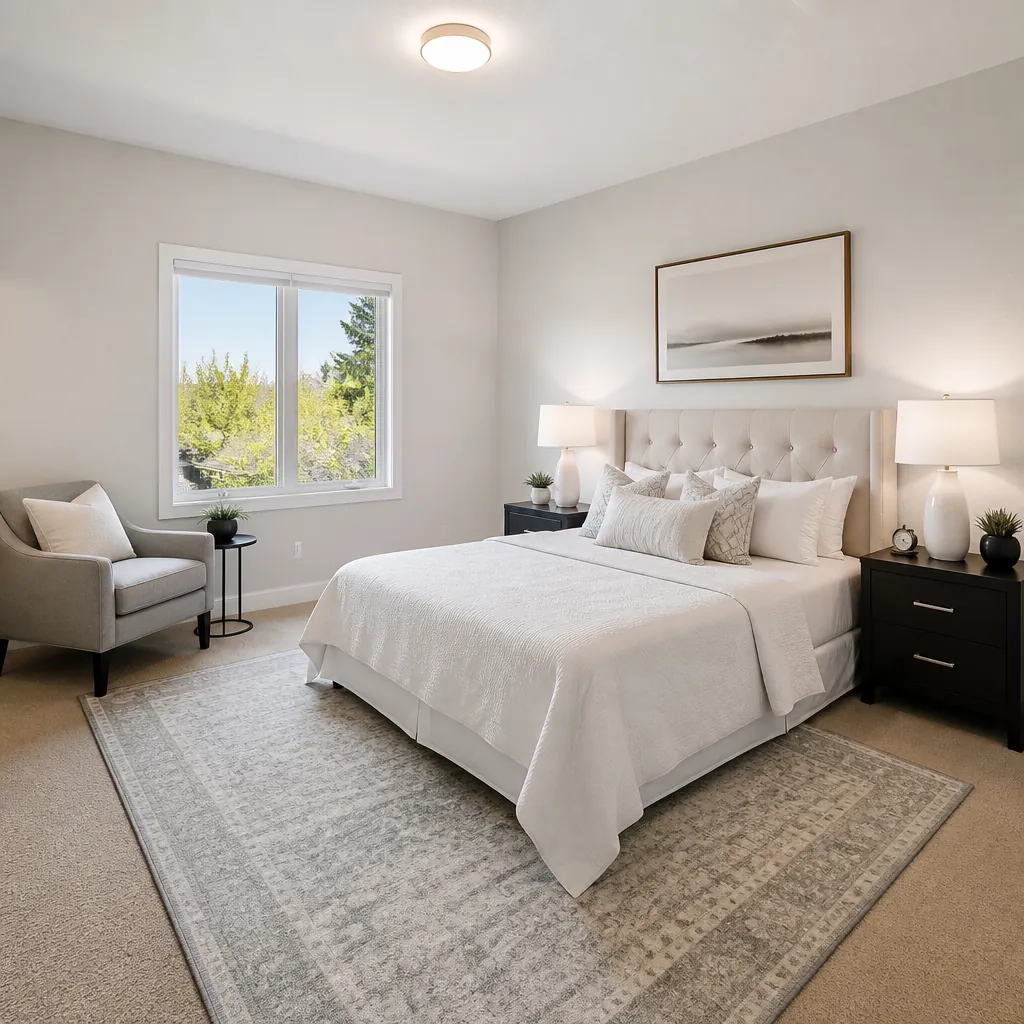
- Declutter aggressively: You'll want to remove 30–50% of what's in each room. The furniture that stays should showcase the space's best features instead of cramming into every corner.
- Prioritize key rooms: Where should you focus first? According to the NAR's 2025 staging research, buyers spend the most time looking at the living room (37%), primary bedroom (34%), and kitchen (23%). Start there with your furniture choices.
- Choose neutral, timeless pieces: Bold colors and trendy styles shrink your buyer pool fast. Neutral tones and classic silhouettes work for almost anyone walking through.
- Invest in professional photography: Don't skimp here. Furnished rooms need professional photography that actually captures light, scale, and warmth. It's non-negotiable if you want a competitive listing.
- Document everything: Before you list, photograph every single piece of furniture included in the sale. Then create an itemized list that becomes part of the purchase agreement.
- Clarify in the contract: And this matters. Every piece of furniture needs to be explicitly listed in the purchase agreement to stop post-closing disputes before they start.
Professional Staging vs. Selling Furnished
Your furniture might actually work against you. If what you've got doesn't showcase your home well, professional staging deserves serious consideration. According to NAR's 2025 staging data, 29% of agents report staged homes received offers 1%–10% higher than comparable unstaged homes. Even more telling: 49% of sellers' agents say staging cut down how long homes sat on the market.
What's this going to cost you? HomeAdvisor's 2025 data shows staging an occupied home runs about $800 on average. Empty house? That jumps to around $2,000. And if you want the full treatment with rental furniture, you're looking at $3,813 per engagement, based on RESA Q3 2025 data.
But here's the good news. Virtual staging—where a photographer digitally furnishes your photos—costs way less. You're talking $59–$129 per image for professional work, or even cheaper if you use AI tools.
Here's what actually matters: Is your furniture neutral and in decent shape? Keep it and use it strategically. Is it dated, too personal, or beat up? Professional staging or virtual staging will almost certainly pay for itself.
Back to topConclusion: Making the Right Call for Your Situation
Here's the thing: whether you sell your house with furniture or strip it bare depends entirely on your specific circumstances. The quality of what you own matters. Your timeline matters. Who you're trying to attract as a buyer matters. And your financial goals? They matter too.
Furnished homes can sell faster when they're staged right. They pull stronger offers. But here's where people stumble — too much furniture, or furniture in bad shape, tanks your sale faster than you'd think. So start honest. Walk through your place and actually assess what you've got. Is your couch still in good condition, or does it look worn? What does your local buyer want to see?
Document everything in writing. List every single item you're including in your sale agreement — no surprises later. And if you're uncertain? Talk to a real estate agent or professional stager before you decide. They've seen what works in your neighborhood.
Back to topFrequently Asked Questions
Does selling a house with furniture increase the sale price?
Not necessarily. Here's what actually matters: high-quality, neutral furniture that's properly staged can help you land a stronger offer. According to NAR's 2025 data, 29% of agents say staged homes sold for 1–10% more than unstaged ones. But worn-out, outdated, or overly personal pieces? They'll likely hurt your chances, not help them. The truth is presentation beats quantity every time.
What furniture typically stays with the house when you sell?
Built-in shelving, cabinetry, window seats, and hardwired fixtures stay. These are considered part of the real property. Everything else — freestanding furniture, electronics, artwork, your collection of family photos — leaves with you unless you negotiate otherwise. One crucial step: spell out exactly what's included in your purchase contract. Don't leave it ambiguous.
How do I price furniture included in a home sale?
Base it on what that piece is worth right now. Not what you paid for it originally. Furniture depreciates fast — often losing 20–50% of its value within the first few years. For expensive items, get a professional appraisal. Here's the smarter move, though: offer furniture as a negotiation tool rather than baking it into your asking price. This keeps your appraisal clean and gives you leverage when offers come in.
Is it better to stage professionally or sell with my own furniture?
It really depends on what you're working with. Your furniture is decent, clean, and works with the space? Strategic decluttering and smart arrangement might be enough — and staging an occupied home costs around $800 on average versus $2,000 for a vacant one. But if your pieces are dated or don't photograph well, professional or virtual staging is worth the investment. The data backs this up: staged homes sell faster and command higher offers.
Are there tax implications to including furniture in a home sale?
Yes, potentially. Separating the furniture's value from the real estate on a standalone invoice can affect transfer taxes, capital gains, or depreciation recapture — especially for investment properties. And the rules change depending on your state and your specific situation. Before you finalize anything that assigns real money to included furniture, talk to a real estate attorney or CPA. This matters even more if you're dealing with a higher-priced sale or an investment property.
Back to top
