

Selling a House for Less Than You Owe: What Are Your Options in Washington
Feeling stuck because you are upside down on your mortgage is stressful and confusing. 2 Many Washington homeowners face this problem when property values drop, leaving them owing more than their home is worth. 1 This guide covers real options — short sale, loan modification, deed in lieu, or working with a cash buyer — to help you out of negative equity. Find out which step makes the most sense for your situation. 3
Key Takeaways
- If your home is worth less than your mortgage (negative equity), you are not alone. Washington homeowners in markets like Seattle and Tacoma saw significant equity erosion during past downturns, with average negative equity often ranging between $20,000 and $70,000.
- Main options include short sale, loan modification or refinance, waiting for the market to recover, deed in lieu of foreclosure, or selling to a cash buyer like KDS Homebuyers.
- Short sales and deeds in lieu drop credit scores by 85–160 points but hurt less than foreclosure, which can lower scores by 200–300 points and stay on credit reports up to 10 years.
- Washington is a non-judicial foreclosure state, meaning lenders can foreclose without going through the courts — typically within 4 to 6 months of default — making early action especially important.
- Washington state's Deed of Trust Act governs most residential foreclosures. Deficiency judgments are generally prohibited on purchase-money mortgages for owner-occupied homes under Washington law, but investment properties may carry different risks.
- Forgiven mortgage debt may trigger a federal IRS Form 1099-C. Washington has no state income tax, so you will not owe state tax on forgiven debt — but federal tax liability may still apply depending on your circumstances.
- Cash buyers offer fast closings — sometimes in as little as 3 days — without repairs or agent fees, which can be especially helpful in high-cost Seattle-area markets where carrying costs add up quickly.
Understanding Your Situation
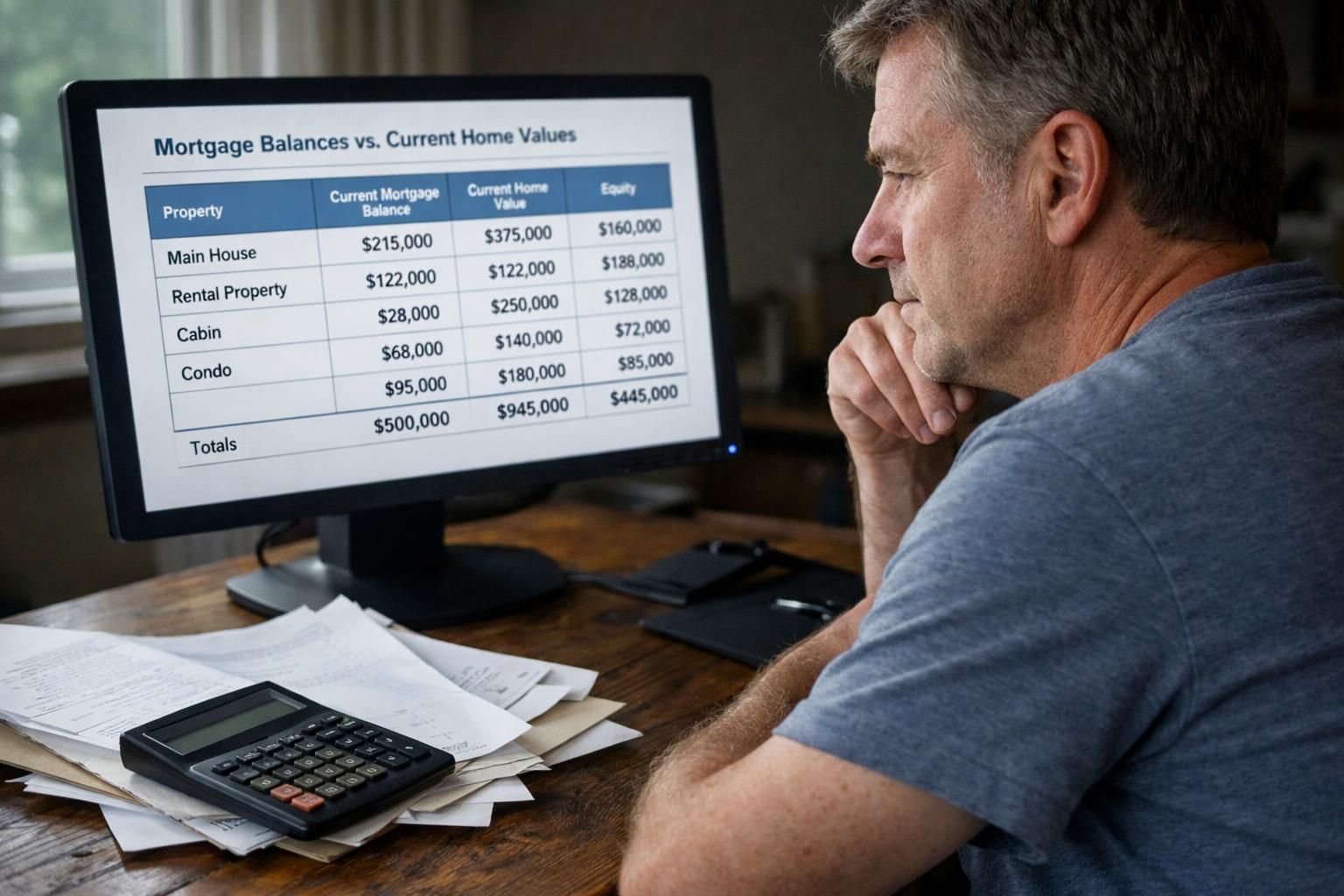
Your mortgage balance can exceed your home's value if market prices drop or if you started with a small down payment. Washington's real estate market — especially in the greater Seattle, Bellevue, and Tacoma areas — can be volatile. Knowing your options gives you more control over what happens next.
How Washington homeowners end up underwater
Falling home prices often lead to underwater mortgages. A sudden drop in property value after purchase can leave you owing more than your house is worth, especially if you bought near the peak of the market. Washington's rapidly appreciating markets — particularly in King and Pierce counties — can also reverse sharply during economic downturns, pushing loan-to-value ratios well above 100%.
Small down payments put homeowners at greater risk since there is less initial equity built up. FHA loans with low upfront costs make it easier to become upside down during market shifts. Interest-only loans keep principal balances high while home values fluctuate. Taking out second mortgages or cash-out refinancing raises total debt even higher relative to your home's current value.
Major property damage not covered by insurance — including damage from flooding or landslides, which are real concerns in parts of Washington — can further reduce home value and deepen negative equity.
Example of negative equity calculation
Working out negative equity is straightforward. Suppose you owe $400,000 on a home in the Tacoma area. A comparative market analysis (CMA) shows the current value has dropped to $340,000. Subtracting your home's worth from what you owe gives you negative equity of $60,000 — meaning you have an underwater mortgage.
Your loan-to-value (LTV) ratio would be $400,000 ÷ $340,000 = approximately 118%. Anything above 100% signals you are underwater; above 125% is considered seriously underwater. Online tools like Zillow or a local Washington real estate agent's CMA can help confirm these figures before you decide on a course of action.
Emotional considerations of being upside down on a mortgage
Stress and anxiety surface quickly after learning your home has negative equity, especially if a job loss or financial hardship caused the situation. Washington's high cost of living — particularly in the Seattle metro — can make the burden feel even heavier when your home loses value. 3
Family life and mental health can suffer when dealing with an upside-down mortgage. Reaching out for professional advice early — including free HUD-approved housing counselors available in Washington — helps ease these pressures and gives you a clearer path forward. 2
Option 1: Short Sale
A short sale lets you sell your home for less than the mortgage balance if your lender agrees. In Washington, this option can help you avoid the state's non-judicial foreclosure process and marks a significant step in handling negative equity.
Definition and step-by-step process
A short sale allows you to sell your home for less than the principal balance with your mortgage lender's approval. 4 To begin, review your mortgage statement and get a CMA to confirm negative equity. Prepare proof of income and a hardship letter explaining your financial situation.
Notify your lender of your intent and submit all required documentation. Once approved, list the property with a Washington real estate agent experienced in short sales. Submit each purchase offer to the lender for review and negotiation. After an offer is accepted, finalize closing documents in compliance with Washington state law, including any terms related to deficiency waivers or tax implications of forgiven debt.
Timeline, credit impact, and Washington-specific rules
Most short sales in Washington take 90 to 120 days, though some extend past six months depending on lender response times and whether there are multiple liens on the property.
A short sale typically drops your credit score by 85 to 160 points, remaining on your credit report for up to seven years. You may need to wait two to four years before qualifying for a new home loan, depending on the loan type.
Washington's Deed of Trust Act generally prohibits deficiency judgments on purchase-money mortgages secured by owner-occupied residential property — meaning your lender typically cannot sue you for the remaining balance after a short sale on your primary home. However, investment properties or second mortgages may not carry the same protection, so consult a Washington real estate attorney to understand your specific exposure.
Because Washington has no state income tax, any forgiven debt will not be taxed at the state level. However, if your lender issues a federal IRS Form 1099-C for forgiven amounts over $600, you may owe federal income tax on that amount unless you qualify for an exclusion under current federal tax law. A tax professional can help you evaluate your options.
Pros and cons
Short sales reduce credit damage compared to foreclosure, and Washington's anti-deficiency protections on owner-occupied homes limit the financial exposure for many homeowners. You may qualify for another mortgage in as little as two years after a short sale versus up to seven years after a foreclosure.
On the downside, lender approval is not guaranteed, and the process can take months. Washington's relatively fast non-judicial foreclosure timeline — often just four to six months — means you should not delay starting the short sale process if you are already behind on payments.
Option 2: Loan Modification or Refinance

You may qualify for a loan modification or refinance through your mortgage lender, which could lower your interest rate and help you keep up with payments — read more to see if this path fits your needs.
Eligibility requirements and current refinance options
Lenders review your credit score, income history, and current payment status before approving a refinance or modification. Government programs like the FHA Streamline Refinance and VA IRRRL help homeowners with upside-down mortgages by skipping appraisals and reducing paperwork — useful options for Washington borrowers who may not have enough equity for a standard refinance. 5
Washington has a significant veteran population, making the VA IRRRL (Interest Rate Reduction Refinance Loan) a particularly relevant option for eligible homeowners in cities like Tacoma and Olympia near Joint Base Lewis-McChord. Fannie Mae and Freddie Mac programs may also offer relief for qualifying borrowers in negative equity situations.
When this option makes sense
Loan modification or refinance makes sense if you want to keep your home and can manage reduced monthly payments. It works best if you have a steady income, expect to stay in the property for several years, and face financial hardship but could sustain an adjusted payment amount.
Washington homeowners with government-backed loans — FHA or VA — often find these programs more accessible due to flexible qualification standards. Contact a HUD-approved housing counselor in Washington for free personalized guidance before making any decisions.
Option 3: Stay and Wait It Out

Viability of waiting for market recovery in Washington
Washington's housing markets — particularly the Seattle-Bellevue corridor — have historically recovered from price dips, often within five to seven years. If you bought near the top of the market with a small down payment, negative equity may feel overwhelming now, but making extra mortgage payments accelerates equity rebuilding during a downturn.
Before deciding to wait, assess local real estate trends in your specific area. Markets in eastern Washington, such as Spokane, can behave very differently from the Puget Sound region. Check whether rental income could cover or offset your mortgage payments while values recover. Always keep emergency savings for property taxes — Washington's property tax rates vary by county — and ongoing maintenance costs.
Rent vs. mortgage cost analysis
In many Washington metro areas, particularly Seattle and Bellevue, monthly ownership costs — including mortgage payments, property taxes, and maintenance — often exceed average rents. 6 Renting your home while waiting for values to recover can be a viable bridge strategy, but Washington landlord-tenant law imposes specific obligations on landlords, so familiarize yourself with state requirements before renting out your property.
Owning still builds equity over time and may offer federal tax benefits. Always review local market conditions and your loan type before deciding whether to sell, rent, or wait. 7
Option 4: Deed in Lieu of Foreclosure

A deed in lieu of foreclosure lets you transfer your property back to the mortgage lender, potentially helping you avoid Washington's non-judicial foreclosure process — learn what this means for your credit and future housing options.
Definition and process
Transferring property ownership to your lender through a deed in lieu lets you avoid the public foreclosure process. 8 You hand over the home because you can no longer make mortgage payments. In Washington, lenders typically ask you to demonstrate financial hardship and may require you to attempt a short sale first.
The process involves negotiating terms and preparing legal documents that confirm both parties agree to end your obligation and transfer title. Some lenders offer a deficiency waiver so you are not pursued for any remaining balance. 8 Given Washington's general anti-deficiency protections on owner-occupied purchase-money loans, confirm with a Washington real estate attorney what additional written protections you may need before signing.
Credit impact and lender acceptance
A deed in lieu typically results in a credit score drop of around 100 points — less severe than a full foreclosure. You may qualify for another mortgage within two to four years through FHA or VA programs. Not all lenders accept a deed in lieu automatically; they will evaluate property marketability, existing liens, and whether you made genuine efforts to sell. Keep detailed records of all communications and agreements in writing.
Option 5: Cash Buyer Solutions
Cash buyers can help you sell your Washington home fast — often without waiting for lengthy mortgage approvals or appraisals — and can relieve financial stress when time is critical.
How cash buyers work and benefits of quick timelines
Cash buyers use their own funds to purchase your home, removing bank delays and loan denials from the equation. Most cash offers allow you to close in as little as 3 to 21 days — a major advantage if you are facing Washington's relatively fast non-judicial foreclosure timeline or need to relocate quickly for work. 9
Selling to a cash buyer typically means no appraisals, inspections, repairs, or cleaning. You skip real estate agent commissions — saving up to 6% of your home's value — and choose a closing date that fits your schedule. Cash buyers purchase homes as-is, so existing property damage does not become another obstacle.
Negotiating with lenders
Contact your mortgage lender as soon as you receive a cash offer or begin struggling with payments. Provide proof of the cash offer, hardship documentation, and a home appraisal to strengthen your position. Washington lenders often prefer alternatives to foreclosure because the process is faster and less costly for all parties. 10
A Washington real estate attorney or HUD-approved housing counselor can help you negotiate more effectively with FHA servicers, VA loan entities, Fannie Mae, or Freddie Mac. Your lender must approve any short sale agreement even when a cash buyer is involved. 10
Cash Buyer Solutions for a Fast, Efficient Resolution
Cash buyers like KDS Homebuyers help you sell a Washington property quickly, even with an upside-down mortgage or negative equity. 11 You avoid agent fees, open houses, and repair costs. Closings can happen in as little as three days with flexible timelines to fit your needs.
If you are underwater on your mortgage in a Washington market — whether in the Seattle suburbs, Tacoma, Spokane, or elsewhere — this path may be the right one. KDS Homebuyers purchases homes as-is and can assist with lender negotiations, helping owners who owe more than their home's current market value find a fair resolution fast.
What Happens If You Do Nothing
Waiting without action allows your mortgage lender to begin the foreclosure process. In Washington, this typically happens through a non-judicial process governed by the Deed of Trust Act — and it can move quickly.
Washington's foreclosure process and credit impact
Missing payments triggers a Notice of Default from your lender. Under Washington's non-judicial foreclosure process, once the Notice of Trustee's Sale is recorded, there is typically a minimum of 190 days before a sale can occur from the date of default — but timelines can move faster once formal proceedings begin. You have a right to request mediation through Washington's Foreclosure Fairness Act, which requires lenders to participate in mediation with owner-occupants before completing a non-judicial foreclosure. This mediation right can give you additional time and options.
Foreclosure damages your credit score by 200 to 300 points and remains on your report for up to 10 years. Most homeowners must wait at least three to seven years before qualifying for a new mortgage after foreclosure, depending on the loan type.
Washington's anti-deficiency rules generally protect owner-occupants on purchase-money mortgages from being sued for the remaining balance after a foreclosure sale — but this protection has limits, particularly for refinanced loans or investment properties. Always verify your specific exposure with a Washington real estate attorney.
Long-term consequences
Foreclosure limits your future homeownership opportunities for three to seven years and can result in higher interest rates on any credit you do obtain. The emotional and financial toll of an upside-down mortgage takes time to recover from. Connecting with a HUD-approved housing counselor in Washington early provides guidance and may help you access options you did not know were available.
Conclusion
You can take control of your situation with the right plan for your upside-down mortgage. Washington law offers meaningful protections for homeowners — including the Foreclosure Fairness Act mediation process and anti-deficiency rules — but those protections are most useful when you act before a crisis point.
Being upside down isn't permanent — early action provides more options
Most Washington real estate markets recover from price drops within five to seven years. Acting quickly gives you more choices: loan modification, short sale, or a fast sale to a cash buyer. Making extra mortgage payments or renting out your home can help bridge the gap while values recover. 12
Use online home value estimators or consult a local Washington real estate agent for current market data. Take advantage of Washington's Foreclosure Fairness Act mediation if you are behind on payments — it can buy critical time. Early action protects your credit score and keeps more options open before missed payments limit your choices.
Decision-making framework based on financial goals and timeline
Start by listing your financial goals: reduce monthly costs, protect your credit, or move on quickly. Housing costs should ideally not exceed 30% of your monthly income. Check local Washington market trends — conditions in Spokane differ significantly from those in Seattle or Tacoma — and factor in your specific loan type and Washington's legal protections before deciding.
Weigh renting versus carrying your mortgage, consider refinance or modification options through Fannie Mae or Freddie Mac, and always discuss your situation with a licensed financial or legal professional before making major decisions involving an underwater mortgage.
FAQs
1. What does it mean to have an underwater mortgage or negative equity?
You have an underwater mortgage when your home's current market value is less than the principal balance you owe. This can happen when property values fall in your area of Washington, particularly after periods of rapid price appreciation.
2. Can I sell my house in Washington if I owe more than it's worth?
Yes. If the sale price will not cover your mortgage balance and closing costs, you may need your lender's approval for a short sale. Washington's anti-deficiency rules may protect you from owing the remaining balance on your primary residence.
3. How does Washington's Foreclosure Fairness Act help me?
Washington's Foreclosure Fairness Act gives owner-occupants the right to request mediation with their lender before a non-judicial foreclosure is completed. This can provide additional time and a structured process to explore alternatives like loan modification or short sale.
4. Will a short sale or deed in lieu hurt my credit score?
A short sale typically drops your credit score by 85 to 160 points, while a deed in lieu may lower it by around 100 points. Both are significantly less damaging than a foreclosure, which can reduce scores by 200 to 300 points.
5. Are there state income tax consequences for forgiven mortgage debt in Washington?
Washington has no state income tax, so forgiven mortgage debt will not be taxed at the state level. However, you may still receive a federal IRS Form 1099-C for forgiven amounts over $600 and could owe federal taxes depending on your circumstances. Consult a tax professional for guidance specific to your situation.
6. What other options exist besides selling when I owe more than my home's value?
Options include FHA Streamline Refinance or VA IRRRL (if you qualify), loan modification through your lender, renting the property while waiting for values to recover, requesting mediation under Washington's Foreclosure Fairness Act, or transferring ownership via deed in lieu. A HUD-approved housing counselor in Washington can help you evaluate all of these at no cost.
If you are dealing with an upside-down mortgage in Washington and need a fast, straightforward solution, KDS Homebuyers purchases homes as-is across the state — no repairs, no commissions, and no waiting. Visit kdshomebuyers.net to request your free cash offer and find out how quickly you can move forward.
References
- ^ https://www.realtor.com/news/trends/home-equity-weakens-underwater-mortgages/ (2025-10-23)
- ^ https://www.legalmatch.com/law-library/article/upside-down-mortgage-lawyers.html (2024-02-23)
- ^ https://www.cnbc.com/select/what-is-an-upside-down-mortgage/ (2022-11-12)
- ^ https://www.har.com/blog_132532_a-complete-guide-to-the-short-sale-process-step-by-step
- ^ https://www.wslaw.com/blog/2024/january/loan-modifications-vs-refinancing-understanding-your-options/ (2024-01-16)
- ^ https://www.zillow.com/learn/renting-vs-buying-pros-and-cons/
- ^ https://www.cnbc.com/2024/05/21/sell-or-rent-my-house.html (2024-05-21)
- ^ https://www.consumerfinance.gov/ask-cfpb/what-is-a-deed-in-lieu-of-foreclosure-en-291/
- ^ https://marketprohomebuyers.com/cash-buyers-home-selling/
- ^ https://www.expresshomebuyers.com/faq/foreclosure/negotiate-foreclosure-cash-buyer/
- ^ https://kdshomebuyers.net/we-buy-houses
- ^ https://www.zillow.com/learn/underwater-mortgage/ (2015-08-14)
