

Sell House As-Is Where-Is: What This Means and How to Price It

Table of Contents
- What Does 'As Is, Where Is' Mean in Real Estate?
- Why Sellers Choose to Sell As Is
- Advantages of Selling Your House As Is
- Disadvantages and Risks of As-Is Sales
- Legal Considerations and Disclosure Requirements
- How Much Will You Lose Selling As Is?
- Steps to Successfully Sell Your House As Is
- Marketing an As-Is Property Effectively
- Alternatives to Selling Completely As Is
- Buyer Perspective: Purchasing As-Is Properties
- Tax Implications of As-Is Sales
- Conclusion: Is Selling As-Is Where-Is Right for You?
- Frequently Asked Questions
Selling your house as is where is might feel like you're throwing in the towel. But here's the truth: thousands of homeowners do this every year, and they're making the right call. You're facing foreclosure. You inherited a property three states away. Your roof's leaking and you simply don't have $15,000 to fix it before your job transfer. Selling as-is strips away all the renovation stress and lets you close whenever you need to. The real challenge? You've got to know what this phrase actually means legally, how deep a discount buyers will demand, and how to price it so you're attracting genuine offers instead of vultures looking to lowball you. We'll walk through all of it here.
Selling a house that needs work? Start with what to know before selling a house that needs repairs. It explains what as-is means, how pricing works and every way to sell a house with problems.
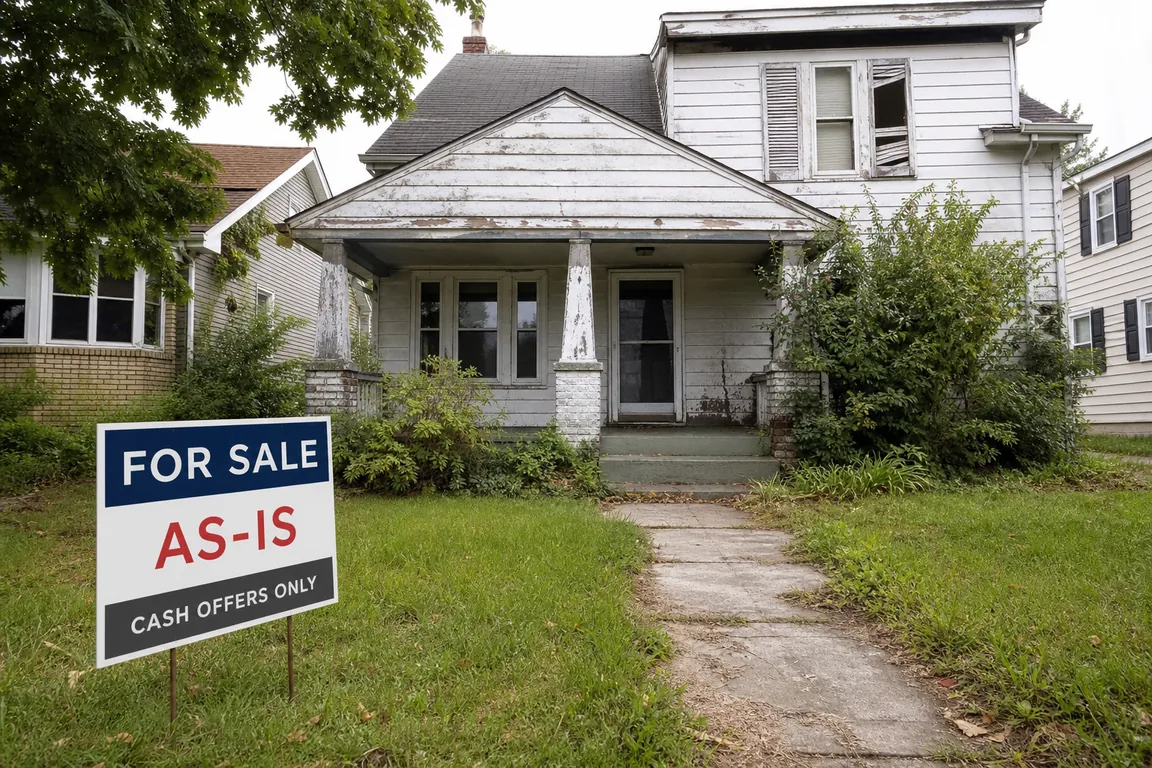
What Does 'As Is, Where Is' Mean in Real Estate?
Definition and Legal Implications
"As is, where is" packs two separate ideas into one contract phrase. "As is" means you're buying the property exactly as it stands right now — no repairs, no improvements, nothing from the seller before you close. "Where is" means you're accepting the location and structure as they are, with zero guarantee that anything meets code, matches the survey, or fits zoning requirements. Put them together, and you've got the strongest possible disclaimer a seller can use to back away from warranties.
Here's what it really means in everyday language: "You see it today? That's what you're getting. I'm not fixing a thing." Most U.S. courts will enforce an as-is clause — but there's a huge gotcha that catches sellers off guard. We'll get to that in the disclosure section.
Common Misconceptions About As-Is Sales
People think selling as-is means silence is golden. Wrong. An as-is clause kills the seller's duty to repair — it doesn't erase the duty to disclose. Don't confuse the two. Another myth? As-is automatically means you're dumping the house cheap. The condition matters, sure. But location, what buyers actually want right now, and how you price and market the place matter just as much. Want a deeper dive? Check out how to sell a house as-is: what it means and how it works.
Regional Variations in As-Is Terminology
Every state writes its own rules. California has an as-is checkbox right on the standard purchase agreement form — and it comes with strict disclosure requirements attached. Florida sellers use as-is all the time, yet you still have to tell buyers about any known defects that matter. Tennessee and Indiana recognize the concept, but their disclosure rules work differently. And that's just three states. Before you sign anything, sit down with a licensed agent or real estate attorney to review your state's purchase agreement form. The phrase "as is" doesn't mean the same thing everywhere — location changes everything.
Back to topWhy Sellers Choose to Sell As Is
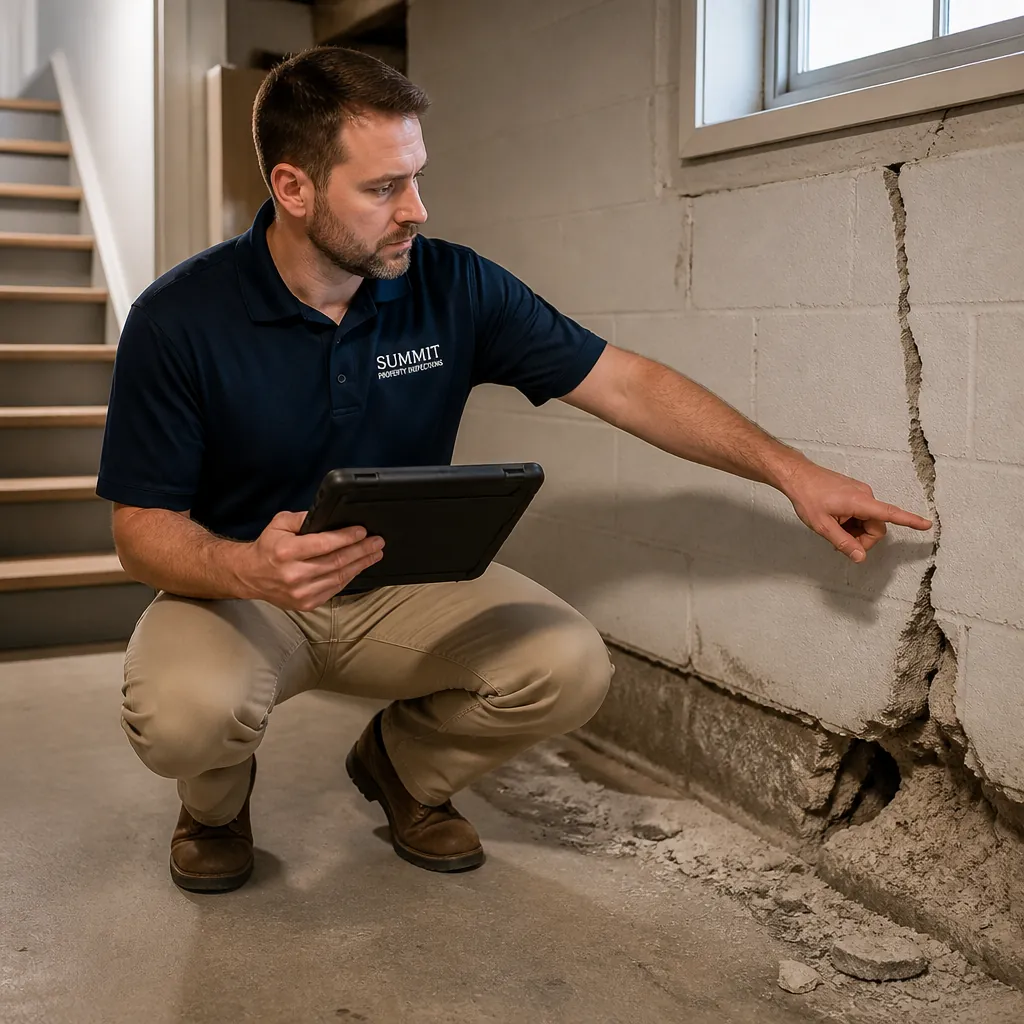
Time Constraints and Urgent Relocation
Your military orders just came through. Or you landed that job offer in another state. Maybe a family health crisis means you need to be somewhere else—now. A six-month renovation? That's not happening. Selling as-is strips away the waiting and gets you to closing fast. The national median days on market was 49 days as of June 2026 (Redfin) for conventional listings. But a well-priced as-is cash sale? You could be closed in one to three weeks.
Financial Limitations and Repair Costs
You don't have $30,000 sitting in savings. Most homeowners don't. A kitchen gut renovation and a new HVAC system can drain what little equity you've built up. And sometimes the repairs cost more than you'd actually gain from selling. In that case, taking a price hit to sell as-is is just smarter math than burning through your last dollars on work that won't pay for itself.
Inherited Properties and Estate Sales
Inherited homes account for some of the most straightforward as-is sales out there. You're probably in another state. You've never set foot in the property. Probate deadlines are ticking. The last thing you need is to hire contractors remotely and wait months for a staged listing to maybe sell for slightly more money. Selling as-is eliminates that whole headache. And here's something that catches families off guard: if you're in this situation, you may also want to review how Medicaid's lookback period affects inherited home sales. It's a real complication.
Foreclosure and Distressed Situations
Behind on payments? An auction date is circled on your calendar. Price doesn't matter anymore—time does. A quick as-is sale can actually stop foreclosure before it destroys your credit even further. And here's the thing that matters most: any equity left over goes back to you, not lost forever to the foreclosure process.
Investment Property Strategies
Landlords dumping rental properties often sell as-is for a simple reason: tenants are living there, which makes renovation nearly impossible. The economics work completely differently on a non-primary residence anyway. Investors get the math and price their offers to reflect that reality.
Back to topAdvantages of Selling Your House As Is
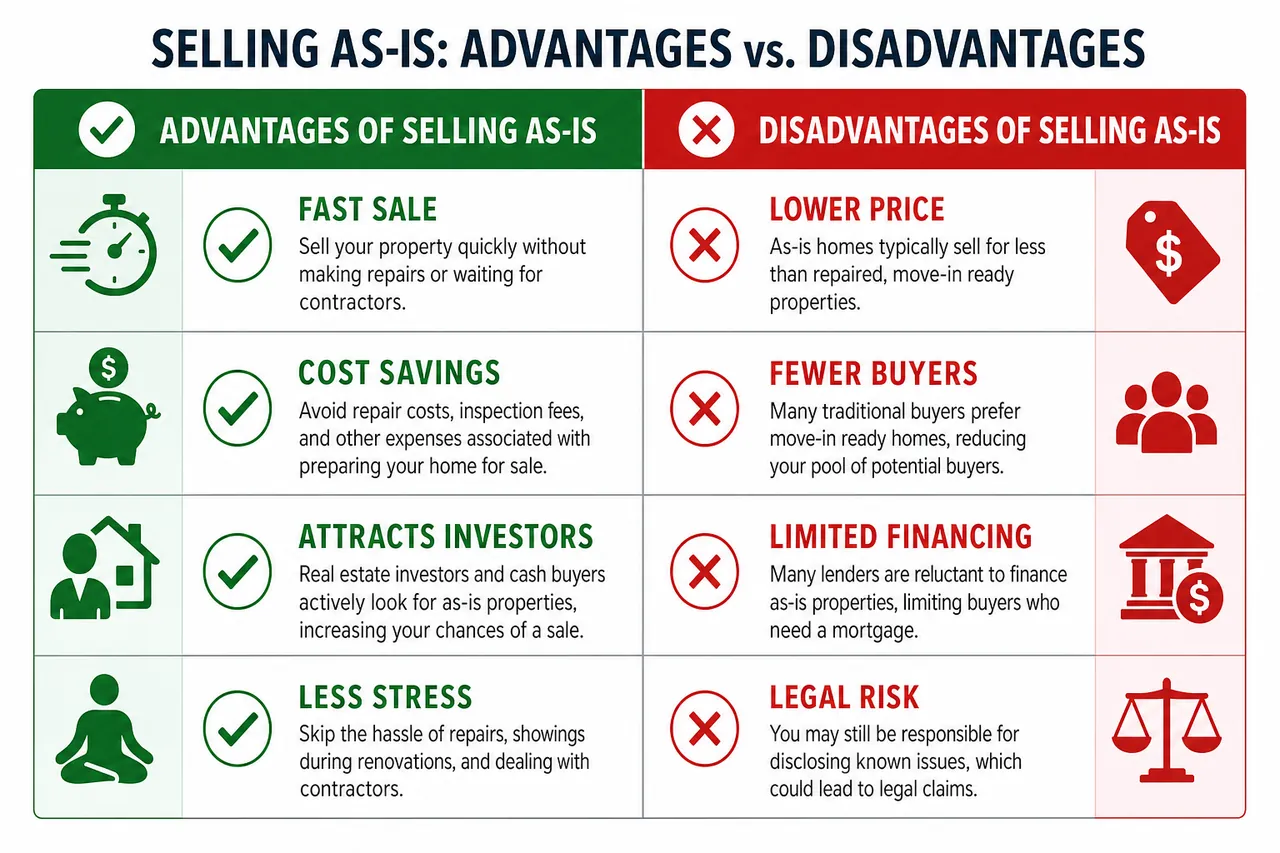
- Speed: Weeks or months? Gone. Cash buyers and investors close in days when you skip repairs and staging entirely.
- Cost savings: Here's the math: every renovation dollar you don't spend is money that stays in your pocket. You're not chasing a higher sale price to break even on work.
- No contractor coordination: Managing bids, pulling permits, watching timelines drag on—that's basically a second job. Selling as-is means none of that headache.
- Reduced negotiation friction: And this matters more than you'd think. When your price already accounts for the condition, buyers have way less room to demand repairs after their inspection.
- Access to cash buyers: According to Opendoor's data, roughly 32% of U.S. home purchases in 2025 were cash deals—and these buyers actively hunt for as-is properties.
- Simplicity: One price. One condition. No moving target. Most sellers who've been through conventional listings with multiple inspection rounds tell the same story: the as-is path is far less stressful.
Disadvantages and Risks of As-Is Sales
- Lower sale price: You're looking at 5%–30% below market value. The exact hit depends on how bad the condition is and whether buyers in your area are desperate enough to take on a fixer-upper.
- Smaller buyer pool: Here's the reality: most conventional buyers can't touch your home if it's got serious maintenance issues. Why? Their lenders won't allow it. First-time homebuyers with FHA or VA loans? Forget it. Those programs have strict property standards, and a deteriorating roof or foundation problems will disqualify the sale before it even gets rolling.
- Financing complications: With 30-year fixed mortgage rates sitting at 6.65% as of August 20, 2026 (Freddie Mac), most buyers are already stretched thin. And if your home can't qualify for conventional financing, you've just eliminated a huge chunk of potential purchasers. That leaves you chasing cash buyers — a much smaller, pickier group.
- Legal exposure: Don't assume as-is protects you from everything. You still can't hide known defects. Skip disclosure? You're risking post-closing lawsuits, rescission demands, or damages claims that'll follow you for months or years.
- Seller-side closing costs still apply: And this one catches people off guard. Agent commissions, title fees, and miscellaneous charges? They don't vanish just because you're selling as-is. You're still looking at 6%–10% of the final sale price in 2026 (Bankrate data cited). The one exception: when you sell directly to cash investors or iBuyers, they often waive agent commissions entirely.
Legal Considerations and Disclosure Requirements

Mandatory Property Disclosures Still Apply
Here's what you absolutely need to know about as-is sales: an as-is clause doesn't let you off the hook for disclosing known material defects. Nearly every U.S. state requires sellers to disclose conditions they know about that could affect value or safety. Roof leaks, foundation cracks, mold, pest infestations, flooding history — they all need to be disclosed. If you try to hide a known defect behind an as-is clause, that's fraud. It's not a legal defense. It's actually the opposite.
State-Specific Rules
Every state has different disclosure requirements, and they can vary wildly. California, for example, demands one of the most comprehensive seller disclosure packages in the nation. Before you list there, check out our guide on how to sell a house as-is in California. Florida's rules are different — sellers must disclose all known facts that materially affect value and aren't readily observable. If you're selling in Florida, read our how to sell as-is in Florida guide first. Colorado, Washington, Tennessee, and Indiana each have their own forms and standards too. We've got state-specific guides for Colorado, Washington, Tennessee, and Indiana if your property is in one of those states.
Protecting Yourself From Liability
The best protection you can get? Thorough written disclosure. Order a pre-listing inspection, document everything that shows up, and hand that report to every potential buyer. I know — it seems backward to volunteer a list of problems. But this approach does three critical things for you. It proves you disclosed in good faith. It reduces the buyer's motivation to demand repairs. And it actually speeds up due diligence because buyers aren't searching for hidden surprises.
Inspection Contingencies and Waivers
Most as-is sellers ask buyers to waive their right to request repairs. But here's the thing: buyers can still get inspections done. They should. The inspection is for their own information — not leverage to force you into fixes. Some buyers waive inspections altogether in hot markets. It's their call, but it's risky for them. You benefit when you're upfront about which contingencies you'll accept and which ones you won't.
Back to topHow Much Will You Lose Selling As Is?
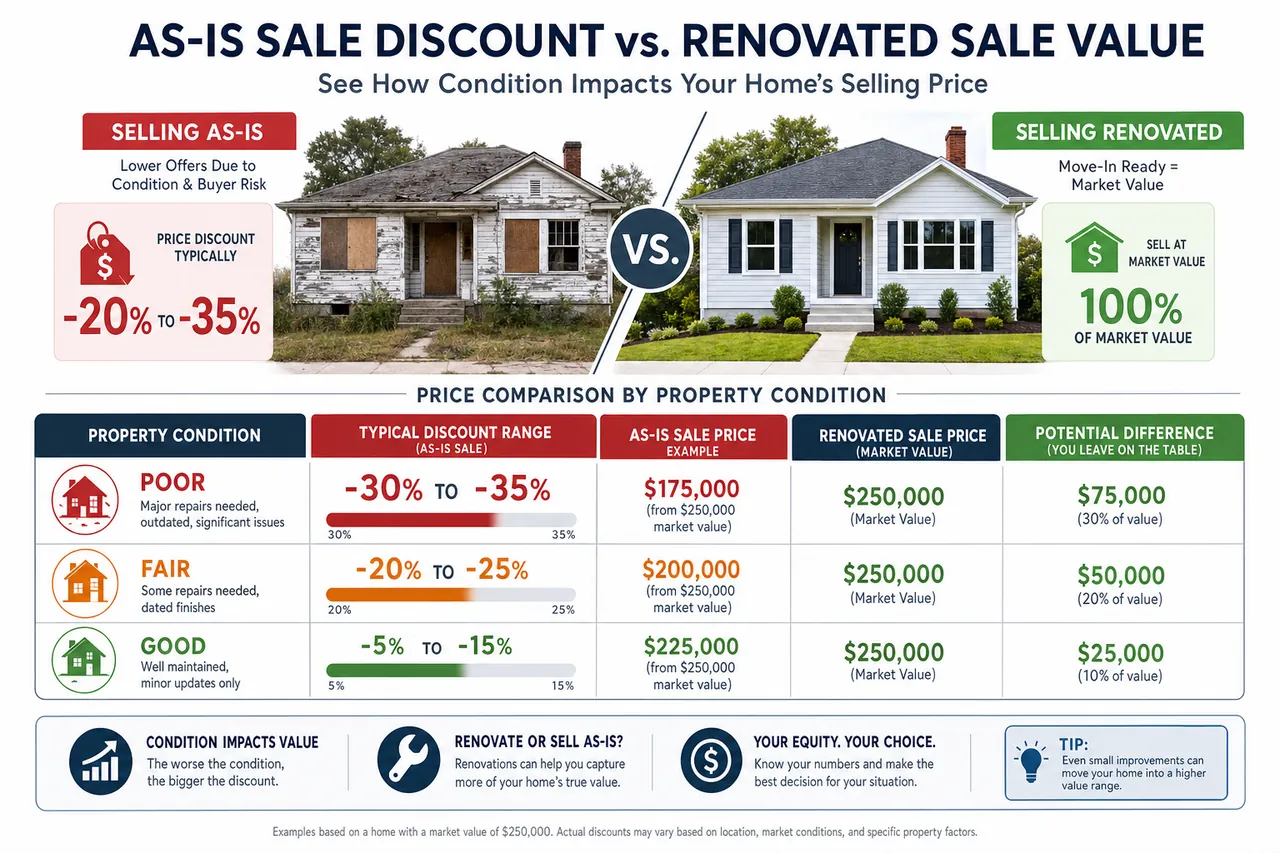
Here's the truth: it really depends on what shape your home's actually in and where you're selling. Most as-is sellers walk away with 75%–95% of what an updated comparable would fetch (based on January 2026 pennymac.com data via ibuyer.com). That 5%–30% discount below market value covers everything from just needing fresh paint to dealing with serious foundation problems.

Let's put real numbers to this. The U.S. median existing-home sale price hit $408,776 as of June 2026 (Redfin). Think about that for your situation. A 10% as-is discount means you're losing roughly $40,000 in proceeds. Jump to a 25% discount? You're looking at approximately $102,000 less in your pocket. Context shifts everything.
| Property Condition | Typical Discount vs. Market Value | Likely Buyer Type | Notes |
|---|---|---|---|
| Cosmetic issues only (paint, carpet, dated fixtures) | 5%–10% | Move-in buyers, light renovators | Widest buyer pool; conventional financing usually possible |
| Minor repairs needed (HVAC, appliances, landscaping) | 8%–15% | Conventional buyers with repair budget, investors | Some lenders may require repairs before funding |
| Major repairs needed (roof, plumbing, electrical) | 15%–25% | Cash buyers, fix-and-flip investors | FHA/VA financing unlikely; cash or rehab loans required |
| Structural issues (foundation, load-bearing, severe water damage) | 20%–30% | Experienced investors, demolition buyers | Very narrow buyer pool; almost always cash only |
| Severe damage (fire, flood, hazmat) | 30%+ or land value only | Developers, land buyers | Improvement value may be near zero; land value drives offer |
And here's something most sellers don't realize about investor expectations. Non-investor cash buyers typically offer 9%–11% less than financed buyers; fix-and-flip investors often come in 15%–30% below market value (2026). If an investor's offer sits at the higher end of that range, don't automatically assume you're being taken advantage of — that might actually be fair pricing for what you're selling.
When As-Is Actually Makes Financial Sense
Here's what you need to do: call a couple of contractors and get real repair bids. Then reach out to a local agent and ask two things — what'd the home sell for fixed up, and what's it worth as-is right now? Compare those numbers. If repairs cost more than the price bump you'd get, or if you'd have to take on debt at painful interest rates to fund them, selling as-is usually wins on the bottom line. And don't forget the hidden costs of waiting — mortgage payments, property taxes, utilities — they add up fast if renovations drag on for three to six months.
Water damage is its own beast. The remediation costs are nearly impossible to nail down, and buyers love to renegotiate hard after their inspector shows up. If your property's dealing with water damage, take a look at how to price and disclose a house with water damage first.
Back to topSteps to Successfully Sell Your House As Is
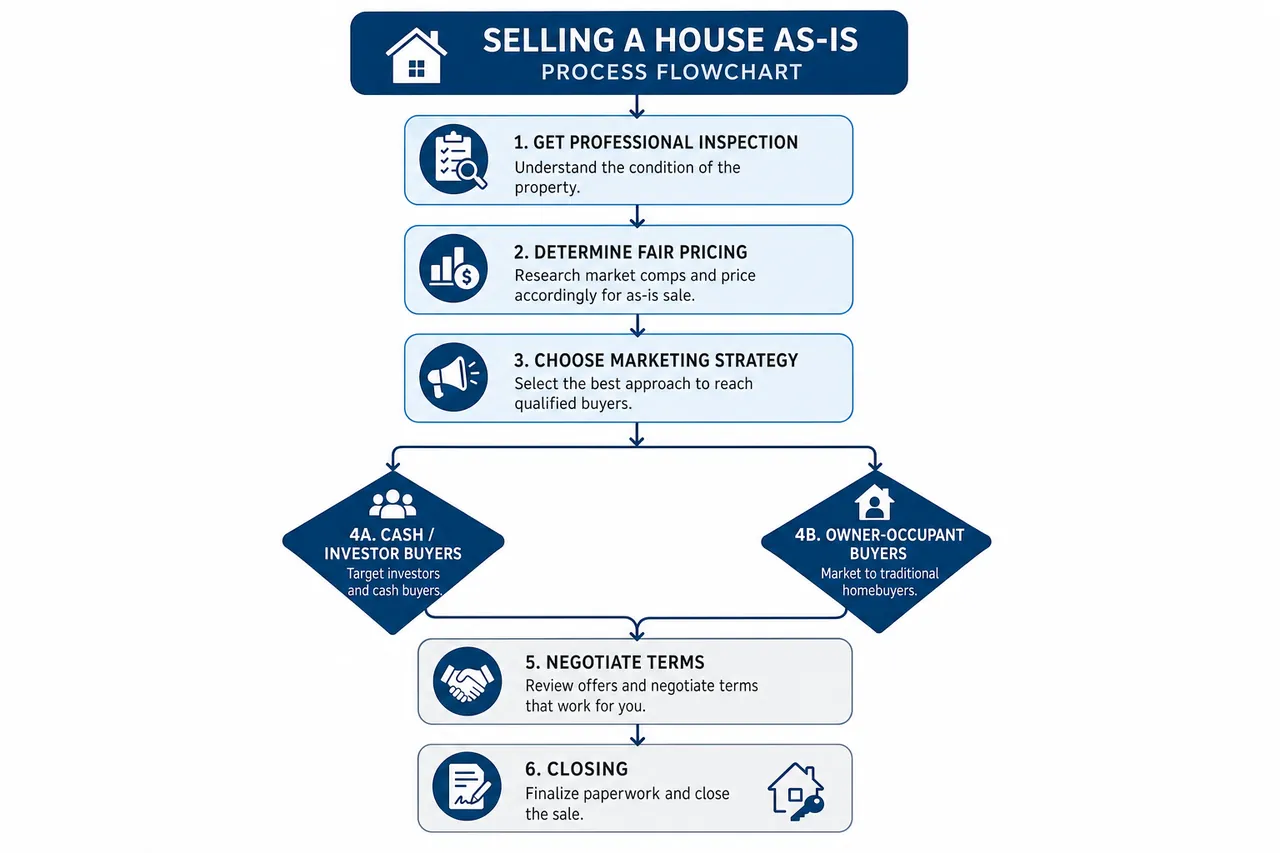
- Get a pre-listing inspection. Before you list, spend $300–$500 on a professional home inspection. You'll know exactly what you're disclosing to buyers, and they'll trust your price more when they see you've been upfront about the property's condition.
- Price it right from day one. Overpricing an as-is property? That's the single biggest mistake sellers make. Buyers expecting a discount will walk if your price signals unrealistic expectations. Use recent comparable sales of homes in similar condition — not freshly updated ones — as your baseline instead.
- Complete your disclosure forms fully. Work with your agent or attorney to fill out every state-required disclosure form accurately. Attach the inspection report. Document everything in writing so there's no room for disputes later.
- Write an honest, strategic listing description. Be clear about the home's actual condition, but lead with what genuinely matters — lot size, location, school district, solid bones, unique features. Using language like "Priced to reflect condition" tells buyers you understand the market and aren't in denial about what needs work.
- Target the right buyer channels. And don't just stop at the MLS for exposure. Market directly to cash buyer platforms and investor networks too. Properties with significant deferred maintenance sell faster when the right buyers — those who specialize in fixers — see them first.
- Decide upfront which contingencies you'll accept. Will you allow an inspection contingency for informational purposes? What about financing contingencies? Being clear in your listing terms prevents wasted time with buyers whose lenders won't fund the property anyway.
- Prepare for creative offers. Investors may request seller financing, delayed closings, or leaseback arrangements. Know your bottom line before negotiations begin — it makes these conversations much faster and clearer.
Marketing an As-Is Property Effectively

Target Cash Buyers and Investors
About 27% of buyers in March 2026 paid cash (NAR data). That's a huge chunk of the market, and here's what makes them different: they don't need lender approval and they're not scared off by a home's condition. You can reach them through investor-focused listing sites, local real estate investment club networks, and services that connect distressed-property sellers with cash buyers. Need to close fast? Programs like KDS Homebuyers' We Buy Houses service offer direct cash offers with flexible closing timelines. Speed often beats waiting for the highest price.
Lead With What Works
Your home has something selling. Maybe it's the location near top schools, a massive lot, an attached garage, a neighborhood everyone wants, or a floor plan you can't find elsewhere. Start there. Investors aren't buying a kitchen—they're buying the opportunity underneath it all.
Quality Photography Still Matters
Professional photos on an as-is home don't hide damage. They show what's really there: scale, layout, natural light. A well-shot photo of a dated but structurally solid home tells a completely different story than a dark, blurry snapshot taken with your phone. Virtual tours help investors who live out of state evaluate without driving in.
Honest, Strategic Listing Language
Words matter here. "Investor special," "priced for condition," "handyman opportunity," and "sold as-is" communicate something clear to experienced buyers: this price already accounts for the work needed. You're not going to ask for more money after inspection. That honesty filters out time-wasters and attracts serious cash buyers.
Back to topAlternatives to Selling Completely As Is
Don't think full as-is is your only path forward. You've actually got a whole spectrum of middle-ground approaches that can boost what you walk away with—without needing a complete gut renovation.
- Fix safety and habitability issues only: Start here. Carbon monoxide detectors, smoke alarms, GFCI outlets, and obvious safety hazards—these are the items that kill deals. They'll typically run you hundreds, not thousands, and they dramatically expand who'll consider your home.
- Address high-ROI cosmetic updates: Fresh paint. Professional cleaning. Basic landscaping. These aren't expensive, and they hit differently with buyers. It's all about that emotional first impression.
- Offer a repair credit at closing: Here's a smart move: instead of fixing things yourself, offer buyers a credit at closing. It's usually worth two bids for the work needed. You keep the sale as-is in spirit, but buyers feel secure about what they're getting.
- Provide closing cost assistance: Mortgage rates are hovering around 6.65% as of August 20, 2026 (Freddie Mac), and that means buyers are stretched thin on upfront costs. Cover some of those closing costs and you'll pull more financed buyers into your pool—no repairs required.
- Consider seller financing: Own the place outright or sitting on real equity? Seller financing opens the door to buyers who can't get traditional mortgages. It takes careful legal setup, but sometimes you actually net more than you would from a discounted cash deal.
- Fix and List programs: Some services will front the renovation money and pull it from your sale proceeds. You get to list a repaired home without spending a dime upfront. KDS Homebuyers' seller programs let you stack cash offers, traditional agent listings, and fix-and-list options side by side—so you can actually see which path leaves you with the most money before you decide.
Buyer Perspective: Purchasing As-Is Properties
Are you thinking about buying an as-is property? Or maybe you're just curious what serious buyers actually look for? Here's the real story.
Never Skip the Inspection
You agreed to waive repair requests. That doesn't mean skip the professional inspection. A $400 inspection can uncover $40,000 in work that needs doing — and that's in a home with deferred maintenance. This is where experienced investors protect themselves. They add a 15%–20% contingency buffer to their repair estimates because surprises always happen.
Financing Challenges Are Real
Here's the problem: FHA and VA loans won't touch homes that don't meet minimum property standards (MPS). Significant structural damage, a failing roof, broken HVAC systems — any of that disqualifies buyers using government-backed loans. Conventional loans through Fannie Mae and Freddie Mac are slightly more flexible, but they still have appraisal standards you need to clear. What actually works? Cash purchases. Renovation loans like the FHA 203(k) or Fannie Mae HomeStyle. Those are your practical tools for true as-is properties.
Get Everything in Writing
"We agreed verbally" won't hold up. You need the as-is condition spelled out explicitly in the purchase contract. Which inspections are allowed? No repairs from the seller — that needs to be crystal clear. The buyer acknowledges the property's condition. Written agreements protect you both.
Understand the Long-Term Cost
A 15% discount below market price feels like you're winning. Then the roof is $18,000. The electrical panel needs $6,000. There's active mold — $12,000 to fix that. Your deal math collapses if you're using optimistic contractor estimates instead of realistic, full-scope repair costs.
Back to topTax Implications of As-Is Sales
Here's the good news: as-is sales get taxed just like any other home sale. If this is your primary residence and you've lived there for at least two of the last five years, you've got real protection. The IRS Section 121 exclusion lets single filers shield up to $250,000 in capital gains from taxes—or $500,000 if you're married filing jointly (2026 tax year). That's substantial.
But if you're selling an inherited property to a family member? Things get trickier. Especially if you're pricing it below what the market would bear. The IRS annual gift tax exclusion is $19,000 per recipient for 2026. Anything beyond that triggers reporting. And selling way below fair market value to a relative can flag gift tax issues you didn't anticipate. Don't skip talking to a tax professional before you structure a below-market deal with family.
Back to topConclusion: Is Selling As-Is Where-Is Right for You?
Selling a house as-is where-is works. But it's not automatically your best move. Your timeline matters. So does your equity, the shape your house is in, and whether local buyers even want fixer-uppers. Here's what's happening in today's market: 62.2% of buyers in 2025 paid below list price. And when they do? They're walking away with a 7.9% discount on average — the biggest haircut since 2012, according to Redfin's full-year 2025 data. Buyers are already expecting to negotiate. An as-is sale just puts those cards on the table from day one.
Want to make this work? Price honestly based on what your house actually needs. Write down everything — and I mean everything — you know about the property's condition. Target buyers who get it: investors, developers, people flipping houses themselves. Then do the math. Run the numbers on repairs versus dropping your asking price. See which path gets you more cash in your pocket faster. Done right, selling as-is where-is saves you time, stress, and money you don't have to throw at renovations anyway.
Back to topFrequently Asked Questions
Do you legally have to disclose problems when selling as-is?
Yes — you do. An as-is clause gets you out of making repairs. It doesn't get you out of telling the buyer what you know is broken. Nearly every U.S. state requires written disclosure of conditions the seller is aware of that would materially affect a buyer's decision. Hide a known defect, and you're committing fraud. That can mean lawsuits and damages well after closing.
Can buyers still walk away after an inspection in an as-is sale?
It depends on what your contract actually says. Most contracts include an inspection contingency — even if it's just for information. That usually lets the buyer walk away within the inspection period and get their earnest money back. But if they've waived the inspection contingency entirely, walking away after inspection probably means losing that earnest money. This is why you need to read every word of the contract before signing. Same goes for the buyer.
What happens if undisclosed problems appear after closing?
You're vulnerable. If you knowingly hid a defect you were supposed to disclose, the buyer can sue you for damages, rescission of the contract, or fraud. Even in an as-is sale, this applies. Your best move? Document everything in writing before closing. A thorough disclosure creates a paper trail proving the buyer knew what they were getting.
Can you sell a foreclosed home as-is?
Absolutely. In fact, most foreclosure sales are as-is by default. Bank-owned (REO) properties get sold as-is because the lender doesn't know what's inside the house and won't be fixing anything. When homeowners sell before foreclosure closes, they often go the as-is route too — time pressure drives that decision. And here's the catch: lender-required appraisals can still flag problems that block the buyer's financing. That's why cash buyers show up so often in foreclosure deals.
Does selling as-is affect property insurance for the buyer?
It can. Insurance companies look at condition, and they don't like what they see in homes with deferred maintenance, aging roofs, knob-and-tube wiring, or water damage history. Getting coverage becomes hard or expensive — sometimes impossible until repairs happen. If you're buying an as-is property, call your insurance agent before you remove contingencies. Ask them flat-out: can this house be insured, and what will it cost?
Back to topMore in Selling as-is and repairs
- Sell My House As Is for Cash: Fast Sales Without Repairs
- Sell Your House As-Is or Fix It Up? Cost-Benefit Analysis and Best Path
- Sell House for Cash in Austin: Fast & No Repairs Needed
- How to Sell a Home As-Is: Pros, Cons, and What to Expect
- Selling a House As Is: Real Seller Experiences and Strategies
- Selling a House As-Is: Pros, Cons, and Whether It's Right for You
See our guide: “How to Sell a House As-Is: What It Means and How It Works” →

