

Property Tax Proration at Closing: How It Works for Sellers in Washington
You might wonder if you will get money back after paying your full property tax bill in April, only to close on June 15th. Property tax proration at closing is a standard part of real estate transactions in Washington, handled by the title company.
This post explains how proration works in Washington, using clear steps and examples to help you understand your credits or debits. 1 Keep reading to learn how property taxes are fairly split during the closing process. 3
Key Takeaways
- Property tax proration makes sure sellers pay only for taxes covering the days they own the home. For example, if you sell on June 15 with a $3,000 annual tax bill, your share covers January 1 to June 14.
- Title companies handle all proration calculations at closing in Washington. These amounts show up as credits or debits on your Closing Disclosure statement under "Other Costs."
- If you paid property taxes in advance by Washington's April 30 deadline, you get a credit back for the buyer's share after closing. If not yet paid, your owed amount comes out of sale proceeds as a debit.
- Use this simple formula: Daily Tax Rate = Annual Tax ÷ 365; Seller's Share = Daily Rate × Days Owned; Buyer's Share = Daily Rate × Remaining Days. Example: $3,000 ÷ 365 ≈ $8.22/day; seller with 165 days owes about $1,356.
- Washington uses a calendar tax year with two installment due dates—April 30 and October 31. Always check your county assessor records and any exemptions like the senior or disability exemption, as these affect your final proration results.
What Property Tax Proration Means

Property tax proration makes sure you only pay your fair share of property taxes based on how long you own the home. Title companies in Washington handle these calculations to keep real estate transactions fair for everyone.
Define proration as the fair division of taxes based on ownership dates.
Proration means dividing property taxes fairly between you and the buyer based on how many days each party owns the home during the tax year. The title company calculates your seller's share using your actual closing date and the annual county tax bill from your local assessor's office.
For example, if you sell your house on June 15th with a $3,000 annual tax bill, you are responsible for taxes from January 1st through June 14th. The buyer takes over for the rest of the year. 1
Washington follows a calendar tax year, so this calculation runs from January 1 through December 31. Some title companies use a 365-day year while others use a 360-day banking calendar — your title company in Seattle, Tacoma, or Spokane will use the method standard to your county.
Use a simple analogy like splitting a restaurant bill.
Think about paying a restaurant bill with friends. Each person covers only what they consumed. Property tax proration works the same way — you pay only for the days you owned your home, and the buyer pays after their ownership begins. No one pays more than their fair share. 2
Title companies use this method to prevent disputes, just as itemizing food and drinks avoids arguments over who owes what at dinner. Your seller's share of taxes is calculated based on how many days you were "at the table" as owner before closing day. This approach protects both sellers and buyers from paying someone else's portion of the annual tax bill.
How Proration Works Step-by-Step

A title company will calculate property tax proration using your actual closing date and the yearly county tax bill. Their step-by-step process ensures you pay only for your share, whether you've paid taxes ahead or still owe a balance.
Walk through calculations with an example ($3,000 annual tax, June 15th sale date).
Property tax proration can seem confusing, but breaking the numbers down makes it easier. Here is how you figure out your seller's share using a real example.
- Start with the annual property tax bill, which totals $3,000.
- Divide $3,000 by 365 days to get the daily rate, which comes to about $8.22 per day.
- If your home closes on June 15th, you are responsible for property taxes from January 1st up to June 14th.
- Count these days — that covers 165 days of ownership as the seller.
- Multiply 165 days by the daily rate of $8.22; your share comes to $1,356.30.
- The buyer's share runs from June 15th through December 31st, making up the remaining 200 days.
- Calculate their portion: 200 days × $8.22 per day = $1,644.
- If you already paid the first installment by Washington's April 30 deadline, the title company will determine what credit or debit applies based on total taxes paid versus your prorated share.
- These values show up on your closing disclosure statement handled by the title company for accuracy and fairness.
Explain both scenarios: seller paid taxes in advance or hasn't yet.
You need to understand how property tax proration works whether you've already paid the bill or not. In Washington, property taxes are due in two installments — April 30 and October 31 — so your payment status at closing depends on where you are in that cycle. 3
- If you paid your first installment by April 30 and close on June 15, the title company calculates whether you've overpaid your prorated share and credits you accordingly.
- If you have not yet paid any taxes for the year and close in June, your prorated portion through June 14 is deducted from your sale proceeds at closing.
- In arrears situations — where taxes for the current year aren't billed until later — the buyer may receive a credit from the seller to cover the seller's period of ownership.
- Local county assessors across Washington, including King, Pierce, and Spokane counties, provide the tax figures that title companies use for these calculations.
- Each situation protects both parties so no one pays too much or skips their share of property taxes.
Provide a simple formula for reference.
Use this simple formula for property tax proration at closing:
Daily Tax Rate = Annual Property Tax ÷ 365
Seller's Share = Daily Rate × Days Owned Before Closing
Buyer's Share = Daily Rate × Days Owned After Closing Through Year-End
For example, if your annual property taxes are $3,000 and you close on June 15th, the daily rate is $8.22 ($3,000 ÷ 365). If you owned the home for 165 days (January 1 to June 14), your share is about $1,356.30 (165 × $8.22). Title companies use these formulas to show credits or debits on your settlement statement.
Who Calculates and Handles This

A title company usually figures out the property tax proration for you in Washington. These calculations are listed on your official closing disclosure statement before the sale is finalized.
Explain the role of title companies in proration.
Title companies act as neutral third parties in Washington real estate transactions. They pull tax records from your county assessor's office — whether that's King County, Pierce County, or Spokane County — and use a daily rate method to calculate each party's share.
If you paid your property taxes in advance, the title company credits you for the buyer's portion at closing. If not, money gets deducted from your proceeds. The title company may also escrow funds to cover estimated unpaid taxes or delinquent amounts. You see these proration amounts listed clearly on the final closing disclosure statement alongside other closing costs.
Washington does not require a closing attorney for most residential transactions — title companies and escrow officers handle the process directly, which is standard practice in Seattle, Bellevue, Tacoma, and throughout the state.
Reassure readers it's reflected on the closing disclosure statement.
You will see property tax proration listed on your Closing Disclosure in Section L under "Other Costs." This section clearly shows the credits and debits for taxes already paid or owed.
For example, if you sold your home on June 15th and paid your April 30 installment in full, the title company calculates your prorated share and shows any credit back to you as a negative entry on the statement. All financial adjustments for property taxes pass through the title company before they release your net proceeds. Review these details with your escrow officer to make sure each prorated amount lines up with your county assessor records.
Credits vs. Debits for Sellers
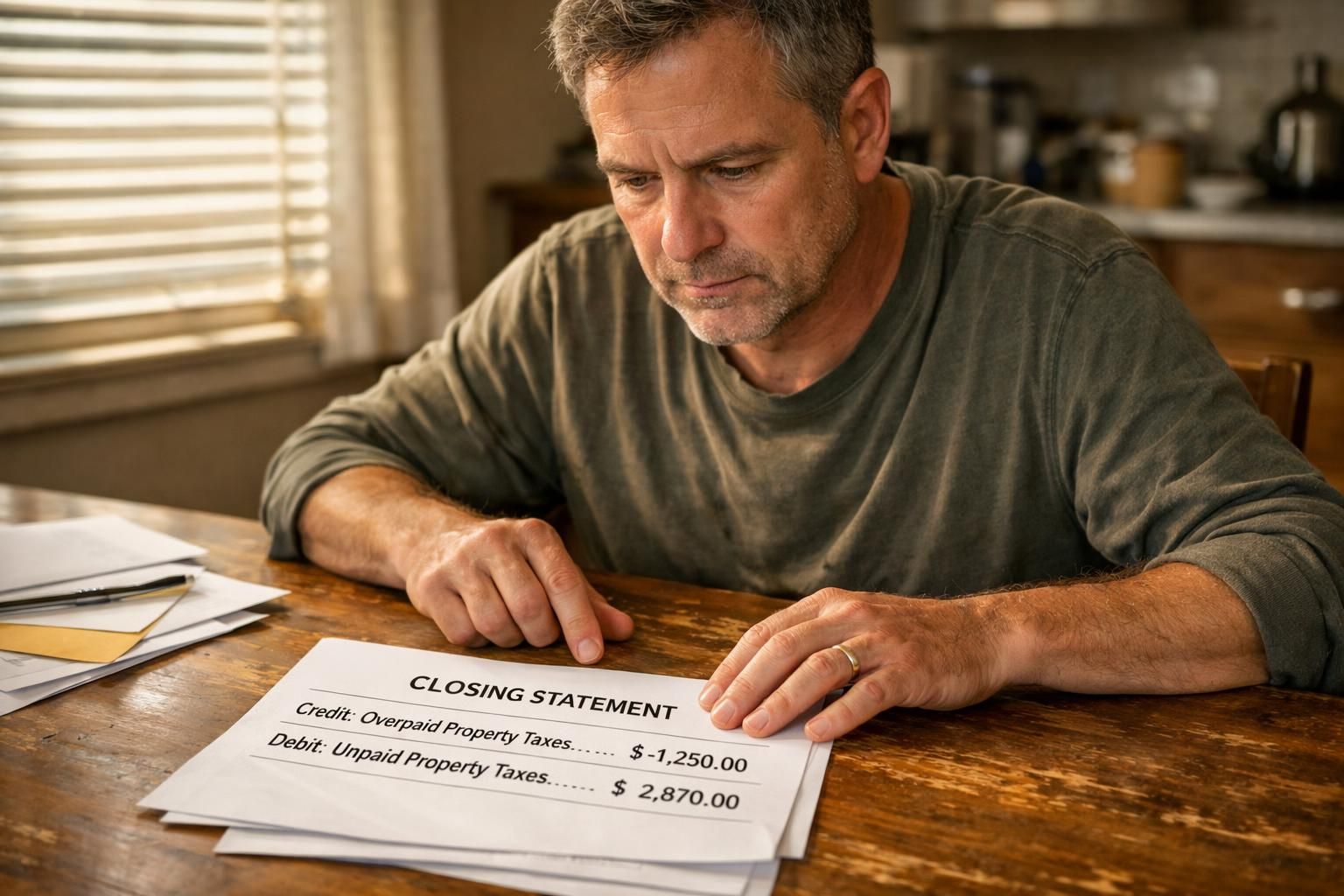
If you have paid more than your share of property taxes, the closing statement will give you a credit for that amount. If you owe unpaid tax for your time owning the home, you will see it listed as a debit handled by the title company at closing.
Clarify when sellers get a credit versus owe money.
Sellers receive a credit at closing if you already paid property taxes in advance for any period after your buyer takes ownership. For example, if you paid your full first-half installment by April 30 and close on June 15th, the title company will calculate the unused portion and the buyer reimburses you for their share. This amount appears as a credit on your closing disclosure. 4
You owe money (a debit) at closing if property taxes have not yet been paid during your ownership period. The title company deducts your portion of unpaid taxes from your proceeds at settlement. Both credits and debits appear on the final statement, itemized by the title company to ensure accuracy.
Use clear examples to illustrate both situations.
Say you paid $8,400 in annual property taxes in April and close on July 14 — day 195 of the year. The daily rate is $23.01. You receive a credit for taxes covering July 15 through December 31, totaling about $4,487.10, which appears as a negative entry on your settlement statement.
Now consider if you have not paid any taxes yet for the year, the bill totals $3,000, and you close on June 15 after owning the house for 165 days. Your share of the unpaid taxes — $1,356.30 — is deducted from your proceeds as a debit on your closing disclosure. Proration ensures you only pay for the period when you actually owned the home.
Washington-Specific Tax Rules

Washington has specific property tax rules that directly affect how proration is calculated at closing. Understanding these details helps you avoid surprises on your settlement statement.
Washington's tax calendar and payment schedule.
Washington property taxes follow a calendar year — January 1 through December 31. The state bills taxes in the current year for that same year, which means taxes are not paid in arrears the way they are in some other states.
Washington homeowners pay property taxes in two installments: the first half is due by April 30 and the second half by October 31. If your total annual bill is $1,000 or less, the full amount is due by April 30. Your closing date relative to these deadlines has a direct impact on whether you receive a credit or owe a debit at settlement.
Property tax rates vary significantly by county. King County (Seattle, Bellevue) tends to have higher assessed values and larger tax bills than Spokane or rural counties. Always pull your most recent tax statement from your county assessor's website to confirm the exact annual amount used in proration.
Washington exemptions that can affect proration.
Washington offers several property tax exemption programs that can affect your proration calculation. The Senior Citizen and Disabled Person Exemption reduces or freezes property taxes for qualifying homeowners. If you benefit from this exemption, your tax bill is lower — and so is the prorated amount owed at closing.
Washington also has an exemption program for veterans with service-connected disabilities. These exemptions typically end once the property changes ownership, which can affect the next year's assessment for the buyer but generally does not change your prorated seller's share for the current year.
If your property qualifies for current-use taxation under Washington's open space or farm programs, ending that designation at sale can trigger additional taxes. Discuss this with your title company well before closing to avoid surprises.
Explain how the closing date impacts calculations.
The closing date sets the exact cutoff for dividing annual property taxes between you and the buyer. If your home sale closes on June 15, you pay for January 1 through June 14; the buyer covers June 15 through December 31.
Timing matters with cash flow. Selling close to Washington's April 30 due date means you might already have paid your first installment — and the title company needs to account for that accurately. A closing near October 31 raises similar questions about the second installment. Always confirm your payment status with your county assessor before closing day.
Special Situations
Special cases can affect your closing costs or property tax proration in Washington. Talk to your title company about any unique property issues before finalizing the sale.
Discuss delinquent taxes, ending exemptions, and escrow account balances.
If property taxes are delinquent at closing, the title company will pay them off using your settlement funds. In Washington, delinquent taxes accrue interest and penalties set by state law, which reduces what you receive at closing. Title companies sometimes hold back funds in escrow to cover possible tax liabilities.
Exemptions like the senior or disability exemption end once the sale is complete. This affects the new owner's future assessments but generally does not change your prorated share for the current year. If you have a mortgage with an escrow account for property taxes, that balance is included in your mortgage payoff at closing rather than applied directly to proration.
If your property is in a current-use or open space program, exiting that program at sale may trigger additional taxes. Review this with your title company early in the process.
What Sellers Should Prepare
Get your paperwork in order before heading to closing. Speak with your title company if you have questions about property taxes, escrow accounts, or exemptions tied to your home.
Checklist: recent tax bills, payment status, exemptions, and reviewing proration details with the title company.
- Collect your most recent property tax bill from your county assessor's office to confirm the exact annual tax amount.
- Verify whether you have paid your April 30 first-half installment or if any amount is outstanding — this directly affects your credit or debit at closing.
- Review any exemptions applied to your account, such as the senior citizen, disabled person, or veteran exemption, as these lower your total tax bill and affect the prorated amount.
- Confirm there are no delinquent taxes on file with your county; unpaid taxes can delay closing or reduce your net proceeds.
- Ask your mortgage lender about the balance in your escrow account for property taxes; you may be eligible for a refund of unused funds after closing.
- Check whether your property is enrolled in any current-use or open space program, since exiting at sale can trigger rollback taxes.
- Make sure all taxing districts — county, city, school district, fire district — are reflected in the proration, as Washington properties often carry assessments from multiple entities.
- Schedule time with your title company's escrow officer to review their proration calculation and confirm it matches your county assessor records before closing day.
Conclusion
Understanding property tax proration gives you peace of mind during the closing process. Title companies and escrow officers in Washington handle these calculations to ensure fairness for both you and the buyer. Every step follows Washington state law and county-level rules, so you do not need to worry about unexpected costs. You can feel confident knowing that this standard part of every home sale protects your finances and makes sure no one pays more than their fair share.
If you want to simplify the process entirely, selling to a cash buyer can eliminate many of the complications around escrow accounts, installment payment timing, and exemption questions. KDS Homebuyers works directly with Washington homeowners to make the closing process straightforward from start to finish. Visit kdshomebuyers.net to request a free cash offer and see how easy selling your home can be.
FAQs
1. What is property tax proration at closing and how does it affect sellers in Washington?
Property tax proration splits the year's property taxes between seller and buyer based on the closing date. In Washington, taxes follow a calendar year, so the split runs from January 1 through December 31. Sellers pay their share for the days they owned the home.
2. How are closing costs impacted by prorated property taxes in Washington?
Prorated property taxes can increase or decrease your net proceeds at closing. The title company calculates what portion of annual taxes belongs to the seller up to the sale date, then debits or credits that amount on the settlement statement.
3. Who handles calculating and collecting a seller's share of taxes during a Washington real estate transaction?
The title company or escrow officer figures out each party's share using county assessor records and the current tax bill. Washington does not require a closing attorney for most residential transactions — escrow companies handle this directly.
4. Does having an escrow account with my mortgage lender change how I pay prorated property taxes at sale?
If you have an escrow account tied to your monthly mortgage payment, any remaining balance is included in your mortgage payoff at closing. It does not directly reduce your obligation to pay your prorated share of property taxes.
5. Can a Washington senior or disability exemption impact my final proration amount?
Yes. If you qualify for Washington's Senior Citizen and Disabled Person Exemption, your annual tax bill is lower, which reduces the prorated amount at closing. This exemption ends once the property transfers to the new owner.
6. Should I expect my real estate agent or title company to explain the proration details before closing?
Yes. Your title company's escrow officer will walk you through the proration calculation and show you exactly how it appears on the closing disclosure. Review these numbers carefully and ask questions if anything doesn't match your county tax records.
References
- ^ https://www.mrei.co.uk/post/tax-proration-definition-how-it-works-and-example (2025-05-18)
- ^ https://info.courthousedirect.com/blog/bid/214724/what-is-property-tax-proration (2018-06-13)
- ^ https://www.ownup.com/learn/first-home-loan/property-taxes-at-closing-who-bears-the-burden/ (2024-06-30)
- ^ https://thedres.com/real-estate-closing-credits-and-debits-explained-a-comprehensive-guide/
