

How to Stage Your Home to Sell Faster: Room-by-Room Guide
Table of Contents
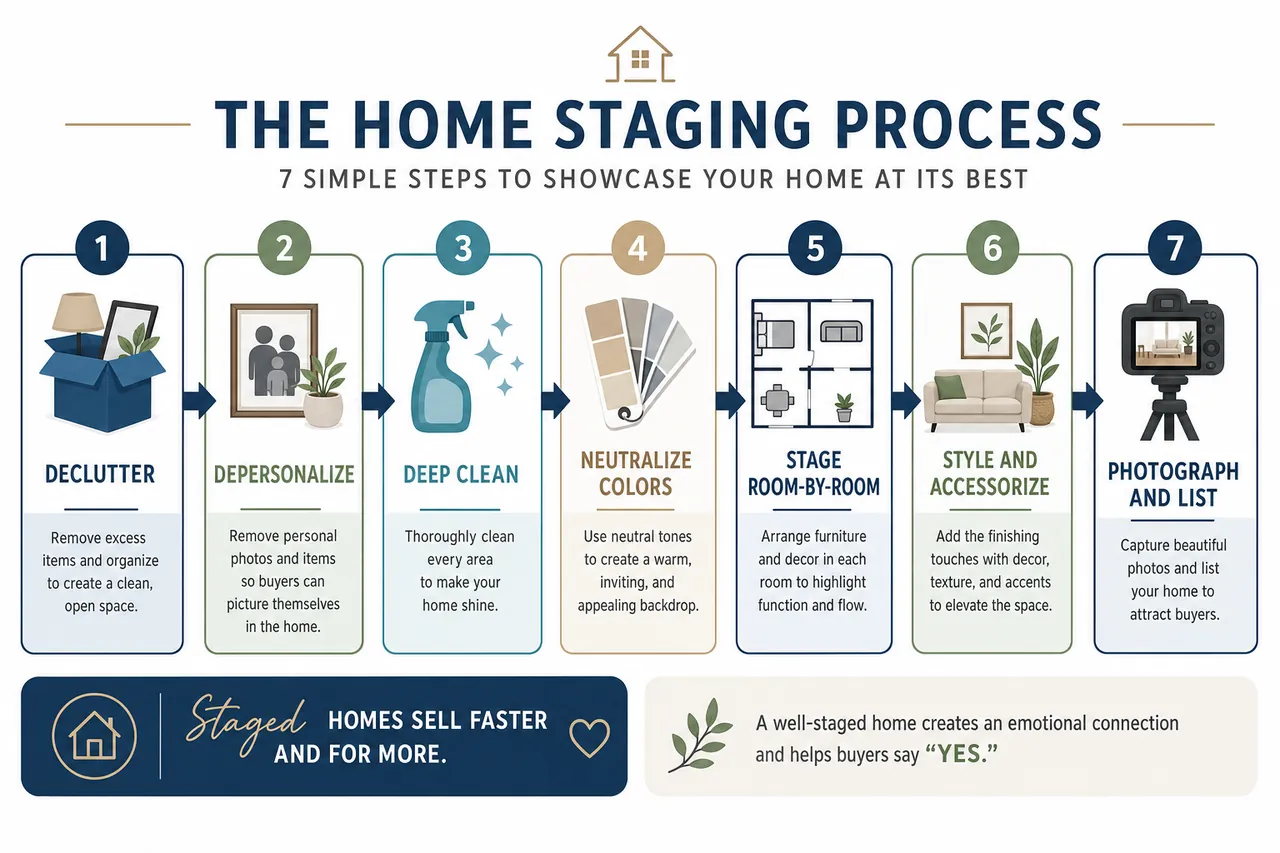
- Why Staging Your Home Matters
- Decluttering and Depersonalizing
- Curb Appeal and First Impressions
- Deep Cleaning for Maximum Impact
- Neutralizing and Modernizing Your Space
- Room-by-Room Staging Strategy
- Strategic Accessorizing and Styling
- Online Staging and Photography Tips
- Staging Budget and Item Purchases
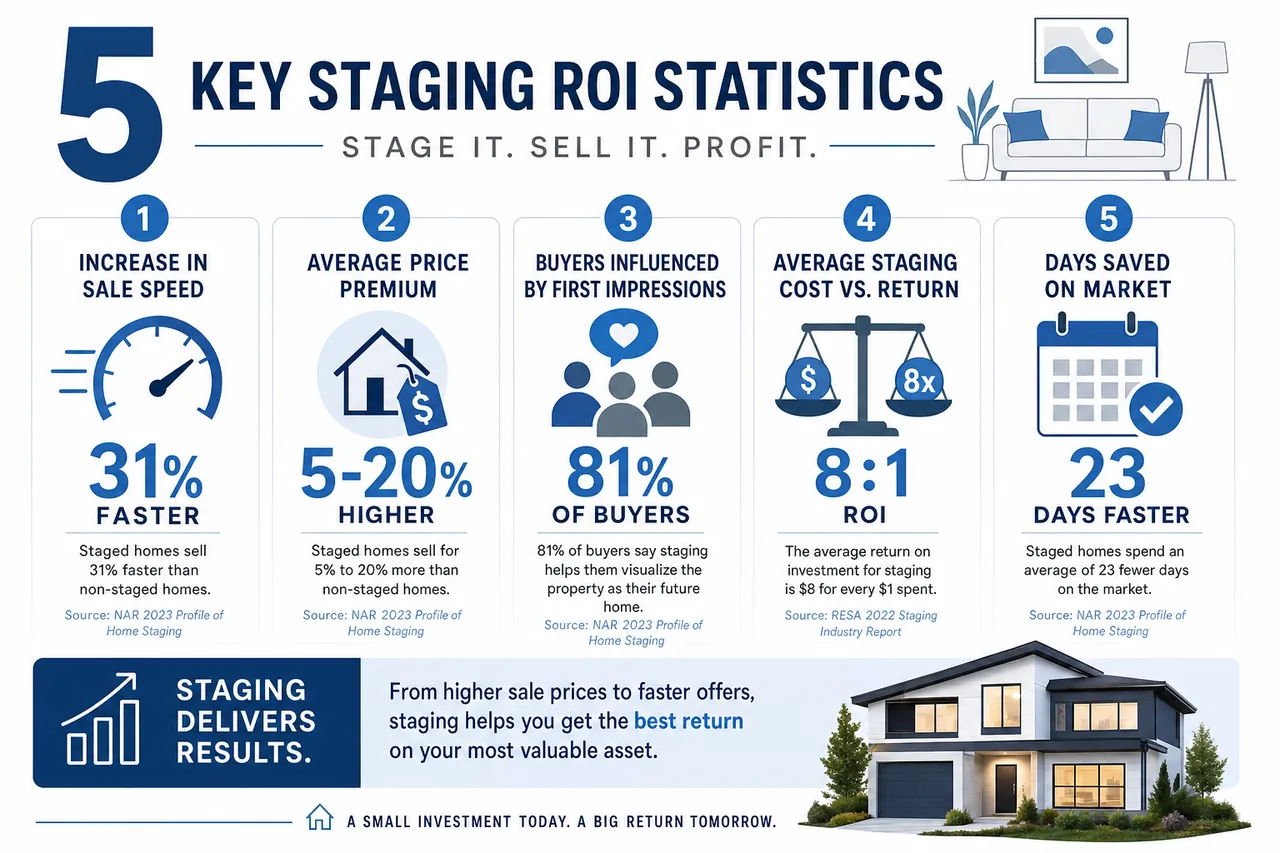
Selling your home quickly and for top dollar isn't just about location or market timing — it's about presentation. Here's what the data shows: 82% of buyers' agents say staging makes it easier for buyers to visualize a property as their future home, according to the National Association of Realtors. And that's not even the most striking number. Staged homes sell 73% faster on average than their unstaged counterparts. If you're motivated to move fast and want every advantage, you need to know how to stage your home to sell fast. It's one of the highest-impact skills you can develop before listing. The best part? You don't need a designer budget or a complete renovation. Even modest changes create dramatic results. This room-by-room guide walks you through everything — from the psychology of first impressions to the exact staging tasks to complete each week before you list.
Why Staging Your Home Matters
Most sellers think buyers can just look past the clutter and outdated paint. They can't. Before we get into the how-to, you need to understand why staging works so consistently. The research is clear — and it's dramatic.

The ROI of Home Staging
You put money into staging. You get way more back. The Real Estate Staging Association found that sellers who hired professional stagers saw a return of 5–15% over asking price compared to homes that weren't staged. And if you're working on a budget? DIY staging still delivers. HomeAdvisor reports homeowners typically spend around $1,500 staging their place and recoup that investment many times over.
Here's what this looks like in practice. Say you've got a 3-bedroom home in a mid-tier market priced at $350,000 but you skip staging. It languishes for 60 days before you drop the price, and it finally sells for $340,000. Now picture the same home, staged for roughly $1,800 in effort and a few accessories. It sells in 12 days at $358,000. That's nearly $20,000 in difference — from a weekend of work.
How Staging Affects Sale Speed
Every day your home sits on the market costs you real money. Mortgage payments. Utilities. Insurance. Property taxes. These bills don't stop. According to Zillow research, staged homes spend 33–50% fewer days on the market than comparable unstaged listings. In most markets, that's the difference between a 90-day slog and a 30-day sale.
But speed matters psychologically too. Homes that sell fast create urgency. Buyers see momentum and start competing with each other. Homes that sit gather dust — and lowball offers. Staging generates that initial momentum before skepticism sets in.
Psychological Impact on Buyers
Buyers don't think their way through a purchase. They feel first, then rationalize later. In the first 7–10 seconds of walking through your door, they've already made a gut-level decision. Staging is about controlling that moment. A clean, decluttered, neutrally decorated home lets buyers see themselves in the space — their own furniture in your rooms, their family around your dining table, their life happening in your home.
The opposite? A home loaded with your personal stuff, bold color choices, or visible wear and tear. Buyers start making lists of problems instead of imagining possibilities. They feel distant. Staging removes those emotional walls so buyers can connect with what they're actually buying.
Back to topDecluttering and Depersonalizing
Before you worry about paint colors or new throw pillows, tackle this first: ruthlessly declutter and depersonalize your space. It's free. And it creates the kind of visual impact that actually moves buyers.
The Art of Strategic Decluttering
This isn't just straightening up your living room on a Saturday afternoon. Strategic decluttering means removing 30–50% of the items in each room so people can actually see the bones of your home. Yes, that includes furniture. Most American homes are packed with too much stuff for the square footage they've got, and that makes rooms look cramped and smaller than they actually are.
When you're staging, less wins.
Start room by room. Use these categories to sort what stays and what goes:
- Remove: Anything broken, outdated, or rarely used
- Store: Seasonal items, hobby equipment, excess furniture
- Donate or sell: Items in good condition you won't take to your new home
- Keep and style: Items that are visually appealing and neutral in character
In your living room, that's one sofa and maybe one or two accent chairs — nothing more. Bedrooms? Strip out extra dressers or nightstands if the room's starting to feel tight. Kitchen countertops should be nearly empty except for one or two essential appliances.
Removing Personal Items Without Losing Warmth
Yeah, this part stings. You're literally erasing your family's presence from the walls. But here's the thing — buyers need to imagine their family living here, not see yours.
Get rid of:
- Family photos (all of them)
- Children's artwork and school projects
- Religious items and political memorabilia
- Sports team gear and branded merchandise
- Highly personalized artwork or monograms
- Pet accessories (beds, food bowls, cages, litter boxes — we'll cover this below)
You don't have to go sterile, though. Swap family photos for neutral art prints or market photography. One tasteful decorative object per surface does the job. Fresh flowers in a vase or a bowl of lemons on the kitchen counter? That adds life without screaming "This is the Johnson family home."
Storage Solutions for Staging
So where's all your stuff supposed to go? If you're living in the house while it's on the market — and most sellers are — you've got options.
- Portable storage pods: Park them in the driveway or move them off-site. You're looking at roughly $150–$300/month.
- Self-storage units: Usually $80–$200/month depending on what size you need and where you live.
- A family member's garage or basement: Free, if you can make that work.
- Consignment or Facebook Marketplace: Sell it fast instead of paying to store it.
One month of storage costs almost nothing next to what you'd lose if your house sits an extra month on market or you have to slash the price. Think of it as a staging investment, not an expense.
Back to topCurb Appeal and First Impressions
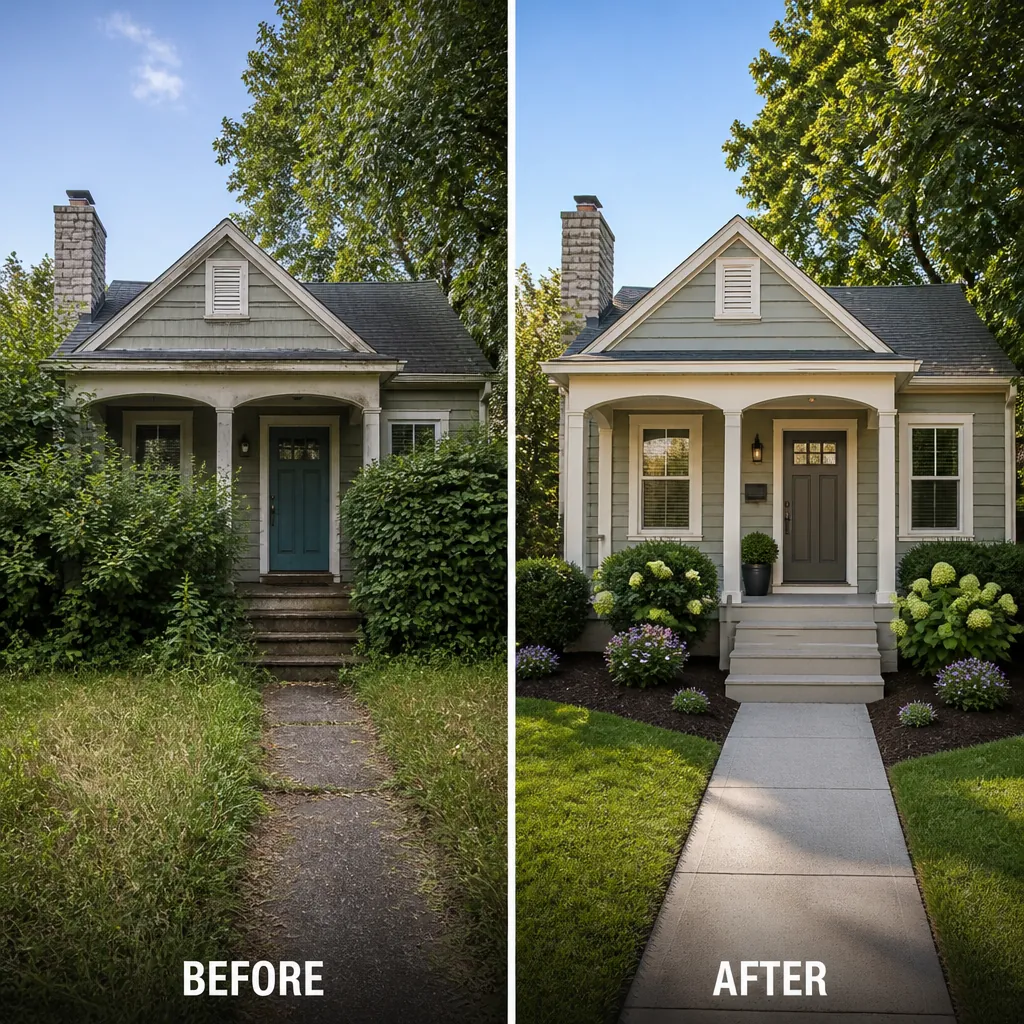
Here's what happens before most buyers ever knock on your door: they drive by. Some make up their minds right there, from the street. Your exterior is basically your home's opening handshake — and you want it to count.
Exterior Staging Essentials
Start here:
- Mow and edge the lawn
- Trim overgrown shrubs and trees (especially those blocking windows)
- Pull all weeds from beds, cracks in the driveway, and walkways
- Add fresh mulch to planting beds ($30–$60 per bag)
- Power-wash driveways, walkways, siding, and the front porch
- Clean or replace house numbers
- Clear the garage door of grime and grease
Need more specific guidance? Your market matters. Check out our full guide on 15 Curb Appeal Ideas to Make Your House Sell Faster, or jump straight to state-specific advice for Florida, California, and Washington.
Landscaping and Hardscaping Quick Wins
You don't need to overhaul everything. The best exterior upgrades are cheap and fast:
- Seasonal flowers in pots: Two large planters on either side of the front door? That's $40–$80 for instant color and balance.
- New outdoor light fixtures: Those old coach lights say "dated." Replace them for $50–$150 each and watch your home's face brighten.
- Repaired or sealed driveway: Cracked asphalt screams deferred maintenance. Driveway crack filler or sealer costs just $20–$50.
- Fresh sod patches: Dead or thin lawn spots? Patch them with sod or seed for under $100.
Front Door and Entry Way Impact
Your front door matters most. Paint it a bold, classic color — deep navy, forest green, classic red, or glossy black. And here's the kicker: Zillow research shows homes with black front doors sold for $6,000 more on average than those with standard white doors. You're spending $40–$60 on paint and a few hours of work.
Don't stop there. Add a new doormat (under $40), polished or new hardware ($50–$120), and clean those light fixtures until they shine. Got a covered porch? Throw down a pair of matching chairs and a small side table. It creates an inviting scene that photographs like a magazine spread.
Back to topDeep Cleaning for Maximum Impact
Staging a dirty home? It's like wearing a tuxedo without showering first. Buyers notice things you've completely stopped seeing — buildup in the oven vent, soap scum on the shower door, grime on baseboards. A deeply clean home tells potential buyers the property's been cared for.
Room-Specific Cleaning Priorities
Kitchen: Degrease everything. The hood vent, backsplash, cabinet fronts — all of it. Get inside the oven, microwave, and refrigerator because buyers will open them. Polish that hardware. And don't forget under the appliances.
Bathrooms: Hard water stains and soap scum have to go — from glass, tiles, and fixtures. Is the tub caulk discolored or peeling? A $10 tube of caulk can transform how the entire bathroom looks. Replace the toilet seat if it's worn. Get those grout lines clean. Make every fixture shine.
Living areas: Steam clean your upholstered furniture and area rugs. Ceiling fans, light fixtures, window sills — tackle all of it. Wipe down every piece of woodwork including baseboards and door frames.
Windows: Both sides. Inside and out. Clean windows brighten a home dramatically and pop immediately in photos. Most people skip this, and it's a mistake.
Details That Make Buyers Notice
Pride of ownership shows in the small stuff.
- Replace burned-out light bulbs throughout the home
- Tighten loose door handles and cabinet hardware
- Ensure all doors open and close smoothly (squeaky hinges cost $3 to fix)
- Clean air vents and replace HVAC filters
- Remove cobwebs from corners, especially on ceilings
- Wipe fingerprints from light switches and outlets
Professional Cleaning vs. DIY
Most homeowners should invest in a professional deep clean before listing. You're looking at $200–$400, and it's worth every penny. Pros have equipment and products that get kitchens and bathrooms to a level of clean that's tough to achieve on your own. After they finish, you can maintain that baseline throughout showings without too much effort. Think of the professional clean as setting the standard. Then you just keep it that way while your home's on the market.
Back to topNeutralizing and Modernizing Your Space
Color is one of the most emotional triggers in interior design — and one of the biggest deal-breakers in real estate. A buyer walks in. They see bold, personal colors. And suddenly they can't envision themselves living there. Neutralizing your space doesn't mean making it sterile or boring. It means creating a backdrop that lets buyers project their own style onto your rooms.
Color Psychology in Staging
Here are the paint colors that consistently win with buyers:
- Agreeable Gray (Sherwin-Williams): Warm greige that photographs well and works in any lighting
- Accessible Beige (Sherwin-Williams): A reliable warm neutral
- Repose Gray (Sherwin-Williams): A true light gray that feels modern and clean
- White Dove (Benjamin Moore): A slightly warm white ideal for trim and ceilings
- Pale Oak (Benjamin Moore): A sophisticated warm neutral for main living areas
What should you skip? Stark bright white — it feels cold and institutional. Dark or jewel-toned accent walls. Terracotta orange. Saturated mustard yellow. Any color that screams "this is MY house, not yours."
Updating Without Major Renovations
You don't need to gut the kitchen to modernize your home. Here's what actually moves the needle:
- Cabinet hardware: Swap brass knobs for brushed nickel or matte black pulls ($2–$6 per piece)
- Light switch and outlet covers: Replace yellowed or damaged covers ($1–$3 each)
- Light fixtures: A dated chandelier or vanity bar can be swapped for under $100–$200 and transforms a room
- Faucets: A brushed nickel kitchen or bathroom faucet runs $50–$150 and makes a significant visual difference
- Mirror replacement: Builder-grade plate mirrors in bathrooms can be swapped for framed mirrors for under $100
Creating a Neutral Palette
Neutralizing stops at paint. Your furniture, bedding, towels, and accessories should all work within a cohesive neutral palette — whites, creams, grays, warm beiges, and occasional soft blues or greens as accents. Remove any furniture with bold patterns or loud colors if you can. That bold velvet sofa? You could tone it down with neutral throw blankets and pillows, but honestly, replacing it with a rented neutral piece might work better for showings.
Back to topRoom-by-Room Staging Strategy
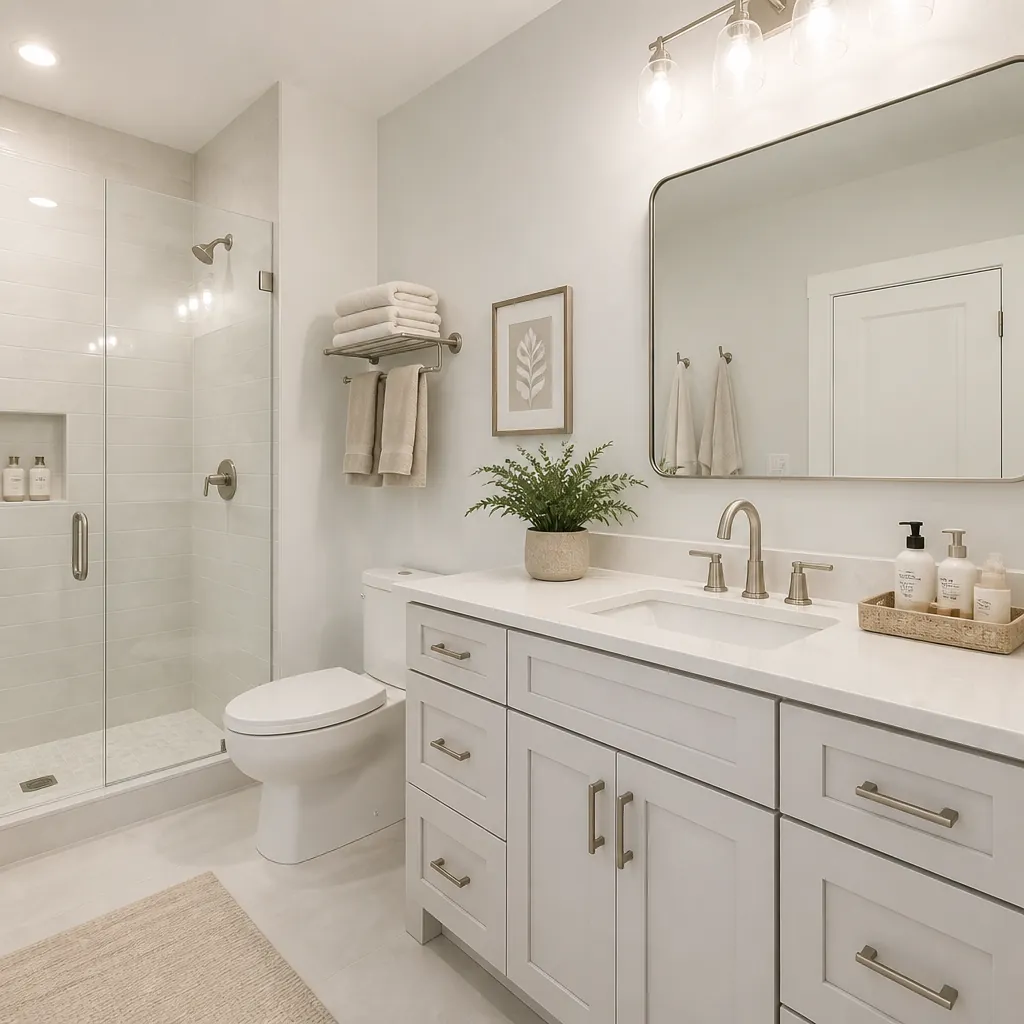
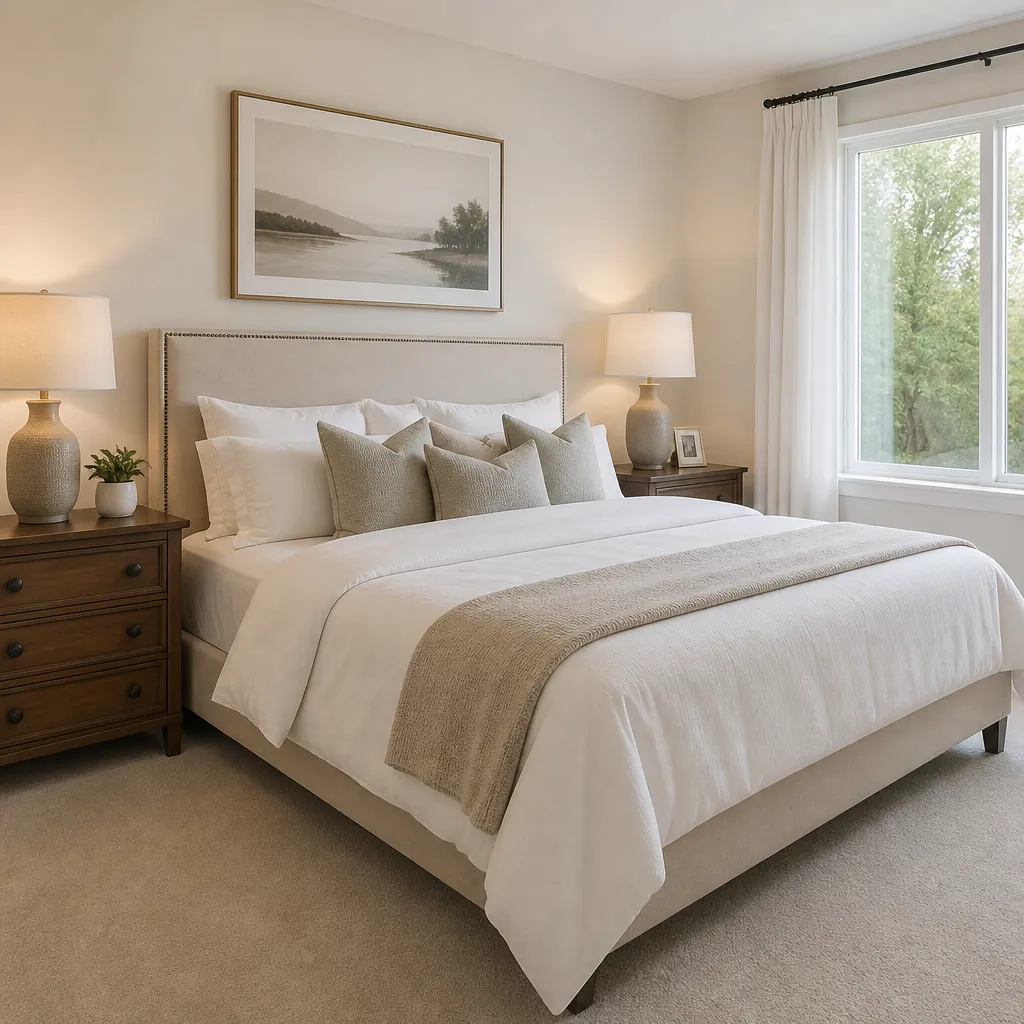
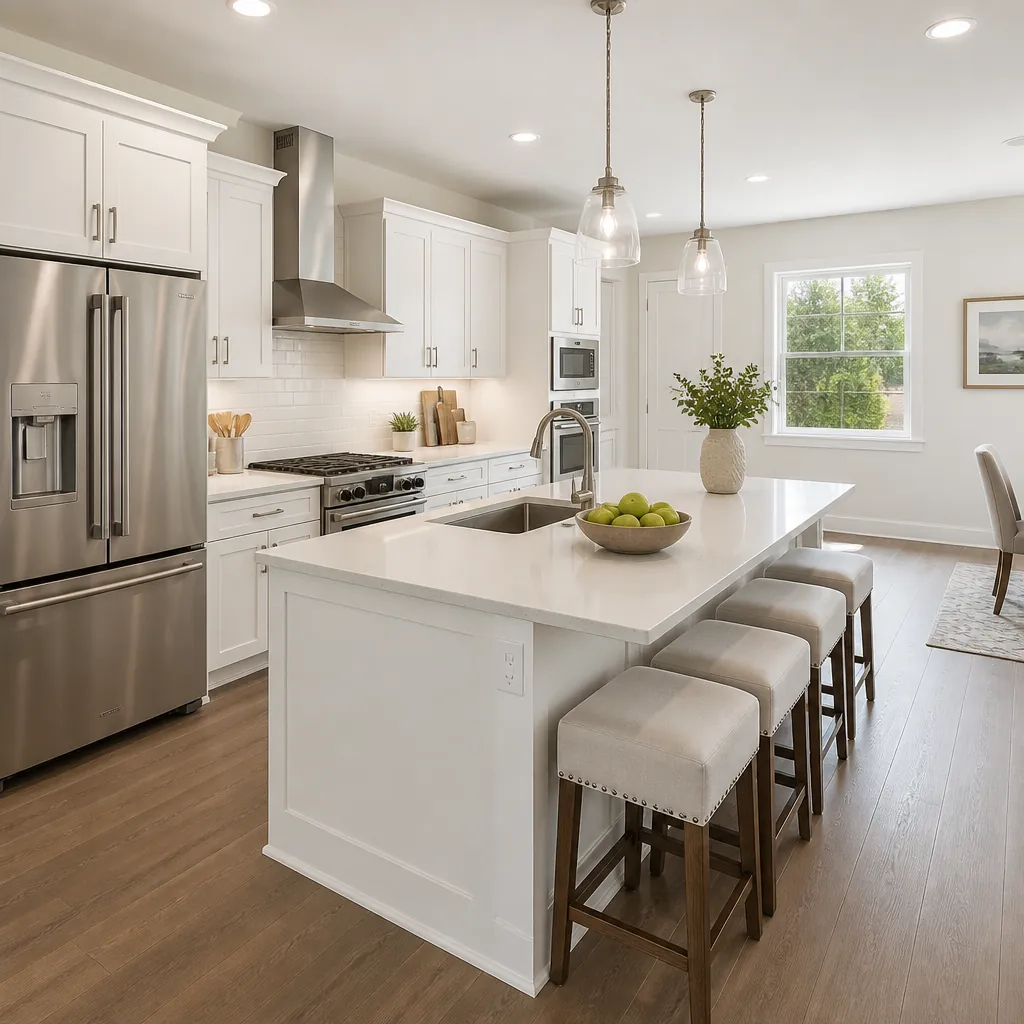
Each room has its own priorities and its own pitfalls. Ready to tackle them one by one? Here's your systematic approach.

| Room | Key Focus Areas | Estimated Effort | Estimated Cost |
|---|---|---|---|
| Living Room | Furniture arrangement, lighting, declutter | High | $50–$300 |
| Kitchen | Counter clearing, deep clean, hardware | High | $50–$400 |
| Primary Bedroom | Neutral bedding, lighting, declutter closet | Medium | $50–$200 |
| Secondary Bedrooms | Define purpose, neutral palette, clear space | Medium | $20–$100 |
| Primary Bathroom | Deep clean, fresh towels, accessories | Medium | $30–$150 |
| Secondary Bathrooms | Clean, declutter, replace mats/accessories | Low | $20–$80 |
| Dining Room | Table setting, scale, lighting | Low | $20–$100 |
| Exterior/Curb | Lawn, paint, plants, power wash | High | $100–$500 |
Staging the Kitchen
Kitchens make or break a sale. Buyers spend more time scrutinizing this room than any other, and it's often the deciding factor in whether they move forward with an offer. What should you focus on?
- Clear every countertop. Keep one appliance visible — a coffee maker or toaster works, but both is overkill. Everything else lives in cabinets or storage.
- Style the countertops minimally. A small cutting board leaning against the backsplash, one cookbook, and a bowl of fresh fruit or lemons — that's the sweet spot. You want "lived-in but intentional."
- Organize the inside of cabinets. They'll open them. Remove about half your cabinet contents and organize what stays neatly, with all labels facing forward.
- Update hardware. Dated cabinet pulls? Swap them out. This single change can modernize a tired kitchen for almost nothing.
- Address odors. Grease, last night's fish, pet food — kitchen smells register instantly. Deep clean the trash area, toss any garbage that stinks, and consider a subtle, neutral diffuser.
Staging Living Areas
This is where buyers picture themselves entertaining and unwinding. Make it feel spacious, bright, and genuinely inviting — without crossing into cold or sterile.
- Furniture arrangement: Pull furniture away from walls. Create a conversation grouping centered on your focal point (fireplace, TV wall, or a great window view). Remove pieces blocking the natural flow through the room.
- Lighting: Layer it. Overhead light plus a floor lamp plus a table lamp beats relying on one harsh fixture overhead. Aim for warm and well-lit.
- Rugs: Stained, worn, or loud patterned? Replace or remove it. A simple, neutral area rug anchors the seating and adds warmth.
- Fireplace: Make it shine. Clean the hearth, clear the mantle of clutter, and consider simple candles or a single piece of art above it.
Staging Bedrooms
Buyers want bedrooms to feel restful and uncluttered. The primary bedroom gets the most attention.
- Bedding: Fresh, white or neutral bedding has the highest ROI of any staging purchase. A white duvet and matching shams from IKEA or Target run under $80 and transform the room instantly.
- Nightstands: Keep them symmetrical and empty except for one lamp per side and one small item — a book, a tiny plant, that's it.
- Closets: They'll peek inside. Remove at least half your clothing and organize the rest by color or type. Visible, organized closets signal plenty of storage.
- Under the bed: Clear it completely. Buyers will look there.
- Secondary bedrooms: Give each one a clear identity. Guest room looks like a guest room. Home office looks functional and neat. Don't let them feel like multipurpose storage zones.
Staging Bathrooms
Think hotel. Think spa. Spotlessly clean with minimal, tasteful accessories — that's the standard.
- Remove all personal care products from counters, tub edges, and shower shelves
- Display fresh, folded towels in white or neutral colors only
- Add a simple soap dispenser and a small plant (succulent or air plant work great)
- Close the toilet lid always — especially for photos
- Swap worn bath mats for clean, simple replacements
- Light a neutral candle or use a subtle reed diffuser for that clean, spa-like scent
Dining Area Presentation
Dining rooms get overlooked in staging, but they're easy wins for aspirational lifestyle appeal. Set the table as if guests are arriving for an elegant dinner: simple centerpiece (candles, a low floral arrangement, or a fruit bowl), neutral placemats, and place settings for four to six.
And check the scale. An oversized table that crowds the space should go. Rent or borrow a smaller piece instead. A chandelier or pendant light centered over the table finishes it off perfectly — if yours looks dated, a $100–$200 swap is worth it.
Back to topStrategic Accessorizing and Styling
Staging isn't decorating—they're fundamentally different. Decorating is all about expressing your personality, while staging creates a blank canvas that speaks to the broadest possible audience. Once you've decluttered and cleaned thoroughly, strategic accessorizing is what transforms your home from "tidy" into something truly aspirational.
Using Furniture to Define Spaces
Open floor plans require especially careful furniture placement. Without defined zones, everything blurs together. Use rugs, sofas, and lighting to carve out distinct areas—a living space here, a dining space there, maybe a reading nook in the corner. A buyer walking through should instantly understand each zone's purpose.
Scale matters enormously in smaller rooms. That sectional sofa that anchors your family room? It'll swallow a cozy living room whole. Got furniture that's making a room feel cramped? Move it to storage temporarily. You're selling potential, not clutter.
Decorative Accents Done Right
Here's the golden rule: use fewer pieces but make them count. Every surface—your coffee table, bookshelf, dresser top—should display at most two or three carefully chosen objects. Skip the mismatched collections. Forget the sentimental but visually chaotic groupings. Nothing should look like an afterthought.
Group items in odd numbers (three is your sweet spot). Within each grouping, vary the height and texture—think a tall candle, a small stack of books, and a low decorative bowl. Everything stays within your neutral palette.
Plants, Art, and Finishing Touches
Real plants bring warmth and life in ways fake ones simply can't match. A large fiddle leaf fig or pothos in a simple ceramic pot works as an affordable statement piece. Fresh flowers in the kitchen and primary bathroom? They signal elegance and care. Ditch the artificial florals during your listing period—real blooms cost $20–$40 weekly and pay for themselves.
Art should be neutral in subject and properly scaled to its wall. A large abstract piece above your sofa reads as sophisticated. And here's a mistake we see constantly: small pieces hung too high. Center your art at approximately eye level—that's 57–60 inches from the floor to the center of the frame.
Lighting is the finishing touch that shouldn't be overlooked. Replace any bulbs registering above 3000K (that harsh, blue-white glow) with warm white bulbs at 2700–3000K. Consistent, warm lighting throughout your entire home creates a cohesive, welcoming atmosphere—in photos and when someone's actually standing in your living room.
Back to topOnline Staging and Photography Tips
Your photos are your first — and often only — chance to catch a buyer's attention. Most buyers start their search online and decide whether to visit based entirely on what they see in your listing photos. The numbers back this up: 97% of home buyers use the internet during their home search, and listings with professional photos get way more views and showing requests. It's surprising how many sellers skip this step.
Preparing for Professional Photos
You'll spend $150–$400 for professional real estate photography. Worth it? Absolutely. But here's the thing — even the best photographer can't work magic on a home that isn't camera-ready. Here's what you need to do before the photographer arrives:
- Open all blinds and curtains to maximize natural light
- Turn on every light in the home, including lamps
- Remove all cars from the driveway and in front of the home
- Remove pet items, food bowls, litter boxes, and toys
- Take the trash cans inside (or to the side yard out of camera view)
- Remove toilet paper rolls, soap bars, and personal care items from bathrooms
- Fluff all pillows and smooth all bedding
- Remove magnets and papers from the refrigerator
- Set the dining room table
- Turn off ceiling fans (they blur in photos)
Virtual Staging Considerations
Got an empty house? Or furniture that screams "2004"? Virtual staging might be your answer. Software like BoxBrownie, Styldod, and Stuccco digitally adds furniture, artwork, and décor to your photos — turning bare rooms into inviting spaces. Cost runs $16–$40 per photo.
But here's where you need to be careful. Virtually staged photos must be clearly disclosed as such, and you must include at least one unaltered photo of each room. A buyer walks in expecting the furniture they saw online — and finds nothing. They feel lied to. Trust evaporates instantly. Use virtual staging as a tool to show potential, not as a bait-and-switch.
Optimizing for Online Listings
"Sun-drenched living room with oversized windows" paints a picture. "Living room, large windows" doesn't. Your listing copy should match the story your photos tell — describe the lifestyle and feeling, not just the specs. Pick your strongest image as the lead photo (usually your best exterior shot or most impressive interior room). And don't forget: most buyers scroll on their phones. Make sure everything looks good on mobile.
Back to topStaging Budget and Item Purchases
Here's the question that keeps sellers up at night: how much should I actually spend on staging? The truth is, it depends on your home's value, what shape it's in right now, and how competitive your local market really is — but here's the rule of thumb: your staging budget shouldn't go over 1–3% of your listing price. And honestly, most DIY staging costs way less than that.
| Staging Category | Estimated DIY Cost | Where to Source | Priority Level |
|---|---|---|---|
| Fresh neutral paint (2–3 rooms) | $150–$400 | Home Depot, Lowe's | High |
| Professional deep clean | $200–$400 | Local cleaning services | High |
| Neutral bedding set (primary) | $60–$150 | IKEA, Target, Amazon | High |
| Fresh towels (2–3 sets) | $30–$80 | Target, TJ Maxx | High |
| Cabinet/door hardware updates | $50–$200 | Home Depot, Amazon | Medium |
| Light fixtures (1–2 rooms) | $80–$250 | Home Depot, Wayfair | Medium |
| Decorative accessories | $50–$150 | TJ Maxx, HomeGoods, IKEA | Medium |
| Exterior plants/planters | $40–$120 | Local nursery, Home Depot | Medium |
| Fresh flowers/plants | $30–$60/month | Grocery store, Trader Joe's | Medium |
| Storage unit rental | $80–$200/month | Public Storage, CubeSmart | Medium |
| Professional photography | $150–$400 | Local real estate photographer | High |
| Front door paint | $40–$70 | Home Depot, Lowe's | High |
Essential Items to Buy vs. Borrow
You don't have to buy everything.
Back to top
