

How to Sell Your House Faster: Marketing, Pricing, and Timing Strategies

Table of Contents
- Pricing Strategy: Set the Right Price from Day One
- Professional Photography and Visual Marketing
- Curb Appeal and Home Staging
- Digital Marketing and Online Presence
- Agent Selection and Networking
- Showings and Open House Strategy
- Sale Methods Comparison: Speed vs. Traditional
- Marketing Strategy ROI: What's Worth the Investment
- Incentives and Competitive Offers
- Selling in Different Market Conditions
- Lead Follow-Up and Buyer Engagement
- Pre-Listing Preparation and Readiness Checklist
- Handling Inspections and Appraisals Efficiently
Selling a home quickly isn't a matter of luck. It's the direct result of deliberate decisions made before the sign ever hits the front yard. According to the National Association of Realtors, homes that sell within the first two weeks on market consistently net higher prices than those that linger. Most sellers still treat marketing as an afterthought, focusing almost entirely on price. But here's what changes the game: when you sell house faster with marketing strategy, you create competitive pressure that can both shorten your timeline and improve your bottom line. What does that actually look like? This guide breaks down every lever you can pull — pricing, photography, staging, digital marketing, agent selection, and sale method. You'll learn to make informed decisions based on your timeline, your home, and your local market.
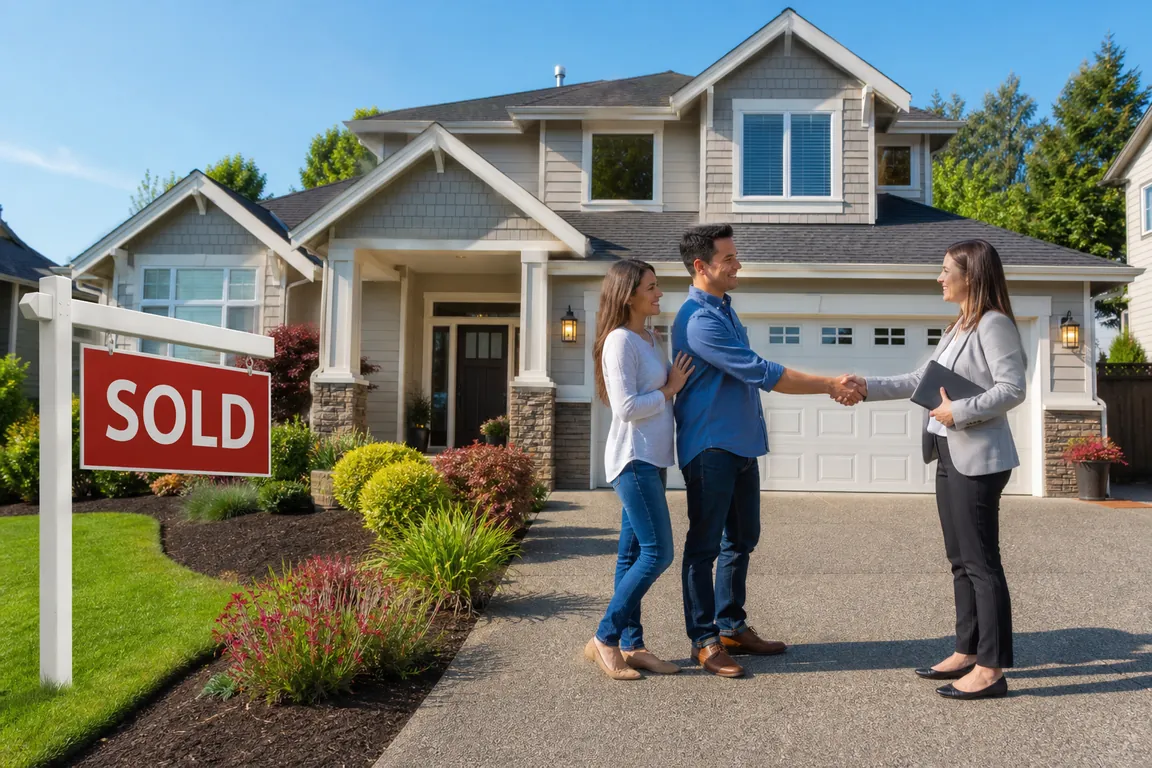
Pricing Strategy: Set the Right Price from Day One
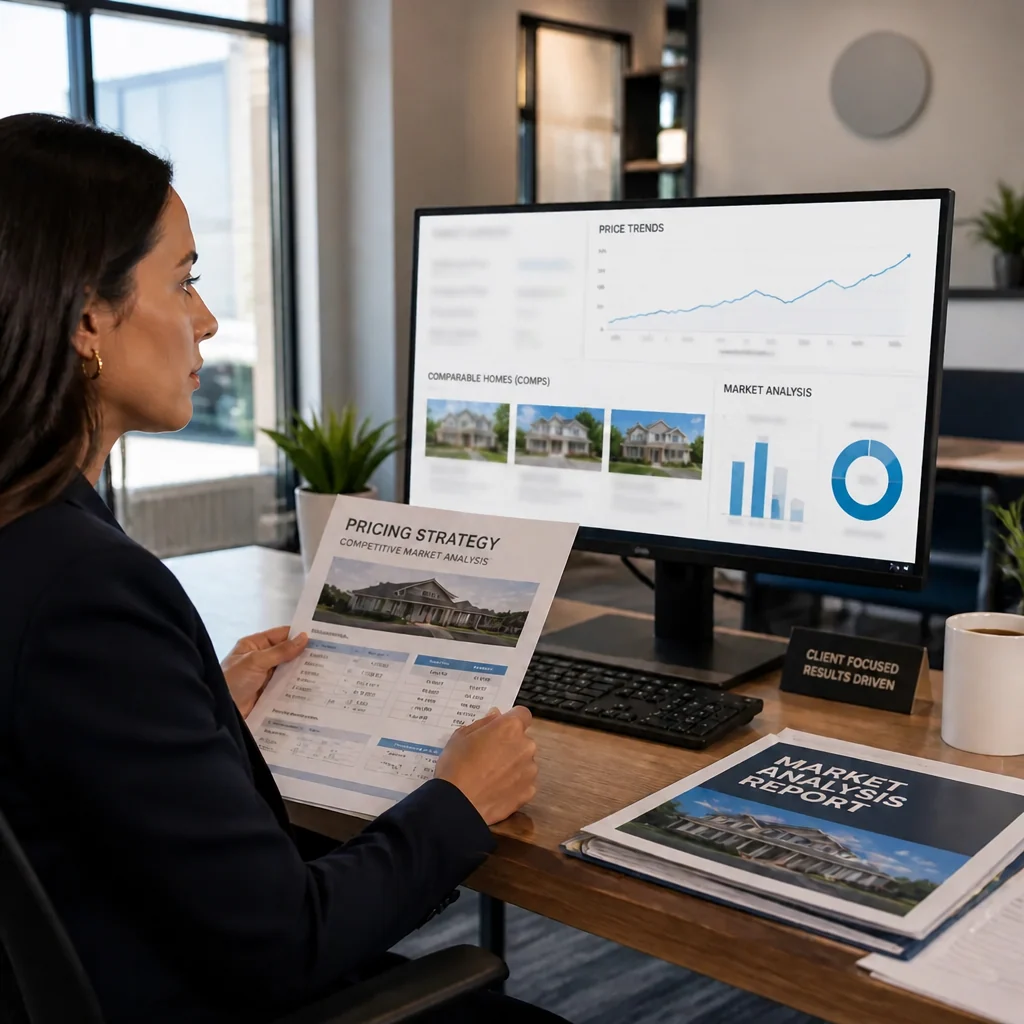
Overpriced listings kill momentum fast. Here's what happens: homes priced right attract serious buyer activity during those critical first seven to fourteen days — agents call it the "golden window." Miss that window, and buyer interest drops off a cliff. Your listing starts carrying the stigma of sitting unsold, and that's a tough reputation to shake.

Competitive Market Analysis (CMA)
You need to compare your home to recently sold properties. Look for homes with similar size, age, condition, and location that closed within the last 90 days, ideally within a one-mile radius. Fast-moving urban markets? Sixty-day-old data is already stale. What should you track? Price per square foot, how many days similar homes spent on market, and what sellers actually got versus what they asked for.
Tools like Zillow's Zestimate and Redfin's Estimate exist, and they're free. But they're algorithm-driven and they'll miss what really matters — how your home's condition affects value. A local agent's CMA paired with a pre-listing appraisal ($300–$500) gives you something solid. You'll have a defensible number that won't fall apart when the buyer's appraiser shows up.
Avoid the Overpricing Trap
Zillow's research is clear: homes with a price cut sell for an average of 1.8% less than homes priced right from day one. And they take nearly twice as long to close. Every price reduction sends a message to buyers. Something must be wrong with this property, they think — even when the only mistake was the original asking price.
Do the math yourself. Your mortgage is $2,000 a month. You "test the market" at an inflated price and it adds 45 extra days to your timeline. That's $3,000 out of your pocket. The data already knew this would happen.
Psychological Pricing Tactics
Price points matter. List at $299,900 instead of $300,000 and you stay in search results for buyers with a $300,000 ceiling. Go to $302,000 and you jump into the next tier, competing with genuinely better homes. Round numbers like $350,000? In luxury segments, that can actually boost perceived value — buyers see confidence in that number. Your market segment determines which tactic works best. Know yours.
Back to topProfessional Photography and Visual Marketing

Here's what you need to know: 97% of homebuyers are scrolling online before they ever pick up the phone. Your listing photos aren't just nice to have — they're make-or-break. According to NAR's 2024 Home Buyers and Sellers Generational Trends report, those first images are the actual showing for most buyers. Professional photography isn't a luxury. It's the single best return on investment you can make when selling.

High-Quality Listing Photos
Professional real estate photographers aren't just pointing a camera at your walls. They're using wide-angle lenses, HDR bracketing, and post-processing that makes rooms pop — bright, spacious, inviting. Most shoots run $150–$400 and deliver 25–40 edited images within 24 hours. That's it.
But here's where it gets interesting: Redfin studied this extensively. Homes photographed by professionals sold for $3,400–$11,200 more than the exact same house photographed with a smartphone. That's an 8x to 30x return on a $150–$400 investment. Do the math.
Want to maximize your session? Declutter every surface before the photographer arrives. Open all blinds, turn on all the lights, remove personal photos and excess furniture. Schedule the shoot in late morning when natural light is at its best. These aren't suggestions — they're the difference between a listing that sits and one that moves.
Virtual Tours and 3D Walkthroughs
Matterport and similar platforms create 3D "dollhouse" walkthroughs. Buyers can navigate your home from their phone, tablet, or computer — anytime, anywhere. And if you're selling in a competitive market or trying to reach out-of-state buyers? This matters. Listings with 3D tours get 87% more views than those without, according to Matterport's data.
You're paying $200–$500 for a professionally captured Matterport scan. In fast-moving markets, that investment can generate written offers before a single person steps foot inside.
Video Marketing for Homes
A 60–90 second video walkthrough hits different. Add drone footage showing your neighborhood, parks, and amenities. Or a lifestyle reel highlighting your home's best features. Videos perform exceptionally well on social platforms — listings with video get 403% more inquiries than those without, according to a National Association of Realtors study.
Drone footage is especially valuable if your property has a large lot, water views, or sits near parks and amenities that ground-level photography can't capture. Budget $300–$800 for combined aerial and interior video production.
Back to topCurb Appeal and Home Staging
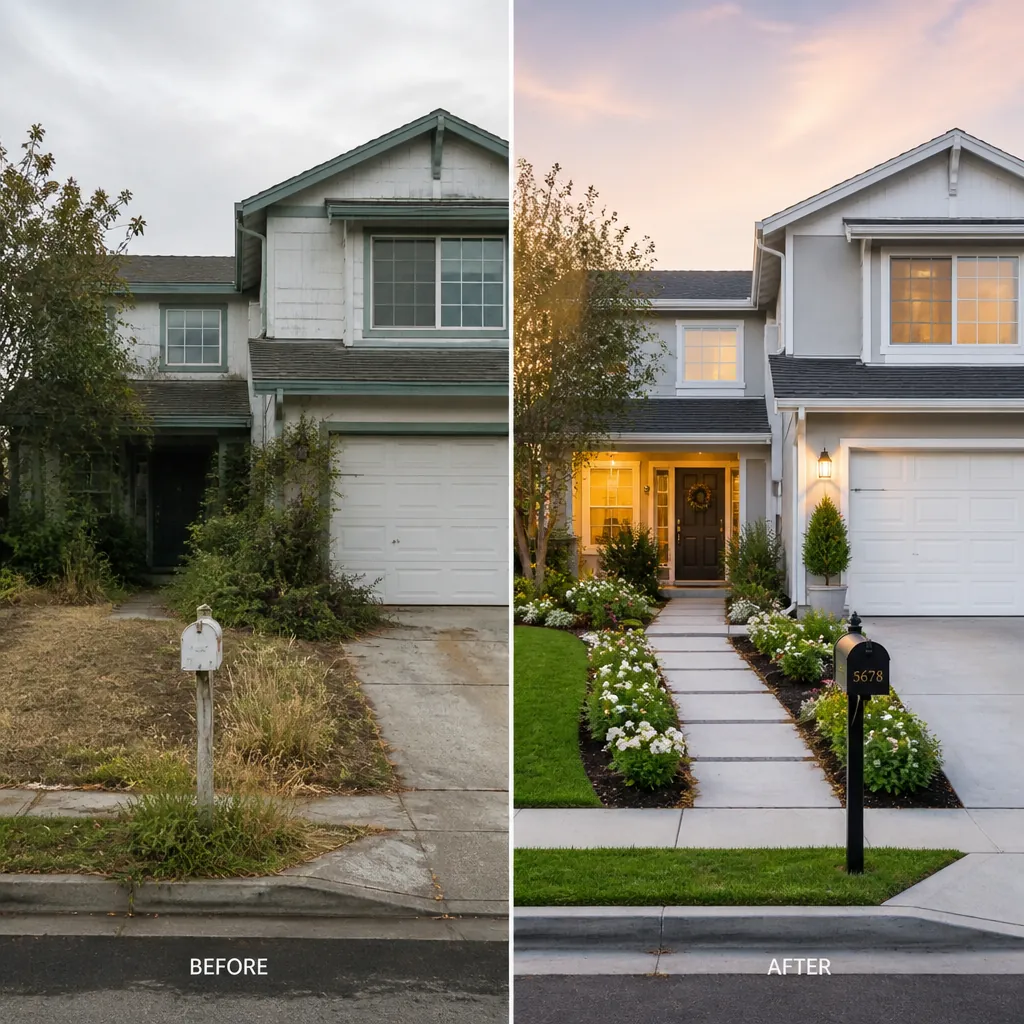
Ten seconds. That's how long a buyer has to form their first impression — before stepping foot inside, before reading a single listing detail. Your home's curb appeal and interior staging hit both sides of a buyer's brain: the emotional pull and the logical checklist. Together, they make it much easier for someone to actually see themselves living there.
First Impression Strategies
Your home's exterior needs to scream "well cared for." Start simple: freshly cut lawn, trimmed hedges, a pressure-washed driveway and walkway, clean gutters, a painted or replaced front door. These aren't optional.
Here's where it gets interesting — a fresh coat of paint on just the front-facing surfaces costs $500–$1,500 but returns $2,000–$5,000. New house numbers, a new mailbox, and potted plants by the entrance are cheap ways to signal a move-in-ready home. And buyers notice these details.
But here's the thing: what works in Seattle doesn't necessarily work in Phoenix. Climate matters. Buyer expectations shift by region. That's why we've broken this down by location — check out our curb appeal tips in Washington, California curb appeal strategies, curb appeal ideas in Florida, and selling faster in Tennessee. Need something more universal? We've got 15 curb appeal ideas that help homes sell faster that work anywhere.
Interior Staging for Faster Sales
Staged homes sell 73% faster than unstaged ones. Real Estate Staging Association data backs this up.
Professional staging runs $1,500–$5,000 for the full treatment, and honestly, that investment pays for itself in speed and sale price. But you don't need to drop that much. A quick consultation ($150–$300) followed by smart furniture rearrangement and decluttering can transform the space.
What actually works? Remove at least one-third of your furniture so rooms feel bigger. Neutralize bold wall colors with grey or warm white — those two colors consistently outperform everything else. Strip out family photos so buyers can imagine their own lives in the space instead of seeing yours.
Budget-Friendly Curb Appeal Tips
Not everyone has $5,000 to throw at staging. So here's what you do instead: deep clean everything — and we mean everything, including inside your appliances and cabinet interiors because buyers will open them. Replace dated light fixtures ($50–$150 each). Re-caulk bathrooms and kitchens. Swap out worn cabinet hardware. Add fresh mulch to planting beds.
These moves cost almost nothing combined, but they send a powerful message: this home's been maintained. Buyers hesitate less at inspections when they see evidence of care. Living in Colorado or Indiana, where seasonal changes hit your curb appeal hard? Check our Colorado curb appeal guide and Indiana curb appeal guide for strategies tailored to your climate.
Back to topDigital Marketing and Online Presence
Just putting your listing on the MLS? That's the bare minimum. It's not a strategy — it's table stakes. Real marketing spreads your home across multiple platforms, creates content people actually want to share, and targets the exact buyer demographic most likely to be interested in what you're selling.
Listing Optimization for Search Engines
Your description needs to work for search. That means neighborhood keywords, nearby amenities (schools, transit, parks), and the specific features buyers are hunting for online — "finished basement," "main-floor primary bedroom," "EV charging." Skip the tired language like "must-see" and "cozy." Those words waste your character count without telling anyone anything useful. Here's what the data shows: listings with 250+ words in the description get measurably more clicks on Zillow and Realtor.com than shorter ones.
Social Media Marketing Campaigns
Facebook and Instagram still dominate real estate marketing. A targeted Facebook ad for a $350,000 home? You can reach 10,000–30,000 local users for $200–$500. Just narrow it down by zip code, age range (25–55), homeownership status, and income. And don't sleep on Instagram Reels and Stories — lifestyle content crushes it here. A 30-second video of morning coffee on a beautiful deck hits emotionally in ways a written description never will. Pinterest gets overlooked constantly, but it's gold if your buyers are thinking renovation and design.
Multi-Platform Distribution
Your home needs to go live on Zillow, Realtor.com, Redfin, Homes.com, and Trulia simultaneously. If your agent uses an IDX-enabled website, it'll automatically push to dozens more portals without extra work. Beyond the big sites, don't ignore Facebook Marketplace (free, tons of traffic), Craigslist (still works in many markets), and your agent's email newsletter if they've built a buyer database. The more places your listing appears, the faster you'll find the right buyer.
Email Marketing to Buyer Databases
Strong local agents sit on email lists of active buyers and investor contacts. This is genuinely one of the biggest hidden advantages of hiring someone well-networked. A new listing announcement to 500 pre-qualified, actively searching buyers? You'll get showing requests within hours. Selling on your own? Build your own list. Collect contact info from open house visitors and follow up with property details emails.
Back to topAgent Selection and Networking
Here's the truth: not all agents are equal marketers. Some just throw your home on the MLS and plant a yard sign. Others bring professional photography, social media campaigns, broker networks, and actual databases of pre-qualified buyers ready to move. That difference? It can shave 15–30 days right off your time on market.
Choosing a Top Local Agent
When you're interviewing agents, dig into specifics. Ask them: How many homes did you actually sell in my neighborhood in the last 12 months? What's your list-price-to-sale-price ratio? And here's the key one—what marketing budget do you commit per listing? Beyond the MLS, what platforms and assets are you using?
An agent moving 40 homes a year in your market has relationships with buyers' agents and lenders that someone selling 5 homes annually just can't touch. You want that network working for you. Get references from recent sellers—not buyers—and check Google and Zillow Agent pages for their reviews.
KDS Homebuyers' seller programs actually let you sit down with vetted local agents and compare your options side by side. A traditional listing. A direct cash offer. iBuyer pricing. You get to see all three before deciding.
Agent Marketing Resources and Networks
The top agents aren't just sitting in their offices. They're embedded in local broker networks—showing up to weekly agent tours, sharing listings in broker WhatsApp groups, personally calling buyers' agents who've got clients that match your home's profile. Those "off-MLS" introductions sometimes land offers before your listing even goes live.
A coming-soon period of 7–14 days works especially well here. Combine it with agent network outreach and you can build real anticipation. Multiple offers on day one? That's actually possible.
Selling Without a Realtor
Thinking about For Sale By Owner to save on commission? It's doable. But you need to be ready because you're handling every single piece of this marketing puzzle yourself.
The resources exist. Detailed guides on how to sell without a realtor walk you through the paperwork, legal disclosures, and marketing steps. And if you're in a specific state, there's help for that too—check out guides for Florida FSBO sellers, Washington state FSBO sellers, and Tennessee FSBO sellers.
Back to topShowings and Open House Strategy
Here's the hard truth: if a buyer can't get into your home, they won't make an offer. You'd be surprised how many sellers underestimate showing accessibility — it's one of your biggest marketing levers. Every obstacle you put in front of scheduling a showing? That's another buyer moving on to a competitor's house instead.
Flexibility with Showing Times
Open your doors seven days a week, 8 AM to 8 PM if you can manage it. The wider your window, the more offers you'll get. Same-day showing requests are critical. Buyers touring multiple homes often decide the same day, and if your house wasn't on their list because they couldn't get in, you've already lost them.
Use an automated showing service like ShowingTime or Calendly. It kills the back-and-forth phone calls and gives buyers' agents instant confirmation. You eliminate friction, and buyers move faster.
Open House Execution
Two things happen at a well-run open house: other buyers see that people are interested (social proof is real), and you collect names and emails for follow-up conversations.
Schedule your first open house for the first weekend after your listing goes live — Saturday and Sunday, 1–4 PM works best. Print a one-page property sheet with the specs, utility averages, and any recent upgrades you've done. Your agent or you should be there, but stay in the background. Buyers need room to talk honestly with each other. Make sure you collect sign-in sheets with names, emails, and which agent they're working with.
Virtual Open Houses
Facebook Live walkthroughs and Zoom open houses took off during 2020 and haven't stopped working. A virtual open house announced 48 hours ahead on social media and email can pull 20–100 viewers — most of them pre-qualified and genuinely interested.
Pair it with a Matterport 3D tour so buyers can walk through your home on their own time after the live event ends.
Back to topSale Methods Comparison: Speed vs. Traditional
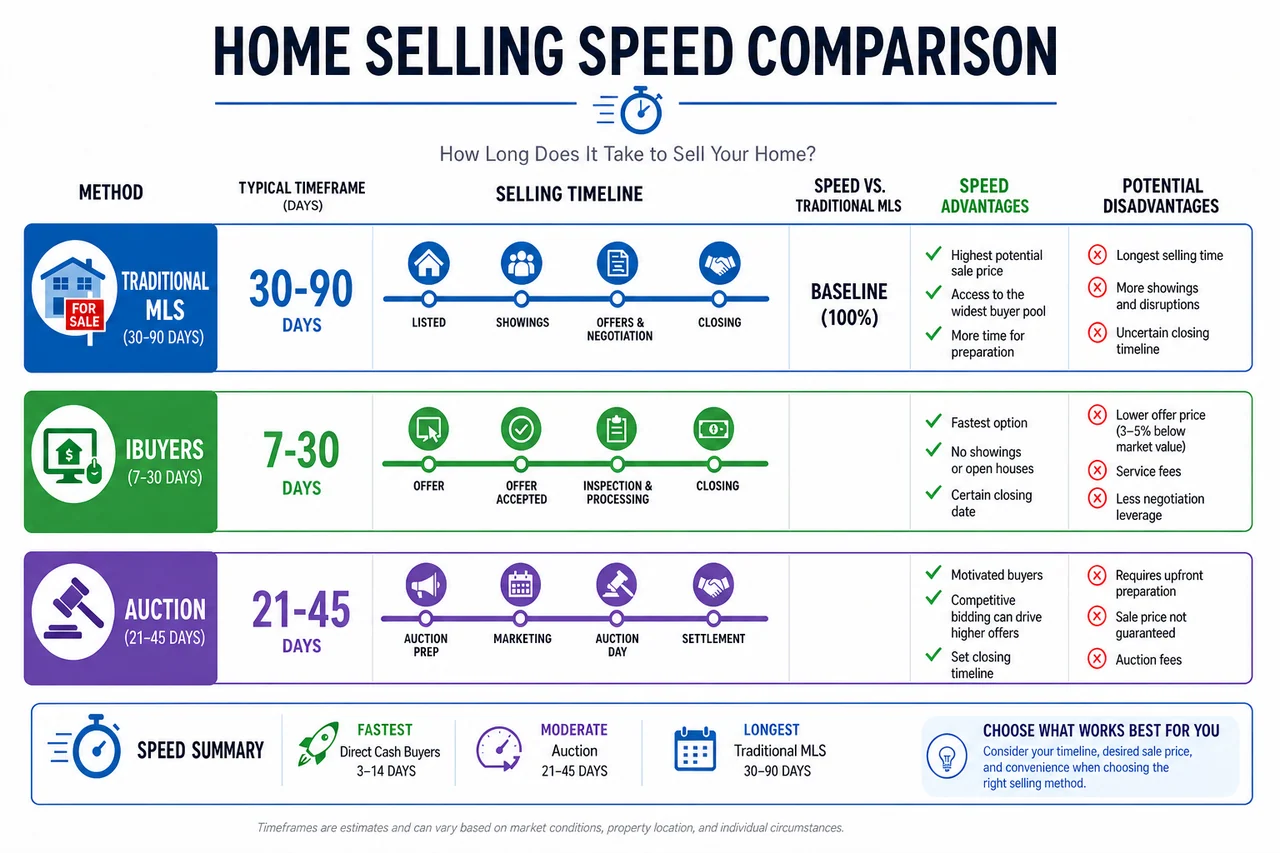
How you sell matters just as much as what you're selling. Each method has its own timeline, costs, and final payout — and which one's right for you depends entirely on what you actually need right now. Let's break down the real trade-offs.
| Sale Method | Average Timeline | Closing Costs (Seller) | Seller Concessions | Best For | Typical Net Proceeds |
|---|---|---|---|---|---|
| Traditional MLS Listing | 30–90 days | 6–8% (agent commissions + fees) | 1–3% of sale price | Sellers prioritizing maximum price | Highest (if priced/marketed well) |
| iBuyer (Opendoor, Offerpad) | 7–30 days | 5–8% service fees | Repair credits post-inspection | Sellers needing certainty and speed | 3–5% below market value |
| Direct Cash Buyer | 3–14 days | 1–3% (minimal) | None typical | Distressed sellers, urgent timelines | 10–20% below market value |
| Auction (Reserve/Absolute) | 21–45 days | 1–2% auction fees | Varies by buyer pool | Unique or hard-to-value properties | Variable — can exceed or miss market |
| FSBO (For Sale By Owner) | 45–120 days | 2–3% (no listing agent) | 1–3% buyer's agent commission | Sellers with marketing skills/time | Moderate — savings offset by lower price |
Need to close in days, not months? Cash buyers can get you to the finish line in as little as three days. That speed comes at a cost — typically 10–20% below what you'd get on the open market — but sometimes that's the trade-off you need to make.
Want something in between?
iBuyers like Opendoor and Offerpad split the difference. You get certainty and a closing timeline of 7–30 days without the deep discount of a cash buyer, though you'll still give up 3–5% of market value. And if both speed and maximum price matter to you, don't count out a professionally marketed traditional MLS listing with an aggressive push in the first few weeks — it often outperforms the alternatives when you're willing to wait 30–90 days.
When time's critical, working with a cash home buyer like KDS Homebuyers deserves a spot on your comparison list. For the full breakdown, read about the benefits of working with a cash-for-house company.
Back to topMarketing Strategy ROI: What's Worth the Investment
Some marketing tactics move the needle. Others? Not so much. The table below pulls real industry data on what these strategies actually cost, how many days faster they'll sell your home, and what kind of price bump you can expect. Use this to figure out where your pre-listing budget makes the most sense.
| Strategy | Typical Cost | Est. Days Saved | Price Impact | Implementation Time | Overall ROI |
|---|---|---|---|---|---|
| Professional Photography | $150–$400 | 5–10 days | +$3,000–$11,000 | 1–2 days | Excellent |
| 3D Virtual Tour (Matterport) | $200–$500 | 3–7 days | +$2,000–$5,000 | 1 day | Very Good |
| Professional Home Staging | $1,500–$5,000 | 10–30 days | +$5,000–$20,000 | 3–7 days | Very Good |
| Curb Appeal Improvements | $500–$2,000 | 5–15 days | +$3,000–$8,000 | 1–7 days | Good |
| Paid Social Media Ads | $200–$500 | 3–10 days | Neutral–Positive | 1 day | Good |
| Drone/Video Marketing | $300–$800 | 3–7 days | +$1,000–$5,000 | 1–2 days | Good |
| Pre-Listing Inspection | $300–$500 | 5–15 days | +$1,000–$10,000 | 1 day + repair time | Good |
| Listing Description Optimization | $0–$200 | 2–5 days | Neutral | Hours | Excellent (low cost) |
Incentives and Competitive Offers
Your home's been on the market over 21 days? That's when incentives become your secret weapon. They can reset buyer interest without slashing your price — and you know what a price cut signals to the market.
Closing Cost Concessions
Here's what works: offer $3,000–$8,000 toward the buyer's closing costs instead of dropping your price by the same amount. Counterintuitive, right? But buyers feel closing costs differently. That's cash they need at the closing table tomorrow. A lower purchase price? It barely moves their monthly payment. Let's say your home's listed at $300,000. You contribute $5,000 to closing costs, you might get three new offers. Drop the price to $295,000 instead, and buyers don't feel the difference — so you get nothing.
Seller Financing and Rate Buydowns
This one's powerful in today's market.
Mortgage rates are still sitting high in 2025–2026. So when you offer to buy down the buyer's rate by 1–2% for the first two years, they sit up and take notice. On a $300,000 loan, dropping their rate from 7.0% to 5.5% cuts their monthly payment by roughly $265. That's a real number. That moves the needle with rate-sensitive buyers — and it doesn't touch your final sale price.
Pre-Closing Incentives
Appliance packages, one year of home warranty coverage ($400–$600 value), and paid HOA fees for year one? Low cost, huge impact. New washer and dryer sitting in the laundry room when buyers close eliminates one moving expense. Warranty coverage quiets their fears about surprise repairs in month two. And that first year of HOA fees off their plate? It's the kind of thing that breaks a tie between two homes.
Back to topSelling in Different Market Conditions
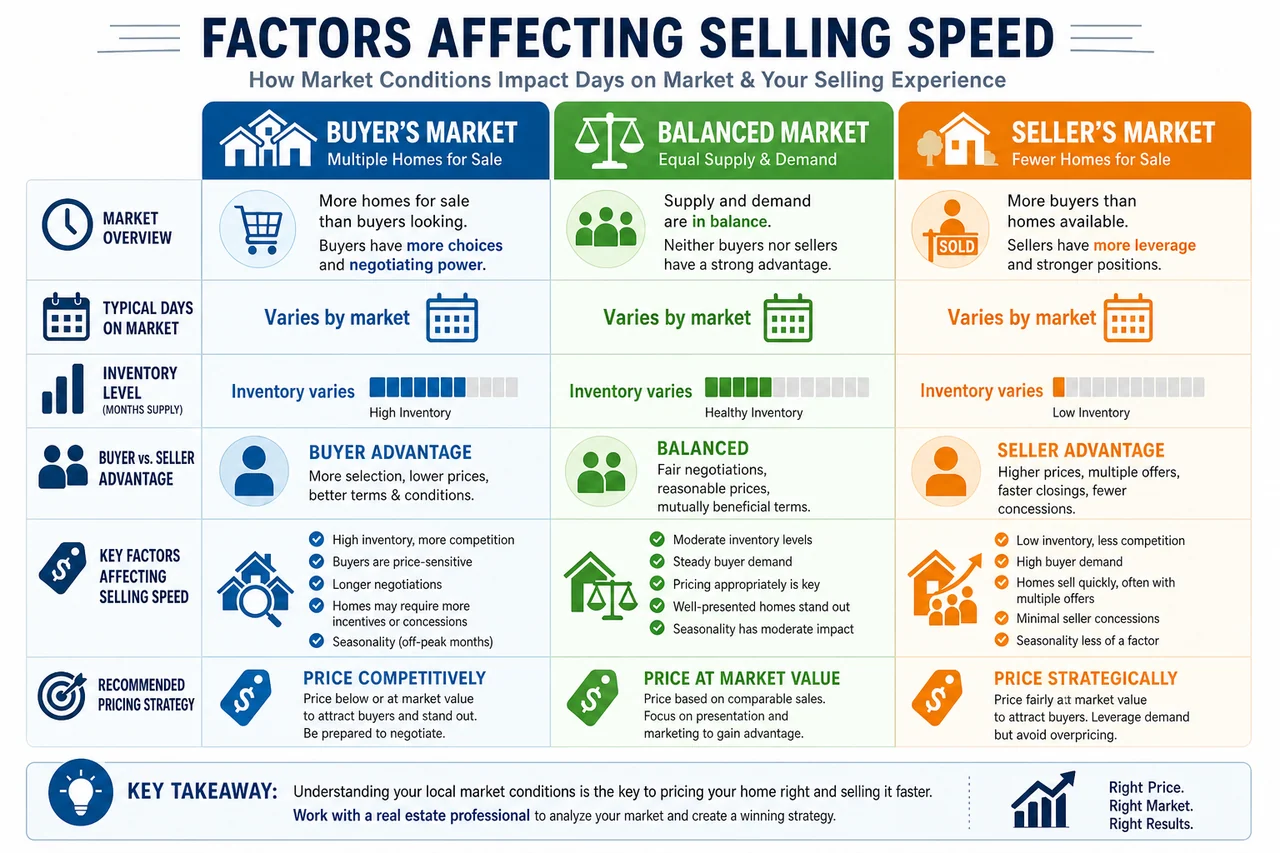
Here's the thing: what works in a hot market doesn't work in a slow one. Two weeks of inventory? That's a completely different game than six months of supply. You've got to match your approach to what's actually happening in your neighborhood right now.
Strategies for Buyer's Markets
When there's more homes for sale than there are buyers looking, your home needs to be the one buyers choose. And that means standing out. Price at or slightly below comparable listings. Offer something real—closing cost help, maybe, or something buyers actually want.
Professional photography, staging, home inspections—these aren't luxuries here. They're what separates homes that sell from homes that sit. Try pricing 1–2% under the most comparable active listing. That move can generate early traffic before buyers' attention shifts somewhere else.
Tactics for Seller's Markets
Low inventory flips everything. Now the danger is pricing too low and leaving money behind.
Run a 7-day coming-soon period first. Build demand quietly, then hit the market with an offer deadline—something like "offers reviewed Sunday at 5 PM." That artificial urgency actually works. You'll often get multiple bids competing against each other. Price fairly at market value and let buyer competition push your final price above asking. Don't fight escalation clauses either—they're normal in these conditions.
Seasonal Selling Patterns
List at the right time of year and you'll sell faster. Your home doesn't change, but buyers' behavior does. The table below shows exactly how many days homes typically sit on the market by region and season in 2026.
| Region/Market Type | Spring (Mar–May) | Summer (Jun–Aug) | Fall (Sep–Nov) | Winter (Dec–Feb) | Annual Average |
|---|---|---|---|---|---|
| Northeast (Urban) | 18 days | 22 days | 28 days | 45 days | 28 days |
| Southeast (Suburban) | 22 days | 28 days | 32 days | 38 days | 30 days |
| Midwest (Mid-size Markets) | 25 days | 30 days | 38 days | 55 days | 37 days |
| Mountain West (Growing Markets) | 20 days | 24 days | 30 days | 42 days | 29 days |
| Pacific Coast (High-Cost Urban) | 15 days | 18 days | 22 days | 35 days | 22 days |
| Sun Belt (Fast-Growing Metros) | 24 days | 30 days | 28 days | 33 days | 29 days |
Spring's still the winner for selling homes nationally. But winter's not the disaster it used to be—more people are shopping online year-round now. Need to sell in December or January? Price more aggressively. Spend harder on digital marketing. You're reaching a smaller group of buyers, but they're serious ones motivated to move fast.
Back to topLead Follow-Up and Buyer Engagement
You can generate all the buyer interest in the world, but converting that interest into a signed offer? That takes prompt, professional follow-up. Harvard Business Review research shows something striking: respond to an inquiry within five minutes, and you're 100 times more likely to make meaningful contact than if you wait 30 minutes. Real estate works the same way.
Response Time Matters
Every showing request, inquiry, and open house sign-in deserves a response within two hours maximum — 30 minutes is better. Here's why: buyers who are actively touring homes are making decisions right now. A delayed response from your agent or you means they've probably already submitted an offer on another property. Get an immediate acknowledgment out there using automated tools like ShowingTime, Follow Up Boss, or even a CRM-connected Gmail account. Then follow up with something personal.
Nurturing Prospects After Showings
After each showing, your agent needs to contact the buyer's agent within 24 hours and ask for feedback. Why does this matter so much? That feedback tells you whether objections are about price (fixable) or condition (potentially fixable). Did someone attend your open house? Send a follow-up email 24–48 hours later. Include additional photos, a link to the 3D tour, and ask if they have questions. You want your property front and center as they're weighing their options.
Back to topPre-Listing Preparation and Readiness Checklist
Here's the truth: homes that are truly ready on day one win. No surprise repairs during inspection. Disclosures done. Professional photos locked in. These homes sell faster and stronger than ones listed in a panic. So what does getting ready actually look like? It takes time, but it's worth it.
- 8–12 weeks before listing: Tackle your deferred maintenance now — get that HVAC serviced, have a roofer inspect for leaks, fix plumbing issues. Anything that'd kill a home inspection needs attention before you list.
- 6–8 weeks before listing: Hire an inspector to come through ($300–$500 range). You'll catch problems early. Better yet, you can fix them and honestly tell buyers they're already resolved instead of leaving them hanging as inspection contingencies.
- 4–6 weeks before listing: Start the grunt work — declutter rooms, deep clean everything, maybe paint a wall or two. New fixtures, fresh landscaping, professional staging if your budget allows. This is where your home stops looking like *your* home and starts looking like *everyone's* dream home.
- 2–3 weeks before listing: Get a professional photographer in. Shoot video. Do a 3D tour. Meanwhile, your agent pulls fresh comps to nail your price — not guesswork, actual data.
- 1 week before listing: Start the buzz. Your agent pushes "coming soon" through their networks and social channels. Every disclosure document gets signed and ready to go the moment you list.
- Listing day: Everything launches at once. MLS. Zillow. Instagram. Email. Paid ads. First week momentum is everything, and coordinated timing makes that happen.
This timeline is honestly one of the biggest advantages you have as a seller — but it only works if you plan ahead. And if you're facing foreclosure? Or a divorce settlement? Job transfer coming next month? You might not have 12 weeks. That's why faster options like as-is cash sales exist for situations where time isn't on your side.
Back to topHandling Inspections and Appraisals Efficiently
Your sale can stall—or even collapse—over inspection findings and low appraisals. The good news? Both are totally manageable if you're ready for them.
Pre-Inspection Strategy
A seller-ordered pre-
Back to top
