

How to Sell a House Without Showings: Direct Sale Options Explained

Table of Contents
- Can You Sell a House Without Showing It?
- Sell Your House Without Traditional Showings
- The For-Sale-By-Owner (FSBO) Alternative Without Showings
- Pricing Your Home for a No-Showing Sale
- Which Selling Method Works Best for You?
- How to Sell to Cash Buyers Without Showings
- Preparing Your Home for Sale Without Showings
- Marketing Strategies Without Traditional Showings
- Legal and Paperwork Requirements
- Negotiating and Closing Without Traditional Showings
- Pros and Cons of Selling Without Showings
- How Long Each Selling Method Actually Takes
- Conclusion: Choosing the Right No-Showing Strategy
- Frequently Asked Questions
The traditional home-selling process — cleaning, staging, scheduling showings, and having strangers walk through your most private spaces — isn't your only option. You might be protecting your privacy. Maybe you're dealing with tenants, managing a difficult property, or just want a faster sale without all the disruption. Whatever your reason, it's entirely possible to sell a house without showing it to the general public. This guide breaks down every realistic option: what each one costs, how long it takes, and what pitfalls to watch for. By the end, you'll know exactly which path fits your situation.

Can You Sell a House Without Showing It?
Understanding Off-Market Sales
Yes — you can absolutely sell your home without hosting an open house or letting potential buyers troop through repeatedly. These are called off-market sales (or "pocket listings"), and they bypass the Multiple Listing Service (MLS) entirely. Think about it: the MLS is how most buyers and their agents find homes. Skip it, and you're working with a much smaller pool of interested parties. But here's the trade-off — you get serious privacy, way less disruption to your daily life, and often a faster closing.
You'll see off-market deals happen all the time in luxury neighborhoods, when someone's settling an estate, when a property's in trouble financially, or when investors are dealing directly with other investors. The approach is simple. Instead of throwing open your doors to anyone with a real estate license, you target one specific type of buyer — usually a cash investor, a developer, an iBuyer platform, or someone you already know — and handle the transaction privately.
Privacy-Focused Selling Options
Most sellers who avoid traditional showings have a real reason. You might be going through a divorce. Financial stress. Maybe you're a public figure or just don't want your neighbors gossiping about why the house is on the market. There are paths forward that keep things quiet.
Direct cash buyer sales work well if privacy matters to you. iBuyer platforms send one inspector instead of dozens of potential buyers. Developer purchases are purely commercial — very discreet. And if you're dealing with an HOA or liens on the property? That doesn't stop you from selling privately. Selling a house with an HOA lien is still absolutely possible through these off-market channels without any public announcement.
Legal Considerations
Here's what matters most: selling quietly doesn't get you out of disclosure laws. Every state requires you to tell buyers about known material defects — and that means actual, serious problems. Structural damage. Water intrusion. Lead paint if the house was built before 1978. Mold. Termites. Environmental hazards. Neighborhood nuisances. The list varies by state, but it's real and it's mandatory.
Your legal obligations don't change just because a buyer never sets foot in your home. Actually, they become even more critical. Without someone walking through and visually spotting issues themselves, you need bulletproof written disclosures — because that's their only window into what they're buying. Before you close an off-market deal, especially if you know the property has problems, talk to a real estate attorney licensed in your state. Don't skip this step.
Back to topSell Your House Without Traditional Showings
Cash Buyer and Investor Sales
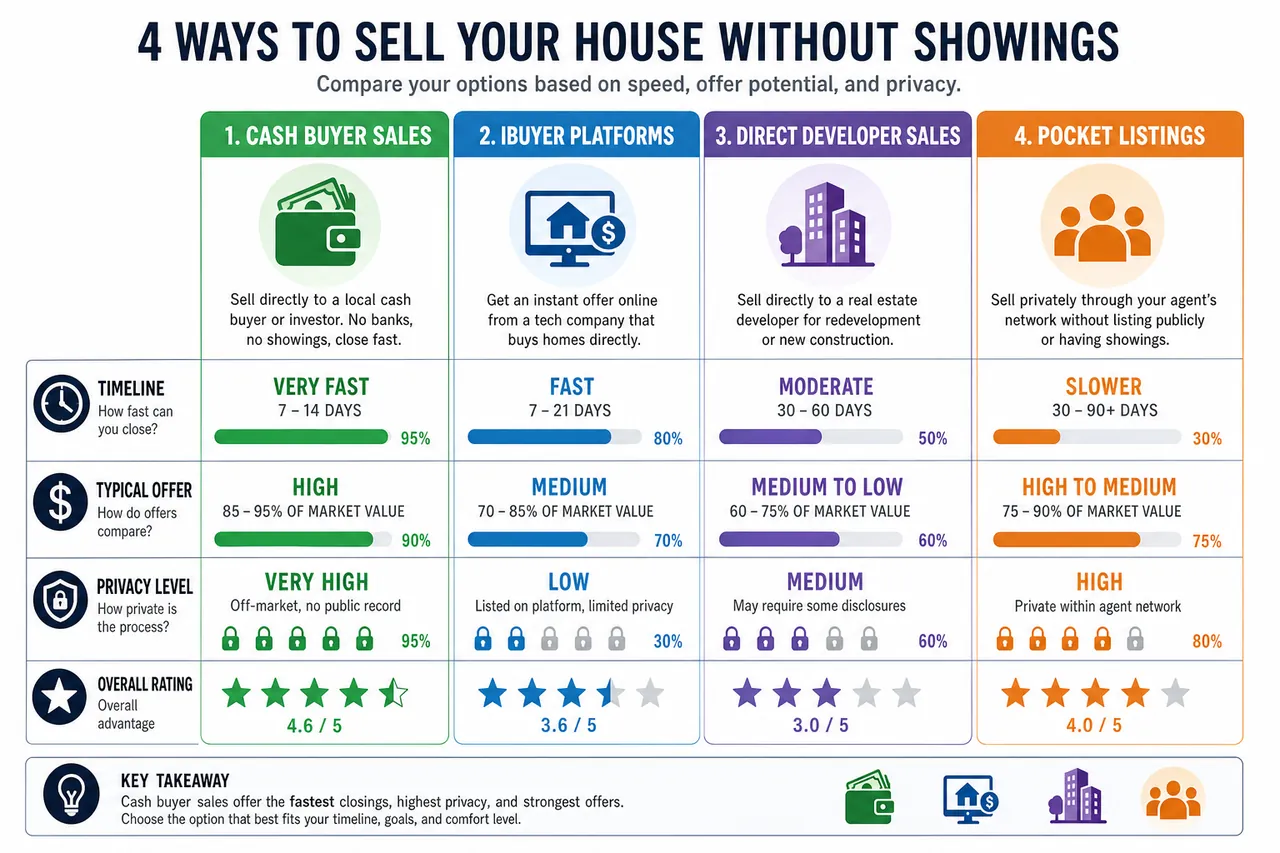
Want to skip the open houses entirely? Direct cash buyers — real estate investors and "we buy houses" companies — are your most straightforward path. They're built for speed and volume, not endless home tours. Most will do a single walkthrough or just look at photos, tax records, and neighborhood comps before throwing out an offer. Once you accept, they'll do a formal inspection to check for surprises, but that's private — no strangers trooping through your kitchen.

And here's the big draw: closing in 7 to 21 days. You sell as-is. No repairs, no cleaning, no staging. But there's a catch. Cash offers typically land at 65–85% of fair market value, depending on what shape your house is in and what the market looks like right now. If you need speed, certainty, or you're dealing with a property that's falling apart? That trade-off can save your life.
iBuyer Platforms
iBuyers like Opendoor work differently. They use algorithms to crunch numbers and spit out an offer in 24 to 48 hours — no agent showing up at your door with a clipboard and ten other buyers in tow. Here's how it goes: you upload photos and basic info online, they calculate an offer based on their model, then you schedule one inspection to nail down the final price. Close on your own timeline, usually between 14 and 60 days.
Not everywhere has iBuyer coverage, though. They cherry-pick their markets. You're also looking at service fees of 5–8% of the sale price, and they may knock down that initial offer once the inspector walks through. These platforms work best if your home's in solid shape and sits in a hot suburban market. Rural properties, older homes with big maintenance issues, and anything that feels risky? They'll pass.
Direct Sales to Developers
Developers think differently about real estate. Your tired 1970s ranch on a half-acre lot in an up-and-coming neighborhood? To a developer, the house itself barely matters. They're buying the land, the zoning, the potential. These deals stay off-market — no showings, no listings, nothing public. Reach out to developers in your area directly. Or connect with a commercial real estate broker who handles land deals. You might already have developer mail sitting on your kitchen counter.
Pocket Listings and Off-Market Deals
A pocket listing happens when your agent quietly pitches your home to their professional network instead of (or before) listing it on the MLS. NAR's Clear Cooperation Policy, which took effect in 2020, says agents must submit listings to the MLS within one business day of marketing — unless you sign a written waiver for an "office exclusive" deal. This gives you limited, careful exposure without the chaos of public open houses. It's most useful in competitive markets where agents know serious buyers personally. Just know the rules: NAR restricts how far an agent can shop a pocket listing before MLS obligations kick in.
Back to topThe For-Sale-By-Owner (FSBO) Alternative Without Showings
Limited Showing FSBO Strategies
Want to sell without an agent? You don't have to go dark completely. Instead of eliminating showings altogether, you can drastically cut them down by setting strict rules. Think appointment-only access, no open houses, and pre-qualified buyers only. Tools like ShowingTime let you control exactly who gets in and when. It's not a zero-showing strategy, but it'll reduce the chaos and constant foot traffic of a traditional listing.
Pre-Qualifying Buyers Before Showings
This is your strongest defense against tire-kickers and casual browsers. Before anyone steps foot in your home, ask for a pre-approval letter from their lender—or proof of funds if they're paying cash. Better yet, spend 15 minutes on a phone or video call with them first. You'll immediately know if they're serious and whether your home actually fits what they need. One filter like this eliminates the majority of people just window shopping and keeps your privacy intact without shutting out genuine retail buyers.
Virtual Tours and Remote Viewings
Here's where technology really earns its keep. Platforms like Matterport create 3D virtual tours that let buyers walk through every room from their couch. You're looking at $150–$400 for a professional scan, and it becomes part of your listing or a private link you share selectively. Add video walkthroughs, FaceTime tours, or drone footage of the outside to sweeten the deal. And yes—virtual tours won't replace a physical inspection, but they're phenomenal at filtering out the browsers. Most sellers report 60–70% fewer in-person visits when they use this approach.
Back to topPricing Your Home for a No-Showing Sale

Market Analysis for Off-Market Properties
You can't rely on hope when you're selling off-market. Data matters more than ever. Start by pulling recent comparable sales (comps) from the last 90 days within a half-mile radius — look for homes with similar square footage, bedroom count, and condition to yours. Tools like Zillow's Zestimate give you a ballpark figure, but don't stop there. Get a comparative market analysis (CMA) from a licensed agent or hire an independent appraiser (typically $300–$600). That investment pays for itself in confidence.

Competitive Pricing Strategies
Here's the reality: off-market sales need aggressive pricing. You're asking buyers to take a leap without MLS exposure, so they need an incentive to move forward. Price 5–10% below your highest realistic MLS value. A well-priced off-market home can actually close faster than an overpriced listed home. But remember — without multiple offers competing, you won't see anyone bidding above asking price.
Realistic Price Expectations Without Exposure
The numbers don't lie. According to NAR's 2023 Profile of Home Buyers and Sellers, MLS listings sell for an average of 17% more than FSBO sales. Cash investors typically offer 70–80% of ARV (After Repair Value). iBuyers? They net you roughly 1–3% less than market after fees, though the process moves faster and with less stress.
So here's what matters: Are speed, privacy, and certainty worth the hit to your bottom line?
If you're trying to maximize every dollar, eliminating showings will likely cost you money. But if you're managing back taxes or other financial complications, a quick no-showing sale might be exactly what you need. Check out what happens when you sell a house with back taxes owed to explore how that plays into your off-market options early on.
Back to topWhich Selling Method Works Best for You?
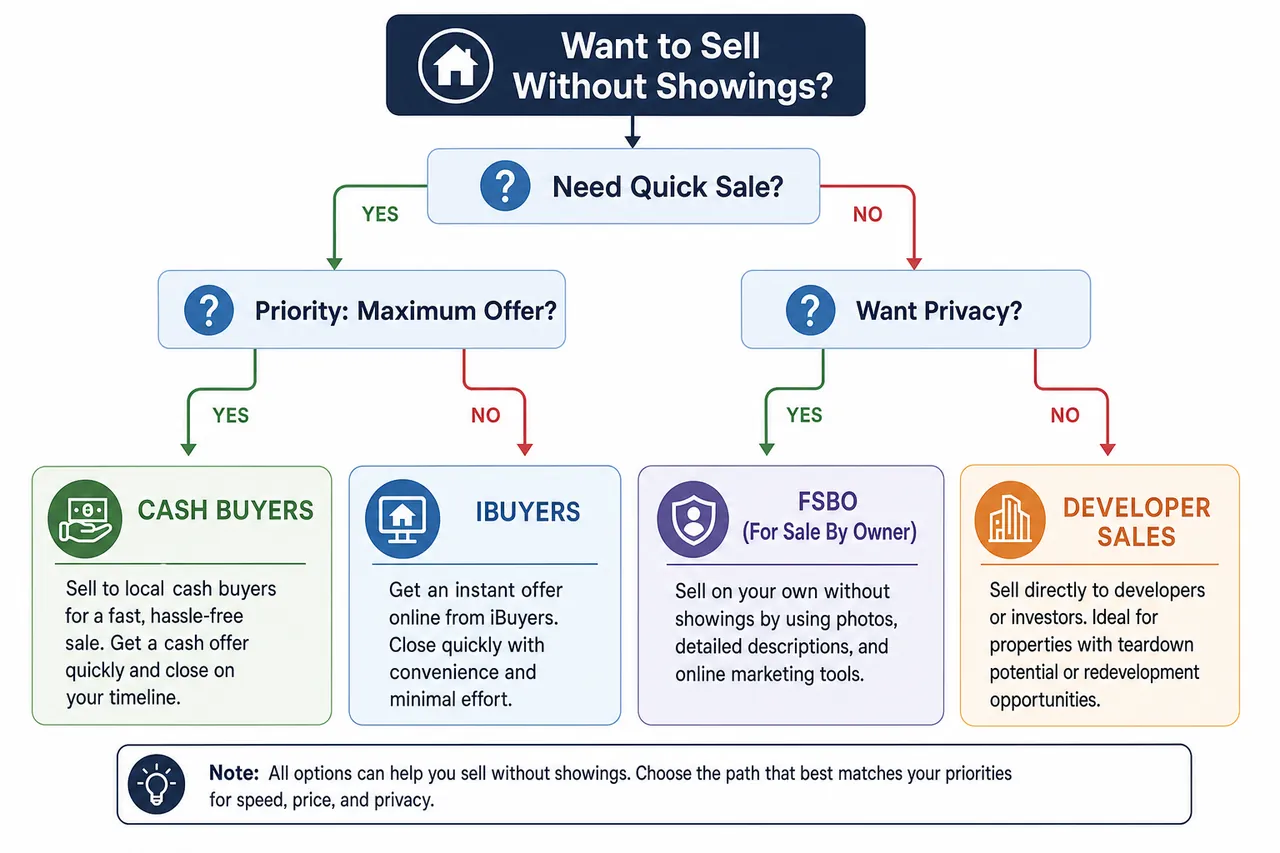
Your timeline matters. So does your financial situation and whether you can handle constant showings. The answer really comes down to what's driving your sale right now. Are you in a rush? Worried about privacy? Dealing with a property that needs work? The comparison below breaks down your four main options side by side.
| Dimension | Traditional Agent + MLS | FSBO (Limited Showings) | Cash Buyer/Investor | iBuyer |
|---|---|---|---|---|
| Average Time to Close | 45–90 days | 30–75 days | 7–21 days | 14–60 days |
| Typical Net Proceeds | 95–100% of FMV | 88–95% of FMV | 65–85% of FMV | 90–95% of FMV |
| Seller Effort Required | High | High | Low | Low–Medium |
| Privacy Level | Low | Medium | High | High |
| Agent Commissions/Fees | 5–6% | 0–3% | None | 5–8% service fee |
| Buyer Pool Size | Very Large | Medium | Small | Single Buyer |
| Showings Required | Many | Few (by appointment) | 0–1 | 0–1 |
| Repairs Required | Often yes | Often yes | No (as-is) | Sometimes (price adjustment) |
| Certainty of Sale | Medium | Lower | Very High | High |
| Best For | Max price, normal timeline | Cost savings, some control | Speed, distress, privacy | Clean homes, convenience |
Want to see what you'd actually get under each option? KDS Homebuyers' seller programs let you compare a direct cash offer, an iBuyer offer (if available in your area), and a traditional agent listing all in one conversation. No guessing. No rough estimates. Just real numbers you can actually weigh against each other.
Back to topHow to Sell to Cash Buyers Without Showings
Finding Reputable Cash Buyer Companies
Here's the reality: the cash buyer space has everything from legitimate national companies to predatory wholesalers running high-pressure operations. Where do you start? Check BBB-accredited companies first. Then dive into Google reviews—look for patterns, not just star ratings. Search your state's Secretary of State website to verify they're actually a registered business entity.
Before you accept any offer, ask for proof of funds. That means a bank statement or letter from a financial institution. Legitimate buyers provide this without hesitation. If they dodge the question or give you excuses, move on.
The Cash Offer Process
Most cash buyer transactions follow this path:
(1) Initial contact and property information submission—online form, phone call, or email. (2) Preliminary offer within 24–72 hours based on public data. (3) Single property walkthrough or inspection. (4) Final offer, often within 24 hours of the walkthrough. (5) Purchase agreement signing. (6) Title search and clearance. (7) Closing at a title company or via mobile notary, often in 7–14 days.
No staging required. No open houses. No contingency-based financing that'll fall through at the last second.
Avoiding Scams and Low-Ball Offers
Red flags? Watch for these. Buyers who pressure you to sign quickly without giving you time to review. Offers that seem unusually high—they're using that to lock up the property, then they'll reduce it at inspection. Requests to sign a deed before closing at a title company. And "assignment" language in contracts, which means the buyer plans to wholesale your contract to another investor.
Always close through a licensed title company or real estate attorney. Never wire funds to a private individual. And here's the critical part: confirm wire instructions directly with the title company via phone before you send anything.
If you're dealing with back taxes in states like Florida, Washington, or Colorado—be extra careful. These situations attract predatory buyers who know you're feeling the pressure. A legitimate buyer will explain how tax obligations get resolved at closing. They won't exploit your urgency.
Back to topPreparing Your Home for Sale Without Showings

Staging for Photos and Virtual Tours
Here's the thing: even without foot traffic through your home, how it looks in photos absolutely matters. When you're selling to a cash buyer or iBuyer, those images and virtual tours are what they're basing their initial offer on. Sloppy photos? Expect lowballed offers or rejections. Start by decluttering every single room, then let natural light pour in, and clear out personal items that make spaces feel cramped. You don't need fancy staging furniture for this. Clean, minimal rooms photograph beautifully. Messy, cluttered ones? They don't.
Professional Photography and Videography
Professional real estate photography runs $150–$300. And honestly, it's worth every penny compared to what your phone camera can do. Since your buyers are making their entire decision based on visuals, this investment typically pays for itself in the offer amount. Consider adding a drone shot ($75–$150 extra) if your property has interesting lot size, location features, or curb appeal that interior photos just can't show.
Home Inspection and Disclosure Documents
Get a pre-listing inspection done. Seriously. At $300–$500, it's one of the smartest investments you can make when you're not showing the home in person. Why? Because it finds problems before the buyer's inspector does, which gives you control — you can fix things or disclose them upfront instead of getting blindsided during negotiations. Pair that inspection with complete disclosure documents: the seller's disclosure form, any past inspection reports, your permit history, HOA documents (if you have an HOA), and utility bills for the last year or two. This paperwork signals you've got nothing to hide and keeps buyers from getting nervous later and trying to renegotiate.
Back to topMarketing Strategies Without Traditional Showings
Reaching Cash Buyers and Investors
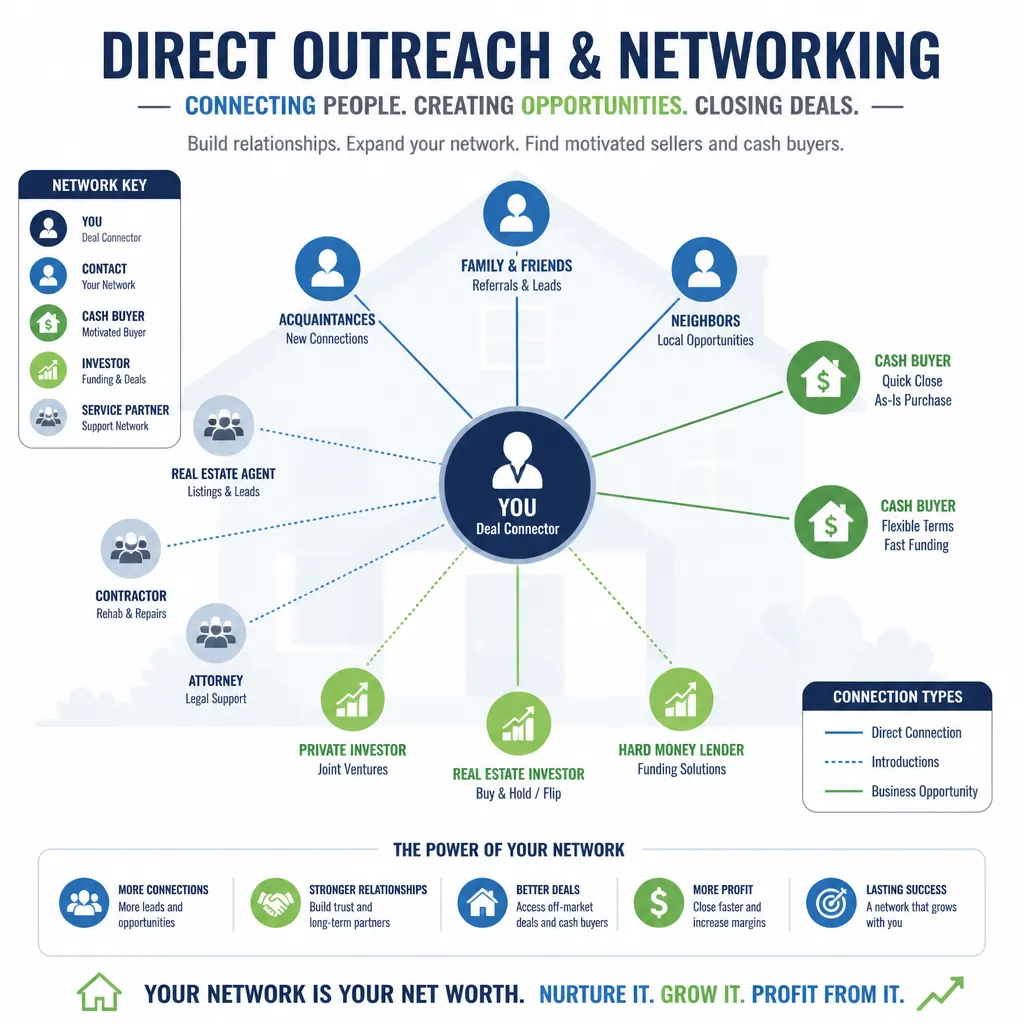
Want to connect with buyers who have cash ready to go? Post your property in local real estate investor Facebook groups. Reach out to your local REIA chapter—that's the Real Estate Investors Association. And don't overlook investor-focused platforms like BiggerPockets' Marketplace or connected investor networks, where you'll find serious buyers actively looking for deals.
Many institutional cash buyers have direct submission portals right on their websites. If you'd rather have someone else handle the legwork, find an agent who specializes in investment property sales. They've already built investor networks that bypass the MLS entirely.
Networking and Direct Outreach
Your network is gold here. Attorneys, CPAs, financial advisors, property managers—tell them your property is available. These professionals know clients sitting on capital, waiting to invest in real estate. Have a commercial or mixed-use property? Direct mail to neighboring business owners and property holders can identify buyers who care about location and are ready to move fast.
Word-of-mouth still works better than most people think.
Limited MLS Listings and Pocket Lists
You don't have to choose between MLS visibility and privacy. List with restrictions: appointment-only showings, pre-qualification required, no lockbox access. Decline open house requests. You'll reach the full MLS buyer pool while staying in complete control of who walks through your door.
Or use flat-fee MLS services for just $99–$299. You get national visibility without paying a full-service agent commission, and you manage showings yourself.
Back to topLegal and Paperwork Requirements
Disclosure Laws and Privacy
Here's what you need to know: disclosure requirements differ wildly from state to state. But no state lets you off the hook entirely—not even with private or off-market sales. Most states require you to fill out a standard seller's disclosure statement that lists any known defects in your home. California? They're strict. You're looking at natural hazard disclosures and transfer disclosure statements on top of everything else. States like Arkansas and Alabama? They ask for less. And yet federal law doesn't budge on one thing—if your home was built before 1978, you must disclose lead-based paint in every single transaction, regardless of how you sell it. Need help understanding what applies to your situation? Resources like California HOA lien considerations or Tennessee HOA lien guidance spell out exactly what sellers must address—whether you're doing an off-market deal or not.
Contracts and Agreements
Off-market sales aren't exempt from standard purchase agreements. You'll use the same contract as you would in a traditional MLS listing—just without the broader buyer pool. Some sellers throw in a non-disclosure agreement (NDA) to keep the sale price and terms private, especially when the property is high-value or the situation's sensitive. Your contract needs to cover the essentials: purchase price, earnest money terms, inspection contingency (or a waiver if you're going as-is), closing date, and language that makes it crystal clear whether you're selling the home as-is or not. And here's the critical part—never sign anything without having a real estate attorney or experienced agent review it first. Period.
Title and Escrow Considerations
Title insurance and escrow matter just as much in off-market deals as they do in traditional sales. A title search digs up any liens, judgments, or ownership questions that could tank your closing—protecting you and the buyer both. Cash transactions move faster because there's no lender underwriting involved, but you still need a licensed title company or closing attorney handling everything. Plan on spending $1,000–$2,500 for title and escrow fees—the amount depends on your state and the sale price. In most states, you'll pay for the owner's title insurance policy.
Back to topNegotiating and Closing Without Traditional Showings
Remote Negotiation Strategies
Off-market deals move fast. Why? No emotional pressure from in-person negotiations. Instead, you're working via email and phone — which actually gives you more control over the process. Get everything in writing. Verbal commitments are worthless in real estate, so don't rely on them. Counter-offer systematically: respond to every lowball with a documented counter that shows your reasoning (recent comps, condition, timeline value). Don't let urgency trick you into accepting the first offer. Even cash buyers expect some back-and-forth, and a 2–5% counter on a $300,000 home puts an extra $6,000–$15,000 in your pocket.
Inspection Contingencies
Most buyers want an inspection period — usually 7–14 days for residential transactions. You've got three real choices here. Accept an inspection contingency (buyer can back out or renegotiate based on what they find). Offer a price reduction instead of allowing inspection. Or market the place explicitly as-is with no inspection contingency — that's what distressed-property cash buyers usually prefer. Here's the thing: a pre-listing inspection strengthens your position no matter which route you pick.
Closing Timeline and Documentation
Timeline depends on the buyer type. Cash sales close in 7–21 days. iBuyer closings run 14–60 days. Financed off-market deals take 30–45 days. Start gathering documents now, whatever method you choose: government-issued ID, property deed, HOA documents (if applicable), mortgage payoff statement, tax records, and any existing inspection reports.
And one more thing — wire fraud at closing is a serious, growing risk. This detailed breakdown of how long it actually takes to sell a house puts realistic timelines in context across all methods. When you're ready to wire money, independently verify all transfer instructions by calling the title company directly using a phone number you find yourself — never trust contact information from an email, even one that looks like it's from the title company.
Back to topPros and Cons of Selling Without Showings
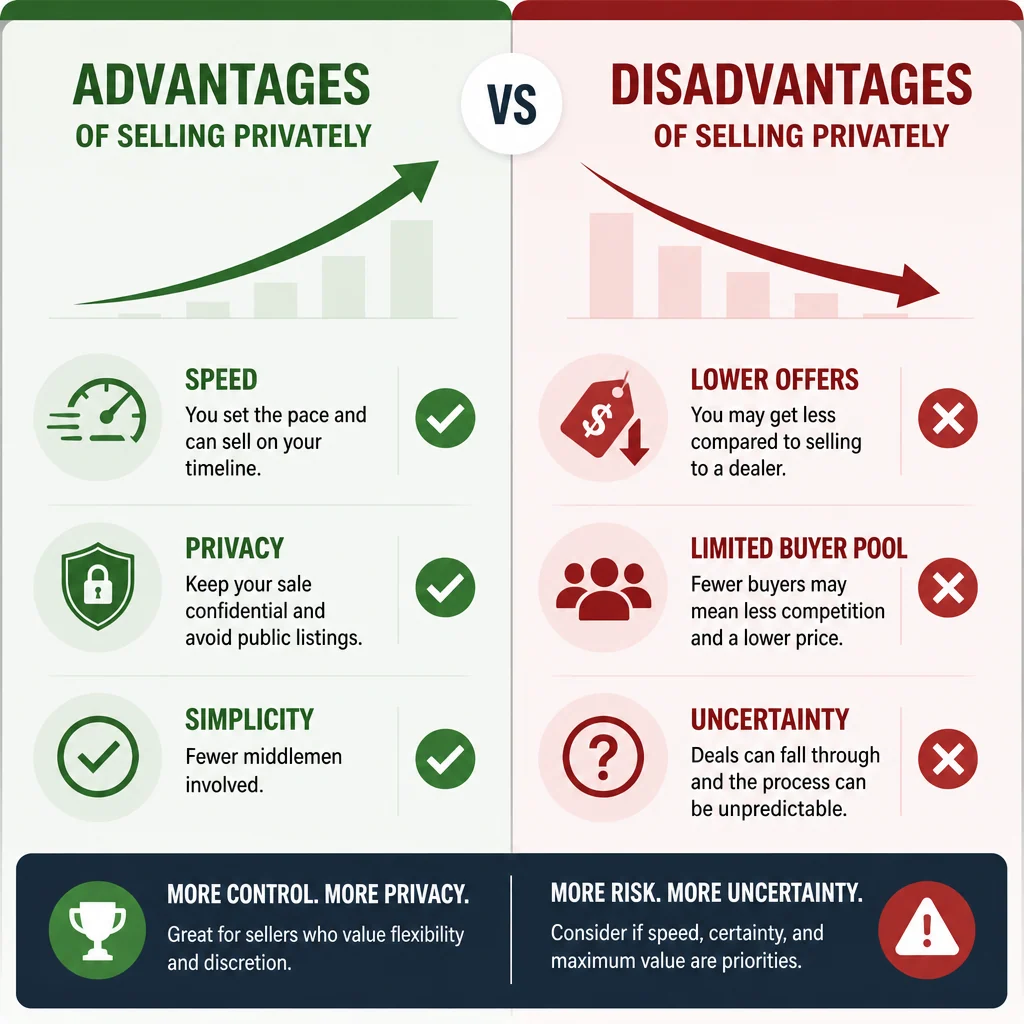
Advantages: Privacy, Speed, and Simplicity
- Privacy and discretion: Your neighbors won't know you're selling. No open-house crowds or random people walking through your home.
- Speed: Cash deals and iBuyers close in days or weeks—not months. If you're facing foreclosure, going through a divorce, relocating fast, or settling an estate, this timeline matters.
- Reduced showing fatigue: Think about it. Traditional listings mean 15–30+ showings spread over weeks or months. Skipping that entirely? That's a real quality-of-life win, especially when you're still living in the house.
- Certainty: Cash sales don't collapse because of financing problems. Accept an offer and pass inspection—you're closing. It's that predictable.
- As-is sales: Most of these options don't require repairs, staging, or professional cleaning. You save thousands in prep costs right there.
Disadvantages: Lower Offers and Limited Pool
- Price reduction: Here's the hard truth. Without multiple retail buyers competing, you'll get less. The discount ranges from 5% (iBuyers) to 30% or higher (distressed cash deals). This is the biggest tradeoff.
- Smaller buyer pool: Taking your home off the MLS cuts you off from the bulk of active buyers in your area. Fewer bidders means less competition driving the price up.
- Limited negotiating power: When only a handful of buyers are interested, you lose leverage. Can't push back on price, contingencies, or how fast they want to close.
- Scam exposure: Off-market deals attract investors who prey on sellers in a hurry. You need to vet them thoroughly.
- Complexity for FSBO: Handling limited showings, pre-qualifying buyers, and legal paperwork solo is a lot of work. Without an agent, the burden falls on you.
How Long Each Selling Method Actually Takes
| Week | Cash Buyer/Investor | iBuyer | FSBO (Limited Showings) | Traditional Agent + MLS |
|---|---|---|---|---|
| Week 1 | Contact, submit info, receive preliminary offer | Online submission, receive offer within 48 hrs | Pricing, photography, virtual tour setup | Agent interviews, CMA, listing prep |
| Week 2 | Walkthrough, final offer, sign contract | Schedule inspection, finalize offer | List on platforms, begin pre-qualified showings | Active on MLS, showings begin |
| Week 3 | Title search, prepare closing docs | Accept or counter offer, set close date | Accept offer, inspection period | Continued showings, offers reviewed |
| Week 4 | Close | Title and escrow processing | Clear contingencies, closing prep | Offer accepted, under contract |
| Week 5–6 | — | Close | Close | Inspection, appraisal, lender review |
| Week 7–10 | — | — | — | Close |
Conclusion: Choosing the Right No-Showing Strategy
You can absolutely sell a house without traditional showings. In many cases, it's actually the smarter move. The trick is picking a method that matches what you actually need. Want speed and certainty with zero disruption? A direct cash buyer eliminates showings entirely and closes in days. Looking for closer-to-market pricing but still want to skip most showings? An iBuyer or pre-qualified FSBO with virtual tours deserves a hard look. And if you're wrestling with complications like back taxes in Indiana or HOA liens in Colorado — don't panic. These issues won't block an off-market sale, but they do need settlement at closing, so calculate your numbers before you sign anything.
Here's the real trade-off you're making: You'll usually give up some price in exchange for speed, privacy, and a simpler process. That's not always a bad deal. But you need actual numbers, not just assumptions. Pull two or three offers and run the math on what you'll actually pocket after fees, commissions, repairs, and how long you'd carry the property. Then decide based on your real financial situation — not because someone's pushing you or your emotions are running high.
Back to top
Frequently Asked Questions
Is it legal to sell a house without allowing any showings?
Yes. There's no law that forces you to hold open houses or list on the MLS. You do have to handle state disclosures properly and use legitimate legal documents, but the marketing side? That's entirely up to you as the seller.
How much less will I get if I sell without showings?
That's the tough part — it really depends on how you sell. iBuyer companies typically take 1–5% off MLS value once fees kick in. Cash investors? They're usually offering 65–85% of what the home's actually worth. If you go FSBO with minimal showings, NAR data shows you'll likely net 11–17% less than an agent would get you. But here's what matters: sit down and do the math on what you actually pocket. Subtract agent commissions, any repairs you'd need to make, and how long you'd carry the mortgage. The real gap shrinks faster than you'd think.
Do cash buyers still conduct an inspection even if there are no showings?
Most of them will. They typically want one walkthrough after you've accepted an offer — that's their inspection, not a showing. Some cash buyers will make an as-is offer with zero inspection contingency, especially if the property's in rough shape. But if someone says they'll buy your place sight unseen with no inspection at all? Don't mistake that for a blessing. It's a warning sign.
What's the biggest mistake sellers make when trying to sell without showings?
Jumping on the first offer because you're desperate. Cash buyers and iBuyers are banking on that. Get at least two or three offers competing for your home. Even just 5% more on a $350,000 sale puts $17,500 back in your pocket — and that's real money.
Do I need a real estate attorney for an off-market sale?
You should absolutely have one. New York, Massachusetts, South Carolina, and Georgia actually require it at closing. Everywhere else? Still hire an attorney to review your purchase agreement — especially the disclosure language, as-is clauses, and any NDA stuff. That $300–$800 fee protects you from getting sued months after closing. It's not optional if you want real protection.
Back to top
