

How to Sell a House With a Mortgage: Step-by-Step Guide

Table of Contents
- Can You Sell a House With a Mortgage?
- Understanding Your Financial Position Before You List
- Preparing Your Home for Sale
- Step-by-Step Selling Process
- Managing Closing Costs and Expenses
- Timing Considerations: Sell First or Buy First?
- Working With Real Estate Professionals
- Special Situations
- What Happens to Your Mortgage at Closing
- Conclusion: Selling a Mortgaged Home Is Manageable With the Right Preparation
- Frequently Asked Questions About Selling a House With a Mortgage
Here's something that might surprise you: roughly two-thirds of homeowners with mortgages still sell their homes every year. According to the Federal Reserve, most owner-occupied homes carry mortgage debt. And yes, you can absolutely sell yours while you still owe money on it. Your lender won't need to give permission. You don't have to pay off the loan before you list. The sale itself works almost the same way as selling a home you own outright. But here's what does change: the math at closing. You'll need to make sure the sale proceeds actually cover what you still owe — and hopefully leave you with something in your pocket. This guide takes you through every single step, from figuring out your equity to getting that final check. By the end, you'll know exactly what to expect.

Can You Sell a House With a Mortgage?
Yes — you can absolutely sell a mortgaged home. It's completely legal, and in most cases, you don't need permission from your lender. Your mortgage is a lien on the property. But it's not a barrier to selling. The key requirement? Your outstanding loan balance gets paid off at closing. The buyer's money funds that payoff, and whatever's left goes to you.
Here's where people get confused. They think the buyer has to take over the old mortgage. That's not how it works. Most conventional, FHA, and VA loans have what's called a due-on-sale clause. This means the entire balance is due the moment you transfer ownership to someone else. Your buyer gets their own financing. Your old mortgage gets paid off from the sale proceeds. The lien disappears. And you move on.
Want the full breakdown of how this plays out depending on where you live? Check out Can You Sell a House With a Mortgage? (Yes — Here's How).
Back to topUnderstanding Your Financial Position Before You List
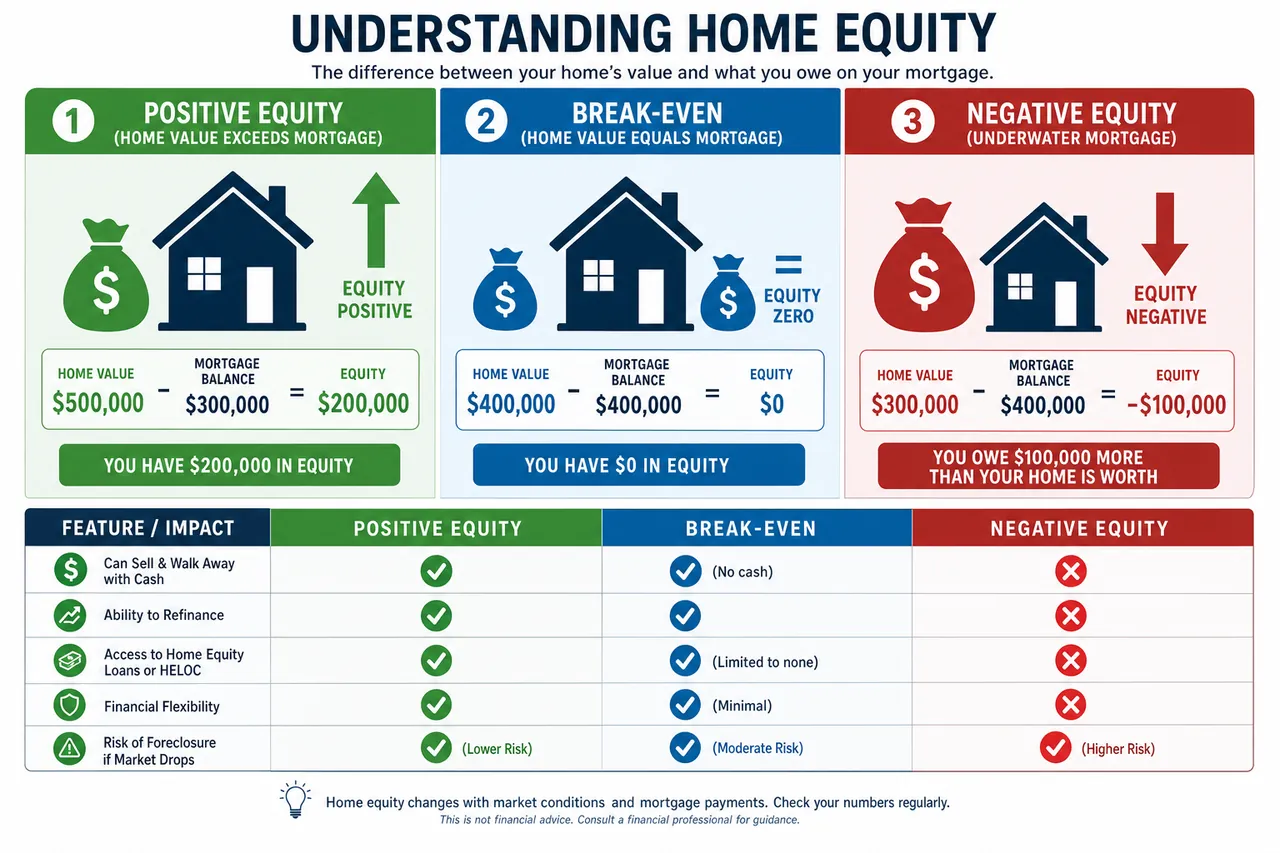

Determine Your Home's Equity
Here's the core question: how much of your home actually belongs to you? Home equity is simple math—it's your home's current market value minus everything you owe on mortgages and liens. Let's say your home's worth $380,000 and you still owe $240,000 on the mortgage. That leaves you $140,000 in equity. That's your real pool. Closing costs and your net proceeds both come straight from that number.

Before you list, you need to know what your home's actually worth. You've got three solid options: look at recent comparable sales (comps) from your neighborhood, ask a local agent for a broker price opinion, or order a pre-listing appraisal for $300–$500.
Get Your Mortgage Payoff Quote
Your monthly statement? That's not your payoff amount. Not even close. Interest compounds daily, and some loans hit you with prepayment penalties. You need to call your loan servicer and ask for a formal payoff statement—also called a payoff quote or demand letter. This document tells you the exact dollar amount to completely satisfy the loan on a specific date, usually 30 days from now.
Three things to verify: payoff quotes expire after 30 to 45 days, they include daily interest accrual rates, and if your closing gets pushed back, you'll need a fresh quote. Save this document. Your title company or closing attorney will ask for it.
Calculate Potential Profit From the Sale
The sale price minus what you owe? That's not your profit. And it's not even close. Agent commissions eat away at it. So do closing costs, prorated taxes, and a dozen other fees. Your actual net proceeds—the money that lands in your account—is what's left after everything comes out.
Look at these four real-world scenarios and see where you might land:
| Sale Price | Mortgage Payoff | Estimated Closing Costs (8%) | Estimated Net Proceeds |
|---|---|---|---|
| $250,000 | $180,000 | $20,000 | $50,000 |
| $380,000 | $240,000 | $30,400 | $109,600 |
| $520,000 | $490,000 | $41,600 | -$11,600 (short sale territory) |
| $650,000 | $300,000 | $52,000 | $298,000 |
But what if your math comes back negative? That's when you're underwater or in "negative equity" territory. The sale price doesn't cover what you owe plus closing costs. Don't panic—there's a different path forward for this situation, and you'll find it in the Special Situations section below.
Back to topPreparing Your Home for Sale
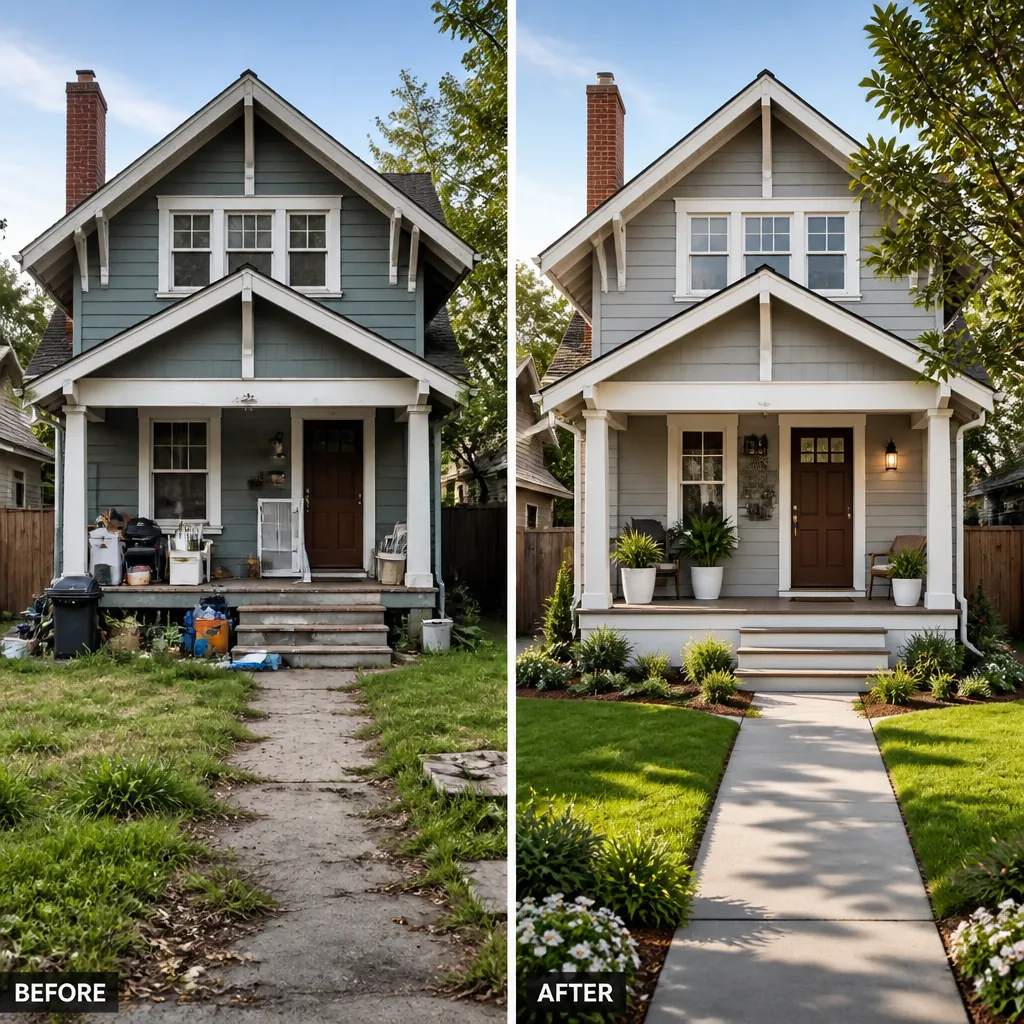
The more equity you have, the more breathing room you get at closing. But here's the thing: smart prep work can actually boost your sale price and put more cash in your pocket after you pay off the mortgage.
Home Inspection and Repairs
Spend $300–$500 on a pre-listing inspection before you list. Why? Because catching problems yourself beats having a buyer's inspector find them during negotiations and demand a price cut. Zero in on the big stuff first—roof, HVAC, electrical, plumbing. Those matter most to buyers. As for cosmetic work like fresh paint or refinished hardwood? You'll typically get back $1.50 to $2 for every dollar you spend on upgrades like that.
Staging and Curb Appeal
Professional staging bumps your sale price by 1–5% on average. The National Association of Realtors has the data. You don't need to hire a stager to see results—declutter hard, deep clean everything, and spend a weekend on your landscaping. Buyers decide in seconds whether they like your home. That first impression translates directly into stronger offers, which means more equity staying with you.
Pricing Strategy
List too high and your home sits. That's when price cuts start happening, and suddenly buyers smell blood in the water. Price at market or slightly below it instead. Multiple offers push the final price up—sometimes above asking. But here's what really matters: your listing price has to cover your mortgage payoff plus closing costs. Anything less creates a shortfall you'll scramble to pay at closing.
Back to topStep-by-Step Selling Process
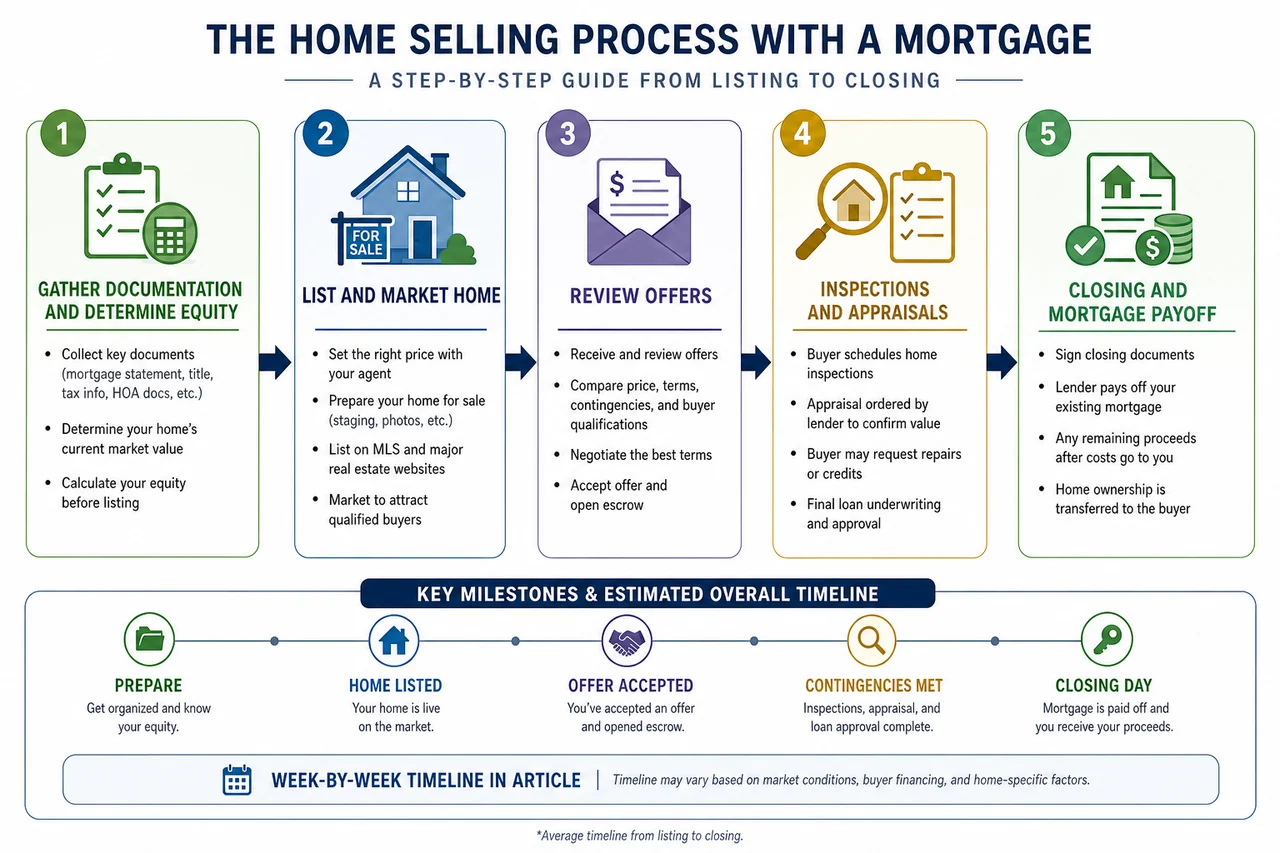
Step 1: Gather Financial Documentation
You'll need to pull together some key paperwork before your home hits the market. Start with your most recent mortgage statement, then get a formal payoff quote directly from your servicer. If you've got an HOA, dig up their contact information and fee schedule. And don't forget about any second mortgages, HELOCs, or liens against the property — you'll need documentation of those too. Grab your property tax records while you're at it. Your title company will use all of this to prepare a preliminary settlement statement that shows exactly what you'll walk away with at closing.
Step 2: List Your Home Competitively
This is where your home gets in front of buyers. You've got two paths: work with a licensed real estate agent, or learn how to sell your house without a realtor and pocket that 5–6% commission yourself. Want to go the solo route? High-quality photos are absolutely essential. So is accurate MLS data. You need online syndication to Zillow, Redfin, and Realtor.com — there's no way around it if you want buyers to actually find your listing.
Different states have different requirements. If you're in Florida or California, check out resources specific to selling without a realtor in Florida or selling without a realtor in California so you know the rules before you start.
Step 3: Review and Negotiate Offers
When offers come in, don't just look at the number. That's the mistake most people make. Look at contingencies. Check the financing type. Consider the closing timeline. A cash offer $10,000 under asking might beat a full-price offer with financing if it closes in 30 days instead of 60 — you avoid appraisal risk and get your money faster.
Financing contingencies are where deals actually fall apart. If a buyer's loan gets denied or falls through, your sale collapses and you're back to square one with your payoff timeline. Before you accept anything, verify the offer nets you enough to cover your payoff amount plus closing costs. Otherwise, you'll actually owe money at closing.
Step 4: Conduct Inspections and Appraisals
Once you've accepted an offer, the buyer's lender orders an appraisal. This is routine — they're making sure the house is actually worth what you're selling it for. Here's the problem: if the appraisal comes in low, you've got limited options. You can renegotiate the price down, ask the buyer to make up the difference in cash, or walk away from the deal entirely.
The buyer's also doing their own home inspection. Be ready for repair requests. Maybe they want you to fix a roof leak or replace bad electrical. More likely, you'll get asked for credits instead — money knocked off the final price to cover fixes they'll handle themselves. Either way, your net proceeds shrink. The good news? If you tackle major issues upfront, you reduce this headache significantly.
Step 5: Schedule the Closing
Your title company or closing attorney handles the final coordination. They bring everyone together — you, the buyer, the buyer's lender, and your mortgage servicer. They'll order a final payoff statement from your lender and verify lien status so there are no surprises at the table. The Closing Disclosure gets prepared well before closing day.
When closing day arrives, funds from the buyer's lender wire into escrow. Your mortgage servicer gets paid their payoff amount. Whatever's left goes to you. Timeline-wise? Expect 30–60 days if the buyer's financing. Cash buyers typically close in 7–21 days.
Back to topManaging Closing Costs and Expenses
Here's what catches most sellers off guard: closing costs eat into your proceeds way more than you'd expect. Get specific numbers upfront, and you'll avoid that sinking feeling when the final numbers hit your desk.
| Cost Item | Typical Range | Who Pays |
|---|---|---|
| Real estate agent commission | 5–6% of sale price | Seller |
| Title insurance (owner's policy) | 0.5–1% of sale price | Seller (varies by state) |
| Escrow/closing fees | $500–$2,000 | Split or seller |
| Transfer taxes/recording fees | 0.1–2% (state-dependent) | Seller (varies by state) |
| Attorney fees | $500–$1,500 | Each party pays own |
| Prorated property taxes | Depends on closing date | Seller (for days owned) |
| HOA transfer fees | $100–$500 | Seller |
| Home warranty (if offered) | $300–$600 | Seller (optional) |
| Mortgage payoff (principal + interest) | Varies | Seller |
You're looking at 8–10% of your sale price going straight to closing costs when you factor in agent commission. That's substantial. And if you're considering seller concessions — offering to cover some of the buyer's costs in exchange for a higher purchase price — you need to think carefully. Sure, both sides can win sometimes. But if your equity's already stretched thin, you'll just end up with less cash in your pocket. Run the numbers before you agree to anything like that.
Back to topTiming Considerations: Sell First or Buy First?
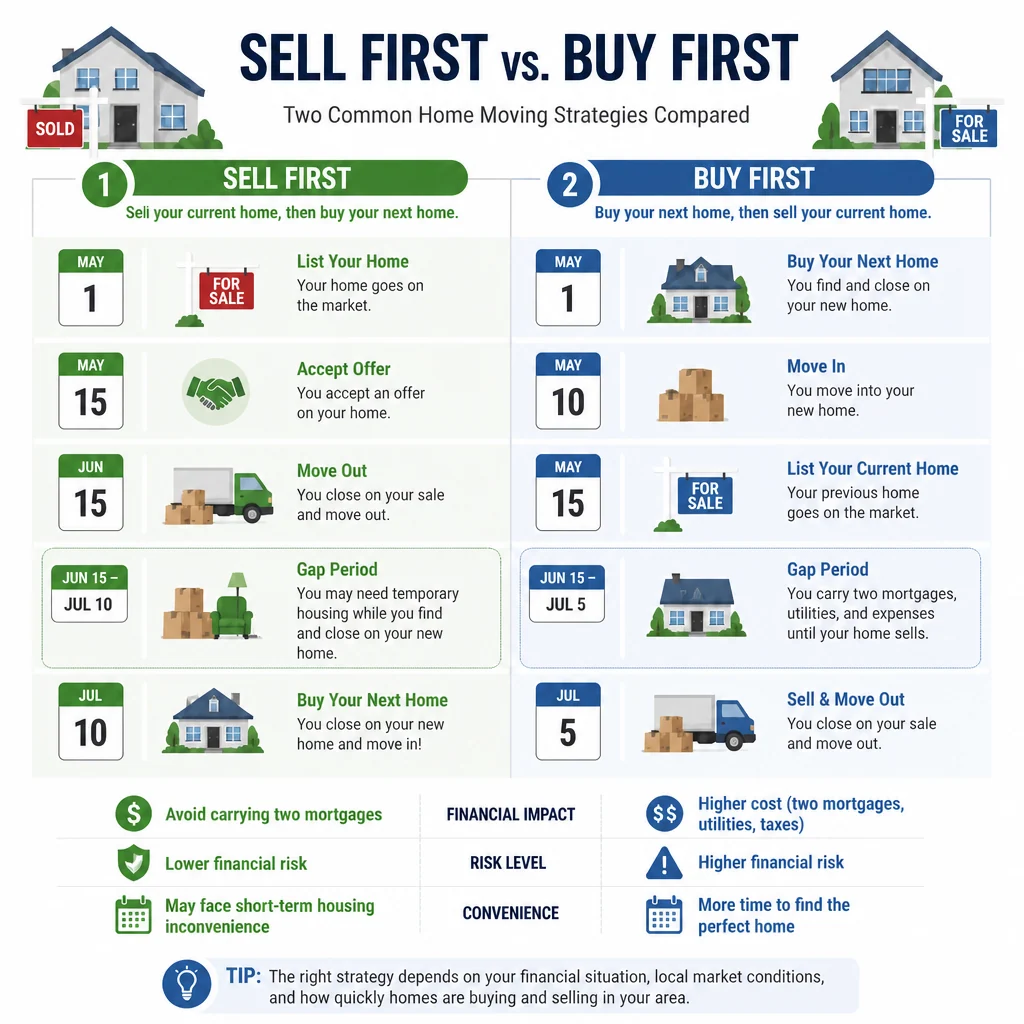
Should you sell first or buy first? It's one of the most stressful decisions you'll face when selling a mortgaged home. Both paths come with real financial risk, and honestly, the right move depends entirely on your local market conditions and how much cash you have in reserves.
| Factor | Sell First | Buy First |
|---|---|---|
| Financial risk | Lower — proceeds secured before new purchase | Higher — may carry two mortgages |
| Negotiating power | Stronger — non-contingent buyer | Weaker — often needs home-sale contingency |
| Housing gap risk | Higher — may need temporary housing | Lower — move directly |
| Best market for strategy | Buyer's market (slower sales) | Seller's market (fast sales) |
| Down payment availability | Secured from sale proceeds | Must have reserves independent of sale |
| Bridge loan needed? | Usually not | Often yes |
Contingent Offers and Bridge Loans
Your offer becomes conditional on your current home selling first when you add a home-sale contingency. That protects your wallet, but sellers hate it. In a hot market, they'll simply skip your offer and go with someone who doesn't need to sell first.
Then there's the bridge loan. It's a short-term loan (typically 6–12 months) that taps into your current home's equity so you can put money down on your next place before the old one sells. But here's the catch: interest rates run 1–2% above prime, and fees pile on fast. They work best if you've got solid equity and you're genuinely confident your current home will move quickly.
Rent-Back Agreements
What if you could sell and still stay in your home a little longer? A rent-back (or leaseback) agreement does exactly that. You sell the home, then rent it back from the new owner for 30 to 90 days. No housing gap. No frantic closing rush. No temporary apartment hunt.
And here's the bonus: you can negotiate the rent. Some buyers will actually accept below-market rates if it means a cleaner, faster deal. If this option sounds right for you, tell your agent to bring it up during the initial offer negotiations—don't wait until later.
Back to topWorking With Real Estate Professionals
Choosing a Real Estate Agent
You need an agent who's actually worked in your price range and knows your neighborhood. Interview at least three agents. Ask to see their recent transaction history — and don't settle for vague answers. They should understand what you're up against, especially if you're selling with thin equity or juggling a simultaneous purchase at the same time.
Want to hedge your bets? Platforms like KDS Homebuyers' seller programs let you compare a traditional listing through a vetted agent against a direct cash offer and other strategies side by side. You can weigh your options before you commit to anything.
Communicating With Your Lender
Here's the thing: your mortgage servicer isn't at the closing table, but they're absolutely in the deal. Call them early and tell them you're selling. Get specifics on the payoff process, wire instructions, and when you'll get your lien released.
After closing wraps up, expect a satisfaction of mortgage document in the mail — that's the recorded proof your loan is paid off. You'll typically see this 30–60 days after closing. File it with your permanent records and keep it safe.
Legal and Tax Considerations
Married filing jointly? The IRS lets you exclude up to $500,000 in capital gains from selling your primary home. Single? You get $250,000. There's a catch though — you've got to have owned and lived in the place for at least two of the past five years.
And if your home has skyrocketed in value or you're selling an investment property, anything above those thresholds gets taxed as long-term capital gains (0%, 15%, or 20% depending on your income bracket). Talk to a CPA before you close. Don't skip this step if there's serious money on the line.
Back to topSpecial Situations
Short Sales and Negative Equity
You're underwater on your mortgage when your home's worth less than what you owe. A short sale lets you sell it anyway — but only with your lender's permission. Here's the deal: the lender agrees to take less money and release their claim on the property. Getting that approval typically takes 3–6 months. And here's what keeps homeowners up at night — a deficiency judgment. That's when the lender sues you for the gap between the sale price and what you still owe. It doesn't happen everywhere, though. California and Florida, for example, have strong anti-deficiency protections that shield you from this. Want to know exactly how your state handles it? Check out our guides on selling with a mortgage in California and selling with a mortgage in Florida.
Multiple Mortgages and Liens
Things get messier if you've got a HELOC, a second mortgage, tax liens, or HOA liens hanging over the property. Each one needs to be paid off or negotiated before closing. The pecking order matters: your first mortgage gets paid first, then everything else lines up behind it. Don't wait on this. Call your title company early in the process — they'll run a title search and flag every recorded claim against your home. Getting blindsided by an unexpected lien at the closing table? That's how deals fall apart or your proceeds shrink without warning.
Reverse Mortgages
A reverse mortgage adds layers of complexity to a home sale. You'll need to notify the servicer, pin down the exact payoff amount (which moves around), and handle HUD's requirements if it's an FHA-backed loan. The details matter here. For the full rundown, read how to sell a house with a reverse mortgage.
Back to topWhat Happens to Your Mortgage at Closing

Closing day moves fast. Here's exactly what happens to pay off your mortgage:
- Buyer's funds arrive: The buyer's lender wires the loan amount (plus any down payment) into the closing escrow account, usually by 10–11 a.m.
- Closing Disclosure reviewed and signed: You and everyone else at the closing table go through the final settlement statement together. It spells out every single debit and credit.
- Deed transferred: You sign the deed handing ownership to the buyer. Then it gets recorded at the county right away.
- Payoff wire sent: The closing attorney or escrow agent wires your exact payoff amount to your mortgage servicer. And it has to match your payoff statement to the penny—including that per-diem interest adjustment.
- Proceeds disbursed to seller: Your net proceeds come next. That's the sale price minus the payoff, agent commissions, and closing costs. You'll get wired funds or a check the same day or the next business day.
- Lien released: Your servicer processes that payoff and files a satisfaction of mortgage with the county within 30–60 days. This is what officially wipes the lien off your title.
Want to see the big picture? Here's a general timeline from listing day to the moment you get your money:
| Week | Milestone |
|---|---|
| Week 1–2 | Gather documents, get payoff quote, prep home, choose agent or listing strategy |
| Week 2–3 | List home, begin showings and open houses |
| Week 3–5 | Receive and negotiate offers, sign purchase agreement |
| Week 5–6 | Buyer inspection, appraisal ordered, title search initiated |
| Week 6–7 | Repair negotiations resolved, buyer's loan in underwriting |
| Week 7–8 | Clear to close issued, closing date scheduled, final walkthrough |
| Closing day | Funds wired, deed signed and recorded, mortgage payoff sent, proceeds received |
| 30–60 days post-close | Satisfaction of mortgage recorded by servicer |
Conclusion: Selling a Mortgaged Home Is Manageable With the Right Preparation
Selling a house with a mortgage? It's actually one of the most routine transactions in real estate. The key to a smooth experience comes down to preparation. Know your equity before you list. Get a formal payoff quote early on. Account for all closing costs in your pricing strategy. And communicate proactively with your mortgage servicer — don't assume they'll figure it out on their own. Whether you're selling in Colorado, Tennessee, Washington, or anywhere else, the underlying process stays the same.
Here's the best part: once your mortgage is satisfied, the proceeds from your sale are yours. Use them however you need — a down payment on the next home, paying down debt, or simply building your financial cushion for whatever comes next.
If you're in a tight spot, though? Tight equity, a looming foreclosure, or the pressure to sell quickly. Don't skip this step: knowing all your options before you commit to one path could make the difference.
Back to topFrequently Asked Questions About Selling a House With a Mortgage
Can you sell your home before paying off the mortgage completely?
Yes, absolutely. You don't need to pay off your mortgage before listing or accepting an offer — it all gets handled at closing using the buyer's funds. Here's the key: the sale price just needs to be high enough to cover what you still owe on the mortgage plus closing costs. If there's a gap, you'll need cash on hand to cover it.
What if you owe more than the home is worth?
Welcome to being "underwater" or having negative equity. It's more common than you'd think, and you do have options. You could wait for the market to recover. You could throw extra money at principal payments to shrink what you owe. Or you could pursue a short sale.
A short sale is when your lender agrees to let you sell for less than the payoff amount. The catch? You need their approval, and it'll likely sting your credit score. But here's something important: some states actually protect you from deficiency judgments after a short sale. Check your state's specific laws or talk to a real estate attorney who knows your area's rules.
How long does the mortgage payoff process take after closing?
The payoff wire goes out on closing day. Your servicer processes it within 1–5 business days and sends you a satisfaction of mortgage document. Then it gets recorded at your county recorder's office — that part can drag on for 30–60 days.
But don't stress. You don't have to wait for that recorded satisfaction before you pack up and leave. Closing officially ends your obligation the moment it happens.
Can you keep sale proceeds to use as a down payment on your next home?
Completely your call. After your mortgage payoff and closing costs come out, whatever's left is yours with zero strings attached. There's no rule saying you have to use it toward another house.
Some sellers use it as a down payment on their next place. Others invest it or stash it in savings. And if you've made a serious profit on the sale? Talk to a tax professional about IRS Section 121 exclusion rules — they'll tell you exactly how much capital gains tax, if any, you might owe.
Do you need your lender's permission to sell your home?
Nope, not in most cases. Your mortgage agreement lets you sell whenever you want. The lender just cares that they get paid off at closing.
Short sales are different — that's where the lender has to sign off on accepting less than the full balance. And if you've got a federally subsidized loan with recapture provisions or a due-on-sale waiver? Read those loan documents carefully or call your servicer and ask directly.
How are property taxes handled at closing?
Property taxes get prorated based on your closing date. In most states, taxes are paid in arrears, so you'll credit the buyer for the portion of the year you actually lived there. Some places work the opposite way — taxes are paid upfront, and the buyer credits you instead.
Your closing statement spells out the exact calculation. The title company handles this automatically as part of settlement.
Back to top
