

How to Sell a House Full of Stuff: Decluttering and Liquidation Strategies

Inherited a home packed with decades of belongings? Downsizing after years in the same house? Or maybe you just need to sell quickly without spending weeks sorting through everything. How to sell a house full of stuff — it's a question that stops most people cold. You're juggling a real estate transaction, an emotional minefield, and a serious time crunch. But here's what we know: proven strategies exist that can actually make this manageable. Some people even come out ahead financially. This guide takes you through every single step, from your first assessment all the way to closing day, with specific tactics for your situation and budget.
The top 10 things to do before selling a house: declutter and depersonalize, deep clean, make necessary repairs, paint walls in neutral tones, give the kitchen a low-cost refresh, boost curb appeal (front door, garage door, pressure washing, lawn and plants), brighten every room, get rid of odors, consider professional staging, and get a pre-sale inspection with your paperwork organized. When the house is full of stuff, clearing it out comes first because nothing else on that list works until the rooms are empty. If that prep isn't realistic for your time or budget, selling as-is to a cash buyer lets you skip it.

Understanding the Challenge of Selling a House Full of Stuff
Why a Cluttered House Impacts Home Sales
Clutter kills a sale. It's not just ugly — it actively tanks your home's value. The National Association of Realtors found that staged, decluttered homes sell for 1% to 5% more and move way faster. When a buyer steps into a packed room, their brain gets overwhelmed. They can't visualize their own life there because they're too busy filtering through someone else's belongings. The rooms shrink in their mind. Light disappears. And those beautiful hardwood floors or built-in shelves? Completely invisible.
There's another problem most people don't think about. Your home inspector needs to actually access things — electrical panels, HVAC systems, water heaters, crawl spaces. If boxes and furniture are in the way, inspections get delayed. Buyers start wondering what you're hiding. The report comes back incomplete. Your offer drops or the whole deal stalls.
Emotional and Practical Considerations
Let's be real. Clearing out a full house, especially one you inherited after losing someone, isn't just a logistics problem — it's emotionally brutal. Every closet holds memories. Every drawer is someone's life. You need to let yourself feel that grief.
But here's the hard part. Your emotions can't stall the whole process. While you're sorting through memories, property taxes keep coming. Insurance bills arrive. The mortgage doesn't pause. Utility costs climb. You could lose thousands in carrying costs by moving too slowly.
And the stuff itself? It's not simple. You're probably dealing with tool collections, antiques you can't value, decades of paperwork, hazardous materials like old paint, and items that mean everything to you but won't sell. Each type needs its own plan.
Timeline and Planning Essentials
How long will this actually take? It depends. Volume matters. Home size matters. Who's helping matters.
- Small home (under 1,500 sq ft) with moderate clutter: 2–4 weeks to declutter, 1–2 weeks to clean and prep
- Medium home (1,500–2,500 sq ft) with heavy clutter: 4–8 weeks to declutter, 2–3 weeks to clean and prep
- Large home or estate (2,500+ sq ft) with decades of accumulation: 2–4 months with professional help
Mark your calendar 60 days before you want to list. That buffer is your safety net — time for estate sales, online selling, donations, and professional cleaning. You won't be rushing. You won't be panicking.
Assess Your Situation and Set Goals

Determine What Needs to Stay vs. Go
Walk through your home with a notebook or phone camera before you touch anything. Flag items into three categories as you go: high-value pieces worth selling on their own, things that'd work for a bulk estate sale or charity donation, and straight-up trash. Pay special attention to antiques, art, jewelry, collectibles, and vintage furniture. These deserve proper appraisal before they disappear into a donation bin or the dump.
Now get honest with yourself about what you're actually keeping. Sentimental items matter emotionally, sure. But they cost money to store. A storage unit at $150 a month adds up fast — especially if you're only visiting twice a year.
Create a Realistic Timeline
Start with your target listing date and work backward. Want to list June 1st? You'll need the house completely ready by May 20th at the latest. Professional cleaning should happen around May 15th. Decluttering needs to be finished by May 10th. And if you're planning an estate sale, factor in 2–3 weeks for setup plus another 2–3 days for the actual sale. Online selling can happen alongside everything else, but it demands consistent daily attention from you.
Budget for Decluttering Costs
Most people drastically underestimate what it costs to clear out a full house. Here's what you're actually looking at:
- Dumpster rental: $300–$600 per load
- Junk removal services (like 1-800-GOT-JUNK): $150–$800+ depending on volume
- Estate sale company setup fees or commissions: 25–40% of gross sales
- Storage unit rental: $75–$300/month depending on size and location
- Professional organizer: $50–$150/hour
- Deep cleaning services: $300–$800 for a full house
Weigh these costs against what you'll actually make from selling items. A well-managed estate sale covering a large home? You might pull in $5,000–$30,000+. That more than covers your expenses. For smaller collections, though, individual online sales or a mix of donations and disposal often make more financial sense.
Decluttering Strategies and Methods
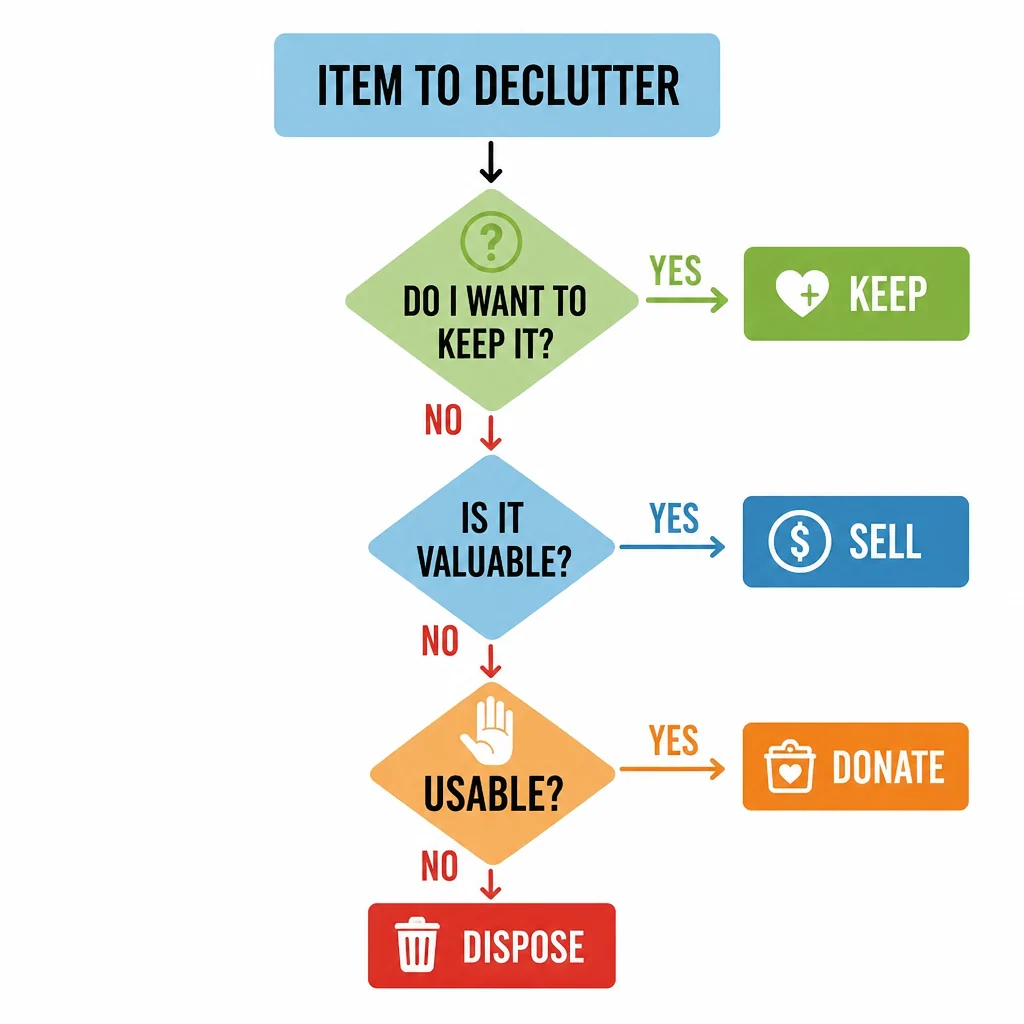
The Four-Pile Sorting System
When your home's packed to the rafters, the four-pile system is your best friend. You'll sort everything into Keep, Sell, Donate, and Dispose — and here's the critical part: every single item gets assigned to one category. No "maybe" pile. That pile always grows. It never shrinks.

- Keep: Stuff you'll actually use or display in your next place. Be honest with yourself — if it's been sitting untouched for two years, it's probably just taking up space.
- Sell: Items that are in decent shape and someone would actually want to buy. Check eBay or Facebook Marketplace real quick. Don't assume something's worth money just because you once paid for it.
- Donate: Things that work fine but won't move at a garage sale. Goodwill, Habitat for Humanity ReStores, and local shelters take all kinds of goods — call ahead and ask what they need.
- Dispose: Broken stuff, trash, and anything hazardous. And here's where people mess up: old paint cans, pesticides, and electronics can't just go in the trash. Your county probably runs a hazardous waste program with free drop-off days — look it up now before you need it.
Room-by-Room Approach
Don't tackle everything at once. You'll burn out. Start where it matters most to potential buyers: the living room, master bedroom, and kitchen. Getting those spaces cleared creates momentum and gives you staging areas for everything else. Want to know where the real volume hides? Attics, basements, and garages. These deserve their own weekend projects with extra hands on deck.
Staying Motivated Through the Process
This work gets exhausting. Real talk. Break it into 2–3 hour chunks with specific targets. "Today I'm clearing the master bedroom closet." That's it. Then you're done. Celebrate when you finish something big — you've earned it.
And if you're sorting through a loved one's things? Take photos first. Capture the memories without keeping the physical clutter. Photograph entire rooms before you clear them too. It gives you something real to hold onto.
Family involved in the process? That changes everything. Set up a fair system from day one. Try giving each person a set number of "claim tickets" for items they want to keep. No tickets left? That item moves on. This stops arguments from derailing the whole project. You might also be dealing with similar coordination headaches if you're in a divorce situation — check out our guide on selling a house during divorce for ways other people have handled it.
Options for Dealing with Belongings
Selling Items Online
The right online platform can put real money in your pocket. But here's the catch: you'll need to invest time in photography, writing descriptions, fielding questions from buyers, and handling shipping or coordinating pickups. Which platform should you use? Check the comparison table below to match your stuff to the best option:

| Platform | Best For | Fees | Time Investment | Audience Size |
|---|---|---|---|---|
| eBay | Collectibles, electronics, branded items | ~13.25% final value fee | High (listing, packing, shipping) | 135M+ active buyers |
| Facebook Marketplace | Furniture, appliances, local large items | 5% for shipped; free for local pickup | Medium (messaging, coordination) | Local + regional |
| Craigslist | Bulk items, tools, free giveaways | Free (most categories) | Low–Medium | Local only |
| Etsy | Vintage items (20+ years old), handmade goods | 6.5% transaction fee + $0.20 listing | High (niche photography, SEO) | 90M+ active buyers |
| OfferUp | Local sales, general household goods | 12.9% for shipped items; free local | Low–Medium | 20M+ monthly users |
| 1stDibs / Chairish | High-end antiques, designer furniture | 20–50% commission | Medium (curated listings) | Luxury buyers |
Here's a practical shortcut: bundle low-value items into "lot" listings on Facebook Marketplace. For example, post "Box of kitchen gadgets, $20 takes all." You'll move inventory faster without the headache of listing dozens of individual items.
Estate Sales and Liquidation
If your home is packed with furniture and goods, an estate sale is often your fastest path to cash. Professional estate sale companies do the heavy lifting—pricing, advertising, staging, and staffing the sale. You provide the inventory. Then you collect your check. The cost? Count on 25–40% commission on whatever sells, plus setup fees of $200–$500 for homes with a lot of stuff.
Estate sales make the most sense when you've got reasonable volume (typically $5,000+ in estimated value) and 2–3 weeks to spare. Companies will walk through your home free, give you a realistic sales estimate, and answer your questions before you decide to move forward.
Donations and Tax Benefits
This one can save you serious money. Donations to qualified 501(c)(3) nonprofits are tax-deductible at fair market value—and a houseful of goods can mean thousands in deductions. You'll need to itemize deductions on your federal return, keep a written receipt for anything over $250, and file IRS Form 8283 for items over $500. Many organizations—Habitat for Humanity ReStore, The Salvation Army, local thrift shops—offer free pickup for large donations. No hauling costs. No hassle.
Before you claim big deductions, talk to a tax professional. And review the capital gains implications in our guide on capital gains tax when selling a house. Your sale has multiple moving parts.
Proper Disposal and Recycling
Not everything sells or donates. For the stuff that doesn't:
- Electronics (e-waste): Best Buy, Staples, and your local municipality often accept TVs, computers, and appliances for free recycling.
- Hazardous materials: Don't throw paint, pesticides, or cleaning chemicals in the trash. Head to Earth911.com to find local drop-off sites.
- Mattresses: Many cities run mattress recycling programs. Some retailers will haul away your old one when you buy new.
- Scrap metal: Old appliances, pipes, and metal furniture bring cash at your local scrap yard. Expect $20–$100 per load.
Decluttering Approaches: Cost-Benefit Comparison
Here's the honest truth: different situations call for different strategies. What works for your neighbor might be a waste of time and money for you. Let's break down your actual options.
| Method | Time Required | Avg. Revenue Potential | Costs | Best For |
|---|---|---|---|---|
| Estate Sale (professional) | 2–3 weeks setup + 2–3 sale days | $5,000–$30,000+ | 25–40% commission | Full homes with mixed-quality furnishings |
| Online Selling (DIY) | Ongoing; 2–8 weeks | $500–$10,000+ | 5–15% platform fees + time | High-value individual items with patient sellers |
| Auction House | 4–8 weeks | $1,000–$50,000+ | 15–25% buyer's premium (varies) | Antiques, art, and high-end collectibles |
| Donation Only | 1–2 weeks | Tax deduction value only | Minimal (possible hauling fees) | Time-pressed sellers, lower-value goods |
| Junk Removal / Disposal | 1–3 days | $0 (cost center) | $300–$1,500+ | True junk, hazardous waste, last resort items |
You're juggling speed, money, and effort. The professional estate sale might pull in $5,000 to $30,000, but they'll take 25–40% off the top. Worth it if you've got a full house and can wait three weeks. Selling items yourself online takes longer—often two to eight weeks—but you keep more cash. Just expect to spend serious time photographing, listing, and communicating with buyers. And be realistic about what actually sells.
Got antiques or collectibles?
An auction house could be your move, especially if you're patient. You might see $1,000 to $50,000+, though the buyer's premium (15–25%) eats into your total. That said, auctions create urgency and attract serious collectors who'll pay for the right pieces.
But if you're in a time crunch or dealing with mostly lower-value items, donating takes just one to two weeks and gives you a tax deduction. Feels good too. Then there's junk removal—the expensive, fast option when nothing else matters except getting it gone. You're looking at $300 to $1,500+ depending on volume, and there's no money coming back to you. Sometimes that's exactly what you need.
Selling Your House With Different Stuff Removal Approaches

Sell As-Is with Belongings Included
You're drowning in stuff. You don't have the bandwidth to sort through decades of accumulated belongings. Selling your house as-is — with everything still in it — might be exactly what you need right now. Cash buyers and real estate investors do this all the time. They've already factored the cleanup costs into what they're willing to pay. You won't get top dollar, but you'll skip weeks of backbreaking work and thousands in disposal fees. That emotional weight of deciding what goes and what stays? Gone.
Here's the critical part: get everything in writing. Your contract needs to spell out exactly which items stay and which ones you're keeping. Any belongings you want to hold onto must be listed as exclusions. Skip this step and you're headed straight for closing day chaos. Be honest about the property's condition in your listing too. Buyers pursuing as-is deals know there's work ahead — just don't ambush them with hidden problems they didn't expect.
And this approach stacks well with other complications. Dealing with back taxes or a lien? Our article on selling a house with back taxes owed shows you how to juggle multiple issues at once.
Sell Furnished for Specific Buyer Demographics
Some buyers will actually pay more for furniture. Vacation rental investors need turn-key properties. Relocating executives want to move in next week. First-time homebuyers haven't accumulated their own furniture yet. If your furniture is decent quality, it becomes an asset instead of a liability. Feature the pieces prominently in your listing and fold their value into your asking price. An independent appraisal of major furniture can back up your pricing when skeptical buyers push back.
Complete Clearance Before Listing
The old-fashioned way still works best in many markets.
Clear everything out, stage the rooms, take professional photos. Buyers see the actual square footage. The space photographs beautifully. You've got more wiggle room on buyer contingencies. Yes, this demands the most labor upfront — but it typically pays off. If your market has solid buyer competition, you'll usually recoup that work in a higher final price and faster sale.
House Selling Strategies Comparison
| Strategy | Timeline | Value Impact | Buyer Type | Complexity |
|---|---|---|---|---|
| As-Is with belongings | 1–3 weeks to close | 10–20% below market | Cash buyers, investors | Low |
| Sell furnished | 30–90 days typical | Neutral to slight premium | Relocators, vacation rental buyers | Medium |
| Full clearance + staging | 60–120 days prep + sale | Maximum market value | Traditional buyers | High |
| Partial clearance + partial staging | 30–60 days prep + sale | 5–15% below full clearance | Broad market | Medium |
Storage and Logistics Solutions

Choosing the Right Storage Option
You've got items taking up space in your home, but you're not ready to decide their fate yet. That's where temporary storage comes in. It gives you the breathing room to think clearly without pressure, and you won't force yourself into choices you'll regret later. Check out how these options stack up:
| Storage Type | Monthly Cost Range | Accessibility | Best Duration | Ideal Items |
|---|---|---|---|---|
| Self-storage unit (10x10) | $75–$200 | Daily access during hours | 1–6 months | Furniture, boxes, seasonal items |
| Self-storage unit (10x20) | $130–$300 | Daily access during hours | 1–6 months | Full room contents, appliances |
| Portable container (PODS-style) | $150–$300 + delivery fee | On-site access anytime | 1–3 months | Staged moves, large items |
| Full-service valet storage | $100–$300+ per bin | Scheduled retrieval only | Short-term | Smaller items, collectibles |
| Climate-controlled unit | $120–$350 | Daily access during hours | Any duration | Wood furniture, artwork, electronics |
Dumpster Rental for Bulk Removal
Need to clear out a lot of stuff fast? Renting a dumpster usually beats paying for multiple junk removal trips. A 10-yard dumpster runs $300–$450 and'll handle what two or three pickup truck loads would hold — perfect for clearing one room. Going bigger? A 20-yard dumpster at $400–$550 tackles most whole-house cleanouts. Before you sign anything, ask the rental company what they won't take. Tires, hazardous chemicals, refrigerants, and concrete are almost always off-limits.
And here's something that actually works: don't just toss items in randomly. Lay flat items like mattresses and doors down first. Then stack boxes and loose stuff in the gaps. You'd be surprised — this method alone can get you 20–30% more capacity out of the same dumpster.
Professional Help and When to Use It

Hiring Estate Sale Companies
A good estate sale company knows what your stuff is worth. They've got buyers lined up, they handle every detail, and they'll clear the whole house in a weekend. When you're interviewing companies, ask three things: references from recent sales, a sample contract, and what happens to unsold items (the best ones arrange free donation pickups). Here's the good news — commission rates aren't set in stone. If you've got high-value inventory, you've got leverage to negotiate.
Working with Real Estate Agents Experienced in As-Is Sales
Not every real estate agent knows how to sell a cluttered or as-is property. Some won't even touch them. But there's a specific breed of agent who does this work regularly — look for mentions of estate sales or as-is experience right in their profiles, or find someone who works with cash buyers and investors. The right agent becomes your coordinator. Instead of juggling estate sale companies, contractors, and buyers on your own, they handle the connections and turn chaos into a working team.
For sellers who want that kind of coordination built in from the start, programs like KDS Homebuyers' seller programs pair homeowners with vetted local agents who also have access to renovation funding, a leaseback option, and a cash-purchase backup — so one conversation covers the full range of scenarios a cluttered or as-is home might create.
Professional Organizers and Declutterers
When emotions are tangled up in the cleanup — especially in inherited homes — a professional organizer does more than organize. They bring both practical systems and genuine compassion to the work. You're looking at $50–$150/hour, with most full-house projects taking 20–40 hours total. Some specialize specifically in downsizing and estates. And if you're stuck, stuck, stuck — they're worth every dollar. The National Association of Productivity and Organizing Professionals (NAPO) maintains a directory of vetted professionals.
Getting Appraisals for Valuables
Before you donate, sell at an estate sale, or take items to auction — get the real story on what you've got. An American Society of Appraisers (ASA) certified appraiser costs $150–$400/hour. That's money well spent. They'll spot paintings, jewelry, silver, vintage watches, and mid-century pieces that would otherwise walk out the door for nothing. One correctly identified item? It'll pay for the entire appraisal ten times over.
Hiring a Professional Home Stager
Once the belongings are gone, an empty house can feel cold and make it hard for buyers to judge room sizes. A professional stager brings in furniture and decor that show how each space works, and they focus on the rooms buyers care about most: the living room, kitchen and primary bedroom.
Ask about pricing structure, how long the furniture stays and what happens if the house takes longer to sell. Some stagers will also work with pieces you already own if a few good items are still in the house.
Preparing Your Home for Sale After Decluttering
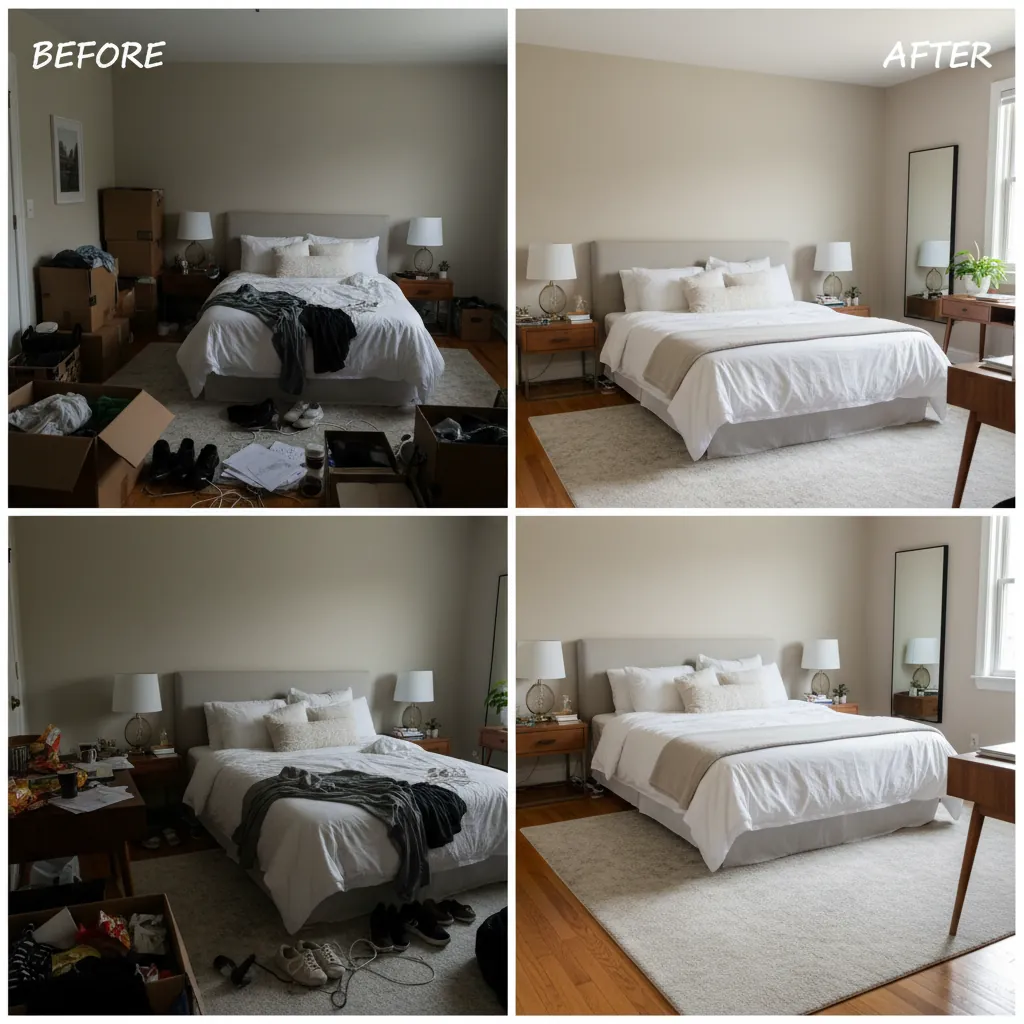
Deep Cleaning After Removal
Now that your house is cleared out, it's time to call in the professionals. Don't settle for a quick sweep — you need a deep clean that covers washing walls, scrubbing inside cabinets and appliances, steam-cleaning carpets, and tackling any lingering smells from pets, smoke, or moisture damage. Here's the thing: odors are one of the biggest reasons buyers walk away, and they leave a lasting impression before anything else registers. Expect to spend $300–$800 for a thorough professional cleaning in an average-sized home.
Necessary Repairs and Staging
Walk through your home with fresh eyes after it's clean. Or better yet, bring in an honest friend who'll tell you what actually needs fixing. Focus on the stuff that'll pop up during inspection: leaky faucets, broken fixtures, damaged flooring, clogged HVAC filters, and water stains. Spending $500–$2,000 on these repairs now prevents buyers from asking for $5,000–$15,000 in credits during negotiations.
And if your home's still partially furnished? Remove anything that doesn't improve the space. Make sure furniture fits the room properly — not too much, not too little. Fresh throw pillows and a bowl of fruit on the kitchen counter cost nothing but make everything feel alive. Every room should have one clear purpose that shows in your photos.
Empty rooms still need help. Virtual staging tools ($30–$100 per room) can fill those blank spaces in your listing photos, making buyers envision possibilities instead of seeing voids.
Paint Neutral and Refresh the Kitchen
Once the rooms are empty, wall color becomes very noticeable. Bold colors, scuffed paint and the outlines where pictures used to hang all stand out. A fresh coat in soft whites, greiges or light grays makes rooms feel bigger and lets buyers picture their own furniture there.
The kitchen gets more attention than any other room, but it doesn't need a full renovation. Small updates go a long way:
- Paint or clean the cabinets.
- Swap dated hardware and the faucet.
- Replace burnt-out or yellowed light fixtures.
- Recaulk around the sink and counters.
- Clear every countertop.
Boost Curb Appeal
Buyers form an opinion before they ever step inside. Start with these:
- Front door: Paint it or replace worn hardware.
- Garage door: Make sure it opens smoothly and quietly. Fix or replace dented or faded panels.
- Exterior surfaces: Pressure wash the siding, walkways, driveway and porch.
- Yard: Mow, edge, pull weeds, trim overgrown shrubs and add fresh mulch.
- Color: Put a few potted plants or flowers near the entry.
A house that sat full of belongings for years often has a neglected exterior too. This is usually one of the cheapest fixes available.
Get Ready for Every Showing
- Lights: Turn on every light, open the blinds and replace dim or mismatched bulbs so the rooms look bright and open.
- Odors: Skip strong-smelling cooking before showings, take out the trash and air the house out. Don't cover smells with heavy fragrances. Buyers notice.
- Alarm system: Disarm it, or give your agent clear instructions, so a showing doesn't set it off.
- Pets and personal items: Put away pet bowls, litter boxes and personal items left from the clear-out.
Legal and Financial Considerations
What Legally Stays and Goes in a Sale
Fixtures — items permanently attached to the property — convey with the sale by default. Built-in shelving, ceiling fans, window treatments, hardwired appliances, plumbed-in fixtures. All of it goes to the new owner unless you specifically say otherwise. Personal property is different. That stays with you unless you and the buyer agree in writing that it doesn't. When in doubt, spell it out in the purchase agreement.
Your situation might be more complicated. Maybe there's a lien on the property, or you've got a reverse mortgage sitting on top of everything. The legal picture changes when financial obligations attach to the house itself. That's why we've put together specific guides: one on selling a house with a lien and another on how to sell a house with a reverse mortgage. Read them both if either applies to you.
Disclosure Requirements
Most states require you to disclose known material defects. And that's where things get tricky during a clearout. Clutter often hides damage — water stains, pest evidence, foundation cracks. Once you uncover these issues while clearing out the property, you're legally required to tell the buyer. Hiding them exposes you to lawsuits after closing. Find a real estate attorney or talk to your agent the moment you spot something wrong.
Tax Implications of Sales and Donations
Here's the good news: most of your household stuff won't create a tax problem when you sell it. Personal property sales are taxable only if you sell items for more than you originally paid — and honestly, how often does a used couch sell for a profit? That's a non-deductible loss, not a taxable gain.
But if you're dealing with appreciated assets — we're talking antiques, art, collectibles, things that went up in value — those gains above your original purchase price are taxable as capital gains. The capital gains tax guide breaks down exactly how much you might owe.
Don't overlook one critical step: protecting your sensitive documents during the clearance. Shred financial records, Social Security documents, old tax returns, medical records. Get a $30 shredder if you don't have one. Identity theft from estate cleanouts happens more often than you'd think, and it's completely preventable.
Pre-Sale Inspection and Paperwork
A pre-listing inspection shows problems before a buyer's inspector finds them. That gives you time to fix issues, price around them or disclose them up front. Older homes that have been packed with belongings for years are especially likely to hide surprises behind the clutter.
Gather these documents early:
- The deed and any probate or trust paperwork
- Recent utility bills and property tax statements
- Records of repairs, permits and warranties
- Any HOA documents
Disclosure requirements vary by state. Check with your agent or a local real estate attorney about what you're required to share.
Handling Inherited Homes and Special Situations
The Emotional Reality of Inherited Properties
Clearing an inherited home isn't just about moving boxes around. It's the last physical step in saying goodbye. You need grace—for yourself and your family. But here's what makes this harder: every month that house sits empty, money drains away. Utilities. Property taxes. Insurance. Decay. The trick is finding a pace that respects both your heart and your wallet.
Here's what actually works: early on, dedicate one afternoon to memory work. Take photos. Grab documents. Pick out a small box of things that matter. Do it once, intentionally. Then shift gears. Switch into project manager mode. Separating the emotional stuff from the physical work makes both feel less overwhelming.
Multifamily Coordination and Family Disagreements
Multiple heirs? That's when disagreements can grind everything to a halt. Before you touch anything, set the rules. One person handles property logistics—usually the executor. You need deadlines with actual dates. And decide how personal items get distributed: maybe everyone takes turns picking, or someone buys out the others' shares for contested pieces. Family tensions run deeper sometimes—like in situations we cover in our guide on what to do when a co-owner refuses to sell—and that's when a neutral professional organizer or mediator becomes worth every penny.
Estate Settlement and Probate Considerations
Most states won't let you sell inherited real estate while it's still stuck in probate without a court's green light. Talk to an estate attorney before you promise anything to buyers or sale companies. And timelines? They're all over the map. Simple cases wrap in weeks. Messy, contested ones drag into 12–18 months. Know exactly where you stand legally before you start marketing that property.
Sometimes there's baggage attached. A reverse mortgage on the property. Back taxes owed. You need to handle these or build them into what you'll actually get from the sale. Our guides on selling a house with back taxes and selling with a reverse mortgage walk you through the options.
Decluttering Supplies Checklist
| Item | Quantity Guide | Cost Estimate | Reusable | Alternative |
|---|---|---|---|---|
| Heavy-duty trash bags (3-mil+) | 3–5 boxes | $15–$40 | No | Standard bags (lower durability) |
| Moving boxes (medium/large) | 20–50 boxes | $40–$100 new; free from liquor stores | Limited | Free boxes from Facebook Marketplace or grocery stores |
| Colored labels/stickers (4 colors) | 2–4 packs | $8–$20 | No | Colored tape or markers on masking tape |
| Permanent markers (Sharpies) | 1 pack (8–10) | $8–$12 | Yes | Any permanent marker |

