

How to Get Your House Ready to Sell in 30 Days
Table of Contents
- Why the 30-Day Timeline Matters
- Quick Assessment: Where to Start
- Week 1: Strategy and Team Assembly
- Week 2: Interior Preparation
- Week 3: Curb Appeal and Exterior
- Week 4: Final Touches and Listing Prep
- High-ROI Improvements Worth Your Time
- Common Mistakes to Avoid
- Disclosure Considerations When Selling Quickly
Thirty days sounds impossibly short. But break it into a focused, week-by-week plan and you'll realize how much ground you can cover when you stop trying to do everything. Start doing the right things instead.
You might be facing a job relocation, a financial deadline, a divorce settlement, or a market window that won't wait. Whatever your situation, your goal isn't perfection. It's a competitive, clean, appealing home that gives buyers every reason to make an offer.
This guide walks you through exactly how to do that. From the first day of assessment straight through to the moment your listing goes live.
Why the 30-Day Timeline Matters
Here's what the data shows: homes that sell in the first week typically bring more than asking price. According to Zillow research, that advantage disappears fast — each additional week on the market costs you money. Buyers and their agents obsess over days-on-market (DOM) figures. A home that lingers? It starts to feel like damaged goods, and you'll get lowball offers instead of competitive ones.
And that's why what you do before listing matters so much. This isn't about making your place pretty — it's about protecting your bottom line. A home that hits the market polished, priced right, and photographed professionally gets showings in week one. More showings means competition. Competition means strong offers.
Every day you spend preparing now is a day that pays you back later.
Let's be real, though. You're not renovating a roof or gutting a kitchen in 30 days. You're not finishing an addition either. This guide won't pretend that's possible. What you can actually do in a month is remove the obstacles standing between you and a sale. Polish the curb appeal. Fix what's obviously broken. Make sure buyers see your home's best self, not its worst.
Back to topQuick Assessment: Where to Start
Before you spend a single dollar or lift a single paintbrush, spend one hour walking through your home with a legal pad and a buyer's mindset. Pretend you've never lived there. What do you notice in the first 10 seconds? What smells hit you at the front door? What does the light look like? What draws your eye in a bad way?
Sort what you find into three buckets. This matters more than you might think.
- Must-fix: Issues that will show up on an inspection, trigger price reductions, or actively deter buyers (leaking faucets, broken fixtures, peeling paint, cracked windows)
- High-ROI updates: Low-cost, high-impact improvements that make the home feel fresher and more move-in ready (paint, hardware, lighting, landscaping)
- Nice-to-haves: Everything else — improvements that would be lovely but don't justify the time or cost given your 30-day window
Here's the hard truth: nice-to-haves are the trap that eats your time and budget without meaningfully improving your sale price. And you can't afford that right now. Focus almost entirely on the first two buckets instead. Once you've got your list sorted, you're ready to build your week-by-week plan.
Back to topWeek 1: Strategy and Team Assembly
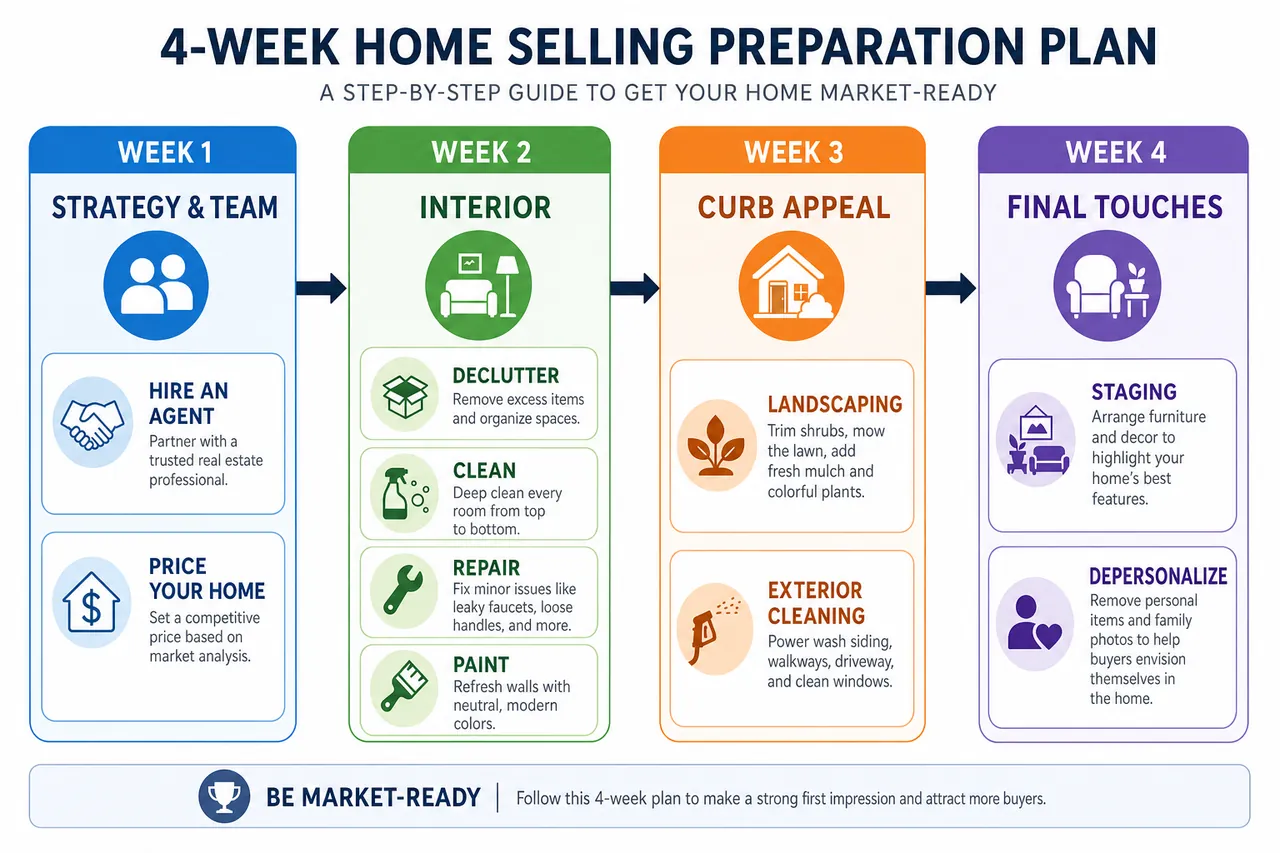
Skip the paint and mulch for now. Week one is about laying the groundwork that makes every decision that follows smarter and faster. Most sellers who rush past this step end up throwing money at the wrong things and pricing their homes on wishful thinking instead of actual market data.
Hire the Right Real Estate Agent
Not all agents have the tools or experience to move a home in 30 days. You need someone who actually knows your neighborhood, can show you sub-30-day closes on their record, and has professional photography, MLS syndication, and digital advertising ready to go. Interview at least two or three agents. Here's the key question to ask each one: "What's your actual strategy to sell this home in 30 days?" If you get vague answers, that's your signal to keep looking.
Want to see all your options at once? KDS Homebuyers' seller programs let you stack a traditional listing, cash offer, iBuyer quote, and renovation funding side-by-side. Then you pick what actually matches your timeline and profit goals.
Estimate Your Home's Value
Get a Comparative Market Analysis (CMA) from your agent. They should pull homes that have *sold* — not just listed — in your area over the last 90 days. That's your real market. Zillow estimates? They're off by 6-7% on average. On a $350,000 home, that's $21,000 of guesswork. You can hire an independent appraiser for $400–$600 if you want a second opinion before you list. Knowing your actual value ceiling matters before you start spending on upgrades.
Set Your List Price
Pricing strategy trumps almost everything else when you're trying to sell in 30 days. Overpriced homes collect dust. Homes priced within 2-5% of true market value? They generate multiple showings fast and sometimes multiple offers. Ask your agent to pull the average days on market for homes like yours in your area. Price to that reality, not to hope.
Budget for Necessary Updates
Plan to spend 1-3% of your expected sale price on pre-listing improvements. That's $3,000–$9,000 on a $300,000 home. Here's where those dollars hit hardest:
| Budget Category | Recommended Allocation | Example ($6,000 Budget) |
|---|---|---|
| Interior paint (key rooms) | 20–25% | $1,200–$1,500 |
| Deep cleaning + carpets | 10–15% | $600–$900 |
| Kitchen updates (hardware, faucet, paint) | 15–20% | $900–$1,200 |
| Bathroom updates (fixtures, caulk, grout) | 10–15% | $600–$900 |
| Curb appeal (mulch, plants, power wash) | 15–20% | $900–$1,200 |
| Lighting upgrades | 5–10% | $300–$600 |
| Miscellaneous repairs | 10–15% | $600–$900 |
Book your contractors right now — in week one, not week three. Good painters, carpet cleaners, and handymen book out fast. Waiting until week three means scrambling for whoever's left, or worse, missing your deadline entirely.
Back to topWeek 2: Interior Preparation
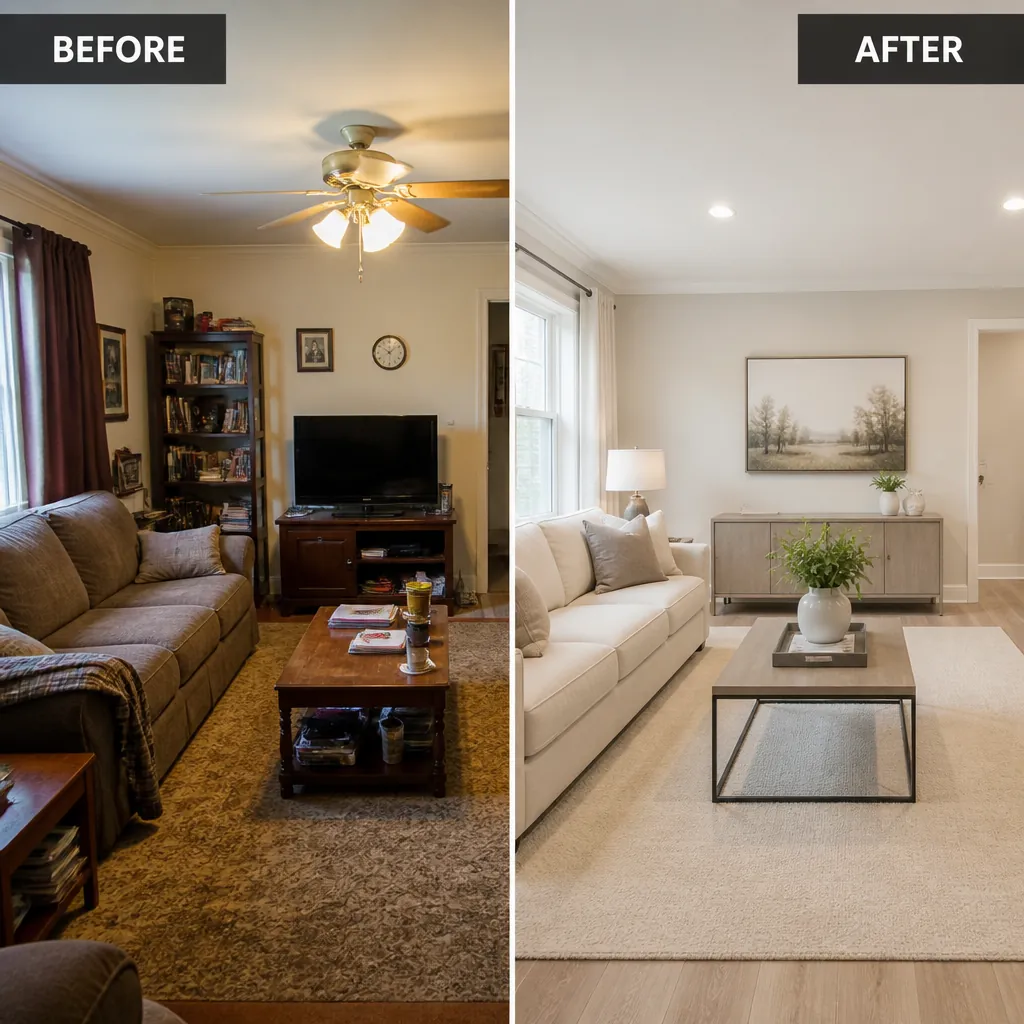
Now it gets real. Your team's in place, your budget's locked, and week two is where you actually see transformation happen. Interior prep is where most sellers either throw money away or miss what actually matters—and that's the difference between a quick sale and one that stalls.

Declutter Every Room
Here's the thing: decluttering isn't the same as organizing. When you organize, you're arranging what you have. When you declutter, you're getting rid of it. Buyers need to imagine themselves living here, not wonder where they'd fit their own stuff. Set a hard target—cut the visible stuff in every room by at least 50%. That means oversized furniture that makes spaces feel cramped, kitchen gadgets, overstuffed bookshelves, toys, things on the floor. All of it.
Rent a storage unit for the listing period. A 10x10 runs about $80–$150 per month. Move your excess there. And this might be the smartest money you spend, because it costs almost nothing yet makes your home look twice as large in photos and during showings.
Deep Clean the Entire Home
Buyers notice dirt immediately. According to a 2023 National Association of Realtors survey, cleanliness was the number-one thing affecting first impressions. You're not talking about your normal Tuesday cleaning here. Hire professional cleaners for the initial deep clean ($200–$400 for an average home), then maintain it yourself while the listing's active.
Where do buyers look hardest? Here:
- Kitchen appliances (inside the oven, inside the refrigerator if it stays)
- Bathroom grout, caulk lines, and tile
- Windows and window tracks
- Baseboards, ceiling fans, and light fixtures
- Carpets and area rugs (professional steam cleaning costs $100–$300)
- Closets (buyers open every door)
Make Essential Repairs
Go through your must-fix list from your initial walkthrough. The goal is simple: eliminate anything an inspector finds that'll give buyers ammunition to negotiate down your price—or worse, walk away entirely. Here's what can't wait:
- Dripping faucets and running toilets
- Broken door handles, locks, and hinges
- Cracked or broken outlet covers and switch plates
- Loose railings or steps
- Water stains on ceilings (fix the leak first, then the stain)
- Broken window panes or seals
- Non-functioning light switches or outlets
Most of these are under $20 in materials and an hour of work. But taken together, they tell buyers the home's been cared for. That matters for your asking price.
Paint and Update Finishes
Fresh paint is your best bang for the buck. Zillow data shows interior painting returns $2 in perceived value for every $1 you spend. Stick to light, neutral colors—warm whites, soft greiges, pale gray-beiges. Things that work for most people. Skip the trendy accent walls or bold colors that scream "this is their taste, not mine."
Paint these spaces first, in this order:
- Living room and main living areas (buyers spend the most time here)
- Kitchen (especially if the walls are an outdated color)
- Primary bedroom
- Hallways and entryway
- Bathrooms (go with semi-gloss for moisture resistance)
While you're refreshing, replace dated cabinet hardware in the kitchen and bathrooms too. New pulls and knobs run $2–$8 each and take literally minutes to swap out. Changing old brass hardware to brushed nickel or matte black? That one small change makes a kitchen feel current and well-maintained. It's one of the fastest wins you can get.
Back to topWeek 3: Curb Appeal and Exterior
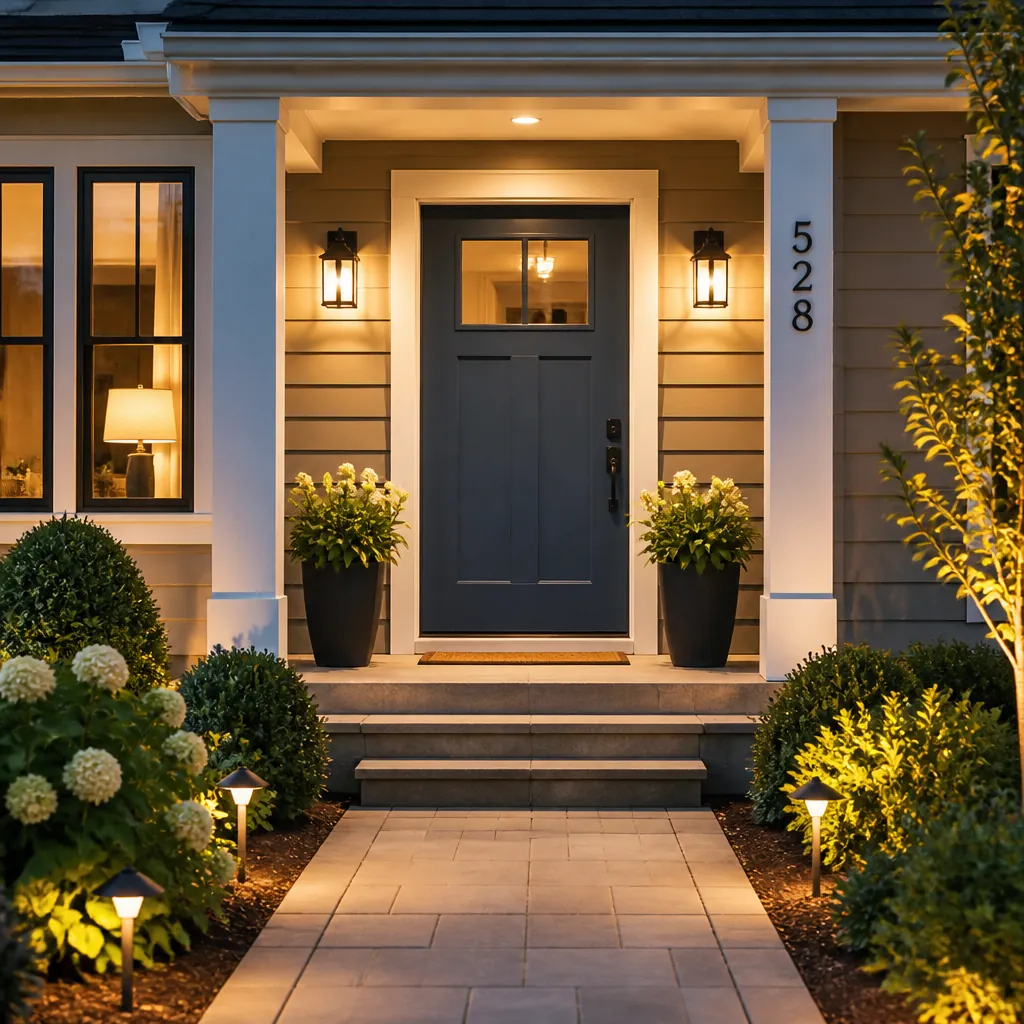
Your front yard makes the sale — or kills it. Buyers decide whether they even want to step inside based on what they see when they pull up to your home. The National Association of Realtors keeps confirming what you already know: curb appeal matters more than almost anything else. Someone looking at an overgrown, tired-looking exterior? They're already looking for problems inside.
Want specifics on what actually works? Check out 15 Curb Appeal Ideas to Make Your House Sell Faster. The guide breaks everything down by budget and includes state-specific versions for Florida, California, Colorado, Indiana, and Tennessee.
Landscaping Quick Wins
You don't need a complete overhaul. What you need is a yard that looks lived-in and maintained. One weekend. That's all this takes:
- Mow and edge the lawn (then keep it mowed every 5–7 days while you're selling)
- Pull weeds from all beds and along the driveway
- Add 2–3 inches of fresh mulch to all planting beds ($25–$50 per yard of mulch)
- Trim overgrown shrubs and low-hanging tree branches
- Plant a few seasonal flowers at the entry — impatiens, petunias, and marigolds work great because they're cheap and look vibrant
Here's the thing about fresh mulch: it's one of the highest-impact upgrades most sellers overlook. Neat beds. Fewer weeds. Photos that actually pop. You'll spend $150–$400 on materials for a full yard refresh, and buyers will notice immediately.
Entrance and Porch Updates
Your front door gets looked at first. If it's scratched, faded, or just plain dull, paint it. Navy blue, deep red, forest green, or classic black — something that stands out. You're spending $30–$50 on paint and a few hours of your time. The visual impact is real.
And while you're focused on the entrance, don't miss these details:
- Replace or polish house numbers (modern brushed metal runs $20–$60)
- Swap out the door knocker and exterior door handle if they're worn
- Put down a fresh welcome mat
- Add one or two potted plants on either side of the door
- Clean or replace the mailbox if people can see it from the street
Exterior Cleaning and Repairs
Power washing transforms everything. Driveways. Walkways. Siding. Decks. Surfaces that looked tired suddenly look almost new. You can hire someone for $150–$300 or rent a machine yourself for $50–$75 a day.
While you've got the exterior under scrutiny, take care of these issues:
- Peeling or faded paint on trim, shutters, or siding
- Damaged or missing gutters and downspouts
- Cracked driveway or walkway concrete (inexpensive to fill)
- Rotting wood on fences, decks, or window trim
Lighting and Visibility
Plenty of buyers do evening drive-bys after work. That's when outdoor lighting becomes critical — and most sellers underestimate how much it matters. Check that all exterior bulbs are working. Consider upgrading to brighter, warmer LED fixtures. Solar-powered pathway lights ($30–$60 for a full set) add visibility and warmth along the walkway without any electrical work or installation hassle.
Back to topWeek 4: Final Touches and Listing Prep
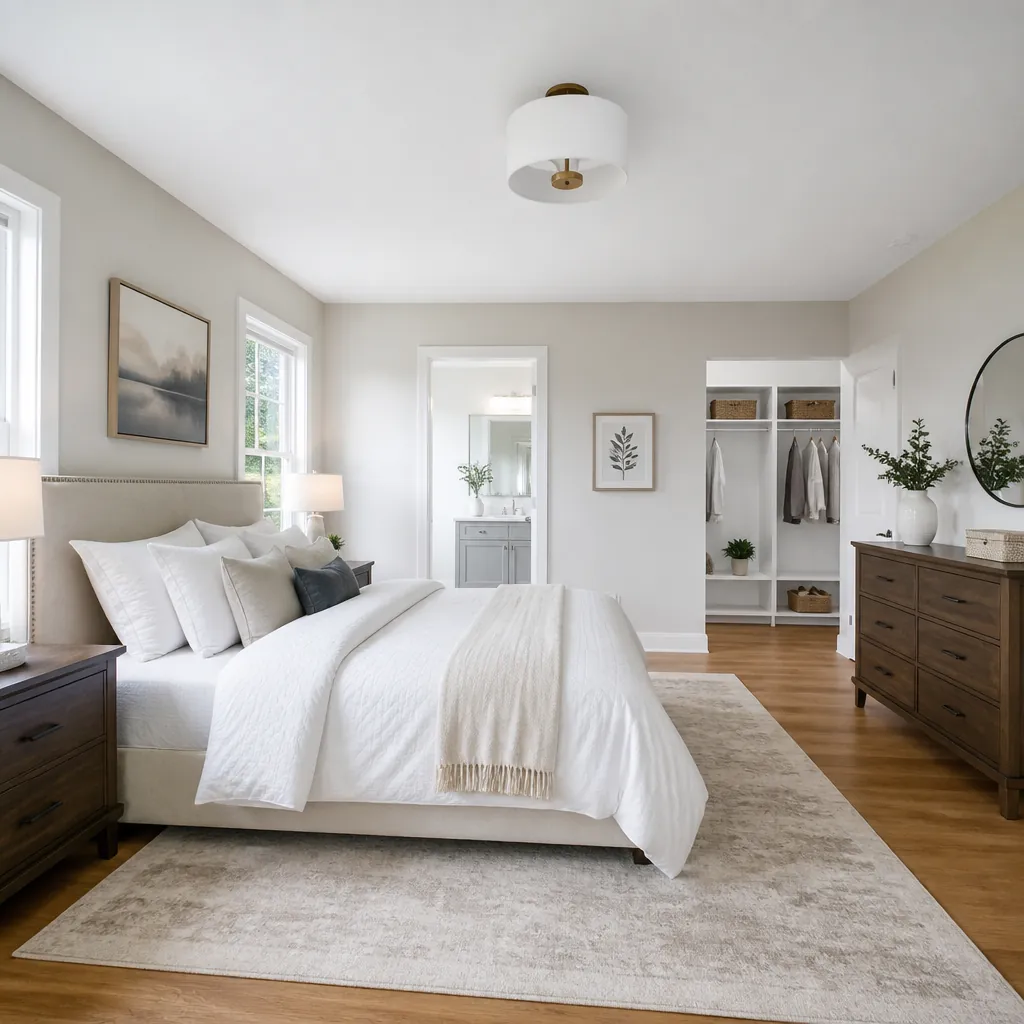
Your repairs are done. The paint's dry. The yard looks great. Now comes week four — the part where you polish everything and get ready to list. This is what separates the homes that sell quickly from the ones that sit.
Stage Each Room Strategically
You don't necessarily need a professional stager (though one can help — check the FAQ). Home staging is really just arranging your space so it photographs well and feels bigger, brighter, and more livable. The basics are straightforward.
- Define each room's purpose clearly. Buyers need to instantly know what a room is for. If a bedroom doubles as a home office and storage room, that sends mixed messages.
- Float furniture away from walls. Sounds backwards, but pulling furniture slightly out actually makes rooms feel larger.
- Use the rule of threes. Three candles, a plant, and one decorative piece look better than a cluttered shelf. Odd numbers just work visually.
- Let in light. Open every blind. Every curtain. Swap out any bulbs below 2700K (those yellowy-warm ones) for 3000K bulbs that feel clean and bright without being harsh.
- Add plants and natural elements. A few tasteful plants bring life without making the space feel like yours.
Depersonalize the Space
Here's the hard part. Buyers can't imagine themselves living here when they're staring at your family photos, your kids' artwork, monogrammed throw pillows, or your collection of vintage something-or-others. Pack it away:
- All family photos and portraits
- Religious or political items
- Children's artwork and schoolwork
- Personal memorabilia and trophies
- Personalized name items
And yes, this feels wrong. But it's not about being ashamed of your life or your family. You're helping buyers fall in love with the home itself.
Final Walkthrough and Inspection
Two or three days before you go live, do a final walkthrough. Better yet? Bring in a brutally honest friend. Ask them: "What jumps out first? Would anything make you walk away?" That unfiltered reaction tells you more than you'll learn on your own.
Check these too:
- Every light fixture works and all bulbs match in temperature
- All doors open and close smoothly
- There are no odors — cooking, pets, mustiness, or that overwhelming artificial air freshener smell
- Every surface is clean and uncluttered
- The whole house smells fresh and neutral (skip the plug-in air fresheners — buyers hate them)
Prepare for Showings
Work with your agent on a showing window that doesn't completely wreck your daily life. The standard: accept showings with 2–4 hours' notice, keep everything show-ready during the first two weeks, and have somewhere to go (pets included) when buyers are walking through.
And invest in professional photography. This isn't optional anymore. According to NAR data, homes photographed by professionals sell 32% faster and command $3,000–$11,000 more than those with amateur photos. You're looking at $150–$400 for a real estate photographer. Want to go further? Ask about a 3D Matterport tour — that's $200–$400 and gets remote and out-of-area buyers genuinely engaged with your listing.
Back to topHigh-ROI Improvements Worth Your Time
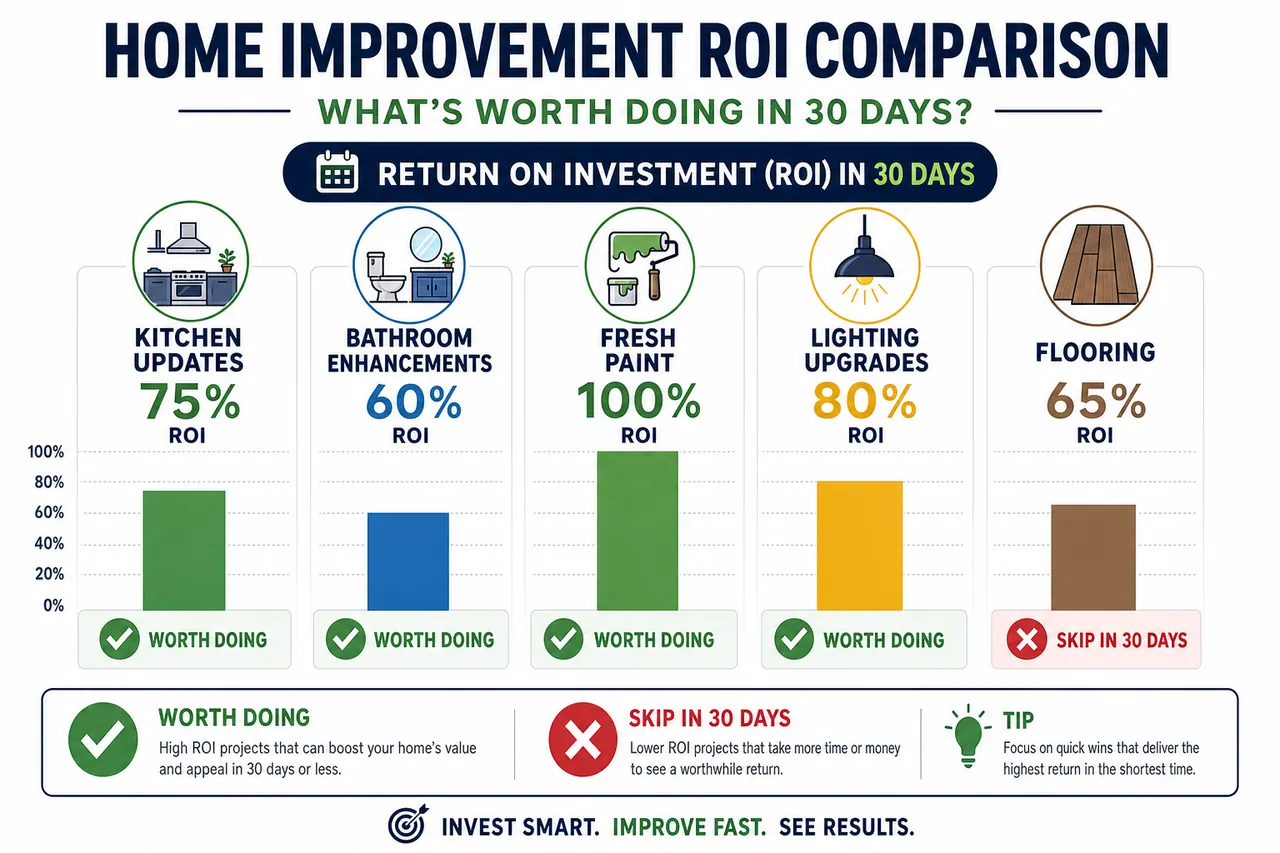
Here's the truth: not every improvement is worth your time or money. You've got 30 days and a limited budget. Some projects will add real value and speed your sale. Others will just drain your wallet with nothing to show for it.

| Improvement | Estimated Cost | Time Required | ROI / Impact | Priority |
|---|---|---|---|---|
| Interior paint (3–4 rooms) | $800–$2,000 | 3–5 days | 100–150% return | High |
| Cabinet hardware replacement | $100–$400 | 2–4 hours | Strong visual ROI | High |
| Landscaping / mulch / flowers | $200–$600 | 1–2 days | First impression boost | High |
| Professional cleaning | $200–$400 | 1 day | Buyer perception #1 factor | High |
| Lighting fixture upgrades | $150–$500 | 2–4 hours | Modernizes feel significantly | Medium-High |
| Carpet cleaning | $100–$300 | Half day | Freshens look and smell | High |
| Cabinet painting (kitchen) | $500–$1,500 DIY / $2,000–$5,000 pro | 3–7 days | High if dated; moderate if not | Medium |
| New kitchen faucet | $100–$300 | 1–2 hours | Quick modernization win | Medium-High |
| Power washing exterior | $150–$300 | Half day | Major curb appeal boost | High |
| New bathroom vanity light | $80–$200 | 1–2 hours | Modernizes bathroom feel | Medium |
| Bathroom re-caulk and grout | $50–$150 | Half day | Removes dated/dingy look | High |
| Professional photography | $150–$400 | 2–3 hours | Directly affects showing volume | Essential |
Kitchen Updates That Matter
Kitchens sell homes. Period. But here's what you need to know: a full kitchen renovation costs around $25,000 and you'll be lucky to break even at resale. And you don't have 30 days for that anyway. What you can do is smart, fast, and genuinely effective.
- Paint the cabinets if they're structurally sound but stuck in the 1990s. White or soft gray can make an outdated kitchen feel almost new. You're looking at 4–7 days whether you DIY or hire someone.
- Replace cabinet hardware entirely. New pulls punch way above their weight visually and cost you almost nothing.
- Install a new faucet. Spend $150–$250 on one with a pull-down sprayer. Buyers notice this immediately.
- Update the lighting. Swap out dated fluorescent boxes or old pendants for something contemporary. Two hours, $80–$300.
- Clean appliances obsessively. Buyers open the oven. They peek inside the fridge. A spotless appliance tells them you maintain your home.
Bathroom Enhancements
Mold, mildew, hard water stains, or crumbling grout? Buyers see these and immediately worry about health and maintenance costs. Don't give them that ammunition.
- Re-caulk tubs, showers, and sinks where caulk is cracked, yellowed, or missing
- Re-grout tile that's stained or falling apart (or use grout paint for speed)
- Swap the toilet seat if it's stained or old (new ones run $20–$60)
- Update the vanity light and faucet if they look dated
- Stage the space with fresh white towels and a simple soap dispenser for showings
Flooring and Paint
Scratched hardwood doesn't mean full refinishing. A buff and recoat costs a fraction as much and looks completely refreshed. Stained carpet? Replace it, especially in main living areas. Budget $1.50–$4 per square foot for builder-grade installation.
And paint—stick with neutral. Really unsure? Visit new home model homes in your neighborhood. Builders spend serious money on color research. Copy what they're using.
Lighting Upgrades
This is the element most sellers overlook. Dark homes feel small and cold no matter how big they actually are.
- Swap every bulb under 60W equivalent for 800-lumen (60W equivalent) LED bulbs. Keep the color temperature consistent at 2700–3000K
- Add floor lamps to shadowy corners
- Take down heavy drapes. Tie them back or replace them with sheer curtains
- Replace one or two obviously dated fixtures—a dining room chandelier or foyer light—with something current
What to Skip in 30 Days
Let's be direct.
- Major renovations: Gut-rehabs in kitchens and bathrooms take months, not weeks. You'll rarely recover the full cost anyway
- Roof replacement: Unless there's an active leak, let the buyer negotiate this at offer time
- HVAC replacement: If it still runs (even if it's old), disclose the age and let the market handle it
- Room additions or structural changes: Not happening in 30 days, and honestly, not necessary
- Swimming pool installation: Pools almost never add back what you spend, and they're irrelevant for a quick sale
Common Mistakes to Avoid
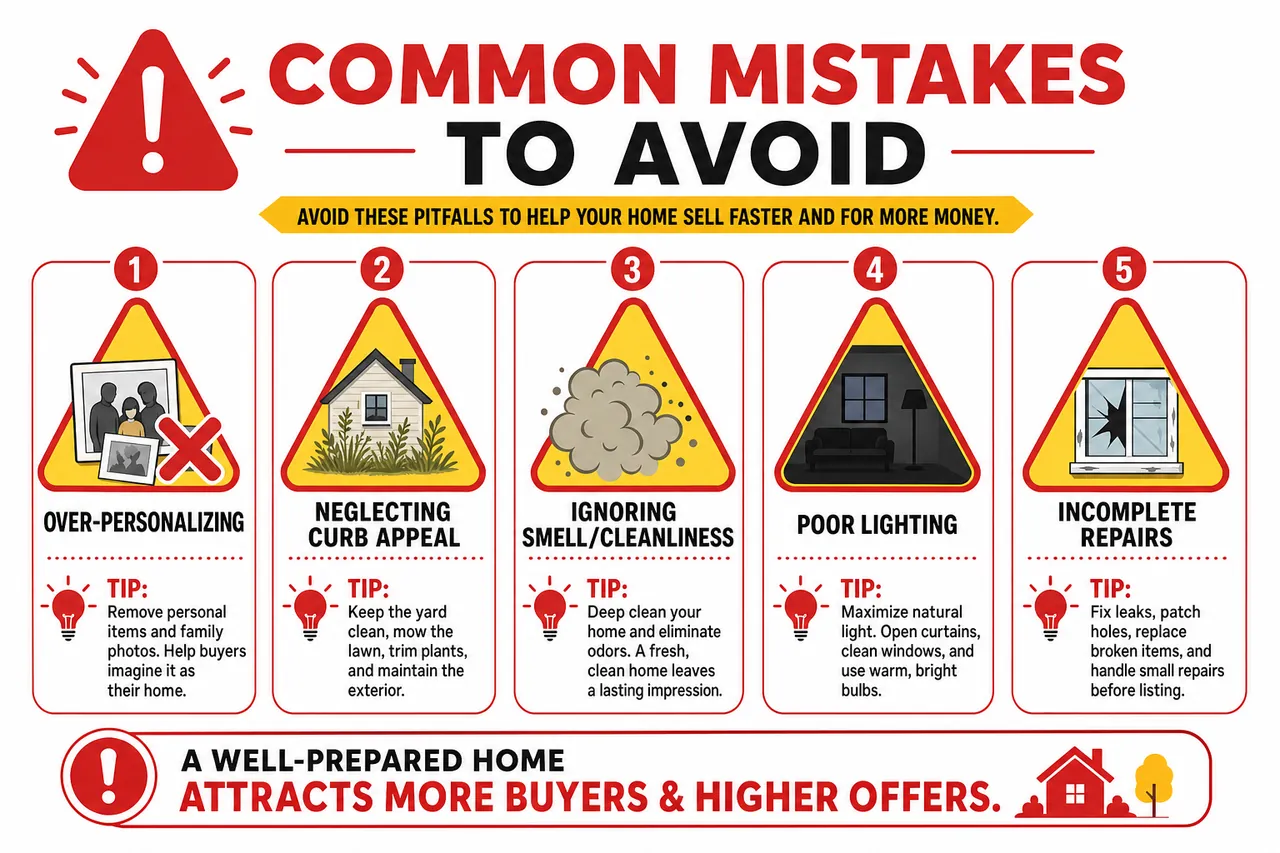
You'll see it happen all the time. Even well-meaning sellers stumble into the same costly errors — wasting time, burning through money, and watching buyer interest evaporate. The good news? You don't have to. Know what's coming, and you're already ahead of the game.
Over-personalizing or Over-decorating
Cozy and warm sound great until they're not. Many sellers cram every surface with decorative objects, candles, throws, and artwork trying to create that feeling. What actually happens? Rooms look smaller. Buyers get distracted from what matters — your home's actual features. The sweet spot is clean, warm, and minimal. Enough personality that it feels lived-in, but neutral enough that buyers can imagine their own life there.
Neglecting Curb Appeal
Your driveway and front yard matter more than you think. Some sellers pour everything into the interior while the outside sits neglected — and that's a mistake. Here's why: if a buyer pulls up and the exterior turns them off, they'll talk themselves out of going inside before they even unlock the front door. Every dollar you spend on curb appeal brings more showings. Interior staging alone can't do that.
Ignoring Smell and Cleanliness
Buyers will forgive a lot of things. Bad smells? Not on that list. Pet odors, cooking smells (especially fried food or heavy spices), cigarette smoke, mustiness — these are the reasons buyers develop negative feelings about otherwise solid homes.
Here's how to fix it:
- Hire a professional cleaning service before listing
- Steam clean carpets and upholstery
- Use an enzyme cleaner in pet areas
- Air out the home thoroughly before every showing
- A subtle, neutral fresh scent (fresh air or very mild citrus) is fine; heavy artificial fragrances make buyers suspicious
Poor Lighting Decisions
Dim bulbs, closed blinds, and broken fixtures scream neglect. Plus, they make rooms look smaller in person and photograph terribly. Ten minutes of work before each showing changes everything. Open the blinds. Turn on every light. Check that every bulb works. It costs nothing and transforms how buyers experience your home.
Incomplete Repairs
A partially patched wall that isn't painted. A door hanging off its hinges. Bathroom tile that's halfway re-grouted. These half-finished projects hurt you more than doing nothing at all. Buyers see them and think: what else is incomplete? It raises red flags and tanks confidence. Finish what you start, even if it means doing fewer projects overall. A fully completed smaller repair beats a half-done major one.
Back to topDisclosure Considerations When Selling Quickly
Here's what nobody talks about enough: rushing your sale doesn't give you a pass on disclosure. You're legally required to tell buyers about known material defects — foundation problems, water damage, mold, roof issues, HVAC failures, pest infestations, the whole list. Hiding what you know to speed things up? That's a lawsuit waiting to happen, sometimes years after you've already closed.
You've got known issues that won't get fixed in 30 days.
Back to top
