

Can You Sell Your House Before Filing Bankruptcy? Legal Options Explained


Table of Contents
- Can You Legally Sell Your House Before Bankruptcy?
- Understanding Exempt vs. Nonexempt Property
- The Bankruptcy Trustee's Look-Back Period
- Risks of Selling Before Bankruptcy
- How to Properly Sell Your House Before Bankruptcy
- Chapter 7 vs. Chapter 13: Selling Property Differences
- Red Flags That Trigger Trustee Investigation
- What to Do With the Sale Proceeds
- Common Mistakes to Avoid
- Conclusion: Proceed With Caution and Expert Guidance
- Frequently Asked Questions
You're asking yourself: can I sell my house before bankruptcy? Yes, you can. But here's what matters — bankruptcy trustees will look at everything with a critical eye. The timing of your sale, what you sell it for, every document, where the money goes — it all gets scrutinized. One wrong move and you're dealing with serious legal trouble. The good news? Selling your home before filing is actually a solid strategy if you do it right. This guide walks you through exactly what you need to know before you make any moves with your property.

Can You Legally Sell Your House Before Bankruptcy?
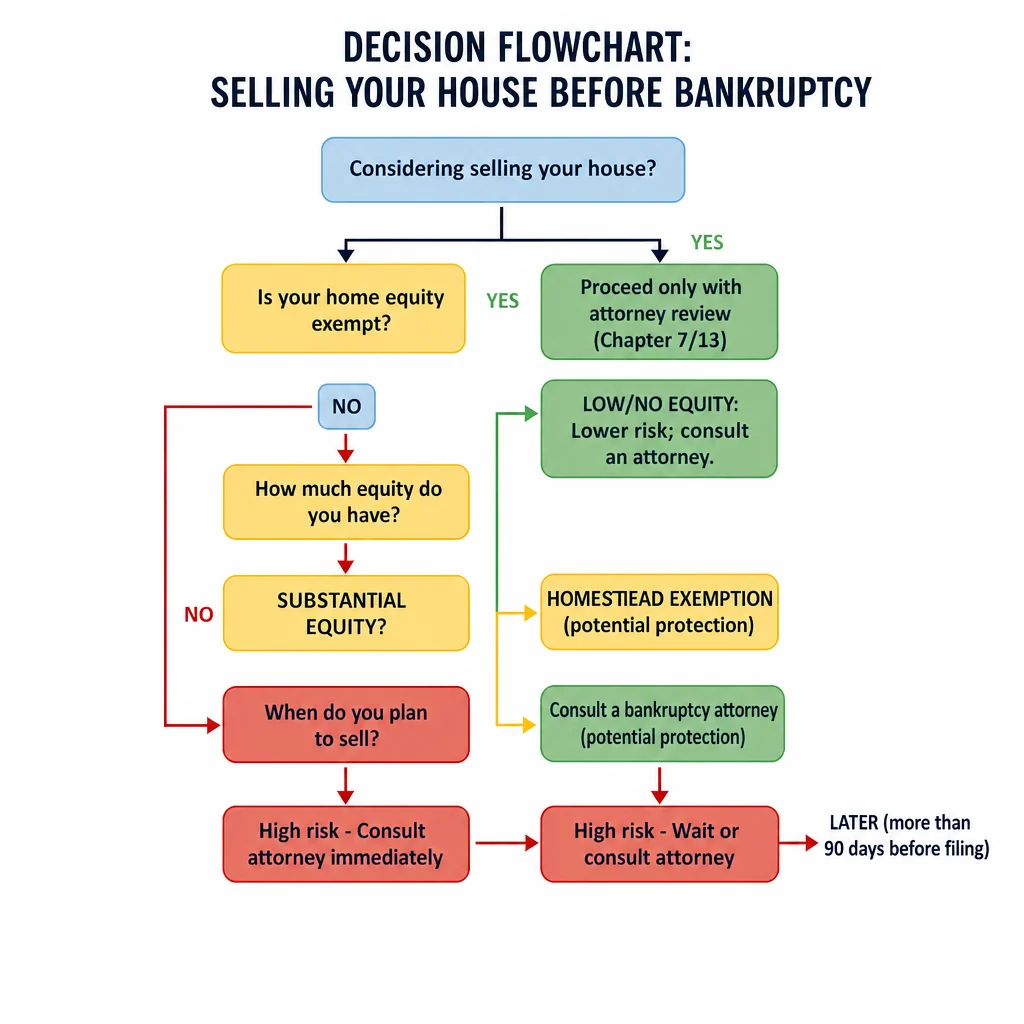
You can sell your house before filing for bankruptcy. But here's the catch—the sale won't necessarily go unquestioned. Bankruptcy trustees exist to spot suspicious asset transfers. They're trained to sniff out deals that look like you're trying to hide money from creditors. The court takes a hard look at every major financial move you make in the months (sometimes years) leading up to your filing.
Three things matter most when the trustee reviews your sale: Did you sell at fair market value? Is everything properly documented? And where'd the money go? If your sale checks all three boxes, you're in much better shape. But even a squeaky-clean transaction can become messy if the court questions your timing or motives.
Here's the practical bottom line. Selling before bankruptcy makes sense when your home equity is way above your state's homestead exemption and you want to keep the trustee's hands off your property. And it gets dangerous when the sale price drops below market value, when you're selling to family members, or when the proceeds vanish into accounts with no protection. Don't skip talking to a bankruptcy attorney first. It could save you thousands of dollars and months of headaches.
Back to topUnderstanding Exempt vs. Nonexempt Property
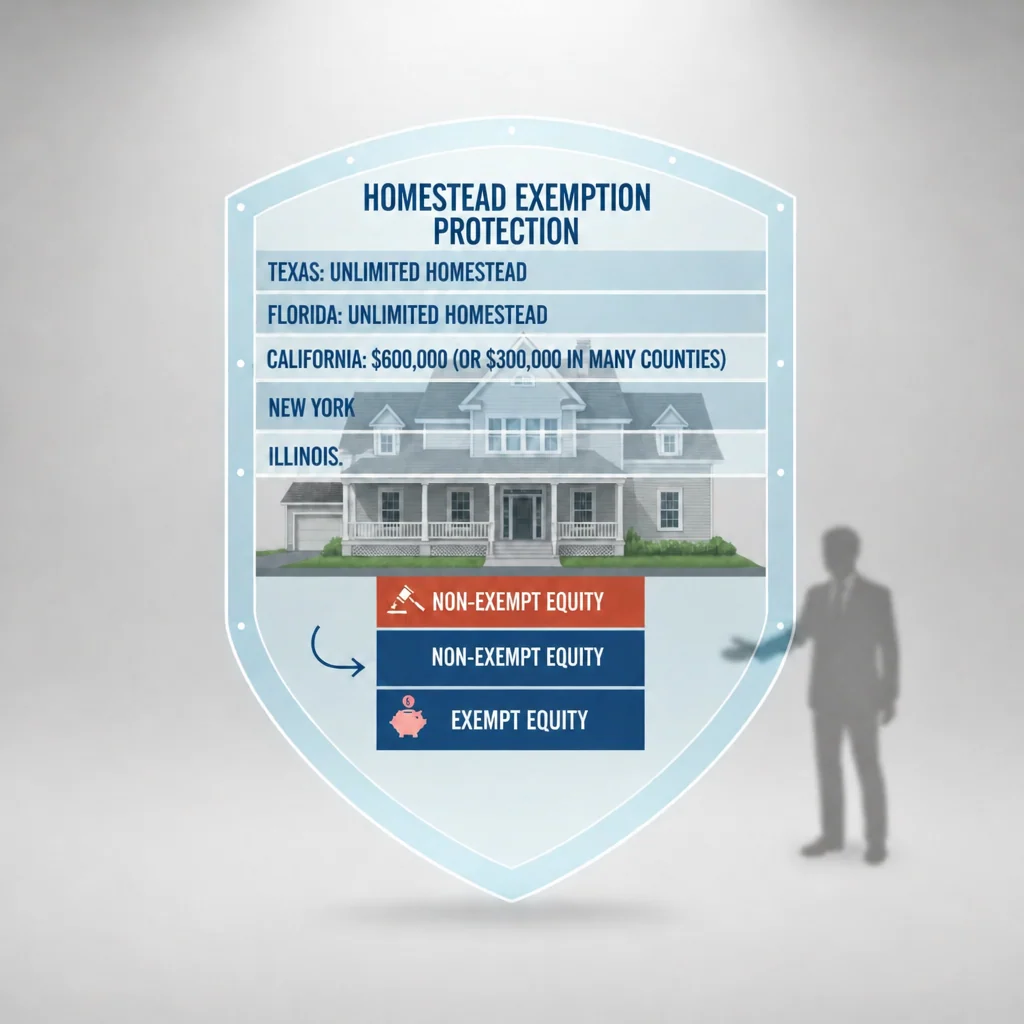
Here's what you need to know before you decide anything: bankruptcy law splits your property into two buckets. Exempt property stays protected from creditors — the trustee can't touch it. Nonexempt property is different. That's what gets liquidated in a Chapter 7 case to pay back what you owe.

Your home usually gets some protection through the homestead exemption. But don't assume you know how much. The protection you actually get depends entirely on where you live. Florida and Texas? You're looking at unlimited homestead exemptions — your entire home equity could be off-limits. California caps it at $600,000 (or $300,000 in many counties). And states like Indiana and Tennessee? They're much stingier, sometimes protecting only $25,000.
What happens if your home equity is bigger than your state's exemption? The trustee sells the house and takes the overage to pay creditors. That's why selling first — before bankruptcy, at fair market value, with clean paperwork — might actually give you control over how this plays out and where the money goes.
But here's the flip side: if your equity sits safely under the exemption limit, selling could backfire. You'd convert protected property into cash that absolutely can be seized.
There's another wrinkle too. If you're carrying property tax debt, you've got to understand how back taxes affect a home sale before you move forward with anything.
Back to topThe Bankruptcy Trustee's Look-Back Period
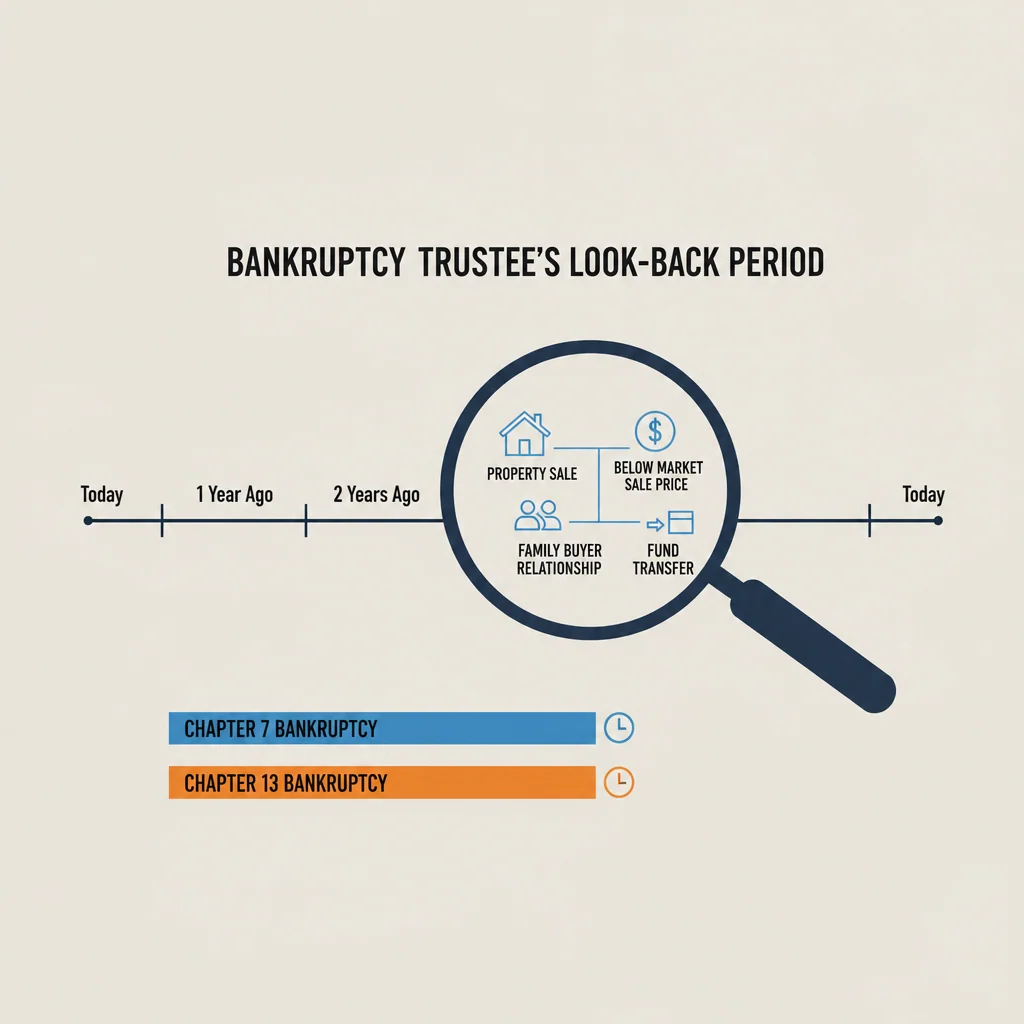
Before you file for bankruptcy, you need to understand the trustee's look-back period. This is the window of time — measured backward from your filing date — where a court can dig into your property transfers and potentially undo them. And it's longer than most people think.
| Transaction Type | Look-Back Period | Risk Level |
|---|---|---|
| General Property Transfer | 2 years before filing | Moderate |
| Fraudulent Conveyance (federal) | 2 years before filing | High |
| Fraudulent Conveyance (state law) | Up to 6–10 years | Very High |
| Family or Insider Transaction | 1 year (preferential) / 2+ years (fraudulent) | Very High |
| Below-Market Sale | 2–4 years depending on state law | High |
| Immediate Pre-Filing Sale (within 90 days) | 90 days (preferential) / 2 years (fraudulent) | Extreme |
Here's what matters: the federal Bankruptcy Code lets trustees challenge transfers made two years before you file if they were designed to defraud, delay, or hinder creditors. But state laws? They can stretch that window much further — sometimes all the way to ten years. That's a huge difference. Did you sell your home 18 months ago at full market price? You're sitting in a much safer position than someone who sold three weeks before filing at a steep discount. Timing isn't everything, but it absolutely changes the legal outcome.
Back to topRisks of Selling Before Bankruptcy
Selling your house before bankruptcy? You're playing with fire. The biggest threat is a fraudulent conveyance claim. That's when the bankruptcy trustee argues you sold the property to hide assets from creditors. The trustee doesn't need to prove intent — just a suspicious pattern.
Watch out for this: selling below market value is the red flag that'll get you in trouble. Say your home's worth $300,000 but you sell it for $200,000. The trustee can go after that $100,000 difference, even if you sold to a stranger. Sell to a family member at a discount? That's exponentially worse in the trustee's eyes.
And here's where most people stumble. You get $180,000 from the sale and stick it in your checking account. Guess what happens? The trustee seizes it. Your only real protection is converting that cash into exempt property — like buying a new primary residence in a state with high homestead exemptions. But you've got to do it right. One misstep, and it looks like last-minute asset shielding.
Don't forget about HOA liens either. If your property has them attached, you'll need to resolve those complications before or at closing. Learn how HOA liens can affect your home sale before you move forward.
Back to topHow to Properly Sell Your House Before Bankruptcy
So you've decided—maybe with your bankruptcy attorney's help—that selling before you file actually makes sense for your situation. Here's what you need to do to do it right.
- Talk to a bankruptcy attorney first. Don't skip this step. Your attorney can look at your equity, figure out what you can actually exempt, and assess the whole financial picture before you sign anything with a buyer.
- Get a professional appraisal. Hire an independent licensed appraiser and document that fair market value in writing. This protects you if a bankruptcy trustee later questions whether you sold too cheap.
- Work with a licensed real estate agent. A licensed agent gives you real credibility. You'll have a documented listing, a clear marketing history, and a negotiation paper trail that shows you actually tried to get the best price.
- Take offers at or near market value. Turning down a full-price offer because you want less money? That raises red flags. The trustee will absolutely question your judgment.
- Keep every piece of paper. All offers. Counteroffers. Emails. The appraisal. The closing statement. Everything goes in a file.
- Plan what happens to the money before you file. This is crucial. Work with your attorney now to figure out how to handle those proceeds in a way that's legally protected.
- Tell the whole truth on your bankruptcy petition. You have to disclose the sale. All of it. Hiding a recent sale is fraud, and fraud can destroy your bankruptcy case.
In Florida, the rules get trickier—especially if you're dealing with back taxes on top of everything else. Check out the Florida-specific rules around selling a house with back taxes before you move forward.
Back to topChapter 7 vs. Chapter 13: Selling Property Differences
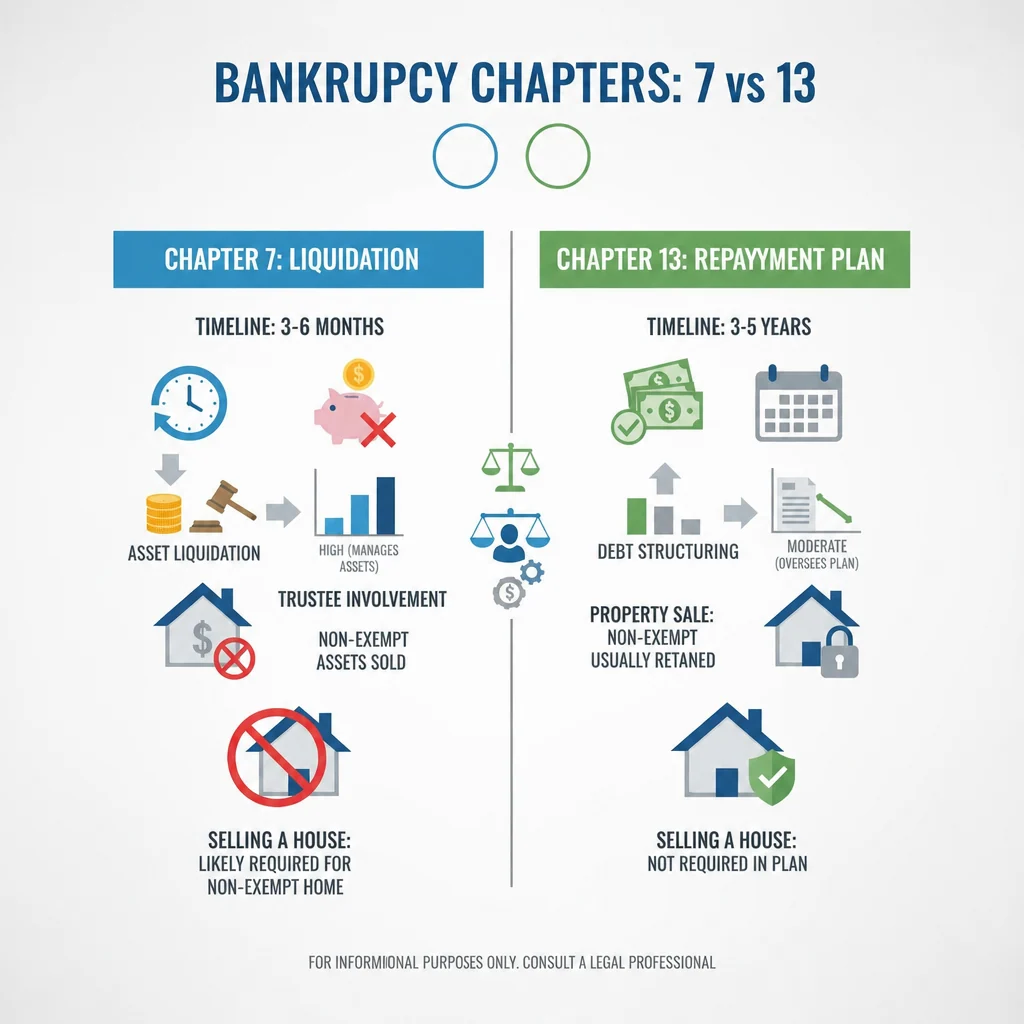
Your choice between Chapter 7 and Chapter 13 changes everything about how your property gets treated—both before and after a sale. Getting this right is essential to your strategy. So which one actually protects your home and your assets?

| Factor | Chapter 7 | Chapter 13 |
|---|---|---|
| Asset Protection | Nonexempt assets liquidated | Assets protected in repayment plan |
| Trustee Authority | High — can sell your property | Limited — oversees repayment |
| Court Approval Required | Generally no (pre-filing) | Yes — required for post-filing sales |
| Timeline to Sell | Faster; 3–6 months to discharge | Slower; 3–5 year repayment period |
| Best for Homeowners | When equity is low or exempt | When you want to keep your home |
| Creditor Impact | Debts discharged after liquidation | Debts paid over time; home retained |
Chapter 7 gives the trustee real power. They can liquidate any nonexempt property you own—and yes, that includes your home. This is why selling before filing makes sense if your home's equity is larger than what your state allows you to protect. And then there's Chapter 13. You don't lose your assets. Instead, you commit to a 3–5 year repayment plan and keep what you have. But here's the catch: if you want to sell during Chapter 13, you need the court's permission first. Whatever money you get from that sale might have to go straight into your repayment plan. For homeowners who've got solid equity and a steady income, Chapter 13 typically gives you better protection for keeping your home.
Back to topRed Flags That Trigger Trustee Investigation

Trustees know what suspicious looks like. They've seen the patterns before — and they're trained to spot them. Want to stay off their radar? Here's what actually catches their attention.
| Red Flag | Why It's Concerning | How to Avoid It |
|---|---|---|
| Below Market Value Sale | Suggests intent to reduce assets available to creditors | Get a certified appraisal; sell at fair market value |
| Family or Friend Transaction | Insider deals are presumed fraudulent until proven otherwise | Avoid if possible; use arm's-length transaction standards |
| Rapid Multiple Transfers | Pattern suggests asset concealment scheme | Limit transactions; document all transfers with clear rationale |
| Sale Just Before Filing | Timing implies intent to defraud creditors | Allow time between sale and filing; consult attorney on timing |
| Unclear or Missing Documentation | Raises questions about legitimacy of transaction | Keep all records: appraisals, offers, contracts, HUD statements |
| Unusual Payment Terms | Deferred payments or seller financing may hide true value received | Use standard cash or financed transactions; avoid creative deal structures |
And here's something Colorado homeowners often miss: HOA liens can seriously derail a pre-bankruptcy sale. Before you list, check the Colorado HOA lien rules so you know exactly what you're dealing with.
Back to topWhat to Do With the Sale Proceeds
Many homeowners stumble right here. You get the check, and suddenly the money feels like yours to spend. But that's not quite how it works — not if bankruptcy is in your future. Your trustee will scrutinize every single dollar.
The smartest move? Buy exempt property right away. This is your strongest protection under bankruptcy law. In states with generous homestead exemptions, you could purchase a new primary residence and shield those funds from creditors. Tools of the trade, retirement accounts, household goods — your state might protect these too if you spend strategically.
Now for what kills people's cases. Don't transfer money to family members. Don't let big cash sit in your bank account unexplained. Don't pay back personal loans to relatives (that's a preferential payment, and trustees hate it). And definitely don't shuffle funds around hoping no one notices.
Living in Indiana or Washington? This stuff gets even trickier with state-specific rules. Check out our guides on selling a house with back taxes in Indiana and selling a house with back taxes in Washington to see how your state handles this.
Back to topCommon Mistakes to Avoid
- Selling below fair market value — Even a small discount can trigger a fraudulent conveyance investigation.
- Failing to disclose the sale to your attorney — Your legal team needs to know everything. Surprises in bankruptcy court are never good.
- Hiding or misallocating proceeds — Moving money around to obscure where it came from or where it's going? That's fraud.
- Not getting a professional appraisal — Without documented fair market value, you've got no defense when a trustee comes calling.
- Selling to family members — Even if the price is right, insider transactions get scrutinized heavily. Talk to your attorney first.
- Assuming proceeds are automatically protected — They aren't. Everything hinges on how you use the money and when.
- Waiting too long to consult an attorney — Early planning works. Last-minute decisions? That's when mistakes happen.
Got tax complications on top of everything else? Tennessee and California homeowners should check out state-specific guidance: selling a house with back taxes in Tennessee and selling a house with back taxes in California.
Back to topConclusion: Proceed With Caution and Expert Guidance
Here's the thing: you can legally sell your house before filing for bankruptcy. But it's also one of the riskiest financial moves you can make without proper legal help. Bankruptcy courts have look-back provisions. There's fraudulent conveyance law to worry about. The trustee will scrutinize everything. Even a transaction you thought was totally legitimate can blow up your entire case in this complex legal environment.
The good news? A properly executed pre-bankruptcy home sale actually works. You get more control over your assets. You protect equity that might otherwise get seized. You set yourself up for a stronger financial fresh start. And that outcome — that control, that protection — it's worth pursuing.
But you can't do it alone.
A qualified bankruptcy attorney isn't optional here. They're essential. They know exactly how courts will judge your transaction and what paperwork you need to survive scrutiny.
At KDS Homebuyers, we work with homeowners in your exact situation all the time. We handle fast, fair, transparent transactions that hold up when lawyers start asking questions. If you're thinking about selling before or during bankruptcy, contact our team and let's talk through your options.
Back to topFrequently Asked Questions
Can I sell my house right before filing bankruptcy?
You technically can. But here's what you need to know: sales made right before filing get heavy scrutiny from trustees. Any sale within 90 days of filing gets flagged for preferential treatment. And sales within two years? Those can be challenged as fraudulent conveyances. The closer you get to your filing date, the bigger your legal risk becomes. Before you do anything, talk to a bankruptcy attorney.
Will the bankruptcy trustee take my home sale proceeds?
If you've got the money sitting in your bank account when you file, yes — the trustee could seize it as a nonexempt asset. That is, unless you've already used it to buy something exempt property protects. The real answer depends on three things: your state's exemption laws, what you actually did with the money, and how close the sale was to your filing date.
What's a fraudulent conveyance in bankruptcy?
This happens when you transfer property — like selling your home — in a way that hurts, delays, or tricks your creditors. Selling below market value counts. Selling to a family member at a discount counts. Even giving property away before filing counts. And here's the catch: courts can undo these transactions and put the property (or its cash value) right back into your bankruptcy estate.
Is selling a house before Chapter 7 different from before Chapter 13?
Very different. Chapter 7 gives the trustee broad power to liquidate your nonexempt assets, so a pre-filing sale might actually let you control what happens — but those proceeds become fair game for creditors. Chapter 13 is the opposite. You keep your assets but have to fund a repayment plan over several years, and the court has to approve any property sales you make after filing. Your choice of chapter should be part of a bigger strategy you develop with your attorney.
How does the homestead exemption affect my decision to sell?
The homestead exemption is your shield. It protects a portion of your home's equity from creditors. If your equity is within that protected amount, your home stays safe in bankruptcy — you might not have to sell at all. But if you've got equity above the exemption limit? The trustee can force a sale anyway. Look up your state's exact exemption amount. It's the only way to know whether selling before bankruptcy actually makes sense for you.
Back to top

