Can You Sell Half a Duplex? Splitting Property Sales Explained

Table of Contents
- Can You Sell a Duplex Separately? The Legal Reality
- Understanding Duplex Ownership Structures
- Legal Requirements for Separating a Duplex Sale
- Cost and Timeline Considerations
- Shared Systems and Maintenance Agreements
- Co-Ownership Challenges and Right of First Refusal
- Buyer Challenges and Market Impact
- Disclosure and Practical Steps Before Selling
- When Selling the Whole Duplex Makes More Sense
- Ownership Structures at a Glance
- Half vs. Whole Duplex Sale: Financial Considerations
- State-Specific Considerations
- Conclusion
- Frequently Asked Questions
You can sell half a duplex — but only if the legal setup allows it, and it's messier than selling a regular house. The whole thing hinges on how the deed is written. Most duplexes are registered as one property, so splitting them for sale means getting lawyers involved to untangle the ownership structure. Before you do anything, talk to a licensed real estate attorney and a CPA about your specific situation. This article is informational only and doesn't replace legal, tax, or financial advice.

Can You Sell a Duplex Separately? The Legal Reality

What It Means to Sell Half a Duplex
When you ask about selling a duplex separately, you're probably thinking about one of two situations. Maybe you want to sell just one physical side of the building to a different buyer. Or maybe you're trying to sell your ownership stake in a property you share with someone else. These aren't the same thing legally, and they don't work the same way. Selling a physical unit requires that unit to have its own legal description, its own parcel ID, and its own deed. Most duplexes don't come with these automatically. Selling your co-ownership share? That's technically doable, but it'll drastically shrink your buyer pool and tank your price, which we'll get into below.
The Short Answer: It Depends on Your Title
Your title structure determines everything here. Is your duplex recorded as a single parcel with two owners holding an undivided interest? Then you can't hand off just your side to a buyer without putting that property through a legal separation process first. Have the two units already been split into separate legal parcels — either as condominiums or via subdivision? Then each one sells independently, like any other house. Before you make any moves, figure out which situation you're actually in.
Back to topUnderstanding Duplex Ownership Structures
Single Title (Co-Owned) Duplexes
Most duplexes across the country sit on one lot under a single legal parcel. That means one tax parcel number, one deed, one set of property taxes for the whole building. When two or more people own it together, each person holds what's called an undivided interest — a percentage stake in the entire property, not the right to claim one specific side as yours. You can't point to the wall between the units and legally call one half yours without going through formal separation. Want to sell? Every co-owner has to agree, no exceptions.
Separately Titled Duplexes
Some duplexes have been split into individual legal units. This usually happens through a condominium conversion or lot subdivision. Each unit gets its own legal description, its own parcel number, its own deed. That means you can mortgage, sell, or transfer your unit completely on your own — without waiting for the other owner's signature. The only catch? Check for any right of first refusal clauses buried in your shared documents. These properties sometimes go by names like "attached condominiums" or "townhome-style condos," even though they look like a traditional side-by-side duplex from the street.
How to Check Your Title Status
Start at your county appraisal district or assessor's database — that's the fastest way to get answers. One parcel ID covering both units? You've got a single legal parcel. Each unit has its own parcel number? The property's already been legally separated. But don't stop there. Order a preliminary title report from a title company to see the full picture — deed restrictions, covenants, easements, and all recorded ownership interests. Read everything before you list or commit to selling. Undisclosed encumbrances can blow up a deal even after you're under contract.
Back to topLegal Requirements for Separating a Duplex Sale
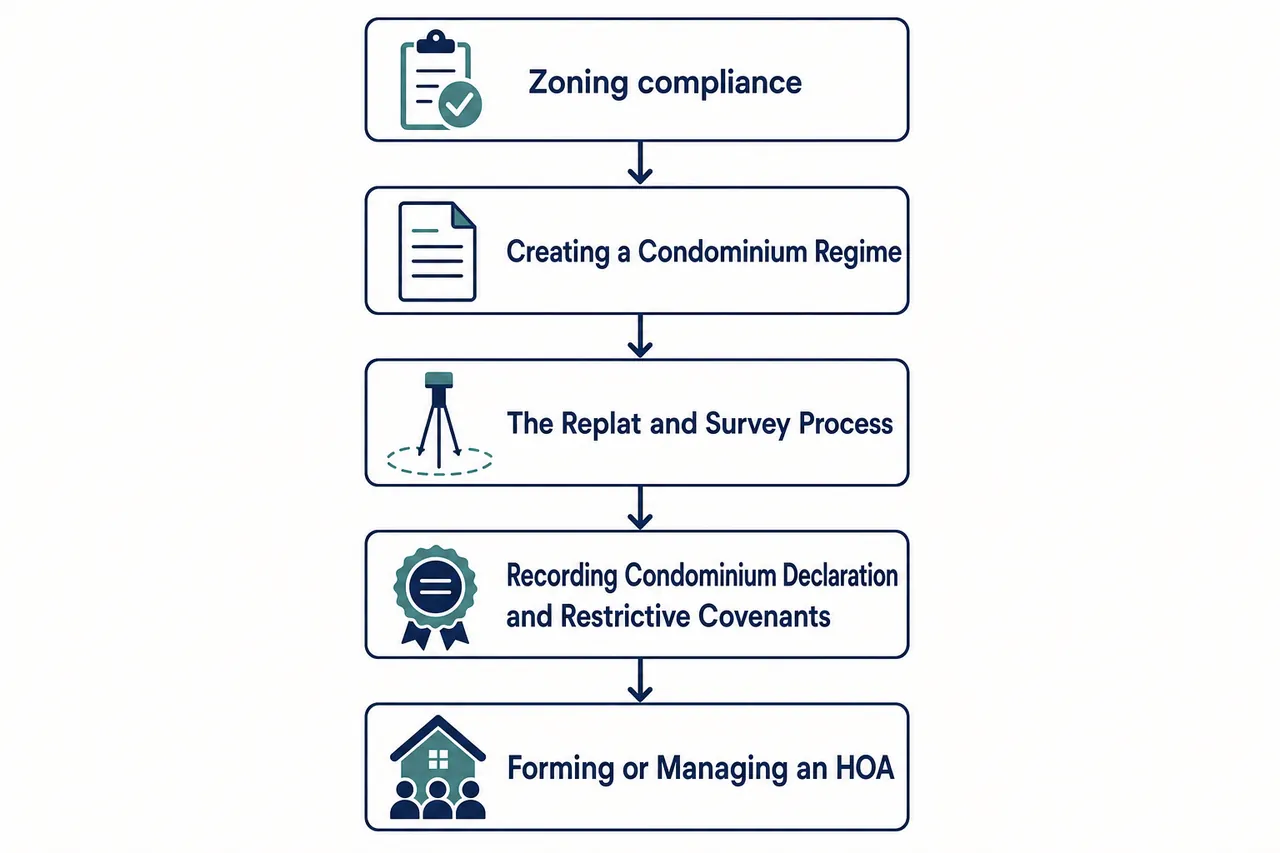
Want to sell just one unit of your duplex? You'll need to legally separate the property first—and it can't be rushed. The process varies by state, but most follow the same general path. Skip a step or get the order wrong, and you're stuck with a property no title insurance company will touch and no lender will finance.
Creating a Condominium Regime
Your best bet is creating a condominium regime under your state's condominium act. Most states follow either the Uniform Condominium Act or the Uniform Common Interest Ownership Act—Texas uses the Texas Uniform Condominium Act, for example. Here's what happens: each physical unit becomes its own legal property. Everything shared—the roof, exterior walls, foundation, stairwells—becomes common elements that both units own together. It's the same legal structure used for high-rise condos, just applied to your two-unit building. Before you even start, though, check with your local zoning office. Some municipalities block condominium conversions in certain zones or demand minimum lot sizes you might not meet.
The Replat and Survey Process
A licensed surveyor has to create a condominium plat—basically a new legal map of your property—before anything gets recorded. This plat shows exactly where each unit begins and ends (usually at the interior surface of the perimeter walls), marks the common elements, and identifies any limited common elements like a specific parking space or patio that only one unit can use. Your local planning or engineering department reviews and approves it. Then it gets recorded in the public property records. This step alone? Expect several weeks to months, depending on how backed up your jurisdiction is.
Recording Condominium Declaration and Restrictive Covenants
After the plat's approved, a real estate attorney drafts and records the condominium declaration—some states call it the Master Deed. This document spells out each unit's exact boundaries, lists the common elements, establishes what rights and responsibilities each owner has, and determines what percentage of the common elements each unit owns. Alongside it go restrictive covenants (CC&Rs—Covenants, Conditions, and Restrictions). These rules control how the property gets used, what changes you can make, and how disputes get resolved. One mistake here—a boundary error, a missing easement, a notarization problem—and your whole separation could be invalid. Both units' titles get clouded. It's not worth cutting corners.
Forming or Managing an HOA
Most state laws require you to establish a homeowners' association or condominium owners' association to manage the common elements going forward. For a two-unit duplex, it might feel like paperwork just for the sake of paperwork—you're the only two members—but it's legally real. Regular meetings. Maintained records. A budget for shared expenses. And shared costs come up constantly: roof replacement, exterior painting, foundation work, common utilities. You need to figure out how those bills get split and paid. Even a minimal two-unit HOA means ongoing administrative work that catches many owners off guard.
Back to topCost and Timeline Considerations
Before you commit to separating a duplex, you need to evaluate the financial case carefully. Costs vary significantly by state and local jurisdiction—and some markets simply don't support pricing premiums large enough to justify the separation expense.
Professional Fees and Expenses
You'll face costs in several categories: surveyor fees for the condominium plat and legal descriptions, real estate attorney fees for drafting the condominium declaration and CC&Rs, and local government filing and recording fees for the plat and declaration. In straightforward jurisdictions, survey and attorney costs together might run a few thousand dollars. In complex urban markets or states with demanding condominium act requirements, you're looking at well over $10,000. Recording fees vary by county—so call your county clerk's office for specifics. Does your building need utility separation? Running individual service lines to each unit means utility company connection fees and potential infrastructure costs on top of everything else. No authoritative published database of these costs by state exists, so treat any figure you hear as a local estimate. Get itemized quotes from local professionals before you budget.
Tax and Appraisal Implications
Your county assessor won't recognize the units as separate properties until the formal condominium regime is properly recorded and accepted. That means no separate tax bills yet. This matters for buyers, who need to know their individual tax liability going in. After separation, each unit gets its own assessed value and its own tax account. The rental side gets complicated fast. If the duplex has been used as a rental, the rental portion of a sale carries depreciation recapture tax at a federal maximum rate of 25% on unrecaptured §1250 gains—regardless of whether you actually claimed depreciation. The IRS applies an "allowed or allowable" rule under the 27.5-year straight-line depreciation schedule for residential rental property. Now for the personal residence portion. It may qualify for the IRC §121 exclusion of up to $250,000 for single filers or $500,000 for married filing jointly, provided you meet the ownership-and-use test—living in the unit as your principal residence for at least 24 months out of the prior 60 months. Any gain above that exclusion is subject to long-term capital gains rates of 0%, 15%, or 20% at the federal level. And you might owe the 3.8% Net Investment Income Tax if your modified adjusted gross income exceeds $200,000 (single) or $250,000 (married filing jointly). Consult a CPA who specializes in real estate transactions. The allocation of basis, depreciation recapture, and exclusion between residential and rental portions of a duplex is genuinely complex.
Timeline for Separation Process
Three to six months is the minimum timeframe in straightforward jurisdictions—from first surveyor engagement to recorded condominium documents. That's the best-case scenario. California's larger counties and many urban Texas markets? You're looking at twelve months or more because of longer government review cycles. Factor this timeline into your sale planning. List a unit before the legal separation is complete and you'll generate buyer interest you can't act on. Conditional listings ("selling pending condo conversion") are difficult to price and market. For state-specific guidance on selling multi-family property in California or in Colorado, those resources cover additional local requirements.
Back to topShared Systems and Maintenance Agreements
Identifying Shared Building Elements
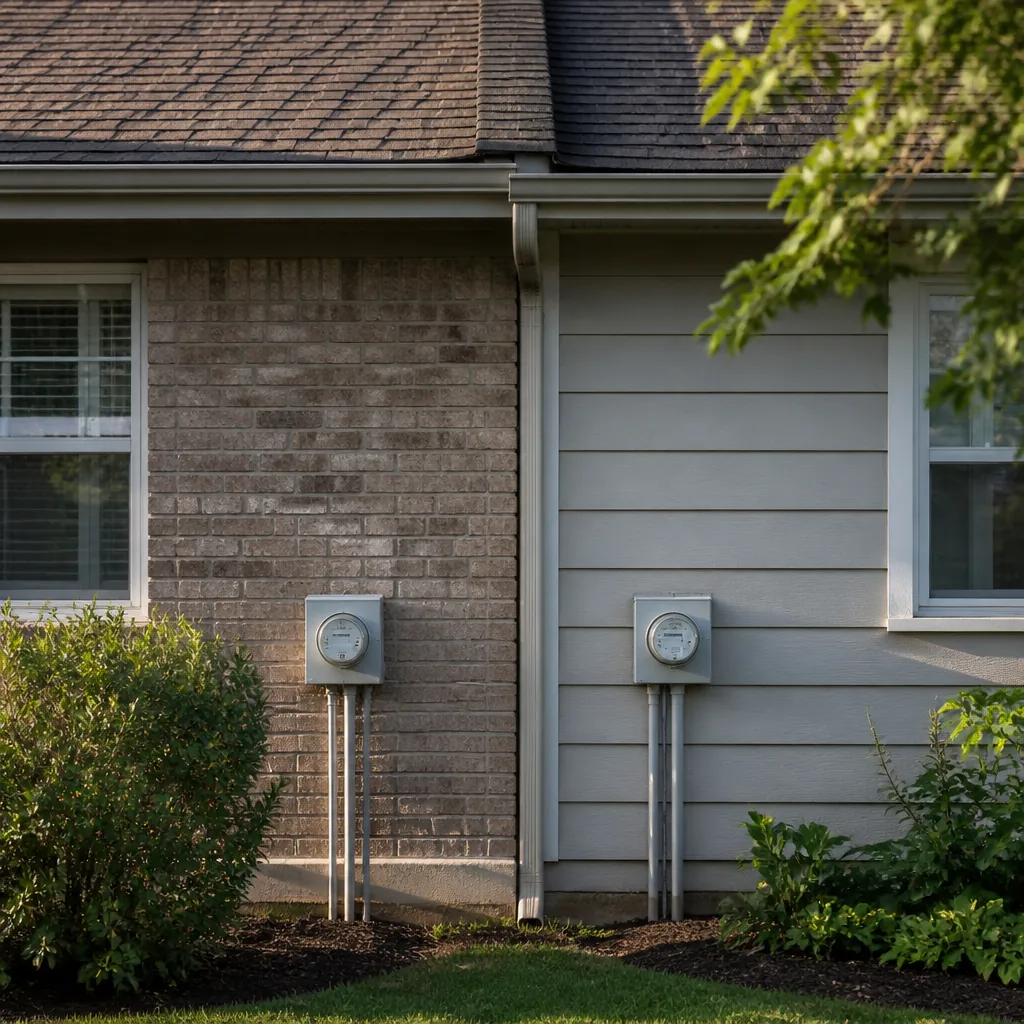
After the legal separation closes, you're still dealing with a building that has shared components. These don't go away. Your roof, foundation, party wall between units, exterior siding, shared driveways, and utility lines — they're all still there, and they're both your problems now. A survey will map out the legal description of each parcel. That's essential. But it won't tell you if the shared structure is actually sound. You'll want a structural engineer's report too, separate from the survey. During the separation process, watch for environmental red flags: shared drainage problems, boundary encroachments, or contamination. These issues complicate everything and can tank the marketability of both units before you even list them.
Drafting Maintenance Agreements
Your condominium declaration and CC&Rs need to spell out maintenance obligations in explicit, numbered terms. Who fixes the roof? How do you split the bill? What happens if the other owner refuses to pay? How do you decide about major repairs? Don't use vague language like "shared equally" — that's not sufficient. Future buyers and their lenders will read these documents word by word. A maintenance agreement that's silent on roof replacement funding is a massive red flag. Experienced agents flag it immediately, and buyers walk.
Party Wall and Easement Issues
That wall between your two units needs its own legal agreement. Party wall provisions (or a separate party wall agreement) have to cover what either owner can do to it, who maintains and repairs it, and how structural changes get approved. Shared driveways, utility easements that cross one parcel to serve the other, and shared fencing must all be formally documented as easements appurtenant. Record them in the public property records. And don't rely on informal handshake deals with your current neighbor — they won't bind the next owner. Post-separation disputes almost always trace back to these unwritten arrangements.
Utilities After Separation
Pay close attention to utilities. They affect how you live day-to-day and what lenders will finance. If both units share a single water, gas, or electrical meter right now, the utility companies might not establish separate accounts without a recorded condominium plat showing separate legal parcels. Some companies demand a recorded plat. Others will work with just a recorded legal description but want you to pay for new service line infrastructure. Call each utility company before you start the separation process — get it in writing. Utility companies move on their own timeline, and their delays can derail your entire sale.
Back to topCo-Ownership Challenges and Right of First Refusal

When Co-Owners Disagree
Got a duplex on a single title with another owner attached to it? You can't sell the whole property without their sign-off. That co-owner might be a sibling, an ex-partner, or someone you inherited the place with. What you *can* do is sell your undivided interest, but we'll get to why that's significantly less attractive in a moment. Attorneys hear about co-ownership disputes constantly — they're some of the most common headaches duplex owners face. The other person might have entirely different plans for the property, disagree on what it's actually worth, or simply won't return your calls. And then there are the fights about who pays for maintenance, how rental income gets split, and whether major improvements should happen at all.
A co-ownership agreement drawn up when you two originally acquired the property — one that lays out maintenance obligations, cost allocation, who gets to make decisions, and how either of you can exit — prevents most of these disasters. Many co-owners never bother drafting one, though. If you're stuck without an agreement, an attorney can walk you through what options actually exist.
Right of First Refusal Clauses
Check your condo declaration and any co-ownership agreement carefully. Many include a right of first refusal (ROFR) clause. This means your existing co-owner gets the chance to match any legitimate offer you receive from a third party before you can accept it. The timeframe varies — typically 10–30 days, though your specific documents control — but you're required to present any accepted offer to your co-owner within that window and give them time to exercise their right. Blow past this requirement and your co-owner can void the entire sale and sue you for damages. Before you list, pull your deed, any co-ownership agreement, and any recorded CC&Rs and search them for ROFR language.
Partition Lawsuits and Forced Sales
Can't agree on a sale or buyout? Either co-owner can file a partition action in court. Every U.S. state has partition law, though the specifics vary by jurisdiction. The court is asked to either divide the property between you or — more commonly, since you can't really split a building in half — order a forced sale at auction with proceeds divided based on each person's ownership percentage. These lawsuits drag on. One to three years is typical, depending on where you live and how backed up the courts are. And they're expensive. You're paying attorney fees, court costs, and possibly a referee or court-appointed commissioner to oversee the process. The auction price often comes in below what you'd get on the open market because of how auctions work.
Some states adopted the Uniform Partition of Heirs Property Act, which gives specific protections to heirs who inherited jointly and may let co-owners force a buyout before a forced sale happens — check your state's statutes to see if this applies to you. Think of partition as your absolute last resort. For more on managing these situations, see our guide on how to sell a duplex or multi-family property.
Back to topBuyer Challenges and Market Impact
You've made it through the legal separation. That's big. But selling one half of a duplex? It's not like selling a single-family home.

Financing Obstacles for Half-Duplex Buyers
Fannie Mae, Freddie Mac, and FHA lenders all have the same requirement: they won't touch a mortgage unless you've got clean, separately deeded units. If you've done that legal separation right, a buyer can get conventional financing up to the 2026 baseline conforming loan limit of $1,066,250 for a 2-unit property in standard areas. High-cost regions push that ceiling to $1,599,375. An owner-occupant might qualify for FHA financing with just 3.5% down.
But there's a catch nobody tells you about: lenders dig into your HOA documents before saying yes. They want to see the budget, the reserve fund, and how many units are owner-occupied. And here's where it gets sticky — most small two-unit HOAs simply don't meet Fannie Mae's standards. Your buyer gets pushed toward portfolio lenders or cash only.
Didn't complete the legal separation? Didn't properly deed the unit? Then conventional and FHA financing vanishes entirely. You're selling to cash buyers, and they know you're stuck. That means steep discounts.
Title Insurance and Lending Restrictions
No title insurance, no loan. No loan, no buyer (except cash, and they'll still want a policy). That's the equation most lenders work with.
Title companies won't insure half a duplex that hasn't been legally separated. When the condominium was created but has problems — a bad legal description, a missing easement, something wrong with the declaration — the title company may issue a policy with exceptions. Those exceptions create real problems the next time someone tries to sell. The legal separation has to be done correctly the first time. It protects this sale and every sale that comes after. For more detail on how this affects deals, read our article on real estate contingencies explained.
Undivided Interest Sales and Pricing Impact
Selling your undivided ownership in a single-title duplex without legal separation means you're selling uncertainty. Most buyers can't finance it. The new owner shares the building with you forever, with no clean split. Sound appealing to you? It doesn't sound appealing to buyers either.
The only people shopping for undivided interest are real estate investors with cash on hand, and they'll demand steep discounts. The price drop depends on your situation, but it's always meaningful — buyers need compensation for legal risk, potential lawsuit costs, and the headache of selling their own share down the road. Real estate investors talk about this dynamic all the time, though you won't find published median prices specifically for duplex halves sold this way.
Limited Buyer Pool
Even when the legal separation is perfect, duplex units still attract fewer buyers than a detached house. Shared walls matter. So do shared maintenance obligations, an HOA (even a small one), and the reality of living next door to your co-owner.
Owner-occupants hesitate when they can't pick their neighbor. Investor buyers face another challenge: they own only part of the building, so major decisions — replacing the roof, painting the exterior, foundation repairs — require the other owner to cooperate. That's friction most investors try to avoid. Pricing needs to account for this smaller pool of interested buyers, especially in markets where you've got plenty of comparable condos nearby.
Back to topDisclosure and Practical Steps Before Selling
What to Disclose to Buyers
Every state requires you to disclose the same core information: shared systems, neighbor disputes, informal cost-sharing arrangements, and known defects in the shared structure. California demands a Transfer Disclosure Statement (TDS) plus additional attachments for common interest developments. Texas sellers must complete the Texas Seller's Disclosure Notice. And if you don't disclose known problems — a leaking shared roof, foundation cracks, broken utility lines — you're opening yourself to lawsuits after closing.
When in doubt, disclose it. Buyers will ask about the neighbor relationship, past disputes, and how shared expenses have been split over the years. That's completely normal. Have clear, documented answers ready for these conversations.
Preliminary Title Report and Document Review
Get a preliminary title report before you list. It'll show you the ownership structure, any liens, existing easements, deed restrictions, and whether there's a lis pendens (pending lawsuit) on the property. It also confirms whether a legal separation was recorded correctly and whether the title company will insure it.
Don't just review this report with your agent. Bring it to a real estate attorney. Then gather all the documents buyers and lenders will ask for anyway — the deed, CC&Rs or condominium declaration, maintenance agreements, utility account information, and your shared expense history. Having this organized before listing speeds everything up and shows buyers you're serious and prepared.
Handling Existing Tenants
Tenant rights during a sale depend entirely on your state and local laws. Some states let the lease survive the sale (the new owner becomes the landlord). Others permit notice to vacate under specific conditions. Rent-controlled areas like Los Angeles, San Francisco, and San Jose have strict "just cause" eviction rules that may prevent you from asking a tenant to leave even when you're selling.
California's AB 1482 gives many tenants statewide just-cause protections. Local ordinances often add even more restrictions on top. Never pressure, inconvenience, or illegally evict a tenant — self-help eviction is illegal everywhere.
Need the unit vacant? Talk to a landlord-tenant attorney about what's actually legal in your jurisdiction. Cash-for-keys agreements — where you pay a tenant to leave voluntarily — are legal when both sides agree in writing.
Neighbor Communication Strategy
Your co-owner next door will feel the impact of your sale. Showings need access to shared areas. Inspectors may need roof access or entry to shared mechanical systems. A new owner moves in.
Tell your neighbor early and honestly. This isn't just kindness — it's practical. An uninformed neighbor can deny inspection access and create delays. A hostile neighbor will scare off buyers with negative comments. And if your co-owner wants to buy your share themselves, address it directly instead of letting uncertainty drag on.
For state-specific guidance on multi-family sales with tenants in place, see our resources for Florida, Tennessee, Washington, and Indiana.
Back to topWhen Selling the Whole Duplex Makes More Sense
Cost-Benefit Analysis
The separation process hits hard: surveyor fees, attorney costs, government review, recording fees, utility separation, HOA setup. All of it adds up fast. In many cases, you'll burn through enough of your sale proceeds that selling just one unit leaves you with less money than if you'd sold the whole property in the first place. This problem gets worse in lower-priced markets, where the fixed costs of separation eat up a much bigger chunk of what each unit is worth.
Before you decide to separate, run the actual numbers. Get quotes from a surveyor and real estate attorney for the full separation process. Check what a single unit would realistically sell for in your area. Then compare your net proceeds from that scenario against what you'd pocket from selling the entire duplex and taking your proportional share. You might be surprised by how much separation costs.
And here's what often wins: selling the whole property as one deal. It's faster. It's cheaper. The buyer pool is broader because investors can purchase it as a two-unit rental property. Conventional financing is available up to the 2026 conforming limit of $1,066,250 for standard areas. You're not creating a brand-new legal structure from scratch. If both owners can agree, this almost always produces better money in everyone's pocket.
Alternative Strategies
Maybe separation doesn't work. Maybe the other owner refuses to sell. Maybe the costs are just too high, or the market is weak right now. Don't settle for pennies on the dollar just yet. These options exist:
- Buyout: Ask the other co-owner to buy out your interest at fair market value. Use a third-party appraisal to settle the price so there's no argument.
- Cash buyer sale of undivided interest: Sell your undivided interest to a real estate investor who buys these situations regularly. Expect a lower price because of the legal complexity and limited market, but you move fast.
- 1031 exchange: Own this duplex as an investment property? A 1031 exchange lets you defer capital gains taxes when you reinvest in a replacement property. This only applies to the investment portion, not any part you live in. Check our guides on 1031 exchanges for homeowners and state-specific details for California, Colorado, and Washington.
- Mediation: Stuck because you and the co-owner can't agree? Mediation is faster and cheaper than going to court. Most disputes get resolved with an agreed sale or buyout, no judge needed.
- Wait for changed circumstances: Sometimes the market will improve. Sometimes the co-owner situation shifts. A short waiting period can completely change whether separation makes financial sense.
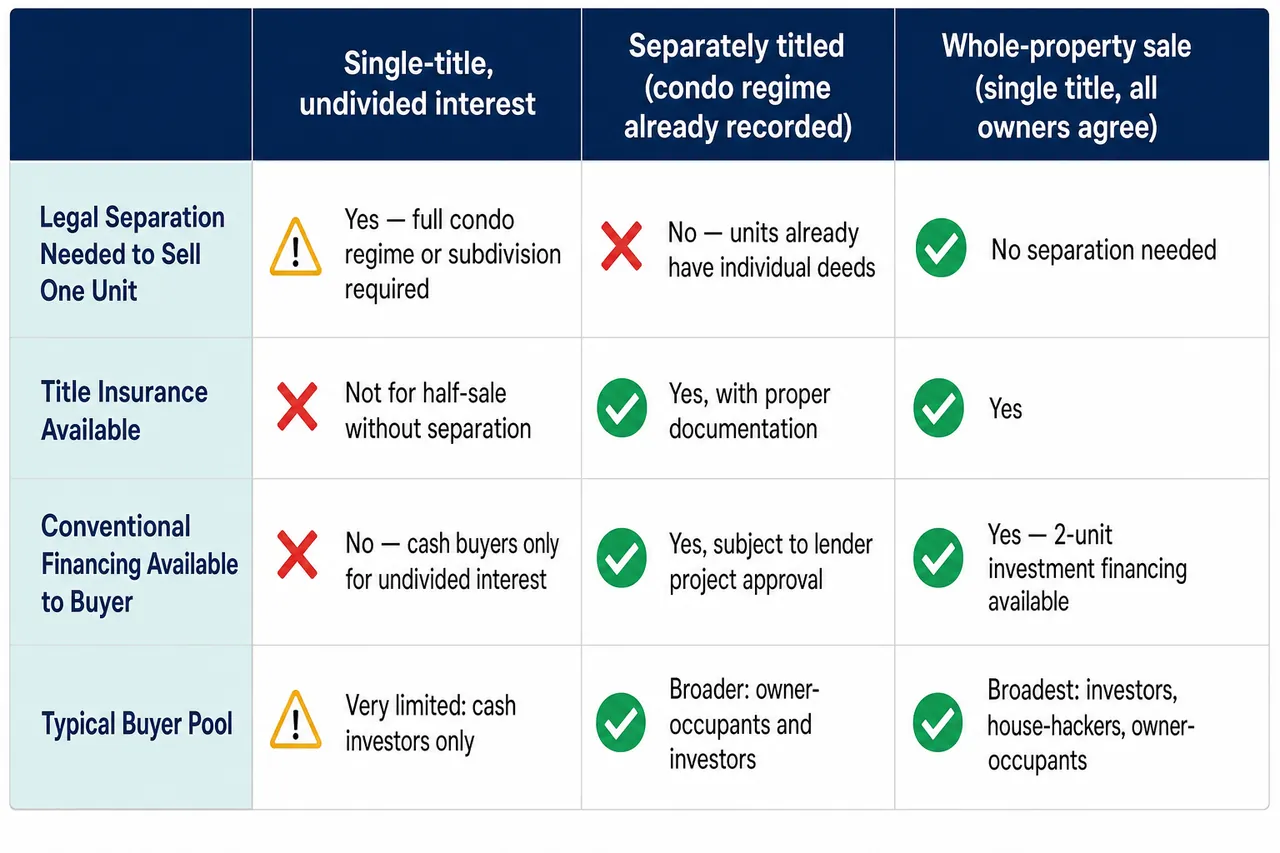
Ownership Structures at a Glance
| Ownership Type | Legal Separation Needed to Sell One Unit | Title Insurance Available | Conventional Financing Available to Buyer | Approximate Timeline to Sell | Typical Buyer Pool |
|---|---|---|---|---|---|
| Single-title, undivided interest | Yes — you'll need a full condo regime or subdivision. This is the complicated route. | Not for half-sale without separation | No — cash buyers only for undivided interest | 3–18+ months (separation) + market time | Very limited: cash investors only |
| Separately titled (condo regime already recorded) | No — your units already have individual deeds | Yes, with proper documentation | Yes, subject to lender project approval | Standard market time (30–90 days typical) | Broader: owner-occupants and investors |
| Whole-property sale (single title, all owners agree) | No separation needed | Yes | Yes — 2-unit investment financing is available | Standard market time (30–90 days typical) | Broadest: investors, house-hackers, owner-occupants |
Half vs. Whole Duplex Sale: Financial Considerations
| Factor | Selling Half Only (After Separation) | Selling Whole Property | Key Consideration |
|---|---|---|---|
| Upfront legal costs | High — survey, attorney, HOA formation, recording | Standard — title, agent commission, closing costs | Those separation costs? They come straight out of what you walk away with |
| Buyer financing availability | Limited — requires lender condo project approval | Broad — standard 2-unit investment financing | Fewer lenders will touch it, which shrinks your buyer pool and hammers your price |
| Time to complete sale | Longer — separation process adds months to years | Shorter — standard transaction timeline | Waiting costs money. Property taxes, insurance, maintenance keep eating away at your proceeds |
| Pricing power | Lower per unit than proportional whole-property value | Full market value for whole building | Selling the whole thing almost always nets you more than selling two halves separately would |
| Ongoing obligations post-sale | HOA, shared maintenance agreements remain | None — seller exits completely | You're still legally tied to whoever buys the other half. That relationship doesn't end when you sell |
| Co-owner cooperation required | For separation process, yes; for individual sale after, no | Yes — all co-owners must agree and sign | Can't sell the whole thing without everyone on board. Separation needs that buy-in too, at least at the start |
State-Specific Considerations
Texas
You'll need to follow the Texas Uniform Condominium Act (Texas Property Code Chapter 82) if you want to convert a duplex into a condo regime. That means filing a condominium declaration and plat with the county clerk. You're also required to complete the Texas Seller's Disclosure Notice. Here's where it gets tricky: zoning rules and HOA restrictions differ wildly depending on where your duplex sits. What flies in an unincorporated area might face extra obstacles in a city with stricter development standards. And Texas doesn't have statewide rent control, so tenant rights during a sale come down to whatever's in the lease plus state landlord-tenant laws.
California
California's conversion rules stem from the Davis-Stirling Common Interest Development Act—but you're also dealing with state and local requirements stacked on top of each other. Cities across the Bay Area, Los Angeles, and San Diego have their own ordinances specifically designed to slow down or block condo conversions to protect renters. If a tenant occupies either unit, stop and evaluate this carefully. California's AB 1482 gives tenants just-cause eviction protections statewide, and many cities layer on rent control rules too. You'll need to provide a Transfer Disclosure Statement (TDS) and additional disclosures specific to common interest developments. For step-by-step guidance tailored to California, check out our resource on selling multi-family property in California.
Other State Variations
Every state wrote its own condominium act, partition statute, and disclosure rules. The zoning standards? Also different everywhere. Some states adopted the Uniform Partition of Heirs Property Act; plenty haven't. You might find a streamlined subdivision process for small properties in one state and face full environmental review requirements in another. Florida, Washington, Indiana, Tennessee, and Colorado each have their own playbook—see our state guides for Florida, Washington, Indiana, Tennessee, and Colorado.
One rule applies everywhere: get a licensed real estate attorney who actually practices condominium conversions in your state before you move forward. The price of a mistake—delayed sales, legal battles, lost tenants—makes hiring the right lawyer look cheap.
Back to topConclusion
You can sell half a duplex. But it's complicated. Most duplexes sit on a single legal parcel, which means splitting one requires a formal condominium regime, a surveyor replat, a condominium declaration with CC&Rs, and an HOA. You'll also need to separate utilities in many cases. We're talking months or years here — and thousands of dollars in costs. Get it wrong, and those units won't be insurable or financeable.
Even after you've successfully separated everything, individually sold duplex units attract fewer buyers. Financing gets trickier. And you're stuck managing shared maintenance obligations that demand ironclad legal documentation.
Before you decide anything, take these steps: check your title status, order a preliminary title report, talk to a real estate attorney licensed in your state, and do the math on separation versus selling the whole property. What does each option actually cost you? In most situations — especially when both co-owners agree — selling the duplex intact is faster, cheaper, and nets you more money. If separation truly makes sense for your situation, do it correctly. The legal structure you build today will stick with that property forever.
Back to topFrequently Asked Questions
Can I sell my half of a duplex without the other owner's permission?
Not if you want a real buyer. When a duplex sits on a single title with shared ownership, you can't sell your physical unit without the other owner's consent—and you'll need to complete the legal separation process first. You could technically sell your undivided ownership interest on your own, but you'd attract only cash buyers willing to accept a steep discount. Plus, your co-ownership agreement might include a right of first refusal clause anyway, which gives the other owner a chance to buy you out instead.
Now, if the units have already been separately titled through a condominium regime? That changes everything. You can sell your unit independently without anyone's permission, subject only to any ROFR provisions in the CC&Rs.
How much does it cost to legally separate a duplex into two sellable units?
It depends on where you live. Really depends.
You're looking at surveyor fees, real estate attorney fees, local government review and recording fees, and potentially utility separation costs. In straightforward jurisdictions, you might spend a few thousand dollars. In complex markets, you could easily exceed $10,000. Some states will cost you significantly more.
Get itemized quotes from a licensed surveyor and a real estate attorney with actual condominium conversion experience before you budget for this. Don't rely on what you hear from someone across the country—your situation is local, and your costs will be too.
Will a buyer be able to get a mortgage to buy half a duplex?
Only if you've done the paperwork right. The unit needs its own deed, its own parcel number, and a recorded condominium declaration. Without those? Forget about it.
With proper documentation, conventional financing works, subject to lender condominium project approval requirements, up to the 2026 baseline conforming limit of $1,066,250 for 2-unit properties in standard areas. FHA financing is also potentially available for owner-occupants with as little as a 3.5% down payment.
But if the unit isn't properly documented and you're trying to sell an undivided interest instead? Your buyer pool shrinks to cash purchasers only. No conventional financing. No FHA financing. That's a problem if you want to sell quickly.
What happens to existing tenants when a duplex is being separated and sold?
Your state and local laws control this—and they vary wildly. In many states, an existing lease simply survives the sale, and the new owner steps into your role as landlord. Done deal.
In rent-controlled jurisdictions—including many California cities—converting rental units to condominiums may require specific tenant protections, relocation assistance, or even right-of-first-offer provisions. And you can't just pressure tenants to leave outside the proper legal process.
Call a landlord-tenant attorney in your jurisdiction before you say anything to tenants about the sale or conversion timeline. The wrong statement could create problems you don't need.
Is it ever better to just sell the whole duplex instead of separating it?
Frequently, yes. If both co-owners agree, selling the entire duplex as a two-unit investment property is typically faster, involves lower transaction costs, and attracts a much broader buyer pool with access to conventional two-unit financing. You also avoid the ongoing HOA and shared maintenance obligations that come with a separated unit.
The legal separation process makes sense when the market supports a meaningful pricing premium for individual units, when you and the other owner need a partial exit, or when you're planning to own one unit long-term. But run a detailed net proceeds comparison first. Run the numbers both ways before you decide.
Back to top