

Transfer on Death Deed: How to Avoid Probate on Your House in Tennessee
You may worry that your house will get stuck in probate after you pass away. 1 A transfer on death deed lets you name a beneficiary for your real estate so it can skip the court process. 2 In this post, you will learn how Tennessee homeowners can use estate planning tools to keep control over their property and avoid delays or extra costs. Find out how simple steps today can protect your loved ones tomorrow.
Key Takeaways
- Tennessee does not currently recognize Transfer on Death Deeds (TODDs). Homeowners in Memphis, Nashville, Knoxville, and across the state must use alternative probate-avoidance tools such as revocable living trusts, joint tenancy with right of survivorship, or Lady Bird deeds.
- Probate in Tennessee is handled through the Chancery or Circuit Court in the county where the deceased lived. The process can take several months to over a year and involves court fees, attorney costs, and potential appraisal expenses.
- Tennessee has no state estate tax or inheritance tax as of 2016, when the state's inheritance tax was fully repealed. Federal estate tax still applies to estates exceeding the federal exemption threshold.
- Living trusts are the most common probate-avoidance tool in Tennessee. Property titled in a trust passes directly to beneficiaries without court involvement.
- Common mistakes include failing to properly title assets into a trust, naming minor children as direct beneficiaries, and forgetting to update estate documents after major life events like divorce or remarriage.
What Is Probate and Why Avoid It?

Probate is a legal process that often delays your family from gaining control of your real property. Many Tennessee homeowners use tools like a living trust or joint tenancy to keep their loved ones from facing long court proceedings and extra costs.
Time delays, court costs, and emotional burden
The probate process in Tennessee typically lasts from six months to well over a year, depending on the complexity of the estate and court backlog in your county. 1 Court filing fees, attorney costs, and appraisal expenses pile up quickly, often cutting 3%–7% of your estate's value.
If you own real property in multiple states, each location may require its own ancillary probate proceeding before beneficiaries can take ownership. Tennessee probate cases are filed in the Chancery or Circuit Court of the county where the decedent resided — for example, the Shelby County Chancery Court in Memphis or Davidson County Chancery Court in Nashville.
The public nature of probate exposes your family's financial details for anyone to search. Proactive estate planning tools can help avoid costly court involvement and reduce much of this burden for your beneficiaries.
Probate timeline vs. a non-probate transfer in Tennessee
Understanding the difference in timelines between a typical Tennessee probate case and a non-probate transfer gives you a clearer path forward.
| Aspect | Tennessee Probate Process | Non-Probate Transfer (Living Trust / Joint Tenancy) |
|---|---|---|
| How Title Transfers | Judge approves transfer through probate court after legal steps | Successor trustee or surviving joint owner receives title directly |
| Timeline | 6–18+ months; court backlogs are common | Usually completed in weeks |
| Costs | Court filing fees, attorney fees, possible appraisal fees | Minimal; trust administration or deed recording fee |
| Privacy Level | Public record through the county court | Private; no court case is filed |
| Emotional Impact | Added stress and delays for grieving families | Simpler process helps beneficiaries move forward quickly |
Does Tennessee Allow Transfer on Death Deeds?
As of 2024, Tennessee does not recognize Transfer on Death Deeds (TODDs). Only 29 states and Washington, D.C., allow this non-probate transfer tool. 2 Tennessee homeowners must use other estate planning strategies to keep real property out of probate. The good news is that several effective alternatives exist under Tennessee law.
How a Transfer on Death Deed (TODD) Works — and What Tennessee Owners Should Use Instead
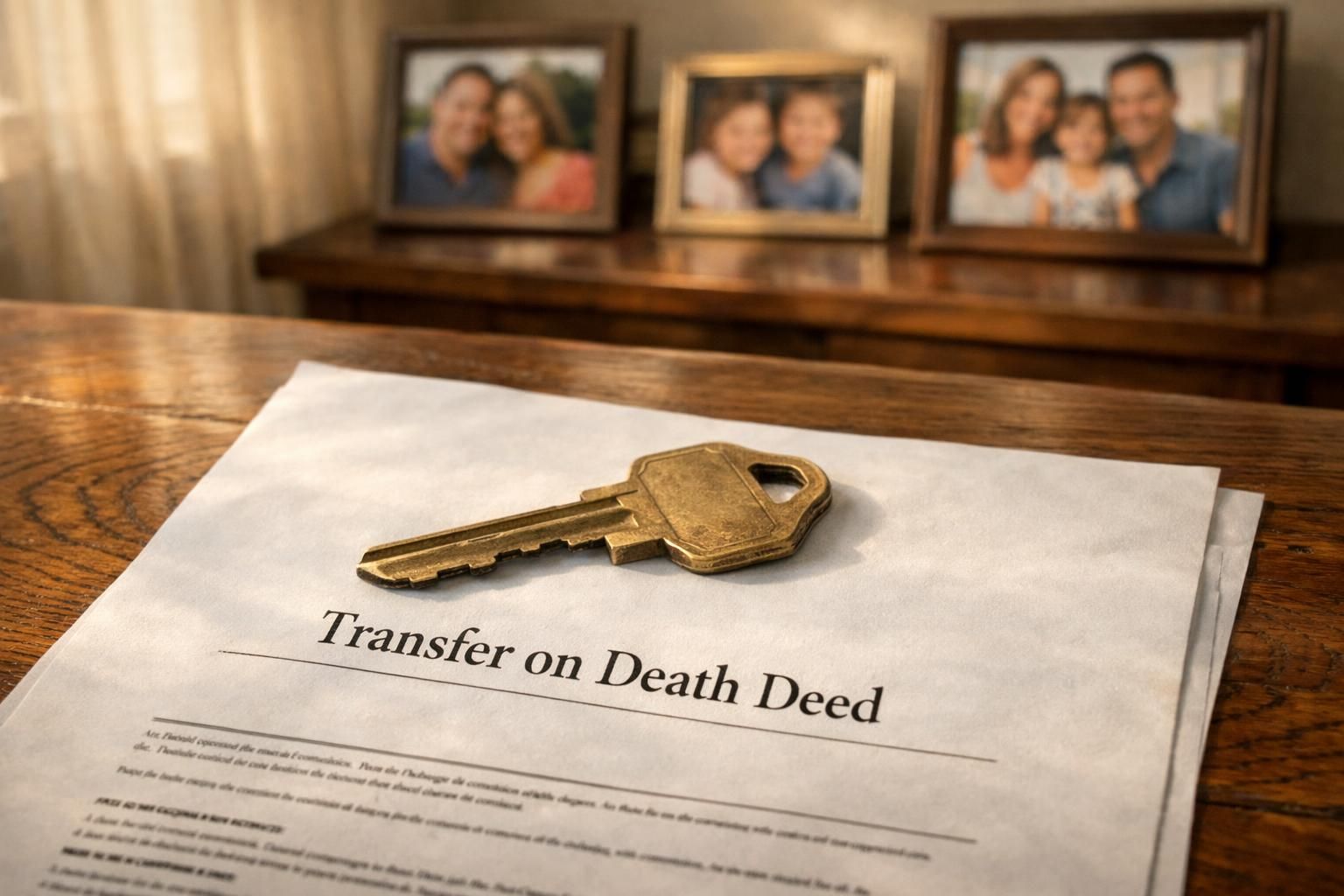
A TODD names a beneficiary who receives real property after the owner's death without going through probate. Because Tennessee has not adopted this tool, understanding how it works in other states helps illustrate what Tennessee alternatives aim to accomplish.
How TODDs work in states that allow them
In states that recognize TODDs, the property owner records the deed in the county where the real property sits during their lifetime. The deed is revocable at any time before death — by recording a new deed or a revocation — and the named beneficiary receives no ownership rights until the owner passes away. After death, the beneficiary files an Affidavit of Death and a certified death certificate with the county recorder to claim title, bypassing probate entirely.
The owner retains full control: they can sell, refinance, or change beneficiaries at any time without the beneficiary's consent. 3 If no named beneficiary survives the owner by at least 120 hours, the deed becomes void and the property enters probate.
Tennessee alternatives that achieve similar goals
Because TODDs are not available in Tennessee, the following tools are the most practical options for keeping real estate out of probate:
- Revocable Living Trust: You transfer your home into a trust while retaining full control as trustee. At death, your successor trustee distributes the property to your named beneficiaries without any court involvement. This is the most flexible and widely used probate-avoidance tool for Tennessee homeowners.
- Joint Tenancy with Right of Survivorship: If you add a co-owner to the deed as a joint tenant, that person automatically inherits your share when you die — no probate needed. Tennessee law recognizes joint tenancy with right of survivorship when the deed clearly states the intent.
- Tenancy by the Entirety: Available only to married couples in Tennessee, this form of joint ownership automatically passes the home to the surviving spouse outside of probate.
- Payable on Death (POD) / Beneficiary Designations: While this applies to bank accounts and retirement assets rather than real estate, keeping these designations current helps reduce the overall size of your probate estate.
Key Benefits of Probate-Avoidance Planning in Tennessee
Avoids probate delays and costs
Probate in Tennessee can consume months of your family's time and thousands of dollars in court and attorney fees — often 3%–7% of the estate's value. A living trust or joint tenancy arrangement lets property transfer directly to your chosen beneficiary, with no judge or court approval required. This saves both time and money for your heirs.
Maintains privacy
Tennessee probate filings are public court records, accessible through the county courthouse. A living trust keeps your assets and beneficiaries private because no court case is filed. Your property moves to heirs without exposing sensitive financial details to creditors or the general public.
Owner retains full control
With a revocable living trust, you serve as your own trustee during your lifetime. You can buy, sell, refinance, or change the terms of your trust at any time. No beneficiary consent is required, and no legal rights pass to heirs until after your death. 3
Flexibility to update beneficiaries
Life changes — marriage, divorce, births, and deaths — require updates to your estate plan. A revocable trust can be amended at any time. Under Tennessee law, divorce does not automatically remove a former spouse from a trust the way it might affect a beneficiary deed in other states, so reviewing and updating your documents after major life events is especially important here. 4
Tennessee Tax Considerations
Tennessee repealed its state inheritance tax effective January 1, 2016, and the state estate tax was fully phased out by that same date. Tennessee homeowners therefore face no state estate or inheritance tax on property transferred at death, regardless of value.
Federal estate tax still applies if your total estate exceeds the federal exemption (over $13 million per individual as of 2024). A non-probate transfer — whether through a trust or joint tenancy — does not eliminate federal estate tax exposure; it only avoids the court process.
Beneficiaries who inherit Tennessee real estate generally receive a stepped-up cost basis equal to the property's fair market value at the date of death. This means if they later sell the home, capital gains taxes are calculated from that stepped-up value rather than what the original owner paid — often resulting in little or no capital gains tax owed.
Existing liens, mortgages, and judgment creditors follow the property regardless of how it transfers. Beneficiaries must address those debts to obtain clear title even after a non-probate transfer.
Limitations and Considerations

TODDs are not available in Tennessee
Tennessee has not adopted the Uniform Real Property Transfer on Death Act, so a TODD recorded here would not be legally valid. If you own property in a state that does recognize TODDs — such as Virginia or Missouri — you may be able to use one for that specific parcel. Always confirm the law in the state where the real property is located before relying on any non-probate transfer tool.
Living trusts require proper funding
The most common mistake Tennessee homeowners make is creating a revocable living trust but failing to retitle their home into it. If your property remains in your individual name at death, it will go through probate regardless of what your trust document says. Work with a Tennessee real estate attorney to record a new deed transferring the property to your trust with the Knox County, Hamilton County, Shelby County, or Davidson County Register of Deeds — whichever county your property sits in.
Potential complications with multiple beneficiaries
Whether you use joint tenancy or a trust, naming multiple beneficiaries for one piece of real estate can create disagreements about whether to sell or keep the property. Clear trust language specifying each person's share and decision-making authority helps prevent disputes. If one beneficiary cannot inherit, your trust should name alternate beneficiaries to avoid the asset reverting to probate. 5
Avoid naming minor children directly
Minor children cannot legally hold title to real property in Tennessee. If you name a child under 18 as a direct beneficiary, a Tennessee court will likely need to appoint a conservator to manage the property until the child reaches adulthood. To avoid this, name a trust for the benefit of the minor child, or use the Tennessee Uniform Transfers to Minors Act to designate an adult custodian.
Practical Steps for Tennessee Homeowners

1. Consult a Tennessee estate planning attorney
Because Tennessee does not allow TODDs, the right tool for your situation depends on your family structure, the value of your property, and your overall estate. An attorney familiar with Tennessee probate law can help you choose between a living trust, joint tenancy, or other strategies and draft documents that comply with state requirements.
2. Draft and fund a revocable living trust
Work with your attorney to create a revocable living trust that names you as trustee during your lifetime and designates a successor trustee and beneficiaries. Then record a new deed transferring your home into the trust at the Register of Deeds office in your county. Recording fees in Tennessee counties typically range from $15 to $50 per instrument.
3. Choose beneficiaries carefully
Name individuals by their full legal name. List alternate beneficiaries in case a primary beneficiary does not survive you. Avoid naming minors directly. Review your designations after any major life change — divorce, remarriage, birth of a child, or death of a named beneficiary.
4. Keep documents current
Review your estate plan every few years or after major life events. Tennessee law does not automatically update trust or deed documents when circumstances change, so regular reviews prevent your property from falling into probate due to outdated paperwork. 6
Understanding Probate in Tennessee
Tennessee probate is administered through the Chancery or Circuit Court in the county where the decedent resided at the time of death. The court appoints an executor (if a will exists) or an administrator (if there is no will), who is responsible for inventorying assets, notifying creditors, paying valid debts, and distributing the remaining estate to heirs.
Tennessee law gives creditors a limited period to file claims against the estate after publication of a notice to creditors in a local newspaper. Until that period expires and the court closes the estate, your loved ones cannot receive clear title to real property through probate.
Without proactive planning tools such as a living trust or joint tenancy, your home will go through this public, time-consuming process. Taking steps now to title your property correctly protects your family from unnecessary delays and costs.
FAQs
1. Can I use a Transfer on Death Deed in Tennessee?
No. Tennessee does not currently recognize Transfer on Death Deeds. Homeowners should use a revocable living trust, joint tenancy with right of survivorship, or tenancy by the entirety (for married couples) to keep real estate out of probate.
2. Does Tennessee have an estate tax or inheritance tax?
No. Tennessee fully repealed both its estate tax and inheritance tax effective January 1, 2016. However, federal estate tax still applies to very large estates above the federal exemption threshold.
3. How long does probate take in Tennessee?
Tennessee probate typically takes six months to over a year, depending on the complexity of the estate, whether a will is contested, and local court schedules. Estates with real property in multiple states may require additional ancillary probate proceedings.
4. What documents do my beneficiaries need to claim property held in a Tennessee living trust?
After you pass away, your successor trustee will need the original trust document, a certified copy of the death certificate, and a new deed transferring the property from the trust to the beneficiary. This deed is recorded with the county Register of Deeds office and does not require court approval.
5. Will my heirs receive a stepped-up basis on inherited Tennessee real estate?
Yes. Heirs who inherit real property — whether through a trust, joint tenancy, or probate — generally receive a stepped-up cost basis equal to the property's fair market value at the date of death. This reduces or eliminates capital gains taxes if they sell the home shortly after inheriting it.
References
- ^ https://www.lifegenlawgroup.com/5-reasons-to-avoid-probate-and-how-to-do-it/ (2025-02-28)
- ^ https://www.rouletlaw.com/faqs/transfer-on-death-deed-a-simple-way-to-avoid-probate-.cfm
- ^ https://nysba.org/new-york-now-allows-transfer-on-death-deeds-but-should-you-use-them/ (2024-12-10)
- ^ https://www.americanbar.org/content/dam/aba/publications/probate_property_magazine/v24/02/2010_aba_rpte_pp_v24_2_mar_apr_horn_gary.pdf
- ^ https://www.goodwinlaw.com/en/insights/publications/2023/01/01_20-transfer-on-death-designations-potential (2023-01-20)
- ^ https://california-elder-law.com/blog/how-to-avoid-probate-with-a-transfer-on-death-deed/ (2025-04-10)
If you are a Tennessee homeowner navigating estate planning, probate, or simply need to sell a property quickly without the hassle of repairs or court delays, KDS Homebuyers can help. Visit kdshomebuyers.net to request a free, no-obligation cash offer today.
