

How to Stop a Foreclosure Sale (Even at the Last Minute) in Indiana
Facing a foreclosure sale in Indiana can feel overwhelming, especially if your deadline is only days away. Foreclosure will remain on your credit report for up to seven years and make future borrowing harder. 2 This guide explains exactly how you can stop foreclosure at the last minute in Indiana, including options like bankruptcy protection, loan modification, and help from HUD-approved housing counselors. 3 Don't give up—real solutions are still available even now. 1
Key Takeaways
- Act fast when you get a foreclosure notice in Indiana. Contact your lender or a HUD-approved housing counselor right away to explore repayment plans, loss mitigation, or loan modification. Many solutions only work if you start before key deadlines—often 37 days before the sheriff's sale.
- Filing for Chapter 13 bankruptcy can stop a foreclosure immediately through the automatic stay (11 USC 362), even on the day of the sheriff's sale. Filing fees are $313, with attorney fees typically ranging from $2,000 to $4,000.
- Indiana is a judicial foreclosure state, meaning your lender must go through court before selling your home. This process generally takes 5 to 7 months from first missed payment to sheriff's sale, giving you more time than many other states.
- Indiana law provides a right of redemption after the sheriff's sale in certain circumstances, meaning you may still have options even after the auction occurs.
- If you have home equity, selling to a cash buyer can close in 7–14 days—fast enough to beat most Indiana sheriff's sale deadlines. Foreclosure damages your credit for seven years, so acting early matters.
Discovering a foreclosure sale date is terrifying, but options exist even days before the sale.
Discovering a foreclosure sale date can make you feel helpless, but real hope remains even days before the auction. In Indiana, your mortgage lender must follow a strict judicial process before selling your home—this means a court must be involved, which gives you more time and legal options than homeowners in non-judicial states.
If you act quickly, you might use options like loss mitigation, loan modification applications, Chapter 13 bankruptcy protection for an automatic stay, or repayment plans to stop the process.
Indiana homeowners can reinstate their mortgage loan by paying missed payments and fees up until a point close to the final sale. Homeowners with equity often have between $15,000 and $75,000 at risk if they lose their homes to a sheriff's sale. Selling to a cash buyer may work fast if you have enough equity because closings can happen within 7–14 days.
A short sale or deed in lieu of foreclosure could also offer alternatives that lower the impact on your credit report. Homeowners facing immediate sales should consult a HUD-approved housing counselor or experienced Indiana foreclosure attorney right away.
Understanding Indiana's Foreclosure Timeline
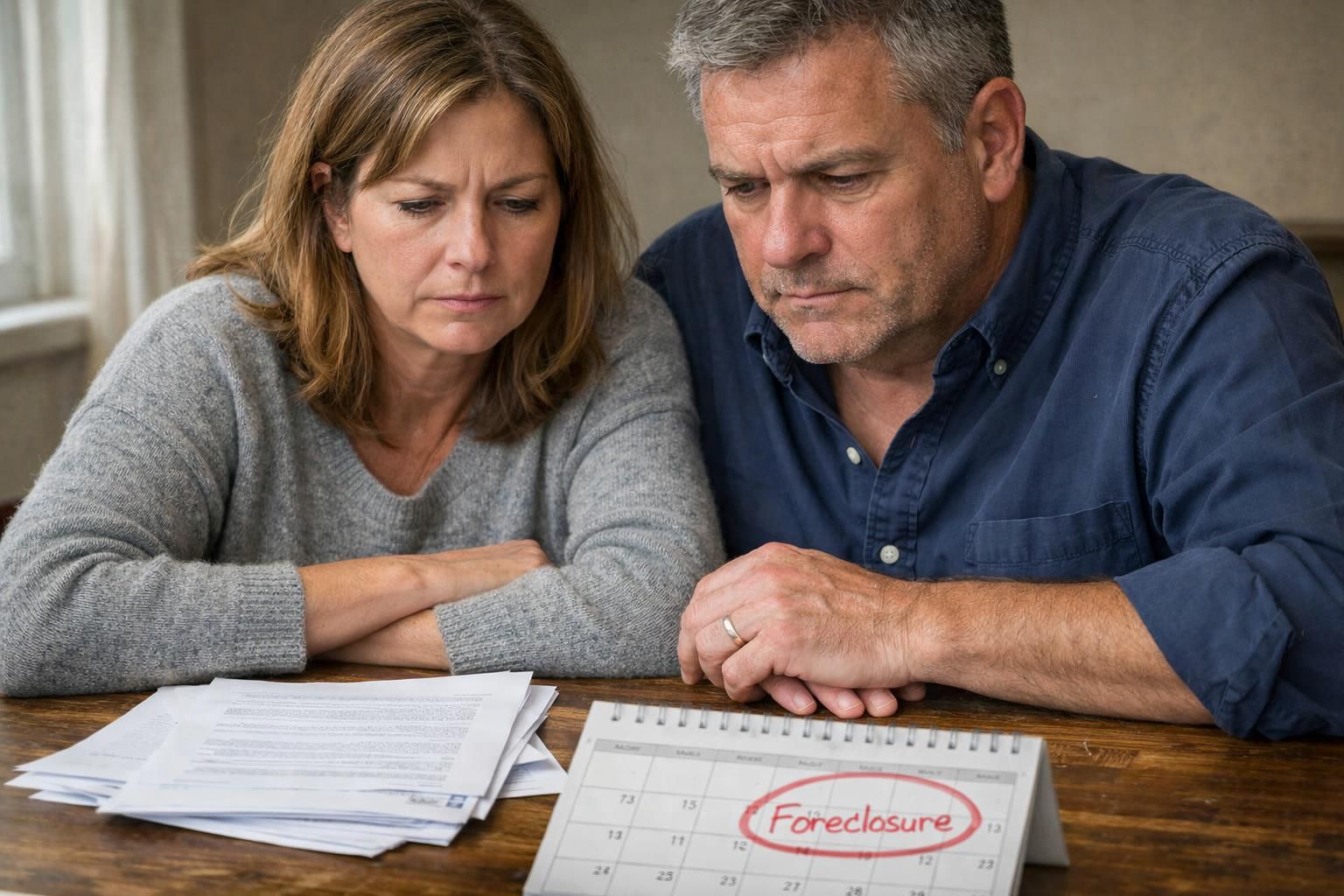
Indiana uses a judicial foreclosure process, which means every foreclosure must go through the court system. This gives homeowners more time and more intervention points than non-judicial states, but you still need to act fast to protect your rights.
Indiana is a judicial foreclosure state
In Indiana, lenders must file a lawsuit in the appropriate circuit or superior court before foreclosing on your home. The court must enter a judgment of foreclosure before any sheriff's sale can be scheduled. This process typically takes 5 to 7 months from a missed payment to the sheriff's sale, though contested cases can take longer.
Because a judge must review the case, you have the opportunity to respond to the lawsuit, raise legal defenses, and negotiate with your lender through the court process. Indiana also provides a redemption period in certain circumstances after the sheriff's sale, giving homeowners an additional window to reclaim their property by paying what is owed.
Homeowners in Indianapolis, Carmel, and other Indiana communities should check with a local foreclosure attorney to understand how their county handles scheduling and court timelines, as these can vary by jurisdiction.
Typical Indiana timeline from first missed payment to sheriff's sale
Missing a mortgage payment in Indiana starts a process that moves faster than most people expect. After 120 days of missed payments, your lender can file a foreclosure lawsuit. You will then be served with a summons and complaint, and you typically have 20 to 23 days to file a written response with the court.
If you do not respond or a judgment is entered against you, the court will order a sheriff's sale. Indiana county sheriffs schedule and conduct these sales, often posting notices in local newspapers and online. From the point of judgment to actual sale, the timeline can range from a few weeks to several months depending on the court's docket.
Legal fees, court costs, and attorney charges accumulate throughout this process, making reinstatement amounts significantly higher than just the missed mortgage payments.
How homeowners often underestimate time lost in the process
Many Indiana homeowners misjudge how quickly the foreclosure process moves once a lawsuit is filed. 2 Ignoring court paperwork or missing response deadlines can result in a default judgment being entered against you without any hearing. At that point, options narrow quickly.
Underestimating the timeline often leaves families unprepared for consequences like deficiency judgments or the seven-year credit damage that follows a completed foreclosure. Acting early—at the first missed payment or at the first sign of a lawsuit—gives you the widest range of tools: loan modification, repayment plans, short sales, or working with a HUD-approved housing counselor to find the right solution before time runs out.
Immediate Actions to Take Within 72 Hours

Act fast within 72 hours—connect with your lender, collect all mortgage documents, check key dates, and understand Indiana's foreclosure process to protect your home.
Contact your lender or servicer immediately
Reach out to your lender or loan servicer as soon as you know you may miss a mortgage payment. 3 Lenders often prefer to work with homeowners on solutions rather than moving straight to a lawsuit. Explain your financial hardship and ask about options such as a repayment plan, forbearance agreement, or loan modification. FHA loan holders can contact the Federal Housing Administration National Servicing Center for additional help.
Respond quickly to all mail and phone calls from your lender. Many homeowners make the mistake of ignoring demand letters while staying current on other bills, which can cost them valuable options later. 3 If you need help communicating with your servicer, reach out to a HUD-approved housing counselor—services are often free and confidential.
Gather all loan documents and understand your exact sale date
Collect every document related to your home loan: mortgage note, recent statements, demand letters, notice to accelerate, and all correspondence from your lender. Look for any court filings you have received, including the foreclosure complaint and summons, which are critical in Indiana's judicial process.
Check for the scheduled sheriff's sale date on any court order or notice you have received. Confirm whether any redemption period applies to your situation under Indiana law. Knowing exact dates lets you plan urgent steps like a loan modification, bankruptcy filing, or legal response before critical deadlines pass.
Research Indiana's foreclosure rules
Indiana's judicial foreclosure process gives you specific rights and deadlines. You have the right to respond to the foreclosure lawsuit, and doing so can significantly extend your timeline. Some Indiana counties also participate in foreclosure mediation programs, which give you a chance to negotiate directly with your lender under court supervision.
Contact a HUD-approved housing counselor or an Indiana foreclosure attorney to understand your rights quickly. Indiana law allows homeowners a right of redemption in certain cases even after the sheriff's sale—this is a significant protection not available in many other states. Understanding these rules before key deadlines can make the difference between saving and losing your home.
Legal Options to Stop or Delay the Foreclosure Sale

Indiana's judicial process gives you multiple legal tools to protect your home, even if the sale date is close. Speaking with a foreclosure attorney or housing counselor can help you use rules like an automatic stay or Indiana-specific defenses to halt the auction fast.
File for Chapter 13 bankruptcy (automatic stay can halt the sale same day)
Filing for Chapter 13 bankruptcy puts an automatic stay in place immediately, stopping the Indiana sheriff's sale even on the day it is scheduled. Under federal law (11 USC 362), your lender must halt all collection actions, including the sheriff's sale. Courts accept emergency bankruptcy filings when time is short. The filing fee is $313, and attorney fees typically range from $2,000 to $4,000.
Chapter 13 allows you to keep your home and catch up on missed payments over three to five years through a court-approved repayment plan. If you filed another bankruptcy within the last year and it was dismissed, the automatic stay may only last 30 days unless extended by court order. Unlike Chapter 7, which mainly delays foreclosure, Chapter 13 is designed to help you save your home by resolving past-due mortgage payments over time.
Apply for loss mitigation or loan modification (must be at least 37 days before the sale)
Submit a complete loss mitigation application to your loan servicer at least 37 days before the scheduled sheriff's sale. Under CFPB Regulation X, lenders cannot dual-track—meaning they must stop pursuing foreclosure while reviewing your request. 4 Common options include lowering your interest rate, reducing fees, or extending your repayment period through Fannie Mae or Freddie Mac programs.
Submit all required documents quickly and respond to requests for additional information immediately. Even if you have already received a judgment in Indiana's court process, pursuing loss mitigation may pause activity. A HUD-approved housing counselor can help you prepare forms and check eligibility for assistance programs that protect your credit history.
Respond to the foreclosure lawsuit and raise legal defenses
Because Indiana requires a court judgment before any sheriff's sale, you have the right to file a written response to the foreclosure complaint. Raising legal defenses—such as errors in the promissory note, improper notice, violations of federal mortgage servicing rules, or dual tracking—can delay or even prevent judgment.
If you have already received a default judgment, consult an Indiana foreclosure attorney immediately about whether the judgment can be challenged or whether you can seek a continuance of the sheriff's sale. Courts may also grant injunctive relief or a temporary restraining order if you can show improper conduct by the lender.
Reinstate the loan by paying past-due amounts and fees
Ask your loan servicer for a reinstatement quote in writing listing all missed payments, late fees, legal costs, and other charges. After months of default, reinstatement totals commonly range from $12,000 to $25,000 due to accumulated interest and attorney fees. 5
In Indiana, you may have the right to reinstate your loan up to a point before the sheriff's sale by paying the full past-due amount. You must pay the exact amount by the legal deadline to stop the foreclosure. Request this figure as soon as possible because lenders need time to process payment and cancel the scheduled sale. 6 Confirm reinstatement rights and deadlines with an Indiana foreclosure attorney or HUD-approved housing counselor.
Alternative Resolution Strategies

Short sale (requires lender approval, typically takes 2-3 months)
A short sale lets you sell your Indiana home for less than what you owe, with lender approval required before listing. Most lenders need proof of financial hardship such as job loss or medical bills. Short sales typically take two to three months due to negotiations and paperwork.
The lender may agree to forgive any remaining balance after the sale. Your credit score might drop by 200 to 250 points—less damaging than the seven-year record a completed foreclosure leaves. A successful short sale may also let you qualify for FHA or conventional financing sooner than if your home went through the sheriff's sale process.
Deed in lieu of foreclosure
A deed in lieu of foreclosure lets you transfer your home's title directly to your lender, avoiding a public court proceeding and sheriff's sale. Lenders typically require that no other liens exist against the property. After signing, you must vacate the home. Some lenders offer relocation assistance and may forgive any remaining mortgage balance.
This approach avoids additional court costs and can speed up your financial recovery. If you experience hardship, speak with a HUD-approved housing counselor or Indiana foreclosure attorney before choosing this option to make sure it is the right fit for your situation.
Repayment plans and forbearance agreements
Repayment plans let you catch up on missed payments by spreading what you owe across several months—typically three months to nearly a year. 7 Each monthly payment includes your regular bill plus a portion of the past-due amount. HUD-approved housing counselors can help you negotiate these terms with your servicer.
Forbearance agreements temporarily reduce or pause mortgage payments while preventing foreclosure. After the forbearance period ends, you must pay what is owed in a lump sum, set up a repayment plan, or request a loan modification. Failure to follow through could restart foreclosure proceedings in Indiana's courts.
Cash Sale Option

A cash sale to an investor can help Indiana homeowners avoid foreclosure if you have enough home equity. Some buyers close in as little as a week, providing fast relief from missed payments and legal stress before the sheriff's sale occurs.
Selling to a cash buyer who can close in 7-14 days if equity exists
Selling your home to a cash buyer can stop foreclosure fast if you have equity. Cash buyers made up 32.8% of home purchases in 2025 and can often close within 7–14 days—much faster than the typical 60–90 day traditional sale. 8 If your home's title is clear and there is enough equity after paying off the mortgage debt and costs, you can avoid costly repairs, showings, and lengthy negotiations.
Investors typically pay below market value but move quickly without requiring updates or cleaning. This approach prevents further delinquent mortgage payments from damaging your credit and can help you pay off the mortgage before Indiana's sheriff's sale is finalized. In the Indianapolis metro area and surrounding communities, active cash buyer markets mean competitive offers are often available.
When this option works vs. when it doesn't
You get the best results with a cash sale if you have equity and need to stop foreclosure quickly. Problems arise if your mortgage is underwater, multiple liens cloud the title, or you face extremely tight deadlines. Investors may walk away at the last minute if title issues cannot be cleared in time.
Always review agreements carefully, confirm funds will be available at closing, and ask about the buyer's experience with urgent Indiana foreclosure situations. 3
Foreclosure Avoidance Strategies
Explore all foreclosure prevention tools as soon as possible. Contact a HUD-approved housing counselor for help with loan modification, repayment plans, or forbearance. Federal programs through FHA and VA offer options tailored to homeowners in hardship; the VA's VASP program can modify loans to a fixed 2.5% interest rate for those who qualify. 9
Apply early for loss mitigation or streamline refinancing if you are behind on payments. Consult your loan servicer about short sales or deeds in lieu of foreclosure. Over 8 million borrowers used forbearance during COVID-19, proving these strategies work when applied quickly. 9 Keep copies of all documents, follow up regularly, and ask about attorney fees involved in stopping the sale through legal channels such as Chapter 13 bankruptcy or seeking a court continuance if necessary.
Indiana-Specific Considerations
Indiana's judicial process gives you more time and court access
Because Indiana requires a court judgment before any sheriff's sale, you have multiple points in the process where you can intervene. You can respond to the lawsuit, request mediation, pursue loan modification, or file bankruptcy—each step has the potential to pause or stop the process. Many Indiana counties offer foreclosure mediation programs that bring lenders and homeowners together under court supervision to find workable solutions.
Indianapolis, Noblesville, and other urban counties may have additional housing assistance resources and legal aid organizations that can help you navigate the court process at low or no cost.
Indiana's right of redemption
Indiana law provides homeowners with a right of redemption after the sheriff's sale in certain situations. This means that even after the auction occurs, you may have a limited window to pay off the debt and reclaim your property. Confirm the specific terms that apply to your situation with an Indiana foreclosure attorney, as redemption rights and timelines depend on the details of your case and loan type.
Property taxes and deficiency judgments in Indiana
Indiana homeowners should also be aware that unpaid property taxes can create separate liens that complicate foreclosure proceedings. If the sheriff's sale proceeds do not cover your outstanding mortgage balance plus fees, your lender may pursue a deficiency judgment in Indiana court, potentially allowing them to collect the remaining balance through wage garnishment or other means. A short sale, deed in lieu, or Chapter 13 bankruptcy can sometimes be structured to avoid or limit deficiency exposure—consult an attorney to understand your options.
What Happens If You Can't Stop the Sale
Credit impact and deficiency judgments
Foreclosure leaves a mark on your credit report for up to seven years, and your credit score can drop by 250 to 300 points. FHA loans require at least a three-year wait before you can qualify again; conventional loans typically require seven years. 11
If the Indiana sheriff's sale brings in less than you owe on the mortgage plus attorney fees and court costs, your lender may seek a deficiency judgment. This could allow the bank to collect the unpaid balance through garnishment or liens. A Chapter 7 bankruptcy can erase personal liability for the mortgage debt but will not remove the foreclosure record from your credit history before seven years are up.
Recovery options after foreclosure
HUD-approved counseling agencies can help you build a recovery plan after a completed foreclosure. Nonprofit groups offer free guidance even after the sale. Focus on rebuilding credit by paying remaining bills on time and using secured credit cards. Use any remaining equity proceeds from a pre-foreclosure sale to pay off debts, relocate, or start fresh. Legal aid organizations in Indiana may also help challenge deficiency judgments or negotiate with lenders about remaining mortgage debt.
Next Steps Checklist
Review and prioritize your options
Gather your loan documents, demand letter, and any court filings right away. List all options: loan modification, repayment plan, forbearance, short sale, deed in lieu, Chapter 13 bankruptcy, or selling to a cash buyer if you have equity. 5 Check eligibility for Indiana foreclosure prevention programs and HUD-approved counseling. Compare each option's timeline against your exact sheriff's sale date.
Meet with an Indiana foreclosure attorney or certified housing counselor as soon as possible. Foreclosure can remain on your credit report for seven years, so weigh long-term impact carefully. 11 Prioritize options based on urgency and your financial situation, and act immediately to protect ownership of your property.
Take action immediately to protect your home
Contact your loan servicer or lender as soon as you receive any foreclosure notice or court papers. Acting fast increases the chance of stopping foreclosure. Call a HUD-approved housing counselor and ask about loss mitigation, repayment plans, and loan modification. Collect every demand letter, notice to accelerate, and court filing so you stay aware of deadlines.
Apply for financial assistance if hardship makes paying your mortgage difficult. If time is critically short, consider filing Chapter 13 bankruptcy to trigger an immediate automatic stay—this halts Indiana's sheriff's sale even on the day it is scheduled. Avoid scams by refusing any service that asks for upfront fees before helping. If you have enough home equity, talk with a cash buyer who can close quickly and help you avoid further credit damage.
Every hour matters during these urgent moments. Each delay reduces what options remain available to save your home from the sheriff's sale.
Conclusion
Taking action today, even at the last minute, is better than doing nothing. If you have equity, selling for cash may provide a way to move forward.
Acting now—even if you feel it is almost too late—can still make a real difference. Indiana's judicial foreclosure process gives you more intervention points than many states, but those opportunities close quickly once deadlines pass. Reach out to your loan servicer or a HUD-approved housing counselor today.
If your property has enough equity, selling for cash to an investor can help you avoid foreclosure and its seven-year credit impact. 5 Many cash buyers close within 7 to 14 days—often fast enough to beat an Indiana sheriff's sale deadline. A quick sale prevents additional attorney fees, court costs, and stress, and may allow you to pay off mortgage debt and start fresh without a deficiency judgment hanging over you.
If you are facing foreclosure in Indiana and want to explore a fast cash sale, visit kdshomebuyers.net to request a free, no-obligation cash offer from KDS Homebuyers. Acting before the final deadline can protect your financial future and help you move forward with fewer long-term consequences.
FAQs
1. What are the most effective ways to stop a foreclosure sale in Indiana at the last minute?
To halt an Indiana sheriff's sale, you can request a loan modification, file for Chapter 13 bankruptcy to trigger an automatic stay, apply for loss mitigation with your loan servicer, or respond to the foreclosure lawsuit in court. You may also seek help from a HUD-approved housing counselor or consult an Indiana foreclosure attorney about requesting a continuance or temporary restraining order.
2. Can filing bankruptcy really stop my home from being sold at an Indiana sheriff's sale?
Yes. Filing for Chapter 13 bankruptcy places an automatic stay on the foreclosure process immediately, including on the day of a scheduled sheriff's sale. The type of bankruptcy and your financial situation will affect how long protection lasts and whether you can permanently save your home.
3. How does Indiana's judicial foreclosure process help homeowners?
Because Indiana requires a court judgment before any sheriff's sale, you have the right to respond to the lawsuit, raise legal defenses, and pursue loss mitigation or mediation through the court. This gives Indiana homeowners more time and more intervention points than homeowners in non-judicial states.
4. Is there a right of redemption after an Indiana sheriff's sale?
Indiana law provides a right of redemption in certain circumstances after the sheriff's sale, giving homeowners a limited window to pay what is owed and reclaim their property. Consult an Indiana foreclosure attorney to determine whether and how this right applies to your specific situation.
5. What is loss mitigation and can I apply even after receiving a court judgment?
Loss mitigation refers to options your lender may offer—such as loan modifications, repayment plans, short sales, or deeds in lieu of foreclosure—to avoid a completed foreclosure. You can still inquire about loss mitigation even after a judgment has been entered, though your options narrow as the sheriff's sale date approaches. A HUD-approved housing counselor can help you navigate these options quickly.
6. Should I hire an Indiana foreclosure attorney?
Yes. An Indiana foreclosure attorney can help you respond to the lawsuit, raise legal defenses, pursue mediation, or file bankruptcy if needed. They can also review whether your lender followed proper notice and procedural requirements under Indiana law, which could provide grounds to delay or challenge the foreclosure.
References
- ^ https://www.michigan.gov/mshda/-/media/Project/Websites/mshda/homeownership/Counseling/Foreclosure-Timeline-212022.pdf
- ^ https://www.researchgate.net/publication/282448136_The_Cost_of_Foreclosure_Delay
- ^ https://www.usa.gov/avoid-foreclosure (2025-06-17)
- ^ https://library.nclc.org/book/surviving-debt/introduction-4
- ^ https://www.nolo.com/legal-encyclopedia/last-minute-strategies-stop-foreclosure.html
