

Short Sale vs. Foreclosure: Which Is Better for You in Washington
Struggling to keep up with your mortgage payments can feel overwhelming. Many Washington homeowners face the tough decision of choosing between a short sale vs foreclosure when they fall behind. 2 This guide explains both options in plain terms, showing how each affects your credit score, finances, and future home ownership under Washington state law. 3 Find out which choice may be better for your situation below. 1
Key Takeaways
- A short sale lets you sell your home for less than the mortgage balance with lender approval. About 50–60% of short sales get approved when you show real financial hardship such as job loss or major illness.
- Short sales drop your credit score by 85–160 points and typically require a two to four-year wait before getting another mortgage. Foreclosure can lower your score by 200–400 points and makes you wait three to seven years for a new loan. Both stay on your credit report for seven years.
- Washington is primarily a deed-of-trust state, meaning most foreclosures proceed non-judicially. Lenders can pursue deficiency judgments after non-judicial foreclosure in Washington, but state law limits this right in certain circumstances — get written debt forgiveness whenever possible.
- Washington's non-judicial foreclosure process can move relatively quickly — typically four to six months after the required 120-day pre-foreclosure notice period. You lose control once foreclosure begins, and it often ends in eviction.
- A short sale gives you more control: you pick the agent, choose buyers, and often remain in your home during the process. This helps preserve your dignity and may let you qualify for future loans faster than going through full foreclosure.
Sources: Fannie Mae/Freddie Mac guidelines; FICO/Experian data; IRS Form 1099-C rules; Washington state deed of trust and foreclosure laws; National Association of Realtors®.
What Is a Short Sale?

A short sale lets you list your home for less than the mortgage balance with your lender's approval. Many Washington homeowners work with a real estate agent to manage this process and avoid foreclosure.
Selling for less than the mortgage balance with lender approval
If you owe $400,000 on your mortgage but your Seattle-area home's market value has dropped to $360,000, you may sell for this lower price with your lender's approval. This is a short sale. 1 Your mortgage lender must agree because they will not receive full repayment. Lenders review your financial hardship documentation before deciding whether to approve the transaction.
During a short sale, the lender typically covers closing costs. You list the property "as is" using a real estate agent and often continue living there during showings. If approved, the lender may forgive the remaining deficiency balance or require some repayment after closing. Washington homeowners have used this strategy to avoid foreclosure and reduce the credit score damage compared to letting the bank proceed with property seizure.
Typical timeline: 60–120 days
The short sale process usually takes about 60 to 120 days from start to finish. You begin by working with a real estate agent and gathering documents for your lender. Most lenders require proof of financial hardship and a listing agreement before considering approval.
Once you receive an offer, your primary lender — and any second mortgage holders — must review it. Multiple liens can push the timeline to six months or more. Cash buyers may close in 7 to 14 days after lender consent is granted. Industry data shows only about half of all short sales receive final approval, so expect frequent communication between yourself, your lender, and your agent throughout the process.
Initiated by the homeowner
You start a short sale by reaching out to your mortgage lender and requesting approval to sell for less than the outstanding mortgage balance. This gives you far more control than foreclosure, which the bank initiates. You choose your real estate agent, prepare the property for buyers, and remain in your home during most of the timeline. Lenders such as Freddie Mac typically require documentation showing true financial difficulty — job loss, medical bills, divorce — before granting consent.
Lender approval requirements
- Lenders require a hardship letter explaining why you cannot keep up with mortgage payments.
- Financial documents — pay stubs, bank statements, tax returns, and a monthly debt summary — confirm your inability to pay.
- A broker price opinion or market analysis shows your property's current value compared to the mortgage balance.
- All offers must be submitted in writing; lenders often prefer cash buyers or large down payments for certainty of closing.
- Second mortgages or home equity lines of credit must also be settled before closing, which can complicate approval.
- Any deficiency balance may be forgiven by some lenders; others may pursue a deficiency judgment under Washington law — always get forgiveness in writing.
- Approval timelines typically range from 60 to 120 days after all paperwork and offers are submitted.
Careful documentation, honest hardship disclosure, and working with an experienced Washington real estate professional can improve your chances of approval.
Real-world example of a successful short sale
You owe $350,000 on your Tacoma home, but the market value has slipped to $300,000. You work with a real estate agent and find a buyer willing to pay $300,000. The lender reviews the short sale and agrees to accept this amount as payment in full, forgiving the $50,000 deficiency rather than pursuing non-judicial foreclosure. Your credit report shows a completed short sale rather than a foreclosure, and your score drops by roughly 85 to 160 points rather than the 200 to 400 points a foreclosure would cause. The lender's forgiveness may generate a 1099-C tax form, but if this is your primary residence, insolvency rules or federal debt relief provisions may offer some protection. This approach protects your financial future better than losing the home to a trustee's sale.
What Is Foreclosure?

Foreclosure starts when your mortgage lender takes legal action to repossess your home after missed payments. In Washington, this process most commonly follows a non-judicial path under the deed of trust statutes, leading to a trustee's sale rather than a traditional court auction.
Lender-initiated legal process
If you miss mortgage payments for three to six months, your lender may begin the foreclosure process. In Washington, most home loans are secured by a deed of trust rather than a traditional mortgage, so lenders typically use non-judicial foreclosure. The trustee — a third party named in your deed of trust — issues notices and manages the sale process without court involvement. Your property is sold at a trustee's sale if you do not resolve the default through options like loan modification or bankruptcy.
Washington's Non-Judicial Foreclosure Process
Washington primarily uses non-judicial foreclosure under its Deed of Trust Act. Before the foreclosure can proceed, the lender must provide a 120-day pre-foreclosure notice, giving you time to explore alternatives. After this notice period, the trustee issues a Notice of Trustee's Sale, and the sale is scheduled no sooner than 90 days later. The entire process — from first missed payment to trustee's sale — typically takes four to six months, though it can extend longer depending on loan modification negotiations or other disputes.
Washington does allow judicial foreclosure in limited circumstances, such as for certain types of liens. Judicial foreclosure moves more slowly and involves the courts, but it is uncommon for standard residential mortgages. Washington does not provide a statutory post-sale redemption period for non-judicial foreclosures, meaning once the trustee's sale is complete, you generally cannot reclaim the property by paying off the debt.
Lenders in Washington can pursue deficiency judgments after a non-judicial foreclosure, though state law places some restrictions on this right. Getting written confirmation of any debt forgiveness from your lender before or at closing is essential to protect yourself.
Typical timeline: 4–6 months in Washington
Washington's non-judicial foreclosure process moves faster than in many states. 2 After the mandatory 120-day pre-foreclosure notice and a subsequent Notice of Trustee's Sale, the property can be sold in as little as four to six months total from the time the lender begins proceedings. Understanding this compressed timeline is critical for Seattle, Tacoma, Spokane, and Bellevue homeowners who want time to explore alternatives like a short sale or loan modification before the trustee's sale date arrives.
Credit Impact Comparison

Your credit score can change sharply after a short sale or foreclosure. Knowing the real difference helps you plan your next steps.
Short sale: credit drop of 85–160 points, 2–4 year mortgage waiting period
A short sale typically lowers your credit score by 85 to 160 points, based on FICO and Experian data. 3 This event appears as a "settled account" on your credit report for seven years but generally looks better to future lenders than a foreclosure. You may qualify for a new mortgage in two to four years depending on loan type — conventional loans often require at least two years, while FHA and VA programs have their own timelines. Keeping up with some mortgage payments during the short sale process can reduce the damage to your credit history.
Foreclosure: credit drop of 200–400 points, 3–7 year mortgage waiting period
Foreclosure can cause a credit score drop of 200 to 400 points and stays on your credit report for seven years from your first missed payment. Most lenders require a seven-year wait before approving a conventional mortgage after foreclosure. FHA loans set a three-year waiting period; VA loans may allow reapplication in two years. Recovering from a foreclosure takes time and discipline, but understanding these facts helps you plan a realistic path forward.
Duration on credit report: 7 years for both
Both a short sale and a foreclosure remain on your credit report for seven years, starting from the date of your first missed mortgage payment. Future lenders will see these marks and may limit your access to new loans or offer higher interest rates. A foreclosure is generally viewed more harshly than a completed short sale. Chapter 7 bankruptcy remains on your report even longer — ten years — making it the most damaging option of all from a credit perspective.
Financial Consequences

Deficiency judgments in Washington
If your home sells for less than the outstanding mortgage balance after a short sale or foreclosure, the lender may seek a deficiency judgment for the remaining amount. Washington allows deficiency judgments after non-judicial foreclosure, though state law places certain restrictions on when and how they can be pursued. 4 Unlike true non-recourse states such as California or Arizona, Washington homeowners cannot automatically assume they are protected from a deficiency claim. Always insist on written confirmation from your lender that any remaining balance is forgiven before closing either a short sale or accepting a deed in lieu. A Washington real estate attorney can help you negotiate a deficiency waiver and avoid unexpected collection actions after the sale.
1099-C taxable income and Mortgage Forgiveness Debt Relief
After a short sale, if your lender forgives part of the outstanding mortgage balance, they must report the canceled debt using IRS Form 1099-C. The IRS may treat this forgiven amount as taxable income. Some homeowners qualify for relief under the Mortgage Forgiveness Debt Relief Act if the property was their primary residence and the loan was used to buy or improve it. You may also avoid taxation by proving insolvency — meaning your total debts exceed your assets at the time of cancellation. Washington does not have a state income tax, which removes one layer of complexity compared to other states; however, federal tax liability still applies. Always consult a tax professional about your specific situation before finalizing either a short sale or foreclosure.
Additional legal fees in foreclosure
Foreclosure in Washington carries trustee fees, legal costs, and potential deficiency judgment expenses that can add up quickly. Even in a non-judicial process, lenders pass many costs on to borrowers through the loan terms. If unpaid property taxes or utility liens are attached to the property, those obligations can complicate the trustee's sale and increase your total financial exposure. Eviction proceedings after a trustee's sale add another layer of cost and stress. Working with a Washington real estate attorney early in the process can help you understand your obligations and explore options that limit these expenses.
Control and Timeline
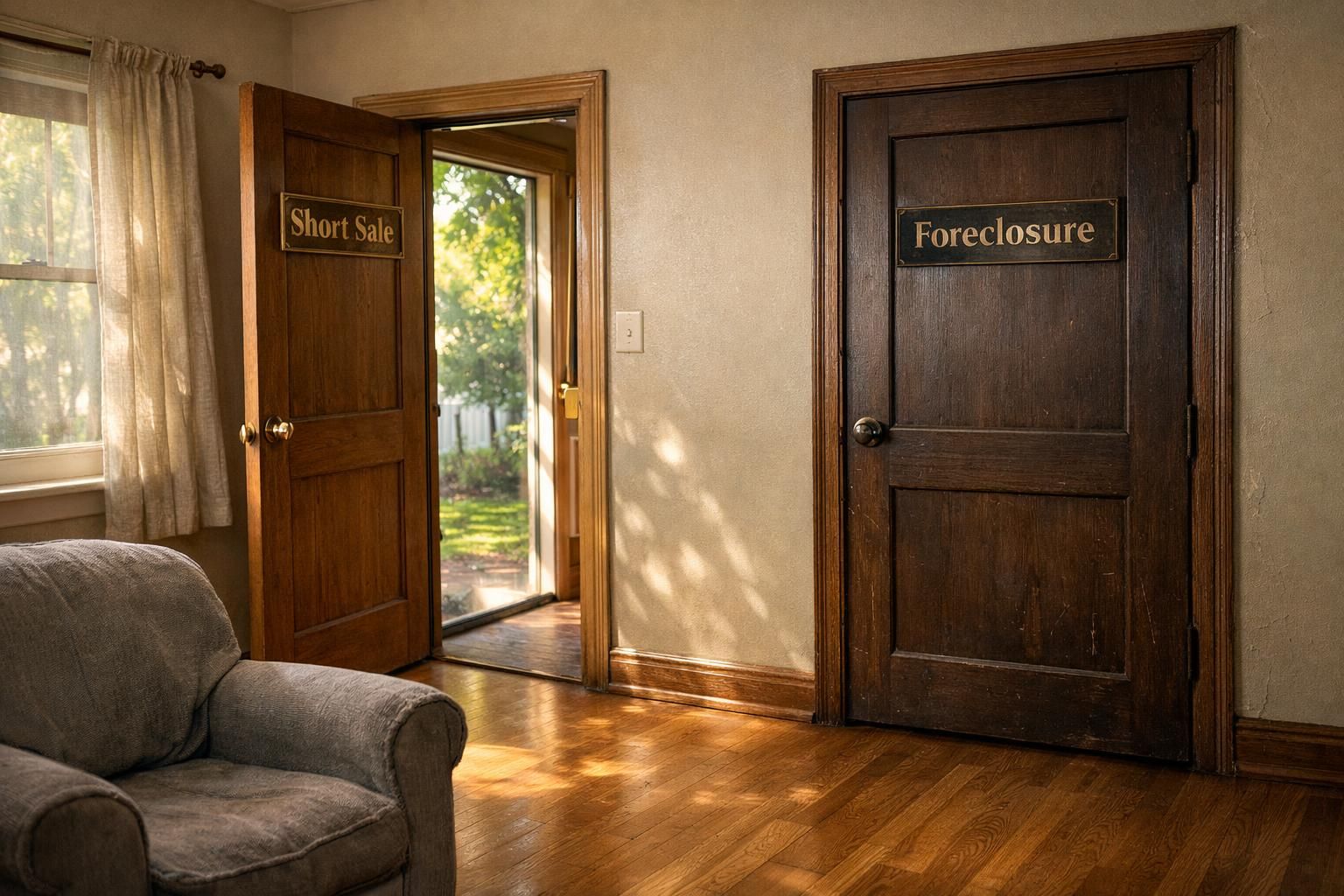
Short sales allow homeowners to choose the buyer and maintain dignity
You have the power to choose your real estate agent and work with buyers you trust during a short sale. This control lets you take part in every step — from showing your home to approving offers before they go to your lender. You can keep living in your house while the process moves forward. Selecting the right buyer helps protect your property's condition and avoids the deterioration common in vacant foreclosed homes. Unlike a trustee's sale, a short sale lets you exit on your own terms and maintain your standing in your community.
Foreclosures strip all control from homeowners
Once foreclosure begins in Washington, the lender and trustee control the entire process. You do not choose if, when, or how your home sells. The 120-day pre-foreclosure notice gives you some time, but after that, the trustee's sale timeline moves forward regardless of your preferences. 5 Homes sitting vacant while awaiting a trustee's sale can suffer damage and decline in value, affecting neighbors and the broader community. The emotional toll of losing all decision-making power during an already difficult financial crisis is significant and should not be underestimated.
Emotional toll: short sale agency vs. foreclosure helplessness
Choosing a short sale gives you a sense of agency. You work with your agent, approve offers, and plan your next move on a schedule that you help set. Many Washington homeowners find this involvement eases the emotional burden and preserves their sense of dignity during a hard time. Foreclosure, by contrast, removes all choice. Notices from trustees and the prospect of eviction create deep stress, and the public record of a trustee's sale can feel stigmatizing in tight-knit communities around Olympia, Bellevue, or Spokane. The financial damage of a 200–400 point credit drop compounds the emotional weight of losing control over your home and future.
When Short Sale Makes Sense
Underwater mortgage
Owing more on your mortgage than your home's market value puts you in an underwater position. Washington's competitive housing markets — particularly in the Seattle and Tacoma areas — can shift quickly, and some homeowners find themselves upside down after a market correction or after taking on a large refinance. Lenders often prefer approving a short sale over taking back bank-owned property through a trustee's sale. Proving hardship and showing that the outstanding balance exceeds market value strengthens your case. A successful short sale can stop late fees from piling up and allow you to qualify for a new home loan in as little as two years. 6
Proven financial hardship
You must show your lender a real, documentable hardship to qualify for a short sale. 7 Acceptable hardships include job loss, major illness, divorce, or a significant reduction in income. You will need a detailed hardship letter and supporting documents — pay stubs, medical bills, bank statements, unemployment records, or court documents. Approval rates typically run 50–60% when homeowners provide strong, well-organized evidence. Missing or weak documentation is one of the most common reasons lenders deny short sale requests and proceed with foreclosure instead.
Ability to maintain property during the sale process
Staying in your home during the short sale process helps protect your property. 6 You can keep the home clean, coordinate showings, and handle minor repairs. Maintained homes attract more buyers and often sell faster and at better prices than vacant properties. Lenders tend to look more favorably on short sales when sellers are actively caring for the home. Being present also lets you respond quickly to lender requests and stay involved in negotiations — keeping decisions in your hands rather than the bank's.
Desire to minimize credit damage
Choosing a short sale over foreclosure limits the damage to your credit score. A foreclosure can drop your score by 200 to 400 points and shows as a trustee's sale on your Washington credit history. A short sale typically causes only an 85 to 160 point loss and appears as a "settled account," which future lenders view more favorably. After a completed short sale, you may qualify for a new mortgage in just two to four years — significantly sooner than the three to seven years typically required after foreclosure.
When Foreclosure Might Be Unavoidable
Lender won't approve short sale
If your lender denies your short sale request, foreclosure may become inevitable. Lenders may reject applications if you cannot demonstrate clear financial hardship, if there are multiple liens on the property, or if they believe they can recover more through a trustee's sale. Incomplete paperwork or missed communication can also lead to denial. When short sale approval is off the table, consulting a Washington real estate attorney about your remaining options — including deed in lieu of foreclosure or bankruptcy — becomes critical.
Inability to document hardship
Without clear financial documentation, lenders will not approve a short sale. Banks want specific records — pay stubs, bank statements, tax returns — confirming that you genuinely cannot make your mortgage payments. If your reasons for missing payments are unclear or unsupported by paperwork, lenders may proceed directly to foreclosure. 5 In these cases, legal representation from a Washington attorney familiar with deed of trust law can help you challenge the lender's decision or negotiate alternative solutions before the trustee's sale date.
Property too damaged to show
Severely damaged properties often cannot go through the short sale process. Homes with major structural problems, code violations, or conditions that make them uninsurable struggle to attract qualified buyers. If the property cannot be marketed effectively, lenders are unlikely to approve a short sale and may prefer recovering funds through the trustee's sale process. Sellers who cannot maintain their property risk losing any opportunity to negotiate a less damaging outcome than foreclosure.
Foreclosure too far along or urgent need to move
If Washington's non-judicial foreclosure process has advanced to the point where a Notice of Trustee's Sale has been recorded and a sale date is imminent, starting a short sale may no longer be feasible. Lenders typically will not pause a trustee's sale to accommodate a new short sale application at a late stage. An urgent need to relocate — due to a job transfer or family emergency — can also make completing the 60–120 day short sale timeline impossible. In these situations, options may be limited to Chapter 13 bankruptcy (which can trigger an automatic stay) or a deed in lieu of foreclosure. Contact a Washington real estate attorney immediately if a trustee's sale date has been scheduled.
Foreclosure Avoidance Options
Washington homeowners have several tools available to avoid losing their home to a trustee's sale. Speaking with a HUD-approved housing counselor or a Washington real estate attorney early gives you the best chance of finding a workable solution.
Loan modification
Loan modification changes the terms of your mortgage to make payments more manageable — lowering your interest rate, extending the loan term, or in some cases reducing the principal balance. You must show proof of financial hardship for lender approval, and about 40% of applicants succeed. A successful modification can help you keep your home and avoid both a short sale and foreclosure. Apply early — before missed payments accumulate — to improve your chances and protect your credit history.
Deed in lieu of foreclosure
A deed in lieu lets you voluntarily transfer ownership of your home to the lender, avoiding the formal trustee's sale process. Some lenders offer "cash for keys" to help cover moving costs. This path generally takes less time than foreclosure and causes less credit damage than a full trustee's sale. Only properties without multiple liens typically qualify. You may receive a 1099-C if the lender forgives any deficiency, so consult a tax professional about potential federal tax liability before proceeding.
Bankruptcy (Chapter 13 to stop foreclosure)
Filing for Chapter 13 bankruptcy triggers an automatic stay that immediately halts a pending trustee's sale in Washington. 8 This gives you time to catch up on missed mortgage payments through a court-approved repayment plan lasting three to five years. Chapter 7 bankruptcy may discharge some debts but often does not save the home and causes greater credit damage. Chapter 13 is a powerful tool when other options — loan modification, short sale — have failed or time is very short before a scheduled trustee's sale.
Selling to a cash buyer
Selling to a cash buyer lets you close in as little as 7 to 14 days, well before a scheduled trustee's sale. Cash buyers purchase properties in any condition, eliminating the need for repairs or extensive showings. You may not receive full market value, but you avoid months of lender approval waiting and protect your credit score from the full impact of foreclosure. 9 Quick payment allows you to clear your outstanding mortgage balance, stop the foreclosure process, and regain control over your financial future without the stress of a public trustee's sale or potential deficiency judgment.
Conclusion
Choosing between a short sale and foreclosure will shape your financial future for years. In Washington, where non-judicial foreclosure can move in as little as four to six months, acting quickly matters. A short sale gives you more control, less credit damage, and a faster path back to homeownership. Foreclosure strips away your choices and carries heavier long-term consequences. Speak with a Washington real estate agent or attorney early to understand your rights and options before the trustee's sale timeline closes off alternatives.
If you need to sell your Washington home quickly to avoid foreclosure, KDS Homebuyers can help. We buy houses directly from homeowners for cash — any condition, any situation — with no repairs, no agent commissions, and no waiting for lender approval. Visit kdshomebuyers.net to request your free cash offer today and take the first step toward protecting your financial future.
FAQs
1. What is the main difference between a short sale and foreclosure in Washington?
A short sale lets you sell your property for less than the outstanding mortgage balance with lender approval. In Washington, foreclosure typically proceeds non-judicially through a trustee's sale after a required 120-day pre-foreclosure notice period.
2. How does each option affect my credit score and credit report?
Both options hurt your credit score and remain on your credit report for seven years. A foreclosure or trustee's sale usually causes a larger drop — 200 to 400 points — compared to 85 to 160 points for a short sale.
3. Can Washington lenders pursue a deficiency judgment after foreclosure?
Yes. Washington lenders can pursue deficiency judgments after non-judicial foreclosure in certain circumstances, unlike true non-recourse states. Always seek written confirmation of debt forgiveness from your lender before closing any transaction.
4. Are there alternatives to foreclosure besides a short sale?
Yes. Washington homeowners can explore loan modification, forbearance, deed in lieu of foreclosure, Chapter 13 bankruptcy, or selling to a cash buyer before the trustee's sale date.
5. Will I owe taxes after a short sale in Washington?
You may have federally taxable income from canceled debt reported on a 1099-C. Washington has no state income tax, which simplifies matters somewhat, but you should consult a tax professional about your federal liability and whether you qualify for insolvency or debt relief exemptions.
6. Should I work with professionals during this process?
Yes. Working with an experienced Washington real estate agent and a local attorney familiar with the Deed of Trust Act helps protect your interests, improves your chances of short sale approval, and ensures you understand all deadlines before a trustee's sale is scheduled.
References
- ^ https://cushnerlegal.com/2025/05/06/what-is-a-short-sale-and-is-it-better-than-foreclosure/
- ^ https://www.rocketmortgage.com/learn/short-sale-vs-foreclosure (2025-11-24)
- ^ https://www.experian.com/blogs/ask-experian/short-sale-vs-foreclosure/ (2025-06-22)
- ^ https://scholarlycommons.law.emory.edu/cgi/viewcontent.cgi?article=1068&context=elj
- ^ https://www.urban.org/sites/default/files/publication/30426/411909
