

Short Sale vs. Foreclosure: Which Is Better for You in Tennessee
Struggling to keep up with your mortgage payments can feel overwhelming. Many Tennessee homeowners face the tough decision of choosing between a short sale vs foreclosure when they fall behind. 2 This guide explains both options in plain terms, showing how each affects your credit score, finances, and future home ownership under Tennessee law. 3 Find out which choice may be better for your situation below. 1
Key Takeaways
- A short sale lets you sell your home for less than the mortgage balance with lender approval. About 50–60% of short sales get approved when you document real financial hardship such as job loss or serious illness (Fannie Mae, Freddie Mac).
- Short sales drop your credit score by 85–160 points and typically require a two to four-year wait before obtaining another mortgage. Foreclosure can lower your score by 200–400 points and triggers a three to seven-year waiting period. Both remain on your credit report for seven years.
- Tennessee is a recourse state, meaning lenders can pursue a deficiency judgment against you for any unpaid balance after a short sale or foreclosure sale — unless the lender agrees in writing to forgive that debt.
- Tennessee uses a non-judicial foreclosure process driven by a deed of trust. After a notice of default and required waiting periods, the process can move quickly — sometimes completing in as few as 60 days from the first legal notice.
- A short sale gives you more control: you choose the agent, work with buyers, and usually stay in the home during the process, protecting your dignity and helping you qualify for future financing sooner.
Sources: Fannie Mae/Freddie Mac guidelines; FICO/Experian data; IRS Form 1099-C rules; Tennessee state law on foreclosure and deficiency judgments; National Association of Realtors®.
What Is a Short Sale?

A short sale lets you list your home for less than the mortgage balance with your lender's approval. Tennessee homeowners often work with a real estate agent to manage this process and avoid foreclosure.
Selling for less than the mortgage balance with lender approval
If you owe $300,000 on your mortgage but your Nashville or Memphis home is worth only $260,000 in the current market, you may sell for the lower price with lender approval. 1 The lender must agree because they will not receive full repayment. Servicers review your documented financial hardship before deciding whether to approve the deal.
During a short sale, the lender typically covers closing costs. You list the property "as is" through a licensed real estate agent and can usually remain in the home during showings. If approved, the lender may forgive the deficiency balance or may require partial repayment — a critical point in Tennessee, which allows deficiency judgments after short sales unless the lender waives that right in writing.
Typical timeline: 60–120 days
The short sale process usually takes 60 to 120 days from start to finish, though multiple liens or a second mortgage can push this to six months or longer. Once a buyer's offer is accepted and the lender grants consent, cash buyers can sometimes close in 7 to 14 days. Roughly half of all short sales nationally receive final approval, so consistent communication with your lender and agent is essential.
Initiated by the homeowner
You start a short sale by contacting your lender and requesting permission to sell for less than the outstanding balance. This keeps you in the driver's seat compared to foreclosure, where the lender acts without your input. You select your own real estate agent, prepare the home, and remain involved at every stage — from setting the price to reviewing offers.
Lender approval requirements
Lender approval is the cornerstone of any short sale. What Tennessee lenders typically require:
- A hardship letter explaining why you cannot keep up with payments — job loss, illness, divorce, or another significant income change.
- Financial documents: recent pay stubs, bank statements, two years of tax returns, and a monthly expense summary.
- A broker price opinion or appraisal showing the home's current market value is less than the outstanding loan balance.
- All offers submitted in writing; lenders often prefer cash buyers or buyers with strong financing for certainty of closing.
- Consent from any second mortgage holder or home equity line of credit lender — both must agree before the transaction can close.
- Written clarification on whether any deficiency balance will be forgiven or pursued through court action under Tennessee law.
Working with a Tennessee real estate agent experienced in distressed sales and a housing counselor approved by the U.S. Department of Housing and Urban Development (HUD) improves your approval chances significantly.
Real-world example of a successful short sale
You owe $280,000 on a Knoxville home now worth $230,000. Your agent finds a buyer willing to pay $230,000. The lender reviews the offer, accepts it as payment in full, and forgives the $50,000 deficiency rather than pursuing foreclosure. Your credit report reflects a "settled account" rather than a foreclosure, and your score drops 85–160 points instead of 200–400. The lender issues IRS Form 1099-C for the forgiven amount; if this was your primary residence, you may qualify for exclusion under federal debt forgiveness rules — consult a Tennessee tax professional to confirm your situation.
What Is Foreclosure?

Foreclosure begins when your mortgage lender takes legal steps to repossess your home after missed payments. In Tennessee, this process moves relatively fast because the state primarily uses non-judicial foreclosure.
Tennessee's Non-Judicial Foreclosure Process
Most Tennessee mortgages are structured as deeds of trust, which means the lender can foreclose without filing a lawsuit in court. After you miss payments — typically three to six months of non-payment — the lender or trustee issues a notice of default and schedules a foreclosure sale. Tennessee law requires the lender to publish a notice of the sale in a local newspaper for three consecutive weeks and provide written notice to the borrower. The sale is then conducted publicly, often on the courthouse steps.
Because court involvement is not required, Tennessee foreclosures can move through the full process in as little as 60 days from the first formal notice, making it one of the faster non-judicial states. 2 Homeowners in Chattanooga, Nashville, and other major Tennessee cities have very little time to act once the formal process begins.
Judicial foreclosure in Tennessee
Judicial foreclosure — where the lender sues in chancery or circuit court — is less common in Tennessee but does occur, particularly when a deed of trust contains unusual terms or title issues arise. This court-supervised path takes considerably longer, sometimes 12 months or more, but the outcome is the same: the property is sold at public auction if the debt is not resolved.
Deficiency judgments and post-foreclosure outcomes
Tennessee is a recourse state. If your home sells at foreclosure auction for less than your outstanding loan balance, the lender can seek a deficiency judgment against you in court for the remaining amount. Tennessee law does require the lender to file for a deficiency judgment within a set time after the sale. That judgment can result in wage garnishment or liens on other assets.
Unlike some non-recourse states, Tennessee provides limited automatic protection from deficiency claims, which is why getting any debt forgiveness agreement in writing before completing a short sale is essential. Tennessee does not provide a statutory post-sale redemption period for non-judicial foreclosures, so once the auction occurs, you generally cannot buy the home back.
Credit Impact Comparison

Short sale: credit drop of 85–160 points, 2–4 year mortgage waiting period
A short sale typically lowers your credit score by 85 to 160 points, according to FICO and Experian data. 3 The account appears as "settled" on your credit report for seven years but is viewed more favorably than a foreclosure by future lenders. Most Tennessee homeowners can qualify for a new conventional mortgage in two to four years after a short sale; FHA and VA programs may offer shorter timelines depending on circumstances. 3
Foreclosure: credit drop of 200–400 points, 3–7 year mortgage waiting period
Foreclosure causes a much heavier credit score drop — typically 200 to 400 points — and stays on your report for seven years from the date of your first missed payment. Most conventional lenders require a seven-year waiting period; FHA loans set a three-year minimum, and VA loans may allow reapplication in two years under certain conditions. Given Tennessee's fast non-judicial foreclosure timeline, the damage can occur before many homeowners have time to explore alternatives.
Duration on credit report: 7 years for both
Both a short sale and a foreclosure remain on your credit report for seven years. The clock starts from your first missed mortgage payment, not the closing date or auction date. Future Tennessee lenders will see these marks during the full seven-year window, limiting access to favorable loan terms and interest rates.
Financial Consequences

Deficiency judgments under Tennessee law
Because Tennessee is a recourse state, lenders can pursue the difference between your outstanding mortgage balance and the auction sale price through a court-ordered deficiency judgment. This risk applies to both short sales and foreclosures unless the lender explicitly waives the deficiency in the short sale approval letter. A deficiency judgment can lead to wage garnishment or liens on other property you own in Tennessee. Always have a real estate attorney review any short sale approval document to confirm deficiency language before you sign. 4
1099-C taxable income and Mortgage Forgiveness Debt Relief Act
When a Tennessee lender forgives a deficiency balance in a short sale, they must report the canceled debt on IRS Form 1099-C, and the IRS may treat that amount as taxable income. If the property was your primary residence and the debt was used to buy or substantially improve it, you may qualify for exclusion under the Mortgage Forgiveness Debt Relief Act. Insolvency — meaning your total debts exceed your total assets at the time of cancellation — is another potential exclusion. Tennessee follows federal tax treatment on forgiven mortgage debt for state income tax purposes, but consult a Tennessee CPA or tax attorney to confirm your specific situation before filing.
Additional costs in foreclosure
Tennessee foreclosures carry costs beyond credit damage. Publication fees for the required newspaper notices, trustee fees, attorney fees, and any unpaid property taxes or HOA dues can all be added to what you owe. If the lender pursues a deficiency judgment after the auction, court filing fees and collection costs increase your financial exposure further. Eviction proceedings after the foreclosure sale add yet another layer of expense and stress. The total financial burden of foreclosure consistently exceeds what homeowners expect, making early action critical.
Control and Timeline
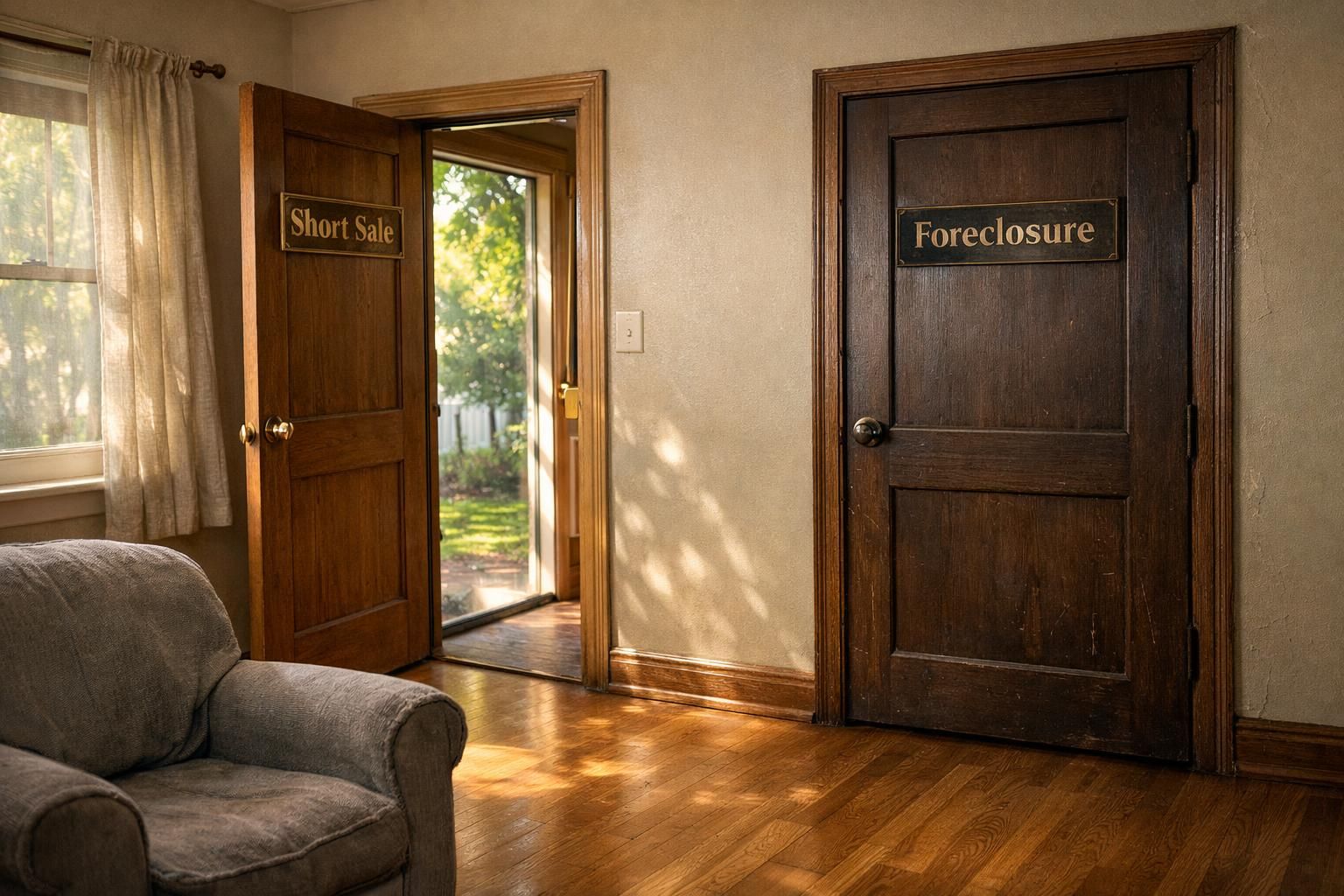
Short sales allow Tennessee homeowners to choose the buyer and maintain dignity
In a short sale, you select your real estate agent, approve showings, and review offers before they go to the lender. You remain in the home during the process, which keeps the property in good condition and signals responsibility to future lenders. Sellers report feeling far less stigma than those who went through foreclosure, and maintaining community relationships is easier when the sale is handled professionally rather than through a public courthouse auction.
Foreclosure strips all control from homeowners
Once Tennessee's non-judicial foreclosure process begins, the lender's trustee controls the timeline and sale. You receive legal notices but have no say in the sale price, buyer selection, or closing date. Because Tennessee's process can move in as little as 60 days, families in Memphis, Knoxville, and elsewhere can find themselves facing eviction very quickly after the auction. Vacant homes attract vandalism and deterioration, further reducing neighborhood values and eliminating any equity that might have remained.
Emotional toll: short sale agency vs. foreclosure helplessness
Participating in a short sale gives you a structured way to exit a difficult situation with your dignity largely intact. You communicate with lenders, agents, and buyers on a defined timeline. Foreclosure, by contrast, removes your voice entirely. Tennessee's non-judicial process means court dates may never appear — but the trustee sale notice posted publicly and the rapid eviction timeline create intense emotional stress. Homeowners consistently report that having agency in a short sale — even under financial duress — significantly reduces anxiety compared to the helplessness of foreclosure.
When Short Sale Makes Sense in Tennessee
Underwater mortgage
If your home's current market value is less than your loan balance — a common situation in parts of Tennessee that experienced rapid price appreciation followed by corrections — a short sale gives you a structured exit. Lenders often prefer short sales over taking back property, particularly in markets where bank-owned homes can sit for months. 6
Proven financial hardship
Tennessee lenders require clear documentation of hardship before approving a short sale. 7 Acceptable causes include job loss, medical emergency, divorce, or a significant reduction in income. You will need a hardship letter plus supporting documents — pay stubs, bank statements, unemployment records, or medical bills. Approval rates nationally run 50–60% when documentation is thorough; incomplete files are a leading reason for denial.
Ability to maintain the property during the sale
Staying in your Tennessee home during the short sale process keeps the property in showable condition, attracts stronger offers, and reduces the risk of vandalism. Lenders look favorably on sellers who actively maintain their investment. A well-kept home also helps inspections go smoothly and supports buyer financing approvals. 6
Desire to minimize credit damage
The gap between a short sale's 85–160 point credit drop and foreclosure's 200–400 point drop is significant for your long-term financial recovery. A "settled account" notation is viewed more favorably by future Tennessee lenders than a foreclosure entry, and the shorter mortgage waiting period — two to four years vs. three to seven — means you can re-enter the housing market sooner.
When Foreclosure Might Be Unavoidable
Lender won't approve the short sale
If you cannot demonstrate financial hardship, if multiple liens complicate the title, or if your lender's loss mitigation team finds more value in a foreclosure auction, short sale approval may be denied. In those cases, foreclosure may proceed despite your efforts to avoid it.
Inability to document hardship
Tennessee lenders will not approve a short sale on goodwill alone. Without pay stubs, bank statements, tax returns, and a convincing hardship letter, the application will stall or be rejected. If documentation cannot be assembled, the lender may accelerate the non-judicial foreclosure process, leaving little time to pursue alternatives. 5
Property too damaged to show
Homes with major structural problems, fire damage, mold, or code violations typically cannot attract qualified buyers at a price the lender will accept. When a property cannot be insured or is deemed uninhabitable, foreclosure often becomes the only remaining path.
Foreclosure too far along
Because Tennessee's non-judicial foreclosure can move quickly — sometimes completing within 60 days of the first formal notice — there may not be enough time to gather documents, list the property, find a buyer, and secure lender approval before the auction date is set. Once a foreclosure sale date is published in Tennessee, lenders are rarely willing to pause the process for a new short sale application. Contact a Tennessee real estate attorney immediately if you believe you are approaching this point. 5
Foreclosure Avoidance Options for Tennessee Homeowners
Loan modification
A loan modification changes your mortgage terms — lowering the interest rate, extending the repayment period, or reducing the principal — to make payments manageable. About 40% of applicants nationally receive approval. Applying early, before you fall significantly behind, improves your chances. A successful modification keeps you in your home and causes far less credit damage than either a short sale or foreclosure.
Deed in lieu of foreclosure
Voluntarily transferring your Tennessee home's title back to the lender avoids the full foreclosure process. Some lenders offer relocation assistance or "cash for keys" to cover moving costs. Your credit will still be affected, but typically less than a formal foreclosure. Only properties with a single lien usually qualify, and any forgiven deficiency balance may generate a Form 1099-C. Speak with a tax professional before proceeding.
Bankruptcy (Chapter 13 to stop foreclosure)
Filing Chapter 13 bankruptcy triggers an automatic stay that immediately halts a Tennessee foreclosure. 8 You then propose a three-to-five year repayment plan to catch up on mortgage arrears while keeping your home. Given how quickly Tennessee's non-judicial process moves, filing Chapter 13 may be one of the few tools available to stop a sale that is already scheduled. Tennessee bankruptcy cases are filed in federal court — the Middle, Eastern, or Western District of Tennessee depending on your location.
Selling to a cash buyer
A cash sale can close in 7 to 14 days, allowing you to pay off your outstanding mortgage balance and stop foreclosure before the auction date. You avoid repair costs, lender approval delays, and lengthy listing periods. While you may receive less than full market value, the speed and certainty of a cash transaction protects your credit and eliminates the risk of a Tennessee deficiency judgment. 9
Conclusion
For Tennessee homeowners facing financial hardship, a short sale typically offers more control, less credit damage, and a faster path back to financial stability than foreclosure. Tennessee's non-judicial foreclosure process moves faster than many homeowners expect, so acting early is critical — the sooner you explore your options, the more choices remain available to you.
If you are behind on mortgage payments and need to sell quickly, KDS Homebuyers purchases homes directly from Tennessee homeowners for cash — no repairs, no agent commissions, and no waiting on lender approval. Visit kdshomebuyers.net today to request a free, no-obligation cash offer and find out how fast you can move forward.
FAQs
1. What is the main difference between a short sale and foreclosure in Tennessee?
A short sale lets you sell your home for less than the outstanding mortgage balance with lender approval. Tennessee foreclosure — typically non-judicial — is lender-initiated and can move in as little as 60 days, ending in a public auction without your input.
2. Can a Tennessee lender sue me for the remaining balance after foreclosure?
Yes. Tennessee is a recourse state, meaning lenders can seek a deficiency judgment for the difference between what you owed and what the home sold for at auction. This risk also applies in short sales unless the lender waives the deficiency in writing.
3. How does each option affect my credit score?
A short sale typically drops your score 85–160 points; foreclosure can cause a 200–400 point drop. Both appear on your credit report for seven years, starting from your first missed payment.
4. Are there alternatives to both options?
Yes — loan modification, deed in lieu of foreclosure, Chapter 13 bankruptcy, and selling to a cash buyer are all worth exploring before your situation reaches the foreclosure auction stage.
5. Will I owe taxes on forgiven mortgage debt in Tennessee?
Forgiven debt is generally reported on IRS Form 1099-C and may be treated as taxable income. Exemptions may apply for primary residences under federal law. Consult a Tennessee CPA or tax attorney to review your specific circumstances.
6. Should I work with professionals?
Absolutely. A Tennessee real estate attorney can review deficiency language in any short sale approval and advise on your rights under state law. A HUD-approved housing counselor can help you evaluate all options at no cost.
References
- ^ https://cushnerlegal.com/2025/05/06/what-is-a-short-sale-and-is-it-better-than-foreclosure/
- ^ https://www.rocketmortgage.com/learn/short-sale-vs-foreclosure (2025-11-24)
- ^ https://www.experian.com/blogs/ask-experian/short-sale-vs-foreclosure/ (2025-06-22)
- ^ https://scholarlycommons.law.emory.edu/cgi/viewcontent.cgi?article=1068&context=elj
- ^ https://www.urban.org/sites/default/files/publication/30426/411909-The-Impacts-of-Foreclosures-on-Families-and-Communities.PDF
- ^ https://better.com/content/short-sale-vs-foreclosure (2025-07-17)
- ^ https://www.sherrodlawfirm.com/blog/is-a-short-sale-better-than-foreclosure-for-homeowners-in-illinois (2025-07-18)
- ^ https://library.nclc.org/book/surviving-debt/chapter-13-bankruptcy-may-stop-foreclosure-permanently
- ^ https://www.nar.realtor/short-sales-foreclosures
