

Short Sale vs. Foreclosure: Which Is Better for You in Florida
Struggling to keep up with your mortgage payments can feel overwhelming. Many Florida homeowners face the tough decision of choosing between a short sale vs foreclosure when they fall behind. 2 This guide explains both options in plain terms, showing how each affects your credit score, finances, and future homeownership in the Sunshine State. 3 Find out which choice may be better for your situation below. 1
Key Takeaways
- A short sale lets you sell your home for less than the mortgage balance with lender approval. About 50–60% of short sales get approved when you can document real financial hardship such as job loss or major illness.
- Short sales drop your credit score by 85–160 points and typically require a two-to-four-year wait before getting another mortgage. Foreclosure can lower your score by 200–400 points and means waiting three to seven years for a new loan. Both stay on your credit report for seven years.
- Florida is a recourse state, meaning lenders can pursue a deficiency judgment against you for any balance not covered by the sale — unless the debt is forgiven in writing.
- Florida uses judicial foreclosure exclusively, requiring court involvement. The process typically takes 6 to 18 months, sometimes longer in high-volume counties like Miami-Dade.
- A short sale gives you more control: you pick the agent, choose buyers, and usually stay in the home during the process — helping protect your credit and your ability to qualify for future loans sooner.
Sources: Fannie Mae/Freddie Mac guidelines; FICO/Experian data; IRS Form 1099-C rules; Florida state law on deficiency judgments; National Association of Realtors®.
What Is a Short Sale?
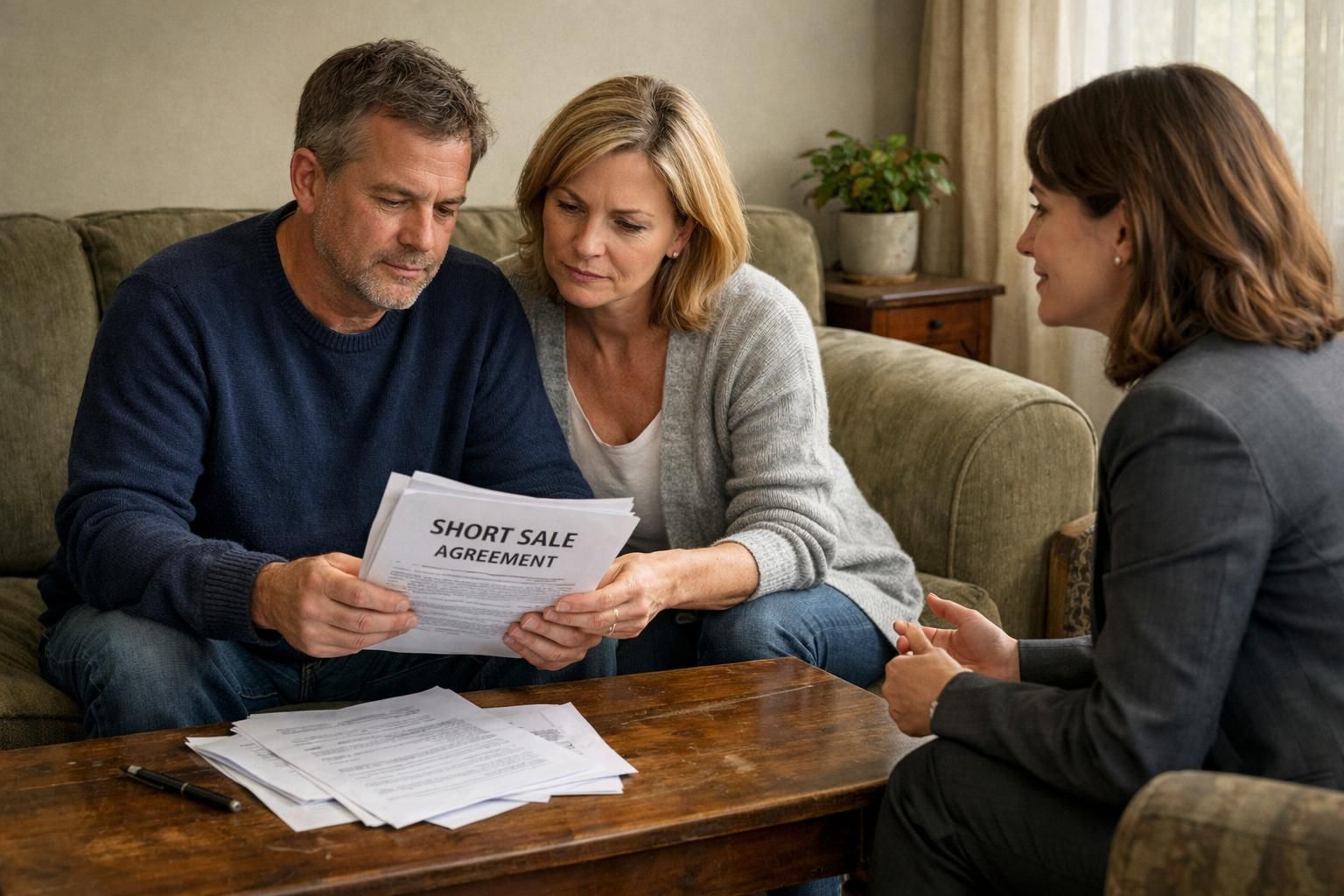
A short sale lets you list your home for less than the mortgage balance with your lender's approval. Many Florida homeowners work with a real estate agent to manage this process and avoid foreclosure.
Selling for less than the mortgage balance with lender approval
If you owe $300,000 on your mortgage but your home's market value has dropped to $250,000, you may sell for the lower price with your lender's approval. Your lender must agree because they won't receive full repayment. Banks review your financial hardship documentation and decide whether to approve the transaction.
During a short sale, the lender typically covers closing costs. You list the property "as is" through a real estate agent and can usually remain in the home during showings. If approved, the lender may forgive the deficiency balance or require partial repayment after closing. Florida homeowners in markets like Tampa and Orlando have used this strategy to avoid foreclosure and limit credit damage.
Typical timeline: 60–120 days
The short sale process usually takes 60 to 120 days from start to finish, though Florida transactions with multiple liens can stretch six months to a year. You begin by working with a real estate agent and gathering hardship documentation for your lender. Once an offer is received, your primary lender — and any second mortgage or HELOC holders — must review and approve it. Cash buyers may close in as little as 7 to 14 days after lender consent. Industry data shows only about half of all short sales receive final approval.
Initiated by the homeowner
You start a short sale by contacting your mortgage lender and requesting approval to sell for less than the outstanding balance. This gives you far more control than foreclosure, which the bank initiates. You choose your real estate agent, prepare the property, and remain in the home throughout most of the process. Lenders like Freddie Mac require documentation of genuine financial hardship — such as job loss, medical bills, or divorce — before approving a listing below the loan balance.
Lender approval requirements
- A hardship letter explaining why you can no longer make mortgage payments — job loss, illness, divorce, or a significant income reduction.
- Financial documents including pay stubs, bank statements, tax returns, and a monthly expense summary.
- A broker price opinion or market analysis showing the home's current value is below the outstanding mortgage balance.
- All offers submitted in writing; lenders often prefer cash buyers or buyers with strong financing.
- Proof the property has been listed by a licensed Florida real estate agent at a competitive price.
- Consent from any second mortgage or home equity line of credit holders before closing.
- Written confirmation of any deficiency balance forgiveness — critical in Florida, which allows lenders to pursue deficiency judgments.
- Loss mitigation review by the lender's specialized team, particularly for loans backed by Fannie Mae or Freddie Mac.
Careful documentation, honest hardship disclosure, and an experienced Florida real estate professional all improve your chances of approval.
Real-world example of a successful short sale
You owe $300,000 on a Jacksonville home, but the market value has fallen to $250,000. You find a buyer through your agent willing to pay that amount. The lender reviews the short sale and agrees to accept it as payment in full, forgiving the $50,000 deficiency. Your credit report shows a completed short sale rather than a foreclosure, and your score drops roughly 85 to 160 points instead of 200 to 400. The lender issues a 1099-C for the forgiven debt, but if this is your primary residence, you may qualify for tax relief under insolvency rules or federal mortgage forgiveness provisions — always consult a tax professional familiar with Florida's guidelines.
What Is Foreclosure?

Foreclosure starts when your mortgage lender takes legal action to repossess your home after missed payments. In Florida, this always goes through the court system, adding time and legal costs to an already stressful situation.
Florida's judicial foreclosure process
Florida is a judicial foreclosure state. That means your lender must file a lawsuit in circuit court, serve you with a summons and complaint, and obtain a final judgment before your home can be sold. After you miss three to six mortgage payments, the lender files for foreclosure. You have 20 days to respond to the complaint. If the lender receives a final judgment, the court schedules a foreclosure sale — typically conducted online through county auction platforms like those used in Miami-Dade, Broward, and Hillsborough counties.
The entire process in Florida generally takes 6 to 18 months, though heavily backlogged courts in South Florida have historically pushed timelines even longer. The property can remain in legal limbo throughout, and you may continue living there until the sale is finalized and a new owner takes title.
Redemption periods and post-foreclosure outcomes in Florida
Florida does not offer a post-sale redemption period in most cases — once the foreclosure sale is confirmed by the court, your right to reclaim the property ends. However, you do have the right to cure the default and stop foreclosure at any point before the certificate of title is issued to the new buyer.
If your home sells at auction for less than your outstanding mortgage balance, Florida law permits the lender to seek a deficiency judgment for the remaining amount. The lender must file for this judgment within one year of the foreclosure sale. A deficiency judgment can result in wage garnishment or liens on other assets. Always consult a Florida real estate attorney about your exposure before the sale occurs.
Credit Impact Comparison

Short sale: credit drop of 85–160 points, 2–4 year mortgage waiting period
A short sale typically lowers your credit score by 85 to 160 points, based on FICO and Experian data. 3 It appears as a "settled account" on your credit report for seven years — a less damaging mark than foreclosure. Most lenders require a two-to-four-year waiting period before approving a new mortgage. Conventional loans typically require at least two years; FHA and VA programs have their own timelines. Keeping up with some payments during the short sale process reduces the overall credit impact.
Foreclosure: credit drop of 200–400 points, 3–7 year mortgage waiting period
Foreclosure causes a severe credit score drop — typically 200 to 400 points — that remains on your report for seven years from your first missed payment. Most lenders require a seven-year wait before approving a conventional mortgage after foreclosure, though FHA loans allow reapplication after three years and VA loans after two years in some cases. Recovering from Florida foreclosure takes time, patience, and a deliberate plan to rebuild your credit history.
Duration on credit report: 7 years for both
Both a short sale and a foreclosure stay on your credit report for seven years, starting from the date of your first missed payment. Future lenders will see these negative marks and may offer higher interest rates or stricter loan terms. A completed foreclosure is generally viewed more harshly than a short sale, even after both events age off your credit file.
Financial Consequences
Deficiency judgments in Florida
Florida is a recourse state. If your home sells for less than the outstanding mortgage balance — whether through short sale or foreclosure — the lender may pursue a deficiency judgment for the remaining amount. After a foreclosure sale, lenders have one year to seek this judgment. After a short sale, the timeframe depends on what was negotiated. Always insist on written confirmation that the lender is waiving its right to a deficiency before you sign anything. A Florida real estate attorney can help you negotiate this waiver and avoid wage garnishment or liens on other property you own. 4
1099-C taxable income and Mortgage Forgiveness Debt Relief Act eligibility
When a lender forgives part of your mortgage balance, they report the canceled debt to the IRS on Form 1099-C. The IRS may treat this as taxable income. If the property was your primary residence and the loan was used to buy or improve it, you may qualify for relief under the Mortgage Forgiveness Debt Relief Act. You might also avoid taxation by proving insolvency — total debts exceeding total assets at the time of forgiveness. Investment properties and second homes do not qualify for this exemption. Florida does not have a state income tax, so the tax concern is primarily federal, but always consult a qualified tax professional to review your specific situation.
Additional legal fees in Florida foreclosure
Because Florida requires judicial foreclosure, you face court filing fees, potential attorney's fees, and costs tied to each stage of litigation. If the lender also pursues a deficiency judgment, those legal expenses increase further. Unpaid property taxes or HOA assessments — common issues in Florida communities — can add additional liens that complicate the process and raise your financial exposure. Eviction proceedings after the foreclosure sale add another layer of cost and stress. The total legal burden from foreclosure almost always exceeds what homeowners expect compared to completing a short sale.
Control and Timeline
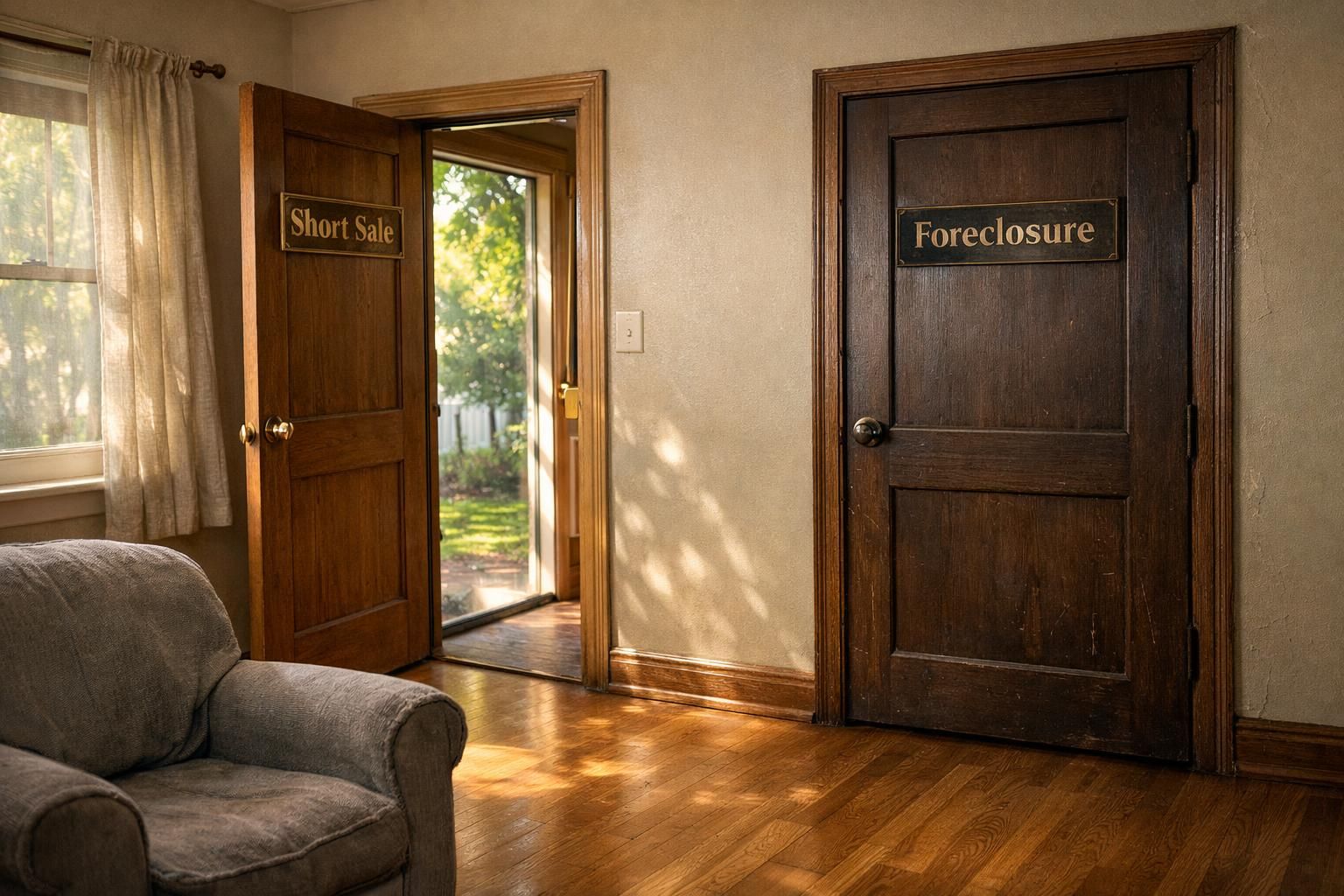
Short sales allow homeowners to choose the buyer and maintain dignity
With a short sale, you choose your real estate agent, participate in every step, and approve offers before they go to the lender. You can stay in your home while the process moves forward. Maintaining the property during the sale helps attract buyers and supports a better outcome. Florida sellers — from Orlando to Tampa — often report that staying involved reduced their stress and preserved their standing in the community compared to going through foreclosure.
Florida foreclosure strips all control from homeowners
Once a Florida lender files a foreclosure lawsuit, decisions about your home shift to the courts and the bank. You receive legal notices and must respond within strict deadlines, but you have no say over the auction date or sale price. The process can take 6 to 18 months in circuit court, and South Florida counties with heavy dockets have historically seen even longer timelines. Once the certificate of title transfers, eviction follows quickly. Vacant homes are also more vulnerable to vandalism and deterioration, which can reduce neighborhood values.
Emotional toll: short sale agency vs. foreclosure helplessness
A short sale gives you a measure of agency during a difficult time. You negotiate with buyers, coordinate showings, and work toward a resolution on your terms. Foreclosure removes all of that — legal notices, court dates, and eventual eviction create an atmosphere of helplessness. Many Florida homeowners who have experienced both describe foreclosure as significantly more emotionally damaging, compounding financial stress with the loss of control over their most important asset.
When Short Sale Makes Sense
Underwater mortgage
If you owe more on your mortgage than your home is worth, a short sale may be your best path forward. Florida markets — particularly in areas that saw rapid appreciation followed by corrections — have produced many underwater mortgages. Lenders often prefer approving short sales over taking back bank-owned property through the Florida court system. Homeowners who complete a successful short sale can often qualify for a new mortgage within two to four years. 6
Proven financial hardship
You must document genuine financial hardship to qualify for a short sale. 7 Acceptable hardships include job loss, medical illness, divorce, or a significant reduction in income. Gather pay stubs, bank statements, tax returns, and any supporting documents — medical bills, termination letters, court records — before submitting your request. Lenders approve roughly 50–60% of short sales when homeowners provide strong, complete documentation.
Desire to minimize credit damage
Choosing a short sale over Florida foreclosure protects your credit score and your ability to buy again sooner. The difference between an 85–160 point drop (short sale) and a 200–400 point drop (foreclosure) is significant when you're trying to rebuild. Keeping up with some mortgage payments during the short sale process can reduce credit damage further. Future lenders view a "settled account" more favorably than a foreclosure judgment on your record.
When Foreclosure Might Be Unavoidable
Lender won't approve short sale
If your lender denies your short sale request — because of insufficient hardship documentation, large outstanding balances, or conflicting lien holders — foreclosure may be your only remaining option. Some lenders see more value in pursuing the Florida judicial foreclosure process and selling at auction than accepting a discounted payoff. Incomplete paperwork or missed deadlines can also kill an otherwise viable short sale application.
Inability to document hardship
Without clear proof of financial hardship, lender approval is unlikely. If your documentation doesn't align with the lender's requirements, they may deny your request and proceed with legal action. In these cases, a Florida foreclosure defense attorney may be able to help you challenge the timeline or negotiate alternatives like a deed in lieu of foreclosure. 5
Property too damaged or foreclosure too far along
Severely damaged homes that cannot attract qualified buyers often don't qualify for short sale approval. If your Florida foreclosure case has already reached a final judgment hearing or auction date has been set, the window for a short sale typically closes. At that stage, your options may narrow to bankruptcy protection or a deed in lieu of foreclosure. Contact a Florida real estate attorney immediately if you are approaching these deadlines.
Foreclosure Avoidance Options in Florida
Loan modification
A loan modification changes your mortgage terms — lowering the interest rate, extending the repayment period, or reducing the principal — to make payments manageable. You must document financial hardship, and about 40% of applicants succeed. A successful modification lets you keep your home and avoids both foreclosure and short sale. Apply early; waiting until you're deep in default reduces your chances of approval and gives you less negotiating leverage with your servicer.
Deed in lieu of foreclosure
You voluntarily transfer ownership of your home to the lender in exchange for release from the mortgage obligation. This avoids the full Florida judicial foreclosure process and typically takes weeks rather than months. Your credit score will still decline, but usually less than with foreclosure. Some lenders offer "cash for keys" incentives to help cover moving costs. Only properties without multiple liens typically qualify, and you may still receive a 1099-C if any deficiency is forgiven — consult a tax professional before proceeding.
Bankruptcy (Chapter 13 to stop foreclosure)
Filing for Chapter 13 bankruptcy triggers an automatic stay that immediately halts Florida foreclosure proceedings. 8 This gives you time to catch up on missed payments through a three-to-five-year court-supervised repayment plan. Chapter 7 bankruptcy may discharge some debt but typically does not save the home and can damage your credit even more than foreclosure. Florida's generous homestead exemption may also protect equity in your primary residence during bankruptcy — speak with a Florida bankruptcy attorney about how these rules apply to your situation.
Selling to a cash buyer
Selling to a cash buyer can close a Florida real estate transaction in as little as 7 to 14 days. You skip repairs, avoid months of waiting for lender approval, and can stop foreclosure before it progresses further in circuit court. 9 You may not receive full market value, but you clear your outstanding mortgage balance, avoid a deficiency judgment, and protect your credit far better than allowing the foreclosure process to run its course.
Conclusion
Choosing between a short sale and foreclosure can shape your financial future for years. In Florida — a judicial foreclosure state where lenders can pursue deficiency judgments — acting early gives you the most options. A short sale preserves more control, causes less credit damage, and gets you back to homeownership sooner. Foreclosure means surrendering all decisions to the courts and the bank.
Speak with a Florida real estate attorney or licensed agent as early as possible to understand which path fits your situation. The sooner you act, the more choices you have to protect your home, your credit, and your peace of mind.
If you need to sell quickly and want to avoid the uncertainty of foreclosure entirely, KDS Homebuyers buys homes directly for cash throughout Florida — no repairs, no agent fees, no waiting. Visit kdshomebuyers.net to request your free cash offer today.
FAQs
1. What is the main difference between a short sale and foreclosure in Florida?
A short sale lets you sell your home for less than the outstanding mortgage balance with lender approval. Florida foreclosure is a lender-initiated lawsuit filed in circuit court that ultimately leads to a public auction if not resolved.
2. Can a Florida lender come after me for the remaining balance after a short sale or foreclosure?
Yes. Florida is a recourse state. Lenders can pursue a deficiency judgment for any balance not covered by the sale. After foreclosure, they have one year to file. Always negotiate a written deficiency waiver as part of any short sale agreement.
3. How long does foreclosure take in Florida?
Florida's judicial foreclosure process typically takes 6 to 18 months, depending on court backlog and case complexity. Counties like Miami-Dade and Broward have historically seen longer timelines due to high case volumes.
4. Will I owe taxes on forgiven mortgage debt in Florida?
Forgiven debt may be reported on IRS Form 1099-C and treated as taxable income at the federal level. Florida has no state income tax, so the concern is federal. You may qualify for relief under the Mortgage Forgiveness Debt Relief Act or insolvency rules — consult a tax professional for guidance specific to your situation.
5. Are there alternatives to foreclosure besides a short sale?
Yes. Florida homeowners can explore loan modification, deed in lieu of foreclosure, Chapter 13 bankruptcy, or selling to a cash buyer — all of which can stop or avoid the foreclosure process when pursued early enough.
6. Should I work with a professional when facing foreclosure in Florida?
Absolutely. A Florida-licensed real estate agent, foreclosure defense attorney, or HUD-approved housing counselor can help you understand your rights under Florida law, negotiate with your lender, and choose the option that best protects your financial future.
References
- ^ https://cushnerlegal.com/2025/05/06/what-is-a-short-sale-and-is-it-better-than-foreclosure/
- ^ https://www.rocketmortgage.com/learn/short-sale-vs-foreclosure (2025-11-24)
- ^ https://www.experian.com/blogs/ask-experian/short-sale-vs-foreclosure/ (2025-06-22)
- ^ https://scholarlycommons.law.emory.edu/cgi/viewcontent.cgi?article=1068&context=elj
- ^ https://www.urban.org/sites/default/files/publication/30426/411909-The-Impacts-of-Foreclosures-on-Families-and-Communities.PDF
- ^ https://better.com/content/short-sale-vs-foreclosure (2025-07-17)
- ^ https://www.sherrodlawfirm.com/blog/is-a-short-sale-better-than-foreclosure-for-homeowners-in-illinois (2025-07-18)
- ^ https://library.nclc.org/book/surviving-debt/chapter-13-bankruptcy-may-stop-foreclosure-permanently
- ^ https://www.nar.realtor/short-sales-foreclosures
