

Short Sale vs. Foreclosure: Which Is Better for You in California
Struggling to keep up with your mortgage payments can feel overwhelming. Many California homeowners face the tough decision of choosing between a short sale vs foreclosure when they fall behind. 2 This guide explains both options in plain terms, showing how each affects your credit score, finances, and future home ownership under California law. 3 Find out which choice may be better for your situation below. 1
Key Takeaways
- A short sale lets you sell your home for less than the mortgage balance with lender approval. About 50–60% of short sales get approved if you show real financial hardship, such as job loss or major illness.
- Short sales drop your credit score by 85–160 points and typically require a two to four-year wait before getting another mortgage. Foreclosure can lower your score by 200–400 points and triggers a three to seven-year waiting period. Both stay on your credit report for seven years.
- California is a non-recourse state for purchase-money loans. In most cases, lenders cannot pursue a deficiency judgment after a trustee's sale foreclosure or an approved short sale on your primary residence. Written confirmation of debt forgiveness is still important.
- California uses non-judicial foreclosure (trustee's sale) as the standard process. This can move as quickly as 120 days from the Notice of Default, making it one of the faster timelines in the country.
- A short sale gives California homeowners more control: you choose the agent, select buyers, and typically remain in the home during the process — helping protect your credit and your ability to qualify for future financing sooner.
Sources: Fannie Mae/Freddie Mac guidelines; FICO/Experian data; IRS Form 1099-C rules; California Civil Code and Code of Civil Procedure on deficiency judgments; California Homeowner Bill of Rights; National Association of Realtors®.
What Is a Short Sale?

A short sale lets you list your home for less than the mortgage balance with your lender's approval. Many California homeowners work with a licensed real estate agent to manage this process and avoid foreclosure.
Selling for less than the mortgage balance with lender approval
If you owe $600,000 on your mortgage but your Los Angeles home is now worth $525,000, you may sell for the lower price with your lender's consent. The lender must agree because they will not receive full repayment of the loan. Banks review your documented financial hardship before approving the transaction.
During a short sale, you list your property "as is" through a real estate agent and typically continue living there during showings. The lender often covers closing costs. If approved, the lender may forgive the deficiency balance or, in limited cases, require some repayment — though California law provides significant protections against deficiency judgments on qualifying loans.
Sellers across the state — from Sacramento to San Diego — have used this strategy to avoid foreclosure and reduce the credit score impact compared to a trustee's sale or bankruptcy.
Typical timeline: 60–120 days
The short sale process usually takes about 60 to 120 days from start to finish, though California transactions with multiple lienholders can stretch to six months or longer. You begin by working with a real estate agent, gathering hardship documentation, and getting your home listed on the MLS.
Once an offer arrives, your primary lender and any junior lienholders — such as a home equity line of credit — must review and approve it. Cash buyers can close in as little as 7 to 14 days after lender consent is granted. Only about half of all short sales receive final approval, so consistent communication between you, your lender, and your agent is essential.
Initiated by the homeowner
You start a short sale by contacting your mortgage servicer and requesting approval to sell below the outstanding balance. You choose your real estate agent, prepare the property, and stay in your home during most of the process. Lender consent is required before listing below what you owe, and servicers typically want documentation of genuine financial hardship — job loss, medical expenses, or divorce — before proceeding.
Lender approval requirements
- A hardship letter explaining why you cannot maintain mortgage payments — job loss, illness, divorce, or significant income reduction.
- Financial documents: pay stubs, bank statements, two years of tax returns, and a monthly expense summary.
- A broker price opinion or appraisal showing the property's current market value is below the loan balance.
- All offers submitted in writing; lenders often prefer cash buyers for certainty of close.
- Proof the property has been listed by a licensed California real estate agent at a competitive price.
- Approval from any junior lienholders (second mortgages, HELOCs) — each must consent or settle their claim.
- Written confirmation of any debt forgiveness before signing closing documents.
- Loss mitigation review by the lender's specialized team; Fannie Mae and Freddie Mac loans have their own guidelines.
- Timelines typically run 60 to 120 days after complete paperwork submission.
Thorough documentation and an experienced California real estate professional significantly improve your approval odds.
Real-world example of a successful short sale
You owe $700,000 on a San Diego home whose value has dropped to $620,000. Working with a real estate agent, you find a buyer willing to pay $620,000. The lender reviews the file, accepts this amount as payment in full, and forgives the $80,000 deficiency. Your credit report shows a completed short sale rather than a foreclosure. The credit score drop — 85 to 160 points — is far less severe than the 200–400 point hit from foreclosure. The lender issues a 1099-C for the forgiven amount, but California and federal insolvency or principal-residence exclusion rules may shield you from additional tax liability. Confirm your situation with a tax professional.
What Is Foreclosure?

Foreclosure starts when your lender takes legal action to repossess your home after missed payments. In California, this process typically follows the non-judicial trustee's sale path, which moves faster than court-supervised foreclosure in many other states.
California's Non-Judicial Foreclosure Process
Most California foreclosures are non-judicial, governed by the California Homeowner Bill of Rights and the state's deed of trust statutes. After you miss payments — typically three to six months — your servicer must contact you to explore foreclosure alternatives before filing anything. The lender then records a Notice of Default (NOD) with the county recorder's office, starting a 90-day reinstatement period during which you can catch up on arrears.
If the default is not cured, a Notice of Trustee's Sale is recorded and published, giving you at least 21 more days before the auction. From NOD to trustee's sale, the minimum timeline is roughly 120 days — faster than the 12–18 months typical in judicial foreclosure states. After the sale, the new owner can file an unlawful detainer (eviction) action if you remain in the property.
California does offer judicial foreclosure as an alternative, but lenders rarely use it because it forfeits their anti-deficiency protections under state law.
California's Anti-Deficiency Protections
California law provides strong anti-deficiency protections. For purchase-money loans on owner-occupied one-to-four-unit properties, lenders generally cannot pursue a deficiency judgment after a trustee's sale. Similar protections often apply to approved short sales on primary residences. However, junior lienholders and cash-out refinance loans may be treated differently. Always consult a California real estate attorney to understand exactly which protections apply to your loans before proceeding with either option.
Redemption periods and post-foreclosure outcomes
Unlike some states, California provides very limited post-sale redemption rights in a non-judicial foreclosure — in most cases, there is no redemption period after the trustee's sale. This makes acting early — before the sale date — critical for California homeowners.
If your home sells at auction for less than you owe, California's anti-deficiency statutes generally prevent the lender from pursuing the remaining balance on a qualifying purchase-money loan. However, unpaid property taxes and other liens may still attach and affect the outcome. Understanding your rights under California law before the sale date preserves your options.
Credit Impact Comparison

Your credit score can change sharply after a short sale or foreclosure. Knowing the real difference helps you plan your recovery.
Short sale: credit drop of 85–160 points, 2–4 year mortgage waiting period
A short sale typically lowers your credit score by 85 to 160 points based on FICO and Experian data. 3 The event appears as a "settled account" on your credit report for seven years but generally looks better to future lenders than a foreclosure. Most loan programs require a two to four-year waiting period before you can qualify for a new mortgage — shorter for FHA and VA loans under certain conditions. Staying current on other obligations during the short sale process reduces the overall credit damage.
Foreclosure: credit drop of 200–400 points, 3–7 year mortgage waiting period
A California trustee's sale foreclosure typically causes a 200–400 point credit score drop, recorded for seven years from your first missed payment. Conventional loan programs generally require a seven-year wait, though a four-year wait may be possible with significant extenuating circumstances and a larger down payment. FHA loans set a three-year minimum; VA loans may allow re-application in two years. Recovering from foreclosure in high-cost California markets like San Francisco and Los Angeles takes patience and disciplined credit rebuilding.
Duration on credit report: 7 years for both
Both a short sale and a foreclosure stay on your credit report for seven years, starting from the date of your first missed mortgage payment. Future lenders will see these marks during that window, limiting access to new loans and favorable interest rates. Lenders consistently view a completed foreclosure more harshly than an approved short sale. Chapter 7 bankruptcy remains even longer — ten years — making a short sale the preferable credit outcome when it is achievable.
Financial Consequences

Deficiency judgments: California's protections
California law offers some of the strongest anti-deficiency protections in the nation. For a non-judicial trustee's sale on a purchase-money loan used to buy a one-to-four-unit owner-occupied property, lenders generally cannot pursue you for the shortfall. Many approved short sales on primary residences receive similar protection under California's Code of Civil Procedure. However, cash-out refinances, investment properties, and junior liens may not qualify — making it critical to get written confirmation from every lienholder before closing either a short sale or allowing a trustee's sale to proceed. Consult a California real estate attorney to confirm which rules apply to your specific loans.
1099-C taxable income and Mortgage Forgiveness Debt Relief Act eligibility
When a lender forgives debt after a short sale, they issue IRS Form 1099-C reporting the canceled amount as potential income. Federal law — extended through the Mortgage Forgiveness Debt Relief Act — has provided relief for homeowners whose primary residence debt was forgiven; check current IRS guidance for the latest extension status. California generally conforms to federal treatment for principal residence debt forgiveness, but you should verify current state Franchise Tax Board rules with a tax professional. If you do not qualify for the exclusion, proving insolvency at the time of cancellation may still shield you from tax liability. Second homes and investment properties do not qualify for the principal residence exclusion.
Additional costs in foreclosure
California foreclosure costs include trustee fees, publication costs, recording fees, and potential property preservation expenses charged by the lender. If unpaid property taxes or HOA assessments have accumulated, those obligations do not disappear with the foreclosure sale. After the trustee's sale, the new owner can pursue an unlawful detainer action to remove you, adding further legal costs. While California's non-judicial process avoids lengthy court battles, the cumulative financial damage — combined with a 200–400 point credit hit — typically far exceeds the costs associated with completing a short sale.
Control and Timeline
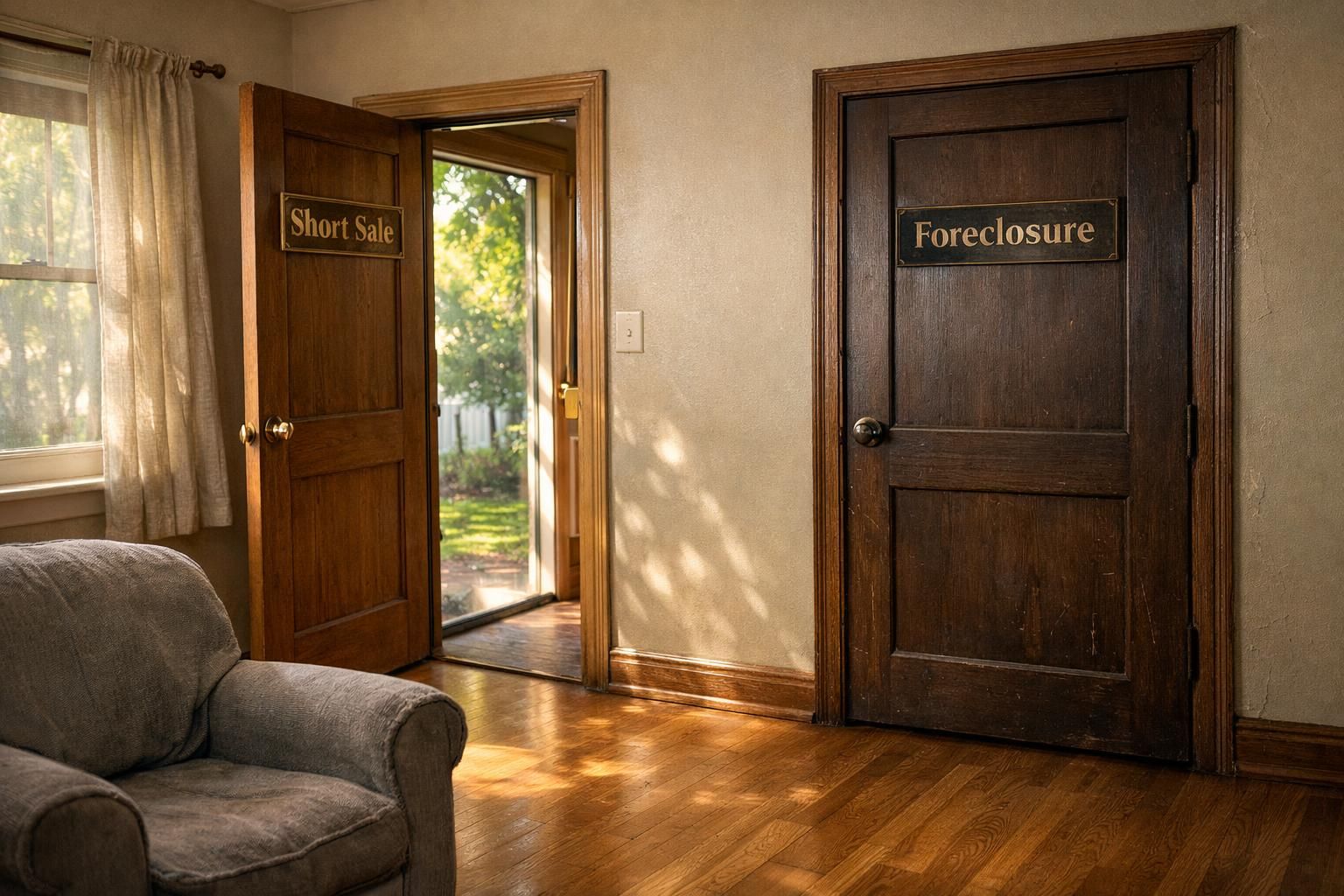
Short sales allow California homeowners to choose the buyer and maintain dignity
You choose your real estate agent, approve offers before they go to the lender, and remain in your home throughout the process. Selecting the right buyer helps protect the property's condition and avoids the vacancy-related damage common with foreclosed homes. Unlike a trustee's sale, a short sale lets you exit on your own terms — reducing community stigma and preserving your relationship with your mortgage servicer for any future dealings.
Foreclosures strip all control from homeowners
Once California's foreclosure process begins, the trustee and lender control the timeline and the sale. You receive statutory notices — the Notice of Default and the Notice of Trustee's Sale — but you have no say over auction timing, pricing, or the buyer. From NOD recording to trustee's sale can be as short as 120 days in California, leaving little time to react without a proactive plan already in place. After the sale, an unlawful detainer action can remove you quickly, forcing families to relocate with minimal notice.
Emotional toll: short sale agency vs. foreclosure helplessness
Choosing a short sale gives you a measure of control during one of the most stressful financial periods of your life. You set up terms, plan your move, and explain the situation to your family on your schedule. Many California homeowners find that taking an active role — even in a difficult sale — preserves their sense of dignity and makes rebuilding afterward feel more manageable.
Foreclosure removes that agency entirely. Seeing a Notice of Default recorded at the county recorder's office or a Notice of Trustee's Sale posted on your door is deeply unsettling. The public nature of California's foreclosure notices — published in local newspapers and recorded in county records — can add unwanted community visibility to an already painful situation. This loss of control compounds both the financial stress and the emotional burden, while also delivering a far greater credit score impact.
When Short Sale Makes Sense in California
Underwater mortgage
California's high home values mean that market corrections — even modest ones — can leave homeowners significantly underwater. If your outstanding loan balance exceeds your home's current market value, a short sale gives you a structured exit that protects your credit and typically avoids deficiency liability under California law. Lenders often prefer short sales over taking back bank-owned property, particularly in competitive markets like Los Angeles or the Bay Area where carrying costs are high. 6
Proven financial hardship
You must document genuine financial hardship to qualify. 7 Acceptable reasons include job loss, a serious medical condition, divorce, or a significant reduction in household income. Prepare a detailed hardship letter alongside pay stubs, bank statements, tax returns, and any relevant supporting documents — medical bills, unemployment notices, or divorce decrees. Approval rates run 50–60% when documentation is thorough and honest. Missing or weak paperwork is the most common reason California lenders deny short sale requests.
Ability to maintain property during the sale
Staying in your home during the short sale process protects the property's value and appeals to buyers. 6 Maintained homes sell faster and attract stronger offers than vacant ones, which are more vulnerable to vandalism and deferred maintenance. Lenders also respond more favorably to short sale requests when they can see the seller is actively preserving the asset. Your presence allows you to coordinate showings with your agent and respond quickly to lender requests.
Desire to minimize credit damage
An 85–160 point credit drop from a short sale is far less damaging than the 200–400 point hit from a California trustee's sale. Future lenders view a "settled account" more favorably than a foreclosure entry. After completing a short sale, many California homeowners qualify for FHA or conventional financing in two to four years — significantly faster than the three to seven-year wait following foreclosure. Acting decisively and pursuing a short sale while lender approval is still possible is one of the most effective ways to protect your long-term financial standing.
When Foreclosure Might Be Unavoidable
Lender won't approve short sale
If your lender denies the short sale request — due to insufficient hardship documentation, complex liens, or internal policy — foreclosure may become your only remaining path. California servicers sometimes determine that proceeding to a trustee's sale is more efficient than managing a prolonged short sale negotiation, particularly when multiple junior lienholders complicate approval.
Inability to document hardship
Without clear, verifiable evidence of financial hardship, California lenders will not approve a short sale. If your missed payments appear to stem from choice rather than genuine inability to pay, approval becomes unlikely. In those cases, the lender may proceed directly toward recording a Notice of Default. Legal representation may help you respond to that filing or explore other alternatives under California law. 5
Property too damaged to show
Severely damaged homes often cannot attract qualified buyers, making lender approval for a short sale unlikely. If a property has major structural issues, fire damage, mold, or code violations that render it uninhabitable or uninsurable, the lender may see more value in recovering funds through a trustee's sale than accepting a discounted short sale price.
Foreclosure too far along
Once a Notice of Trustee's Sale has been recorded in California, the window to pursue a short sale closes rapidly. Lenders are generally unwilling to postpone a scheduled trustee's sale unless you have a fully executed short sale contract and lender approval already in place. If you are within weeks of a sale date, options narrow to bankruptcy (Chapter 13 to trigger an automatic stay), a last-minute cash sale, or negotiating a postponement directly with the servicer. Contact a California real estate attorney immediately if you are in this position.
Foreclosure Avoidance Options in California
Loan modification
California's Homeowner Bill of Rights requires servicers to review homeowners for foreclosure alternatives — including loan modifications — before recording a Notice of Default. A successful modification can lower your interest rate, extend your loan term, or reduce your principal balance, making monthly payments manageable again. About 40% of applicants succeed. Applying early, before missed payments accumulate, significantly improves your odds and limits credit damage.
Deed in lieu of foreclosure
A deed in lieu lets you voluntarily transfer title to the lender, avoiding the formal trustee's sale process. Some California servicers offer "cash for keys" assistance to cover moving expenses. Your credit score will still take a hit, but typically less than a full foreclosure. Only properties free of junior liens generally qualify, and you may receive a 1099-C for any forgiven deficiency. Consult a tax professional about potential taxable income before proceeding.
Bankruptcy (Chapter 13 to stop foreclosure)
Filing Chapter 13 bankruptcy triggers an automatic stay that halts California's foreclosure process immediately. 8 This gives you a structured three-to-five-year repayment plan to catch up on mortgage arrears while keeping your home. Chapter 7 may discharge unsecured debts but does not provide the same protection against property loss, and it remains on your credit report for ten years.
Selling to a cash buyer
A cash sale can close in as little as 7 to 14 days — fast enough to stop a California foreclosure before the trustee's sale date. You sell in any condition, skip lender approval delays, and can use the proceeds to pay off the outstanding mortgage balance and potentially avoid deficiency issues entirely. While you may not receive full market value, you preserve your credit, avoid the public record of a foreclosure, and regain control over your timeline. 9
Conclusion
For California homeowners, the choice between a short sale and foreclosure has significant consequences for your credit, your finances, and your ability to buy again. A short sale gives you more control, better credit outcomes, and the protection of California's strong anti-deficiency laws — when you act early enough to pursue it. Foreclosure through a trustee's sale moves quickly in California and leaves you with far fewer options once the process is underway.
Speak with a California-licensed real estate agent, a real estate attorney familiar with state law, and a tax professional to understand which path fits your situation. Acting before a Notice of Default is recorded gives you the most choices. If you need to move quickly, KDS Homebuyers purchases homes directly from California homeowners for cash — no repairs, no agent commissions, and no waiting for lender approval. Visit kdshomebuyers.net to request a free, no-obligation cash offer and explore your options today.
FAQs
1. What is the main difference between a short sale and foreclosure in California?
A short sale lets you sell your home for less than the mortgage balance with lender approval, giving you control over the process. Foreclosure — typically a non-judicial trustee's sale in California — is lender-initiated and can complete in as little as 120 days from the Notice of Default, leaving you with little ability to direct the outcome.
2. Can a California lender pursue me for the remaining balance after foreclosure or a short sale?
In most cases, California's anti-deficiency laws protect you from deficiency judgments after a non-judicial trustee's sale on a purchase-money loan for an owner-occupied property. Similar protections often apply to approved short sales. Cash-out refinances and junior liens may be treated differently — consult a California real estate attorney for guidance specific to your loans.
3. How does each option affect my credit score?
A short sale typically causes an 85–160 point drop and a two to four-year mortgage waiting period. A foreclosure causes a 200–400 point drop and a three to seven-year waiting period. Both appear on your credit report for seven years.
4. Will I owe taxes on forgiven mortgage debt in California?
Possibly. The lender issues a 1099-C for canceled debt. Federal and California law have provided exclusions for forgiven debt on a principal residence, but rules change — verify current treatment with a tax professional and the California Franchise Tax Board.
5. What are my alternatives to foreclosure in California?
Options include loan modification (California servicers must review you before recording a Notice of Default), deed in lieu of foreclosure, Chapter 13 bankruptcy, a short sale, or a cash sale to a direct buyer. Acting before the Notice of Default is recorded preserves the most choices.
6. Should I work with professionals during the process?
Yes. A California-licensed real estate agent experienced in distressed sales, a real estate attorney familiar with the Homeowner Bill of Rights and anti-deficiency statutes, and a tax professional are all valuable resources. Their guidance can protect your rights and help you choose the option that limits long-term financial harm.
References
- ^ https://cushnerlegal.com/2025/05/06/what-is-a-short-sale-and-is-it-better-than-foreclosure/
- ^ https://www.rocketmortgage.com/learn/short-sale-vs-foreclosure (2025-11-24)
- ^ https://www.experian.com/blogs/ask-experian/short-sale-vs-foreclosure/ (2025-06-22)
- ^ https://scholarlycommons.law.emory.edu/cgi/viewcontent.cgi?article=1068&context=elj
- ^ https://www.urban.org/sites/default/files/publication/30426/411909-The-Impacts-of-Foreclosures-on-Families-and-Communities.PDF
- ^ https://better.com/content/short-sale-vs-foreclosure (2025-07-17)
- ^ https://www.sherrodlawfirm.com/blog/is-a-short-sale-better-than-foreclosure-for-homeowners-in-illinois (2025-07-18)
- ^
