

Selling a House During Divorce: A Step-by-Step Guide in Florida
Selling a house during divorce in Florida can feel overwhelming and stressful. Property division is one of the most complicated parts of any Florida divorce, and the family home is often the largest marital asset at stake. 1 This guide walks you through the key steps to sell your marital home with less confusion, fewer mistakes, and a clearer view of your financial future under Florida law. 2
Key Takeaways
- Florida is an equitable distribution state, not a community property state. Courts divide marital assets fairly — but not always 50/50. A judge considers each spouse's financial situation, contributions, and circumstances when splitting home sale proceeds.
- Consulting a Florida-licensed divorce attorney is essential. State-specific rules under Florida's equitable distribution statutes affect how home profits are divided, and legal advice helps avoid forced sales or costly disputes.
- Both spouses should obtain a professional appraisal before listing to establish fair market value and prevent conflicts over price. 6
- Tax consequences matter. If both spouses lived in the home at least two of the last five years, you may exclude up to $500,000 in capital gains as a married couple. Selling after the divorce is finalized may reduce that exclusion to $250,000 per person. Florida has no state income tax, but federal capital gains tax still applies. 4
- Fast cash sales can close in 7–14 days — a strong option when facing court deadlines or foreclosure risk. Escrow handles mortgage payoffs first, then splits remaining proceeds per your settlement agreement.
Understanding Your Options

Deciding what to do with your Florida family home during a divorce shapes property division, your financial future, and how smoothly the overall divorce process moves forward. You generally have three paths.
One spouse buys out the other
In a buyout, one spouse keeps the marital home and pays the other their share of the equity. Start with a professional appraisal to establish current market value — Florida courts often require this during property division proceedings.
To complete the buyout, the staying spouse typically refinances the mortgage in their name alone. Some VA and FHA loans allow mortgage assumption instead. Because Florida follows equitable distribution rather than a strict 50/50 split, the buyout amount may reflect each spouse's contributions and circumstances as determined in your divorce settlement. A buyout can also preserve stability for children who are enrolled in local schools and settled in the family neighborhood.
Always review capital gains tax implications with a tax professional before finalizing this path.
Selling the home and splitting proceeds
Selling the marital home gives both spouses immediate liquidity and a clean break. An escrow company manages the sale proceeds at closing to ensure each party receives their share under the divorce settlement. Because Florida is an equitable distribution state, a judge — or your settlement agreement — determines how proceeds are divided based on fairness rather than a mandatory 50/50 split.
Proceeds first pay off any outstanding mortgage, home equity loans, or lines of credit. Remaining funds can then address marital debts or other obligations outlined in the settlement. Traditional sales carry costs of roughly 8–10% of the sale price, including agent commissions, repairs, and staging. 1
Co-owning temporarily
Florida family courts sometimes allow one spouse to remain in the marital home temporarily — particularly when minor children are involved — while the divorce is finalized. Both spouses continue sharing mortgage payments, property taxes, insurance, and maintenance costs during this period.
Clear written agreements about how to split expenses and any rental income are essential. Co-ownership exposes both parties to market fluctuations and ongoing shared decision-making, which can create friction during an already difficult time. Make sure your divorce decree spells out timelines and exit conditions precisely.
Pros and cons of each option
| Option | Pros | Cons |
|---|---|---|
| One Spouse Buys Out the Other |
|
|
| Selling and Splitting Proceeds |
|
|
| Temporary Co-Ownership |
|
|
The Legal Side: What You Need to Know First

Florida has its own rules governing marital property, disclosure requirements, and court procedures. Understanding them before you list protects your share of the home's equity.
Consulting a Florida divorce attorney
Florida divorce cases are handled in the Circuit Court of the county where either spouse resides — for example, Duval County Circuit Court in Jacksonville, Hillsborough County Circuit Court in Tampa, or Miami-Dade Circuit Court. A Florida-licensed family law attorney understands how local judges approach equitable distribution of the marital home and can help document agreements about dividing sale proceeds in detail. 2
Your attorney can also explain how Florida's Homestead laws interact with the divorce process, whether a prenuptial agreement affects property division, and how capital gains tax or escrow company procedures apply in your specific situation. If both spouses cannot agree on a sale strategy, experienced legal counsel keeps the process fair and avoids forced-sale scenarios. 3
Florida's equitable distribution standard
Florida is an equitable distribution state. Under Florida law, marital assets and liabilities are divided fairly — but a fair division does not always mean an equal one. Courts weigh factors such as each spouse's economic circumstances, contributions to the marriage, duration of the marriage, and whether one spouse sacrificed career opportunities.
This is a key distinction from community property states like California or Texas, where home sale proceeds are split 50/50 by law. In Florida, a negotiated settlement agreement or a judge's ruling determines the actual split. Always confirm the details of your division with a qualified Florida divorce attorney before making decisions about selling the marital home.
Florida Homestead considerations
Florida's Homestead laws add a layer of complexity to divorce-related home sales. The Florida Constitution restricts the sale or encumbrance of homestead property without the consent of both spouses — even if only one spouse is on the deed. This means your spouse generally must sign the deed or closing documents for the sale to proceed, regardless of who holds title. A Florida real estate attorney can help you navigate this requirement and avoid closing delays.
Tax implications of selling during or after divorce in Florida
Florida has no state income tax, so there is no state-level capital gains tax on home sale proceeds. However, federal capital gains tax still applies. If both spouses lived in the marital home for at least two of the last five years, the couple may exclude up to $500,000 in capital gains from federal taxes. If only one spouse meets the residency requirement, or if the home is sold after the divorce is finalized, the exclusion drops to $250,000 per person. 4
Florida also imposes a documentary stamp tax on deed transfers — currently $0.70 per $100 of the sale price (or $0.60 per $100 in Dade County). This is a closing cost both parties should factor into their settlement calculations. Consult a tax professional early to minimize liability and avoid surprises at closing.
Steps to take if spouses cannot agree
Florida courts offer several mechanisms when divorcing spouses cannot agree on the marital home.
- Request mediation — Florida courts often require mediation before a judge will hear contested property division matters. A neutral mediator helps both parties reach agreement without costly litigation. 5
- Obtain a professional appraisal to establish an unbiased market value, supporting buyout negotiations or court proceedings. 6
- File a partition action in Florida Circuit Court if no agreement is reached. A judge can order a forced sale and divide proceeds according to each spouse's equitable share.
- Use an escrow company to manage and distribute proceeds so neither party controls the funds unilaterally.
- Ask your attorney about financial offsets if one spouse paid more toward mortgage payments, taxes, or repairs after separation — Florida courts can account for these contributions in the final division.
- Consult a tax expert about federal capital gains exposure tied to the timing and structure of the sale. 4
- If communication breaks down entirely, allow legal counsel to handle all negotiations and paperwork related to the home sale.
Preparing to Sell: Steps Before Listing

Organizing your property and paperwork before listing reduces friction and helps you move forward faster — especially important when Florida court deadlines or settlement timelines are in play.
Getting a professional home appraisal
Hire a neutral, Florida-licensed appraiser to provide an unbiased value of the marital home before beginning property division. Both spouses should agree on the appraiser to prevent disputes over valuation later. Florida Circuit Courts often reference professional appraisals when making equitable distribution decisions, so a recent, credible report carries real weight. 6
The appraised value also guides buyout negotiations and supports any listing price discussions with your real estate agent. If repairs are needed, the appraisal helps justify any price reductions upfront.
Agreeing on a listing price
Set your listing price close to the appraised value to minimize disputes between spouses. 7 Your agent should provide a comparative market analysis using recent sales in your Florida neighborhood — whether you are in a competitive Orlando market or a slower rural area, local data matters. Agree in writing on a schedule for price reductions if offers do not arrive within a set timeframe. Both parties should also acknowledge how agent commissions, Florida's documentary stamp tax, and other closing costs will reduce the net proceeds before any split occurs.
Selecting the right real estate agent
Choose a real estate agent experienced with divorce-related sales in Florida. This person acts as a neutral coordinator for showings, negotiations, and repairs — reducing direct conflict between spouses. If choosing together is difficult, each spouse can select a trusted person to help vet candidates, or both agents can agree on a third professional to handle the listing. Your agent should understand Florida's disclosure requirements and Homestead rules, and have experience navigating contested or emotionally charged sales. 7
Deciding who handles repairs and staging
Create a written list of needed repairs and agree on who funds each item before listing. For larger expenses, make sure the cost is justified by the likely increase in sale price. If one spouse still lives in the home, that person should keep the space tidy and accessible for showings. If the home is vacant, your agent can coordinate professional staging. 8
If one spouse pays out-of-pocket for significant repairs or improvements, document these costs and address reimbursement in the divorce settlement or closing cost calculations. Mediation can resolve disagreements over repair responsibilities before they stall the sale. 8
Managing the Sale Process

Communicating effectively with your ex-spouse
Establish a structured communication plan before you list the property. Decide how updates on offers, inspections, and price changes will be shared — email or written messages work well because they create a record. Ask your real estate agent to send updates to both spouses simultaneously to keep everyone informed without requiring direct interaction. Written records reduce the chance of disputes over decisions made during the home sale process and protect both parties if the case returns to court.
Handling showings and negotiations
Your agent schedules showings and coordinates access with both spouses to prevent conflicts. Agree on set times for property access to keep the process smooth. The agent presents buyer offers to both parties and uses comparable Florida sales data to support each negotiation step. Review every counteroffer together — or through your attorneys — before responding. This approach protects everyone's interests through the property division phase.
Managing challenges if one spouse stops cooperating
If one spouse refuses to sign documents or obstructs showings, the sale can stall. Florida courts can issue orders compelling cooperation or, in extreme cases, order a partition sale through Circuit Court. A skilled real estate agent acts as intermediary to reduce direct conflict, while mediation — which Florida courts frequently require before contested hearings — can resolve impasses without escalating legal fees. If the situation worsens, your attorney can seek court intervention to enforce the divorce settlement terms and protect the home's equity from further delay.
Keeping emotions separate from business decisions
Emotional attachment to the family home is natural, but it can lead to poor financial decisions during the sale process. Agree with your ex-spouse upfront that legal and financial factors drive all decisions about pricing, repairs, and offers. Professional counseling or Florida-based mediation services can help both parties manage stress before it affects the home sale. Sellers who address emotional readiness early tend to have smoother closings and fewer last-minute disputes over valuation or costs.
Financial Considerations
Splitting proceeds fairly under Florida law
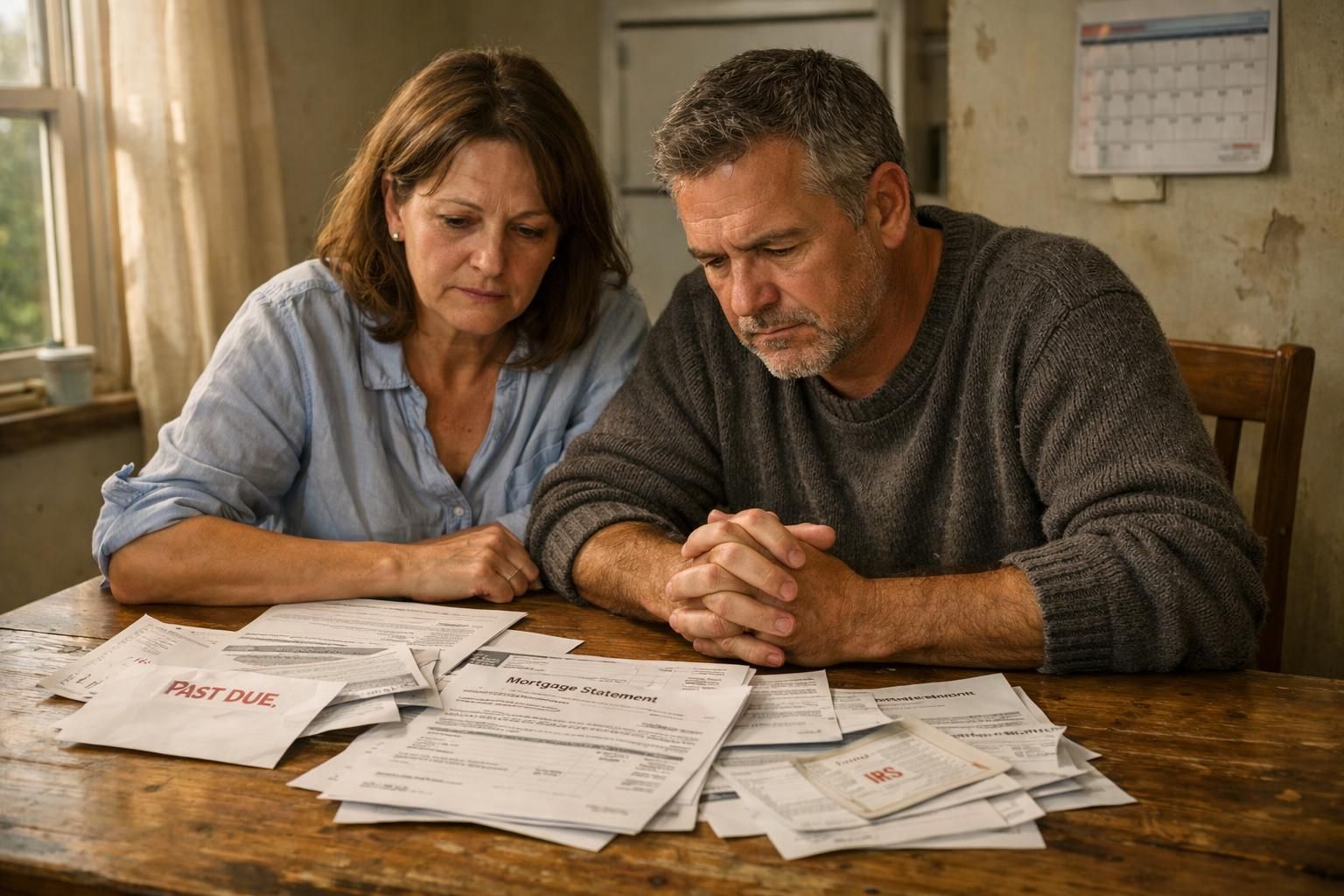
An escrow company manages and distributes proceeds at closing. Because Florida follows equitable distribution, a judge — or your settlement agreement — determines each spouse's share based on fairness, not an automatic 50/50 rule. 9 Courts consider factors like each spouse's economic circumstances and contributions to the marital home. Sometimes proceeds fund shared obligations such as marital debts or children's needs before any division occurs. The timing of the sale can also affect alimony and child support calculations, so plan accordingly with your attorney.
Managing outstanding mortgages and home equity loans
Both spouses remain responsible for mortgage payments, taxes, and insurance on the marital home until the sale closes or a buyout is completed. Your lender will require full payoff of the primary mortgage and any home equity loans at closing; the escrow company handles this before distributing remaining proceeds. Some VA and FHA loans may allow one spouse to assume the loan, which can help if one party wants to keep the home. If the home is underwater — you owe more than the sale price — the court may order a short sale or assign remaining debt to one spouse as part of the equitable distribution ruling. Track which spouse claims mortgage interest deductions as specified in the divorce decree to avoid future IRS complications.
Understanding capital gains taxes
Florida's lack of a state income tax is an advantage, but federal capital gains tax still applies to home sale profits. Married couples who both meet the two-of-five-year residency rule can exclude up to $500,000 in gains. If only one spouse qualifies, or if the divorce is finalized before closing, the exclusion drops to $250,000 per person. 4 Timing the sale — before versus after the divorce is finalized — can have a significant impact on your federal tax bill. Consult a tax professional familiar with Florida real estate transactions before making that decision.
Handling costs associated with the sale
Selling costs in Florida typically run 8–10% of the sale price, including agent commissions, Florida's documentary stamp tax, title insurance, and any repairs or staging. Both spouses should agree on cost sharing before listing. The escrow company deducts these expenses directly from proceeds before any funds are distributed, so both parties should understand the net amount they will actually receive. Factor in temporary housing costs if one spouse needs to relocate before the divorce settlement is finalized — surprises here can create new financial strain during an already difficult period.
Alternative Options and Timeline Concerns
When a quick sale makes sense
Florida court-imposed deadlines, urgent custody relocations, or the risk of foreclosure can all make a fast home sale necessary. 10 If neither spouse can sustain mortgage payments on two separate households, or if the home is underwater, selling quickly to a cash buyer protects credit and provides immediate funds for both sides of the settlement. Cash sales skip the delays of repairs, dual agency issues, and traditional financing contingencies — closing in as few as 7–14 days. 10
Selling to a cash buyer for speed and certainty
A cash buyer purchases the home as-is, eliminating the need for staging, repairs, or agent commissions. The sale can close in 7–14 days, giving both spouses immediate access to funds and helping meet urgent Florida court or financial deadlines. You avoid traditional sale costs of 8–10% and sidestep delays from mortgage underwriting, buyer financing contingencies, or contested valuations — all common friction points in divorce-related sales.
Renting the property temporarily
Renting the marital home for a defined period lets both spouses share rental income while waiting for better market conditions or for the divorce to finalize. This can help cover mortgage payments, taxes, and insurance in the interim. Your divorce settlement must include clear, written terms for splitting costs, managing tenants, and handling repairs. Use an escrow company or experienced property manager to handle rent collection and oversight — this builds accountability and reduces the chance of disputes between co-owners.
Troubleshooting common issues: underwater mortgages and contested valuations
- If the Florida home is underwater, lenders must approve a short sale for less than what is owed. A Florida Circuit Court may assign remaining debt to one spouse as part of the equitable distribution ruling.
- Disputed valuations are best resolved with a professional appraisal. If spouses cannot agree, Florida's mandatory mediation process offers a structured path to resolution before the case goes before a judge.
- Partition actions in Florida Circuit Court can force a sale, but legal fees and court costs can erode proceeds significantly. Pursue this only after other options are exhausted.
- Outstanding liens, home equity loans, and second mortgages must all be cleared at closing before any proceeds are distributed. The escrow company manages this process.
- Federal capital gains tax exposure should be reviewed with a tax adviser early — especially given the potential difference between the $500,000 joint exclusion and the $250,000 individual exclusion depending on when the sale closes. 4
Conclusion
Selling your Florida family home during a divorce is challenging, but clear planning and the right professional guidance make it manageable. Work closely with a Florida-licensed divorce attorney to understand how equitable distribution applies to your situation. Factor in federal capital gains tax, Florida's documentary stamp tax, and all closing costs before agreeing to a split. Whether you pursue a traditional listing, a buyout, or a fast cash sale, informed decisions now protect your financial future after this difficult chapter closes.
If you need to sell quickly and want to skip the stress of repairs, showings, and agent fees, KDS Homebuyers is here to help. We buy Florida homes directly for cash, in as-is condition, and can close in as little as 7–14 days — giving you the speed and certainty you need during the divorce process. Visit kdshomebuyers.net to request your free, no-obligation cash offer today.
FAQs
1. What steps are involved in selling a marital home during a Florida divorce?
The process starts with agreeing on property division under Florida's equitable distribution rules. Both spouses choose whether to sell, pursue a buyout, or co-own temporarily. A real estate agent experienced in Florida divorce sales can guide you through pricing, disclosure requirements, and coordination with the escrow company at closing.
2. How does equitable distribution work in Florida?
Florida courts divide marital assets fairly — but not always equally. A judge weighs each spouse's financial situation, contributions to the marriage, and other factors. This differs from community property states, where a 50/50 split is mandatory.
3. Does Florida have a state capital gains tax on home sales?
No. Florida has no state income tax, so there is no state capital gains tax. However, federal capital gains tax applies. Married couples may exclude up to $500,000 in gains if both meet the two-of-five-year residency requirement; otherwise, the exclusion may be limited to $250,000 per person. 4
4. Can one spouse force the sale of the marital home in Florida?
Yes. If both spouses cannot agree, one can petition the Florida Circuit Court for a partition action, which can result in a court-ordered sale. However, mediation is typically required first, and partition actions can be costly.
5. What is Florida's Homestead law and how does it affect a divorce home sale?
Florida's Homestead laws require both spouses to consent to the sale or transfer of homestead property, even if only one spouse is on the deed. This means your ex-spouse must sign the closing documents for the sale to proceed. A Florida real estate or family law attorney can help ensure this requirement is met to avoid closing delays.
References
- ^ https://www.divorcenet.com/resources/divorce/marital-property-division/selling-house-when-you-divorce
- ^ https://www.har.com/blog_133764_guide-to-selling-your-home-during-a-divorce
- ^ https://www.forsalebyowner.com/blog/selling-a-home-during-a-divorce-what-you-need-to-know (2024-07-24)
- ^ https://www.colesorrentino.com/selling-home-during-divorce-legal-financial-considerations/
- ^ https://provinziano.com/blog/sell-keep-buyout-house-california-divorce/ (2025-08-23)
- ^ https://www.cageandmiles.com/blog/california-divorce-and-real-estate-buying-selling-and-tax-traps (2026-01-15)
- ^ https://edinhart.com/selling-a-home-during-divorce/
- ^ https://www.rismedia.com/2024/07/18/preparing-your-home-for-sale-divorce/ (2024-07-18)
- ^
