

Selling a House During Divorce: A Step-by-Step Guide in California
Selling a house during divorce in California can feel overwhelming. California is a community property state, which means the marital home and its proceeds are generally split 50/50 by law — but the process still involves court procedures, tax rules, and legal deadlines that can catch homeowners off guard. This guide walks you through each step so you can protect your financial interests and move forward with clarity.
Key Takeaways
- California is a community property state, so sale proceeds from a marital home are typically divided 50/50. Each spouse generally has equal ownership rights regardless of who paid more toward the mortgage.
- Consulting a California family law attorney is essential. The state's community property rules, along with concepts like Epstein credits and Watts charges, can significantly affect how equity is divided.
- Get a professional appraisal before listing. Both spouses should agree on the appraiser to avoid later disputes over value — a common issue in contested California divorces.
- Tax consequences matter. If both spouses lived in the home for at least two of the last five years, you may qualify for up to a $500,000 capital gains exclusion as a couple. Selling after the divorce is finalized may reduce that to $250,000 per person.
- California also imposes a documentary transfer tax at the county level. Certain interspousal transfers during divorce may be exempt — confirm with your attorney or escrow officer.
- A cash sale can close in 7–14 days, skipping agent fees, repairs, and court delays — a strong option when facing California court deadlines or foreclosure risk.
Understanding Your Options

Deciding what to do with your family home during a California divorce involves real financial and legal consequences. Each option affects property division, your tax situation, and your timeline through the court process.
One spouse buys out the other
In a buyout, one spouse keeps the marital home and compensates the other for their 50% share of equity. Start with a licensed appraisal to establish current market value — California courts expect this step in contested cases.
To complete a buyout, the keeping spouse typically must refinance the mortgage in their name alone. Some VA and FHA loans allow assumption instead. California-specific concepts like Epstein credits (reimbursing a spouse who made post-separation mortgage payments from separate funds) and Watts charges (offsetting the value of exclusive use of the home) can adjust the final equity calculation. Review capital gains tax implications with a tax professional before committing to this path.
Selling the home and splitting proceeds
Selling the marital home provides a clean financial break. Because California is a community property state, net sale proceeds are divided 50/50 unless a valid prenuptial agreement or court order says otherwise. The escrow company manages payoff of the mortgage, any home equity lines of credit, and closing costs before distributing the remainder equally.
Traditional real estate sales typically cost 8–10% of the sale price in agent commissions, repairs, and staging. Sellers must vacate by closing unless a rent-back agreement is included in the divorce settlement.
Co-owning temporarily
California courts sometimes allow one spouse to remain in the family home temporarily — particularly when minor children are involved — to avoid uprooting them during the school year. Both parties continue sharing mortgage payments, property taxes, and insurance until a final sale or buyout is arranged.
A written co-ownership agreement is strongly recommended. It should address how rental income is split if one spouse moves out, how repair costs are handled, and what triggers the final sale. Ongoing co-ownership can complicate both parties' ability to purchase new homes and may cause disputes over property management decisions.
Pros and cons of each option
| Option | Pros | Cons |
|---|---|---|
| One Spouse Buys Out the Other |
|
|
| Selling and Splitting Proceeds |
|
|
| Temporary Co-Ownership |
|
|
The Legal Side: What You Need to Know First

Consulting a California family law attorney
California's community property laws are specific and can be complex, especially in high-value markets like Los Angeles or San Francisco. A family law attorney familiar with California divorce proceedings can explain how Epstein credits, Watts charges, and any prenuptial agreement affect your share of the home's equity. They can also document the property division agreement in detail, protecting both parties from future disputes over proceeds, capital gains treatment, or closing costs.
If spouses disagree on pricing strategy or whether to sell at all, an attorney can petition the California Superior Court for a partition action or seek enforcement through an existing court order.
California as a community property state
California is one of nine community property states. Any asset — including the marital home — acquired during the marriage belongs equally to both spouses regardless of whose name is on the deed. Upon divorce, community property is divided 50/50 unless both parties agree otherwise or a court makes a different determination.
Separate property (owned before marriage, or received as a gift or inheritance) is treated differently. If separate property funds were used toward the marital home's purchase or mortgage, your attorney may need to trace those contributions using a Moore/Marsden calculation to determine what portion of equity qualifies as separate versus community property.
Tax implications in California
At the federal level, couples who both lived in the home for at least two of the last five years may exclude up to $500,000 in capital gains. Selling after the divorce is finalized often reduces this to $250,000 per person — a significant difference in California's high-value housing markets. 4
California also taxes capital gains as ordinary income at the state level, with no separate preferential rate. The top California state income tax rate is 13.3%, so the combined federal and state tax burden on a large gain can be substantial. Consult a tax professional before deciding when and how to sell.
California's documentary transfer tax applies at closing, though interspousal transfers pursuant to a divorce settlement may qualify for an exemption under California Revenue and Taxation Code. Confirm this with your escrow officer or attorney.
Proposition 13 also affects ongoing property taxes for the buying spouse after a buyout — reassessment rules may apply, though parent-child and spouse-to-spouse transfers have historically had some protections. Verify current rules given recent legislative changes from Proposition 19.
Steps if spouses cannot agree
- Request mediation through a neutral third party. California courts often encourage or require mediation before ordering a forced sale.
- Work with a California family law attorney who understands Superior Court procedures in your county.
- Obtain a professional appraisal. Courts rely on licensed appraisals to resolve disputes over home value. 6
- File a partition action in California Superior Court if no agreement is possible. Under California's Partition of Real Property Act, the court can order the home sold and proceeds divided.
- Use Epstein credits or Watts charges to account for unequal post-separation contributions before splitting equity.
- Ask the court to enforce Automatic Temporary Restraining Orders (ATROs), which take effect at the start of every California divorce and restrict either party from transferring, encumbering, or damaging marital assets.
- Have legal counsel manage communications and paperwork if direct negotiation has broken down entirely.
Preparing to Sell: Steps Before Listing

Getting a professional home appraisal
Hire a licensed, neutral appraiser both spouses agree on before listing. In competitive California markets — from Sacramento to San Diego — home values can vary significantly by neighborhood and season. A current appraisal prevents disputes over the listing price and satisfies any court requirements for documenting fair market value. 6
The appraisal also guides buyout negotiations and supports any Moore/Marsden tracing your attorney may need to do for separate property contributions.
Agreeing on a listing price
Base your listing price on the appraisal and a comparative market analysis from your real estate agent. 7 Both spouses must agree in writing on the asking price and any future price reductions. Establish a schedule for reductions upfront so there are no disagreements if the home sits longer than expected. Clarify how agent commissions and closing costs will reduce net proceeds before they are split.
Selecting the right real estate agent
Choose a real estate agent experienced in divorce-related sales who can act as a neutral coordinator for both parties. In larger markets like Los Angeles or the Bay Area, some agents specialize specifically in divorce transactions. If you cannot agree on one agent, each spouse may nominate a candidate and the two agents can jointly select a third professional to list the home.
Your agent should understand California disclosure requirements, which are among the most comprehensive in the nation. Sellers must disclose known material defects, natural hazard zones, and other conditions — missing disclosures can delay or kill a deal.
Deciding who handles repairs and staging
Agree in writing on which repairs to make, who pays, and how costs will be credited at closing. Large improvement expenses should make financial sense for both parties. If one spouse still occupies the home, they are responsible for keeping it clean and accessible for showings. 8
If a spouse pays for repairs out of pocket before closing, document those costs carefully — they may be reimbursable as an offset against the other party's share of proceeds. Mediation can help resolve disputes over repair responsibilities without escalating to court.
Managing the Sale Process

Communicating effectively with your ex-spouse
Set up a written communication plan before listing the property. Use email or a co-parenting app to document all decisions about showings, offers, repairs, and escrow milestones. This creates a paper trail that protects both parties and reduces the chance of conflict later. Ask your real estate agent to copy both spouses on all significant updates.
Handling showings and negotiations
Your agent schedules showings and coordinates access with both spouses. Agreed-upon showing windows reduce friction. The agent presents all offers to both parties simultaneously and uses comparable sales data to support pricing decisions. Both spouses must sign off on any accepted offer or counteroffer — confirm this process with your agent and attorney upfront.
If one spouse stops cooperating
California ATROs prevent either party from sabotaging the sale during active divorce proceedings. If a spouse refuses to sign listing agreements or sale documents, your attorney can seek a court order compelling cooperation. In extreme cases, a partition action through the California Superior Court can force the sale without mutual consent. Mediation is usually faster and cheaper than litigation — try it before going back to court.
Keeping emotions separate from business decisions
Emotional attachment to a family home — especially in a city where you may have lived for many years — can interfere with sound financial decisions. Work with your attorney, agent, and if needed a mediator or counselor to keep negotiations focused on financial outcomes. Early attention to emotional readiness typically leads to smoother transactions and fewer last-minute disputes at closing.
Financial Considerations
Splitting proceeds fairly
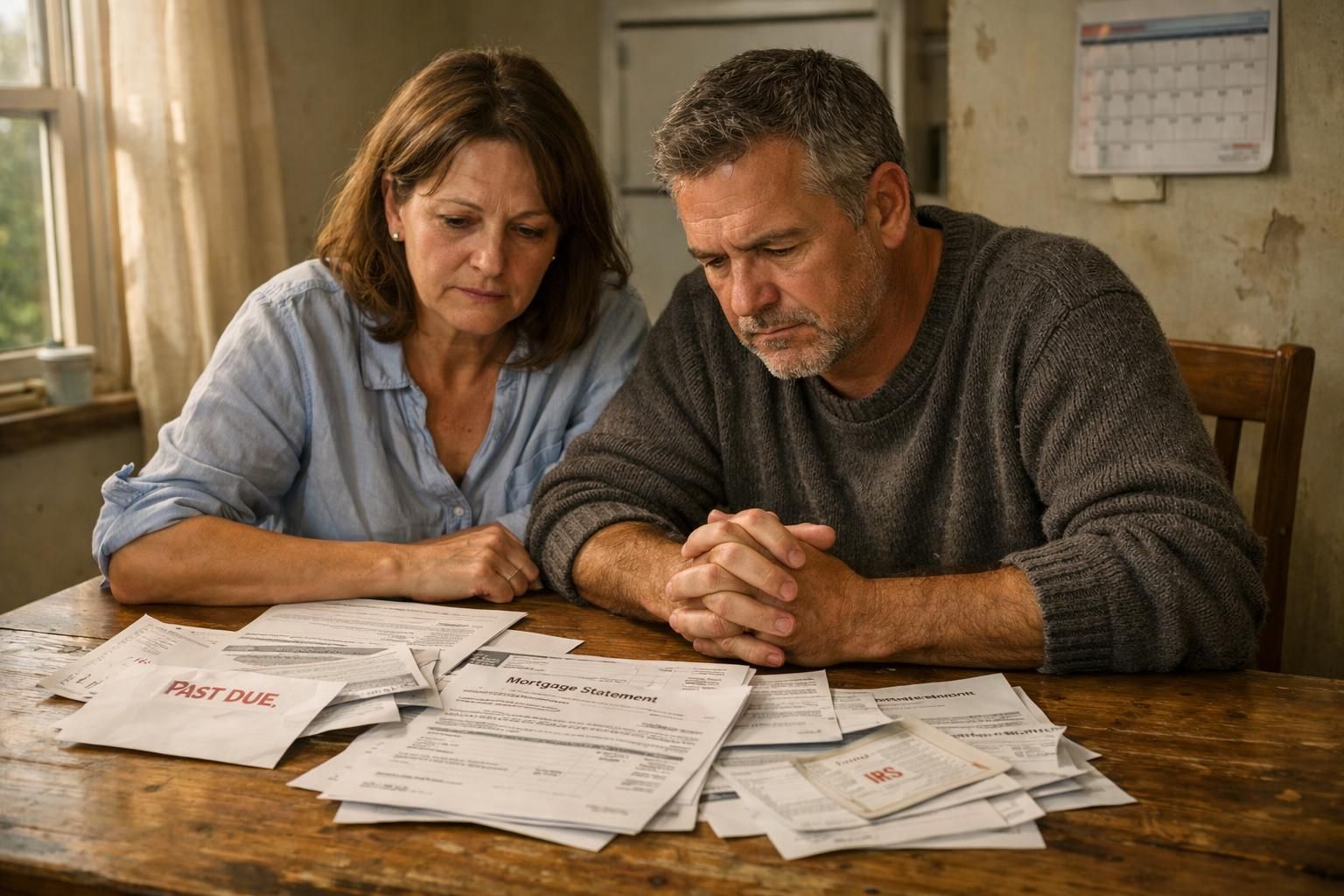
California's community property rule means net sale proceeds are divided 50/50 after the escrow company pays off the mortgage, any home equity loans, and closing costs. 9 If Epstein credits or Watts charges apply, those adjustments happen before the final split. Courts prefer that spouses reach a written agreement before closing; if they cannot, a judge will apply state law to divide the proceeds.
Managing outstanding mortgages and home equity loans
Both spouses remain jointly liable on the mortgage until the home is sold or one spouse refinances into their name alone. The escrow company at closing pays off all liens — first mortgage, HELOC, second mortgage — before distributing proceeds. If the home is underwater (worth less than what is owed), the court may order a short sale, which requires lender approval. Keep track of which spouse claims mortgage interest deductions, as your divorce decree should address this to avoid IRS issues.
Understanding capital gains taxes
If both spouses lived in the home for at least two of the last five years, you may qualify for the $500,000 federal exclusion on capital gains. 4 Selling after the divorce is finalized typically limits each person to a $250,000 exclusion — a meaningful reduction given California home values. California taxes capital gains as ordinary income at the state level, so the total tax burden can be significant. Consult a California CPA or tax attorney before finalizing your timing.
Handling costs associated with the sale
California home sales typically cost 8–10% of the sale price when accounting for agent commissions, repairs, staging, and closing costs. Agree on these costs in writing before listing so neither party is surprised at closing. One spouse handling temporary housing while awaiting the settlement should factor those expenses into their overall financial planning early. The escrow company deducts all authorized expenses from proceeds before any distribution.
Alternative Options and Timeline Concerns
When a quick sale makes sense
California divorce proceedings can take six months at minimum — longer in contested cases — and court-imposed deadlines, custody relocation orders, or foreclosure risk may require a faster resolution. 10 If neither spouse can afford to carry the home alone during the divorce process, a quick sale to a cash buyer removes the financial pressure and provides immediate liquidity for both parties.
Selling to a cash buyer for speed and certainty
Cash buyers purchase homes as-is, eliminating the need for repairs, staging, or agent commissions. A cash sale can close in 7–14 days — far faster than a traditional California escrow, which often takes 30–45 days. 10 This speed is especially valuable when court deadlines are approaching or when both spouses simply want to finalize the property division and move forward.
Renting the property temporarily
Renting the marital home gives both spouses time to plan while rental income helps cover mortgage payments and carrying costs. This works best when children need stability during the school year or when market conditions favor waiting. Your divorce settlement must clearly define how rental income is split, how expenses are shared, and what triggers the final sale or buyout. Use a property manager or trusted real estate agent to handle tenant relations and reduce direct conflict between co-owners.
Troubleshooting underwater mortgages and contested valuations
- If the home is worth less than the mortgage balance, the lender must approve a short sale before it can close. California is a non-recourse state for purchase-money mortgages, which may limit lender claims against you after a short sale — confirm with your attorney.
- Hire a licensed appraiser to resolve valuation disputes. Both spouses can also request competing appraisals and have a third appraiser resolve the difference if needed.
- Mediation is available through California Superior Court and private services; it is generally faster and less expensive than litigation.
- Epstein credits and Watts charges allow the court to offset unequal post-separation contributions before dividing equity.
- All liens must be cleared through escrow before proceeds are distributed. Outstanding property tax liens or mechanics liens can delay closing if not addressed early.
- Consult a California CPA about state capital gains reporting obligations and any IRS requirements related to the sale of a primary residence during or after divorce.
Conclusion
Selling your family home during a California divorce is challenging, but a clear plan makes the process manageable. Work with a California family law attorney, a knowledgeable real estate agent, and a tax professional to protect your financial interests at every step. Understand your rights under California's community property laws, plan your sale timing carefully to maximize tax exclusions, and don't let emotional attachment override sound financial decisions. Careful planning gives you the best foundation for a fresh start.
FAQs
1. How are home sale proceeds divided in a California divorce?
California is a community property state, so net proceeds from selling the marital home are generally split 50/50 between spouses. Adjustments for Epstein credits, Watts charges, or separate property contributions may affect the final split.
2. Can one spouse force the sale of the marital home in California?
Yes. If spouses cannot agree, either party can file a partition action in California Superior Court. The court can order a forced sale and divide proceeds according to California community property law.
3. What are the tax implications of selling a home during a California divorce?
Couples who meet the two-year residency requirement may exclude up to $500,000 in capital gains at the federal level. California taxes capital gains as ordinary income, so combined state and federal taxes on large gains can be significant. Selling before the divorce is finalized generally preserves the larger exclusion.
4. What is a Moore/Marsden calculation?
A Moore/Marsden calculation determines how much separate property credit one spouse receives when separate property funds were used to purchase or pay down the mortgage on a community property home. A California family law attorney handles this tracing analysis.
5. How can a cash buyer help in a California divorce home sale?
A cash buyer closes in 7–14 days with no repairs, staging, or agent commissions required. This is especially useful when California court deadlines are pressing, when neither spouse can carry the home financially, or when both parties simply want a clean and fast resolution to property division.
References
- ^ https://www.divorcenet.com/resources/divorce/marital-property-division/selling-house-when-you-divorce
- ^ https://www.har.com/blog_133764_guide-to-selling-your-home-during-a-divorce
- ^ https://www.forsalebyowner.com/blog/selling-a-home-during-a-divorce-what-you-need-to-know (2024-07-24)
- ^ https://www.colesorrentino.com/selling-home-during-divorce-legal-financial-considerations/
- ^ https://provinziano.com/blog/sell-keep-buyout-house-california-divorce/ (2025-08-23)
- ^ https://www.cageandmiles.com/blog/california-divorce-and-real-estate-buying-selling-and-tax-traps (2026-01-15)
- ^ https://edinhart.com/selling-a-home-during-divorce/
- ^ https://www.rismedia.com/2024/07/18/preparing-your-home-for-sale-divorce/ (2024-07-18)
- ^ https://www.northamericanfamilylaw.com/news-publication/divorce-and-dividing-a-marital-home-how-to-sell-with-the-least-drama-and-for-max-profit/ (2023-05-25)
- ^ https://goliathdata.com/the-investor-s-guide-to-understanding-divorce-driven-home-sales
If you need to sell your California home quickly during a divorce, KDS Homebuyers offers a straightforward cash purchase with no repairs, no agent fees, and no lengthy escrow. Visit kdshomebuyers.net to request your free cash offer and take one major item off your plate during this difficult time.
