

Selling a House With an Easement: Disclosure and Impact on Value
Table of Contents
- What's an Easement and How Does It Affect Your Sale?
- Types of Easements You'll Encounter When Selling
- Can You Sell a Property with an Easement?
- How Easements Affect Property Value and Sale Price
- Removing or Terminating an Easement Before Sale
- Step-by-Step Guide to Selling a Property with an Easement
- Legal and Financial Considerations for Sellers
- Buyer Concerns and How to Address Them
- Conclusion
- Frequently Asked Questions
Found an easement on your property? Don't panic. You can still sell — but you need to be smart about disclosure, pricing, and how you talk to buyers. Easements are everywhere. That utility corridor cutting through your backyard, the shared driveway your neighbor has the legal right to use — these show up on roughly 20–30% of residential properties. Most homeowners never think about them until a title search during the selling process brings one to light. Here's what matters: selling a house with an easement is totally doable. In fact, sellers who tackle this head-on almost always come out ahead of those who don't.
What's an Easement and How Does It Affect Your Sale?
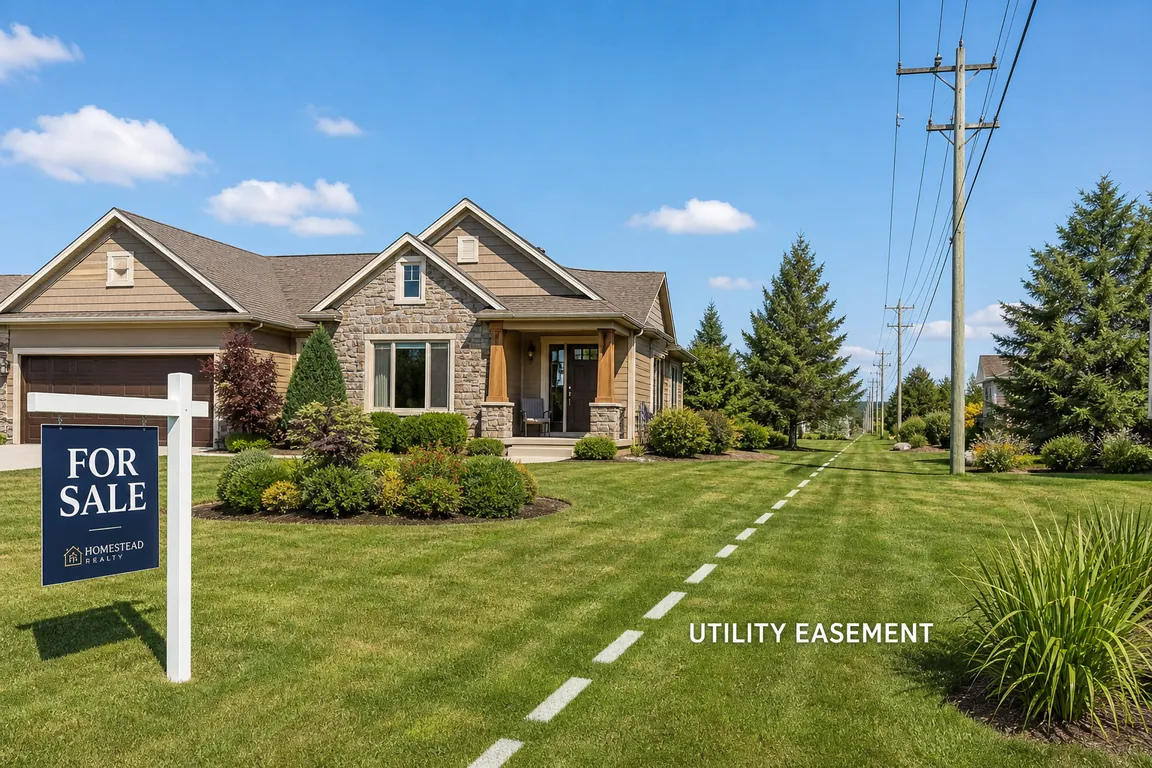
An easement is a legal right that lets someone other than you use a specific part of your land for a defined purpose. It's not yours alone anymore — not really. These easements get recorded in the public record, typically at your county recorder's or register of deeds office, and they stick to the land itself, not to you as the owner. So when you sell? They transfer automatically to the buyer unless you formally terminate them beforehand.
You'll discover easements in two main ways. Either they show up through a recorded deed or plat map notation, or a title search during escrow pulls them up. Buyers and their lenders almost always run a title search before closing, so hidden easements rarely stay hidden for long. Title insurance commitments will flag any recorded encumbrances. A surveyor's report might reveal the physical evidence too — worn paths, utility lines, access roads — that point to an easement even before the paperwork surfaces.
Here's what this means for you as a seller: disclose the easement. Price accordingly. Don't do both, and you're looking at legal liability and deals that fall apart.
Back to topTypes of Easements You'll Encounter When Selling
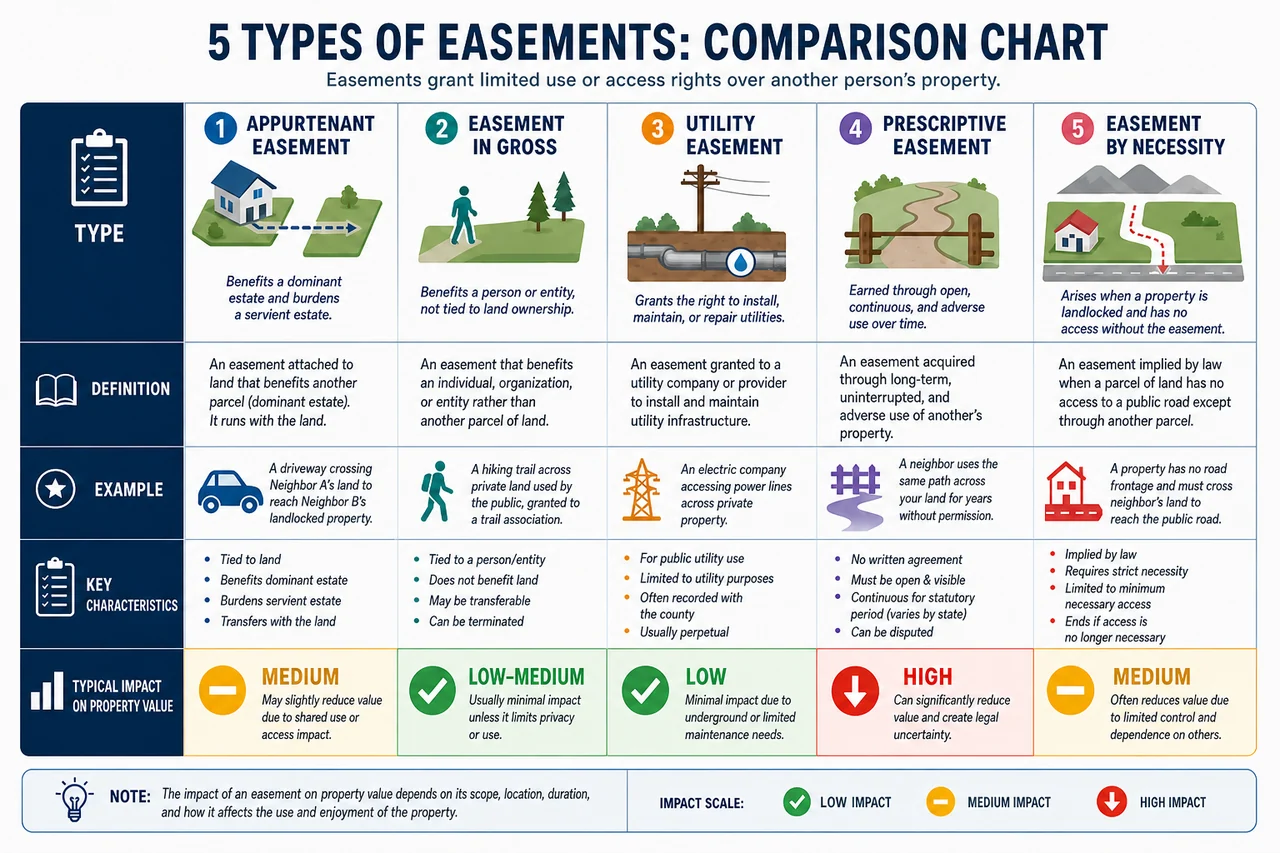
Here's the thing: not all easements hit your sale the same way. Know which one you're dealing with, and you'll know exactly how to price it and what to tell buyers.

Easement Appurtenant
Your neighbor has an easement that benefits their property (the "dominant estate") while burdening yours (the "servient estate"). Say they need to cross your land to reach the public road — that's a classic example. When either property sells, the easement goes with it. You're looking at a permanent fixture here.
Easement in Gross
This one benefits a specific person or company, not the neighboring land. Utility companies rely on easements in gross for power lines, pipelines, and sewer systems. But when a commercial entity like a telecom company holds it? That's when your development options shrink and buyer pushback kicks in.
Utility Easements
Most common in residential deals. Power, gas, water, cable — they all want their strips of land, usually 10 to 20 feet across your lot. Buyers don't usually stress about these. They're everywhere, and they won't mess with your day-to-day life.
Prescriptive Easements
Someone used your property openly and continuously, without asking permission, for 5–21 years (depends on your state). Here's what makes this dangerous: it might not show up in the deed or title search. And you could discover it right at closing.
Easements by Necessity
Courts create these when a property would otherwise be landlocked. The landlocked owner gets legal access across your land — even if you never signed anything.
| Easement Type | Transferable to Buyer | Typical Value Impact | Buyer Concern Level | Removal Difficulty |
|---|---|---|---|---|
| Utility Easement | Yes | 0–5% | Low | High (utility company consent) |
| Easement Appurtenant | Yes | 5–15% | Medium | Medium (neighbor negotiation) |
| Easement in Gross (personal) | Rarely | 2–10% | Low–Medium | Low (holder releases) |
| Easement in Gross (commercial) | Yes | 10–25% | High | Very High |
| Prescriptive Easement | Yes | 10–20% | High | Very High (legal action) |
| Easement by Necessity | Yes | 5–15% | Medium | High (court involvement) |
Can You Sell a Property with an Easement?
Yes. Millions of homes with easements sell every year without a hitch. The real question? Have you told the buyer what they need to know?
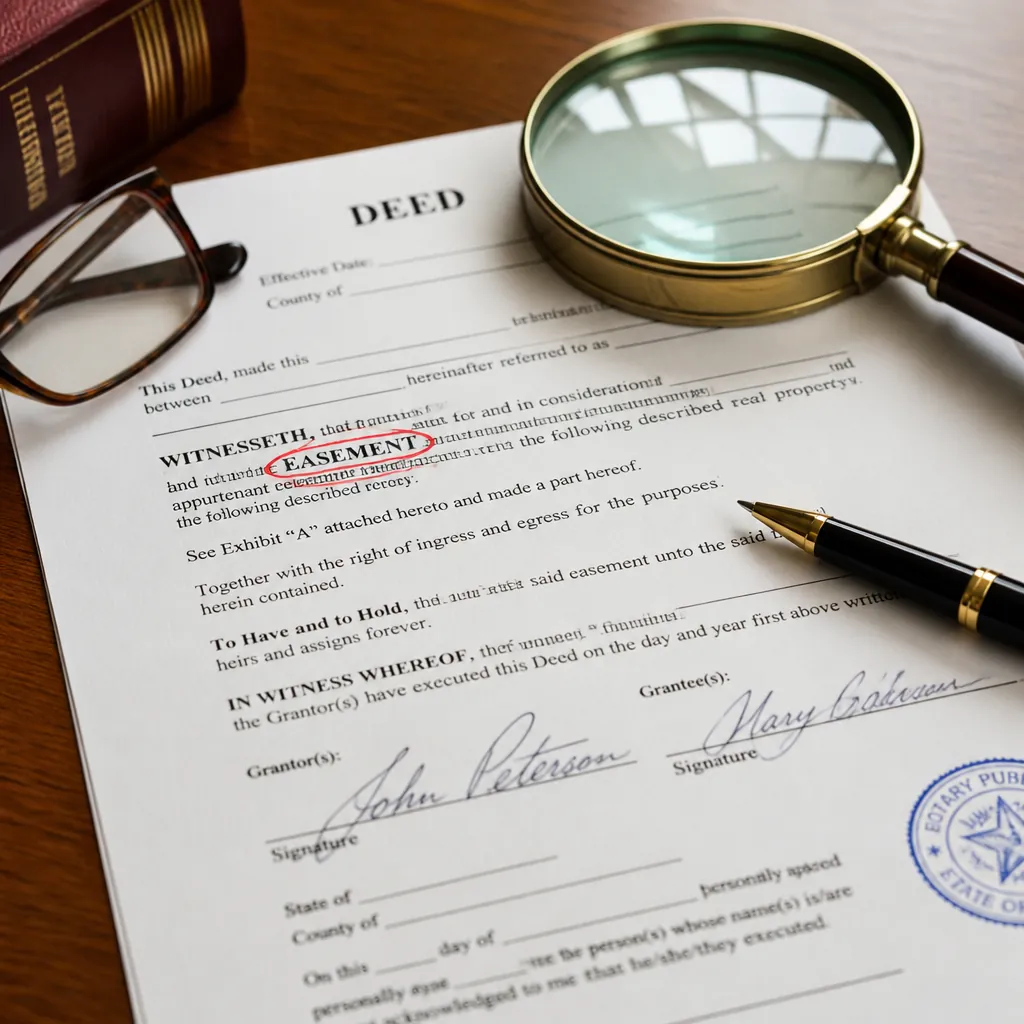
Every state in the U.S. requires you to disclose the facts that matter — the things that could sway a buyer's decision or change what they'll pay. A recorded easement absolutely counts. Most seller disclosure forms have a specific box asking about easements or encumbrances. Checking "no" when an easement actually exists? That's fraud. You're looking at contract rescission, lawsuits, and damages that can follow you years after closing.
Here's the silver lining: honesty helps you. When buyers know about the easement upfront, before they've spent money on inspections and appraisals, they often accept it as part of the property rather than backing out. And title insurance companies will still insure the property. But they'll note the easement as an exception — meaning they won't cover losses if the easement causes problems down the road. Buyers' agents see this all the time. It's standard.
Your state's rules matter more than you might think. California, Florida, and Colorado have detailed statutes spelling out exactly what you need to say about easements. Strong consumer protection laws mean you need to get it right. Before you list, have a real estate attorney check your disclosure forms. It's the same kind of guidance sellers dealing with lead paint disclosure depend on — you're protecting yourself from compliance issues that shift from state to state.
Back to topHow Easements Affect Property Value and Sale Price
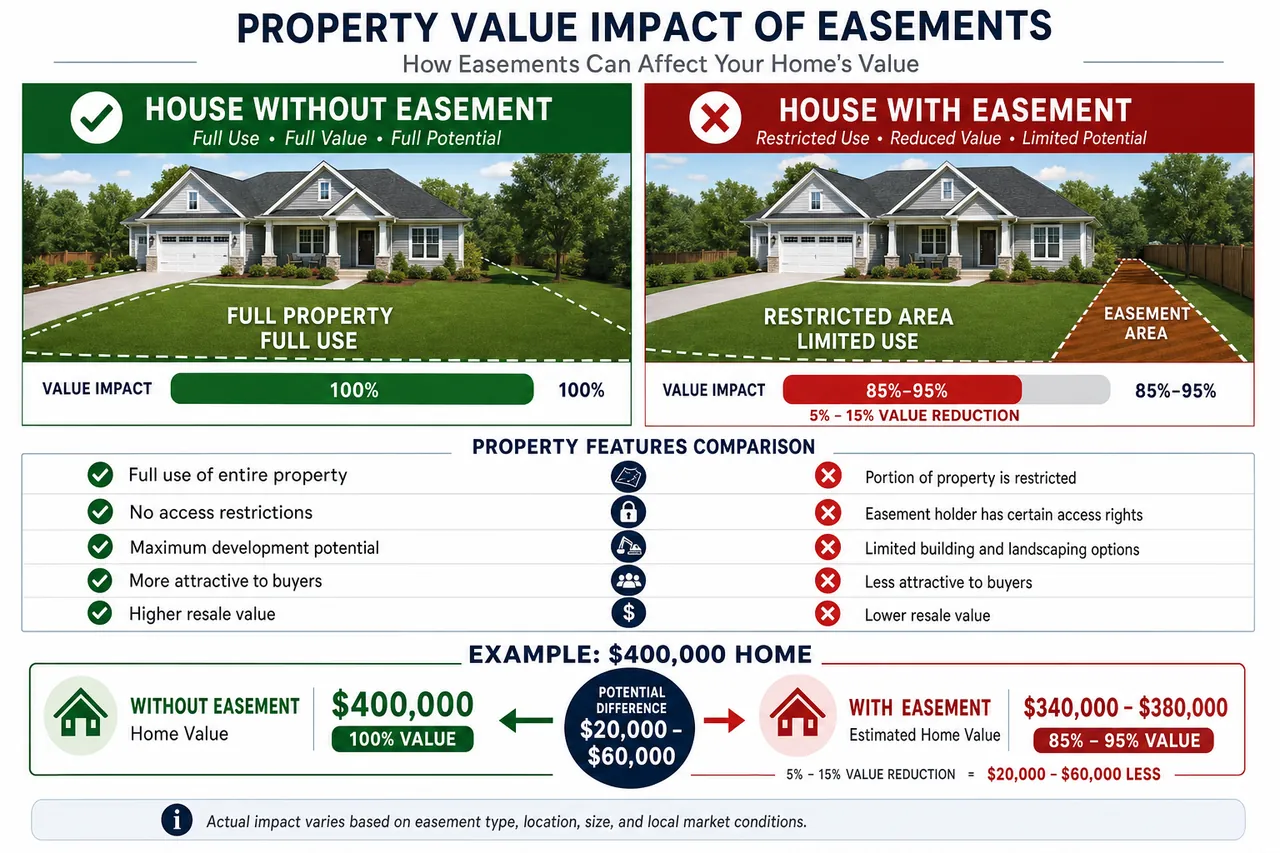
Here's the truth: it all comes down to what type of easement you're dealing with, where it sits on your property, and how often someone's actually using it. A utility easement tucked along your back fence line? Most buyers won't even notice it. But a commercial pipeline easement that blocks you from building anything within 50 feet of the centerline? That's a different story entirely — you're looking at losing a serious chunk of usable land and the value that goes with it.

When appraisers evaluate easement impact, they're asking one core question: what does this actually prevent you from doing? They dig into several specifics to figure out the damage.
- How much land are we talking about? A 10-foot easement across 2 acres barely registers. Put that same easement on a 5,000 sq ft city lot and you've got a real problem.
- Is anyone actually using this thing? A utility easement that sits dormant is way different from a shared driveway neighbors use every single day.
- Can you build on it or improve it? Most easements prohibit permanent structures in that corridor, which severely limits what you can do with the space.
- Can people see it from the street or your main living areas? Even if it doesn't practically matter much, visual impact changes how buyers feel about your property.
Want to price this right? Start by hunting down recent sales of other properties with similar easements in your area. That's your real-world baseline. And if comparable sales are hard to find, bring in an independent appraiser to put a number on what the easement actually costs you. That report becomes your leverage when you're negotiating with buyers who get nervous about restrictions.
Back to topRemoving or Terminating an Easement Before Sale
You can remove an easement. But it's rarely quick or cheap. Before you spend time and money on this, think hard about whether the cost and timeline actually make sense for your sale.
Negotiated Release
This is your simplest option. You approach the easement holder directly and offer them money to sign a formal release. Utility companies will sometimes release easements if they've moved their infrastructure elsewhere. Neighbors who hold appurtenant easements might accept a buyout if they can use a different route instead. Plan on 30–90 days of back-and-forth, with compensation running anywhere from a few hundred dollars to tens of thousands depending on how valuable that easement is to them.
Quiet Title Action
Can't reach the easement holder? Or maybe the easement was never set up properly in the first place. That's when you'd file a quiet title lawsuit to have a court wipe it out. But here's the catch: this takes 6–18 months and costs $3,000–$15,000+ in legal fees. If you're trying to sell your home on a normal timeline, this won't work for you.
Abandonment and Merger
Two things can kill an easement legally. The holder stops using it with clear intent to give it up. Or you end up owning both the property with the easement and the property it benefits (merger). You'll need solid legal paperwork to prove either scenario.
Real talk: in most residential sales, your best move is this. Unless you can kill the easement fast and easy, disclose it to buyers and adjust your price. Don't waste months chasing a termination that might not even happen.
Back to topStep-by-Step Guide to Selling a Property with an Easement
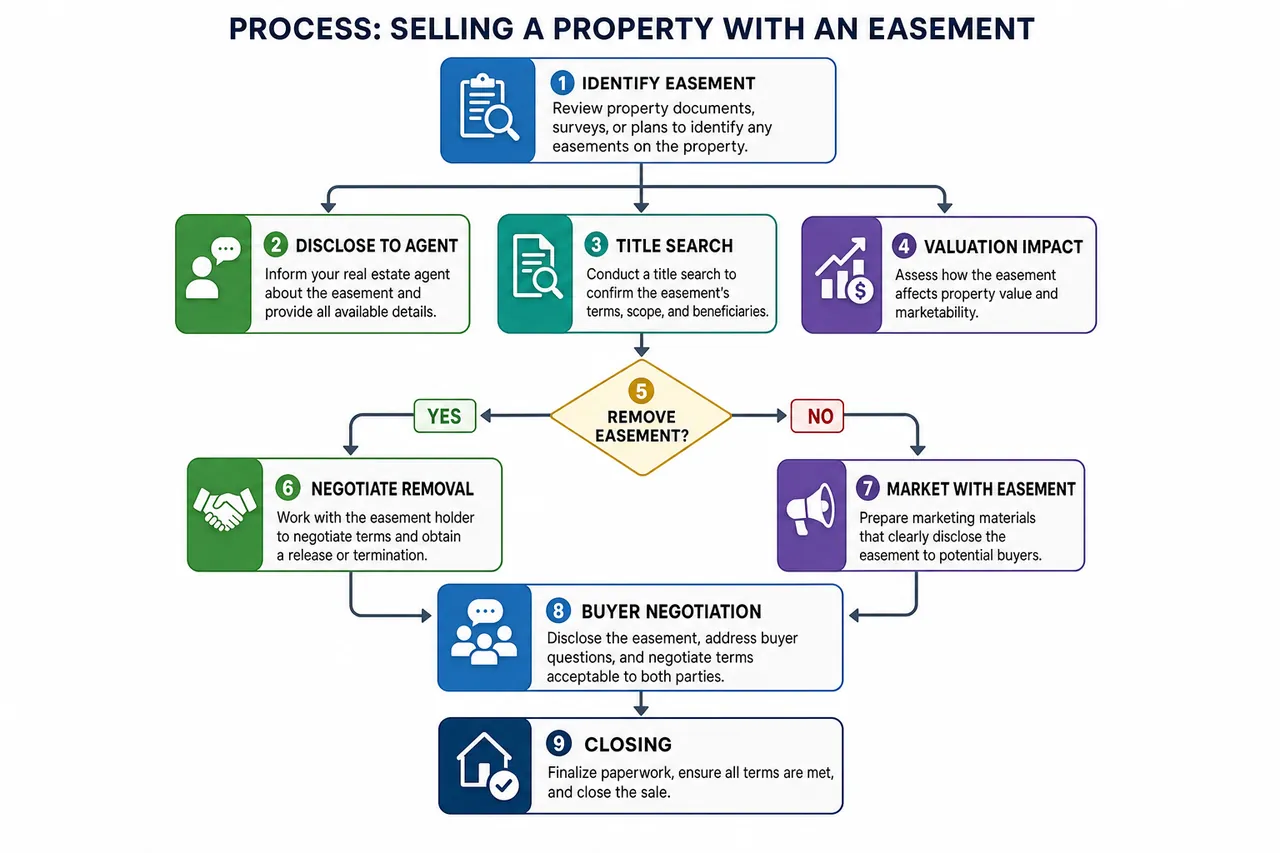
Following a clear roadmap keeps your deal moving and stops last-minute chaos from derailing everything.
| Stage | Action | Timeline | Cost Range | Professional Needed |
|---|---|---|---|---|
| 1. Discovery | Pull deed, plat, prior title report; walk property for physical evidence | 1–3 days | $0–$50 | None (DIY) or title company |
| 2. Title Search | Order professional title search to identify all recorded encumbrances | 3–7 days | $150–$400 | Title company |
| 3. Legal Review | Have attorney review easement terms and advise on disclosure language | 3–5 days | $200–$600 | Real estate attorney |
| 4. Appraisal | Commission appraisal to quantify value impact if significant easement | 5–10 days | $400–$800 | Certified appraiser |
| 5. Disclosure | Complete seller disclosure forms; provide easement documents to agent and buyers | Before listing | $0 | Real estate agent, attorney |
| 6. Marketing | List with accurate easement description; contextualize impact in listing notes | At listing | $0 | Real estate agent |
| 7. Negotiation | Address buyer objections with documentation; negotiate price based on appraised impact | Offer stage | $0 | Real estate agent, attorney |
| 8. Closing | Confirm easement noted on title insurance commitment; sign closing documents | Standard 30–45 days | Standard closing costs | Title/escrow officer |
Here's what actually matters when you're marketing the property: be upfront about that easement. Don't hide it. The best listing descriptions acknowledge the easement directly and explain what it actually means — "rear utility easement doesn't affect usable yard or home footprint" — because that builds trust. Buyers will dig into the details anyway during their due diligence, and vague language only makes them suspicious.
Back to topLegal and Financial Considerations for Sellers

Before you close, there's more to handle than just disclosure.
Attorney Involvement
You need a real estate attorney to dig into the easement instrument itself. Don't just confirm that an easement exists — actually read the document. Easement documents lay out what the holder can do, who pays for maintenance, and whether you're owed any compensation. Here's the thing: sellers sometimes find out they've been missing annual payments, or that the easement's supposed boundaries don't match how it's actually being used. That's money left on the table.
Liability Exposure
Are people or vehicles regularly crossing your property because of the easement?
You could be liable for injuries that happen in that zone until you hand over the keys. Call your homeowner's insurance company right now and verify you're covered for easement-related incidents during the listing period — this matters most for access and right-of-way easements. The same goes for any property with environmental or structural problems. Sellers dealing with asbestos or radon know this risk all too well.
Tax Considerations
Conservation easements granted to qualifying organizations can actually work in your favor. You might get a charitable deduction equal to the loss in fair market value. But here's what matters if you're selling: consult a tax professional about any conservation easement you've previously granted. That deduction history affects your adjusted basis and how much you owe on capital gains.
Back to topBuyer Concerns and How to Address Them
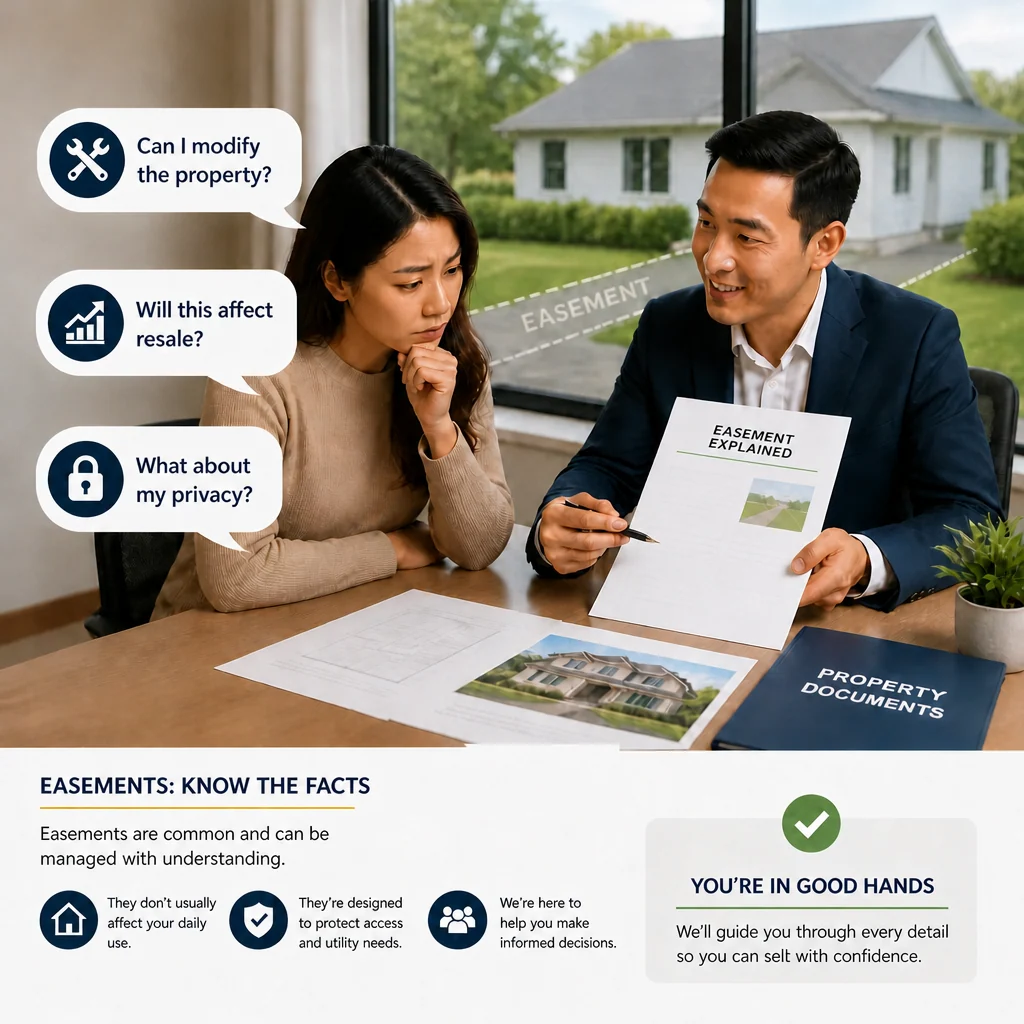
When you know what keeps buyers up at night, you can address those fears head-on. It's the difference between a deal that stalls and one that closes.
Privacy and Access Intrusion
Here's what worries most buyers: they picture utility workers tramping across their property constantly. That's not reality. Utility companies access easements rarely — often just once every few years for routine maintenance. Document actual use patterns and put that reassurance in writing so buyers can see for themselves.
Restrictions on Improvements
Many easements do block permanent structures within the corridor. The fix? Show buyers the exact language from the easement instrument itself. No surprises, no guessing. If the restricted area doesn't overlap with anything they actually want to build, point that out clearly. A simple diagram or survey overlay works wonders here.
Future Resale Concerns
They're thinking ahead — what happens when they sell? Don't minimize their worry.
Instead, remind them that millions of homes with easements sell successfully every year. The easement is already documented and disclosed, so future buyers get the same clear picture you're giving them now. And their title insurance policy reflects it too. That's the transparency that matters.
When Speed Is the Priority
If you need to close fast and don't have the patience for lengthy easement negotiations, there's another path. A cash home buyer will take the property as-is. No extended due diligence, no price renegotiation — encumbrances and all.
Back to topConclusion
Here's the truth: selling a house with an easement isn't a roadblock. It's solvable. The sellers who hit walls? They're the ones hiding the easement, slapping an inflated price tag on the property, or showing up empty-handed without documentation. Buyers discover the problem during due diligence—after trust has already started to build. That's when everything falls apart.
Successful sellers do something different. They treat the easement as a known, manageable condition from day one. Disclosure comes early. They work with an appraiser to price it right. They gather every easement document before the listing even goes live. And when buyers ask questions, they answer with specifics—not vague reassurances that leave people guessing.
Does this approach work? Yes. Most easement-encumbered properties sell within normal market timelines. You'll likely see a price that reflects the actual impact of the easement, which is often more modest than you'd expect.
Back to topFrequently Asked Questions
Do easements transfer to the new owner when I sell?
Most of the time, yes. Easements appurtenant, utility easements, prescriptive easements, and easements by necessity all run with the land — meaning they automatically transfer to whoever buys the property at closing. But here's where it gets tricky: personal easements in gross (those tied to one specific person rather than a company or neighboring property) might disappear when the original holder dies or when you sell, depending on what the easement document actually says. Your title attorney can tell you exactly which type you're dealing with.
Will an easement prevent my property from selling?
Not really. Easements — especially utility and appurtenant ones — are so common that buyers and their lenders see them all the time. What kills deals isn't the easement itself. It's hiding it. Undisclosed easements discovered late in escrow? That's a deal-breaker. But if you disclose it upfront and price accordingly, most buyers won't bat an eye.
Can buyers get title insurance on a property with an easement?
Absolutely. Title insurance works fine on properties with recorded easements. The easement shows up as a "Schedule B exception" in your title commitment — basically telling the insurer, "We know about this one." They won't cover losses from that specific easement, but that's standard. It won't stop the policy from being issued or the lender from funding.
How much will an easement reduce my home's value?
It depends. A utility easement in a normal spot? You're probably looking at 0–5% value loss. But a commercial easement that blocks development or involves heavy, frequent use could drop your value 10–25%. The real variables are how much of your usable land it eats up, what restrictions come with it, and how active people are using it. Want a real number? Get a certified appraiser who knows your local market — they're your best bet.
Are there state-specific rules I need to know about?
Definitely. Disclosure rules, time limits on prescriptive easements, and how you terminate them all vary wildly by state. California demands you disclose all encumbrances on the Transfer Disclosure Statement. Florida has equally strict seller disclosure laws. Colorado has its own requirements for easement documentation in mountain and rural properties. Indiana and Tennessee follow common law easement principles but use state-specific disclosure forms. And Washington state requires you to disclose any easements you know about as part of the statutory seller disclosure form. If you're selling in any of these states — especially if you're also dealing with other disclosure headaches like asbestos in California, lead paint in Florida, or asbestos in Washington — talk to a local real estate attorney before you list.
Back to top
