

How to Sell a House With Solar Panels or a Solar Lease in Tennessee
Table of Contents
- Understanding Your Solar Situation
- Selling a House With Owned Solar Panels
- Selling a House With Leased Solar Panels or a PPA
- Disclosure Requirements and Legal Considerations in Tennessee
- How Solar Affects Your Sale Timeline and Price in Tennessee
- Tax Considerations for Tennessee Solar Home Sellers
- Conclusion
- FAQs
Selling your home with solar panels or a solar lease can feel stressful and confusing. 1 The average cost to install a solar energy system ranges from $25,595 to $33,763, making it one of your biggest investments. 2 Tennessee homeowners in Nashville, Memphis, Knoxville, and Chattanooga are increasingly adding solar to their properties, and knowing how to handle panels or a lease at sale time is essential. This guide breaks down each step clearly so you know what to expect before listing.
Key Takeaways
- Owned solar panels make your Tennessee home easier to sell and can add 30%–50% of the installation cost to its value. Homes with owned panels may sell up to 4.1% faster and for as much as $15,000 more.
- Leased solar panels or Power Purchase Agreements (PPAs) require buyers to assume the contract, pass a credit check (usually needing a score of 650–680), and sometimes pay an assumption fee between $0–$250. About 77% of leases transfer successfully, but some lenders may reject mortgage applications because of active leases.
- Tennessee has no state income tax on wages, but capital gains from a home sale may be subject to federal tax rules; the federal exclusion of $250,000 ($500,000 for married couples) still applies if you meet the two-out-of-five-years ownership and use test.
- Complete documentation is crucial — provide installation records, warranties (panels: usually 25 years; inverter: often 10–15 years), utility bills showing energy savings, maintenance logs, proof of ownership or contracts, and all legal agreements.
- Tennessee does not currently have a statewide solar property tax exemption, meaning added value from owned panels could factor into your assessed value. Check with your county assessor's office for local rules.
Understanding Your Solar Situation
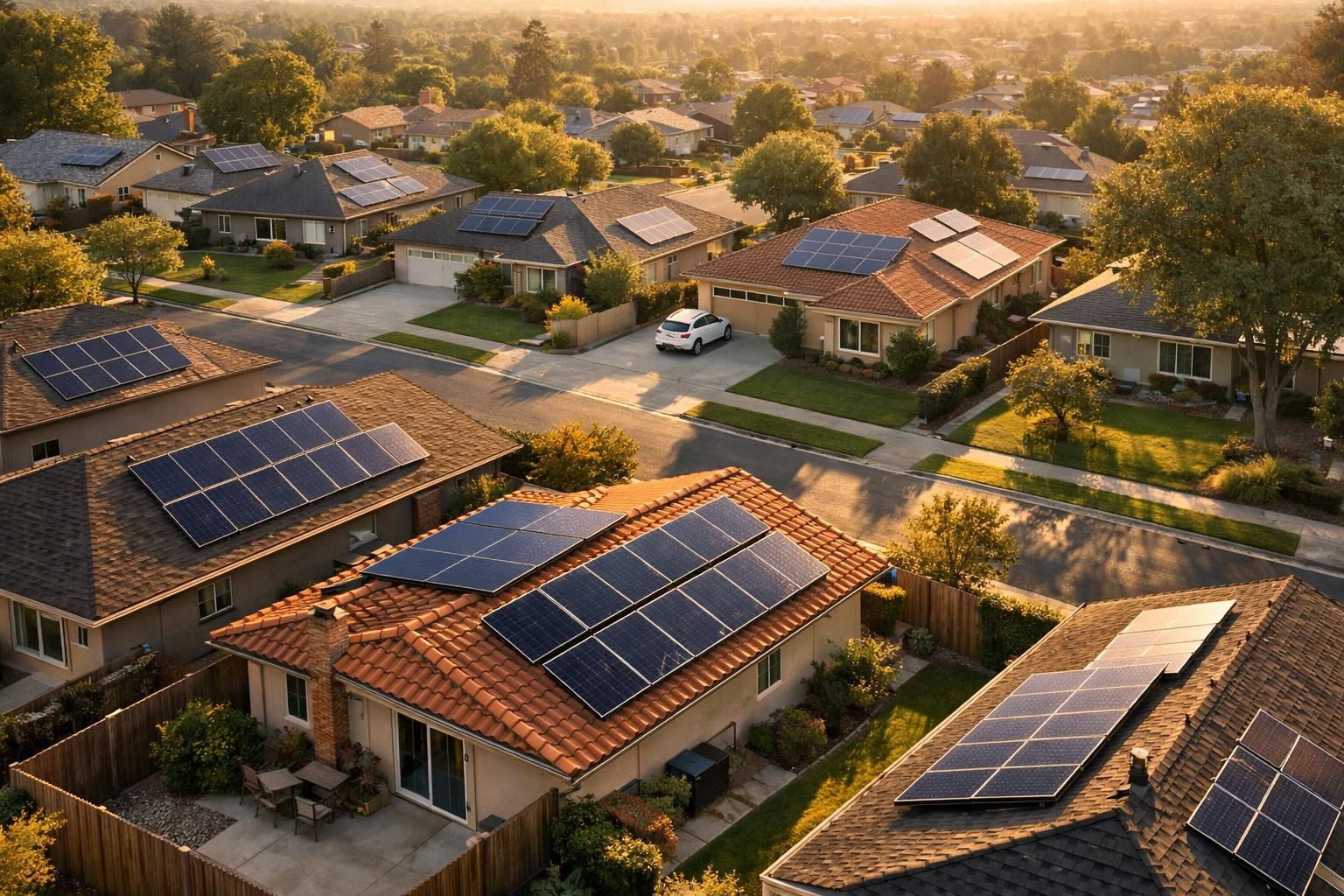
Many Tennessee homeowners feel uncertain about solar panel ownership or leasing. Understanding your agreement with the solar company can help you make better choices before selling your house.
Owned panels: Paid off or financed
Owned solar panels make your home sale smoother in Tennessee. If you have paid them off, you do not need to involve a third party or worry about extra contracts. Buyers often prefer homes with paid-off solar because the panels become part of the property and can add 30% to 50% of the installation cost directly to your home's value.
If you still have a solar loan, check whether it is secured by your property or unsecured like most personal loans. Secured loans must be paid in full before closing, while unsecured ones do not hold up the sale since they remain solely in your name. Tennessee closings are handled by title companies or attorneys, so your closing agent can help clarify how any lien tied to your solar financing appears in the title search.
Solar benefits include transferable warranties, production history, and maintenance records that buyers, mortgage lenders, and underwriters will expect to review during the transaction.
Leased panels or Power Purchase Agreement (PPA)
Leased solar panels and Power Purchase Agreements (PPAs) let you use renewable energy without buying the system outright. A lease charges a fixed monthly payment; a PPA charges per kilowatt-hour generated. Both options typically run 20 to 25 years and may include an annual escalator clause of 2% to 5%.
Major providers offering these agreements in Tennessee include Sunrun, SunPower, and Tesla Energy. If you sell a house with leased panels or a PPA in place, the buyer must pass a credit check — most agreements require scores between 650 and 680 — and an assumption fee of $0 to $250 may apply. Under appraiser guidelines, leased systems count as personal property and do not add value the way owned systems do.
How to identify your solar panel type
Identifying your solar panel type before listing in Tennessee is a critical first step.
- Check your original purchase or lease agreement for terms like "owned," "financed," or "leased."
- Review monthly electricity bills and any separate solar company statements. Tennessee Valley Authority (TVA) customers and those on local power company programs may see credits or net-metering adjustments that differ from lease payments.
- Search for a Uniform Commercial Code (UCC) lien filing in Tennessee's Secretary of State records — its presence often signals a financed system tied to a loan.
- Check whether you claimed the federal solar Investment Tax Credit (ITC) using IRS Form 5695; this applies to owned systems only.
- Contact your solar installer or provider — companies like Sunrun or Tesla can confirm ownership or lease status.
- Confirm with your mortgage lender whether any restrictions apply to your sale due to debt-to-income (DTI) concerns.
- Gather all legal documentation — warranties, permits, and proof of ownership — for use during negotiations and closing.
Selling a House With Owned Solar Panels
If you own your solar energy system in Tennessee, you can offer buyers lower electricity bills and long-term energy savings. Homeowners often see greater interest and may command a premium price by highlighting renewable energy as a feature.
Transferring panels with the home
In Tennessee, owned solar panels transfer with the property at closing like any other real estate improvement. Your title company or closing attorney will include the system in the deed transfer. Have your documentation ready — proof of ownership, warranty details, production history, and all service agreements from your solar company. 1
Panels that are fully paid off can increase property value by thousands of dollars. Warranties typically last 25 years for panels and 10–15 years for inverters. List this information on your MLS listing so buyers feel confident about purchasing a home with an existing renewable energy system.
Marketing solar as a value-add in Tennessee
Showcase your solar energy system as a key selling point. Highlight savings on electricity bills — especially relevant for Tennessee homeowners served by TVA and local power companies — with utility bill comparisons before and after installation.
Add a "Solar Snapshot" to your listing detailing system size, manufacturer, production history, maintenance records, warranty coverage, and yearly energy output. Homes with owned panels can sell for up to 4.1% more and often move faster than homes with leased systems.
Note that Tennessee does not currently offer a blanket solar property tax exemption, so be prepared to address questions about whether the panels increase the home's assessed value. Some counties may handle this differently, so checking with the local assessor is worthwhile.
Documentation needed: warranties, production history, maintenance records
- Full installation records from your solar company or installer. 2
- Warranty details — panel warranties usually last about 25 years; inverter warranties cover 10 to 15 years.
- Maintenance reports tracking upkeep on panels, inverters, and other equipment.
- Production data such as monitoring system reports or monthly utility statements showing real energy savings.
- Any service agreements, lease contracts, or PPA documents relevant to your system.
- Access to your online monitoring system if possible, so buyers can view real-time performance.
- Copies for your closing attorney, appraiser, and buyer's lender during the Tennessee closing process.
Selling a House With Leased Solar Panels or a PPA


Selling a Tennessee home with leased solar panels or a PPA requires early communication with your solar provider and real estate agent. Here are your main options.
Option 1: Buyer assumes the lease
Most buyers take over the existing solar lease when purchasing a home with leased panels. 3 The solar company runs a credit check — typically requiring a minimum score of 650 to 680 — and an assumption fee of $0 to $250 may apply. The transfer generally takes 30 to 60 days, which you should build into your Tennessee closing timeline.
The new owner must qualify for their mortgage plus the ongoing solar lease payments. FHA loans will count lease payments against the buyer's debt-to-income ratio, which can limit your buyer pool. Keep copies of all existing contracts, payment history, and warranties for reference during negotiations.
Option 2: Seller buys out the lease
Paying off your solar lease before selling removes barriers for buyers. A full buyout typically costs between $10,000 and $30,000 and converts the system to owned equipment, which appraisers treat more favorably. Some leases carry early payout penalties or tax-related restrictions — certain providers require waiting up to six years after installation before allowing a full payoff.
Compare the buyout cost to the expected increase in your Tennessee home's sale price before committing. Always request written documentation on warranties and maintenance records once the buyout is complete.
Option 3: Seller prepays the lease balance
Prepaying the solar lease at Net Present Value can settle your solar agreement before you sell. This option often allows the buyer to receive free solar energy for the remainder of the lease term, increasing your home's appeal. 4 Check your contract for prepayment rules and consult both your leasing company and a financial advisor before proceeding, as past tax credits or depreciation may affect how much you owe.
Addressing buyer objections and timeline considerations
- Explain how leased solar panels lower electricity bills and offer predictable monthly costs. 3
- Provide buyers copies of the lease agreement, maintenance records, and recent energy savings reports.
- Share that about 77% of solar leases transfer successfully in real estate deals.
- Inform buyers that many Tennessee mortgage lenders approve homes with leased panels, though FHA loans may factor lease payments into DTI ratios.
- Note that cash buyers and investors are often more flexible about assuming leased panels than traditionally financed buyers.
- Contact your solar provider as soon as you list your home to avoid last-minute delays during Tennessee closings, which are handled by title companies or real estate attorneys.
- Set clear expectations: sales involving a solar lease typically take 60–90 days from offer to closing.
Disclosure Requirements and Legal Considerations in Tennessee

Tennessee is a disclosure state. Sellers are required to complete a Residential Property Condition Disclosure form, and material facts about your solar system — including whether it is owned, financed, or leased — must be disclosed to buyers. Failure to disclose can expose you to legal liability under Tennessee's seller disclosure laws.
Tennessee-specific obligations
Your Tennessee Property Condition Disclosure must accurately reflect the status of your solar installation. If a UCC lien is filed against the system in the Tennessee Secretary of State's records, your title company will identify it during the title search and it must be addressed before closing. Lenders and real estate agents will ask for your installation agreements, warranties, and production data before finalizing any sale.
Tennessee does not currently mandate a separate solar-specific disclosure form, but all contracts, lease agreements, and financing details related to the solar system should be provided to buyers as part of standard due diligence. Work with your closing attorney to ensure all documents are properly handled at the title table.
Importance of providing solar documentation during listing
Buyers, appraisers, and closing attorneys in Tennessee will request your solar documentation. Key records include installation reports, panel and inverter warranties, utility bills showing energy savings, production history, and maintenance logs. Providing these records upfront boosts buyer confidence, supports your asking price, and keeps the closing process on schedule.
Back to topHow Solar Affects Your Sale Timeline and Price in Tennessee

Impact on buyer pool and marketability
Owned solar panels attract a broader pool of Tennessee buyers because they avoid extra qualification steps or added monthly payments. In competitive markets like Nashville and Knoxville, a fully paid-off solar system can be a strong differentiator.
Leased panels can shrink your buyer pool because each interested party must qualify for both the mortgage and the lease agreement. Some lenders will not finance properties with active leased solar systems. Cash buyers and investors tend to be more flexible and may be especially receptive to homes with solar leases given the long-term energy savings.
Pricing strategies and setting realistic expectations
Set a competitive price by reviewing recent comparable sales in your Tennessee county. Buyers often pay roughly $4 per watt of installed solar capacity, which can boost value by 4–7% or up to $29,000 for a median-priced home. 5 Use energy savings data and production history to support your asking price.
Because Tennessee does not have a statewide solar property tax exemption, talk with your county assessor and a local real estate agent familiar with renewable energy properties before finalizing your list price. Factor in any solar loan balance or lease buyout cost when calculating your net proceeds.
Homeowners who want to explore all their options at once — including renovation funding, leaseback arrangements, or a cash-purchase backstop — can start with a vetted local agent through KDS Homebuyers, whose seller programs are designed to give Tennessee homeowners a full set of tools before committing to a single path.
Back to topTax Considerations for Tennessee Solar Home Sellers
Tennessee has no state income tax on wages or salaries, and the state's Hall Income Tax — which once applied to investment income — was fully repealed as of 2021. However, profit from selling your home may still be subject to federal capital gains tax. If you have lived in the home for at least two of the last five years, you can exclude up to $250,000 in gain ($500,000 for married couples filing jointly) under federal law.
If you claimed the federal solar Investment Tax Credit (ITC) on an owned system, consult a tax professional before selling to understand any recapture rules that may apply. Tennessee does not impose a state transfer tax on residential real estate sales, which simplifies your closing cost calculation compared to many other states.
Back to topConclusion
Selling a Tennessee home with solar panels or a solar lease takes preparation, but you have clear options. Gather documentation from your solar company early, work with a real estate agent who understands renewable energy systems, and be transparent on your Tennessee Property Condition Disclosure form. Whether your panels are owned or leased, clear communication with buyers, lenders, and your closing attorney will keep the process moving.
If you need to sell quickly and want to skip the complications of marketing a solar home on the open market, KDS Homebuyers purchases Tennessee homes directly for cash — solar panels, leases, and all. Visit kdshomebuyers.net to request your free, no-obligation cash offer today.
Back to topFAQs
1. How does owning solar panels affect selling a house in Tennessee?
Owned solar panels can make your Tennessee home more attractive by offering buyers lower electricity bills and reduced energy costs. Appraisers treat owned systems as real property improvements, which can support a higher asking price.
2. What should I know if my Tennessee home has a solar lease?
Tell your real estate agent early. The buyer must agree to assume the lease — and pass a credit check — or you may need to buy out the contract before closing. Your closing attorney will need copies of all lease documents at the title table.
3. Does Tennessee have a solar property tax exemption?
Tennessee does not currently have a statewide solar property tax exemption, unlike some other states. Added home value from owned solar panels could be reflected in your county assessed value. Check with your local county assessor for the most current rules.
4. Are there state transfer taxes when selling a solar home in Tennessee?
Tennessee does not impose a state real estate transfer tax, which simplifies closing costs. However, some counties may have local fees, so confirm with your closing attorney or title company.
5. Should I work with experts when selling a Tennessee home with solar panels?
Yes. Work with a real estate agent experienced in renewable energy properties and a closing attorney familiar with Tennessee title requirements. They can guide you through disclosure obligations, connect you with local professionals, and help answer buyer questions about your solar system.
References
- ^ https://www.solarenergyworld.com/blog/solar-faqs/transfer-solar-when-selling-home/ (2025-05-15)
- ^ https://www.bostonsolar.us/solar-blog-resource-center/blog/finally-solar-explained-for-realtors/ (2025-11-14)
- ^ https://www.solar.com/learn/selling-a-home-with-leased-solar-panels/ (2026-01-14)
- ^ https://www.homelight.com/blog/selling-a-house-with-leased-solar-panels/ (2024-08-26)
- ^ https://solartechonline.com/blog/do-solar-panels-add-value-to-home-guide/
