

Selling a House With Lead Paint: Federal Rules and Disclosure Requirements in Indiana
Table of Contents
- What Is Lead Paint and Why Is It a Concern?
- Understanding the Federal Lead-Based Paint Disclosure Rule
- Common Questions from Indiana Sellers
- Selling Your Indiana Home with Lead Paint: Strategies for Success
- How Lead Paint Affects Different Buyer Types in Indiana
- Remediation Options and Costs
- The Lead Paint Disclosure Process Step-by-Step in Indiana
- Indiana Tax Considerations When Selling a Lead-Paint Home
- Conclusion
- FAQs
You may feel stressed if you need to sell a house with lead paint. 2 Many homes built before 1978 still have lead-based paint, which can put families at risk for lead poisoning. 1 Indiana has a large stock of older housing — particularly in Indianapolis, Carmel, and Noblesville — where pre-1978 homes remain common. This post will guide you through federal rules, Indiana-specific considerations, required disclosures, and steps to protect yourself when selling your home.
Key Takeaways
- Federal law requires sellers to disclose any known lead-based paint or hazards in homes built before 1978. Sellers must provide buyers with the EPA pamphlet "Protect Your Family from Lead in Your Home" and complete a signed disclosure form. (EPA, HUD, Title X)
- Buyers have up to 10 days to inspect for lead paint before purchasing a pre-1978 home. This right protects families from health risks such as lead poisoning, especially for children under six.
- Most houses built before 1940 (87%) contain some form of lead-based paint; this risk drops to about 69% for homes from 1940–1959 and around 24% for homes built between 1960 and the 1978 ban.
- Failing to follow disclosure rules can result in fines over $16,000 per violation and possible lawsuits. You must keep all signed forms for at least three years after the sale.
- Indiana does not impose a state real estate transfer tax, but sellers should be aware of Indiana's capital gains treatment and county-level considerations when pricing a lead-paint home. Cash buyers often purchase pre-1978 Indiana homes "as-is," while traditional buyers may request price reductions of 3%–6%.
What Is Lead Paint and Why Is It a Concern?

Lead-based paint was widely used in pre-1978 homes, and many Indiana properties still contain this hazardous material. The Environmental Protection Agency warns that dust from deteriorating lead paint can cause serious health risks, especially for children and pregnant women.

Brief history of lead paint use (pre-1978 homes)
Before 1978, manufacturers used lead paints widely in American homes, including throughout Indiana. The EPA found that 87% of houses built before 1940 contain some form of lead-based paint. Between 1940 and 1959, about 69% of homes included lead paint on walls or woodwork. Even newer properties carry risk — around 24% of homes built between 1960 and the 1978 ban may still have lead hazards.
Government regulations banned residential lead-based paint in 1978. The EPA now requires real estate agents, sellers, and property managers to follow strict disclosure rules for pre-1978 homes during sales or leases. Indiana's older urban neighborhoods — including areas of Indianapolis and Lebanon — have some of the highest concentrations of pre-1978 housing stock in the Midwest.
Health risks, especially for children
Lead-based paint poses serious health risks, especially to children under six. Even small amounts of lead dust from old windows or doors can cause lead poisoning, resulting in brain damage, kidney problems, behavioral issues, and developmental delays. Federal reports show lead can accumulate in bones and re-enter the bloodstream over time.
The Indiana State Department of Health (ISDH) monitors childhood blood lead levels across the state and partners with local health departments to respond to elevated lead cases. Indiana sellers of pre-1978 homes must be especially aware of these risks, as disclosure protects both buyers and sellers from future liability.
Back to topUnderstanding the Federal Lead-Based Paint Disclosure Rule

Federal law — specifically Title X of the Residential Lead-Based Paint Hazard Reduction Act of 1992 — requires Indiana sellers to disclose known lead hazards in pre-1978 homes. Real estate agents must provide the EPA's "Protect Your Family from Lead in Your Home" guide during the sale process. Indiana follows these federal requirements directly; there is no separate state lead disclosure statute, but Indiana real estate contracts typically include a federally required lead paint addendum.

Provide EPA pamphlet 'Protect Your Family from Lead in Your Home'
You must give buyers the EPA pamphlet "Protect Your Family from Lead in Your Home" before they sign any contract on a pre-1978 Indiana property. This free booklet, available at epa.gov/lead and in Spanish, explains lead-based paint hazards and health risks. Handing over this pamphlet is not optional — it is one of the core requirements under Title X federal regulations. Indiana real estate agents routinely include this step as part of standard closing paperwork.
Disclose any known lead paint or hazards
Provide buyers with all available records and reports about lead-based paint or hazards in your home. Complete and sign the federal Lead Paint Disclosure form before signing the purchase agreement. Include any inspection or abatement reports you have on file. Failure to disclose can result in penalties or legal action under federal rules enforced by HUD and the EPA, and could expose you to civil claims in Indiana courts.
Allow buyers a 10-day testing period
Federal law gives buyers of pre-1978 homes up to 10 days to conduct a lead paint inspection or risk assessment before the sale closes. You must make this option available in your Indiana purchase agreement. Buyers may waive the period in writing. FHA and VA loan programs — commonly used by Indiana buyers in suburban markets like Fishers and Noblesville — often require a lead paint inspection on pre-1978 properties before approving financing.
Penalties for non-compliance
The EPA and HUD enforce federal lead paint disclosure rules nationally, including in Indiana. Civil fines can exceed $16,000 per violation. Intentional violations may trigger criminal prosecution. Buyers and renters may report violations at epa.gov/lead/violation. You must retain signed disclosure forms for at least three years after the sale. Lawsuits for health damages related to undisclosed lead hazards can result in significant additional costs.
Back to topCommon Questions from Indiana Sellers
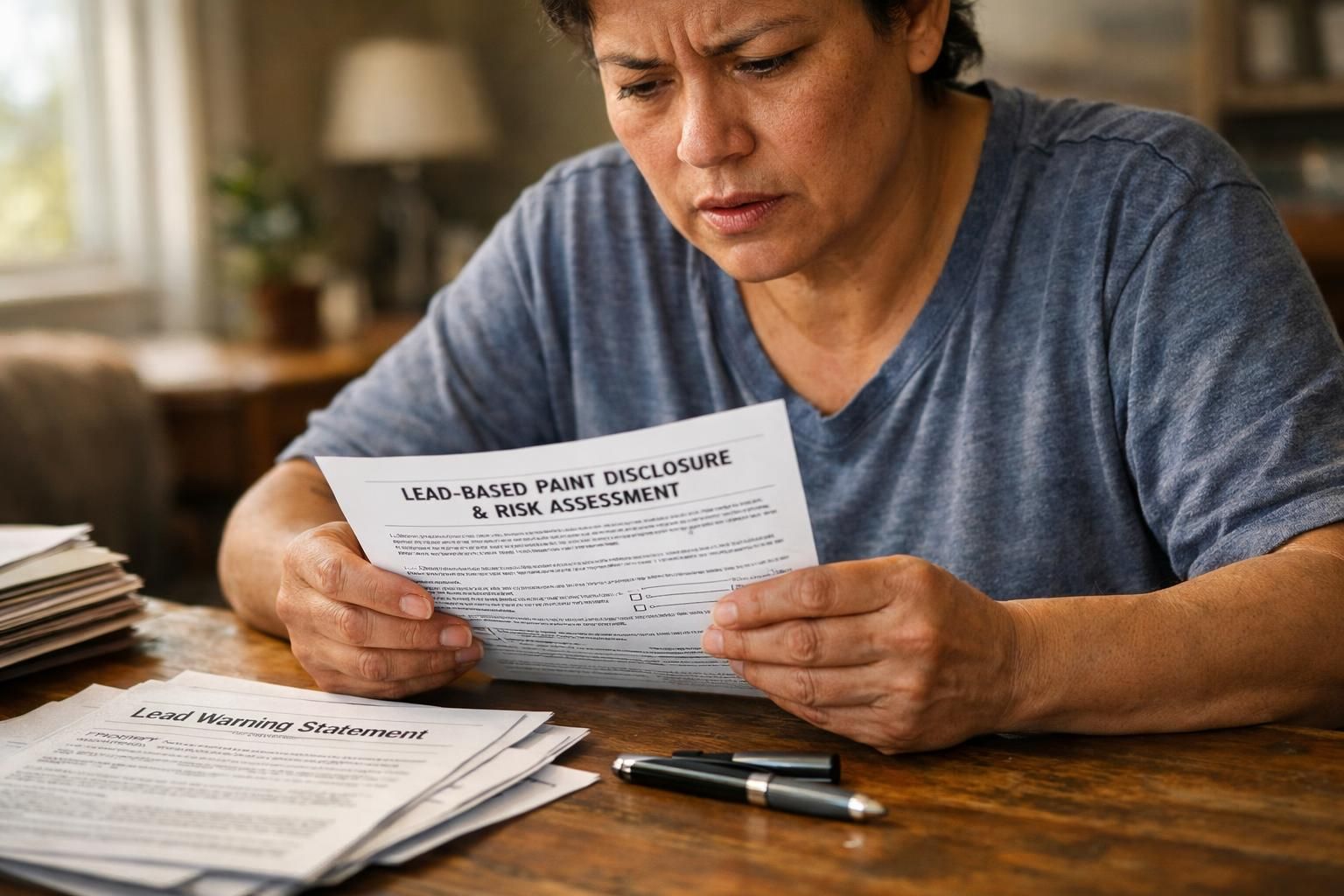

Do Indiana sellers need to test for lead paint before selling?
Federal law does not require you to test for lead paint before selling if you have no knowledge of its presence. If your Indiana home was built before 1978, you must disclose any known lead paint or hazards and share any past inspection reports. You must also provide the EPA pamphlet. Buyers get up to 10 days to conduct their own testing. FHA and VA lenders active throughout the Indianapolis metro area may require a lead paint inspection before approving loans on pre-1978 homes — check with your lender early in the process.
What if Indiana sellers aren't sure if lead paint is present?
If you aren't certain whether your pre-1978 Indiana home contains lead paint, disclose that uncertainty honestly on the federal Lead Paint Disclosure form. Never guess or misrepresent what you know. State that no information is available if that's the truth. Keep all disclosure documents for at least three years after closing. Indiana real estate agents familiar with Marion County or Hamilton County transaction norms can help you navigate these requirements correctly.
Does painting over lead paint eliminate disclosure requirements?
No. Painting over lead-based paint does not remove your legal obligation to disclose known lead hazards. Federal law applies in every Indiana sale involving a pre-1978 home, regardless of whether new paint covers old layers. Even encapsulation does not end your disclosure duty. Sellers and property managers must still provide the EPA pamphlet, share any test results, and offer the 10-day inspection window. The EPA may fine those who fail to comply. 1
Back to topSelling Your Indiana Home with Lead Paint: Strategies for Success

You can sell your Indiana home with lead-based paint either "as-is" or after making repairs. Selling as-is saves time and avoids costly abatement work, but offers from cash buyers may come in below fair market value. Indiana real estate agents often recommend addressing lead hazards before listing if you want to attract financed buyers in competitive markets like Carmel or Fishers.
Renovating areas with lead paint increases buyer interest and reduces health risks. Cash buyers and investors typically handle risk assessments themselves and can close quickly — sometimes within a few weeks — which appeals to Indiana sellers who want to avoid a drawn-out process.
Back to topHow Lead Paint Affects Different Buyer Types in Indiana

Traditional buyers vs. investors and cash buyers
Selling a pre-1978 Indiana property with lead paint means you will likely encounter two kinds of buyers. Here is how each group typically approaches the process:
| Buyer Type | Lead Paint Risk Tolerance | Required Compliance | Typical Price Impact | Sales Process |
|---|---|---|---|---|
| Traditional Buyers (Families, FHA/VA buyers, financed buyers) |
Low — focused on health and safety, especially for children | Full federal disclosure, EPA pamphlet, 10-day inspection window; FHA/VA lenders may require inspection | May negotiate 3%–6% price reduction or request remediation | Longer, more conditional; may delay closing pending inspection results |
| Investors and Cash Buyers | Higher — primarily focused on investment return | Federal disclosure and EPA pamphlet still required; rarely request remediation or use 10-day period | Lower initial offer, but fewer contingencies | Fast, as-is sales; quick assessments with their own contractors |
In Indiana's market, cash buyers are especially active in older Indianapolis neighborhoods and smaller cities with aging housing stock. Working with a cash buyer often means a faster close and less paperwork, even if the price is somewhat lower. 2
Back to topRemediation Options and Costs
You have several ways to manage lead-based paint in your Indiana home. A certified inspector or risk assessor can help you choose the best approach before you list.
Encapsulation, removal, and replacement
Encapsulation covers lead paint with a special sealant and typically costs $4 to $7 per square foot. Removal strips away all lead paint layers and runs $8 to $17 per square foot, performed by EPA-certified contractors under the 2010 Renovation, Repair, and Painting (RRP) rule. Replacement removes lead-coated components — doors, window frames, trim — and installs new materials. Full abatement for an average Indiana home typically runs $8,000 to $15,000 depending on size. Interim controls offer temporary relief for around $1,000 to $3,000 but do not eliminate the long-term hazard.
Typical cost ranges for lead paint abatement in Indiana
Most Indiana homeowners pay an average of around $3,500 for lead paint removal, with most projects falling between $1,500 and $5,500. 3 Large pre-1978 homes or full abatement projects can reach $18,000. Encapsulation runs $4–$7 per square foot; full removal costs $8–$17 per square foot. After remediation, plan for annual inspections by certified contractors — typically $300–$700 per year. Indiana does not offer a specific state subsidy for residential lead abatement, but the Indiana Housing and Community Development Authority (IHCDA) and some local health departments may have resources available for qualifying low-income homeowners.
Back to topThe Lead Paint Disclosure Process Step-by-Step in Indiana
Completing the disclosure addendum
The Indiana Association of Realtors® provides a federally compliant lead paint disclosure addendum as part of its standard purchase agreement forms. Complete this addendum before any sale or lease if your property was built before 1978. List all known lead hazards and attach any past inspection reports. Include the EPA pamphlet "Protect Your Family from Lead in Your Home." All parties — buyers, sellers, and agents — must sign and date the form. The buyer's 10-day inspection period begins at that point unless both parties agree in writing to waive or shorten it. 4 Keep copies for at least three years after closing. Electronic signatures are acceptable under Indiana law, but all parties retain the right to sign paper documents. 4
Providing the EPA pamphlet
Before signing a sales contract on any pre-1978 Indiana home, federal law requires you to provide the EPA pamphlet "Protect Your Family from Lead in Your Home" to buyers. This document is available free at epa.gov/lead and in Spanish. The Residential Lead-Based Paint Hazard Reduction Act of 1992 (Title X) enforces this requirement in all states. Failure to provide the pamphlet can lead to federal penalties. Indiana real estate agents include this step as routine practice in transactions involving pre-1978 properties. 1
Back to topIndiana Tax Considerations When Selling a Lead-Paint Home
Indiana does not impose a state-level real estate transfer tax, which simplifies the closing process compared to some other states. However, Indiana sellers should be aware of a few tax points:
- Capital gains: Indiana taxes capital gains as ordinary income at a flat state rate of 3.05% (as of 2024). Federal capital gains exclusions ($250,000 for single filers, $500,000 for married filing jointly) still apply if you meet the ownership and use tests.
- Abatement costs as selling expenses: Money spent on lead paint remediation before the sale may be deductible as a selling expense, reducing your taxable gain. Consult an Indiana tax professional for guidance specific to your situation.
- County assessor records: In Indiana, property tax assessments are handled at the county level. If you invest in lead abatement that improves the property, your assessed value could change. Check with your county assessor's office for implications.
Conclusion
Lead paint does not have to prevent a sale of your Indiana home. With proper federal disclosures, the right buyer strategy, and honest communication, selling a pre-1978 property is manageable and legal.
Traditional buyers may request price reductions of 3%–6% or ask for remediation. Cash buyers and investors — active throughout the Indianapolis metro area and across the state — often purchase as-is, move quickly, and handle their own risk assessments. Whichever path you choose, completing the federal disclosure addendum, providing the EPA pamphlet, and retaining all signed documents for three years keeps you protected under both federal law and Indiana real estate norms. 1
If you want to skip the stress of repairs, showings, and lengthy negotiations, KDS Homebuyers buys houses directly from Indiana homeowners for cash — including pre-1978 homes with lead paint, as-is. Visit kdshomebuyers.net to request a free, no-obligation cash offer and find out how quickly you can close.
Back to topFAQs
1. What are the federal rules about selling an Indiana home with lead-based paint?
Federal law requires sellers of pre-1978 Indiana homes to provide buyers with a signed lead paint disclosure form and the EPA pamphlet on lead hazards before any purchase agreement is signed. Indiana real estate agents include these steps in standard transactions.
2. Why is lead paint dangerous for Indiana buyers?
Lead poisoning causes serious health risks, especially in children under six. Indiana's older housing stock — particularly in Indianapolis and surrounding counties — means many buyers will encounter pre-1978 properties. A professional lead paint inspection or risk assessment protects all parties.
3. Does Indiana have additional lead paint disclosure requirements beyond federal law?
Indiana follows the federal Title X disclosure framework. There is no separate Indiana-specific lead disclosure statute, but the Indiana Association of Realtors® includes a federally compliant lead paint addendum in its standard purchase agreements. Always confirm current requirements with your Indiana real estate agent or attorney.
4. Can I sell my Indiana home with lead paint as-is?
Yes. Indiana sellers can sell pre-1978 homes as-is without completing remediation, provided they comply with all federal disclosure requirements. Cash buyers and real estate investors are often willing to purchase as-is homes and handle remediation themselves after closing.
5. How does lead paint affect my Indiana home's sale price?
Traditional financed buyers may request price reductions of 3%–6% or ask sellers to complete remediation. Cash buyers typically factor the cost of future repairs into a lower offer but close faster and with fewer conditions. Indiana sellers should weigh these trade-offs when choosing a buyer strategy.
References
- ^ https://www.epa.gov/lead/real-estate-disclosures-about-potential-lead-hazards (2025-09-17)
- ^ https://www.researchgate.net/publication/276596887_The_impact_of_the_residential_lead_paint_disclosure_rule_on_house_prices_findings_in_the_American_Housing_Survey
- ^ https://www.angi.com/articles/how-much-cost-removing-lead-paint.htm (2025-10-21)
- ^ https://www.flalandlord.com/the-lead-disclosure-rule
- ^ https://www.epa.gov/lead/sellers-disclosure-information-lead-based-paint-andor-lead-based-paint-hazards
- ^ https://pmc.ncbi.nlm.nih.gov/articles/PMC11972548/
