

How to Sell a House With Foundation Problems in Indiana
Table of Contents
- Understanding Foundation Issues
- Your Legal Obligations in Indiana
- Getting a Professional Foundation Inspection
- Understanding Repair Costs
- Four Options for Selling a House With Foundation Problems in Indiana
- Pricing Strategy for Indiana Homes With Foundation Issues
- Marketing a House With Foundation Problems in Indiana
- Navigating Negotiations and Inspections
- Conclusion
- FAQs
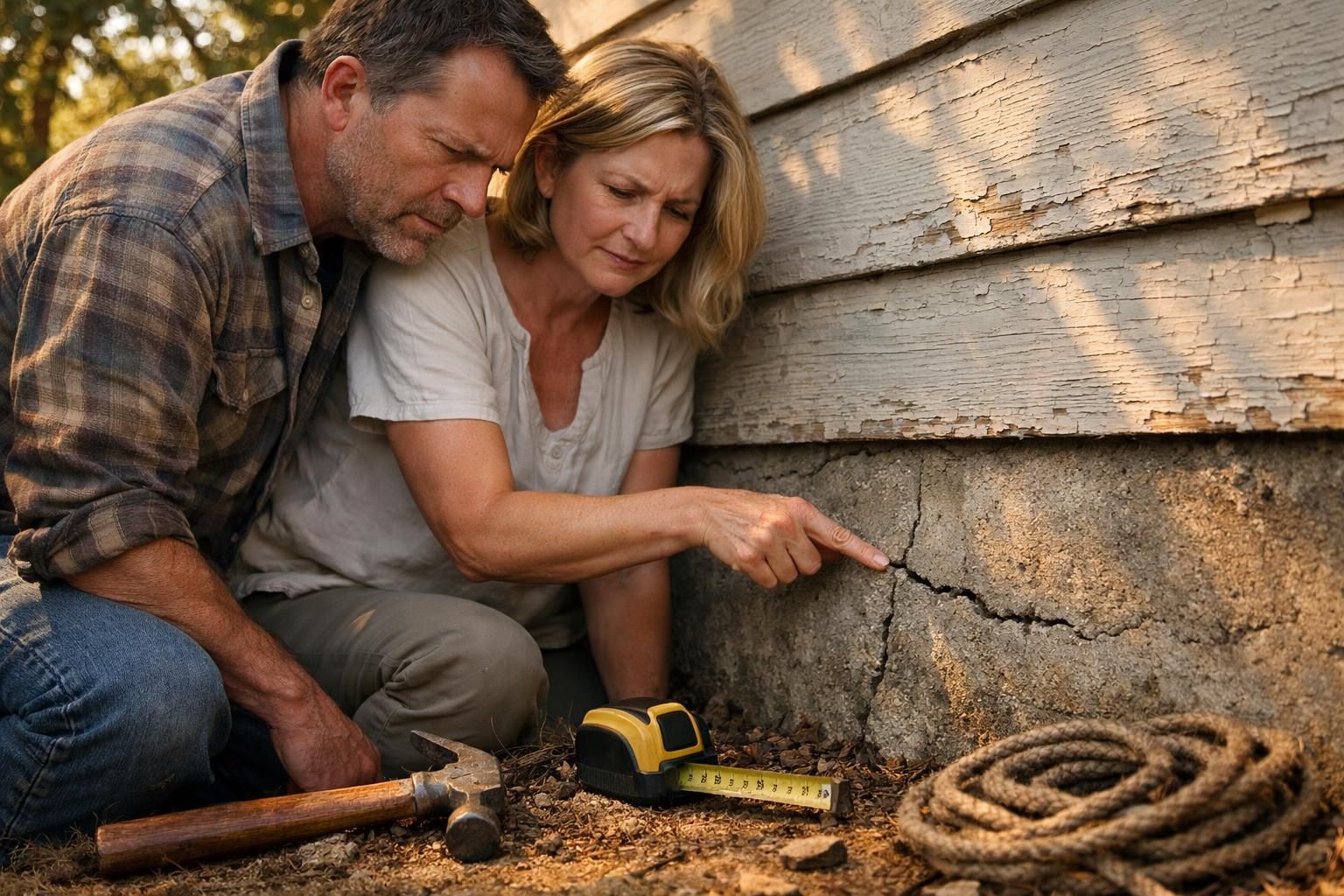
You may feel overwhelmed if you need to sell a house with foundation issues in Indiana. Over 60% of buyers see foundation problems as deal-breakers, making it hard to attract offers. 3 This guide walks you through Indiana-specific disclosure rules, inspection requirements, repair costs, and selling strategies so you can move forward with confidence.
Key Takeaways
- Indiana law requires sellers to disclose known material defects — including foundation problems — using the state's Seller's Residential Real Estate Sales Disclosure form. Failing to disclose puts you at serious legal and financial risk.
- Foundation repair costs range from $250 for minor crack repairs to over $25,000 for severe settling. Building permits in Indiana average around $1,650; structural engineer inspections typically cost $300–$1,000.
- Licensed structural engineers provide unbiased reports that guide repairs, support negotiations, and satisfy lender requirements during the home inspection process.
- Most Indiana buyers will expect a 10–25% discount on homes needing major foundation work. Overpriced homes with structural issues often sit on the market 30–60 days longer than comparable listings.
- Selling options include completing repairs first, selling as-is with a price reduction, or working with cash investors who close quickly but typically offer 50–80% of after-repair value.
Understanding Foundation Issues
Foundation problems affect homes throughout Indiana, from older neighborhoods in Indianapolis to newer subdivisions in Carmel and Fishers. Indiana's clay-heavy soils, freeze-thaw cycles, and seasonal moisture swings make foundation movement more common here than in many other states. Spotting early warning signs helps you act fast and make informed decisions before listing.

Common types of foundation problems
Understanding what you are dealing with helps you communicate clearly with structural engineers, contractors, and buyers.
- Settling or sinking foundations cause uneven floors, drywall cracks, or visible dips along the home's perimeter — common in central Indiana where expansive clay soils shift with moisture.
- Foundation upheaval pushes parts of a slab upward, creating raised tiles or buckled floors.
- Bowing or bulging basement walls signal major structural stress requiring urgent attention from a licensed structural engineer.
- Large horizontal cracks are severe warning signs, often appearing in basements, indicating soil pressure is causing wall movement.
- Vertical cracks result from normal settling but wide gaps may point to deeper repair needs.
- Stair-step cracks in brick mortar joints suggest shifting footings beneath the surface.
- Diagonal cracks spreading from window or door corners indicate uneven settlement.
- Sticky doors and windows that no longer open smoothly often mean foundation movement has shifted frames out of alignment.
- Sagging or sloping floors may point to rot in crawl space beams or soil subsidence beneath the structure.
- Water pooling in crawl spaces — a frequent issue in Indiana's wet springs — weakens supports and leads to mold damage over time.
- Leaning porches, chimneys, or columns are red flags for instability caused by shifting soils.
- Gaps between garage doors and pavement typically trace back to settlement that needs prompt attention.
Checklist of warning signs to identify severity levels
Use this checklist to gauge how serious your foundation issues may be before calling a structural engineer or real estate professional.
- Misaligned doors or windows that won't latch — early signs of shifting in the home's base.
- Windows hard to open or showing cracked glass — signals movement in the structure.
- Sloping floors or stairs — may reveal moderate sinking beneath the surface.
- Cracks in walls or ceilings near door frames — uneven settling.
- Gaps forming between walls or where walls meet the ceiling — ongoing structural stress.
- Large cracks in basement floors or along the base — serious structural concerns requiring immediate attention.
- Water pooling in basements or crawl spaces — worsens existing damage to footings and piers.
- Bowed or bulging basement walls — soil pressure causing advanced damage, often needing carbon fiber reinforcement.
- Sagging wooden floorboards — advanced movement and potential support failure in the crawl space.
- Cabinet doors that won't close fully — hidden misalignment from gradual foundation shift.
- Leaks around fireplaces — may hint at deeper foundation issues and water intrusion below living spaces.
If several items on this list apply to your home, contact a licensed structural engineer for a foundation inspection. Their report builds buyer confidence, provides accurate repair estimates, and supports you during the selling process.
Back to topYour Legal Obligations in Indiana

Indiana disclosure requirements
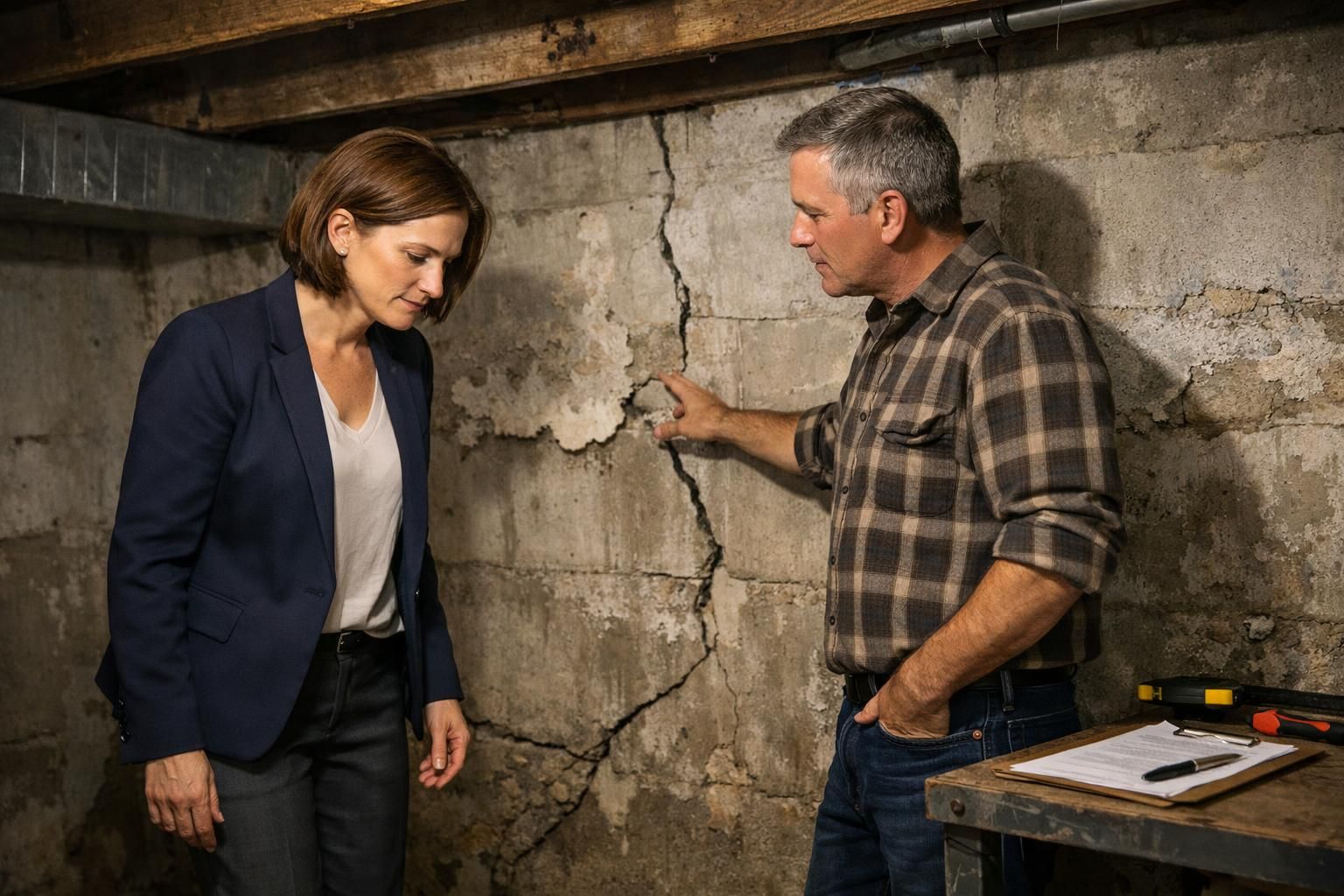
Indiana law requires residential sellers to complete a Seller's Residential Real Estate Sales Disclosure form. This form must be provided to prospective buyers before an offer is accepted. You must disclose all known material defects, including foundation problems, structural issues, water intrusion, and any prior repairs. Selling "as-is" does not exempt you from this requirement — you must still disclose what you know.
Failing to disclose known foundation problems exposes you to lawsuits, financial damages, and potentially the reversal of the sale. Indiana courts have held sellers liable for concealed defects discovered after closing. Sharing inspection reports and repair estimates upfront protects you from future claims and keeps transactions on track.
How to document and communicate problems transparently
- Gather all inspection and repair reports, including findings from a licensed structural engineer or home inspector, with dates and details of every discovered issue.
- Obtain written repair estimates from licensed Indiana contractors, including cost breakdowns and recommended fixes.
- Take high-quality photographs documenting horizontal cracks, vertical cracks, sloped floors, and any other visible structural problems.
- Complete Indiana's required Seller's Residential Real Estate Sales Disclosure form, listing each finding from every inspection or engineering report.
- Provide copies of inspection reports and contractor estimates to serious buyers during negotiations to demonstrate transparency.
- Share any updates if further damage occurs after your initial documentation so nothing is hidden during the sale process.
- Avoid masking foundation problems with cosmetic repairs such as painting over cracks — this increases legal exposure under state disclosure law and FHA lending requirements.
- Use honest language in your listing, mentioning foundation issues upfront with supporting documents to attract qualified cash buyers or investors.
- Consult an experienced Indiana real estate agent who can guide you on state-specific disclosure obligations and communicate issues effectively to buyers.
Getting a Professional Foundation Inspection
Benefits of hiring a structural engineer
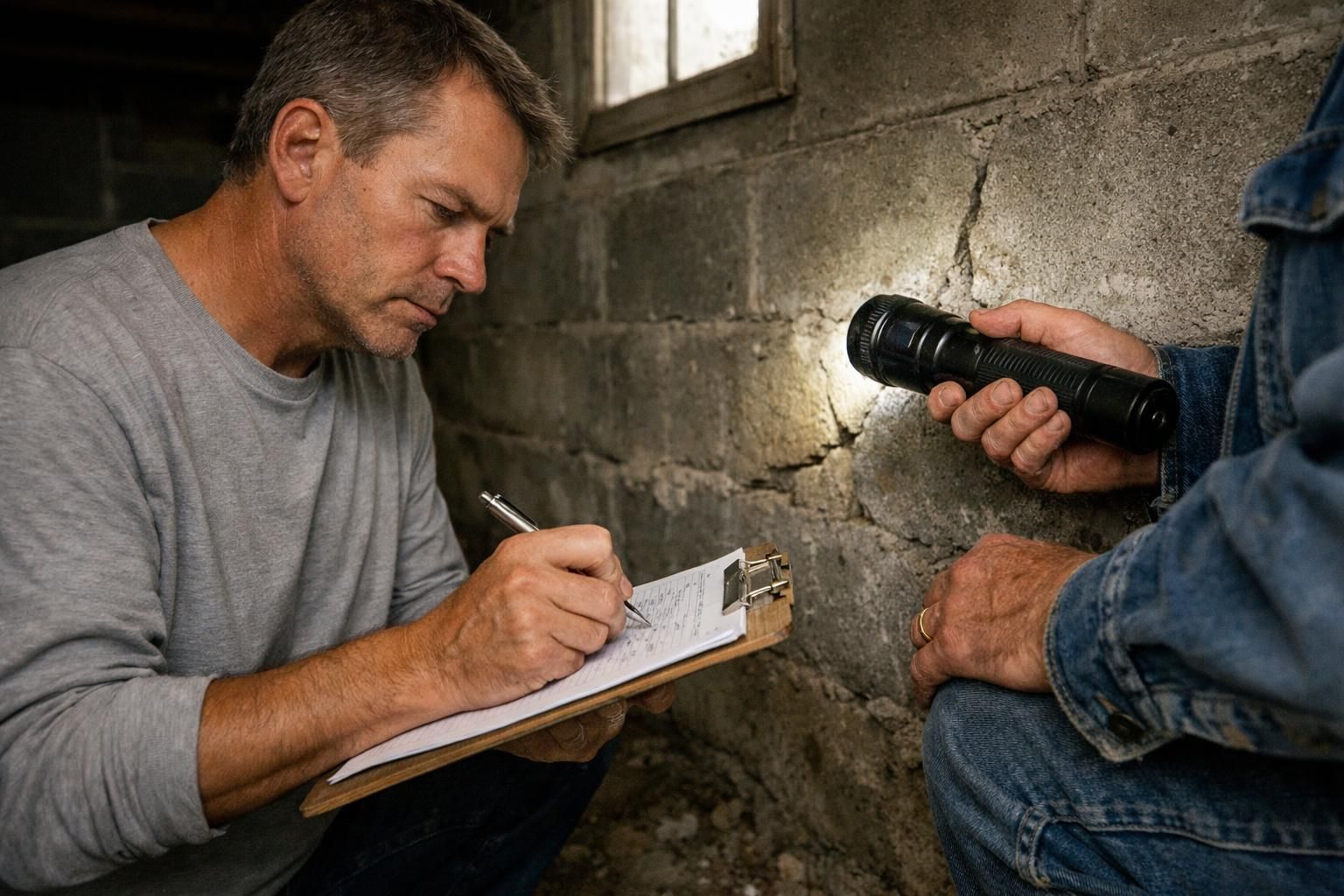
Licensed structural engineers identify the root cause of foundation problems — from sinking foundations to horizontal and vertical cracks. 1 Because they do not perform the actual repairs, their evaluation remains unbiased. Buyers, lenders, and Indiana real estate agents all trust independent engineering reports during transactions involving structural concerns.
Their detailed reports guide you toward qualified Indiana contractors and help stop small issues from becoming expensive problems. Early expert advice also protects your investment and boosts buyer confidence when selling a house with foundation issues in markets like Indianapolis or Noblesville.
Typical inspection costs and what the report includes
| Aspect | Details |
|---|---|
| Inspection Cost |
|
| Who Performs It |
|
| What the Report Includes |
|
| Why the Report Matters |
|
Understanding Repair Costs

Cost ranges for different types of foundation repairs
| Type of Repair / Service | Cost Range | Details and Notes |
|---|---|---|
| Minor Crack Repairs | $250 – $800 | Small vertical cracks fixed with epoxy or polyurethane injections. |
| Hairline Crack Repairs | $500 – $1,500 | Address early to prevent worsening, especially after Indiana freeze-thaw cycles. |
| Horizontal Crack Repairs | $1,000 – $15,000 | Indicates structural stress; may need wall anchors or reinforcement. |
| Settling/Sinking Foundation Repairs | $5,000 – $25,000 | Piers cost $1,000–$3,000 each. Mudjacking can run $500–$1,300 per area. |
| Bowing Wall Stabilization | $4,000 – $12,000 | Uses carbon fiber or steel braces. Severe cases may also need piers. |
| Basement Underpinning | $1,000 – $3,000 per pier | Supports sinking or unstable basements; typically recommended by a structural engineer. |
| Soil Report | $700 – $1,800 | Important in Indiana given clay-heavy soils; full contamination report can reach $5,000. |
| Building Permit (Indiana) | Average $1,650 | Required for most structural repairs; cost varies by municipality. |
| Tree Removal Affecting Foundation | $200 – $2,000 | Roots too close to footings can worsen settlement; removal protects repairs. |
Factors affecting repair costs in Indiana
Severity and location of the damage drive costs significantly. Indiana's clay soils expand and contract with seasonal moisture, making settling and shifting more likely — especially in areas around Indianapolis, Lebanon, and Noblesville. Homes built on clay-heavy lots or in flood-prone zones often face higher repair quotes.
Water intrusion, mold growth, or tree root damage create complex repair situations that raise contractor costs. Poor drainage around the foundation — common in Indiana's flat terrain — adds repair steps and may require grading or drainage system work alongside structural fixes. Most Indiana homeowners spend less than $8,100 for typical repairs after a licensed inspection, though full replacement can exceed $100,000 in severe cases. Building permits are required for structural work in Indiana municipalities and average around $1,650.
Back to topFour Options for Selling a House With Foundation Problems in Indiana

Repair first and sell traditionally
Fixing foundation problems before listing often leads to quicker offers and stronger prices. Reputable Indiana contractors typically provide warranties with their work — a genuine selling point for buyers. Costs range from $250–$800 for minor repairs to over $25,000 for major structural work. 3
Getting several repair estimates keeps costs manageable. A professional foundation inspection by a licensed structural engineer guides the repair process and provides documentation that satisfies lender requirements, including FHA and VA guidelines. Highlight completed renovations and contractor warranties in your listing to reassure buyers and support your asking price in Indiana's competitive markets like Carmel or Fishers.
Sell as-is with a price reduction
Selling as-is allows you to move forward without spending on repairs. Under Indiana's disclosure law, you must still complete the Seller's Residential Real Estate Sales Disclosure form and share all known defects in writing, even in an as-is sale. 4
The buyer pool for as-is sales is smaller — typically investors, flippers, and renovators comfortable handling foundation repairs. Most lenders hesitate to finance homes with unresolved structural issues, so expect buyers to rely on cash or renovation loans. Upfront honesty about damage increases buyer confidence and reduces the risk of deals falling apart after the inspection.
Sell to investors or flippers
Investors and flippers actively seek properties with foundation problems in Indiana markets. They typically offer 50% to 80% of after-repair value. 3 Because they use cash or renovation financing instead of traditional mortgages, closings move faster and avoid delays tied to lender structural requirements.
Getting multiple repair estimates before meeting with investors strengthens your negotiating position. An Indiana real estate agent familiar with local investor markets can connect you directly with cash buyers looking for fixer-uppers, especially in Indianapolis and surrounding suburban counties.
Sell to cash buyers specializing in problem properties
Cash buyers who specialize in homes with foundation problems can often provide an offer within 24 hours and close in as little as seven days. No repairs or home prep are required. You avoid FHA, VA, and conventional loan complications that arise from structural defects.
Cash offers typically fall below market value, but they deliver speed and certainty — especially valuable when facing job relocation, divorce, inheritance situations, or mounting repair costs. This option is particularly practical for Indiana homeowners who cannot afford upfront repair expenses or need to move quickly.
Back to topPricing Strategy for Indiana Homes With Foundation Issues
Tips for pricing with foundation issues
- Research recent Indiana sales of homes with similar structural problems using the MLS or public county records.
- Consult a licensed Indiana real estate agent who understands how foundation issues affect local market value.
- Adjust your asking price based on damage severity — major structural problems may reduce value by 20% or more compared to similar stable homes. 5
- Obtain repair estimates from licensed Indiana contractors to support your price reduction calculations.
- Disclose all foundation inspection findings during showings and negotiations to build trust with serious buyers.
- Highlight completed repairs, upgrades, and any existing warranties from structural engineers to justify your price.
- Offer buyer incentives such as a repair credit at closing or flexible closing dates if significant issues remain unresolved.
- Expect buyers to request at least a 10–25% discount for homes needing major foundation work.
- Revisit pricing every two weeks if the property receives little activity — staying aligned with Indiana market conditions is essential.
Importance of realistic pricing and market comparisons
Homes with foundation issues in Indiana can sit on the market 30 to 60 days longer when overpriced. 5 Accurate pricing attracts investors, cash buyers, and renovators who specifically look for properties needing work in areas like Indianapolis, Noblesville, and Lebanon.
Use recent Indiana sales data and work with a licensed agent familiar with structural property challenges in your area. Overpricing creates doubt and delays, while underpricing leaves money on the table. Market comparisons give you real-world numbers to negotiate from a position of confidence.
Back to topMarketing a House With Foundation Problems in Indiana
Strategies for honest disclosure and highlighting strengths
- Complete Indiana's required Seller's Residential Real Estate Sales Disclosure form, listing all known foundation problems such as sinking, horizontal cracks, or structural movement. 3
- Share professional foundation inspection reports upfront so buyers understand the issues and estimated repair costs. 7
- Provide repair estimates from Indiana structural engineers or licensed contractors, including timelines and recommended solutions.
- Offer documentation of any prior foundation work completed, including receipts and before-and-after photos.
- Highlight strengths unrelated to the foundation — recent kitchen upgrades, newer HVAC systems, energy-efficient windows, or proximity to top-rated Indiana schools and parks.
- Show that proactive attention to structural issues reflects responsible ownership and gives buyers confidence in the home's long-term condition.
- Be transparent about repairs still needed; some cash buyers and investors specifically seek Indiana homes with known foundation work required.
Targeting the right audience
Market your Indiana home to buyers who understand and accept the repair challenge — investors, renovators, and flippers. These buyers often expect a 20–25% discount for structural issues and factor repair costs into their offers from the start. Highlight the property's upside potential and what someone experienced could build after completing foundation repairs.
Work with an Indiana real estate agent who knows how to reach cash buyers and investors active in your area. This focused approach helps attract serious offers despite the foundation concerns.
Back to topNavigating Negotiations and Inspections
Preparing for buyer reactions and financing challenges
- Traditional buyers may walk away after a home inspection reveals horizontal cracks, vertical cracks, or signs of a sinking foundation.
- FHA and VA loan programs typically require major repairs to be completed before closing — this can delay or kill deals if issues are unresolved.
- Conventional lenders may allow sales to proceed but often attach conditions tied to repair timelines or appraisal findings.
- Appraisers will lower home value based on foundation inspection results; expect this to influence your final sale price.
- Inspection reports carry significant weight in negotiations — buyers' agents use them to push for price reductions. 8
- Cash buyers and Indiana investors are more open to homes with known structural issues because they close faster without lender complications.
- Sellers who provide clear documentation from licensed Indiana structural engineers help ease buyer concerns and move negotiations forward.
Strategies for handling repair requests and price reductions
- Gather inspection reports and repair estimates from a qualified structural engineer before entering negotiations.
- Get multiple contractor bids to strengthen your position and demonstrate transparency.
- Decide in advance how much you are willing to offer as a repair credit or price reduction — typically 10% to 25% for homes with major foundation issues.
- Share copies of engineering and inspection reports during negotiations to build buyer confidence and reinforce your disclosure obligations under Indiana law.
- Avoid temporary cosmetic fixes on visible structural problems; buyers may see through quick patches and it can increase your legal exposure.
- Work closely with your Indiana real estate agent to manage expectations and navigate tough conversations about repair costs.
- Consider offering a repair credit at closing instead of doing the work yourself — many buyers prefer selecting their own contractors.
- Stay firm but flexible during negotiations with investors; use data from your reports and current Indiana market comparisons to support your counter-offers.
- Communicate honestly throughout the process; transparent documentation keeps deals on track and limits last-minute surprises.
Conclusion
Selling a house with foundation problems in Indiana is challenging but entirely manageable. Indiana's mandatory disclosure requirements mean honesty is not just good practice — it is the law. By obtaining a professional structural engineer's inspection, pricing your home realistically, and targeting the right buyers, you can move forward with confidence.
Work with an experienced Indiana real estate agent who understands structural property challenges in your local market. With thorough documentation and smart planning, you can close your sale and help the next owner start fresh.
Homeowners who want to keep all their options open in one place may find it useful to start with a vetted local agent through KDS Homebuyers, whose seller programs include renovation funding to repair and list, a leaseback option if you need to stay after closing, and a cash-purchase backup if the listing doesn't sell — covering most of the scenarios discussed in this guide.
If you need to sell quickly without making repairs, KDS Homebuyers buys houses directly from Indiana homeowners for cash — in any condition. Visit kdshomebuyers.net to request your free, no-obligation cash offer today.
Back to topFAQs
1. What are my disclosure obligations when selling a house with foundation problems in Indiana?
Indiana law requires you to complete the Seller's Residential Real Estate Sales Disclosure form, listing all known material defects including foundation problems. This applies even to as-is sales. Failing to disclose known issues puts you at risk of lawsuits and potential reversal of the sale.
2. Should I repair the foundation before listing my Indiana home?
It depends on your timeline and budget. Completing repairs before listing typically attracts more buyers and stronger offers. If repairs are cost-prohibitive, selling as-is with full disclosure and a realistic price reduction is a viable alternative — particularly for cash buyers and investors.
3. How do foundation problems affect home values in Indiana?
Major structural issues can reduce a home's value by 20% or more compared to similar stable properties. Indiana's clay soils and seasonal weather contribute to foundation movement, which buyers and appraisers take seriously. Accurate pricing and solid documentation help offset buyer hesitation.
4. Can I sell a house with foundation issues to a cash buyer in Indiana?
Yes. Cash buyers and investors who specialize in problem properties are active throughout Indiana, including Indianapolis and surrounding counties. They typically close faster than traditional buyers and do not require lender-mandated repairs, though their offers generally fall below full market value.
5. Will foundation problems delay my sale in Indiana?
Unresolved structural issues can extend your time on market by 30–60 days if you are targeting traditional buyers. FHA and VA loans often require repairs before closing. Working with cash buyers or investors eliminates most of these delays and provides more predictable closing timelines.
References
- ^ https://crosstownengineering.com/why-hire-a-structural-engineer-for-foundation-inspections/
- ^ https://www.twobrosfoundationrepair.com/research/foundation-repair-cost
- ^ https://www.homelight.com/blog/selling-a-house-with-foundation-issues/ (2025-11-25)
- ^ https://www.ramseysolutions.com/real-estate/selling-a-house-as-is?srsltid=AfmBOopShOXqQ1Onb8cqTC2Z9xP8ztq518D2O-mNx_nTeqJ1YPX9kezr
- ^ https://www.researchgate.net/publication/5142089_Pricing_Strategies_and_Residential_Property_Selling_Prices
- ^ http://www.princeton.edu/~erp/Econometrics/Old%20Pdfs/Rust.pdf
- ^ https://www.realtor.com/advice/sell/how-does-one-sell-a-home-with-foundation-problems/ (2018-03-13)
- ^ https://dsdt.edu/how-a-home-inspection-can-affect-your-negotiation/ (2025-07-10)
