

Empty Nest? How to Decide Whether to Sell or Stay in Indiana
Deciding whether to sell your home or stay put is a tough choice for many Indiana empty nesters after their kids move out. Rising costs and extra space you no longer need are pushing more Hoosier homeowners to reconsider their living situations. 1 This post gives you clear steps, practical tips, and Indiana-specific guidance to help you move forward with confidence. 3
Key Takeaways
- Many empty nesters feel emotional stress when deciding to sell or stay. About 40% who make quick decisions report regret, while only 15% still feel unsure after six months if they take their time. Give yourself permission to grieve and talk openly with family before acting.
- Maintenance on a $300,000 Indiana home can reach $12,000 per year. Property taxes in larger Marion County or Hamilton County homes can range from $4,000–$8,000 annually but may drop significantly after downsizing.
- Selling your home frees up equity—sometimes over $100,000—for travel, healthcare, or retirement. Federal tax rules allow married couples to exclude up to $500,000 in capital gains if the home was a primary residence for two of the last five years.
- Indiana does not impose a state capital gains tax separate from ordinary income, which can make selling even more favorable for Hoosier homeowners in certain income brackets.
- Location matters as you age. Living closer to Indianapolis-area hospitals, family, or walkable communities in Carmel or Fishers lowers risks linked to social isolation and medical needs. 123
Emotional Considerations: Navigating the Transition

Deciding whether to sell your Indiana home can stir up strong emotions, especially when you have decades of memories in every room. Give yourself permission to process these feelings through a room-by-room decluttering approach before making any major decisions.

Attachment to family memories and identity tied to the home
Sorting through cabinets filled with home movies and your kids' sports memorabilia brings a wave of nostalgia. After 25 or 30 years in an Indiana neighborhood, many homeowners see their house as far more than physical space — it's proof of hard work and life milestones.
Clearing out rooms means letting go of sentimental items, custom cabinetry, and special keepsakes tied to major family moments. Homes shape identity for empty nesters and serve as anchors for memories that don't fit into a box marked "declutter."
Fear of regret and importance of grieving this life stage
You might worry about making the wrong choice and regretting the sale of your family home. Studies show that homeowners often overestimate this fear — after six months in a new place, fewer than 15% still feel regret. However, rushed decisions lead to nearly 40% experiencing deep misgivings.
Give yourself permission to grieve. The process of downsizing brings real freedom but also real sadness. A room-by-room decluttering approach helps honor your past while preparing for what lies ahead. Reaching out for support from friends, family, or a professional organizer lets you face this transition without feeling overwhelmed.
Permission to take time before making a decision
Allow yourself one or even two years for the decluttering and downsizing process, especially if strong sentimental value is attached to your home. Share thoughts openly with your partner and set clear priorities together. Avoid renting storage units — they delay progress and add unnecessary costs without solving real needs. Take things slowly so your future space fits the life you actually want to live.
Back to topFinancial Factors to Evaluate

Carefully review your household budget as you weigh upkeep costs, Indiana property taxes, and HOA fees. Use online retirement calculators to compare different scenarios so you can protect your savings during this transition.

Maintenance costs vs. retirement income
For a $300,000 Indiana home, expect to pay between $3,000 and $12,000 each year just for upkeep. Older homes in Indianapolis or Noblesville neighborhoods often demand even more repairs. Deferred work can lower your home's value or make it harder to sell on the open market — many buyers want move-in-ready spaces, and updates can run $30,000 to $100,000 before listing. Compare these expenses with your fixed retirement income and plan accordingly.
Indiana property taxes and their impact on fixed budgets
Indiana property taxes are governed by the state's circuit breaker caps, which generally limit property taxes to 1% of assessed value for a primary residence, 2% for other residential property, and 3% for non-residential property. However, assessed values in growing Hamilton County communities like Carmel and Fishers have risen steadily, pushing tax bills higher even within those caps. 1
Indiana also offers a Homestead Standard Deduction and a Supplemental Homestead Deduction for primary residences, which can meaningfully reduce your taxable assessed value. Seniors may also qualify for the Over 65 Circuit Breaker Credit if their assessed value and income fall within qualifying thresholds. Use the Indiana Department of Local Government Finance tools or your county assessor's website to compare current and projected tax bills before deciding to stay or downsize.
Home equity as a resource for retirement funding
Selling your Indiana home can unlock significant equity for retirement. If you have lived in your house for at least two of the last five years, federal tax law allows you to exclude up to $500,000 in capital gains as a married couple, or $250,000 as a single filer. Indiana taxes capital gains as ordinary income at the state's flat rate, so consulting a tax professional before selling is advisable to understand your full picture.
Downsizing to a smaller property reduces maintenance and property tax costs while freeing cash for travel, healthcare, or investment. Selling quickly with a cash offer provides speed but may yield less than a traditional listing — weigh your timeline and financial goals carefully.
Cost comparison of staying vs. downsizing in Indiana
Reviewing the numbers side by side can make your decision more informed and less stressful.
| Cost & Feature | Staying in Current Home (2,000–2,500 sq. ft.) | Downsizing to Smaller Home (1,200–1,500 sq. ft.) |
|---|---|---|
| Annual Maintenance | Higher upkeep, often $2,000–$5,000/year; may need roof, HVAC, or appliance upgrades | Lower routine costs, typically $1,000–$2,500/year; fewer repairs and less yard care |
| Indiana Property Taxes | Higher assessed value; annual bill can range $4,000–$8,000 in Hamilton or Marion County | Taxes drop with lower assessed value; annual bill may fall to $2,000–$4,500 |
| Utilities | Heating and cooling a large Indiana home: $3,000–$5,000/year | Smaller footprint uses less energy; annual utilities around $1,800–$2,800 |
| Accessibility Modifications | May require stair lifts or bathroom remodels; average $5,000–$15,000 per project | Many newer single-story Indiana homes are move-in accessible with minimal changes |
| Home Equity | Equity tied up in the house; less liquidity for retirement needs | Selling may free $100,000+ for investments, travel, or healthcare |
| Sales Process | No disruption, but growing maintenance risk and deferred costs | Indiana home sales typically close in 30–60 days on the open market; cash buyers can close in 7–14 days |
After downsizing, many Indiana homeowners report utility bills falling by half and routine maintenance becoming far more manageable. Living closer to family and healthcare in communities like Lebanon or Noblesville made daily life less stressful for many who made the move.
Back to topOptions for Homeowners: Sell and Stay or Sell, Stay, and Buy

You can sell your home and stay in it for a short time while you plan your next move. Indiana cash buyers often close in 7 to 14 days, giving you flexibility with no repairs or showings required. This option helps if you need to access home equity quickly but are not yet ready to move.
Some Indiana empty nesters choose to sell their current home and buy a more accessible property better suited for aging — perhaps a single-story ranch in a walkable Fishers neighborhood or a lower-maintenance condo near Indianapolis. Others decide to remodel their existing space, adding single-floor living features or updated bathrooms. Room-by-room decluttering before selling supports either path and reduces stress during the transition.
Back to top
Practical Lifestyle Questions
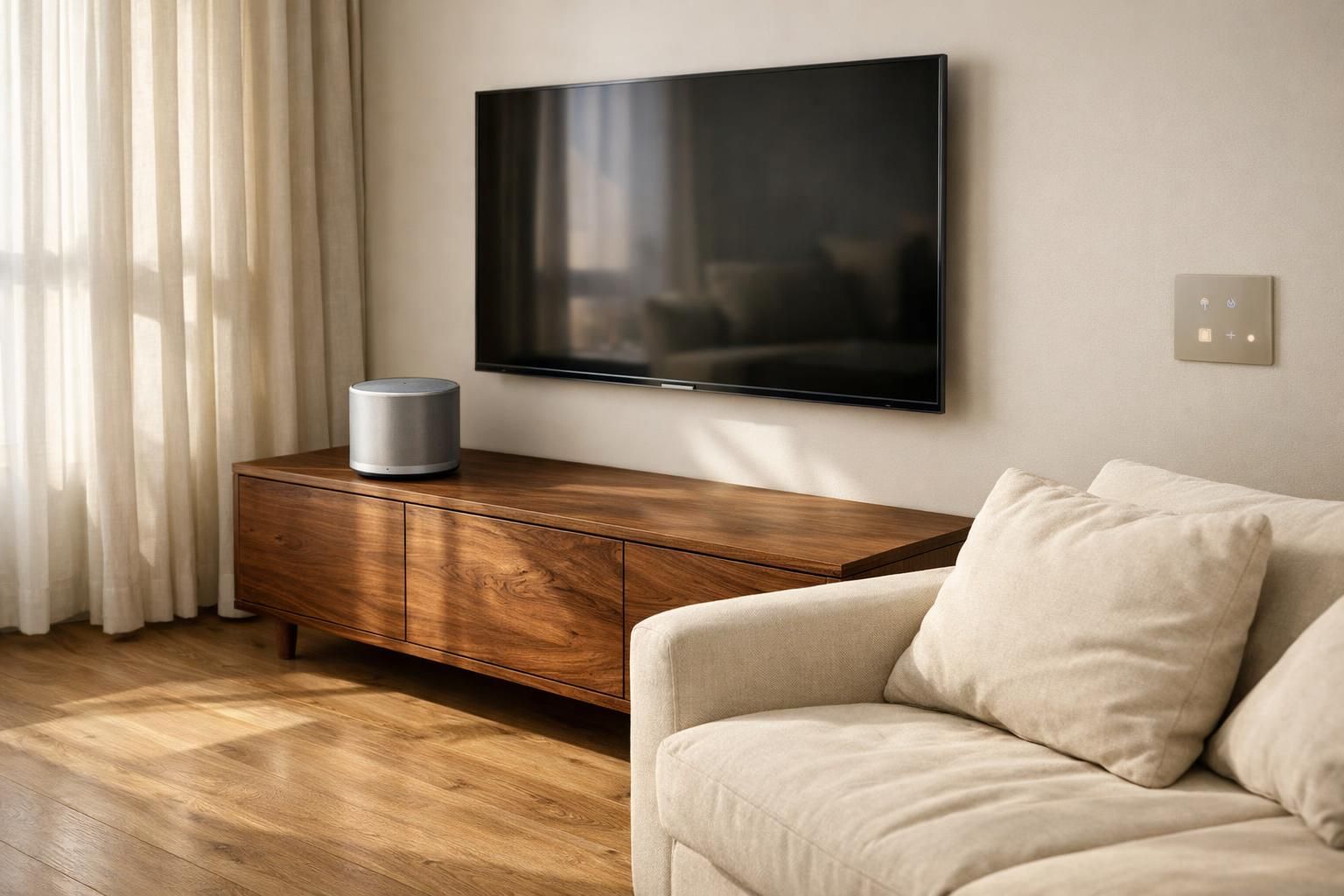
Your daily routine will shift as you age, and your home's layout may no longer match your needs. Smart home technology and thoughtful decluttering can support comfort, safety, and independence at any stage.
Physical upkeep of the property as you age
Falls are the leading cause of injury for adults 65 and older, with most accidents happening at home. Stairs, bathtubs, and routine yardwork can quickly become dangerous tasks. Motion-sensor lights in hallways, remote-controlled window shades, and battery-operated candles reduce risk for Indiana homeowners aging in place. Many families find that reducing about 70% of their belongings room-by-room also minimizes the physical burden of maintaining a large home.
Accessibility of the home's layout
Narrow hallways and multi-story layouts become bigger challenges as mobility changes. Wider doorways, ramps, or single-floor living arrangements address these concerns proactively. Multipurpose furniture like Murphy beds and storage credenzas makes rooms easier to navigate while adding flexibility. Creating multi-functional areas — such as a bedroom office or a hobby room from an old guest suite — supports aging in place without sacrificing style.
Proximity to healthcare, family, and social connections
Living close to essential services shapes your well-being as an Indiana empty nester. If health needs change, proximity to IU Health, Ascension St. Vincent, or Community Health Network facilities brings real peace of mind. Studies show that empty nest households without social support face higher health risks, and consistent family involvement helps manage those risks. 2 Rural Indiana areas often lack both healthcare access and stable social networks, increasing vulnerability for older adults living alone. Moving closer to family in the Indianapolis metro area can make a meaningful difference. 3
Space utilization and opportunities gained by downsizing
Downsizing gives you the chance to use every part of your home more intentionally. Clearing out extra rooms reduces clutter, which studies show wastes up to 15 minutes a day. With less space, you can design multi-functional areas — a playroom that doubles as a theater, a hobby studio, or a dedicated exercise space. Fewer belongings make daily tasks easier, boost mental clarity, and cut cleaning time significantly. Shifting to intentional purchasing means every future buy gets careful thought, preventing unnecessary spending as you move into this new chapter.
Back to topConclusion

Choosing to sell or stay after your children leave home is a deeply personal decision that balances emotion, finances, and daily practical needs. Use cost comparisons, Indiana-specific tax tools, and smart home upgrades to guide your thinking. Take your time, lean on family and trusted advisors, and remember that change opens new doors for comfort and happiness at this stage of life.
Back to topFAQs
1. What Indiana-specific financial factors should I consider before selling my family home?
Review your current property tax bill and any applicable Indiana homestead deductions or senior circuit breaker credits. Consider how state income tax on capital gains and federal exclusion limits apply to your situation. Consult a local tax professional and your county assessor's office before finalizing any decision.
2. How does the Indiana real estate market affect my decision to sell or stay?
Market conditions vary by area. Communities like Carmel, Fishers, and Noblesville have seen strong demand and rising values, which may favor selling sooner. In slower markets, waiting could yield better returns. Consult a local real estate professional for current data on your specific neighborhood.
3. Are there common myths about becoming an empty nester that could impact my choice?
Yes. Many believe they must downsize immediately or that keeping a large Indiana home is always too costly. In reality, some find comfort and value in staying put, while others save significantly by moving to a smaller home sooner and freeing equity for retirement.
4. What steps can help me decide whether to keep or sell my Indiana home as an empty nester?
Start by listing your needs and future goals clearly. Use your county assessor's online tools to compare tax scenarios. Consult a local real estate professional for market-specific advice. Weigh personal and emotional reasons alongside practical financial ones before making any final decisions.
If you're an Indiana homeowner ready to explore your options, KDS Homebuyers can help. We buy houses directly from homeowners across Indiana for cash — no repairs, no showings, no hassle. Visit kdshomebuyers.net to request your free, no-obligation cash offer and take the first step toward your next chapter.
References
- ^ https://www.researchgate.net/publication/383589941_Evaluation_of_Property_Taxes_and_Their_Impact_on_the_Real_Estate_Market
- ^ https://pmc.ncbi.nlm.nih.gov/articles/PMC8775500/
- ^ https://www.researchgate.net/publication/249708322_The_Empty_Nest_Syndrome_in_Midlife_FamiliesA_Multimethod_Exploration_of_Parental_Gender_Differences_and_Cultural_Dynamics
