

Sell Your House and Rent It Back: How Sale-Leaseback Works in Indiana
Table of Contents
- What Is a Sale-Leaseback?
- How Residential Sale-Leaseback Works in Indiana
- Why Indiana Homeowners Consider Sale-Leaseback
- Pros and Cons Analysis
- Financial Considerations for Indiana Homeowners
- Alternatives to Compare
- Red Flags and Protections in Indiana
- Decision Framework for Indiana Sale-Leaseback
- Conclusion
- FAQs
- References
Are you worried about selling your house but need more time before moving out? A sale-leaseback lets you sell your Indiana home and rent it back from the new owner, giving you fast access to your equity. 1 This guide explains how a residential sale-leaseback works in Indiana, who it helps, and what steps to follow for a smooth transaction. 2
Key Takeaways
- A sale-leaseback lets you sell your Indiana home, receive 70%–85% of market value in cash, and stay as a renter under a lease agreement.
- Rent is typically 110%–125% of local market rates; lease terms usually run one to three years.
- This option helps Indiana homeowners avoid foreclosure, cover medical emergencies, fund business needs, or bridge moves during school years or new construction delays.
- Downsides include losing future home equity gains, becoming a tenant with eviction risk, and possible Indiana and federal capital gains tax exposure on the sale.
- Always work with an Indiana-licensed real estate agent and a real estate attorney to review all documents and protect against predatory schemes.
What Is a Sale-Leaseback?

A sale-leaseback is a real estate transaction where you sell your house to an investor or cash buyer and then sign a lease agreement to stay as a renter. The new owner becomes your landlord, while you continue living in the home.
Residential sale-leasebacks are less common than commercial deals and face fewer regulations. In Indiana, you typically receive 70%–85% of your home's market value at closing, reflecting the buyer's risk and profit needs. Rent payments often run 110%–125% of comparable rentals in your area—whether you're in Indianapolis, Carmel, or a smaller market like Lebanon.
Both parties must understand that the funds received represent a sale, not a loan. Indiana courts treat these as distinct transactions, and mischaracterizing a sale-leaseback as a loan could trigger state lending laws and consumer protection statutes.
A residential broker or Indiana-licensed real estate attorney can help review all parts of your leaseback agreement before you commit.
Back to top
How Residential Sale-Leaseback Works in Indiana
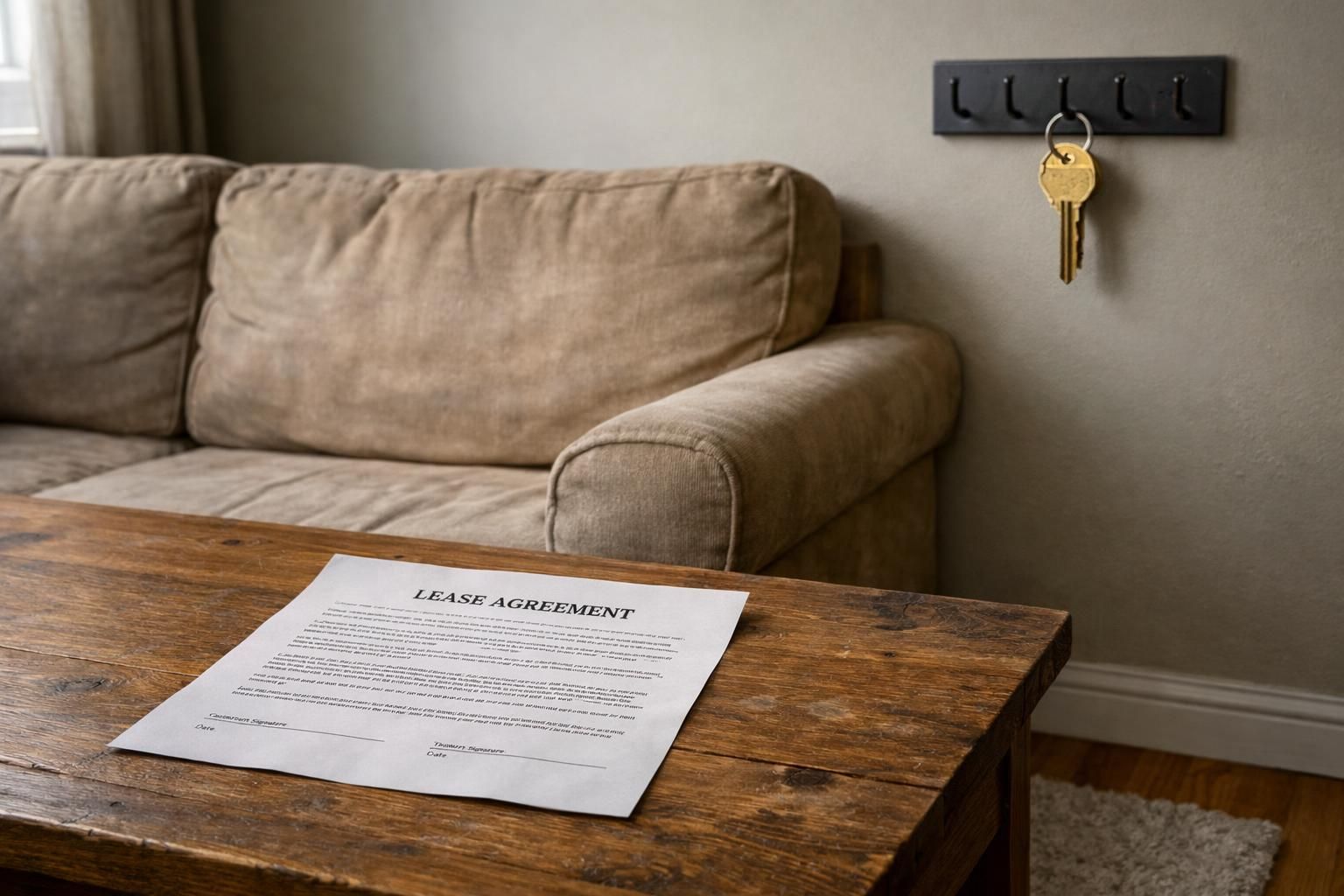
A residential sale-leaseback starts with a real estate investor or cash buyer purchasing your property. After the home closes, you sign a lease agreement and make rent payments to stay in your home.

Step-by-step process: sale, rent calculation, and lease terms
You can use a sale-leaseback as a practical tool if you need fast access to home equity but want to stay put. 1
- Submit an application to start the process with an investor or cash buyer serving Indiana.
- Receive a cash offer—typically within 48 hours.
- Review the sale contract with an Indiana-licensed real estate agent; consider hiring a real estate attorney familiar with Indiana property law.
- Prepare your home for a third-party inspection to meet buyer standards.
- Sign closing paperwork and receive funds, often within 30 days. Indiana closings typically occur at a title company or attorney's office.
- Negotiate lease terms, usually one to three years, with possible extensions.
- Confirm security deposit requirements—typically one to two months' rent held in escrow under Indiana landlord-tenant law.
- Calculate monthly rent based on local market appraisals; partial months are prorated on a daily basis.
- Clarify maintenance responsibilities in writing. Indiana's landlord-tenant statutes generally require landlords to maintain habitable conditions, while tenants handle minor upkeep.
- Address subletting rights, inspection access, and penalties for late rent consistent with Indiana's notice requirements.
- Confirm who pays Indiana property taxes and homeowners insurance premiums under the new ownership arrangement.
- Agree on vacate dates and lease-end conditions before signing.
Who buys the home: investors, institutions, or cash buyers
Buyers in an Indiana sale-leaseback typically include individual investors, institutional buyers, and specialist companies. Some iBuyers and local cash buyers also offer these arrangements for homeowners who need quick equity access in markets like Indianapolis, Fishers, or Noblesville.
Credit requirements vary—some companies require a minimum credit score around 600, while others accept lower scores. 2 Traditional banks and mortgage lenders generally do not participate in sale-leaseback transactions. Working with an experienced Indiana real estate agent helps you compare offers and ensure terms fit your situation.
Back to topWhy Indiana Homeowners Consider Sale-Leaseback

Avoiding foreclosure
A sale-leaseback completed before a foreclosure sale can pay off your mortgage and help you avoid a damaging credit event. Indiana uses a judicial foreclosure process, meaning lenders must file a lawsuit in circuit or superior court, serve you with a summons, and obtain a court judgment before a sheriff's sale can occur. This process can take several months, giving you a window to pursue a sale-leaseback instead.
After selling, you sign a lease and make rent payments to the new owner. Missing rent could result in eviction under Indiana's eviction (forcible entry and detainer) statutes, so stable income is essential. Always involve a real estate attorney to review documents and protect against unfair agreements.
Accessing equity for medical or business needs
Unexpected medical bills or business capital needs can be met quickly through a sale-leaseback. Cash is often available within days of closing. Business owners in Indiana—particularly those in the Indianapolis metro or surrounding Hamilton County communities—sometimes use this strategy instead of complex commercial loans to fund growth or cover operating costs while staying in their homes.
Elderly homeowners staying in familiar surroundings
Many older Indiana homeowners use a sale-leaseback to stay near family, neighbors, and healthcare providers without the burdens of ownership. You convert your equity to cash without taking on new debt, and lease terms may include the new owner covering property taxes, insurance, and major maintenance. You do not build equity while renting, but the arrangement can fund retirement or urgent needs without uprooting your daily life.
Bridge scenarios: school year or new construction
Families in fast-growing communities like Carmel and Noblesville sometimes use a sale-leaseback to bridge the gap between selling and moving—especially when children are mid-school-year or a new construction home is delayed. Rent-back periods in these cases often cap at 60 days, giving you time to relocate without juggling temporary housing or two mortgages. You also gain immediate access to sale proceeds to secure your next property.
Back to topPros and Cons Analysis

Pros: immediate cash, staying in home, avoiding moving costs
- You get fast access to your home equity to cover urgent needs—medical bills, debt payoff, or business investment.
- The leaseback agreement lets you stay in your Indiana home for 30 to 60 days or longer depending on negotiated lease terms. 3
- Avoiding two moves saves you money on storage and relocation costs, especially during school-year transitions or new construction delays common in fast-growing Indiana suburbs.
- Some buyers cover property taxes, insurance, HOA dues, and major maintenance as part of the leaseback arrangement.
- Sale-leaseback deals typically close faster than traditional home sales, giving buyers a competitive edge in Indiana's active real estate market.
Cons: loss of equity, becoming a tenant, rent increase risks
- Loss of Equity: You forfeit future appreciation in Indiana home values after the sale closes. 4
- Becoming a Tenant: You can no longer make permanent changes without landlord approval and have fewer protections than a traditional homeowner.
- Rent Increase Risks: Lease renewals may allow rent hikes based on market conditions, straining budgets over time.
- Risk of Eviction: Under Indiana's forcible entry and detainer statutes, missing rent payments can lead to eviction proceedings—a very different situation than a mortgage default.
- Tax Implications: Selling quickly at a discount may trigger capital gains taxes with limited time to plan. Indiana also imposes a state income tax on capital gains, so consult a CPA about your specific situation. 5
- Harder Future Borrowing: Lenders may view seller-turned-tenants as higher risk for future home equity products.
- Loss of Control: The investor-owner makes decisions about major repairs and property upgrades.
Financial Considerations for Indiana Homeowners

Quick-sale discount on home price
Indiana sale-leaseback transactions typically yield 70%–85% of your home's market value. The discounted price reflects investor risk and profit needs. You may also pay a commission of roughly 5.5%–6%, similar to a traditional sale. After closing, any future appreciation in Indianapolis-area or statewide home values benefits the investor, not you as the former owner.
Rent calculation and tax implications
Monthly rent is typically set at 110%–125% of local market rates. If you vacate mid-month, rent is prorated on a daily basis. A security deposit of one to two months' rent is held in escrow per your lease agreement and Indiana landlord-tenant law.
Once you sell, you can no longer deduct mortgage interest or Indiana property taxes as a homeowner. However, you may qualify for the federal capital gains exclusion—up to $250,000 if single or $500,000 if married filing jointly—if the home was your primary residence and you meet the IRS ownership and use tests. Indiana taxes capital gains as ordinary income at the state's flat income tax rate, so factor that into your net proceeds calculation. Consult a CPA or tax professional familiar with Indiana tax law before proceeding.
Indiana property taxes are assessed by county assessors and paid in arrears; confirm with the buyer how taxes will be prorated and credited at closing.
Back to topAlternatives to Compare
Before committing to a sale-leaseback, Indiana homeowners should evaluate other options for accessing equity or improving cash flow.
- Refinancing can lower your monthly payment or provide cash out, but requires sufficient equity, a solid credit score, and income verification.
- Reverse mortgages are available to homeowners 62 or older and allow you to convert equity to cash without monthly payments, though the loan balance grows over time and heirs may need to repay it. 6
- Home equity loans provide a lump sum at a fixed rate using your home as collateral. Missing payments can trigger foreclosure under Indiana law. 7
- HELOCs offer a revolving line of credit with variable interest rates—useful for ongoing expenses but carrying the risk of payment increases.
- Traditional sale through an Indiana-licensed real estate agent may net the highest price if local demand is strong, but requires you to vacate at closing.
Red Flags and Protections in Indiana
Watch for arrangements that blur the line between a sale and a loan. Indiana's consumer protection and lending statutes apply if a transaction is structured to disguise a loan as a property sale. Always insist on two clearly separate documents: a real estate purchase contract and a standalone lease agreement.
Hire an Indiana-licensed real estate attorney before signing anything. Attorneys can identify unfair clauses around rent increases, buyback rights, eviction procedures, and maintenance responsibilities that an ordinary person might overlook. Avoid any company that pressures you against seeking independent legal advice or rushes you toward a decision without answering questions about tax implications, fees, or lease terms.
Indiana's landlord-tenant law sets minimum notice requirements for entry and eviction proceedings—make sure your lease reflects those rights so you are protected as a tenant after the sale closes.
Back to topDecision Framework for Indiana Sale-Leaseback
Start by comparing offers from reputable investors who operate in Indiana. Review rent-back periods, buyback rights, monthly rent, and potential rent increases. Confirm the provider serves your specific county or metro area—coverage varies across the state.
Complete prequalification to understand credit and income requirements. Then work through the application: submit property details, complete a credit check, and review offers carefully with an Indiana-licensed real estate agent or attorney. Expect appraisals to affect cash valuations and closings to take 30 days to six weeks. Avoid any provider hiding fees or pushing rushed decisions—transparency is essential when your home equity is at stake.
Back to topConclusion
A sale-leaseback can give Indiana homeowners breathing room when life throws a curveball—whether you're facing foreclosure, a medical emergency, or simply need time to transition. You gain quick access to your home equity and avoid the immediate pressure of moving. Talk with an Indiana-licensed real estate agent and consult a real estate attorney before signing any lease agreement. Weigh all options, including refinancing or a home equity loan, to protect your long-term financial stability.
If a cash sale with flexible terms sounds right for your situation, KDS Homebuyers works directly with Indiana homeowners to make the process straightforward. Visit kdshomebuyers.net to request a free, no-obligation cash offer and explore your options today.
Back to topFAQs
1. What is a home sale-leaseback and how does it work in Indiana?
A home sale-leaseback is a real estate transaction where you sell your Indiana home but remain as a renter under a lease agreement. You receive cash at closing, then pay rent to the new owner under agreed lease terms.
2. How is a leaseback different from a home equity loan or HELOC?
With a leaseback, you no longer own the property and take on no new debt. With a home equity loan or HELOC, you retain ownership but borrow against your equity and must repay the balance.
3. What Indiana laws affect a sale-leaseback arrangement?
Indiana's landlord-tenant statutes govern your rights as a renter after the sale, including notice requirements for entry and eviction procedures under the state's forcible entry and detainer laws. Indiana consumer protection statutes also apply if a sale-leaseback is misrepresented as a loan. Always have an Indiana-licensed attorney review the documents.
4. What are the tax implications for Indiana homeowners?
The sale may trigger federal capital gains tax, though you may qualify for up to $250,000 (single) or $500,000 (married) in exclusions if the home was your primary residence. Indiana taxes capital gains as ordinary income at the state's flat income tax rate. Consult a CPA familiar with Indiana tax law before closing.
5. Who handles property taxes and maintenance after I sign the leaseback?
Indiana property taxes are assessed by county assessors and typically credited at closing based on proration. After closing, the new owner is responsible for taxes and major maintenance unless your lease agreement states otherwise—always clarify these responsibilities in writing before signing.
Back to topReferences
- ^ https://www.wallstreetprep.com/knowledge/sale-leaseback/ (2024-02-20)
- ^ https://www.wpcarey.com/blog/ins-outs-sale-leasebacks
- ^ https://www.homes.com/learn/rent-back-agreement/
- ^ https://fountainheadcommercial.com/blog?view=article&id=465:advantages-disadvantages-sale-leaseback&catid=78:sale-leaseback
- ^ https://www.researchgate.net/publication/257715501_Analysis_of_Factors_and_the_Impacts_of_Sale_and_Leaseback_Transaction
- ^ https://www.rocketmortgage.com/learn/alternatives-to-a-reverse-mortgage
- ^ https://www.cnbc.com/select/reverse-mortgage-vs-home-equity-loan-or-heloc/ (2026-02-21)
