

How to Sell a Fire-Damaged House (And What It's Actually Worth) in Indiana
Dealing with a house fire can leave you overwhelmed and uncertain how to sell a fire-damaged house in Indiana. Every year, homeowners across Indianapolis, Carmel, and rural communities throughout the state face this challenge—and discover that selling a fire-damaged property is not only possible but sometimes the smartest move forward. 2 This guide walks you through how real estate agents, insurance adjusters, and home buyers in Indiana approach these situations and what your damaged home might actually fetch in today's market. 3
Key Takeaways
- Selling a fire-damaged home in Indiana is possible. You can repair and sell, list as-is, or accept a quick cash offer from local real estate investors.
- Insurance claims for fire damage typically take 60 to 180 days to settle. Payouts often range between $80,000 and $120,000 per incident, but repairs can cost anywhere from $5,000 (cosmetic) up to $400,000 (full rebuild). Document all damage with photos and receipts before filing your claim.
- Indiana buyers typically subtract total repair costs from their offers. Expect as-is sales of fire-damaged homes to come in at 40%–70% of pre-fire value; severely damaged rural Indiana properties may only bring lot value.
- Indiana law requires sellers to disclose all known material defects, including fire damage—even if repaired—or face legal liability. Indiana municipalities can also fine you for maintaining an unsafe or unsecured property after a fire.
- Direct cash buyers close quickly—often in 7–10 days—and help you avoid ongoing holding costs like elevated insurance premiums, property taxes, and utilities on a vacant home.
The Emotional and Financial Reality of a Fire-Damaged Home in Indiana
Losing your home to fire brings deep emotional distress and serious financial strain. Insurance claims often take 60–180 days to settle, and waiting is hard when bills keep coming. Homeowners insurance may cover $80,000 to $120,000 per incident, but those funds do not arrive immediately.
While you wait, document all property damage thoroughly with receipts and photos for your insurer. Secure the site quickly—Indiana municipalities can impose daily fines for properties deemed unsafe or in violation of local housing codes. Holding a vacant home is costly; insurance premiums can increase by up to 40 percent after a fire loss, and Indiana property taxes continue to accrue regardless of the home's condition.
Back to topAssess the Damage and Your Options
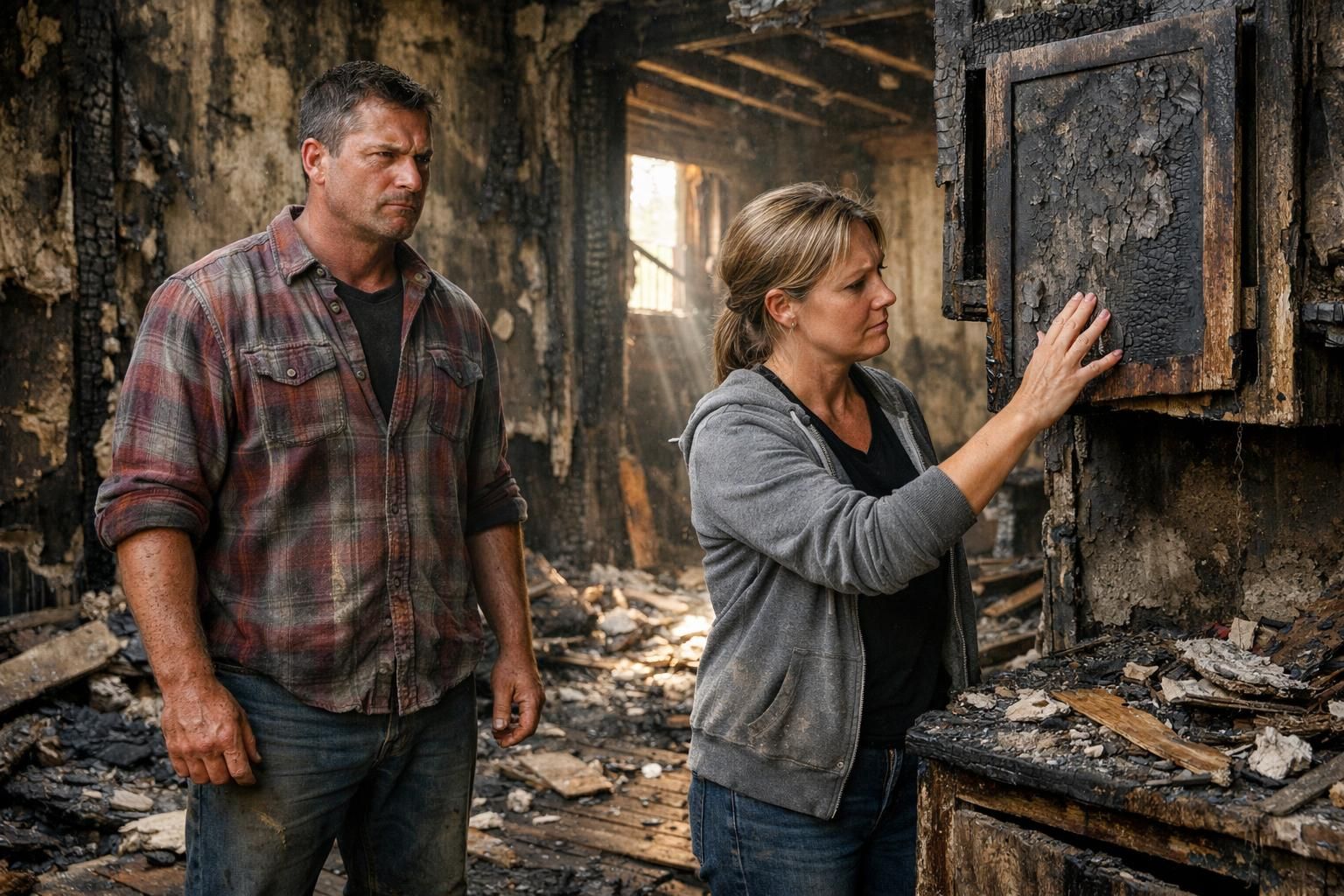
A fire can leave behind both visible destruction and hidden structural risks. A certified home inspector and a fire restoration specialist can help you understand your full range of options in Indiana's real estate market.

Cosmetic Damage vs. Structural Damage
Cosmetic fire damage includes smoke stains, soot on walls and ceilings, and minor charring on trim or cabinets. These repairs typically cost between $5,000 and $15,000 and do not affect the home's structural integrity. Restoration companies use specialized equipment to remove odors and soot.
Structural damage is far more serious—burned support beams, roof collapse, or compromised foundations threaten both safety and market value. Repair costs for severe structural fire damage in Indiana commonly run $100,000 to $250,000, with full rebuilds ranging from $150,000 to $400,000. A professional assessment (roughly $4.50 to $6 per square foot) is essential before deciding whether to repair, sell as-is, or pursue an insurance claim.
Navigating the Indiana Insurance Claim Process
File your homeowners insurance claim as soon as the property is safe. Your insurer will assign an adjuster, but you should also arrange an independent inspection to document your losses. Claim settlements typically take 60 to 180 days from filing. Indiana homeowners with an active mortgage should know that lenders generally have rights to insurance proceeds up to the outstanding loan balance.
Some Indiana policies pay upfront; others reimburse after repairs are complete. Review your policy for Additional Living Expense (ALE) coverage, which can help cover temporary housing costs. If you need to sell before settlement, buyers and sellers can negotiate in the purchase agreement who receives the eventual insurance payout—giving you flexibility to move forward even while your claim is pending.
Decision Framework: Repair and Sell vs. Sell As-Is
Weigh your repair costs against your insurance payout and personal finances. If damage is mostly cosmetic and your policy covers most expenses, repairing and listing with a licensed Indiana real estate agent can secure the highest return—though traditional sales typically take three to nine months. 1
For homeowners who want to explore the repair-and-list route without committing to it upfront, KDS Homebuyers' vetted agent network connects sellers with local agents who also have access to renovation funding, leaseback options, and a cash-purchase backstop—giving sellers a fuller picture of their choices before deciding which path makes the most financial sense.
If structural damage is significant or out-of-pocket costs are steep, selling as-is may be the better path. Cash buyers and real estate investors in Indiana typically offer 50%–70% of after-repair value (ARV) for distressed properties, but deals close much faster—often within 30 to 90 days—without requiring renovation or lengthy mortgage approvals. Always consult an Indiana attorney or tax professional about potential capital gains tax implications before making your decision. 1
Back to topUnderstanding What Your Fire-Damaged Indiana Home Is Worth

Value depends on pre-fire market value, the extent of damage, location within Indiana, and current real estate market conditions. Here is how buyers and investors calculate what they will actually pay.

Key Factors Affecting Value in Indiana
Your pre-fire market value is the starting baseline. Buyers reduce offers by estimated repair costs to arrive at a fair price. Fire-damaged homes in Indiana generally sell for 40%–60% of pre-fire value, though properties in stronger markets like Indianapolis's near-north side or Carmel may approach 60%–70%. Homes in rural Indiana counties with lower demand can drop to near lot value if structural damage is severe.
Location matters significantly. Indianapolis-area properties attract more investors and rehabbers because profit margins after renovation are larger. In contrast, rural Indiana land values are lower, and buyer competition is thinner—particularly in winter months when construction costs and timelines stretch further.
How Buyers Calculate Their Offers
Indiana investors almost always subtract the full estimated repair cost from their offer, then deduct an additional 15%–20% for holding costs and profit margin. Conventional mortgage lenders rarely finance fire-damaged homes, so the buyer pool is largely limited to cash purchasers and investors using renovation loans such as FHA 203k or Fannie Mae HomeStyle—both of which involve slower approval timelines.
Indiana Example Scenarios
- Cosmetic damage only: A home in Fishers valued at $350,000 pre-fire with $10,000 in smoke and minor char repairs might attract offers of $210,000–$245,000 (60%–70% of value).
- Moderate structural damage: An Indianapolis home worth $250,000 pre-fire needing $60,000 in repairs might receive offers of $100,000–$150,000 (40%–60% of value).
- Severe damage in a rural county: A home appraised at $180,000 facing $140,000 in rebuild costs may only attract lot-value offers in the $40,000–$60,000 range.
Your Selling Options in Indiana
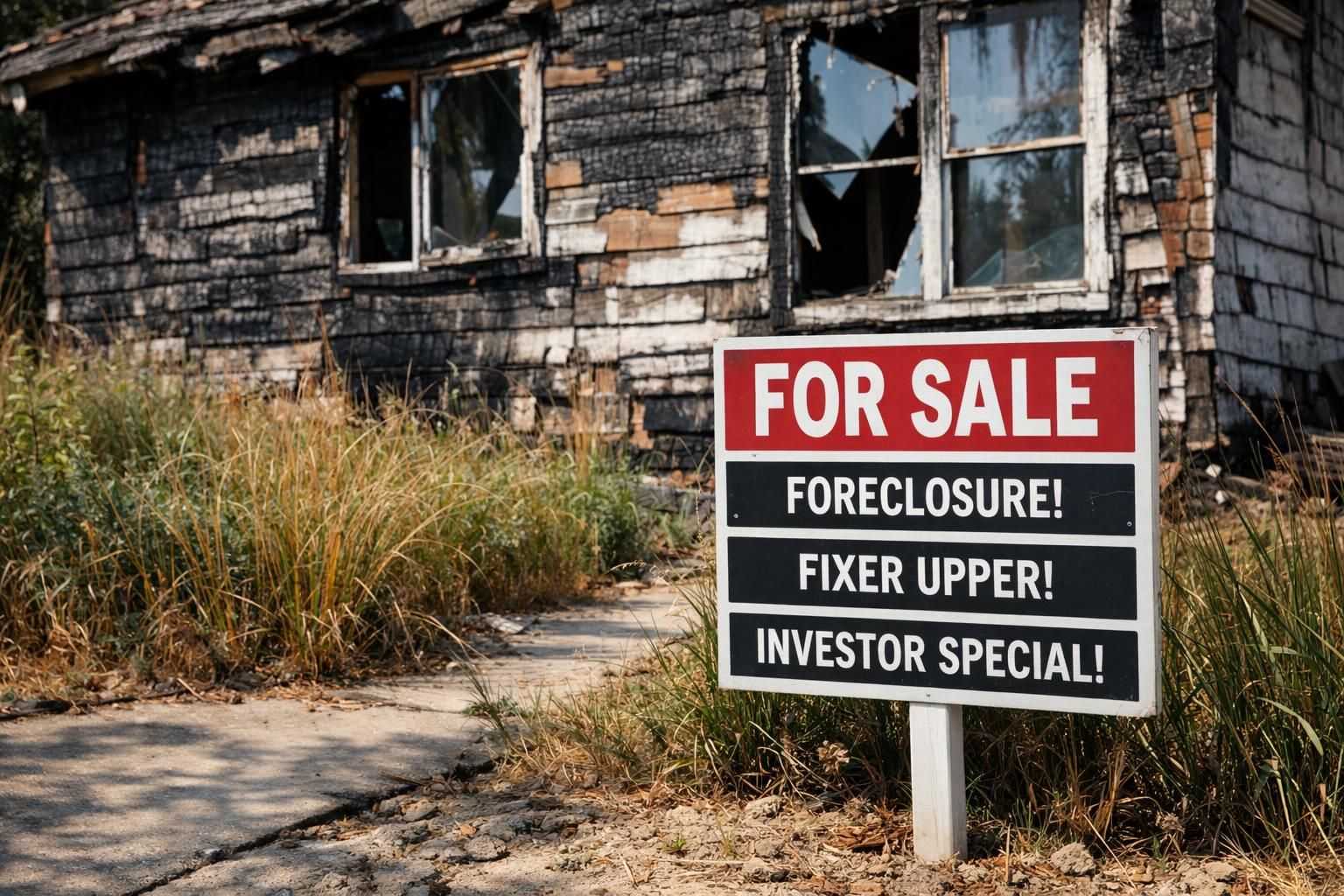

Option 1: Traditional Sale After Repairs — Highest Return, Most Time
Repairing the property and listing with a licensed Indiana real estate agent typically yields the highest sale price and restores access to conventional mortgage buyers through the MLS. However, this route requires securing all necessary building permits from your local Indiana municipality, passing inspections, and meeting occupancy code requirements before listing. 1
Expect the full process to take four to eight months. Major repairs can run $3,000 to $51,000 for moderate work and up to $400,000 for full rebuilds. Thorough documentation of repairs helps clear insurance claims and reassures future buyers that all code compliance steps were completed. 2
Option 2: Sell As-Is with an Indiana Real Estate Agent
Listing as-is through a traditional agent avoids upfront repair costs and can close in 30 to 90 days. The trade-off is a smaller buyer pool—most Indiana lenders will not finance distressed properties—so you'll largely be dealing with investors and rehabbers who will offer less.
Indiana's seller disclosure law requires you to complete a Seller's Residential Real Estate Sales Disclosure form, which must include all known material defects, including fire damage and related structural issues. Failing to disclose accurately exposes you to contract cancellation or legal liability after closing. Holding costs—taxes, utilities, and elevated insurance premiums—accumulate until the sale closes.
Option 3: Sell to a Cash Buyer or Real Estate Investor
Indiana cash buyers and real estate investors offer the fastest path—often closing in 7 to 10 days with no repair requirements, no agent commissions, and minimal paperwork. You provide damage documentation and insurance claim information; they handle the rest.
Expect offers of roughly 50%–70% of ARV. On a home with a $300,000 post-repair value and heavy structural damage, an investor might offer $150,000–$210,000. The lower price reflects their repair risk and costs, but the speed and simplicity provide real relief when ongoing holding costs and emotional stress are mounting.
Option 4: Sell for Lot Value
When repair costs exceed the home's after-repair value, selling the land itself is often the most practical option. Indiana developers and builders calculate lot value by subtracting demolition and construction costs from the ARV of a rebuilt home. For example, if similar homes in your neighborhood sell for $350,000 and a teardown-rebuild costs $220,000, the lot may be worth around $130,000.
Urban and suburban Indiana lots—particularly in growing areas around Noblesville or Lebanon—retain stronger land values than rural parcels. Be transparent about structural damage to avoid delays during due diligence.
Back to topIndiana Legal and Disclosure Requirements

Indiana Seller Disclosure Law
Indiana requires sellers to complete a Seller's Residential Real Estate Sales Disclosure form under Indiana Code. This form must disclose all known material defects, including fire damage, smoke damage, structural issues, and any repairs made as a result of a fire—even if those repairs were fully completed. Concealing known fire damage can expose you to rescission of the contract or a civil lawsuit after closing.
You must disclose the date and cause of the fire, the extent of structural or smoke damage, the repairs performed, and the contractors involved. Provide supporting documentation—permits, inspection reports, and contractor receipts—with your disclosure package.
Code Compliance and Title Issues in Indiana
Indiana fire-damaged properties frequently trigger code compliance reviews by local building departments. Repairs made without proper permits can create title problems that delay or prevent closing. Red-tagged properties in Indiana cannot be occupied until inspections confirm all repairs meet safety standards.
Local municipalities—including Indianapolis's Department of Business and Neighborhood Services—actively monitor vacant and distressed properties. Daily fines for unsecured or code-violating properties can accumulate rapidly. Always obtain permits for every repair and maintain detailed records for buyers, agents, and title companies throughout the selling process.
Indiana Tax Considerations
If your fire-damaged home was your primary residence, you may qualify for the federal capital gains exclusion ($250,000 for single filers, $500,000 for married filing jointly) on any gain from the sale. Indiana also taxes capital gains as ordinary income at the state's flat income tax rate, so consult an Indiana tax professional about your total tax exposure—especially if your insurance payout plus sale proceeds create a taxable gain. Indiana's homestead exemption and other property tax deductions stop applying once the property is vacated, which can increase your property tax liability on a damaged home.
Back to topSteps to Take Right Now

Your Indiana Action Checklist
- Secure the property immediately. Board windows, lock doors, and block unsafe areas to prevent theft and further damage—and to avoid municipal fines for unsecured properties.
- Document all damage thoroughly. Photograph and video every room. Note structural issues, smoke damage, water damage from firefighting, and damaged personal property. Indiana insurers require detailed documentation before approving claims. 3
- Get professional inspections and repair estimates. Hire a licensed Indiana home inspector and a fire restoration specialist. Collect at least two contractor bids so you understand the full cost picture before any buyer discussions.
- Contact your insurance adjuster promptly. Start your claim early. Review your policy for ALE coverage and understand whether your mortgage lender has rights to any portion of the payout.
- Complete your Indiana Seller's Disclosure form accurately. Work with a real estate attorney if needed to ensure full compliance with Indiana disclosure requirements.
- Explore all selling options. Consult a licensed Indiana real estate agent experienced with distressed properties and speak directly with local cash buyers who specialize in as-is purchases.
- Keep all records organized. Maintain receipts, emails, permits, inspection reports, and insurance correspondence in one place throughout the process.
Conclusion
Every Indiana homeowner's situation is different—whether you're in Indianapolis, a Carmel suburb, or a rural county. Take time to evaluate your repair costs, insurance settlement timeline, and financial goals before deciding on a path forward.
If speed and simplicity matter most, a direct cash sale lets you avoid commissions, ongoing holding costs, and the emotional weight of a lengthy repair-and-list process. Expect cash offers to run 20%–40% below fair market value, but the tradeoff is a fast, clean closing—often within a week to ten days—with no repairs required.
If you're dealing with a fire-damaged home in Indiana and want a no-obligation cash offer, KDS Homebuyers buys houses as-is throughout Indiana. Visit kdshomebuyers.net to request your free cash offer and take the first step toward moving forward.
Back to topFAQs
1. How does fire damage affect my Indiana home's market value?
Fire-damaged Indiana properties typically sell below fair market value due to repair costs, structural concerns, and buyer hesitation. Investors factor in renovation expenses and risk, resulting in offers of 40%–70% of pre-fire value in most cases.
2. Can I sell my Indiana house as-is after a fire?
Yes. Selling as-is is common in Indiana. Most buyers for fire-damaged properties are cash investors or rehabbers who purchase without requiring repairs, though their offers will reflect the cost of the work needed.
3. What must I disclose under Indiana law when selling a fire-damaged home?
Indiana law requires you to complete a Seller's Residential Real Estate Sales Disclosure form disclosing all known material defects, including fire damage, the cause and date of the fire, structural issues, and all repairs performed—even fully completed ones.
4. Who buys fire-damaged homes in Indiana?
Cash buyers, real estate investors, and companies like KDS Homebuyers purchase fire-damaged homes throughout Indiana. They make direct offers and can close quickly without requiring repairs or traditional financing.
5. Should I use my insurance payout for repairs before selling?
You can use your insurance proceeds to repair before listing—potentially increasing your sale price—or sell as-is and retain the payout. Both options affect your net proceeds and potential Indiana state income tax liability on any gain. Consult a tax professional before deciding.
6. What speeds up the sale of a fire-damaged property in Indiana?
Work with an Indiana agent or investor experienced in distressed sales, gather repair estimates quickly, complete your seller disclosure accurately, secure all necessary permits, and keep documentation organized. Accepting a direct cash offer typically produces the fastest closing timeline.
References
- ^ https://www.firecashbuyer.com/resources/repair-or-sell-fire-damaged-house (2025-02-13)
- ^ https://www.realtor.com/advice/sell/how-do-i-sell-a-fire-damaged-property/ (2022-10-18)
- ^ https://www.fastexpert.com/blog/how-to-sell-a-house-with-fire-damage/ (2024-01-18)
