

How to Keep Your House in a Divorce: What It Takes in California
You may feel worried about how to keep your house in a divorce, especially with so much at stake. About 90% of divorce settlements involve the marital home or real estate as a key asset. 3 California's community property laws make this process especially important to understand. This guide covers property division, home equity, and what it takes to keep your house under California law—from navigating the mortgage process to working with a California divorce attorney.
Your next move could shape your future—see how you can protect it. 2
Key Takeaways
- About 90% of divorce settlements involve the marital home or real estate as a key asset 3.
- California is a community property state, meaning the marital home is generally split 50/50 unless a prenuptial agreement or other legal arrangement says otherwise.
- To keep the house, you must first know its current value and your share of equity. If your Los Angeles home is worth $800,000 and you owe $500,000, there is $300,000 in equity to divide—$150,000 per spouse.
- You can keep the house by buying out your ex-spouse's share using savings, retirement accounts (with tax risks), or cash-out refinancing. Most lenders require a credit score of at least 620 for conventional loans or 580 for FHA loans, plus two years of steady income.
- If neither spouse can afford the home alone—especially when monthly costs exceed 35% of income—selling and splitting proceeds may be the smarter path. Federal capital gains tax rules protect up to $250,000 in profit for single filers ($500,000 married). Always ensure quitclaim deeds and refinancing documents align with your divorce settlement.
Understanding Your Options

Facing divorce in California can leave you with tough choices about your marital home. You have several paths forward, each affecting your property ownership and financial future in its own way.
Keeping the house through a buyout
To keep the marital home after a California divorce, you must create a reasonable buyout offer for your spouse. Start by obtaining a professional home appraisal to establish current market value. Subtract any mortgage debt from this amount to calculate home equity. For example, if your San Diego home is valued at $700,000 and you owe $400,000 on the mortgage, each spouse's share of the $300,000 equity is $150,000.
You can fund a buyout with cash from savings, retirement accounts, or through cash-out refinancing such as FHA or VA loans. Some couples swap assets—one spouse keeps the home while the other receives a larger share of retirement accounts or other property. Trading retirement funds carries long-term tax risks, so review these carefully with a financial adviser before agreeing to terms.
Make sure child support obligations and legal fees don't overwhelm your post-divorce budget, as these affect loan-to-value ratios and long-term affordability.
Selling the house and splitting the proceeds
Selling the marital home and dividing proceeds is often the cleanest option when neither spouse wants or can afford to keep it. After paying off your mortgage, any home equity loans, and closing costs, you split what remains per your divorce settlement. California's high home values—particularly in the Bay Area and Los Angeles—can mean significant equity, but also larger capital gains exposure.
Under federal IRS rules, capital gains tax applies to profits over $250,000 for single filers; couples filing jointly can exclude up to $500,000 in profit if they meet ownership and use requirements. California also taxes capital gains as ordinary income, so factor in state income tax when calculating your net proceeds. Keep careful records of your purchase price and major improvements to reduce your taxable gain.
Co-owning the house temporarily
Co-owning the marital home after divorce can help maintain stability for your children. 1 California courts can approve joint ownership arrangements when both parties agree in writing and the divorce settlement includes a clear co-ownership agreement. This document should specify who pays the mortgage, property taxes, homeowners insurance, and handles repairs.
Many California couples choose temporary joint ownership while waiting for better market conditions or when one spouse cannot immediately qualify for refinancing. 1 Include detailed terms in your parenting plan and legal documents to limit future disputes over sale timing and upkeep.
Financial Requirements to Keep the House
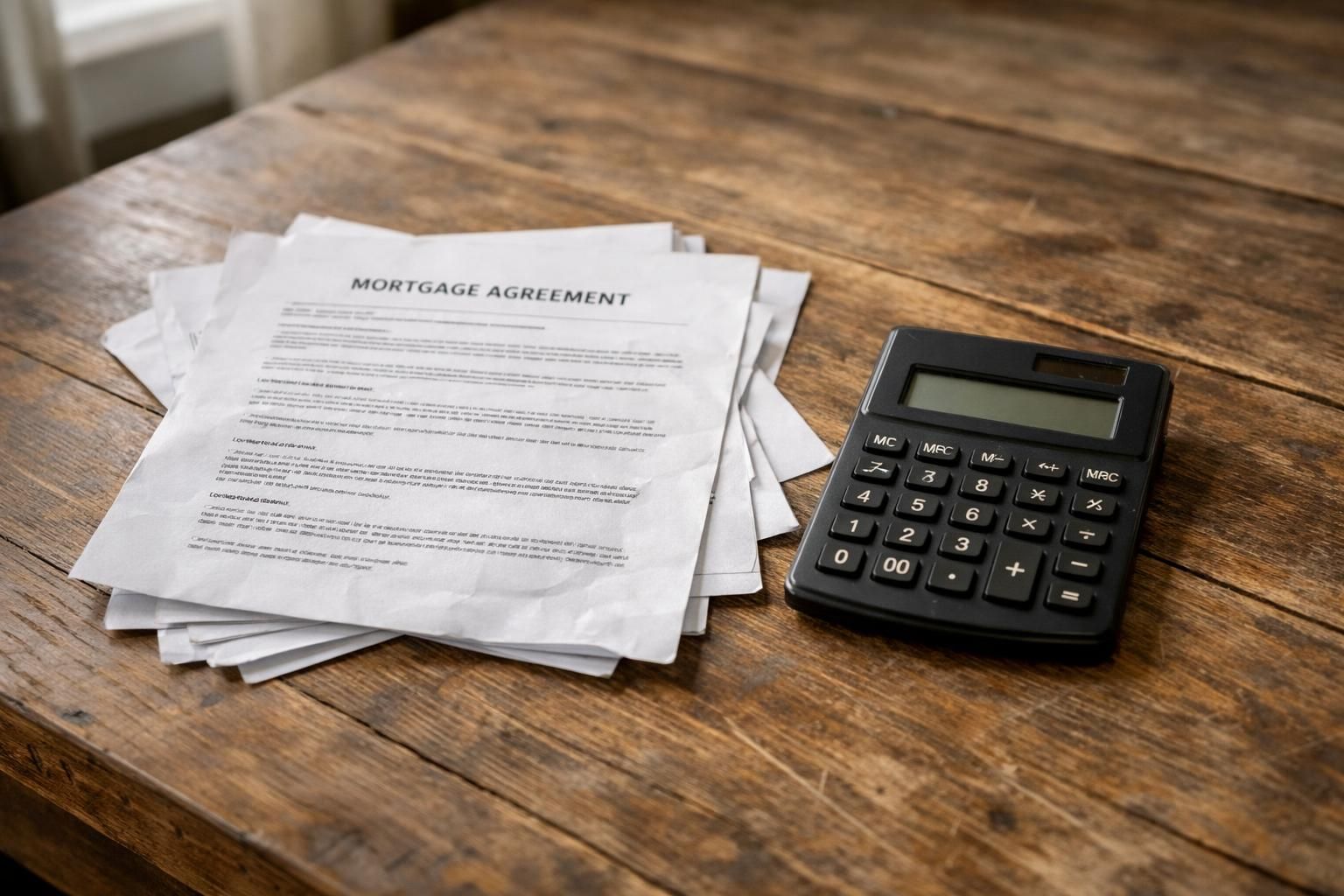
You need a clear picture of your home equity and property value before making any decisions. Mortgage lenders will examine your credit score, income, and debt-to-income ratio to determine whether you qualify for a new loan or mortgage assumption—critical steps in California's competitive housing market.
Appraising the home and calculating equity
Start with a professional appraisal or comparative market analysis (CMA) to get an accurate property valuation. A certified appraiser will review recent comparable sales and inspect the home's condition. In high-cost markets like San Francisco or Los Angeles, even modest homes carry significant equity, making this step especially important. 2
Subtract the current mortgage balance from the appraised value to find home equity. Because California is a community property state, that equity is generally divided equally between spouses during divorce proceedings. 3 Use the appraised value to negotiate fair buyout terms or evaluate whether joint ownership makes sense given your specific situation.
Qualifying for refinancing or assuming the mortgage
Lenders look at your income, credit score, and debt-to-income (DTI) ratio before approving a refinance or mortgage assumption. Most require a credit score of at least 620 for conventional loans or 580 for FHA refinancing, with a DTI below 43%. If you plan to keep the marital home on your own, you must prove you can cover the full mortgage payment, property taxes, and insurance without your ex-spouse's income—a higher bar in California's expensive markets.
Cash-out refinancing lets you borrow against the home's equity to pay out your former partner's share. Expect the process to take 30 to 60 days after your divorce is finalized; California lenders generally will not approve new loans until the settlement is complete. Review your credit report and bank statements early to avoid surprises.
Credit score, debt-to-income ratio, and income requirements
Credit scores below 700 can mean higher mortgage rates or difficulty qualifying for refinancing altogether. 4 Your DTI—including credit cards, car loans, and the proposed mortgage—should stay under 43% of your gross monthly income. 5
Income requirements become stricter once you move from two incomes to one. Most lenders require at least two years of documented steady earnings. Given California's high housing costs, a single income covering a mortgage that was manageable for two people can quickly become a financial strain. A financial adviser familiar with California real estate can help you evaluate FHA or VA loan options if standard qualifying is difficult post-divorce.
Calculating If You Can Afford It
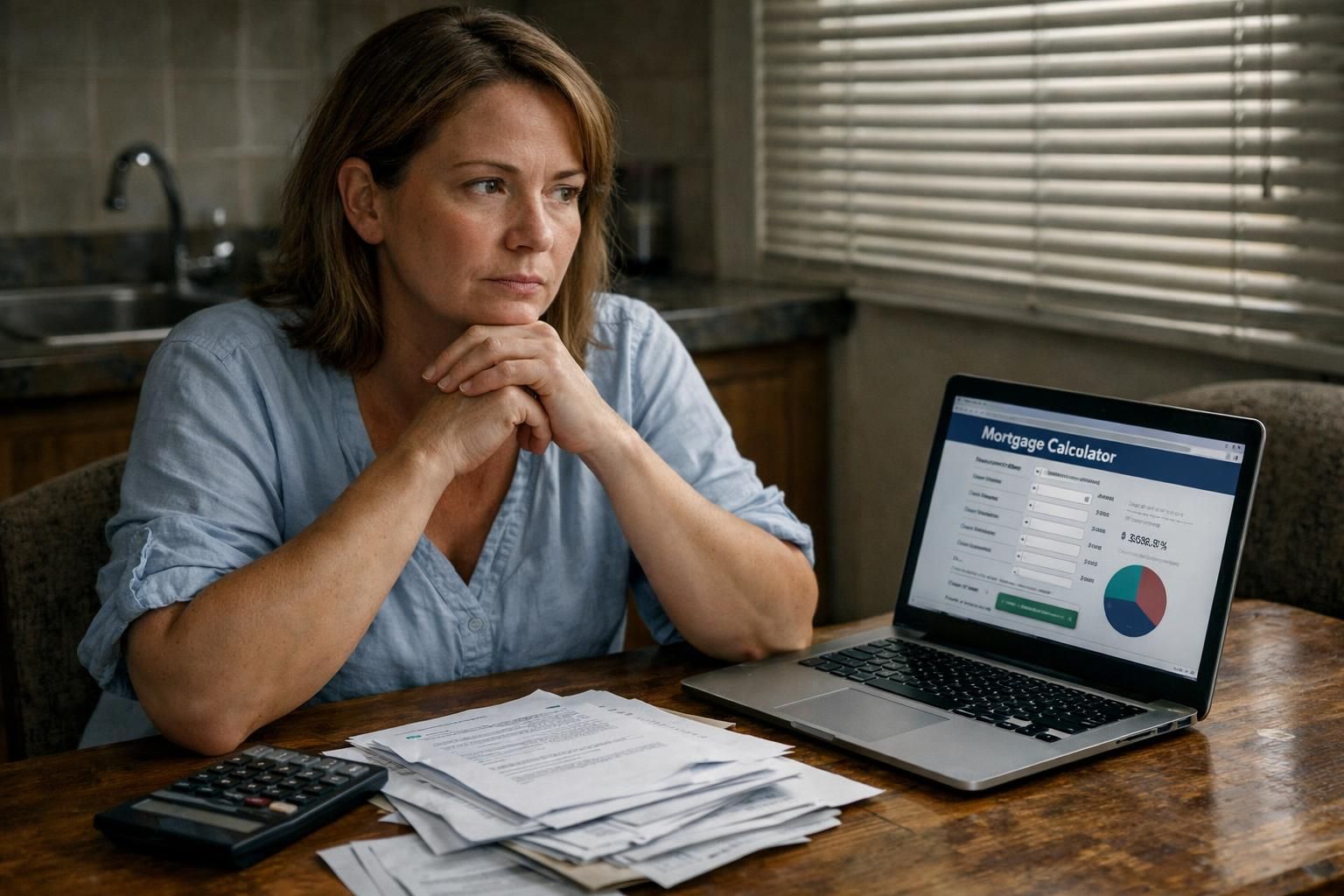
To see if you can truly afford to keep the marital home, compare your income and debts against all housing costs—mortgage payments, California property taxes, insurance, and future repairs.
Budgeting for mortgage, taxes, insurance, and maintenance
Monthly mortgage payments, California property taxes, and homeowners insurance can add up quickly after divorce. 6 Keep total housing expenses under 35% of your income. California's property taxes are governed by Proposition 13, which generally limits increases to 2% per year on the assessed value—but refinancing or transferring ownership in a divorce may trigger a reassessment in some circumstances, so consult a California tax professional. Also budget for utilities and unexpected repairs; a new roof or foundation issue can cost tens of thousands of dollars.
California homeowners insurance premiums have risen sharply in recent years due to wildfire risk, particularly in areas around Sacramento, the Inland Empire, and parts of Southern California. 7 Factor these rising costs into your long-term affordability analysis before deciding to keep the home.
Applying the 28/36 rule to assess financial feasibility
Lenders use the 28/36 rule as a key affordability benchmark: housing costs should not exceed 28% of gross monthly income, and all debt payments should stay below 36%. Banks set an absolute DTI limit at 43%, but targeting 36% is safer. Going from two incomes to one—especially in high-cost California markets—can dramatically change what you can afford.
If a buyout requires most of your savings or if housing costs rise above 35% of your income, treat these as serious red flags. Get advice from a certified financial adviser or California divorce attorney before committing to refinancing or a co-ownership arrangement.
Legal and Divorce Settlement Considerations
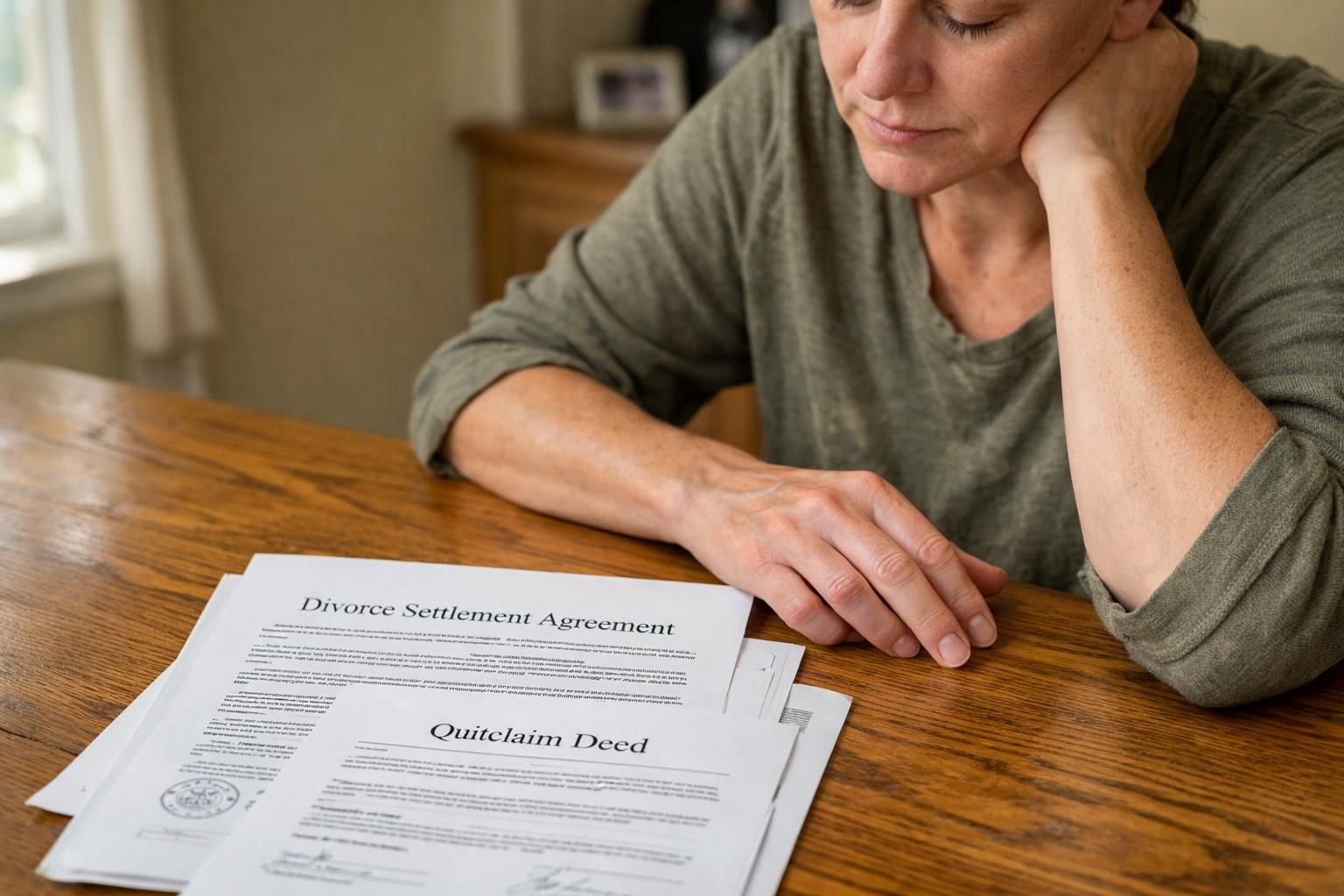
California's community property rules, quitclaim deeds, and divorce settlement agreements all shape your rights to the marital home. Understanding these legal tools is essential before making any decisions.
California as a community property state
California is a community property state, meaning any assets—including the marital home and its equity—acquired during the marriage are generally owned equally by both spouses and divided 50/50 in a divorce. This applies regardless of whose name is on the deed or mortgage. Separate property, such as a home owned before marriage or received as an inheritance, may be treated differently, but commingling funds can complicate that distinction.
California divorces are handled in Superior Court in the county where either spouse resides. If both parties cannot agree on property division through negotiation or mediation, the court will decide based on California Family Code provisions. Because of the state's strict community property rules, having a knowledgeable California divorce attorney is especially valuable.
The importance of quitclaim deeds and refinancing
A quitclaim deed allows your ex-spouse to transfer their ownership interest in the marital home to you. In California, this deed must be notarized and recorded with the county recorder's office where the property is located. However, a quitclaim deed does not remove your ex from the mortgage—only refinancing accomplishes that.
Refinancing in your name alone protects your credit and establishes clear financial responsibility. Lenders typically require a minimum 620 credit score for conventional loans or 580 for FHA loans, along with two years of steady income documentation. Closing costs typically run between 2% and 5% of the new loan amount. California courts may order a sale if one spouse cannot refinance within a court-specified timeframe.
Steps to Keep Your House

Appraise the home and review finances
Start with a professional appraisal or comparative market analysis to establish your home's current market value. 2 Subtract the remaining mortgage balance to find your equity. Then list every housing cost—mortgage, property taxes, insurance, utilities, and maintenance—and check how these fit against your post-divorce income. 8 Consider how child support or spousal support orders might affect your monthly budget under California Family Code guidelines.
Negotiate buyout terms and finalize the settlement agreement
Agree on the home equity amount using a certified appraisal, then negotiate buyout terms with your spouse. Work with a California divorce attorney or mediator to document every detail. You can fund a buyout using savings, retirement accounts such as IRAs or 401(k)s (understanding the tax implications), or structured installment payments. Ensure the final settlement specifies legal fee responsibilities and the consequences of missed payments. Confirm that quitclaim deeds and new loan paperwork are consistent with the settlement terms before any ownership transfer. 2
Complete refinancing and execute the quitclaim deed
Refinance the home into your name alone to establish sole ownership. You will need to meet lender requirements—typically a 620+ credit score, two years of income documentation, and a DTI ratio within guidelines. Closing costs generally run 2%–5% of the new loan amount. Once refinancing is complete, have your ex-spouse sign a quitclaim deed, which must then be notarized and recorded with your county recorder's office. California courts typically require the divorce judgment to be finalized before lenders will complete this process. This step protects both parties and gives you clear legal title going forward.
When Keeping the House Doesn't Make Sense
Sometimes holding onto the marital home puts your financial stability at risk. Reviewing your full financial picture honestly—and consulting a California divorce attorney—can help you make the smarter long-term decision.
Financial red flags and emotional considerations
Serious financial red flags include: inability to qualify for refinancing within six to twelve months, needing nearly all your savings for a buyout, facing more than $20,000 in necessary repairs, or having total housing costs exceed 35% of your income. In California, where mortgage payments on even modest homes can be steep, these warning signs carry extra weight.
Divorce stress can also lower credit scores at the worst possible time, blocking access to the loans you need. Decisions driven by emotion—keeping the home out of attachment or spite—rather than sound financial planning often lead to trouble later. Let the numbers guide you when evaluating whether the marital asset truly serves your long-term interests.
Exploring alternatives for a fresh start
Selling the home and splitting proceeds cleanly may be the best option if neither party can afford to maintain it alone. Renting or downsizing can improve your financial flexibility and reduce legal entanglements. Mediation can produce creative solutions such as temporary co-ownership or deferred sale arrangements that protect children's stability. A California-based financial adviser can help you evaluate refinancing options, FHA or VA loans, or home equity lines of credit as you plan your next steps.
Conclusion
Keeping your house after a California divorce requires careful planning, honest budgeting, and solid legal guidance. California's community property laws give both spouses equal claim to marital home equity, making it especially important to understand your rights and obligations early. Confirm whether you can qualify for refinancing, meet lender requirements, and sustain housing costs on a single income before committing to keeping the home. Smart decisions made now will lay the groundwork for long-term financial stability.
FAQs
1. How does property division work for the marital home in a California divorce?
California is a community property state, so the marital home and its equity are generally divided 50/50. Separate property—such as a home owned before marriage or inherited—may be treated differently, but commingling of funds can complicate that distinction. A California divorce attorney can help you sort out what qualifies as separate versus community property.
2. What role does child custody play in keeping the house?
California courts may allow the custodial parent to remain in the family home to preserve stability for children. Child custody arrangements and parenting plans often directly influence property division decisions, and a judge may delay the sale of a home until children reach a certain age or milestone.
3. How is home equity calculated during a California divorce settlement?
Home equity is determined by subtracting the current mortgage balance from the home's appraised market value. In California, this equity is treated as community property and divided equally unless a valid agreement states otherwise.
4. Are there California-specific tax considerations when keeping or selling the house?
Yes. In addition to federal capital gains tax exclusions ($250,000 single / $500,000 married), California taxes capital gains as ordinary income at the state level. A property reassessment under Proposition 13 may also occur depending on how ownership is transferred. Consult a California tax professional to understand the full picture.
5. Should I hire a California divorce attorney when trying to keep my house?
Absolutely. A California divorce attorney can advise you on community property rules, California Family Code provisions, quitclaim deed requirements, and how to structure a settlement that protects your ownership rights and long-term financial security.
References
- ^ https://www.divorcenet.com/resources/divorce/marital-property-division/continue-co-own-house-after-a-
- ^ https://www.homelight.com/blog/how-to-keep-the-house-in-a-divorce/
- ^ https://digitalcommons.law.uga.edu/cgi/viewcontent.cgi?article=1946&context=fac_artchop
- ^ https://www.northshorerealtors.com/news/considerations-for-retaining-the-marital-home-after-a-divorce
- ^ https://institutedfa.com/surviving-financially-after-divorce-1/
- ^ https://www.prosperityplanninginc.com/blogs/financial-planning-for-the-marital-home-in-divorce (2024-10-18)
- ^ https://pmc.ncbi.nlm.nih.gov/articles/PMC9303434/
- ^ https://corient.com/us/en/insights/articles/should-you-keep-the-house-when-divorcing (2024-06-13)
If keeping your California home isn't the right move—or if you simply want to move forward quickly—KDS Homebuyers can help. We buy houses directly from homeowners for cash, with no repairs, no agent fees, and no lengthy closing timelines. Visit kdshomebuyers.net to request your free cash offer today.
