

Probate vs. Trust: What's the Difference When Selling a House in Tennessee
If you need to sell a house after a loved one's death in Tennessee, the probate vs. trust process can feel overwhelming. Many homeowners don't realize that a living trust can help avoid probate court entirely. 2 This guide breaks down how estate planning choices — wills, revocable trusts, and probate — affect home sales, timelines, and costs in Tennessee. Whether you're dealing with property in Memphis, Nashville, or a smaller community, knowing your options makes selling inherited property faster and less stressful. 3
Key Takeaways
- Tennessee probate typically takes 6 to 18 months. Legal and court fees can reach 3%–7% of the estate's value. All probate filings become public record in Tennessee courts.
- A living trust allows you to avoid probate entirely. When real estate is held in a revocable living trust, the successor trustee can sell it in as little as 30–90 days with no court delays. 1 2 3
- Trust administration in Tennessee keeps your affairs private. Only trustees and beneficiaries see property transfer details — unlike probate, where records are open to the public.
- Failing to fund the trust causes problems. If a home or account was never retitled into the trust, it still goes through Tennessee probate — even if a valid trust exists. 6
- Cash buyers speed up sales of inherited property. Trust-held homes may close in 30–60 days; probate properties take longer because Tennessee courts must approve the sale first.
What Is Probate in Tennessee?

Probate in Tennessee is the court-supervised process for managing a deceased person's estate. You'll face probate if the estate includes only a last will and testament — or no estate plan at all — and assets are held solely in the decedent's name.
Definition and Purpose of Probate
Probate in Tennessee is handled by the Chancery Court or Probate Court depending on the county — Nashville's Davidson County, for example, uses a separate Probate Court, while many other counties route these matters through Chancery. The process validates the will, appoints a personal representative (executor), and oversees distribution of the estate.
Tennessee law requires probate when assets are titled solely in the decedent's name and no automatic transfer mechanism — like joint tenancy, a beneficiary designation, or a trust — exists. The state's intestate succession laws govern who inherits when there is no valid will.
Tennessee has a small estate affidavit procedure for estates with personal property valued under $50,000, allowing heirs to collect assets without full probate. Real estate, however, generally requires formal probate regardless of value unless it passes through a trust or joint ownership.
Key Steps in Tennessee Probate
The process begins by filing the will — if one exists — with the appropriate Tennessee court and petitioning to open the estate. The court issues Letters Testamentary or Letters of Administration, giving the executor legal authority to act on behalf of the estate.
The executor must identify and inventory all assets, notify creditors, and publish a notice to creditors in a local newspaper as required by Tennessee law. Creditors then have four months from the date of the first published notice to file claims against the estate.
After settling debts, handling any required state or federal tax filings, and obtaining court approval where needed, the executor distributes remaining assets to heirs. Selling real property during this period requires care — and in some cases court authorization — before proceeds can be distributed.
Working with an experienced Tennessee probate attorney helps ensure each step meets legal requirements and avoids costly delays.
Timeline Expectations (6–18 Months or Longer)
Most Tennessee estates spend at least 9 to 12 months in probate, largely because the four-month creditor claim period cannot be shortened. Contested wills, disputes among heirs, or complex asset inventories can stretch the process to two or three years. Property taxes, insurance, and maintenance costs continue to accrue on inherited real estate throughout this period — adding financial pressure on families waiting to sell.
A properly funded revocable living trust sidesteps this entirely. Trust administration in Tennessee typically completes in 30 to 90 days, giving families in Knoxville, Chattanooga, or anywhere across the state much faster access to proceeds.
What Is a Trust?

A trust lets you transfer real estate or personal property to a chosen manager — the trustee — while maintaining control during your lifetime. Tennessee law fully recognizes revocable living trusts as a valid and effective estate planning tool.
Definition of a Living Trust (Revocable Trust)
A living trust — formally called a revocable living trust — is created while you are alive. As the grantor, you typically name yourself as the initial trustee and retain full control to amend or revoke the trust at any time. You also name a successor trustee to step in when you pass away or become incapacitated. 2
To make the trust effective, you must fund it — meaning you retitle your Tennessee real estate and other assets into the trust's name. After your death, those assets transfer directly to your named beneficiaries without going through Tennessee probate court or becoming part of the public record. 1
Roles of Grantor, Trustee, and Beneficiaries
You are the grantor when you create and fund the trust. During your lifetime you typically serve as your own trustee, managing assets as you always have. Your successor trustee — often a spouse, adult child, or trusted advisor — takes over immediately upon your death without any court involvement.
The successor trustee notifies beneficiaries, gathers documents, pays outstanding debts and taxes, and distributes assets according to the trust's terms. Beneficiaries receive their share directly, whether outright or held in a continuing trust for minor children or other purposes.
Key Benefit: Avoiding Tennessee Probate Court
When real property is properly titled in a Tennessee living trust, the successor trustee can sell or transfer it immediately after death — no court petition, no judge approval, no public filings. This eliminates the four-month creditor waiting period and the ongoing court supervision that defines Tennessee probate.
Trust administration also stays private. Unlike probate filings, which are public record accessible to anyone at the courthouse, the terms of a living trust remain confidential between the trustee and beneficiaries. For families selling a home in Nashville or Memphis, this privacy can reduce unwanted contact from distant relatives and simplify the transaction.
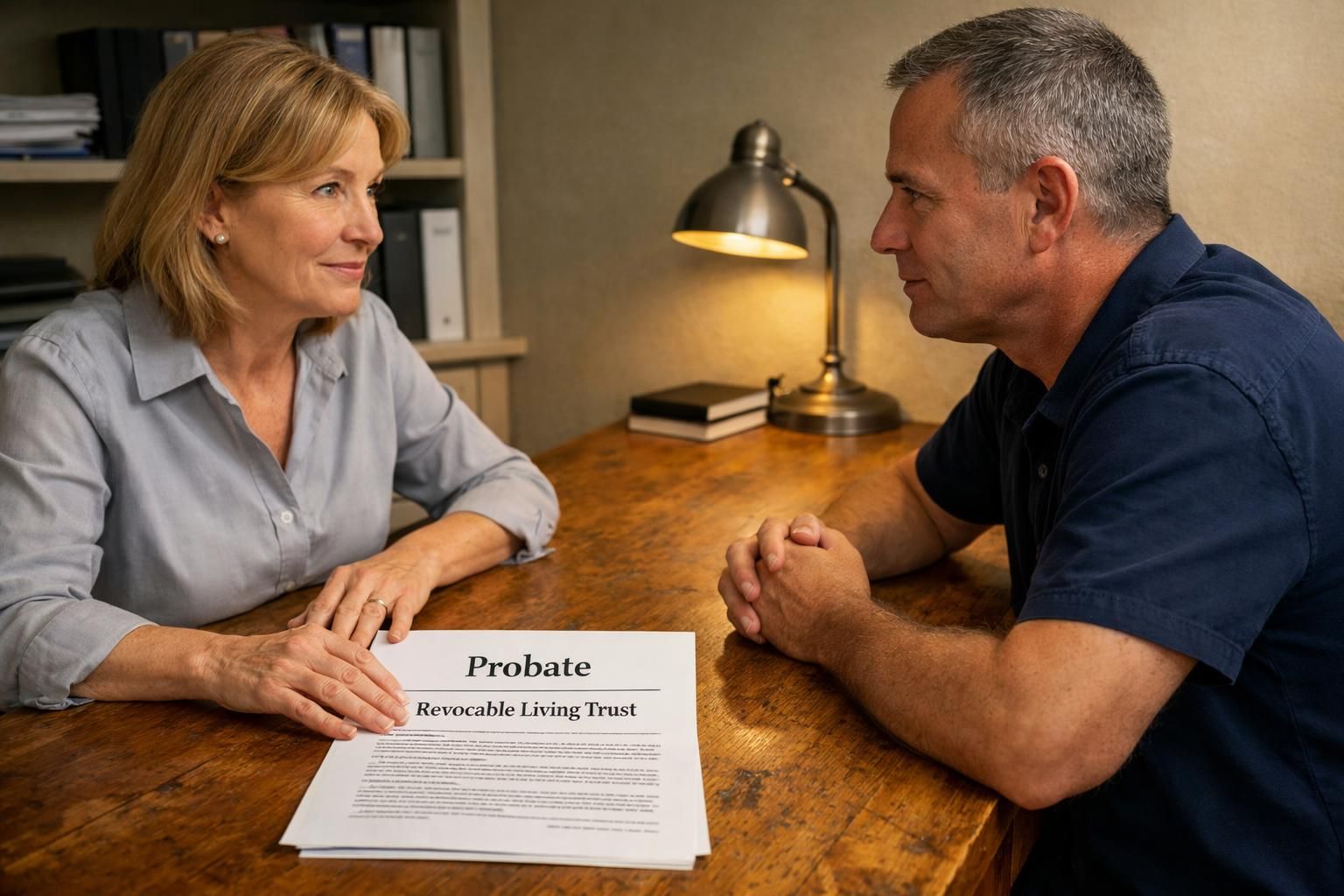
Key Differences Between Probate and Trust in Tennessee
Court Involvement
Selling a probate property in Tennessee requires court oversight at multiple stages. The executor must obtain Letters Testamentary before listing the home, satisfy the creditor notice period, and may need court approval before closing — especially if heirs disagree or the will is contested. All filings are part of the public record.
A trust-held property avoids nearly all of this. The successor trustee presents a trustee certification and the trust agreement to the title company, and the sale proceeds without court hearings. Only disputes over trust validity or improper funding would send the matter back to a Tennessee court.
Privacy Considerations
Tennessee probate filings are public. Anyone can visit the Chancery or Probate Court clerk's office and review the will, asset inventory, creditor claims, and distribution orders for an estate. This exposes heirs' names, property values, and family financial details to anyone who looks.
A living trust keeps all of that private. Only the trustee and beneficiaries ever see the trust terms or asset details. For families managing significant real estate holdings or simply wanting to avoid outside interference, this privacy is one of the strongest reasons to choose trust-based estate planning.
Timeline and Cost Comparisons
Tennessee probate runs a minimum of four to six months due to the mandatory creditor period, and realistically 9 to 18 months for most estates. Complex estates or disputes can extend beyond two years. During that time, property taxes, insurance premiums, and maintenance costs continue — all paid from estate funds before heirs see anything.
Trust administration typically wraps up in 30 to 90 days. Setting up a living trust in Tennessee generally costs $1,500 to $3,500 in attorney fees. By contrast, probate costs — including court filing fees, attorney fees, and executor compensation — routinely consume 3% to 7% of the estate's total value. On a $300,000 home, that can mean $9,000 to $21,000 lost before heirs receive a dollar.
Selling a House in Tennessee Probate

Steps: Executor Authority, Appraisal, Listing, and Closing
Before selling, the executor must have Letters Testamentary or Letters of Administration issued by the Tennessee court. Without this document, no title company will insure the transaction. The executor then orders an independent appraisal to establish fair market value and lists the property — often with a real estate agent familiar with Tennessee probate sales.
Unlike some states, Tennessee does not generally require a separate court confirmation hearing to approve the sale price once the executor has proper authority. However, if heirs object or the will restricts sales, court involvement can still delay closing significantly. After the sale closes, proceeds go into the estate account and are distributed only after all debts, taxes, and expenses are settled.
Heir Agreements, Repairs, and Timeline Challenges
When multiple heirs must agree on a sale price or whether to sell at all, disputes can stall the process for months. Tennessee courts can appoint a special fiduciary or order a sale if heirs reach a deadlock, but litigation adds time and cost.
Repairs present another challenge. The executor typically needs to use estate funds for maintenance, and spending decisions may require heir consensus or court approval in contested situations. Most probate properties sell as-is, which can reduce buyer interest and final sale price. Throughout the process, property taxes to the county and any HOA fees keep accruing — creating financial pressure on heirs who need liquidity.
Tennessee Real Estate and Probate
Probate directly affects real estate in Tennessee when property is titled solely in the decedent's name. The home cannot be sold, refinanced, or transferred until the court appoints a personal representative and the estate is properly opened. Tennessee's four-month creditor claim period is non-negotiable — it begins from the date of the first published notice and cannot be shortened, even if all heirs agree and there are no known creditors.
Executors carry a fiduciary duty to heirs and creditors alike. Mistakes — such as selling below market value, failing to pay property taxes on time, or improperly distributing funds — can result in personal liability. An experienced Tennessee probate attorney helps protect against these risks.
Selling a House Held in a Tennessee Trust

Simpler Process: Trustee Authority and Faster Transactions
When a Tennessee home is held in a living trust, the successor trustee can list and sell it immediately after the grantor's death — no court petition required. The trustee presents a certification of trust to the title company confirming their authority, and the transaction proceeds like any normal real estate sale. Trust sales in Tennessee commonly close in 30 to 60 days. 3
Buyers typically find trust sales more straightforward than probate sales because the trustee can negotiate freely, allow inspections and contingencies, and close without waiting for court approval. 4
Trustee Responsibilities and Dispute Resolution
Tennessee successor trustees carry a fiduciary duty to all beneficiaries. This means keeping detailed records, communicating transparently about the sale process and proceeds, paying any outstanding debts or estate taxes before distributing funds, and following the trust agreement's distribution instructions precisely.
Beneficiary disputes do occur — particularly when family members disagree about the sale price or timing. Unlike probate, there is less automatic court oversight of trust administration in Tennessee, so problems can sometimes go unresolved longer. 5 Trustees who face challenges should consult a Tennessee estate planning attorney promptly to avoid personal liability.
What If There's Both Probate and Trust in Tennessee?
You may face both processes if a loved one set up a living trust but failed to retitle all assets — including the home — into the trust's name before death. This is one of the most common and costly estate planning mistakes in Tennessee.
Improper Funding and Mixed Assets
If a Tennessee home was never deeded into the trust, it will go through probate even if a valid revocable living trust exists. The four-month creditor period, court oversight, and public filings all apply to that untitled property. 6
A pour-over will can direct untitled assets into the trust after death, but it does not avoid probate — those assets still go through the court process first before moving into the trust for distribution. Bank accounts, investment accounts, and life insurance policies with named beneficiaries generally pass outside of both probate and the trust, but beneficiary designations must be reviewed regularly to avoid unintended results.
Families across Tennessee — from Chattanooga to rural counties — have experienced months of costly delays simply because a deed was never updated after the trust was created. 6
Importance of Legal Guidance in Tennessee
A qualified Tennessee estate planning attorney ensures that your trust is properly funded, your deeds are correctly titled, and your beneficiary designations align with your overall estate plan. If your estate includes business interests, blended family dynamics, minor children, or multiple properties across Tennessee counties, professional guidance is essential.
Errors in trust administration or probate can expose trustees and executors to personal liability under Tennessee law. Early planning — and periodic reviews — saves your family from expensive court proceedings and protects the assets you've built over a lifetime.
Common Questions About Probate vs. Trust in Tennessee
Which Is Better for Selling Property in Tennessee?
For most Tennessee families, a living trust produces a faster, cheaper, and more private sale. 7 The successor trustee can close in 30 to 60 days without court involvement, keeping more of the proceeds for beneficiaries. Probate sales demand patience — the mandatory creditor period alone is four months, and total timelines of 9 to 18 months are common. If you need funds quickly to settle debts or cover living expenses, probate's pace creates real hardship. 7
Tax Implications in Tennessee
Tennessee repealed its state inheritance tax in 2016, so heirs generally owe no state-level inheritance or estate tax on property received. This is a significant advantage compared to many other states.
At the federal level, the estate tax exemption for 2024 is $13.61 million — most Tennessee estates will not owe federal estate tax. Inherited real estate also receives a stepped-up cost basis to fair market value on the date of death, reducing capital gains taxes when the property is sold soon after inheriting.
Properties held in a revocable living trust receive the same stepped-up basis treatment as probate assets. Assets inside an irrevocable trust may face different tax treatment depending on how the trust is structured — consult a Tennessee tax advisor for guidance specific to your situation.
Tennessee does impose a real estate transfer tax (also called the realty transfer tax) when property changes hands, currently calculated at $0.37 per $100 of value. Both probate sales and trust sales are subject to this tax at closing.
When to Seek Professional Help
Seek a Tennessee probate or estate planning attorney when you face contested wills, unclear property titles, insolvent estates, multiple heirs in disagreement, or trusts that were never properly funded. Executors and successor trustees carry fiduciary responsibilities and can be held personally liable for errors under Tennessee law.
Even straightforward estates benefit from professional guidance to ensure creditor notices are properly published, tax filings are completed accurately, and distributions follow the will or trust terms exactly.
Conclusion
Navigating Tennessee Probate or Trust Administration
You don't have to face Tennessee's probate process or trust administration alone. With the right estate planning in place — a properly funded revocable living trust, up-to-date beneficiary designations, and clear trustee instructions — your family can avoid months of court delays and keep more of the estate's value intact.
Tennessee's elimination of the state estate tax makes it a relatively favorable environment for passing on real property. Pairing that advantage with a living trust and professional legal guidance gives your loved ones the smoothest possible path forward.
Make Informed Decisions About Your Tennessee Estate
Every family's situation is different. Review your estate plan regularly — especially after major life changes like marriage, divorce, or acquiring new property. Make sure any Tennessee real estate you own is properly titled in your trust if you want to avoid probate. Check beneficiary designations on life insurance and retirement accounts to ensure they align with your overall plan.
Meeting with a qualified Tennessee estate planning attorney before making major decisions protects your heirs from costly mistakes and gives you peace of mind that your wishes will be honored efficiently and privately.
Selling Inherited Tennessee Property Quickly
Whether your Tennessee property is moving through probate or held in a trust, a cash buyer offers a fast and straightforward path to closing. You skip open houses, repairs, and lengthy negotiations. Trust-held properties can close in as little as 30 to 60 days; probate properties move faster than a traditional listing even with court oversight involved — because the cash offer eliminates financing contingencies and drawn-out buyer timelines.
Cash buyers purchase homes as-is, which is especially helpful when an inherited property needs deferred maintenance that the estate can't afford to address. Proceeds go directly toward settling estate debts, paying outstanding property taxes to the Tennessee county, and distributing funds to beneficiaries.
If you've inherited a home in Tennessee and want to explore a fast, hassle-free sale, KDS Homebuyers is here to help. Visit kdshomebuyers.net to request a free, no-obligation cash offer and take the first step toward closing on your timeline.
FAQs
1. What is the main difference between probate and a trust when selling real estate in Tennessee?
Tennessee probate requires court supervision through the Chancery or Probate Court, a mandatory four-month creditor period, and public filings. A living trust lets the successor trustee sell real property immediately after death without any court involvement.
2. How does a revocable living trust protect privacy in Tennessee?
Trust administration stays entirely private — only the trustee and beneficiaries see the terms and asset details. Tennessee probate filings, by contrast, are public record accessible to anyone at the courthouse.
3. Does Tennessee have a state estate or inheritance tax?
No. Tennessee fully repealed its state inheritance tax in 2016. Most estates also fall well below the federal estate tax exemption of $13.61 million for 2024.
4. Can a pour-over will avoid probate in Tennessee?
No. A pour-over will directs untitled assets into your trust after death, but those assets still go through the Tennessee probate process first before reaching the trust. Properly funding the trust during your lifetime is the only way to avoid probate for those assets.
5. How long does Tennessee probate take before a house can be sold?
At minimum, Tennessee's mandatory four-month creditor notice period must pass. Most estates take 9 to 18 months total. A properly funded living trust eliminates this wait entirely.
6. Should I use both a living trust and a will in my Tennessee estate plan?
Yes — most Tennessee estate planning attorneys recommend both. The living trust handles real estate and major assets without probate, while a pour-over will captures any assets accidentally left outside the trust and provides instructions for guardianship of minor children.
References
- ^ https://www.metlife.com/stories/legal/what-type-of-trust-should-you-create-for-your-estate/
- ^ https://extension.umn.edu/transfer-and-estate-planning/trusts-definitions-types-and-taxation
- ^ https://usleadlist.com/resources/understanding-probate-vs-trust-sale
- ^ https://teamtapper.com/blog/trust-sale-vs-probate-sale/ (2023-12-28)
- ^ https://www.barrattorneys.com/blog/trust-vs-probate-what-to-choose/ (2026-01-21)
- ^ https://www.heritagelawwi.com/the-legal-risks-of-improperly-funding-a-trust
- ^ https://www.lametrohomefinder.com/blog/probate-vs-trust-sale-california
