

Probate vs. Trust: What's the Difference When Selling a House in Colorado
If you need to sell a house after a loved one's death in Colorado, the probate vs. trust process can feel confusing and stressful. Many homeowners do not realize that using a living trust can help avoid probate court altogether. 2 This guide breaks down how estate planning choices like wills, revocable trusts, and probate affect home sales, timelines, and costs in Colorado. Find out which option makes selling your inherited property easier and faster. 3
Key Takeaways
- Selling a house through Colorado probate usually takes 6 to 18 months, sometimes longer. Legal fees and court costs can add up to 3%–7% of the property's value. Probate also makes your private information public record under Colorado law.
- A living trust allows you to avoid probate. When real estate is held in a revocable living trust, the successor trustee can sell it in as little as 30–90 days with less paperwork and no court delays. 1
- Trust administration keeps your information private. Only trustees and beneficiaries see details about property transfers—unlike probate where all records are public in Colorado district courts.
- Mistakes like not transferring assets into the trust cause problems. If homes or accounts are left out, those assets still go through Colorado probate—even if a trust exists. 6
- Cash buyers make selling inherited property quick. Trust-owned homes may close in 30–60 days; probated properties take longer because Colorado courts must approve sales first.
What Is Probate in Colorado?

Probate is a legal process that takes place after someone dies and leaves property behind in Colorado. You will face probate if the estate plan includes only a last will and testament or no trust at all, and the estate exceeds Colorado's small estate threshold.
Definition and purpose of probate
Colorado probate is supervised by the district court in the county where the decedent lived or owned property. In Denver, that means the Denver Probate Court, which handles these matters exclusively. Elsewhere in the state—Aurora, Colorado Springs, Lakewood—district courts manage probate alongside other civil matters.
Colorado follows the Uniform Probate Code, which allows for both formal and informal probate administration. Informal probate is less court-intensive and works when there is no dispute over the will or heirs. Formal probate requires a judge's involvement at each major step and is used when conflicts arise or the estate is complex.
The main goals are to verify the will, appoint a personal representative, pay debts, and distribute assets to heirs. Colorado's intestate succession laws govern who inherits when there is no valid will. Under Colorado law, small estates with personal property valued under $80,000 (with no real property) may qualify for an affidavit process that bypasses full probate entirely.
Key steps in Colorado probate
You begin by filing the will and a petition with the district court in the appropriate county. The court then issues "Letters Testamentary" or "Letters of Administration," giving the personal representative legal authority to act on behalf of the estate.
The personal representative must inventory all assets, including real property, bank accounts, and personal belongings. Colorado law requires notifying creditors, who then have a set period—generally four months from the first publication of notice—to submit claims. After creditors are paid and any required federal estate tax returns are filed, the personal representative distributes remaining assets to heirs and files a closing statement with the court.
Court approval is required before selling real estate in a formal probate. Working with a Colorado estate planning attorney helps you navigate each step correctly and avoid personal liability as a personal representative.
Timeline expectations
Colorado informal probate can move relatively quickly—sometimes wrapping up in six to nine months if the estate is straightforward and no disputes arise. Formal probate, or cases involving contested wills, creditor disputes, or complex real property holdings, can stretch to 18 months or longer. During this entire period, property taxes and insurance on any real estate continue to accrue, adding financial pressure on heirs.
What Is a Trust in Colorado?

A trust lets you transfer real estate or personal property to a chosen manager, called a trustee, under Colorado law. This helps protect your assets and can make estate administration smoother for your loved ones.
Definition of a living trust (revocable trust)
A living trust, often called a revocable living trust, is created while you are alive and governed by the Colorado Uniform Trust Code. As the trust creator (grantor), you keep full control over your assets and can change or cancel the trust at any time. 2 You name yourself as trustee during your lifetime and designate a successor trustee to take over if you become incapacitated or pass away.
You transfer real estate and other assets into the trust's name—a process called funding the trust. In Colorado, funding real property into a trust requires recording a new deed with the county clerk and recorder's office. After your death, these assets transfer directly to your beneficiaries without going through Colorado probate court or becoming public record. 1
Roles of grantor, trustee, and beneficiaries
You serve as the grantor and typically act as your own trustee during your lifetime. Your chosen successor trustee steps in immediately upon your death—no district court appointment needed. This person must notify beneficiaries under Colorado law, gather asset documents, settle debts, and distribute assets according to the trust agreement. Beneficiaries receive their share as outlined in the trust, which can include provisions for minor children or special needs beneficiaries.
Key benefit: avoiding Colorado probate
A living trust allows you to sidestep Colorado's probate process entirely for assets held in the trust. Your successor trustee can act immediately without waiting for court approval, avoiding delays that typically run 6 to 18 months. You also avoid probate court filing fees and keep estate details private—Colorado probate records are public, but trust documents are not.
Key Differences Between Probate and Trust in Colorado
Court involvement
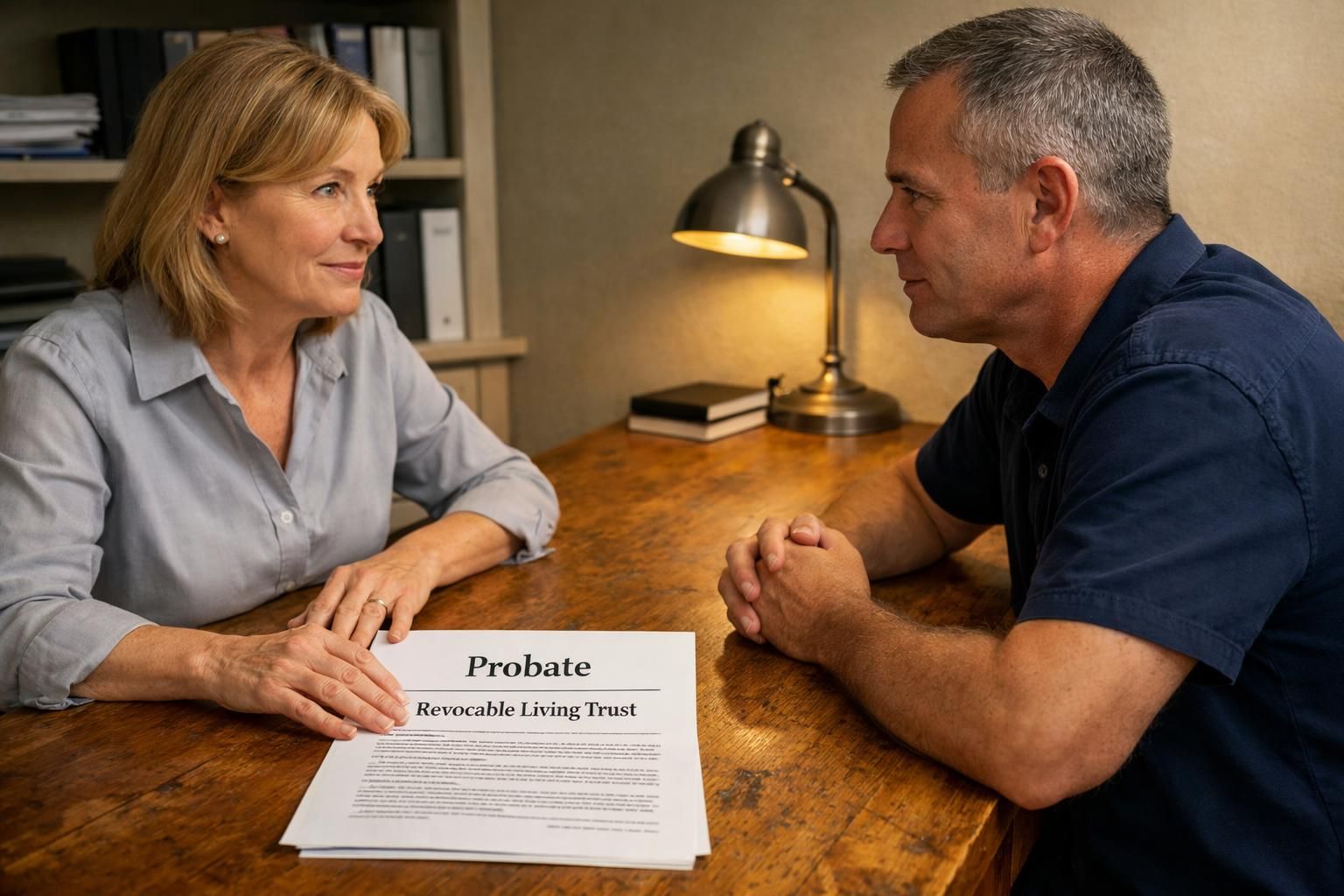
Colorado formal probate sales require district court supervision. You must file documents with the court, and the personal representative must follow state-mandated procedures before selling real estate. All filings become public record, accessible by anyone at the courthouse or through Colorado's online court records system.
Selling property held in a living trust avoids court involvement entirely, provided assets were properly titled into the trust. The successor trustee handles all steps privately under the trust agreement. Only disputes or improper trust funding may require district court intervention.
Privacy considerations
Colorado probate records are public. Anyone can access filings including the will, asset inventories, heir information, and distribution plans through the district court. A revocable living trust keeps all of this private—only the grantor, successor trustee, and named beneficiaries know the terms. This is especially valuable for families in the Denver metro area where property values are high and estate details can attract unwanted attention.
Timeline and cost comparisons
Colorado informal probate may close in six to nine months in straightforward cases; formal probate or contested estates routinely take 18 months or more. Trust administration typically wraps up in 30 to 90 days. Probate costs in Colorado range from 3% to 7% of the estate's value when accounting for attorney fees, court filing fees, and administrative expenses. Setting up a revocable living trust costs between $1,500 and $3,500 upfront but significantly reduces costs during administration, leaving more for your beneficiaries.
Selling a House in Colorado Probate

Steps: court authority, appraising property, listing, and closing
In Colorado, the personal representative must obtain Letters Testamentary or Letters of Administration from the district court before taking any action on real estate. Under informal probate, the personal representative has broad authority to sell real property without court confirmation of the sale price—a significant advantage compared to states that require a judge to approve every transaction.
The personal representative then orders a licensed appraisal to establish fair market value, lists the property, and negotiates with buyers. While formal court confirmation of the sale is not typically required in Colorado informal probate, the personal representative must still act in the best interests of all heirs and creditors. Creditors have four months from the first publication of notice to submit claims, which can affect how quickly proceeds are distributed after closing.
Common concerns: heir agreements, repairs, and timeline
When multiple heirs must agree on a sale, disagreements over pricing or timing can arise. If heirs cannot reach consensus, the matter may require formal court involvement, adding delays and legal fees. Repairs also present challenges—estate funds generally cannot be spent on improvements without proper authority, so most Colorado probate properties sell "as-is," which can limit buyer interest and reduce sale price.
During the entire probate period, property taxes, insurance, and maintenance costs continue to accumulate. Colorado property taxes are assessed annually, and missing payments during probate can lead to penalties or tax liens that complicate the eventual sale.
Understanding probate in Colorado real estate
Probate affects real estate directly in Colorado. If someone passes away owning property solely in their name, probate is required to transfer title. The personal representative must include the property in the estate inventory and may face personal liability if mistakes are made during administration. Working with a Colorado estate planning attorney protects against costly errors and ensures compliance with state law.
Selling a House Held in a Colorado Trust

Simpler process: trustee authority and faster transactions
If your Colorado home is held in a living trust, the successor trustee can sell it immediately after your death without waiting for district court approval. Sales typically close in 30 to 60 days. 3 The trustee presents a certification of trust and trust agreement to the title company—no lengthy court filings required. 4
Colorado title companies and real estate attorneys are familiar with trust sales, making the process straightforward. Buyers can request inspections and contingencies just as in any standard transaction, which makes trust properties more attractive than "as-is" probate sales.
Trustee responsibilities and disputes
The successor trustee in Colorado has a fiduciary duty to all beneficiaries under the Colorado Uniform Trust Code. This means maintaining clear records, paying outstanding debts and taxes, and distributing proceeds according to the trust agreement. If beneficiaries believe the trustee is not acting properly, they can petition the district court for oversight—though this is far less common than formal probate disputes. 5 Consulting a Colorado estate planning attorney helps trustees avoid missteps that could lead to personal liability.
What If There's Both Probate and Trust in Colorado?
You may encounter both probate court and trust administration if a loved one failed to transfer all assets into the living trust before death. This commonly happens when a Colorado homeowner sets up a trust but never re-records the deed to transfer the home into the trust's name with the county clerk and recorder.
Improper funding and mixed assets
If your Colorado home was not properly deeded into the trust, it will need to go through probate even if a living trust exists. A pour-over will can direct those assets into the trust after probate closes, but the delay and cost of probate cannot be avoided. 6 Bank accounts, investment accounts, and vehicles titled solely in the decedent's name face the same issue. Reviewing beneficiary designations on retirement accounts and life insurance policies regularly helps ensure those assets pass outside of probate entirely.
Importance of legal guidance in Colorado
Colorado estate planning attorneys can coordinate trust agreements, deed transfers, beneficiary designations, and pour-over wills to ensure your entire estate plan works together. If your estate includes business interests, mineral rights (common in Colorado), unclear property titles, or minor children's guardianship provisions, professional guidance is essential. Errors in trust funding or administration can trigger disputes, drain estate resources, and expose the trustee to personal liability under Colorado law.
Colorado Tax Implications: Probate vs. Trust
Colorado does not impose a state estate tax or inheritance tax, which simplifies planning compared to many other states. However, federal estate tax still applies to estates exceeding $13.61 million in 2024. Both probate assets and trust assets generally receive a stepped-up cost basis to fair market value at the date of death, which reduces capital gains taxes owed when heirs sell inherited property shortly after receiving it.
Assets held in an irrevocable trust may be treated differently for tax purposes depending on how the trust is structured—consult a Colorado tax professional or estate planning attorney for guidance specific to your situation. Colorado also imposes a documentary fee on real estate transfers, currently $0.01 per $100 of consideration, which applies to both probate and trust property sales.
Common Questions About Probate vs. Trust in Colorado
Which is better for selling Colorado property?
Selling through a living trust is almost always faster and less expensive in Colorado. The successor trustee can close in 30 to 60 days without district court involvement. 7 Probate—even Colorado's relatively efficient informal process—takes months and creates public records. Families who need access to funds quickly, or who want to avoid the stress of ongoing property maintenance costs during a lengthy court process, benefit most from trust-based planning.
When should you seek professional help?
Seek a Colorado estate planning attorney if you face contested wills, unclear title to mineral rights or agricultural land, insolvent estates, or disputes among multiple heirs. Personal representatives and successor trustees carry fiduciary duties and can be held personally liable for errors under Colorado law. An experienced attorney ensures compliance with the Colorado Uniform Probate Code and Colorado Uniform Trust Code, protecting everyone involved.
Conclusion
Whether your Colorado property is going through district court probate or being transferred by a successor trustee, understanding the process helps you make smarter decisions and protect your family's interests. A revocable living trust offers privacy, speed, and lower costs—but it only works if assets are properly funded into the trust before death. Working with a qualified Colorado estate planning attorney early gives you and your loved ones peace of mind.
If you need to sell an inherited home in Colorado quickly—whether it's in probate or held in a trust—KDS Homebuyers can help. We buy houses directly from homeowners and estate representatives for cash, with no repairs, no showings, and no lengthy closing timelines. Visit kdshomebuyers.net today for a free, no-obligation cash offer and find out how fast you can move forward.
FAQs
1. What is the main difference between probate and a trust when selling real estate in Colorado?
Colorado probate requires district court supervision of estate administration after death, while a living trust lets the successor trustee manage and sell real property immediately without court involvement.
2. Does Colorado require court confirmation of probate real estate sales?
Under Colorado informal probate, the personal representative generally does not need court confirmation of a sale price—a significant advantage over states like California. Formal probate may require closer court oversight.
3. Does Colorado have an estate tax or inheritance tax?
No. Colorado does not impose a state estate tax or inheritance tax. Federal estate tax applies only to estates exceeding $13.61 million in 2024.
4. Can minor children inherit real property through a Colorado trust?
Minor children cannot directly own real property. A trust provides asset protection and management for minors until they reach the age specified in the trust agreement, making it a key estate planning tool for Colorado families.
5. What happens if I forget to deed my Colorado home into my trust?
The home will need to go through Colorado probate. A pour-over will can direct the asset into the trust after probate closes, but the delay and court costs cannot be avoided. Always confirm with your attorney that real property deeds are properly recorded in the trust's name with the county clerk and recorder.
6. Should I use both a pour-over will and a living trust in my Colorado estate plan?
Yes. Combining both ensures that any assets accidentally left out of the trust are directed into it after probate, so your full estate ultimately follows the distribution plan managed by your successor trustee.
References
- ^ https://www.metlife.com/stories/legal/what-type-of-trust-should-you-create-for-your-estate/
- ^ https://extension.umn.edu/transfer-and-estate-planning/trusts-definitions-types-and-taxation
- ^ https://usleadlist.com/resources/understanding-probate-vs-trust-sale
- ^ https://teamtapper.com/blog/trust-sale-vs-probate-sale/ (2023-12-28)
- ^ https://www.barrattorneys.com/blog/trust-vs-probate-what-to-choose/ (2026-01-21)
- ^ https://www.heritagelawwi.com/the-legal-risks-of-improperly-funding-a-trust
- ^ https://www.lametrohomefinder.com/blog/probate-vs-trust-sale-california
