

Pricing Your Home to Sell: Market-Based Strategy for Fast Sales
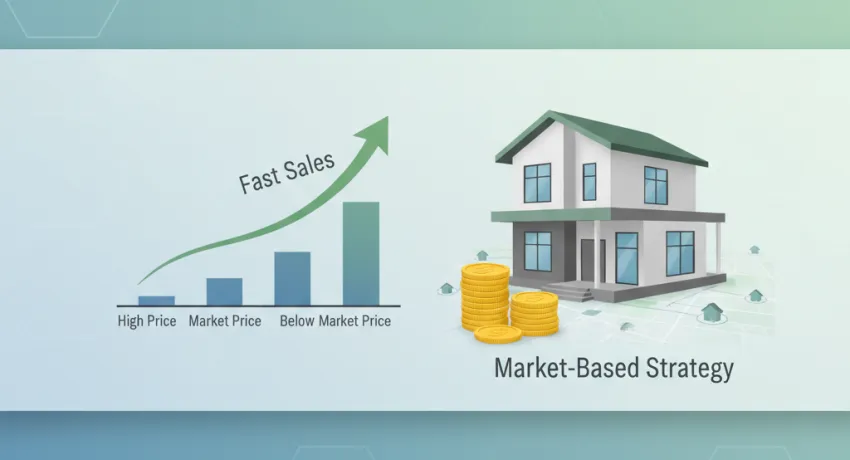
Table of Contents
Getting the asking price right? It might be the single most important call you'll make as a seller. List too high and your home sits on the market gathering dust—then you're forced into those awkward price cuts that make buyers wonder what's wrong. But price it too low and you're just handing money away. Pricing your home to sell requires real work. It's not a guess. You'll need to dig into market data, look honestly at your home's condition, and time it strategically. This guide breaks down exactly how to do it so you can list confidently and actually close the deal faster.
Understanding Your Home's Market Value
What Determines Home Value
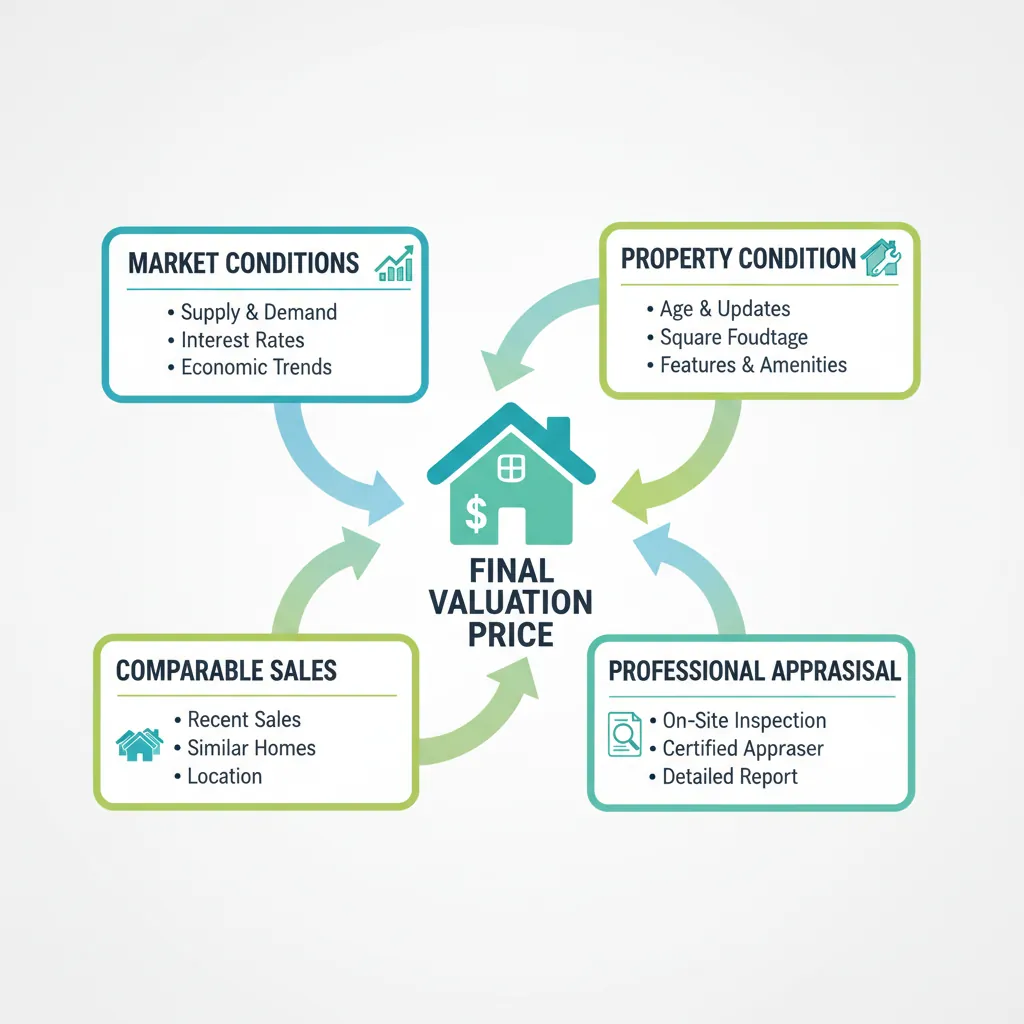
A few things anchor your home's value: location, square footage, lot size, and what school district it's in. These don't change much. But here's what does: condition, recent upgrades, market demand — these swing wildly. And here's the reality in 2026. Buyers come prepared. They've already checked Zillow, scoured neighborhood sales histories, and run the numbers through mortgage calculators. Your price has to stand up to all that scrutiny, or they'll move on to the next listing.
The Importance of Accurate Pricing
Homes priced right from day one sell faster. They also sell closer to asking price. Start too high? You're inviting suspicion. Buyers wonder what's actually wrong with the place if you had to cut the price later. A 5–10% overpricing mistake extends your days-on-market from 30 to 90+ days and costs you money in the end. The well-priced listing wins every time.
Current Market Conditions in 2026
Mortgage rates are still elevated — expect 6.5–7% for a 30-year fixed loan. That's squeezing buyer purchasing power significantly. Inventory's up modestly across most metros, which means some markets are shifting toward balance or even favoring buyers instead of sellers. Spring still beats winter. Listings posted in spring typically get 10–15% more traffic. But here's what really matters: don't rely on national headlines. Get on your local MLS and check trends monthly. What's happening nationwide probably isn't what's happening in your zip code. For specifics to your state, check out our home pricing guide for Florida sellers or our California home pricing guide for the regional breakdown you actually need.
Back to topKey Home Pricing Strategies
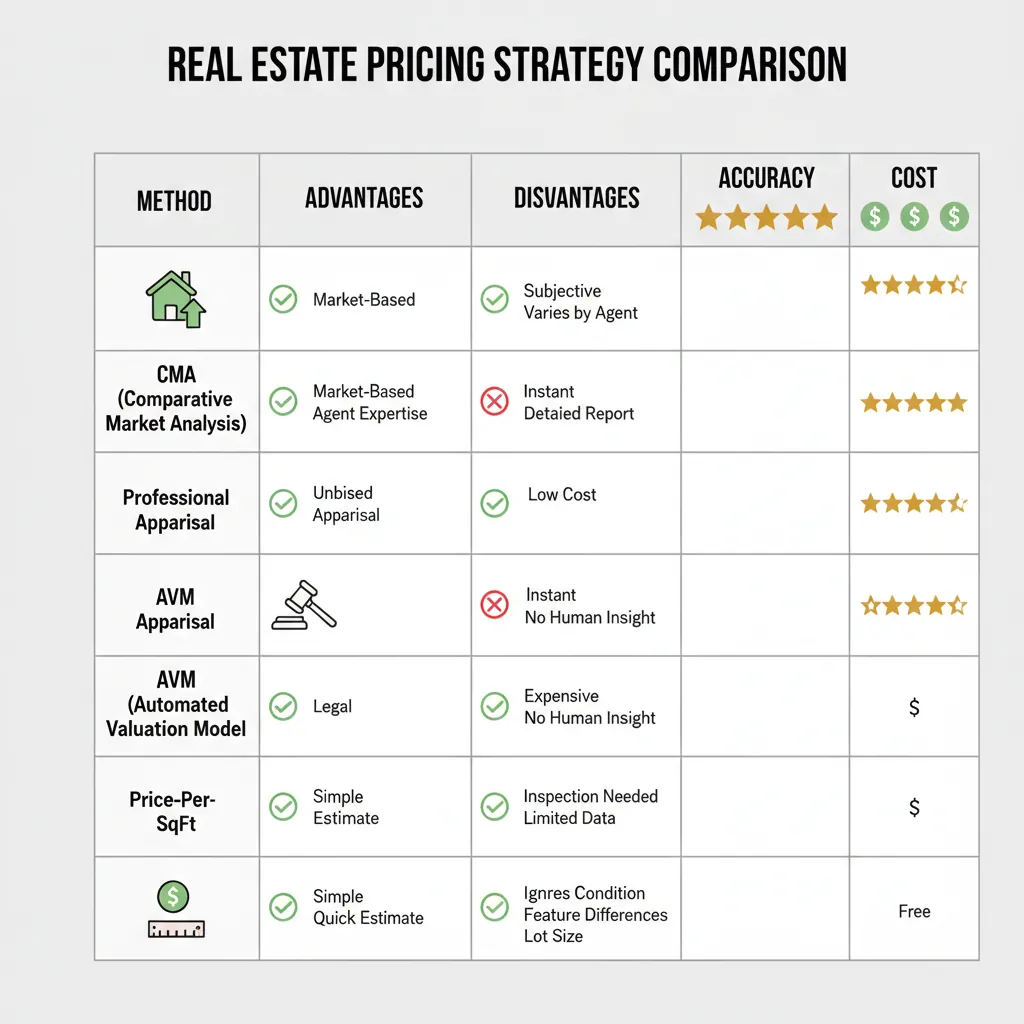
Your home's value isn't determined by one magic formula. But some pricing methods will give you way more reliable results than others, depending on what you're dealing with. Check out how these four approaches stack up:
| Method | Accuracy Level | Cost | Time Required | Best For |
|---|---|---|---|---|
| Comparative Market Analysis (CMA) | High | Free (via agent) | 1–3 days | Most residential sales |
| Professional Appraisal | Very High | $300–$600 | 1–2 weeks | Unique properties, disputes |
| Automated Valuation Model (AVM) | Moderate | Free | Instant | Quick estimates only |
| Price-Per-Square-Foot | Moderate | Free | Hours | Uniform neighborhoods |
Comparative Market Analysis (CMA)
Most sellers should start here. A licensed agent will dig up recently sold homes — usually within a half-mile of yours and sold in the last 90 days — that match your place in size, age, condition, and features. The agent then adjusts for the differences. A finished basement? That's typically worth $15,000–$25,000 more. Sitting on a busy road? Expect to subtract 5–8% from value. You'll get a price range instead of a single number, which gives you real wiggle room. Want the full breakdown? Our seller's pricing guide walks you through it step by step.
Professional Home Appraisals
Does your property have something unusual about it? Maybe you've got significant acreage, a historic designation on the property, or you've put serious money into custom renovations. That's when a licensed appraiser becomes worth the $300–$600 investment. You're getting an objective, professional opinion with liability backing it up. And here's the thing: if you're selling, the buyer's lender will require an appraisal anyway during their financing. Getting one done before you list means you can price confidently and dodge any last-minute shocks.
Automated Valuation Models
Zillow's Zestimate, Redfin's estimate — they're quick and free, so they're tempting. But don't rely on them as your final answer. These tools pull from public tax records and MLS data that's often months out of date. A brand-new kitchen remodel? They won't know about it. A roof that's starting to leak? Same problem. Use AVMs to get a ballpark range at the start. Then move on to something more solid.
Back to topPreparing Your Home for Pricing
Home Inspection and Condition Assessment
Before you list, get a pre-listing inspection. It'll cost you $300–$500, but it's worth every penny. Why? Because discovering a failing HVAC system or roof damage before buyers show up gives you real choices — fix it, or adjust your price upfront. Waiting until mid-contract to deal with these issues puts you in a terrible negotiating position. Your home's condition is the foundation of everything else. It literally sets your pricing ceiling.
Recent Upgrades and Their Impact
Not every upgrade moves the needle equally. Here's what actually happens with common improvements:
| Improvement Type | Average Cost | Typical ROI | Market Demand | Pricing Impact |
|---|---|---|---|---|
| Minor kitchen remodel | $15,000–$25,000 | 75–85% | Very High | Strong positive |
| Bathroom refresh | $5,000–$15,000 | 60–70% | High | Moderate positive |
| New roof | $10,000–$20,000 | 60–68% | High | Prevents price reduction |
| Landscaping / curb appeal | $2,000–$8,000 | 80–150% | High | Strong first impression |
| Luxury pool addition | $40,000–$80,000 | 30–50% | Market-dependent | Mixed, often negative |
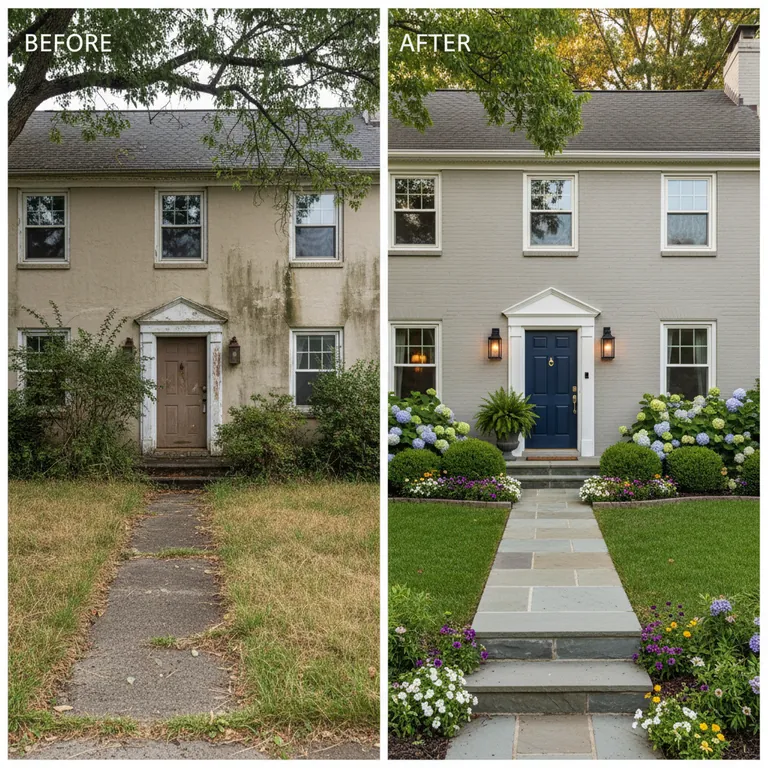
Curb appeal deserves serious attention. The National Association of Realtors found that strong exterior presentation can bump up perceived value by 7–10%. And here's the thing — you don't need to spend a fortune. Fresh paint, clean landscaping, a clear entryway. These cost relatively little but they create that emotional first impression that actually drives offers. Want practical staging advice? Check out our guide on home staging tips that help sell your house faster.
Back to topAvoiding Emotional Pricing Decisions
Common Pricing Mistakes Sellers Make
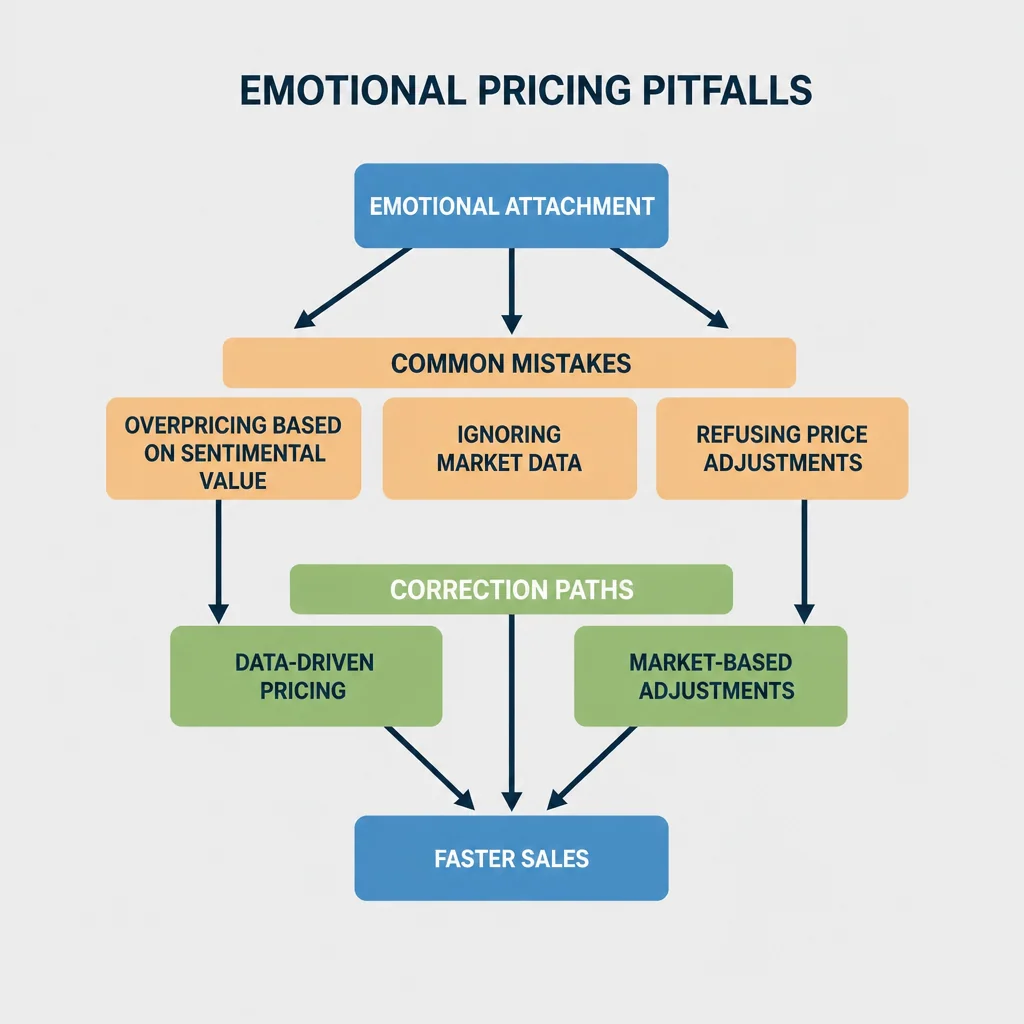
You love your home. That kitchen renovation you did yourself, the years of memories in those walls—they matter to you. But here's the thing: they don't add dollar-for-dollar value in the eyes of buyers. And that's where most sellers stumble. Your emotional attachment inflates what you think the house is worth, sometimes way above what the market will actually pay. Want to know the biggest traps? Check these out:

| Mistake | Why It Happens | Consequences | How to Avoid |
|---|---|---|---|
| Pricing based on what you need | Financial pressure | Overpriced listing, low traffic | Anchor to comparables, not need |
| Ignoring negative comparables | Confirmation bias | Unrealistic expectations | Request full CMA, not cherry-picked data |
| Refusing to reduce after 30 days | Sunk-cost thinking | Stale listing stigma | Set a pre-agreed price review schedule |
| Over-valuing personal upgrades | Emotional investment | Buyer resistance | Use agent's objective market data |
When to Adjust Your Price
The market will tell you what it thinks. If fewer than 5–8 people are showing up in those first two weeks, that's a signal. Same thing if you're getting showings but no offers coming in. Don't ignore this.
A price cut of 3–5% around the 21-day mark usually sparks fresh interest before your listing starts looking stale and worn-out. But wait past 45 days? Then you're looking at a much bigger reduction just to shake off that stigma. Build your decision-making timeline into your plan right now, before you list. Don't wait until you're frustrated and desperate.
Back to topWorking with Real Estate Professionals

A skilled listing agent gives you three things you honestly can't do solo: real MLS comparable data, a read on what local buyers actually want, and someone to handle the emotional weight of offers without you getting defensive. When you're interviewing agents, here's the key question to ask: how'd they land on that list price? A good agent shows their math. They'll walk you through each comparable property and explain why they adjusted the price up or down based on specific differences.
Watch out for agents who throw out a suspiciously high number just to land your business. That's called "buying the listing," and it almost always backfires—you won't get multiple offers at an inflated price, you'll just sit on the market looking overpriced.
And location matters more than you might think. If you're selling in a specific state, regional expertise is everything. Our Colorado pricing guide, Tennessee pricing guide, and Washington state pricing guide dig into the details that a national agent often misses—local market shifts, seasonal patterns, neighborhood-specific buyer preferences.
Back to topPricing for Different Market Conditions
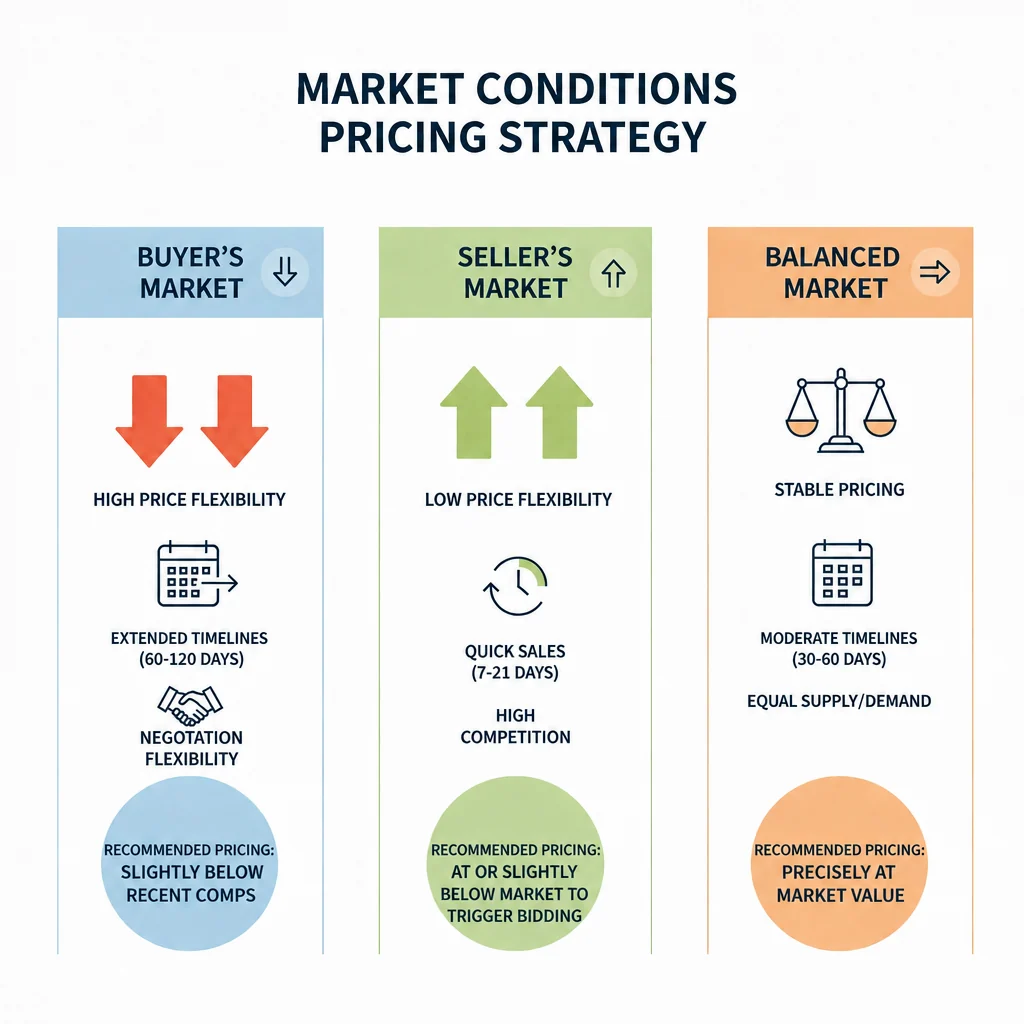
| Market Type | Pricing Strategy | Timeline to Sell | Price Flexibility | Key Considerations |
|---|---|---|---|---|
| Seller's Market | Price at or slightly below market to trigger bidding | 7–21 days | Low (buyers compete) | Offer review dates can maximize price |
| Balanced Market | Price precisely at market value | 30–60 days | Moderate | Condition and staging matter most |
| Buyer's Market | Price slightly below recent comps | 60–120 days | High (expect negotiation) | Concessions may be necessary |
| Distressed / Foreclosure | Price 10–15% below market for speed | 14–45 days | Very High | As-is condition priced in |
Here's the tough reality: if you're selling a distressed property or racing against a foreclosure clock, speed matters more than squeezing out every last dollar. You need to know what your home's actually worth in its current condition—not what it could be worth after fixes. That's essential information for making smart decisions. And here's the good news: our Indiana staging guide and Colorado staging guide show you how to present your home affordably, even when you're selling as-is.

For sellers in that position who need to close on a strict timeline, some turn to a cash home buyer like KDS Homebuyers, which purchases houses directly from owners with no fees, no required repairs, and the ability to close in as little as three days.
Back to topTools and Resources for Home Valuation
You've got options beyond just calling an agent or ordering an appraisal. Here are some free tools that'll help you get a clearer picture:
- Zillow / Redfin estimates: They're decent starting points, but here's the catch — accuracy really depends on how much market data exists in your area.
- FHFA House Price Index: This one tracks whether your region's prices are climbing or dropping, which matters if you're trying to understand your local market's direction.
- County assessor records: And these are actually public. You can call your county assessor's office or look them up online to see what neighboring homes recently sold for — no agent required.
- MLS via agent access: Most accurate of the bunch. You'll see recent comparables, how long homes actually sat on the market, and what sellers really got versus what they asked.
- HomeLight's Simple Sale tool: If you're thinking about a fast cash sale, this gives you a baseline offer you can measure against what you'd make selling the traditional way.
Don't rely on just one. Pull data from at least two or three of these, then sit down with a professional CMA to lock in your actual list price.
Back to topConclusion
Pricing your home to sell is part science, part strategy. Start with honest, data-driven comparable analysis. Your home's actual condition matters — not what it could be with work. Set a pre-agreed price review schedule. That way, emotion won't delay the adjustments you need to make. And lean on professionals whose market knowledge comes from real transaction data, not wishful thinking. The sellers who close fastest? They treat pricing as a market conversation, not a wish list. Get the number right at the start, and everything else flows from there — showings, offers, negotiations. It all works because you nailed the foundation.
Back to topFrequently Asked Questions
How do I determine the right asking price for my home?
Get a Comparative Market Analysis from a local agent. Then cross-reference it with 2–3 online AVM tools and honestly assess your home's current condition. Does your home have unusual features? A paid appraisal ($300–$600) gives you the most defensible number you can point to. But here's what matters most: anchor everything to what comparable homes have actually sold for — not what similar homes are listed at. There's a big difference.
How much does overpricing actually hurt my sale?
It hurts a lot. Homes that start overpriced and reduce later typically sell for 2–5% less than correctly priced homes that sold quickly. That's real money out of your pocket. And when a listing sits? Buyers interpret that as a red flag. Something must be wrong, they think. So they skip it or come in with lowball offers and drag out negotiations. Time on market is your enemy in most conditions.
Should I price high to leave room for negotiation?
That strategy usually backfires. Here's why: today's buyers aren't walking through overpriced listings. They're using data tools to filter them out before you even get a showing request. But in competitive markets, something counterintuitive happens. Price slightly under market, and you'll generate multiple offers that can actually drive your final sale price above asking. Leaving room for negotiation just means leaving money and serious buyers on the table.
When should I reduce my listing price?
Don't wait around. If you're seeing fewer than 5–8 showings in the first two weeks, or you're getting consistent showings with no offers, reduce promptly by day 21. A 3–5% cut repositions your listing in buyer search filters and tells the market you're serious and responsive. Wait beyond 45 days? You'll likely need a much steeper reduction to shake off the "stale listing" stigma.
Do home improvements always increase my asking price?
Not even close. Minor kitchen and bathroom updates, fresh paint, and decent landscaping consistently deliver strong returns. But over-improve for your neighborhood — say, adding a luxury pool or high-end finishes to an entry-level area — and you won't recover your costs. What do buyers in your specific price range actually want? That's what you should focus on. Your agent knows the market. Ask them.
Back to top
