

Pre-Foreclosure: What It Means and What You Can Do Right Now in Indiana
Falling behind on mortgage payments can feel overwhelming and scary. Pre-foreclosure is the warning stage before your lender takes legal steps to repossess your home, but you still have options to protect yourself. 2 This guide breaks down what pre-foreclosure means in Indiana, shows you how pre-foreclosure help works, and explains how to connect with a housing counselor or explore loan modification. Take action now—there are real solutions available. 3
Key Takeaways
- Pre-foreclosure in Indiana starts when you miss mortgage payments and your lender files a complaint in court. Indiana is a judicial foreclosure state, meaning the process goes through the courts and can take several months to over a year, giving you time to act.
- Missing payments can drop your credit score by 200–400 points after foreclosure or 50–150 points with a short sale. Foreclosure stays on your credit report for seven years. 1
- Indiana homeowners have rights in pre-foreclosure: pay missed amounts to reinstate the loan, sell the home, and use Indiana's statutory redemption period. Military families are protected under the Servicemembers Civil Relief Act (SCRA). 5
- Lenders offer help like loan modification, forbearance, repayment plans, short sales, or deed-in-lieu of foreclosure. Chapter 13 bankruptcy can stop foreclosure and set up a payment plan. 9 HUD-approved housing counselors provide free guidance.
- Beware of foreclosure rescue scams that charge upfront fees or ask for deeds. Work only with HUD counselors or government agencies like the CFPB; never sign property documents without expert review. 10
Pre-foreclosure in Indiana is serious — but it's not hopeless.
Facing pre-foreclosure in Indiana brings real fear and stress. You may feel overwhelmed by legal notices, calls from your mortgage servicer, and the threat of losing your home in cities like Indianapolis, Carmel, or Noblesville.
Many Indiana families face months of uncertainty since the judicial foreclosure process can take six months to well over a year from first missed payment to sale. You still have real options for foreclosure prevention and loss mitigation even after missing payments. Indiana courts require lenders to go through a formal legal process, which gives you time and opportunities to respond. A HUD-approved housing counselor or Indiana foreclosure attorney can explain your choices at no cost.
What is Pre-Foreclosure?

Pre-foreclosure means your mortgage servicer has not received all of your payments and the foreclosure process may start soon. In Indiana, this stage precedes a court-supervised foreclosure sale, but you still have time to review loss mitigation options and protect your home.
Definition: The period between the first missed payment and the foreclosure sale.
The phase starts after you miss your first mortgage payment and ends before the court-ordered foreclosure sale. During this time, your lender has not yet taken formal ownership of your home. You can still live in and control the property while exploring options like loan modification or repayment plans.
Indiana is a judicial foreclosure state, which means the lender must file a lawsuit in the circuit or superior court in the county where the property is located — for example, Marion County for Indianapolis properties or Hamilton County for Carmel and Fishers. The court issues a judgment before any sale can occur. This process typically takes six months to over a year, giving Indiana homeowners more time compared to non-judicial states.
After a judgment is entered, the sheriff conducts a public sale. Properties in pre-foreclosure may attract real estate investors or cash buyers before they ever reach that auction. Acting quickly helps preserve more options and prevents further damage to your credit score.
Timeline overview: Missed payments → Demand Letter → Court Filing → Sheriff's Sale notice.
Missing your first mortgage payment triggers calls and letters from your servicer. After three missed payments, expect a formal Demand Letter giving you 30 days to pay arrears or discuss loss mitigation. If no resolution is reached, the lender files a foreclosure complaint in Indiana circuit or superior court.
Once filed, you are served with the complaint and have 23 days to respond under Indiana rules. If no answer is filed, the lender may seek a default judgment. After a judgment is entered, a sheriff's sale is scheduled — typically 30 to 90 days later. Indiana also provides a 3-month redemption period after the sale in most cases, during which you may be able to redeem the property. Public court filings make your status visible, impacting credit and equity options.
What Happens During Pre-Foreclosure?

Pre-foreclosure affects your credit score and leads to calls and legal notices from your mortgage servicer. In Indiana, court filings become part of the public record once the lender files its complaint.
Immediate credit impact and how it compounds over time.
Missing mortgage payments leads to a fast drop in your credit score. A foreclosure can lower your score by 200 to 400 points and stays on your credit report for seven years. 1 A pre-foreclosure short sale typically causes a smaller drop of 50 to 150 points. Credit issues compound as late mortgage payments create problems with other debts. Lenders like Freddie Mac, Fannie Mae, and FHA require waiting periods after foreclosure before new loan approvals.
Legal notices and court filings in Indiana.
Because Indiana uses judicial foreclosure, the formal process begins with a court complaint filed by your lender, served to you by the sheriff or through certified mail. Unlike some states, Indiana does not use a Notice of Default filed with a county recorder — instead, the lawsuit itself is the formal trigger. Once the complaint is filed with the county court, the case becomes part of the public record accessible through Indiana's Odyssey court records system.
Opening every piece of certified mail and any court documents protects your rights to repayment plans, loan modification, or a pre-foreclosure sale. Missing a court deadline — such as the 23-day window to respond to the complaint — can result in a default judgment against you. Acting immediately after receiving any legal notice is critical. 2
Lender contact attempts and public record listings.
After missed payments, your mortgage servicer starts reaching out by letter and phone. After three missed payments, you receive a formal Demand Letter with a 30-day deadline. Once the lender files a foreclosure complaint, your case appears in Indiana's public court records. Real estate investors and agents watch these filings closely because pre-foreclosure properties may be available below market value through a short sale or direct cash purchase.
Your Rights During Pre-Foreclosure in Indiana
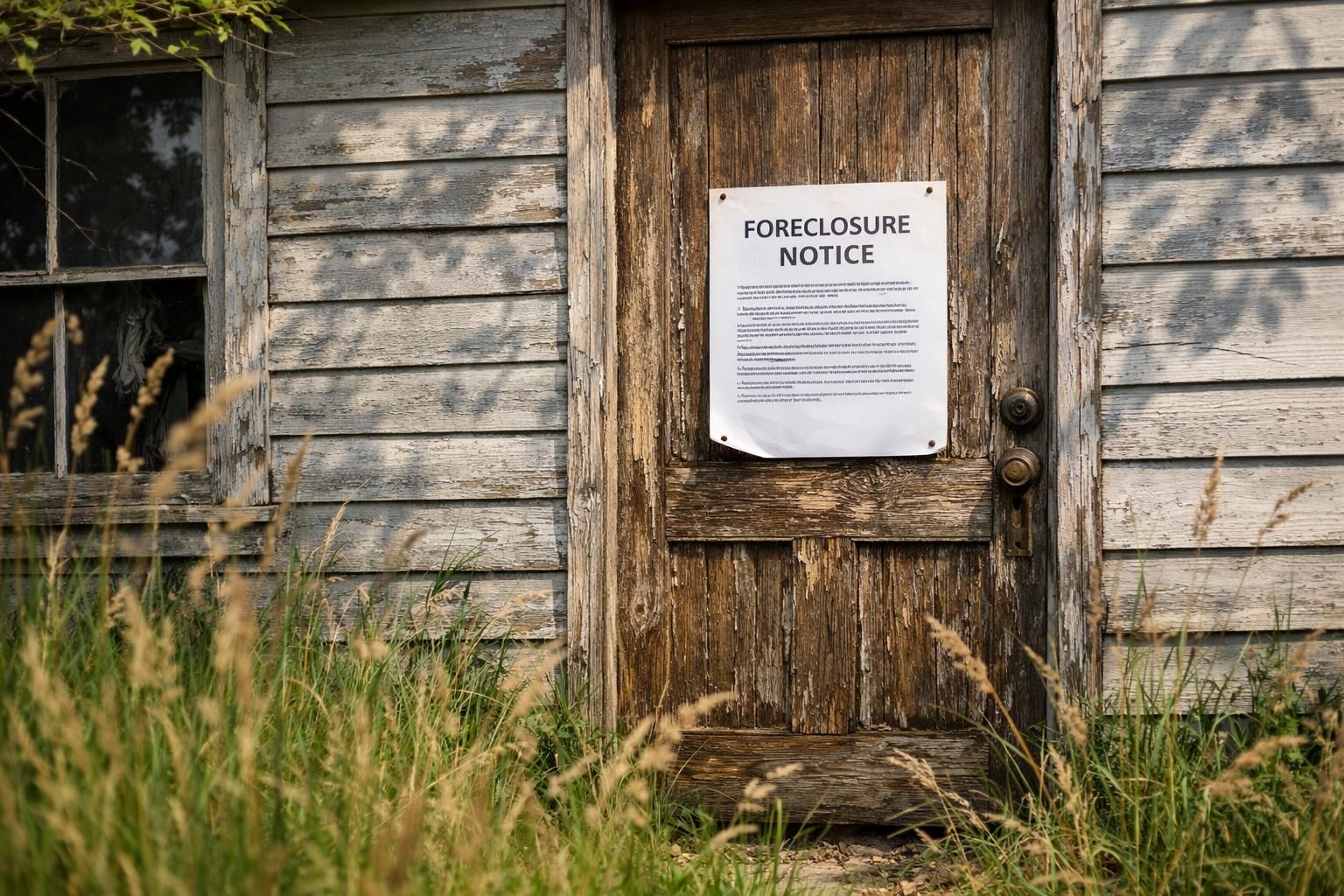
Indiana law gives you specific rights during pre-foreclosure. Understanding them helps you work with your mortgage servicer, avoid common mistakes, and protect your home.
Right to reinstate the loan.
Indiana law gives you the right to reinstate your mortgage loan by paying all missed payments, late fees, and legal costs before the foreclosure judgment is entered. Most lenders require a lump-sum payment of arrears — often $10,000–$30,000 if you are three or four months behind. A Demand Letter from your servicer will outline the exact amount owed and set a deadline, often 30 days. Reinstating your loan restores it to good standing and halts the foreclosure process. Contact your lender early and work with a HUD-approved housing counselor to clarify figures and deadlines.
Right to sell the property.
You keep the right to sell your Indiana home during pre-foreclosure, even after a court complaint is filed, as long as the sheriff's sale has not yet occurred. A pre-foreclosure sale — traditional or cash — can pay off outstanding mortgage debt and stop the judicial foreclosure process. If you owe more than the home is worth, a short sale requires lender approval but typically causes less credit damage than a completed foreclosure. Always review loan documents with a trusted attorney or HUD-approved housing counselor to protect yourself from equity-stripping schemes. 4
Indiana's redemption period.
Indiana provides a statutory redemption period after a sheriff's sale. In most residential cases, you generally have a period after the sale during which you may be able to redeem the property by paying the full amount owed, including fees. The sheriff's notice will detail your specific rights. Contact a HUD-approved housing counselor or Indiana foreclosure attorney to understand how the redemption period applies to your situation and county.
Protections under the Servicemembers Civil Relief Act (SCRA) for military members.
Active-duty service members receive special protections under the SCRA. If you serve in the military, your mortgage interest rate must be capped at 6 percent for debt incurred before active duty. Indiana courts cannot enter a foreclosure judgment against an active-duty service member without a court order confirming military status. This protection continues through active duty and for up to nine months after returning. 5 Military families in Fishers, Noblesville, and communities near Indiana's military installations should contact a HUD-approved counselor or JAG office for tailored assistance.
Immediate Action Steps

Open all mail and understand deadlines.
Open every letter from your mortgage servicer, Indiana courts, or any government agency. In Indiana's judicial foreclosure process, missing the 23-day deadline to respond to a court complaint can result in a default judgment and dramatically shorten your time to act. Early Demand Letters may offer loan modification or loss mitigation options, but deadlines move fast. Record all key dates in a calendar and respond promptly to preserve your rights under Indiana law and federal rules from the Consumer Financial Protection Bureau (CFPB).
Contact the lender to discuss loss mitigation options.
Reach out to your mortgage servicer as soon as you notice a problem making payments. Share your situation honestly — describe job loss, medical bills, or other financial hardship in detail. Ask about all available foreclosure prevention programs: loan modification, forbearance, repayment plans, partial claim relief, or short sale. FHA homeowners can call (877) 622-8525 or 800-CALL-FHA. VA loan holders should use the VA Foreclosure Alternatives resources. Provide documentation early — pay stubs, bank statements, and hardship letters — and keep records of every contact with your lender.
Review your budget and financial situation honestly.
List every source of income and every monthly expense. Prioritize mortgage payments after healthcare needs. Cut non-essential spending and consider temporary work to cover missed payments before legal deadlines arrive. Many Indiana homeowners in pre-foreclosure find that an honest budget review — done with a HUD-approved housing counselor — reveals options they had not considered, including short-term repayment plans or government assistance programs.
Explore all available options before deadlines approach.
Reach out early to your mortgage servicer and call a HUD-approved housing counselor at (800) 569-4287 or TTY (800) 877-8339. The Homeowners Hope Hotline at (888) 995-HOPE can also help. 3 Acting quickly in Indiana's judicial process expands your solutions — from forbearance and loan modification to short sale, deed-in-lieu, or Chapter 13 bankruptcy. 6 Indiana homeowners who engage early keep more control over their credit score and financial future.
Pre-Foreclosure Options for Indiana Homeowners

Loan modification: How it works and who it's best for.
A loan modification changes the original terms of your mortgage — lowering your interest rate, extending the repayment period, or sometimes reducing the principal balance. FHA-HAMP programs can roll missed payments into a new balance and lower monthly costs. Loan modification works best for homeowners facing ongoing financial hardship who want to keep their home. Apply as soon as possible; a HUD-approved housing counselor can help you gather documentation and submit a complete package to your servicer.
Forbearance: Temporary relief and its effects.
Forbearance gives you a temporary break from or reduction in monthly mortgage payments — typically three to six months. 7 Missed payments are not forgiven; they must be repaid through a lump sum, repayment plan, or loan modification once relief ends. You must request forbearance yourself — it does not happen automatically. This option helps prevent foreclosure while you recover from hardship but requires careful planning with your servicer or a HUD counselor.
Repayment plans: Catching up on missed payments.
Repayment plans let you catch up on missed mortgage payments by adding a set extra amount to your regular monthly payment over three to twelve months. You must get servicer approval and can handle higher temporary payments. This option works best when you have stable income again after a short-term setback. Get all terms in writing and review them carefully, as agreements affect fees, interest, and your position in any ongoing Indiana court proceedings.
Short sale: Selling for less than owed and its implications.
A short sale lets you sell your Indiana home for less than the mortgage balance, but requires lender approval and typically takes three to six months. Indiana law may allow lenders to pursue a deficiency judgment for any remaining balance after the sale — consult an Indiana foreclosure attorney before agreeing to terms. A short sale typically reduces your credit score by 50 to 150 points, which is less damaging than a completed foreclosure. Always document lender communications and work with a HUD-approved counselor. 3
Deed-in-lieu of foreclosure: Transferring ownership to the lender.
A deed-in-lieu lets you avoid Indiana's full judicial foreclosure process by voluntarily transferring your home's title to the mortgage lender. 8 This can protect your credit score better than foreclosure and may include relocation assistance. Ensure any written agreement from your servicer confirms full discharge of the remaining loan balance so you face no deficiency liability. Note that this option may have Indiana income tax implications — consult a tax professional before signing.
Bankruptcy (Chapter 13): Stopping foreclosure and restructuring debt.
Filing for Chapter 13 bankruptcy in Indiana's federal bankruptcy court triggers an automatic stay that immediately halts foreclosure proceedings, including any pending sheriff's sale. The court supervises a three-to-five-year repayment plan to catch up on missed mortgage payments. 9 Other debts like credit cards and medical bills can be included. Legal fees typically range from $1,500 to $3,500, payable over time. Many Indianapolis-area homeowners use Chapter 13 as part of a broader foreclosure prevention strategy with support from a qualified attorney.
Selling traditionally or selling for cash for faster resolution.
Traditional real estate sales can work during pre-foreclosure in Indiana, but the 30–45 day closing timeline for financed buyers may conflict with court deadlines. If a sheriff's sale has been scheduled, you risk running out of time. An experienced Indiana real estate agent familiar with distressed sales can help move faster.
Selling for cash usually closes in 7 to 14 days, which can fit tightly within Indiana's judicial foreclosure timeline. A quick sale pays off outstanding mortgage debt, late fees, and legal costs before the sheriff's sale occurs. Cash buyers often purchase homes in any condition, allowing you to skip repairs and skip the uncertainty of contingency-based offers. Selling quickly can protect your credit score and preserve remaining equity during financial hardship.
Red Flags and Scams to Avoid
Foreclosure rescue scams and equity stripping.
Foreclosure rescue scams target Indiana homeowners in financial hardship by offering fake "mortgage relief." Scammers charge upfront fees of $2,000–$5,000 for guaranteed loan modifications or foreclosure stops — services no one can legally guarantee. 10 Some tell you to stop communicating with your mortgage servicer, which puts your home at greater risk. Equity stripping schemes involve signing over your deed with a promise to save your house; the scammer collects rent but never pays the lender, leaving you facing eviction. Report suspicious activity to the Indiana Attorney General's Office, the CFPB, or the Federal Trade Commission immediately.
Lease-back schemes that could leave you homeless.
Lease-back scams convince you to sell your home and rent it back with a promise to repurchase later. 11 The scammer collects rent without paying the mortgage, putting you at risk of eviction and stripping you of all home equity. Never sign over a deed or transfer ownership without review by a licensed Indiana real estate attorney or HUD-approved housing counselor. Once your property rights are gone, recovering them through Indiana courts is extremely difficult and costly.
How to verify legitimate help and avoid predators.
Only work with HUD-approved housing counselors or the Indiana Attorney General's Office for free advice. You should never pay upfront fees to anyone claiming they can stop foreclosure or modify your loan. Always make mortgage payments directly to your servicer — never to a third party. Verify any agency through the CFPB's official list of approved counselors at consumerfinance.gov. If anyone pressures you to share sensitive financial information over unsecured websites or sign documents immediately, walk away and report them.
Making the Right Decision
Evaluate if you can realistically afford the home long-term.
Compare your monthly income to all bills, including mortgage payments, utilities, groceries, and healthcare. If you are using credit cards for everyday expenses or debt is growing each month, the hardship may be deeper than a temporary setback. HUD-approved housing counselors can help you review repayment plans, loan modification options, or explore a short sale if staying is not financially viable. Base your decision on honest facts — not hopes — about future earnings to prevent deeper hardship later.
Decision-making framework: Temporary setback vs. permanent financial change.
If your financial hardship is short-term — a brief job loss or medical issue — forbearance or a repayment plan may be enough. Contact your servicer and a HUD counselor to map out a catch-up plan. If you face lasting changes such as divorce, disability, or permanent income loss, loan modification or a short sale may better fit your situation. In those cases, the goal shifts from immediate relief to long-term financial stability. The CFPB and Indiana-based housing counseling agencies can help you sort through your loan documents and options in either scenario.
Use a decision framework to find your best path forward.
Consider your credit history, income, and current mortgage status together. If you have missed two or more payments but still have stable income, a loan modification or repayment plan likely suits you better than a short sale. If job loss or a permanent income change caused your hardship, a cash sale or deed-in-lieu of foreclosure may best protect your remaining equity. Indiana's judicial foreclosure timeline gives you more runway than many states, but each missed court deadline narrows your choices. HUD-approved counselors can walk through your specific numbers and match you with the right foreclosure prevention tools — from partial claims to Indiana court-supervised repayment structures.
Conclusion
Consider cash buyers if traditional sales are not feasible.
Cash buyers can help Indiana homeowners avoid foreclosure when traditional sales are too slow. These buyers often close in 7 to 14 days — well within Indiana's foreclosure timeline. Many homeowners preserve equity and limit credit damage by selling before the sheriff's sale date. Cash buyers typically purchase homes in any condition and may cover closing costs, making the process straightforward even under time pressure. If legal notices have already been filed in your county's circuit or superior court, a reputable cash buyer may be your fastest path to avoiding a public auction.
Acting quickly preserves your options in Indiana.
Taking quick action gives you the best chance at foreclosure prevention in Indiana. Each day closer to a scheduled sheriff's sale limits your choices and puts more equity at risk. Contacting your mortgage servicer right after missing a payment gives you access to loss mitigation options like loan modification or repayment plans. Waiting can lead to deficiency judgments, wage garnishment, and deeper credit damage. 6 Call a HUD-approved housing counselor, open all legal notices, and respond before any court deadlines pass. Early action keeps every door open — from staying in your home to limiting losses if you must move on.
FAQs
1. What does pre-foreclosure mean for an Indiana homeowner?
Pre-foreclosure in Indiana starts when you miss mortgage payments and the lender files a lawsuit in the county circuit or superior court. This stage gives you time to explore foreclosure prevention options such as loan modification, repayment plans, or a pre-foreclosure sale before a sheriff's sale occurs.
2. How long does the foreclosure process take in Indiana?
Indiana's judicial foreclosure process typically takes six months to over a year from the first missed payment to a sheriff's sale. After the sale, Indiana provides a redemption period during which you may be able to reclaim the property by paying the full amount owed. The timeline varies by county and individual circumstances.
3. Who can help if I face financial hardship and pre-foreclosure in Indiana?
A HUD-approved housing counselor provides free guidance and can help you navigate Indiana's foreclosure process. Call (800) 569-4287 to find a counselor near Indianapolis, Carmel, or your local area. The Indiana Attorney General's Office also provides homeowner resources and can help identify scams.
4. What steps should I take after receiving court papers from my mortgage lender in Indiana?
Act immediately. You have 23 days to respond to a foreclosure complaint under Indiana rules. Contact your mortgage servicer about loss mitigation options, and consult a foreclosure attorney or HUD-approved housing counselor for legal guidance. Missing this deadline can result in a default judgment.
5. Are there scams targeting Indiana homeowners in pre-foreclosure?
Yes. Scammers promise guaranteed loan modifications or foreclosure stops for upfront fees — services no one can guarantee. Report suspicious activity to the Indiana Attorney General's Office or the CFPB. Always use HUD-approved counselors and never transfer your deed or pay fees to third parties without verified legal advice.
6. Will pre-foreclosure affect my Indiana property taxes?
Unpaid property taxes in Indiana can lead to a tax lien or tax sale separately from mortgage foreclosure. If you are behind on both mortgage payments and property taxes, address both issues with your servicer and a HUD counselor. Indiana's property tax homestead exemption may still apply if you remain the owner of record, but consult a local tax professional for guidance specific to your county.
References
- ^ https://www.federalreserve.gov/pubs/feds/2010/201059/index.html
- ^ https://www.rocketmortgage.com/learn/preforeclosure
- ^ https://www.investopedia.com/terms/p/pre-foreclosure.asp
- ^ https://www.scirp.org/journal/paperinformation?paperid=57191
- ^ https://www.militaryonesource.mil/financial-legal/legal/servicemembers-civil-relief-act/
- ^ https://marshackhays.com/blog/what-is-pre-foreclosure-and-how-does-it-work/
- ^ https://www.nar.realtor/magazine/real-estate-news/economy/mortgage-forbearance
- ^ https://www.consumerfinance.gov/ask-cfpb/what-is-a-deed-in-lieu-of-foreclosure-en-291/
- ^
