

Pre-Foreclosure: What It Means and What You Can Do Right Now in California
Falling behind on mortgage payments can feel overwhelming and scary. In California, pre-foreclosure is the warning stage before your lender takes legal steps to repossess your home — but you still have real options to protect yourself. 2 This guide breaks down what pre-foreclosure means under California law, how to connect with a HUD-approved housing counselor, and how to explore loan modification before the foreclosure timeline advances. 3
Key Takeaways
- In California, pre-foreclosure typically begins with a Notice of Default (NOD) filed by the lender after three or more missed payments. The non-judicial foreclosure process gives homeowners roughly 111 days minimum before a trustee sale.
- Foreclosure can drop your credit score by 200–400 points and stays on your credit report for seven years. A short sale typically causes a 50–150 point drop. 1
- California homeowners have the right to reinstate the loan up to five business days before the trustee sale, sell the property, and benefit from the state's one-action rule limiting lender deficiency claims. Military families are also protected under the Servicemembers Civil Relief Act (SCRA). 5
- Lenders offer options including loan modification, forbearance, repayment plans, short sales, and deed-in-lieu of foreclosure. Chapter 13 bankruptcy can immediately stop a trustee sale and allow debt restructuring. 9
- Beware of foreclosure rescue scams. California's Home Equity Purchase Contract law (Civil Code Section 1695) provides specific protections — always work with HUD-approved counselors or the California Department of Real Estate for verified help. 10
Pre-foreclosure in California is stressful — but it is not hopeless.
Facing pre-foreclosure in California — whether in Los Angeles, Sacramento, San Diego, or the Central Valley — brings real fear and uncertainty. You may feel overwhelmed by legal notices, calls from your mortgage servicer, and the threat of losing your home.
California's non-judicial foreclosure process can move relatively quickly once the Notice of Default is filed, so understanding your timeline matters. But this period still gives you meaningful time to act and explore loss mitigation options.
Lenders generally prefer to avoid foreclosure because of the cost and delay involved. A HUD-approved housing counselor or California-licensed foreclosure attorney can walk you through your options clearly and often at no cost to you.
What is Pre-Foreclosure?

Pre-foreclosure in California means your mortgage servicer has not received payments and the foreclosure process may begin soon. California primarily uses a non-judicial (trustee sale) process, meaning courts are generally not involved unless you contest the foreclosure. You still have time to review loss mitigation options and protect your home.
Definition: The period between the first missed payment and the trustee sale.
In California, the pre-foreclosure phase starts after you miss mortgage payments and ends before the trustee sale. During this time, the lender has not taken ownership, and you can still live in and control the property while exploring options like loan modification or a pre-foreclosure sale.
The process formally begins when the lender or trustee records a Notice of Default (NOD) with the county recorder's office — a public filing that signals the loan is in default. After the NOD is recorded, California law requires a 90-day waiting period before the lender can record a Notice of Trustee Sale. The sale itself cannot occur until at least 21 days after that notice is posted and published.
In total, California's minimum foreclosure timeline is roughly 111 days from NOD recording to trustee sale, though in practice the process often takes longer. Acting early is critical.
Timeline overview: Missed payments → Notice of Default → Notice of Trustee Sale → Auction.
After one or two missed payments, your servicer will begin calling and sending letters. By the third missed payment — typically around 90 days of delinquency — the lender may instruct the trustee to record a Notice of Default with the county recorder.
After the NOD is recorded, you have a 90-day reinstatement period during which you can pay all arrears and bring the loan current. If you have not resolved the default, the lender records a Notice of Trustee Sale, setting the auction date at least 21 days out.
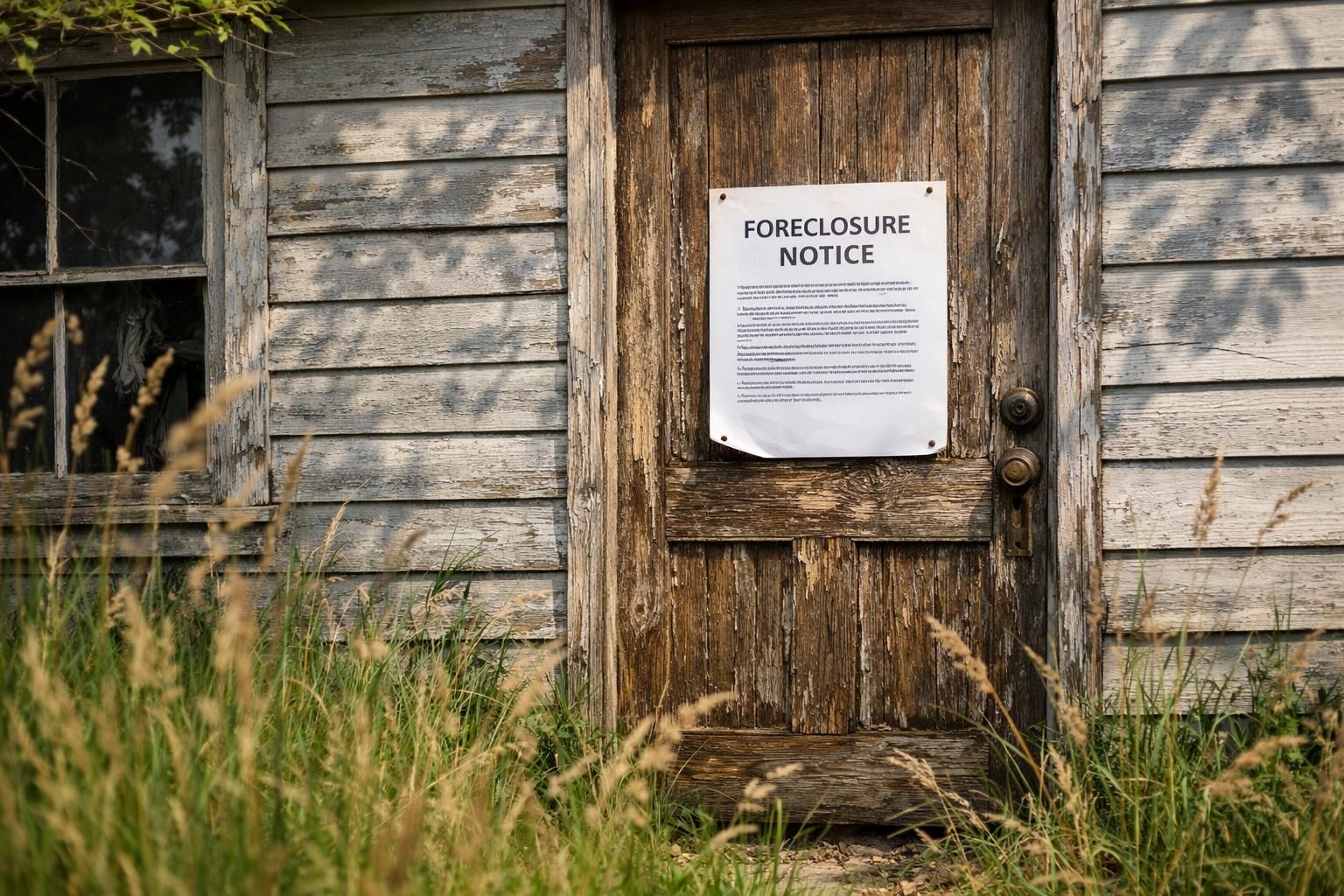
California law requires the Notice of Trustee Sale to be posted on your property, published in a local newspaper, and mailed to you. The trustee sale — conducted publicly, often on courthouse steps — completes the foreclosure unless you take action first. The entire process is recorded in public county records and will affect your credit history and home equity.
What Happens During Pre-Foreclosure?

Immediate credit impact and how it compounds over time.
Missing mortgage payments triggers a fast drop in your credit score. A completed foreclosure can lower your score by 200 to 400 points and remains on your credit report for seven years. 1 Selling during pre-foreclosure through a short sale typically causes a smaller drop of 50 to 150 points.
The impact spreads to other credit accounts too — auto loans and credit cards may become harder to manage after foreclosure. Lenders like Freddie Mac, Fannie Mae, and FHA require waiting periods of several years before approving new home loans after foreclosure, making early action especially valuable.
Legal notices: Recorded documents and property postings.
In California, the Notice of Default is recorded with the county recorder rather than filed through a court. You will receive a copy by certified mail. The California Homeowner Bill of Rights (HBOR), enacted in 2013, requires mortgage servicers to contact you by phone or in person at least 30 days before recording the NOD to discuss foreclosure alternatives.
Once the Notice of Trustee Sale is issued, it must be posted on your property and published. Opening every piece of certified mail and responding promptly protects your rights to reinstatement, loan modification, or a pre-foreclosure sale. 2
Lender contact attempts and public record listings.
After missed payments, your mortgage servicer will contact you by letter and phone. California's HBOR requires servicers to provide a single point of contact — one person or team — to assist you through the loss mitigation process. This is an important right that many homeowners do not know about.
Once the NOD is recorded with the county, your pre-foreclosure status becomes public. Anyone can access these filings through county recorder records. Properties in this stage often appear on investor lists and real estate sites, attracting cash buyers and agents familiar with distressed sales.
Your Rights During Pre-Foreclosure in California
Right to reinstate the loan.
California law gives you the right to reinstate your loan by paying all missed payments, late fees, and legal costs up to five business days before the scheduled trustee sale. This window is one of your most powerful tools. If you are three or four months behind, reinstatement totals typically range from $10,000 to $30,000 or more.
Your servicer is required to send you a reinstatement figure upon request. Many homeowners work with HUD-approved housing counselors to verify the numbers and meet reinstatement deadlines. Acting before the Notice of Trustee Sale is recorded gives you the most time and flexibility.
Right to sell the property.
You retain the right to sell your home at any point before the trustee sale. Many California homeowners choose a pre-foreclosure sale to avoid the full credit impact of foreclosure. You can list your property or seek cash offers while still living there, provided the trustee sale has not occurred.
If you owe more than the home is worth, a short sale may be an option — but your lender must approve it first. 3 Importantly, California's anti-deficiency laws (Code of Civil Procedure Section 580b and related statutes) generally protect homeowners from deficiency judgments after a short sale on a purchase-money loan, though you should confirm your specific situation with an attorney.
Always consult a HUD-approved housing counselor or licensed attorney before signing any sale agreement during pre-foreclosure. 4
California's one-action rule and anti-deficiency protections.
California's one-action rule generally limits lenders to one legal action to recover on a mortgage debt. Combined with the state's anti-deficiency statutes, most homeowners who lose a primary residence through non-judicial foreclosure are protected from personal liability for the remaining loan balance. These protections do not apply in all situations — second mortgages and HELOCs may be treated differently — so legal advice is essential.
Protections under the Servicemembers Civil Relief Act (SCRA).
Active-duty service members in California receive federal protections under the SCRA. Lenders must cap interest rates at 6 percent on pre-service mortgage debts, and foreclosure on those debts requires a court order during active duty and for up to nine months after discharge. 5 Contact a HUD-approved counselor or military legal assistance office for guidance specific to your situation.
Immediate Action Steps
Open all mail and understand California-specific deadlines.
Open every letter from your mortgage servicer, the county recorder, or any government agency. California's HBOR requires servicers to contact you before recording a NOD, so early notices may contain critical options. Later documents such as the Notice of Default or Notice of Trustee Sale contain legal deadlines — missing them can eliminate your reinstatement and sale rights.
Note that California's non-judicial process moves without court supervision. Once the trustee sale date is set, your window to act narrows quickly. Record all deadlines in a calendar and consult a HUD-approved housing counselor at (800) 569-4287 if you need help reading the documents.
Contact your servicer immediately — California HBOR requires a single point of contact.
Under California's Homeowner Bill of Rights, your servicer must assign you a single point of contact when you request foreclosure prevention assistance. This person or team must have access to your loan information and authority to discuss your options. Use this right to your advantage.
Be honest about your financial hardship and ask about all available programs: loan modification, forbearance, repayment plans, partial claims, and short sales. FHA borrowers can call (877) 622-8525 or 800-CALL-FHA. VA loan holders can visit the VA Foreclosure Alternatives page. Keep written records of every contact with your servicer.
Review your budget honestly.
List every source of income and every monthly expense. Prioritize mortgage payments after healthcare needs. If you are using credit cards for basic expenses or see balances growing each month, your financial hardship may require a longer-term solution than a simple repayment plan.
Consider whether the home is affordable long-term — not just whether you can survive the next month. Honest assessment now helps you choose the right loss mitigation option and avoid deeper problems later.
Explore all options before California deadlines pass.
Call a HUD-approved housing counselor at (800) 569-4287 or the Homeowners Hope Hotline at (888) 995-HOPE right away. 3 California deadlines under non-judicial foreclosure are firm — once the trustee sale date is posted, you have very little time left.
Options like Chapter 13 bankruptcy, a pre-foreclosure sale, or deed-in-lieu of foreclosure must all begin well before the sale date. 6 Acting now preserves more choices and limits damage to your credit score and equity.
Pre-Foreclosure Options in California

Loan modification: How it works and who it's best for.
A loan modification changes your existing mortgage terms — your servicer may lower your interest rate, extend the repayment period, or in some cases reduce principal. FHA-HAMP programs are available for FHA-insured loans. California homeowners with conventional loans may qualify for in-house servicer programs or options through Fannie Mae or Freddie Mac.
Loan modification works best for homeowners facing ongoing hardship who want to keep their home. Apply as early as possible and submit all required financial documents — income verification, bank statements, and a hardship letter. Under California's HBOR, servicers are prohibited from proceeding with a trustee sale while a complete loan modification application is under review ("dual tracking" ban).
Forbearance: Temporary relief and its effects.
Forbearance pauses or reduces your mortgage payments temporarily — typically three to six months, sometimes longer. 7 Missed payments are not forgiven; you will need to repay them through a lump sum, repayment plan, or loan modification once the forbearance ends. Request forbearance directly from your servicer and get all terms in writing before agreeing.
Repayment plans: Catching up on missed payments.
A repayment plan spreads your missed payments over several months by adding an extra amount to your regular payment. Most plans run three to twelve months. You must have stable income to qualify and get servicer approval in writing. A HUD-approved counselor can help you negotiate terms and review all documents before you sign.
Short sale: Selling for less than owed in California.
A short sale allows you to sell your home for less than the mortgage balance with lender approval. The process typically takes three to six months. California's anti-deficiency laws offer meaningful protection — on purchase-money loans secured by owner-occupied one-to-four unit properties, lenders generally cannot pursue a deficiency judgment after a short sale. Always confirm your specific situation with a California-licensed attorney before proceeding. 3
A short sale will lower your credit score by 50 to 150 points — less damaging than a full foreclosure. Keep written records of all lender communications throughout the process.
Deed-in-lieu of foreclosure: Transferring ownership to the lender.
A deed-in-lieu allows you to voluntarily transfer title to the lender in exchange for release from the mortgage debt. 8 Some lenders offer relocation assistance ("cash for keys") as part of this arrangement. Make sure any agreement clearly states that the full debt is satisfied and no deficiency will be pursued.
Lenders may decline if there are junior liens or title issues. Consult a tax professional as well — debt forgiveness can have California income tax implications depending on the circumstances.
Bankruptcy (Chapter 13): Stopping the trustee sale.
Filing for Chapter 13 bankruptcy triggers an automatic stay that immediately halts a California trustee sale. The court supervises a three-to-five-year repayment plan that lets you catch up on mortgage arrears while keeping your home. 9 Attorney fees typically range from $1,500 to $3,500 and can be paid over time through the plan. Many homeowners use Chapter 13 alongside guidance from HUD-approved counselors and a qualified bankruptcy attorney.
Selling traditionally or selling for cash.
A traditional sale through a real estate agent can work during pre-foreclosure, but buyers using mortgages typically need 30 to 45 days to close — which may not align with California's foreclosure timeline. If a Notice of Trustee Sale has already been recorded, a traditional listing may not close in time.
Selling for cash to a local investor can close in as few as 7 to 14 days. This may be enough to pay off your outstanding mortgage balance, late fees, and legal costs before the trustee sale date. Cash buyers typically purchase homes in any condition and may cover closing costs, preserving more of your remaining equity during a financially difficult time.
Red Flags and Scams to Avoid in California
Foreclosure rescue scams and equity stripping.
California has some of the highest rates of foreclosure rescue fraud in the country. Scammers target distressed homeowners with promises of guaranteed loan modifications or foreclosure stoppage for upfront fees of $2,000 to $5,000. 10 Under California law, it is illegal for foreclosure consultants to collect fees before completing their promised services.
Equity stripping schemes involve persuading you to sign over your deed with false promises of saving your home. The scammer collects rent from you but does not pay the mortgage, leaving you facing eviction with no equity. Report any suspicious activity to the California Department of Real Estate or the Consumer Financial Protection Bureau (CFPB) immediately.
Lease-back schemes that could leave you homeless.
Lease-back scams offer to buy your home and rent it back to you with an option to repurchase later. 11 California's Home Equity Purchase Contract law (Civil Code Section 1695) provides some protections for homeowners in default who sell to equity purchasers — including a five-day right of rescission — but these protections can be circumvented by unscrupulous operators. Never sign over your deed without independent legal review.
How to verify legitimate help in California.
Only work with HUD-approved housing counselors or your servicer's designated single point of contact. You can verify HUD-approved agencies at hud.gov or by calling (800) 569-4287. The California Department of Real Estate also provides resources for verifying licensed foreclosure consultants and real estate professionals.
Never pay upfront fees for loan modification or foreclosure help. Never sign loan documents or transfer property without a licensed California attorney reviewing the terms first. The CFPB lists approved agencies for loss mitigation guidance. If an offer sounds too good to be true, report it to the California Attorney General's office.
Making the Right Decision
Evaluate if you can realistically afford the home long-term.
Be honest about your finances. Compare your monthly income to all expenses — mortgage, utilities, food, healthcare, and debt payments. If you are using credit cards for basics or debt is growing each month, a longer-term solution may be needed. Many California homeowners find that temporary hardships like job loss can be managed with forbearance, while permanent income changes may call for a loan modification or sale.
HUD-approved housing counselors can help you review your budget and match you with the right foreclosure prevention tool. Prioritize your mortgage and essential needs, and seek advice from trusted resources like the CFPB and California Housing Finance Agency (CalHFA) programs.
Temporary setback vs. permanent financial change.
A short-term hardship — brief unemployment, a medical emergency — may be addressed through forbearance or a repayment plan. A lasting change such as divorce, disability, or permanent income loss may require loan modification, a short sale, or even Chapter 13 bankruptcy. Working closely with your servicer and a HUD-approved counselor helps you identify which path fits your actual situation rather than just your hopes about the future.
Using a decision framework to find your best path.
Consider your income stability, the amount of equity in your home, how far behind you are on payments, and whether you want to keep or leave the property. If you have missed two or three payments but still have stable income, reinstatement or a repayment plan may be within reach. If you have negative equity and no path back to affordability, a short sale or deed-in-lieu may protect you more than fighting to hold on. California's HBOR dual-tracking prohibition gives you some breathing room while a complete loss mitigation application is pending — use that time wisely with qualified guidance.
Conclusion
Consider cash buyers if traditional options are not feasible.
If time is running short and traditional sale timelines will not work before a California trustee sale date, a reputable local cash buyer may be your best option. Cash purchases can close in 7 to 14 days, potentially stopping the foreclosure process before your home reaches auction. Many cash buyers purchase homes as-is, covering closing costs and helping you walk away with remaining equity intact.
Always verify the legitimacy of any cash buyer through the California Department of Real Estate or by consulting a HUD-approved housing counselor before signing any agreement.
Act now — California's timeline is unforgiving.
California's non-judicial foreclosure process can move from Notice of Default to trustee sale in as little as four months. Every day closer to that sale date eliminates options and puts your equity at greater risk. Contact your servicer today, open all legal mail, and call a HUD-approved housing counselor at (800) 569-4287 or (888) 995-HOPE. 6
Early action keeps doors open — to reinstatement, loan modification, a pre-foreclosure sale, or a faster resolution through a cash buyer. Waiting costs you choices. The right move now can protect your home, your credit, and your financial future.
If you are facing pre-foreclosure in California and need a fast, straightforward solution, KDS Homebuyers buys homes directly from homeowners for cash — no repairs, no agent fees, no delays. Visit kdshomebuyers.net to request your free cash offer today and see how quickly you can move forward.
FAQs
1. How does California's foreclosure process differ from other states?
California primarily uses non-judicial (trustee sale) foreclosure, meaning the process does not go through court unless you contest it. The minimum timeline is roughly 111 days from Notice of Default recording to trustee sale. California's Homeowner Bill of Rights also requires servicers to provide a single point of contact and prohibits dual tracking while a loan modification application is under review.
2. What is California's right of reinstatement?
California law gives you the right to reinstate your loan — by paying all arrears, fees, and costs — up to five business days before the scheduled trustee sale. Contact your servicer for the exact reinstatement amount and deadline.
3. Can a lender sue me for the remaining balance after foreclosure in California?
California's anti-deficiency statutes generally protect homeowners from deficiency judgments after non-judicial foreclosure on a purchase-money loan secured by an owner-occupied property. Protections vary for HELOCs, refinanced loans, and investment properties — always confirm your situation with a California attorney.
4. What is the California Homeowner Bill of Rights?
Enacted in 2013, California's Homeowner Bill of Rights requires mortgage servicers to assign you a single point of contact, prohibits dual tracking, and mandates written notice before recording a Notice of Default. These protections apply to first lien mortgages on owner-occupied one-to-four unit residential properties.
5. Are there scam protections specific to California?
Yes. California Civil Code Section 1695 governs home equity purchase contracts and gives homeowners in default a five-day right to cancel agreements with equity purchasers. State law also prohibits foreclosure consultants from collecting upfront fees. Report suspected fraud to the California Department of Real Estate or the California Attorney General.
6. Will pre-foreclosure affect my California property taxes?
Pre-foreclosure itself does not change your property tax obligation. However, debt forgiveness from a short sale or deed-in-lieu may have California income tax consequences. The federal Mortgage Forgiveness Debt Relief Act has expired and been extended at various points — consult a tax professional about your current exposure under both federal and California state tax law.
References
- ^ https://www.federalreserve.gov/pubs/feds/2010/201059/index.html
- ^ https://www.rocketmortgage.com/learn/preforeclosure
- ^ https://www.investopedia.com/terms/p/pre-foreclosure.asp
- ^ https://www.scirp.org/journal/paperinformation?paperid=57191
- ^ https://www.militaryonesource.mil/financial-legal/legal/servicemembers-civil-relief-act/
- ^ https://marshackhays.com/blog/what-is-pre-foreclosure-and-how-does-it-work/
