

Judicial vs. Non-Judicial Foreclosure: What's the Difference in Tennessee

If you are worried about losing your home in Tennessee, you are not alone. Tennessee is a non-judicial foreclosure state, which means lenders can foreclose without going through the court system in most cases. 3 Understanding how Tennessee's foreclosure process works — and what rights you have — can help you protect your home and plan your next steps. 1
Key Takeaways
- Tennessee primarily uses non-judicial foreclosure through a power-of-sale clause in the deed of trust. A trustee handles the process without court involvement, and sales can happen within about 60 days of the first published notice.
- Because there is no judge overseeing the process, timelines move fast in Tennessee — often two to three months from notice of default to auction.
- Tennessee law requires the foreclosure sale to be advertised in a local newspaper for three consecutive weeks before the auction date.
- Federal law still gives you at least 120 days after missing a payment before formal foreclosure proceedings can begin.
- Tennessee does allow deficiency judgments after foreclosure. If your home sells for less than you owe, the lender may pursue the remaining balance in court.
- You have rights — including the ability to seek loan modifications, cure defaults, or explore alternatives — but deadlines are short. Acting early is critical.
What Is Judicial Foreclosure?
Judicial foreclosure uses the state court system to resolve mortgage default. While Tennessee rarely uses this path, it is worth understanding because it can apply in certain situations, such as when a mortgage instrument lacks a valid power-of-sale clause.
Court involvement and lender lawsuit filing
In a judicial foreclosure, the lender files a lawsuit in state court — in Tennessee, that would be a Chancery Court or Circuit Court depending on the county. You receive a summons and complaint, and you typically have 30 days to respond. If you do not file an answer, the court may enter a default judgment against you.
This process is far less common in Tennessee than in states like Florida or New York, but it does occur when deeds of trust do not contain enforceable power-of-sale language. Court involvement adds months — sometimes over a year — to the process, but it also gives homeowners more formal opportunities to raise defenses.
Summons, judgment, and sale approval process
If the Tennessee court rules for the lender, a judgment of foreclosure is entered and the court authorizes a sale. A notice of sale is published before the auction. In some cases, homeowners may raise defenses during litigation to slow or challenge the process. Deficiency judgments — where a lender seeks the difference between the sale price and the loan balance — are available through the judicial process in Tennessee.
What Is Non-Judicial Foreclosure?

Non-judicial foreclosure is the standard process in Tennessee. If your home loan uses a deed of trust — which is the norm in this state — the lender does not need to go to court to foreclose. A trustee manages the entire process under the power-of-sale clause in your deed of trust.
Power-of-sale clause and trustee-led process
Most Tennessee home loans are secured by a deed of trust that names a trustee — typically an attorney or title company — who holds the power to sell the property if you default. When you miss payments, your mortgage servicer instructs the trustee to begin foreclosure. The trustee issues a notice of default and schedules a public auction without any judge's approval required.
Tennessee does not require the lender to send you a formal notice of default before advertising the sale, though federal rules still require your servicer to wait 120 days after your first missed payment before initiating foreclosure. Once the process starts under state law, it moves quickly.
Tennessee's notice requirements and timeline
Under Tennessee law, the foreclosure sale must be advertised in a newspaper published in the county where the property is located — once a week for three consecutive weeks before the sale date. The sale is typically held at the courthouse in the county where the property sits. In cities like Memphis, Nashville, Knoxville, or Chattanooga, these auctions take place at the respective county courthouse.
From the first published notice to the actual auction, the minimum timeline is roughly 21 days, but in practice most Tennessee foreclosures take 60 to 90 days from the point the servicer engages the trustee. There is no statutory right of redemption after the sale in Tennessee — once the property is sold at auction, you lose the right to reclaim it by paying off the debt.
Key Differences Between Judicial and Non-Judicial Foreclosure in Tennessee

Court involvement, timelines, redemption rights, deficiency judgments, and notification processes
In Tennessee's non-judicial process, there is no judge reviewing your case. The trustee handles everything outside of court, which keeps the timeline short — typically two to three months. In a judicial foreclosure (used only in limited situations), you would receive a formal summons with time to respond, and the process could take significantly longer due to court scheduling.
Tennessee does not provide a statutory post-sale redemption period for non-judicial foreclosures. Once the auction is complete and the deed is transferred, the former homeowner has no automatic right to reclaim the property. This is a critical difference from states like Indiana, which allow months of post-sale redemption.
Deficiency judgments are permitted in Tennessee. If your home sells at auction for less than the outstanding loan balance, the lender can file a separate lawsuit in state court to collect the remaining debt. Tennessee does not have broad anti-deficiency protections for residential mortgage borrowers the way some other states do, so this is a real financial risk to understand before any sale takes place. 2
Notification in Tennessee's non-judicial process centers on the newspaper publication requirement — three consecutive weekly notices. You may also receive direct communication from your mortgage servicer, but the legal trigger is the published notice. This means you need to monitor your mail and stay in contact with your servicer from the moment you miss a payment.
Homeowner Rights in Tennessee's Foreclosure Process
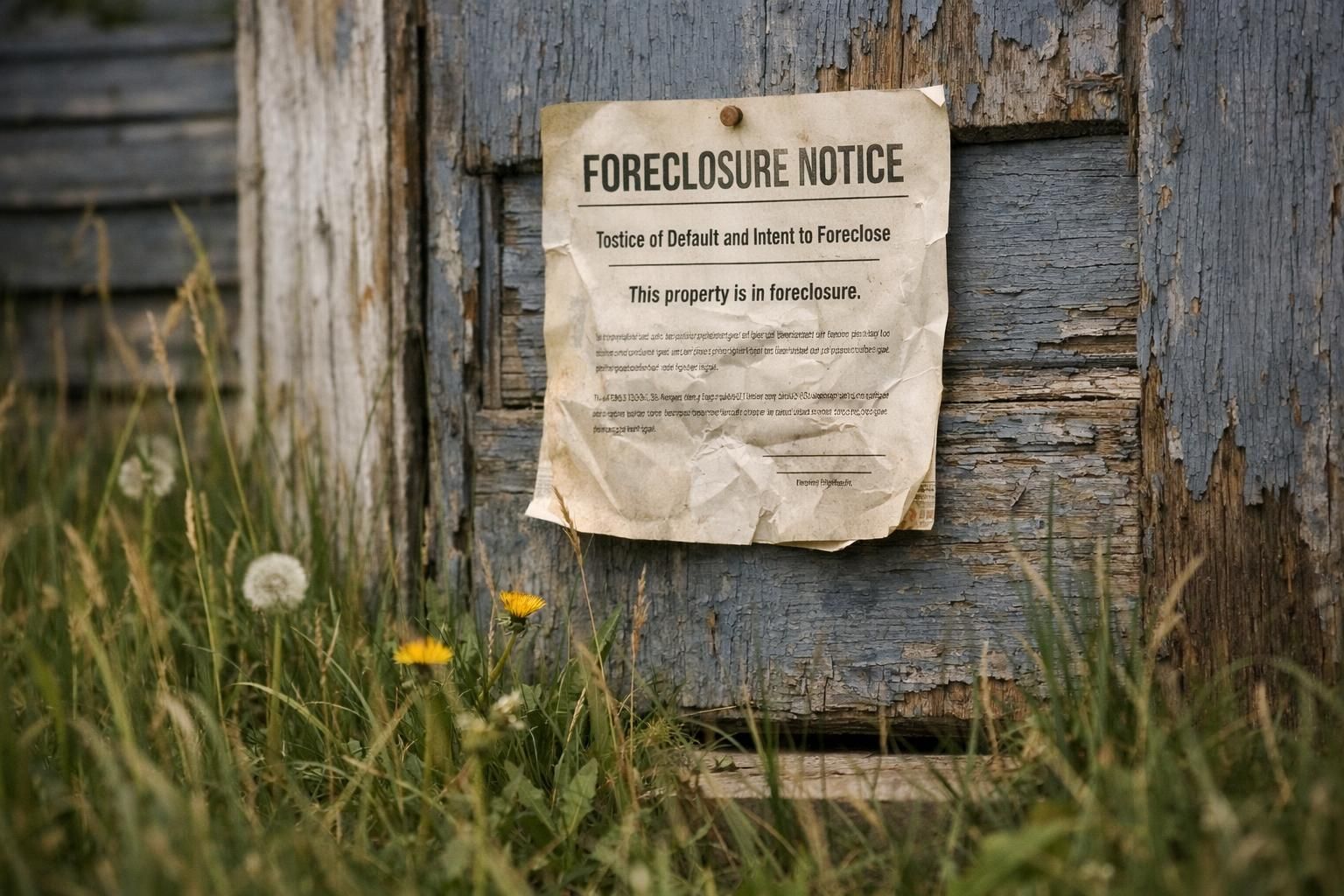
Even though Tennessee's non-judicial process gives lenders significant power, you still have meaningful rights and options.
Notice requirements, right to cure, and response options
Federal law requires your mortgage servicer to wait until you are more than 120 days delinquent before officially starting foreclosure. During this window, your servicer must evaluate you for loss mitigation options — including loan modification, repayment plans, or forbearance. 4
Your deed of trust may also include a right-to-cure provision requiring the lender to send you a written notice of default and give you time to bring the loan current before the trustee can proceed. Review your loan documents carefully to understand what your specific agreement requires.
If you believe the foreclosure was conducted improperly — for example, due to inadequate notice, errors by the servicer, or lack of legal standing — you may file a lawsuit in Tennessee Chancery or Circuit Court to challenge the sale. Tennessee courts have the authority to set aside a foreclosure sale if proper procedures were not followed. Acting quickly is essential because these challenges are easier before the sale than after.
Tennessee does not currently have a mandatory foreclosure mediation program, so proactive communication with your servicer and consultation with a licensed Tennessee real estate attorney are your best tools.
Tennessee Foreclosure Timeline: From First Missed Payment to Sale

Month-by-month breakdown for Tennessee homeowners
Month 1: You miss a mortgage payment. Your servicer begins contact attempts. No foreclosure action can begin for at least 120 days under federal rules.
Months 1–4: The servicer is required to review you for loss mitigation — loan modification, repayment plan, or forbearance. This is the best window to work out a solution. If you are in Nashville, Memphis, or any other Tennessee city, contact a HUD-approved housing counselor for free guidance during this period.
After 120 days: If no resolution is reached, the servicer instructs the trustee to begin foreclosure. The trustee schedules the sale and publishes the required three-week notice in a local newspaper in the county where your property is located.
Within 60–90 days of engagement: The public auction takes place, typically at the county courthouse. If no third-party bids exceed the lender's credit bid, the lender takes ownership of the property.
After the sale: There is no redemption period in Tennessee. The new owner — whether a third-party buyer or the lender — may begin eviction proceedings. The lender may also pursue a deficiency judgment in court if the sale did not cover the full loan balance.
What Tennessee Homeowners Can Do Right Now
Verify your loan documents, understand your timeline, and explore your options
Start by locating your deed of trust and checking for a power-of-sale clause and any right-to-cure language. Confirm whether your loan is serviced by a company subject to federal rules under the Consumer Financial Protection Bureau, which provides important protections during the 120-day pre-foreclosure window.
Contact your mortgage servicer immediately and request a loss mitigation application in writing. Ask about loan modification, forbearance, repayment plans, short sale, or deed in lieu of foreclosure. In Tennessee, these conversations need to happen early because once the newspaper notices begin running, the clock moves fast.
Consult a Tennessee real estate attorney or a HUD-approved housing counselor. Legal aid organizations in Memphis, Nashville, and Knoxville may offer low-cost or free consultations for homeowners facing foreclosure.
Foreclosure Avoidance Strategies for Tennessee Homeowners
Use the federal 120-day window to pursue loss mitigation seriously. 4 Loan modification can reduce your monthly payment or adjust your interest rate to make the loan affordable again. If your home has equity, a short sale may allow you to sell the property for less than you owe with lender approval, avoiding foreclosure altogether.
If you believe your servicer made errors — improper notices, failure to evaluate your loss mitigation application, or predatory lending practices — these can be raised as legal defenses in Tennessee court. 5 Because Tennessee does not offer post-sale redemption, raising these issues before the auction is critical.
Also consider whether filing for bankruptcy protection could give you time to reorganize your finances and catch up on mortgage arrears. Chapter 13 bankruptcy, in particular, can pause a Tennessee foreclosure and allow you to repay overdue amounts through a court-approved plan.
Review the potential for a deficiency judgment under Tennessee law before agreeing to any short sale or deed in lieu arrangement, and make sure any agreement includes a written waiver of deficiency from the lender.
Conclusion: Act Early — Tennessee's Timeline Leaves Little Room
Tennessee's non-judicial foreclosure process is one of the fastest in the country. Without court oversight or a post-sale redemption period, homeowners who wait too long lose their most important options. The good news is that federal protections and Tennessee law still give you a meaningful window to act — but you must use it.
Whether you are in Chattanooga, Knoxville, Memphis, or a rural county, the steps are the same: know your documents, contact your servicer early, seek professional guidance, and explore every alternative before the auction date arrives.
Consider Selling Quickly for a Fresh Start
If you are behind on payments and worried about foreclosure, selling your home to a cash buyer may be the fastest way to avoid auction, protect your credit, and move forward. Cash sales can close in as little as two weeks, skipping bank approvals and court delays entirely — giving you control over the outcome rather than leaving it to a trustee-led auction.
KDS Homebuyers purchases homes directly from Tennessee homeowners for cash, in any condition. If you want to explore a fast, straightforward sale and get out from under the stress of foreclosure, visit kdshomebuyers.net today for a free, no-obligation cash offer.
FAQs
1. Is Tennessee a judicial or non-judicial foreclosure state?
Tennessee is primarily a non-judicial foreclosure state. Most home loans use a deed of trust with a power-of-sale clause, allowing a trustee to foreclose without going through the court system.
2. How long does foreclosure take in Tennessee?
After the federal 120-day waiting period, the non-judicial process in Tennessee typically takes 60 to 90 additional days. The sale must be advertised in a local newspaper for three consecutive weeks before the auction date.
3. Does Tennessee have a redemption period after foreclosure?
No. Tennessee does not provide a statutory right of redemption after a non-judicial foreclosure sale. Once the property is sold at auction, the former homeowner cannot reclaim it by paying off the debt.
4. Can a lender pursue a deficiency judgment in Tennessee?
Yes. If your home sells at foreclosure auction for less than your loan balance, the lender may file a separate lawsuit in Tennessee court to collect the remaining debt. Tennessee does not have broad anti-deficiency protections for most residential borrowers.
5. Can I stop a foreclosure in Tennessee?
Yes, but you must act quickly. Options include loan modification, repayment plans, short sale, deed in lieu of foreclosure, or filing for bankruptcy protection. Challenging a foreclosure in court is also possible if proper procedures were not followed, but this is easier before the sale than after.
6. What court handles foreclosure disputes in Tennessee?
Tennessee Chancery Courts and Circuit Courts have jurisdiction over foreclosure-related lawsuits, including actions to challenge an improper non-judicial sale or to pursue a deficiency judgment.
References
- ^ https://www.auction.com/blog/judicial-vs-non-judicial-foreclosures/ (2024-11-21)
- ^ https://www.nolo.com/legal-encyclopedia/the-difference-between-a-judicial-and-nonjudicial-foreclosure.html
- ^ https://www.justia.com/foreclosure/judicial-vs-non-judicial-foreclosure/ (2025-10-18)
- ^ https://scholarship.law.nd.edu/cgi/viewcontent.cgi?article=2219&context=law_faculty_scholarship
- ^ https://scholarlycommons.law.emory.edu/cgi/viewcontent.cgi?article=1116&context=elj
