

How Foreclosure Affects Your Credit (And How Long It Lasts) in Tennessee
Worried about how losing your home could hurt your finances? The foreclosure credit score impact can be severe, often dropping scores by over 100 points and making it harder to get a loan. 1 This guide explains exactly what happens to your credit report after foreclosure in Tennessee and offers smart steps for rebuilding stronger financial habits. Find out how you can bounce back—starting today.
Key Takeaways
- Foreclosure can drop your credit score by 85 to 160 points if you had good credit, or by 60 to 80 points if your score was already low. The biggest drops happen in the first two years after foreclosure.1
- A foreclosure stays on your credit report for seven years from the date of your first missed mortgage payment, not the sale date. Each late payment before foreclosure is also listed for seven years.
- Tennessee is primarily a non-judicial foreclosure state, meaning the process can move quickly—sometimes completing in as little as 60 days—which makes early action especially important.
- After a foreclosure, mortgage lenders require waiting periods between two and seven years before approving new home loans. FHA loans need three years; conventional loans may require up to seven unless extenuating circumstances apply.
- Foreclosure raises insurance premiums by up to 50% and can lead to rental denials or employment screening issues. Acting early—through loan modification, short sale, or selling to a cash buyer—limits long-term damage.
Foreclosure significantly impacts credit, but the damage is not permanent, and there are proactive steps to rebuild.
Foreclosure can cause your credit score to drop by 85 to 160 points if you had good credit before the missed payments. If your FICO score was lower, expect a smaller decrease of about 60 to 80 points.
Your payment history and credit report will show the foreclosure as a derogatory remark for up to seven years after your first missed mortgage payment. You may face higher insurance costs, problems renting, or even issues with job applications due to this negative mark.
Many people feel overwhelmed during this time, but millions have recovered from foreclosure. The damage is not permanent if you take action early. Using secured credit cards, rebuilding your payment history with on-time payments, and keeping low balances on new lines of credit can slowly improve your scores.
If you are facing challenges now, consider options such as loan modification or selling the home quickly rather than waiting for foreclosure. Both options create less harm on your credit record than bankruptcy or a completed foreclosure sale—and in Tennessee, where the non-judicial process moves fast, acting sooner matters even more.
Immediate Impact of Foreclosure on Credit Scores
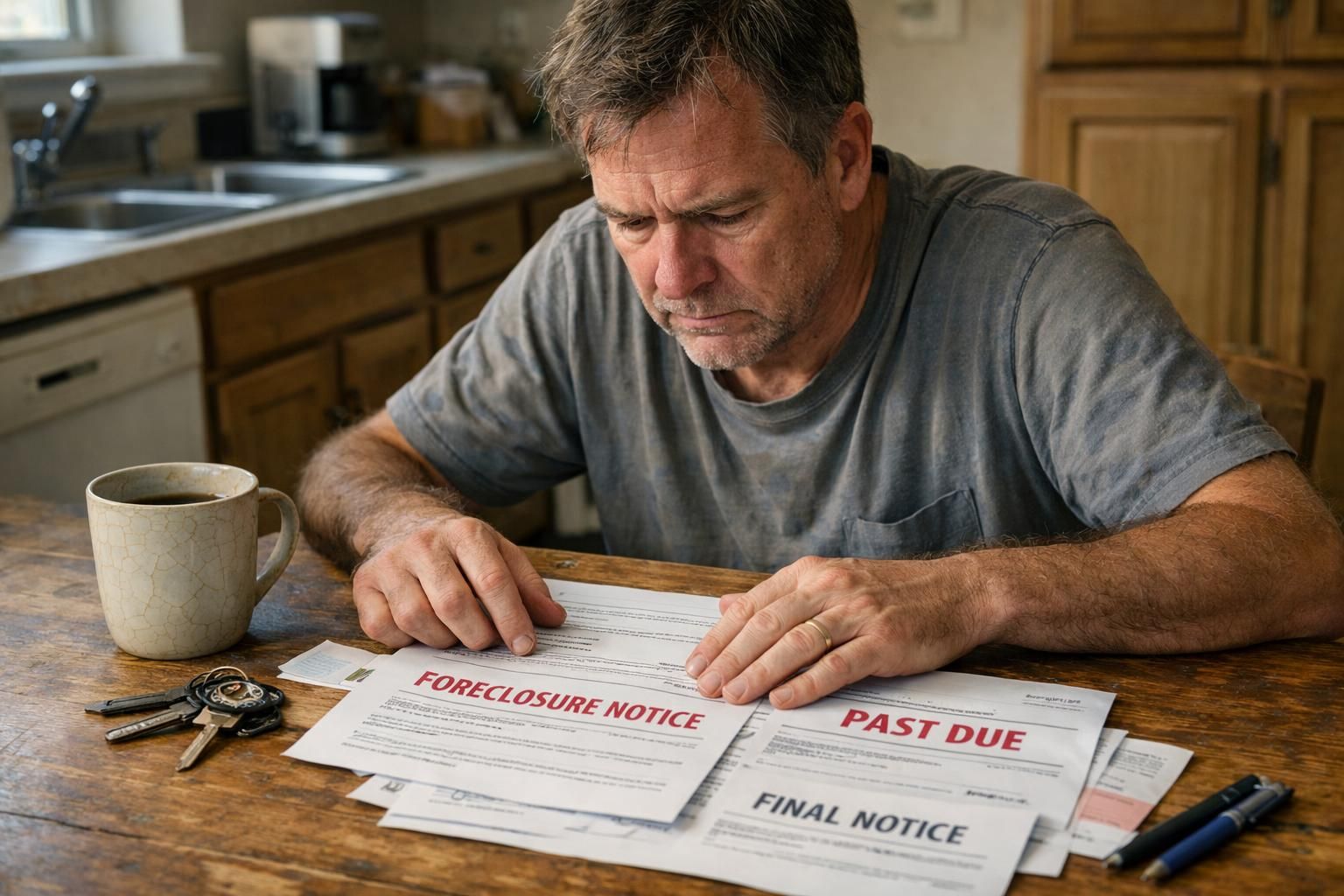
Foreclosure can cause your credit score to drop fast, especially if you had a strong payment history. Credit bureaus record missed mortgage payments and foreclosure filings as major events, which may affect your FICO scores almost right away.
Expect credit score drops of 85-160 points for good credit (680+).
If you have a solid credit score above 680, falling behind on mortgage payments can drop your FICO score by 85 to as much as 160 points. People with a pre-foreclosure score around 780 often see the steepest declines, sometimes falling to the 620–640 range. Those starting at 680 typically land between 575 and 595 after foreclosure appears on their credit report.
This steep decline happens soon after missed mortgage payments are reported to Experian, Equifax, or TransUnion. Short sales and deed in lieu of foreclosure cause similar damage because all count as major derogatory marks in your payment history. Most of the harm arrives fast in those early months, making early intervention critical for Tennessee homeowners.
Smaller drops (60-80 points) for those with lower credit scores.
Lower credit scores already reflect past late payments or debts. Because of these existing derogatory marks, a foreclosure usually causes a smaller drop of about 60 to 80 points. Much of the damage from missed mortgage payments has often already occurred before the final foreclosure hits your record.
Still, you may find it hard to get approved for new lines of credit or face higher interest rates—even after what seems like a modest decrease. Timely bill payment and keeping overall debt levels in check remain key to financial recovery at any starting score.
Timeline of foreclosure impact: 30-day late payment (reported), 90-day late (severe damage), foreclosure filing (public record), final foreclosure (maximum impact).
A 30-day late mortgage payment gets reported to the credit bureaus and shows up as a derogatory remark. This first missed payment can drop your score by 60 to 110 points depending on your history. At 90 days, damage becomes severe and most lenders begin collection efforts.
In Tennessee, lenders can begin the non-judicial foreclosure process once you are approximately 120 days delinquent. The lender publishes a Notice of Default and Intent to Sell in a local newspaper for three consecutive weeks before the sale date—this public record further lowers your FICO score. Final foreclosure delivers maximum impact, staying on credit reports as a major derogatory event and making qualifying for new loans extremely difficult for years ahead.
How Foreclosure Works in Tennessee and Its Immediate Effects on Credit

Foreclosure starts after you miss several mortgage payments. Tennessee uses a non-judicial foreclosure process governed by a deed of trust, meaning no court approval is required in most cases. This makes the Tennessee timeline significantly shorter than judicial states—the entire process can complete in as little as 60 days from the first notice, compared to a year or more in states that require court involvement.
The lender or trustee must publish a notice of the foreclosure sale in a newspaper of general circulation in the county where the property is located—such as Shelby County for Memphis homeowners or Davidson County for Nashville homeowners—for three consecutive weeks before the sale. Once filed, this action appears as a public record on your credit report.
Credit bureaus log each missed payment separately under payment history; these late payments remain for seven years each and sharply lower your FICO score or VantageScore. Foreclosure is classified as a "serious delinquency" by credit scoring models, second only to bankruptcy in damage done.
How Long Foreclosure Stays on Your Credit Report

Foreclosure appears as a derogatory mark on your credit report for seven years after your first missed mortgage payment. Credit bureaus use this timeline, and lenders check it before approving new lines of credit or home loans.
Foreclosure remains on credit reports for 7 years from the first missed payment.
A foreclosure stays on your credit report for seven years, starting from the date of your first missed mortgage payment. Credit bureaus like Experian, Equifax, and TransUnion follow this rule under the Fair Credit Reporting Act. Many people think the clock starts with the foreclosure sale or the trustee's deed—but it begins with that initial late payment.
Because Tennessee's non-judicial process can finalize quickly, the gap between your first missed payment and the foreclosure sale date may be short. This means the seven-year reporting period and the actual sale can feel very close together, leaving little time to intervene once the process starts. Afterward, credit reporting agencies must remove the foreclosure automatically from your file by law.
Most damage occurs in the first 2 years, with gradual recovery afterward.
You will notice the steepest drop in your credit score within the first two years after a foreclosure appears on your credit report. Lenders weigh recent missed payments and derogatory remarks most heavily during this period. Responsible habits—making all other payments on time, using secured credit cards, and keeping low credit utilization—can speed up recovery.
Over three years, about 60–70% of that early dip usually fades as long as you manage outstanding lines of credit wisely and keep current accounts positive. Many people see scores rise by around 50 points in just twelve months with careful financial management.
Misconception clarified: timeline starts from first missed payment, not foreclosure sale date.
Many Tennessee homeowners assume the seven-year countdown begins after the trustee's sale. In reality, credit bureaus start the clock with your first missed mortgage payment. Each late payment leading up to foreclosure also stays on your credit report for seven years from its own missed date.
Because Tennessee's non-judicial process can move so quickly, early action—such as contacting your mortgage servicer about loan modification or exploring a quick sale—may be your best opportunity to limit lasting damage to your credit history.
Consequences Beyond Credit Scores

Foreclosure can lead to higher insurance costs and make renting much harder. Some employers also review your credit report during hiring, which can create new financial challenges.
Difficulty obtaining new mortgages (2-7 year waiting periods based on loan type).
If you have gone through foreclosure, mortgage lenders will require a waiting period before approving a new home loan. FHA loans typically require a three-year wait after the completed foreclosure. VA loans set their rule at two years, while USDA mortgages use a three-year guideline. Conventional programs like Fannie Mae or Freddie Mac often enforce up to a seven-year wait, though extenuating circumstances—such as serious illness or sudden job loss—may reduce this to three years with a 20% down payment.1
For homeowners in markets like Nashville or Knoxville, where home values have risen significantly, these waiting periods can mean missing out on considerable equity-building time. Understanding loan modification rules and adjusting financial habits right away helps shorten how long consequences follow you.
Higher insurance premiums, rental denials, and potential employment screening issues.
Homeowners insurance premiums may jump by 20 to 50 percent for three to five years after a foreclosure, while auto insurance rates can increase by 10 to 30 percent. Many landlords run credit checks, and a foreclosure often means rental denials, larger security deposits, or the need for a co-signer—a real challenge in tight rental markets like Nashville or Memphis.
Nearly half of all employers check credit reports, especially for finance-related or security-sensitive positions. A past foreclosure may require an explanation during employment screening. Rebuilding good financial habits—consistent on-time payments above all—helps restore your reputation with creditors, landlords, and potential employers over time.
Deficiency judgments in Tennessee.
Tennessee law allows lenders to pursue a deficiency judgment if the foreclosure sale proceeds do not cover the full mortgage balance. The lender must file suit within two years of the foreclosure sale to seek a deficiency. If a judgment is entered, it can remain enforceable for years and potentially lead to wage garnishment or bank levies. This is another reason why exploring alternatives before the foreclosure sale finalizes—such as a short sale or deed in lieu—is important for Tennessee homeowners.
Strategies to Rebuild Credit After Foreclosure

Start by pulling your credit reports from all three major bureaus and disputing any errors you find—even small mistakes hurt your score. Pay every bill on time, since payment history makes up 35% of your FICO Score. Keep current accounts open when possible to preserve credit history length and lower your overall utilization rate.
Target a credit utilization rate under 30 percent; aiming for 10 percent produces faster results. Use secured cards if regular ones are out of reach—they help prove responsible use over time. Monitor progress monthly to catch issues early. Paying down debts improves your debt-to-credit ratio, which accounts for another 30% of most scores used by mortgage lenders.
Foreclosure Avoidance: Understanding Your Tennessee Options
Because Tennessee's non-judicial foreclosure process can move quickly, knowing your options early is critical. Mortgage servicers may offer loan modification programs that lower your payment or change your loan terms. A short sale—selling the home for less than you owe with lender approval—typically impacts credit scores by 50 to 150 points but is generally less damaging than a completed foreclosure.
A deed in lieu of foreclosure allows you to transfer ownership back to the lender, which typically hurts your FICO score less than an actual foreclosure. Keep in mind Tennessee lenders retain the right to pursue deficiency judgments after both short sales and deeds in lieu unless the lender agrees in writing to waive that claim.
HUD-approved housing counselors can help Tennessee homeowners negotiate repayment plans or explore federal assistance programs. Selling directly to a cash buyer before missing mortgage payments entirely avoids any derogatory remark on your payment history and keeps future financial recovery simpler. Given how fast the Tennessee foreclosure timeline can move, reaching out to a qualified real estate attorney or housing counselor as soon as you anticipate trouble is the smartest first step.
Conclusion
Many Tennessee homeowners regain control of their financial lives after foreclosure. Explore your options—loan modification, short sale, deed in lieu, or selling to a cash buyer—for a faster, cleaner path forward.
Millions have recovered from foreclosure—immediate action is essential.
You can join millions of people who have rebuilt their credit after foreclosure. Taking immediate action gives you the best chance for faster recovery—most people see significant score improvement within three years by making smart, consistent choices. Steps like paying bills on time, using secured credit cards, and disputing errors on your credit report help regain trust with lenders and keep more doors open for future homebuying.
In Tennessee, where the non-judicial process can finalize in as little as 60 days, waiting to act can cost you options quickly. Reaching out to your servicer, a HUD-approved counselor, or a cash buyer early in the process limits damage not only to your credit score but also to your ability to access new lines of credit and housing down the road.
Explore alternative solutions like selling to a cash buyer to avoid foreclosure damage entirely.
Selling to a cash buyer often stops foreclosure before it damages your credit report. If you close the sale before the trustee finalizes the foreclosure, no foreclosure appears on your payment history with the credit bureaus. This means you avoid the 85–160 point FICO score drop that typically follows a completed foreclosure for those with good credit.
Cash buyers do not rely on loan approval or long closing timelines—they can complete the purchase in as little as seven days in many cases. Quick closings help prevent missed mortgage payments from piling up as derogatory marks on your account. Acting early also limits exposure to a potential deficiency judgment under Tennessee law.
If you are a homeowner in Tennessee facing foreclosure—whether in Memphis, Nashville, Knoxville, Chattanooga, or anywhere in the state—KDS Homebuyers can help. Visit kdshomebuyers.net today for a free, no-obligation cash offer and find out how quickly you can close on your own timeline before foreclosure affects your credit.
FAQs
1. How does foreclosure impact your credit score and payment history in Tennessee?
Foreclosure becomes a derogatory remark on your credit report. It damages your payment history by showing missed payments to the credit bureaus and lowers both FICO scores and VantageScore ratings for up to seven years. Tennessee's fast non-judicial process means the public record can appear on your report quickly after the process begins.
2. How long does foreclosure stay on my credit report?
A foreclosure stays as a negative mark for seven years from the date of the first missed mortgage payment. During this time, it affects loan applications, interest rates, and access to new lines of credit.
3. Can you rebuild your credit after a Tennessee foreclosure?
Yes. Rebuilding starts with small steps like using secured cards, making on-time payments, keeping low utilization rates, and monitoring all accounts. Most people see meaningful improvement within two to three years of consistent positive habits.
4. Does a short sale or deed in lieu affect your score differently than foreclosure in Tennessee?
Both options typically cause less credit score damage than a full foreclosure if negotiated properly with the lender. In Tennessee, make sure any agreement clearly states whether the lender is waiving its right to pursue a deficiency judgment, as Tennessee law permits deficiency claims after both short sales and deeds in lieu unless waived in writing.
5. Can a Tennessee lender come after me for money after foreclosure?
Yes. Tennessee allows lenders to file suit for a deficiency judgment within two years of the foreclosure sale if the sale proceeds do not cover the full loan balance. This is separate from the credit reporting impact and can result in wage garnishment or bank levies if a judgment is entered.
6. Is there any tax impact after a lender cancels mortgage debt following foreclosure?
Canceled mortgage debt can trigger a taxable event reported through Form 1099-C sent by the lender. Tennessee has no state income tax on wages or salary, but canceled debt may still be subject to federal income tax depending on your circumstances. Consult a tax professional to understand how any debt cancellation affects your federal return.
