

Foreclosure vs. Bankruptcy: What's the Difference and Which Is Worse in Tennessee
Facing serious financial trouble can leave Tennessee homeowners wondering whether they'll lose their home to foreclosure or need to file for bankruptcy protection. Both options carry lasting consequences for your credit report and financial future. 3 This article breaks down the key differences between foreclosure and bankruptcy under Tennessee law and helps you figure out which path makes the most sense for your situation. 1
Key Takeaways
- Tennessee is a non-judicial foreclosure state, meaning lenders can repossess your home without going to court. The process can move quickly—sometimes within 60 days of the first published notice—and a foreclosure stays on your credit report for 7 years, dropping your score by 85 to 160 points.
- Tennessee allows deficiency judgments. If your home sells at foreclosure auction for less than you owe, the lender can sue you for the difference. On a $300,000 mortgage that sells for $220,000, you could still owe $80,000.
- Bankruptcy is filed under federal law in Tennessee's federal district courts. Chapter 7 discharges most unsecured debts in three to six months but can drop your credit score up to 240 points and stays on record for 10 years. Chapter 13 sets up a 3–5 year repayment plan and may let you keep your home.
- Filing bankruptcy triggers an automatic stay that immediately halts foreclosure proceedings in Tennessee, buying you time to reorganize or catch up on mortgage arrears.
- Alternatives exist—loan modification, short sale, deed-in-lieu, or a cash home sale—that may help you avoid both foreclosure and bankruptcy entirely.
Defining Foreclosure
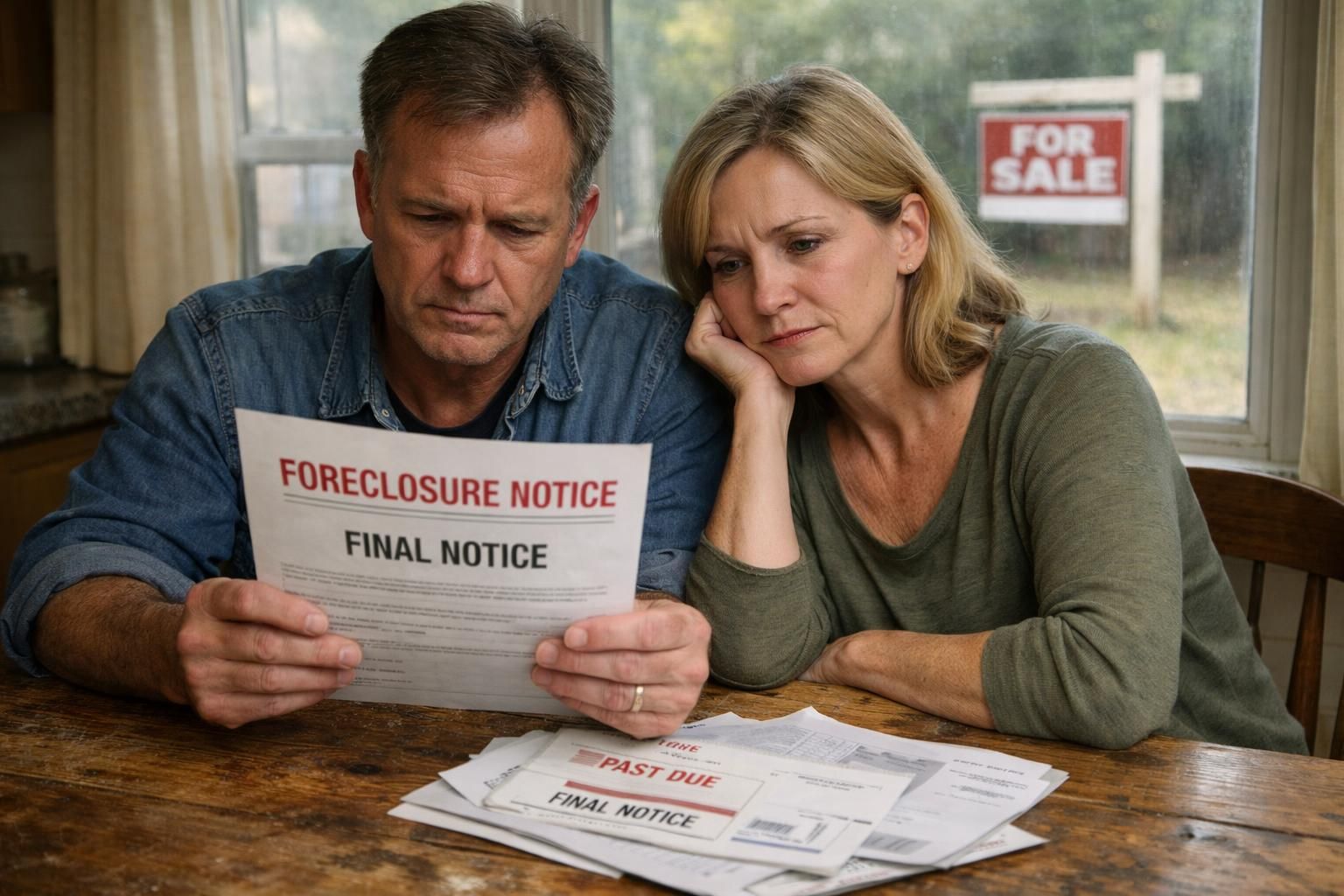
Foreclosure is the legal process a mortgage lender uses to take back your home after you stop making payments. In Tennessee, this process moves faster than in many other states because the state does not require court approval in most cases.
Tennessee's Non-Judicial Foreclosure Process
Tennessee follows a non-judicial foreclosure process under a deed of trust structure. Most Tennessee mortgages are actually deeds of trust, which grant a trustee the power to sell the property if you default—without a court order.
Once you default, the lender must publish a foreclosure notice in a local newspaper once a week for three consecutive weeks. The sale typically cannot occur until at least 20 days after the first publication. From start to finish, a Tennessee foreclosure can be completed in as little as 60 days, making it one of the faster processes in the country.
Tennessee law does permit deficiency judgments. If your Memphis or Nashville home sells at auction for less than what you owe, your lender has the right to pursue you for the remaining balance. For example, if you owe $275,000 and the home sells for $190,000, you could face a $85,000 deficiency claim. The lender generally has two years from the foreclosure sale date to file suit for the deficiency.
Tennessee does not provide a statutory right of redemption after a non-judicial foreclosure sale, which means once the sale is complete, you generally cannot reclaim the property by paying off the debt.
Defining Bankruptcy

Bankruptcy is a federal legal process that lets you discharge or reorganize debts when you can no longer keep up with payments. Tennessee residents file in one of the state's three federal bankruptcy districts: the Eastern, Middle, or Western District of Tennessee.
Chapter 7 and Chapter 13 in Tennessee
Chapter 7 bankruptcy can wipe out most unsecured debts—credit cards, medical bills, personal loans—within three to six months. Filing costs $338 plus attorney fees typically ranging from $1,000 to $2,000. To qualify, you must pass the federal means test based on Tennessee's median income levels, which are updated periodically.
Tennessee offers state-specific bankruptcy exemptions that protect certain assets. The homestead exemption allows individuals to protect up to $5,000 in home equity ($7,500 for joint owners), which is relatively low compared to other states. This means significant equity in your Knoxville or Chattanooga home could be at risk in a Chapter 7 case.
Chapter 13 lets you keep your home and catch up on mortgage arrears through a court-approved 3–5 year repayment plan. As soon as you file either chapter, an automatic stay goes into effect, immediately stopping any pending Tennessee foreclosure action.
Foreclosure vs. Bankruptcy: A Side-by-Side Comparison
Timeline, Credit Impact, Cost, and Scope
Tennessee foreclosure can close in as few as 60 days from first publication. Bankruptcy timelines range from 3–6 months for Chapter 7 to 3–5 years for Chapter 13. Foreclosure has no filing fee for the homeowner, while bankruptcy costs $313–$338 in filing fees plus legal costs.
Credit impact: foreclosure drops your score 85–160 points and stays on record 7 years. Chapter 7 bankruptcy can drop scores 130–240 points and remains for 10 years. Chapter 13 stays 7 years with score drops of 130–200 points.
Foreclosure addresses only the secured mortgage debt on your home. Bankruptcy can address unsecured debts like medical bills and credit cards alongside mortgage arrears, giving broader financial relief.
An important Tennessee-specific tax note: if a lender forgives a deficiency balance after foreclosure or short sale, you may receive a IRS Form 1099-C for cancellation of debt income. Consult a tax professional about whether any federal exclusions apply to your situation.
Which Is Worse for Your Credit?
Initial Impact vs. Long-Term Recovery
Starting with a credit score around 780, a bankruptcy filing can cause a drop of 220–240 points. At a starting score near 680, the decline is typically 130–150 points. A Tennessee foreclosure commonly causes drops of 105–200 points depending on your starting score and other account history. 1
Long-term recovery depends on your behavior after either event. Homeowners who rebuild payment history consistently and keep other accounts in good standing can make meaningful credit recovery within a few years, even after a foreclosure or bankruptcy. Chapter 13 may offer faster access to future FHA mortgage loans—potentially as soon as one year into a successful repayment plan—compared to the three-year wait typically required after a foreclosure.
Can You Stop Foreclosure with Bankruptcy in Tennessee?

Automatic Stay, Chapter 13 Plans, and Chapter 7 Limits
Because Tennessee foreclosures move quickly without court involvement, filing bankruptcy at the right time is critical. The moment you file, the automatic stay under federal bankruptcy law halts the foreclosure process—even a scheduled trustee's sale must stop.
Chapter 13 is the stronger tool for saving a Tennessee home. You can roll mortgage arrears into a structured repayment plan and continue making regular monthly payments going forward. As long as you follow the plan, your lender cannot proceed with foreclosure.
Chapter 7 also triggers the automatic stay, but the protection is temporary. Since Chapter 7 does not cure mortgage arrears, lenders can file a motion for relief from the automatic stay and resume foreclosure proceedings relatively quickly. Chapter 7 is better suited to eliminating unsecured debt than to saving a home with significant arrears.
Scenarios Where Bankruptcy Makes Sense
Overwhelming Unsecured Debt, Steady Income, or Keeping the Home
If most of your debt is unsecured—medical bills, credit cards, personal loans—Chapter 7 can give you a fresh financial start relatively quickly. Tennessee homeowners who pass the means test and have limited home equity may find Chapter 7 an effective path to debt relief.
If you have stable income and want to keep your home, Chapter 13 is often the better choice. You catch up on Tennessee mortgage arrears over 3–5 years, stop the foreclosure, and protect personal property. This approach generally causes less long-term damage to future lending eligibility than allowing a foreclosure to proceed.
Scenarios Where Foreclosure Makes Sense
Underwater Home, Unaffordable Payments, or Wanting a Clean Break
If your mortgage balance is significantly higher than your Tennessee home's current market value and you have no realistic path to catching up on payments, foreclosure may be unavoidable. In a declining market, continuing to drain savings on a property that will never recover its value can make the situation worse.
Be aware that Tennessee lenders can pursue deficiency judgments, so walking away from a home does not necessarily mean walking away from all the debt. Exploring a short sale or deed-in-lieu arrangement may eliminate or reduce a potential deficiency, and some lenders will negotiate a deficiency waiver as part of those agreements.
If maintaining homeownership is no longer realistic due to job loss, divorce, or a major income change, foreclosure followed by a period of rebuilding can sometimes offer a more direct path to a fresh start than a multi-year Chapter 13 commitment.
Alternatives to Both
Loan Modification, Short Sale, Deed in Lieu, and Cash Home Sales
Loan modification lets you work with your servicer to adjust your interest rate, extend your loan term, or add arrears to the back of your loan—avoiding foreclosure without filing bankruptcy. Tennessee homeowners should contact their servicer as early as possible, since options narrow as the foreclosure timeline advances.
A short sale requires lender approval to sell your home for less than the mortgage balance. While it damages your credit, it generally causes less long-term harm than a foreclosure and may eliminate or reduce a deficiency, though lenders vary in whether they waive the remaining balance.
Deed-in-lieu of foreclosure transfers your property directly back to the lender. Some Tennessee lenders offer relocation assistance or a brief rent-back period. Acceptance is not guaranteed, and some lenders still pursue deficiency claims unless you negotiate a written release upfront.
A cash home sale can resolve your situation quickly without court involvement, lengthy bank approvals, or the public record of a foreclosure auction. Selling for cash avoids the derogatory marks that follow a foreclosure for seven years and lets you move on without the additional stress of bankruptcy proceedings. 2
Tennessee Foreclosure Avoidance Strategies
Contact your mortgage servicer immediately when payments become difficult. Tennessee's non-judicial process moves fast, and early communication gives you more options. Request forbearance, a repayment plan, or a loan modification before the lender begins publication of the foreclosure notice.
If you need time to reorganize debts and save the property, file Chapter 13 in your applicable federal district—Eastern (Knoxville), Middle (Nashville), or Western (Memphis)—to trigger the automatic stay and propose a repayment plan for arrears.
Tennessee does not offer a post-sale right of redemption in non-judicial foreclosures, so acting before the trustee's sale is essential. Once the sale occurs, your options are extremely limited.
Consider consulting a HUD-approved housing counselor in Tennessee for free or low-cost guidance. Many offer remote consultations and can help you evaluate which path—modification, short sale, bankruptcy, or cash sale—best fits your financial profile.
Conclusion and Guidance
Consult Professionals, Evaluate Your Situation, and Consider a Cash Home Sale for Faster Resolution
Meet with a Tennessee bankruptcy attorney or a foreclosure defense lawyer to review your options. Many offer free initial consultations and can outline how Chapter 7, Chapter 13, a deed-in-lieu, or a short sale applies to your specific situation. They can also advise on Tennessee's deficiency judgment rules and exemption limits so you know what assets are at risk.
Take a close look at your home equity, total debt load, income stability, and long-term goals before deciding. A cash home sale is often the fastest route to relief—it can stop creditor calls, eliminate the need for lengthy legal proceedings, and help you avoid the lasting credit damage of a foreclosure auction or bankruptcy filing. 3
If you're a Tennessee homeowner facing foreclosure or overwhelming debt, KDS Homebuyers can help. Visit kdshomebuyers.net to request a free, no-obligation cash offer on your home and explore a faster path forward before time runs out. 4
FAQs
1. What is the main difference between foreclosure and bankruptcy in Tennessee?
Tennessee foreclosure is a lender-driven process that can remove you from your home in as little as 60 days through a non-judicial trustee's sale. Bankruptcy is a federal process you initiate that can discharge or restructure debts and temporarily halt foreclosure through an automatic stay.
2. Does Tennessee require a court order for foreclosure?
No. Tennessee is a non-judicial foreclosure state. Most home loans in Tennessee are structured as deeds of trust, giving the trustee authority to sell the property upon default without going through the court system.
3. Can I keep my home if I file bankruptcy in Tennessee?
Chapter 13 gives you the best chance of keeping your home by allowing you to catch up on mortgage arrears through a structured repayment plan. Chapter 7 may not protect your home, especially if you have equity above Tennessee's $5,000 homestead exemption.
4. Does filing bankruptcy stop a Tennessee foreclosure?
Yes. Filing either Chapter 7 or Chapter 13 immediately triggers the federal automatic stay, which halts a pending trustee's sale or any other foreclosure action. Chapter 13 provides longer-term protection by allowing you to cure arrears over time.
5. Can a Tennessee lender sue me for the remaining balance after foreclosure?
Yes. Tennessee permits deficiency judgments. If your home sells at auction for less than the outstanding mortgage balance, the lender generally has two years from the sale date to pursue you for the difference.
6. Which option is worse for my credit—Tennessee foreclosure or bankruptcy?
Both cause significant credit damage. Chapter 7 bankruptcy typically causes the largest initial drop (up to 240 points) and stays on your report for 10 years. Foreclosure drops scores 85–160 points and remains for 7 years. Chapter 13 falls between the two in terms of long-term impact and may allow faster access to future FHA financing.
References
- ^ https://www.nolo.com/legal-encyclopedia/which-is-worse-for-my-credit-score-bankruptcy-or-a-deed-in-lieu-of-foreclosure.html
- ^ https://www.bankruptcy-law-seattle.com/Articles/short-sale-vs-foreclosure-vs-deed-in-lieu/ (2024-07-25)
- ^ https://www.sawinlaw.com/blog/bankruptcy-versus-foreclosure/ (2023-11-29)
- ^ https://www.nbcnews.com/id/wbna21478416 (2007-10-28)
