

How Does Foreclosure Work? The Complete Process Explained in Tennessee
Worried about losing your home because of missed mortgage payments? Foreclosure is the legal process where a mortgage lender can take back your house if you default on your mortgage loan. 2 This guide explains exactly how foreclosure works in Tennessee, including what to expect and steps you can take to protect yourself. 3 Keep reading to learn key facts every Tennessee homeowner should know. 1
Key Takeaways
- Foreclosure is the legal process where your mortgage lender takes back your home after missed payments. Federal law requires lenders to wait at least 120 days after the first missed payment before starting the process. 4
- Tennessee primarily uses non-judicial foreclosure, meaning the process moves quickly — often within 60 days of the first published notice — without requiring court approval.
- Homeowners have rights during foreclosure, including receiving proper notices, time to pursue repayment plans or loan modifications, and access to free help from HUD-approved housing counselors. Call the HOPE Hotline at (888) 995-HOPE.
- Options to avoid losing your home include loan modification, forbearance, short sale, deed-in-lieu of foreclosure, Chapter 13 bankruptcy, or selling quickly for cash.
- After foreclosure, expect a credit score drop of 100–160 points and a seven-year mark on your credit report. Tennessee does allow deficiency judgments in some cases, so understanding your exposure is important.
What Is Foreclosure?

Foreclosure happens when a mortgage lender takes legal action to repossess your home after you miss several mortgage payments. In Tennessee, this process most commonly follows the non-judicial path, though judicial foreclosure is also available. Either route can affect your home equity and credit history.
Definition of foreclosure and its purpose
Lenders use foreclosure as a legal tool to recover the unpaid balance of your home loan when you stop making mortgage payments. Your lender can take possession of your property because the deed of trust — the instrument most commonly used in Tennessee — makes your home collateral for the debt.
The purpose is to allow lenders to recoup losses through a public sale. If no one purchases the home at the foreclosure sale, the property typically becomes Real Estate Owned (REO). This system gives lenders a way to resolve unpaid secured debt while giving homeowners chances to avoid losing their home through loan modification, repayment plans, short sale, or help from HUD-certified housing counselors.
Judicial vs. non-judicial foreclosure in Tennessee
Tennessee is primarily a non-judicial foreclosure state. Most mortgages in Tennessee are structured as deeds of trust with a power of sale clause, which allows the lender — through a trustee — to sell your home without going to court. This process is governed by Tennessee state law and can move very quickly compared to judicial foreclosure states.
Judicial foreclosure is available in Tennessee but is rarely used. It requires the lender to file a lawsuit in chancery court and obtain a court order before selling the property. This path takes significantly longer and offers more opportunities for the homeowner to respond and contest the action.
Both types can result in loss mitigation options for you, including loan modification or repayment plans guided by HUD-approved housing counselors.
Foreclosure is a last resort for lenders
Mortgage lenders do not want to foreclose. Federal law says lenders must wait at least 120 days after you miss mortgage payments before starting foreclosure proceedings. Lenders offer options such as forbearance, repayment plans, or loan modification long before moving toward foreclosure. Foreclosure is costly for lenders — it involves administrative work, potential legal fees, and months without payments. Strict federal rules also block "dual-tracking," so your application for help must be fully reviewed before any sale can move forward.
The Complete Foreclosure Timeline in Tennessee
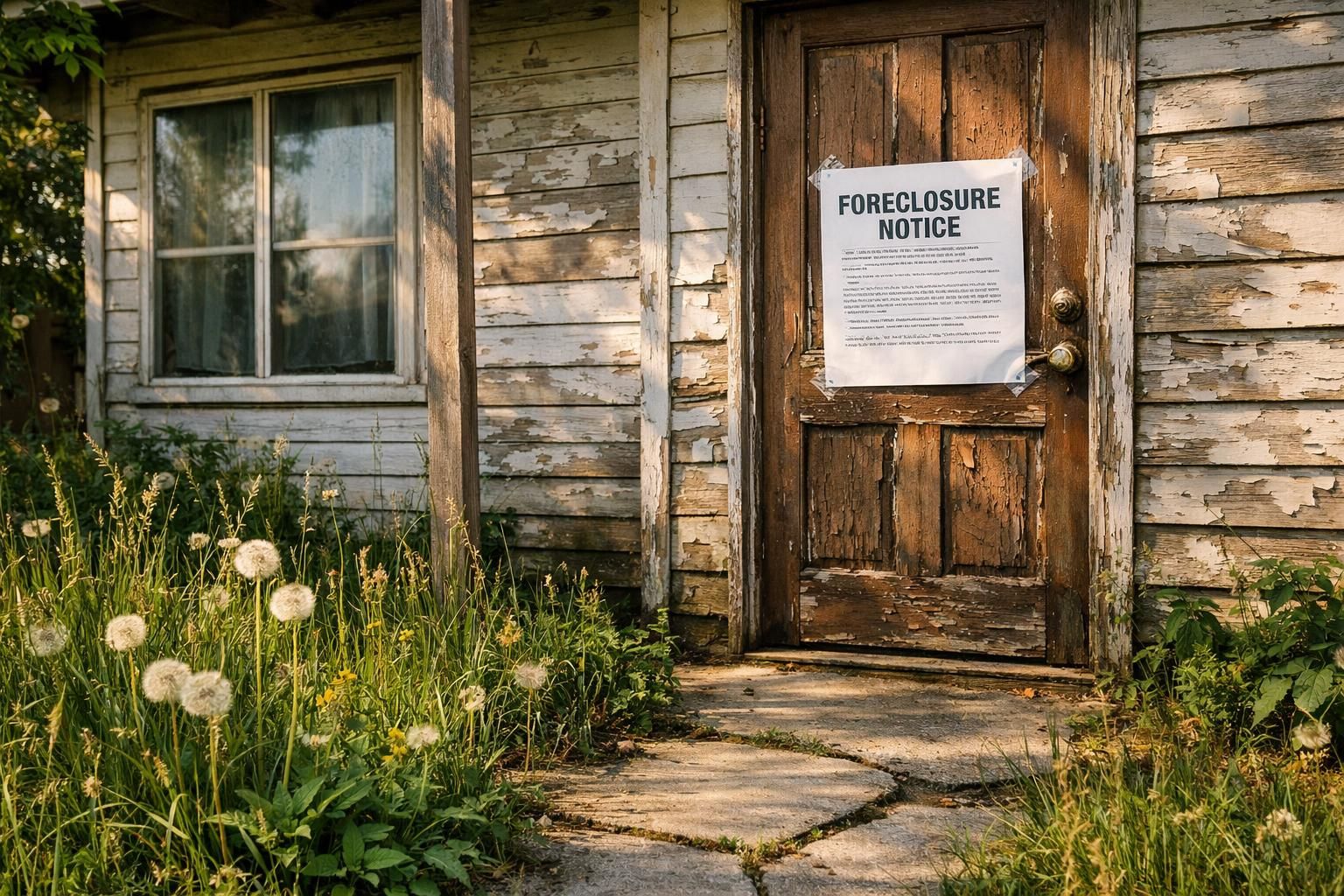
Understanding Tennessee's foreclosure timeline helps you prepare and take action at each step.
Missed Payments (30–120 days)
Mortgage payments typically carry a 15-day grace period. Missing a payment beyond 30 days puts your loan in default and triggers credit bureau reporting. Most lenders reach out after the first missed payment to discuss forbearance or repayment plans. Federal rules require lenders to wait at least 120 days before initiating foreclosure proceedings. During this period, contacting a HUD-approved housing counselor or exploring loan modification can help protect your home and limit credit damage.
Pre-Foreclosure Notice (90–120 days)
After approximately 90 days of missed payments, your lender will typically send a demand letter giving you 30 days to bring your account current. If you do not respond, the lender — through the trustee named in your deed of trust — moves to schedule a foreclosure sale. Under Tennessee law, the trustee must publish a notice of the foreclosure sale in a local newspaper for three consecutive weeks before the sale date. This publication requirement is the primary notice mechanism in Tennessee's non-judicial process. You should read every notice carefully and respond immediately. This is a critical point to contact a HUD-approved housing counselor and explore all available options.
Foreclosure Sale (as few as 60 days from first notice publication)
Because Tennessee uses non-judicial foreclosure, the process can move much faster than in court-supervised states. Once the three-week publication requirement is satisfied, the trustee conducts a public foreclosure sale — often on the courthouse steps or another publicly designated location. The home is sold to the highest bidder. If no third party outbids the lender, the lender takes ownership and the property becomes REO. Tennessee law does not require court confirmation of the sale.
Redemption Period
Tennessee does not provide a statutory post-sale redemption period for non-judicial foreclosures. Once the trustee's sale is completed, you generally cannot reclaim your home by paying off the debt. This makes acting early — before the sale date — critically important for Tennessee homeowners facing foreclosure. Some limited redemption rights may exist in judicial foreclosure scenarios, so consult an attorney familiar with Tennessee chancery court proceedings if this applies to you.
Post-Foreclosure: Eviction and deficiency judgments
After the foreclosure sale, the new owner may begin eviction proceedings. Tennessee law requires proper notice before eviction, but the timeline can be short. If renters occupy the property, they are protected under the Helping Families Save Their Homes Act of 2009, which requires at least 90 days' notice or allows tenants to remain until their lease ends.
Tennessee does permit deficiency judgments. If your home sells at foreclosure for less than what you owe, the lender may file suit in Tennessee court to collect the remaining balance. Lenders must file for a deficiency judgment within two years of the foreclosure sale under Tennessee law. This is a significant exposure that Tennessee homeowners should discuss with a real estate attorney early in the process. 2
Judicial vs. Non-Judicial Foreclosure

How Tennessee's non-judicial process compares
Because Tennessee relies on the power of sale clause in deeds of trust, the foreclosure process is faster and less expensive for lenders than in judicial states like Florida or New York. The entire process from first published notice to sale can be completed in as few as 60 days. You receive fewer procedural protections compared to states that require court approval at every stage.
Judicial foreclosure in Tennessee goes through chancery court, takes considerably longer, and gives homeowners more opportunities to respond, contest the foreclosure, or negotiate a resolution. However, lenders rarely choose this route in Tennessee unless required by the specific loan type or circumstances.
Impact on homeowner rights and timelines
Tennessee's non-judicial process means you have a narrow window to act. Once the trustee begins publishing the notice of sale, time moves quickly. You have fewer built-in chances to contest errors or negotiate with your lender compared to judicial foreclosure states. This makes early communication with your lender and a HUD-approved housing counselor essential. Do not wait for a notice of sale before seeking help — reach out as soon as you miss a payment or know you are at risk.
Your Rights During Foreclosure in Tennessee

Federal protections for homeowners
- Federal law requires lenders to wait at least 120 days after the first missed payment before starting foreclosure. 4
- Dual-tracking is prohibited — lenders cannot advance a foreclosure while your loss mitigation application is under active review.
- The CFPB requires lenders to provide clear written notices about your rights and account status throughout the process.
- Active-duty military members are protected by the Servicemembers Civil Relief Act (SCRA), which requires a court order before foreclosure can proceed.
- HUD-approved housing counselors offer free guidance through the HOPE Hotline at (888) 995-HOPE.
- You may remain in your home during most of the foreclosure process until the sale is finalized and a legal eviction notice is served.
- Lenders must inform you of all available loss mitigation options — including loan modification, short sale, and deed-in-lieu of foreclosure — before proceeding.
- Up to $750,000 in forgiven mortgage debt may not be taxable income through 2025 under the Mortgage Forgiveness Debt Relief Act.
Tennessee-specific rights and considerations
- Tennessee does not offer a post-sale statutory redemption period for non-judicial foreclosures — your window to act is before the trustee's sale.
- You have the right to reinstate your loan before the sale by paying all past-due amounts, fees, and costs. The reinstatement deadline is typically close to the sale date, so act quickly.
- Tennessee lenders can pursue deficiency judgments within two years of the foreclosure sale, so understanding your potential remaining debt is critical.
- Tennessee does not have a statewide foreclosure mediation program, making direct communication with your lender and a housing counselor even more important.
- HUD-approved counselors familiar with the Memphis, Nashville, Knoxville, or Chattanooga markets can provide local guidance on lender practices and available assistance programs.
- Consulting a Tennessee real estate attorney early in the process can help you identify any procedural errors in the trustee's notice that might give you additional time.
Notification requirements lenders must follow in Tennessee
- The trustee must publish a notice of the foreclosure sale in a newspaper of general circulation in the county where the property is located, once a week for three consecutive weeks.
- Your lender must also send you written notice of the foreclosure sale, typically by mail.
- Federal law requires a pre-foreclosure notice of default after 90–120 days of missed payments, along with information about available loss mitigation options.
- All notices must use clear language and meet legal standards — incomplete or improper notice can be grounds to challenge the foreclosure.
- Lenders must review any loss mitigation application before moving forward with a sale under federal CFPB rules.
Living in the home during foreclosure proceedings
You can typically remain in your home through the foreclosure sale in Tennessee. However, because the non-judicial process can move quickly — sometimes completing in as little as 60 days from the first published notice — you should not wait to make housing plans. After the sale, the new owner may begin eviction proceedings promptly. Renters living in the property are protected under federal law and must receive at least 90 days' notice. No one may remove you without following proper legal eviction procedures under Tennessee law.
Options to Stop or Avoid Foreclosure in Tennessee

Loan modification, forbearance, and repayment plans
If you fall behind on payments, your lender may offer several options before starting the foreclosure process. Under federal law, lenders and servicers must consider all available loss mitigation options.
- Loan modification changes the original terms of your home loan — lowering the interest rate, extending the loan term, or rolling missed payments into the remaining balance — to make monthly costs more manageable.
- Forbearance agreements allow you to pause or reduce payments for a set period, usually three to twelve months. The suspended amounts must be repaid afterward, either as a lump sum or through an extended plan.
- Repayment plans let you catch up on missed payments spread over several months while staying current on new payments.
- Early communication with your lender is essential in Tennessee given the speed of the non-judicial process. Contact a HUD-approved counselor as soon as you know you are at risk.
Short sale, deed in lieu of foreclosure, and refinancing
- Short sale lets you sell your property for less than the mortgage balance with lender approval. This process typically takes three to six months and may qualify you for relocation assistance through federal programs. In Tennessee, lenders may still pursue a deficiency judgment after a short sale unless they specifically waive it in writing. Fannie Mae and Freddie Mac generally allow new financing two years after a short sale. 5
- Deed in lieu of foreclosure allows you to voluntarily transfer your home back to the lender in exchange for release from the debt. Lenders will review the title first, and any second mortgages or HELOCs must be resolved. Deficiency judgments may still apply unless specifically waived.
- Refinancing replaces your current loan with a new one at more manageable terms. Government-backed FHA short-refinance options may be available for qualifying borrowers, allowing first liens up to a 97.75% loan-to-value ratio. Refinancing before the foreclosure process advances is the most effective use of this option.
Bankruptcy (Chapter 13) as an option
Filing for Chapter 13 bankruptcy places an automatic stay on all foreclosure actions immediately, stopping the trustee's sale. 6 This gives you three to five years to catch up on missed mortgage payments through a court-approved repayment plan while keeping your home. You must demonstrate regular income and meet debt limits to qualify. Unlike Chapter 7, which rarely saves homes, Chapter 13 allows most homeowners to retain their property if they complete the plan. Tennessee bankruptcy cases are filed in federal bankruptcy court, with divisions serving Memphis, Nashville, Knoxville, Chattanooga, and other areas.
Selling the home quickly for cash
Selling your home quickly for cash is one of the most effective ways to stop a Tennessee foreclosure — especially given how fast the non-judicial process moves. Cash buyers can often close within days, giving you time to pay off your mortgage, avoid a foreclosure on your credit record, and potentially walk away with funds if you have equity. You retain control over timing and terms rather than waiting for a lender-controlled trustee's sale. This option is particularly valuable in Tennessee because there is no post-sale redemption period — once the trustee sells the home, your options are gone.
What Happens After Foreclosure in Tennessee?
Credit score impact and recovery timeline
Foreclosure typically reduces your credit score by 100 to 160 points and stays on your credit report for seven years. A short sale has a smaller impact, usually 45 to 65 points. FHA loans require a three-year waiting period before you can qualify again. VA loans require two years, and conventional loans typically require seven years unless you can document extenuating circumstances, which may reduce the wait to three years. Fannie Mae and Freddie Mac generally allow new financing two years after a short sale or deed-in-lieu. Working with a HUD-approved counselor during this period can help you rebuild your financial health faster.
Deficiency judgments and tax implications in Tennessee
Tennessee law permits lenders to pursue deficiency judgments when a foreclosure sale does not cover the full amount owed. Lenders have two years from the date of the foreclosure sale to file for a deficiency judgment in Tennessee court. Unlike some states, Tennessee does not have broad anti-deficiency statutes that automatically protect homeowners, making it important to understand your exposure before and after any sale.
If part of your mortgage debt is forgiven — through short sale, deed-in-lieu, or loan modification — you may owe income taxes on the forgiven amount unless protected under the Mortgage Forgiveness Debt Relief Act, which covers up to $750,000 in forgiven debt on a primary residence through 2025. If foreclosure is not finalized and the lender walks away from the property, you may remain responsible for property taxes until ownership officially transfers. Consult a Tennessee real estate attorney or tax professional to understand your specific situation.
Timeline for buying another home
FHA loans require a three-year waiting period after foreclosure. VA loans require two years. Conventional loans typically require seven years, reduced to three with documented extenuating circumstances. Fannie Mae and Freddie Mac allow buyers who completed a short sale or deed-in-lieu to seek new financing after two years. Rebuilding credit through consistent, on-time payments is essential during this period. A HUD-approved housing counselor can help you create a plan for returning to homeownership after financial hardship.
How Does Foreclosure Work in Tennessee? Summary
Tennessee's foreclosure process begins after three to six months of missed mortgage payments, though federal law requires lenders to wait at least 120 days before initiating proceedings. Because Tennessee is a non-judicial foreclosure state, the trustee — acting under the power of sale clause in your deed of trust — can sell your home without going to court once the three-week publication requirement is met. The entire process from first published notice to sale can happen in as few as 60 days.
There is no post-sale redemption period in Tennessee's non-judicial process, which means your window to act is entirely before the sale date. Homeowners in Memphis, Nashville, Knoxville, Chattanooga, and elsewhere in Tennessee must act quickly once they fall behind on payments. Options such as loan modification, forbearance, short sale, deed-in-lieu of foreclosure, Chapter 13 bankruptcy, or a fast cash sale can all help you avoid losing your home — but only if pursued before the trustee's sale occurs.
Foreclosure affects your credit for up to seven years and may expose you to a deficiency judgment in Tennessee if the sale price falls short of what you owe. Consulting a HUD-approved housing counselor and a Tennessee real estate attorney early in the process gives you the best chance of finding a workable solution. 7
Conclusion
Facing foreclosure in Tennessee is stressful, but you have more options than you may realize — especially if you act early. Understanding the speed of Tennessee's non-judicial process is the first step. Connect with a HUD-approved housing counselor, call the HOPE Hotline at (888) 995-HOPE, and speak with a Tennessee real estate attorney to fully understand your rights and timeline.
If you need to sell quickly to avoid foreclosure, KDS Homebuyers purchases homes directly from Tennessee homeowners for cash, with a fast, straightforward process and no agent commissions. Visit kdshomebuyers.net to request a free, no-obligation cash offer today and explore whether a cash sale is the right solution for your situation.
FAQs
1. What starts the foreclosure process in Tennessee?
Foreclosure in Tennessee typically begins after a homeowner misses mortgage payments for 90 to 120 days. The lender — through a trustee — then begins the notice publication process required under Tennessee law before scheduling a foreclosure sale.
2. Does Tennessee use judicial or non-judicial foreclosure?
Tennessee primarily uses non-judicial foreclosure. Most Tennessee deeds of trust include a power of sale clause that allows the trustee to sell the property without court approval. Judicial foreclosure through chancery court is available but rarely used.
3. How long does foreclosure take in Tennessee?
The non-judicial process can be completed in as few as 60 days from the first published notice, making Tennessee one of the faster foreclosure states. This is why acting quickly when you miss payments is critical.
4. Can I get my home back after a foreclosure sale in Tennessee?
No. Tennessee does not offer a statutory post-sale redemption period for non-judicial foreclosures. Once the trustee's sale is complete, you cannot reclaim the property by paying off the debt. Your best opportunity is to act before the sale occurs.
5. Can a lender sue me for the remaining balance after foreclosure in Tennessee?
Yes. Tennessee law allows lenders to pursue deficiency judgments if the foreclosure sale price does not cover the full mortgage balance. Lenders have two years from the sale date to file. Consulting a Tennessee attorney about your potential exposure is strongly recommended.
6. What options do I have to stop foreclosure in Tennessee?
Options include loan modification, forbearance, repayment plans, short sale, deed-in-lieu of foreclosure, Chapter 13 bankruptcy, or a fast cash sale. Because Tennessee's non-judicial process moves quickly, pursuing these options early — before the notice publication begins — gives you the best chance of success.
References
- ^ https://lawecommons.luc.edu/cgi/viewcontent.cgi?article=2738&context=luclj
- ^ https://www.consumerfinance.gov/ask-cfpb/how-does-foreclosure-work-en-287/ (2024-05-28)
- ^ https://law.wisc.edu/fjr/clinicals/foreclosure_timeline.pdf
- ^ https://www.dfs.ny.gov/consumers/help_for_homeowners/foreclosure_assistance/consumer_bill_of_rights
- ^ https://www.nolo.com/legal-encyclopedia/deed-lieu-vs-short-sale.html
- ^ https://cannonlaw4u.com/blog/how-chapter-13-bankruptcy-can-help-you-avoid-foreclosure/ (2025-05-27)
- ^ https://en.wikipedia.org/wiki/Foreclosure
