

How Does Foreclosure Work? The Complete Process Explained in Indiana
Worried about losing your home because of missed mortgage payments? Foreclosure is the legal process where a mortgage lender can take back your house if you default on your mortgage loan. 2 This guide explains exactly how foreclosure works in Indiana, including what to expect at each stage and steps you can take to protect yourself. 3
Key Takeaways
- Foreclosure is the legal process where your mortgage lender takes back your home after you miss payments for 3 to 6 months. Federal law requires lenders to wait at least 120 days after the first missed payment before starting the process. 4
- Indiana uses judicial foreclosure, meaning every case goes through the court system. The average Indiana foreclosure takes roughly 261 days, though complex cases can run longer.
- Indiana homeowners have rights during foreclosure, including formal court notices, time to pursue repayment plans or loan modifications, and access to free help from HUD-approved housing counselors. Call the HOPE Hotline at (888) 995-HOPE.
- Options to avoid losing your home include loan modification, forbearance, short sale, deed-in-lieu of foreclosure, Chapter 13 bankruptcy, or selling quickly for cash.
- After foreclosure, expect a credit score drop of 100–160 points and a seven-year mark on your report. FHA loans require a three-year waiting period before reapplying; VA loans require two years; conventional loans generally require seven.
What Is Foreclosure?

Foreclosure happens when a mortgage lender takes legal action to repossess your home after you miss several mortgage payments. In Indiana, this always involves the court system, which gives homeowners meaningful opportunities to respond and seek relief.
Definition of foreclosure and its purpose
Lenders use foreclosure as a legal process to recover the balance of your home loan if you stop making mortgage payments. Your lender can take possession of your property because the mortgage makes your home collateral for the debt. Missed payments, defaulting on other loan terms, or financial hardship can all trigger this process under Indiana and federal foreclosure law.
The purpose is not simply to repossess homes but to allow lenders to recoup losses through a court-ordered sale. If no one purchases the property at auction, it typically becomes Real Estate Owned (REO). This system also gives homeowners multiple chances to avoid losing their home through options like loan modification, repayment plans, short sale, or help from HUD-certified housing counselors.
Indiana uses judicial foreclosure
Indiana is a judicial foreclosure state. That means your lender must file a lawsuit in an Indiana circuit or superior court and obtain a judge's approval before proceeding. You will receive official court papers and have the right to respond or defend yourself before your property can move toward a sheriff's sale. This court involvement adds time to the process but also gives you stronger legal protections compared to non-judicial states.
Non-judicial foreclosure — common in states like California or Texas — skips the courts entirely when a deed of trust contains a power-of-sale clause, moving through the process in as little as four to six months. Indiana does not use this path; every foreclosure here must go through the courts.
Foreclosure is a last resort for lenders
Mortgage lenders do not want to foreclose. Federal law requires lenders to wait at least 120 days after the first missed payment before starting foreclosure proceedings. During that window, lenders typically reach out to offer loss mitigation options such as forbearance, repayment plans, or loan modification.
Foreclosure is expensive for lenders — court fees, legal costs, and months without payment add up quickly. Strict federal rules also block "dual-tracking," meaning your application for help must be reviewed before any sale can move forward. Foreclosure only begins after other solutions have failed.
The Complete Indiana Foreclosure Timeline
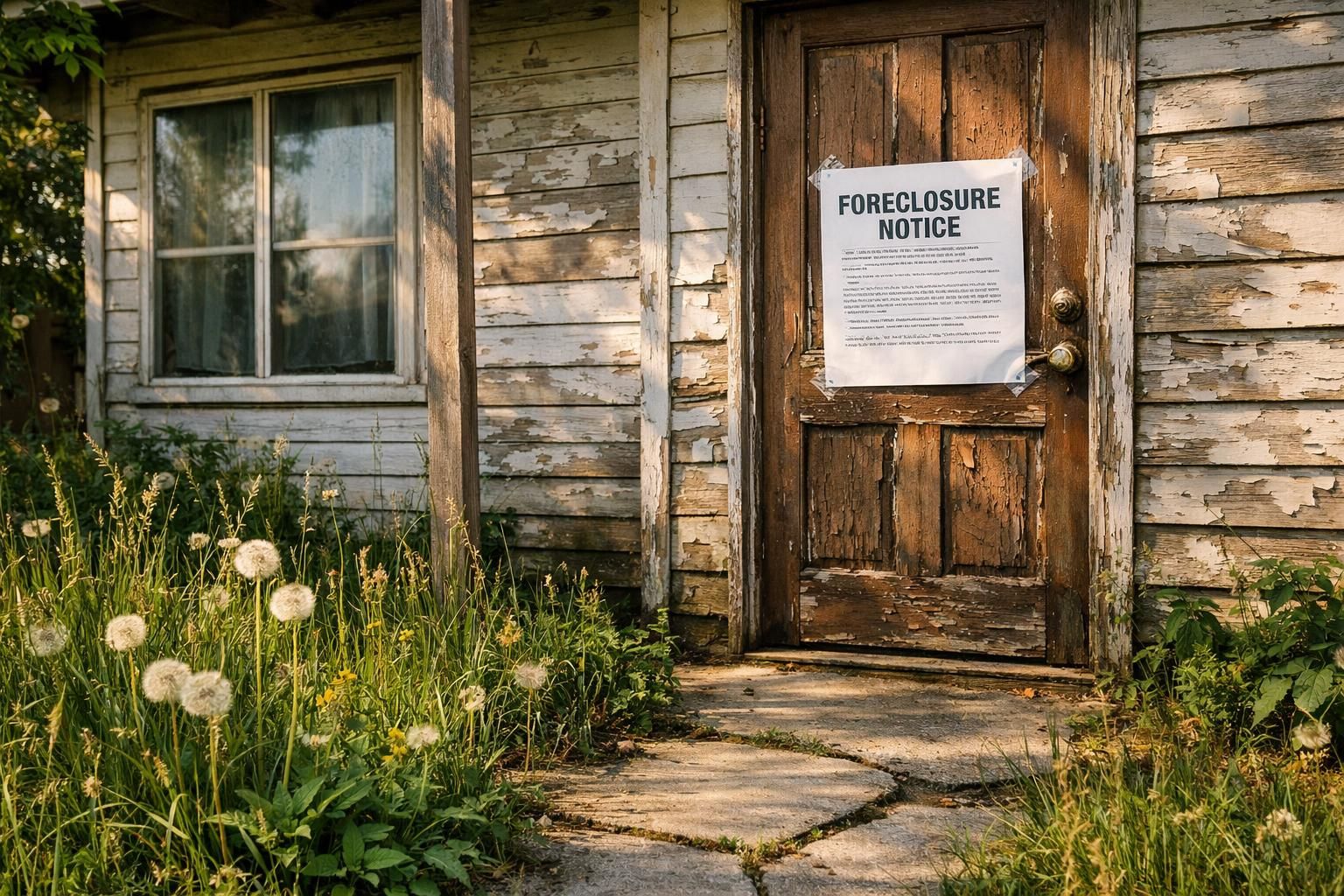
Understanding Indiana's foreclosure timeline helps you prepare and protect your rights at each step.
Missed Payments (30–120 days)
Mortgage payments typically include a 15-day grace period. Missing a payment beyond 30 days puts your loan in default and gets reported to credit bureaus. Most Indiana lenders reach out after the first missed payment to discuss options like repayment plans or forbearance.
If payments remain missed for three to six months, federal rules require the lender to wait at least 120 days before initiating foreclosure. Speaking with a HUD-approved housing counselor early can help protect your home and limit damage to your credit.
Pre-Foreclosure Notice (90–120 days)
After roughly 90 days of missed payments, your lender will typically send a demand letter giving you 30 days to catch up. If you do not respond, a formal Notice of Default follows. In Indiana's judicial process, the lender prepares to file a court complaint at this stage.
Federal and Indiana state laws require lenders to provide clear pre-foreclosure notices listing all overdue amounts, interest, and fees. Many homeowners work with a HUD-approved counselor at this point to explore loan modification or repayment plan offers.
Foreclosure Filing in Indiana Courts
In Indiana, your lender files a foreclosure complaint in the circuit or superior court of the county where the property is located. You are served with the complaint and summons and have the opportunity to file a written answer. If you do not respond, the court may enter a default judgment for the lender.
Once the court rules in the lender's favor, it issues a judgment of foreclosure and orders a sheriff's sale of the property. Legal and administrative costs grow at this stage and may be added to your total debt. Consulting a HUD-approved housing counselor or attorney early is strongly recommended.
Redemption Period in Indiana
Indiana law provides homeowners a limited right of redemption — the ability to reclaim your home by paying the full amount owed, including interest, court costs, and lender fees — but this right must be exercised before the sheriff's sale is confirmed by the court. 1 Once the sale is confirmed, redemption rights are generally extinguished. Because Indiana's redemption window is narrow compared to some other states, prompt action is critical. Consult a local attorney to understand your exact deadline.
Sheriff's Sale
After the court issues a foreclosure judgment, the property is scheduled for a sheriff's sale — Indiana's version of the public foreclosure auction. The county sheriff's office advertises the sale and conducts the auction, typically at the county courthouse. Anyone may bid, and the highest bidder wins the property.
If no outside bidder exceeds the lender's minimum, the lender takes ownership and the property becomes Real Estate Owned (REO). The court must confirm the sale before ownership officially transfers. In Indianapolis, Marion County, and surrounding counties such as Hamilton (Carmel, Fishers, Noblesville) and Boone (Lebanon), sheriff's sale dates and procedures are published by the respective county sheriff's offices.
Post-Foreclosure: Eviction and Deficiency Judgments
Once the sheriff's sale is confirmed, you may face eviction. Indiana law requires proper legal notice and court process before you can be removed from the property — no one can physically remove you without following those procedures. If tenants occupy the home, federal law under the Helping Families Save Their Homes Act of 2009 requires at least 90 days' notice or allows them to remain through the end of their lease.
If your home sells for less than what you owe, Indiana law generally permits lenders to pursue a deficiency judgment for the remaining balance. Unlike California or Arizona, Indiana does not have a broad anti-deficiency statute for most residential mortgages, so this is a real risk. Legal counsel can help you understand whether any exceptions or negotiations apply in your situation. 2
Judicial vs. Non-Judicial Foreclosure

Key differences
Judicial foreclosure — used in Indiana — requires a lender to file a lawsuit, obtain a court judgment, and follow court-ordered procedures including a sheriff's sale. This process typically takes longer (Indiana averages around 261 days) but provides stronger homeowner protections: formal court notices, the right to respond, and judicial oversight at every step.
Non-judicial foreclosure, used in states like California, Arizona, and Texas, skips the courts when a power-of-sale clause exists in the deed of trust. This method moves faster — often four to six months — but offers homeowners less time to challenge errors or negotiate with their lender.
How Indiana's judicial process impacts your rights
Because Indiana requires court involvement, you receive formal legal notice, have the right to contest the foreclosure, and benefit from judicial oversight before any sale occurs. This extra time gives you more opportunity to seek help from a housing counselor, pursue loan modification, or arrange a cash sale. However, once a judgment is entered and the sheriff's sale is confirmed, your options narrow quickly — so acting early matters.
Your Rights During Indiana Foreclosure

Federal protections for Indiana homeowners
- Your lender must wait at least 120 days after the first missed payment before starting foreclosure proceedings. 4
- Dual-tracking is prohibited — lenders cannot advance foreclosure while your loan modification or forbearance application is under active review.
- The CFPB requires clear written notices about your rights, account status, and available options throughout the process.
- Active-duty military members are protected under the Servicemembers Civil Relief Act (SCRA), requiring a court order before any foreclosure can proceed.
- HUD-approved housing counselors offer free guidance. Call the HOPE Hotline at (888) 995-HOPE.
- You have the right to remain in your home throughout most of the foreclosure process until the court confirms the sheriff's sale and a proper eviction notice is issued.
- Lenders must present available loss mitigation options — including loan modification, short sale, or deed-in-lieu — before pursuing foreclosure.
- Under the Mortgage Forgiveness Debt Relief Act (extended through 2025), up to $750,000 in forgiven mortgage debt on your primary residence is not counted as taxable income.
Indiana-specific rights and notification requirements
- You will receive a formal court summons and complaint when the lender files suit. You have the right to file a written answer and contest the foreclosure.
- Indiana requires proper service of process — lenders cannot shortcut the notice requirements without risking the case being dismissed.
- Reinstatement — paying all overdue amounts to bring the loan current — is possible up until the court confirms the sheriff's sale.
- Indiana does not require mandatory foreclosure mediation statewide, though some courts and lenders may offer it voluntarily. Ask your attorney or housing counselor whether mediation is available in your county.
- You remain responsible for property taxes and basic maintenance until ownership officially transfers after the confirmed sale.
Living in your Indiana home during foreclosure
You can generally remain in your home through the entire court process and until the sheriff's sale is confirmed and an eviction order is issued. Do not abandon your property without legal advice — leaving prematurely can complicate your options and may not relieve you of property tax obligations until ownership transfers. Tenants in the home have additional federal protections requiring proper notice before eviction.
Options to Stop or Avoid Foreclosure in Indiana
Loan modification, forbearance, and repayment plans
- Loan modification changes your loan's terms — lowering the interest rate, extending the repayment period, or rolling missed payments into the balance — to make monthly costs more manageable.
- Forbearance agreements allow you to pause or reduce payments for a set period, typically three to twelve months. Federal rules require lenders to review forbearance applications before advancing foreclosure.
- Repayment plans let you catch up on missed payments by spreading them over several months while keeping current on new ones. Early communication with your lender or servicer significantly improves your chances of approval.
A HUD-approved housing counselor can guide you through all of these options at no cost. Contact one as soon as you begin struggling with payments.
Short sale, deed in lieu, and refinancing
- Short sale lets you sell your home for less than the mortgage balance with lender approval. The process typically takes three to six months. In Indiana, lenders may still pursue a deficiency judgment for the remaining balance unless they waive it in writing. Federal programs like HAFA may provide up to $3,000 in relocation assistance.
- Deed in lieu of foreclosure transfers ownership voluntarily back to the lender in exchange for debt release. Any second mortgages or HELOCs must typically be resolved first. While a deficiency judgment remains possible, the credit impact is generally less severe than a full foreclosure.
- Refinancing replaces your existing mortgage with a new loan at better terms. FHA short-refinance programs allow first liens up to 97.75% loan-to-value with combined LTV up to 115% when lenders write down at least 10% of the principal. This option works best when acted upon before foreclosure filings begin.
Chapter 13 bankruptcy
Filing for Chapter 13 bankruptcy places an automatic stay on all foreclosure actions, immediately halting the process — including any scheduled sheriff's sale. 6 You propose a court-approved repayment plan spanning three to five years that allows you to catch up on missed mortgage payments while keeping your home. You must demonstrate regular income and meet debt limits to qualify.
Unlike Chapter 7 bankruptcy, which rarely saves homes, Chapter 13 is specifically designed to let homeowners retain their property if they complete the plan. Indiana bankruptcy cases are filed in the U.S. Bankruptcy Court for the Southern District of Indiana (Indianapolis) or the Northern District of Indiana, depending on where you live.
Selling your home quickly for cash
Selling your home for cash before the sheriff's sale is one of the most effective ways to stop the foreclosure process, protect your credit, and potentially walk away with equity. Cash buyers can close in days rather than weeks, giving you the speed needed to act before a court judgment is entered or a sale date is set.
This approach gives you far more control over timing and terms than waiting for the lender to repossess the property. If you have equity — even partial equity — a fast cash sale may cover your mortgage balance and leave you with funds to start fresh. Many Indiana homeowners in Indianapolis, Noblesville, and surrounding areas have used this option to avoid the full damage of a completed foreclosure.
What Happens After Indiana Foreclosure?
Credit score impact and recovery timeline
Foreclosure typically drops your credit score by 100 to 160 points and stays on your credit report for seven years. A short sale has a smaller impact, usually 45 to 65 points. State foreclosure laws and loan type influence how quickly recovery can begin.
Waiting periods before new mortgage eligibility:
- FHA loans: 3 years after foreclosure
- VA loans: 2 years
- Conventional loans: 7 years (3 years with documented extenuating circumstances)
- After short sale or deed-in-lieu: Fannie Mae and Freddie Mac may allow new financing after 2 years
Working with a HUD-approved housing counselor can help you build an action plan for credit recovery and future homeownership.
Deficiency judgments and tax implications in Indiana
Indiana generally allows lenders to seek deficiency judgments when a foreclosure sale does not cover the full loan balance. This means you could owe money even after losing the home. Unlike California or Arizona, Indiana does not have a broad anti-deficiency statute for most residential mortgages, so legal counsel is important to understand your exposure.
If any portion of your mortgage debt is forgiven — through a short sale, deed-in-lieu, or lender settlement — it may be treated as taxable income unless protected by the Mortgage Forgiveness Debt Relief Act (extended through 2025), which excludes up to $750,000 in forgiven debt on a primary residence. Consult a tax professional to understand your specific situation.
If a foreclosure stalls without completing — sometimes called a "bank walkaway" — you may remain responsible for property taxes until ownership officially transfers, which can create unexpected costs.
In-Depth: How Indiana Foreclosure Works
Foreclosure in Indiana begins after you miss mortgage payments for three to six months. Your lender sends a Notice of Default, then files a lawsuit in your county's circuit or superior court. You are served with legal papers and have the right to respond. If the court rules for the lender, it orders a sheriff's sale — a public auction conducted by the county sheriff. 7
The highest bidder at the sheriff's sale acquires the property, subject to court confirmation. If no outside bidder appears, the lender takes ownership as an REO property. Indiana's average foreclosure timeline runs approximately 261 days, though contested cases or crowded court dockets can extend that significantly.
At every stage, homeowners may qualify for relief through loan modification, repayment plans, short sales, or deed-in-lieu arrangements. Selling for cash before the sale is confirmed remains one of the fastest ways to stop the process entirely. Acting at the first sign of financial trouble — rather than waiting for a court filing — gives you the most options. 7
Conclusion
Facing foreclosure in Indiana is serious, but you are not without options. The state's judicial process provides meaningful time and legal protections that many homeowners in non-judicial states do not have. The key is acting early — whether that means contacting a HUD-approved housing counselor, speaking directly with your lender about modification or forbearance, exploring a short sale, or selling your home quickly for cash before the sheriff's sale occurs.
Connect with a HUD-approved housing counselor or call the HOPE Hotline at (888) 995-HOPE for free guidance. Use your rights under Indiana and federal law to protect your future and rebuild after financial hardship.
If you need to sell your Indiana home quickly to stop foreclosure, KDS Homebuyers can help. We buy houses directly from homeowners for cash, with no repairs, no commissions, and fast closings. Visit kdshomebuyers.net to request your free, no-obligation cash offer today.
FAQs
1. What starts the foreclosure process in Indiana?
Foreclosure begins after you miss mortgage payments, typically for three to six months. Federal law requires lenders to wait at least 120 days before filing. In Indiana, the lender then files a lawsuit in circuit or superior court.
2. Does Indiana use judicial or non-judicial foreclosure?
Indiana uses judicial foreclosure exclusively. Every foreclosure must go through the court system, and a judge must approve the process before a sheriff's sale can occur.
3. What options do I have before losing my Indiana home?
You may pursue loan modification, forbearance, a repayment plan, short sale, deed-in-lieu of foreclosure, Chapter 13 bankruptcy, or a cash sale. A HUD-approved housing counselor can help you evaluate which path fits your situation.
4. What is a sheriff's sale in Indiana?
A sheriff's sale is Indiana's court-ordered public auction of a foreclosed property, conducted by the county sheriff. The highest bidder wins, subject to court confirmation. If no outside bidder appears, the lender takes ownership.
5. Can I get my home back after an Indiana sheriff's sale?
Indiana's redemption rights are generally limited to the period before the court confirms the sheriff's sale. Once confirmation occurs, reclaiming your home becomes very difficult. Act before the sale date whenever possible.
6. How does foreclosure affect my credit and future borrowing?
A completed foreclosure drops your credit score by 100–160 points and remains on your report for seven years. Waiting periods for new mortgages range from two years (VA) to seven years (conventional). Working with a housing counselor can help you rebuild faster.
References
- ^ https://lawecommons.luc.edu/cgi/viewcontent.cgi?article=2738&context=luclj
- ^ https://www.consumerfinance.gov/ask-cfpb/how-does-foreclosure-work-en-287/ (2024-05-28)
- ^ https://law.wisc.edu/fjr/clinicals/foreclosure_timeline.pdf
- ^ https://www.dfs.ny.gov/consumers/help_for_homeowners/foreclosure_assistance/consumer_bill_of_rights
- ^ https://www.nolo.com/legal-encyclopedia/deed-lieu-vs-short-sale.html
- ^ https://cannonlaw4u.com/blog/how-chapter-13-bankruptcy-can-help-you-avoid-foreclosure/ (2025-05-27)
- ^ https://en.wikipedia.org/wiki/Foreclosure
